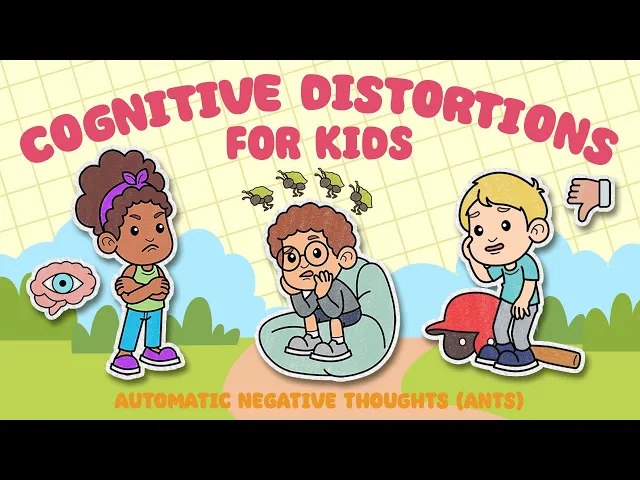
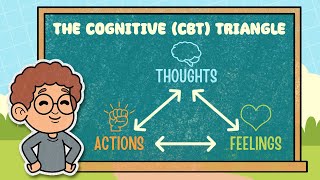
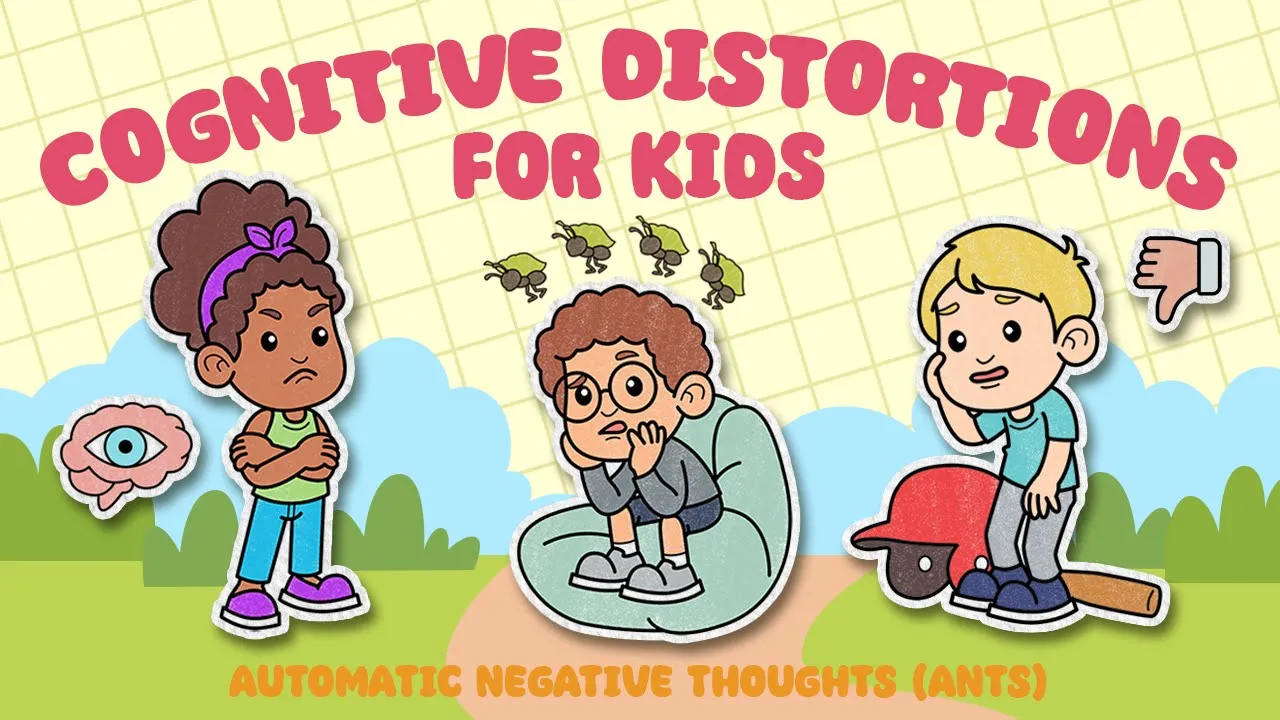
Hi friends! Today you will learn about an important part of CBT called cognitive distortions. These are negative thoughts that pop into your head so quickly that they feel almost automatic.
These are also called Automatic Negative Thoughts, or ANTs for short. Just like real ants that can sneak into your home and cause trouble, these ANTs can sneak into your mind and make you feel bad. Understanding cognitive distortions and learning to spot these ANTs will help you feel better and think in more helpful ways.
Let's learn about four common types of ANTs that might be crawling around in your mind: 1) All-or-Nothing ANTs These ANTs only see things as completely good or completely bad, with no middle ground. They whisper things like: - "If I don't get an A+ on this test, I'm a complete failure" - "Since I struck out at baseball, I'm the worst player ever" - Or "If my drawing isn't perfect, it's totally horrible" The truth is life isn't just black and white - there are lots of colors in between. 2) Mind Reading ANTs These sneaky ANTs make you think you know exactly what others are thinking (even though you don't have real mind-reading powers).
They give you thoughts like: - "Everyone thinks I'm weird because I like dinosaurs" - "My friend didn't wave at me, so they must hate me now" - Or "My teacher probably thinks I'm not smart when I ask questions" The reality is we can't actually know what others are thinking unless they tell us. 3) Jumping to Conclusions ANTs These ANTs rush ahead and assume the worst will happen, even without any evidence. They say things like: - "Nobody will want to be my partner for the group project" - "I won't get picked for the team" - Or "The new kid won't like me" Remember, we can't predict the future, and good things are just as likely to happen as bad things.
4) Catastrophizing ANTs These are the "mountain out of a molehill" ANTs that turn tiny problems into huge ones. They shout things like: - "I forgot my line in the school play - this is the most embarrassing thing that's ever happened! " - "I got one math problem wrong - now I'll never get into college!
" - Or "My friend sat with someone else at lunch - I'll never have friends again! " The truth is that most problems are actually just molehills, even though these ANTs try to make them look like mountains. Just like you might use ant spray to keep real ants away from your home, here’s an easy-to-remember Catch, Check, Change strategy to manage these Automatic Negative Thoughts: Catch - Notice when an ANT has crawled into your mind Check - Ask yourself if this thought is really true Change - Switch to a more helpful thought Let's practice using this strategy with our different types of ANTs: Example 1: All-or-Nothing Thinking Situation: You get a B on your science project Automatic Negative Thought: "I got a B, I'm so terrible at science!
" Using Catch, Check, Change: Catch: "I notice I'm having an all-or-nothing thought about my science abilities" Check: "Does one B really mean I'm terrible at science? What about all the times I've done well? " Change: "A B is still good, and I can learn from the feedback to do even better next time" Example 2: Catastrophizing Situation: You trip during a dance performance Automatic Negative Thought: "This is the worst thing ever!
Everyone will laugh at me forever! " Using Catch, Check, Change: Catch: "I'm having a 'mountain out of a molehill' thought about my trip" Check: "Will people really remember this forever? Don't most people forget small mistakes quickly?
" Change: "Everyone makes mistakes sometimes, and it’s not the end of the world. " Just like real ants, these automatic negative thoughts might keep trying to come back, which is perfectly normal. The important thing isn't to never have ANTs, but to get better at recognizing which type of ANT is bothering you, using the Catch, Check, Change strategy to challenge these thoughts, and practicing more helpful ways of thinking.
When you're having trouble with ANTs, it can help to: - Talk to a trusted adult about your thoughts - Drw or write your thoughts down to see them more clearly - Take a few deep breaths to help you think more clearly - And remember that thoughts are just thoughts - they're not always facts If you found this video helpful, don't forget to like, share, and subscribe! For more social-emotional and mental health resources for kids and teens, please visit www. mentalhealthcenterkids.
com. Thanks for watching!