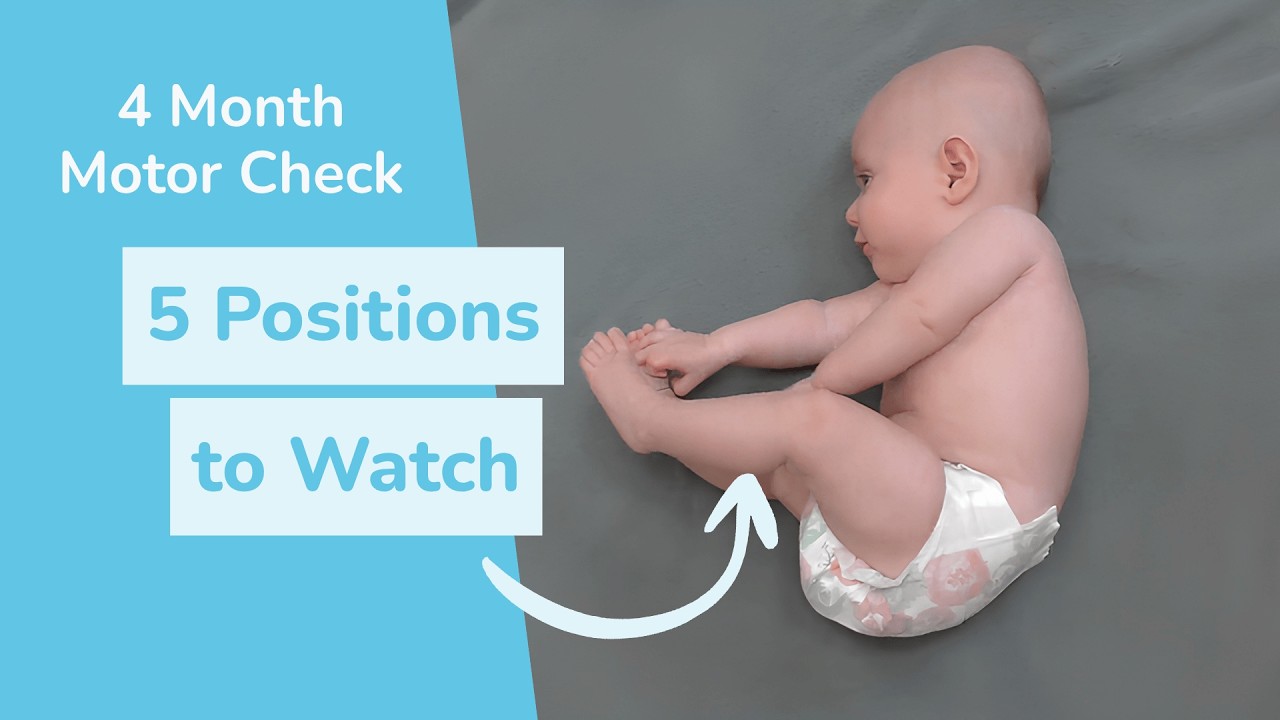
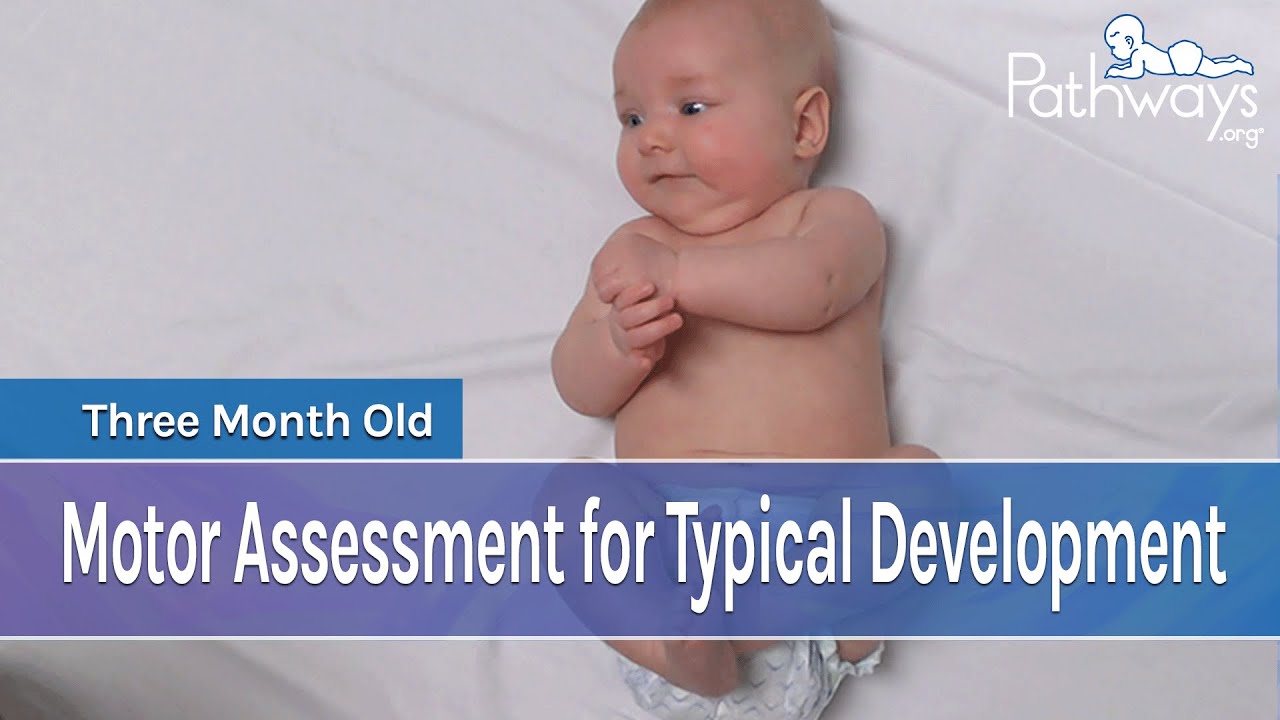
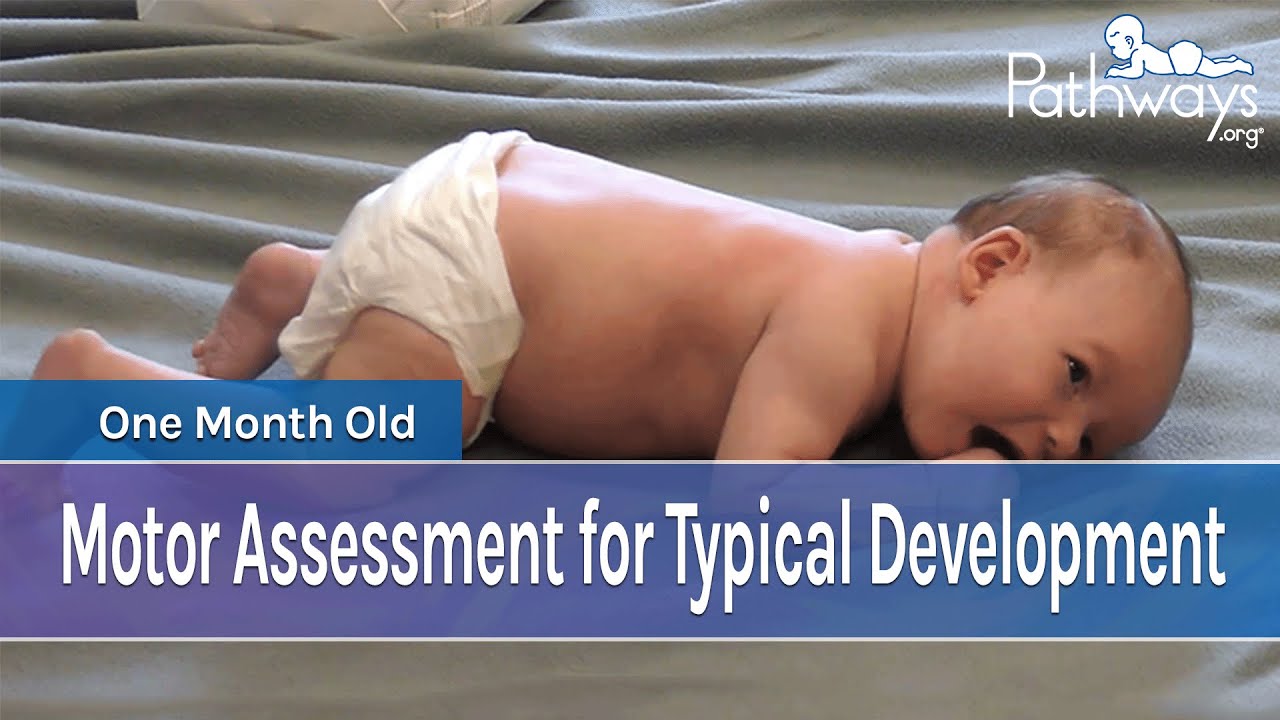
four-month-old typical atypical motor development side-by-side in this video you will see a typically developing baby and an a typically developing baby in eight different positions use this to help recognize early motor delays please remember to adjust for prematurity position one supine head and body position the typically-developing baby on the left is able to hold his head in mid line and has symmetry of the head eyes arms and legs while the a typically-developing baby on the right has a symmetry of the head and extremities his head is tilted and body curved like the letter c presented
a toy when baby on the left has presented a toy he shows visual engagement reaches against gravity and explores toys with both hands the a typically-developing baby on the right is not visually engaged he does not track the toy he does move his arms but does not lift his shoulders off the surface extremities notice the typically-developing baby has frequent anti-gravity movements and extremity movement disassociated from a stable trunk while baby on the right has random movements and not much anti-gravity movement positioned to sideline head and trunk baby on the left is able to lift his
head and upper trunk off the surface in preparation for independent rolling baby on the right cannot lift his head and upper trunk off the support service posture notice typically-developing baby on the left can sustain this posture with a balance of trunk flexor and extensor muscles while baby on the right is unable to sustain this posture because he lacks balance of trunk flexors and extensors extremities baby on the left is able to use upper arms and disassociated lower extremities to assist in facilitated role baby on the right exhibits sluggishness and his top arm during the facilitated
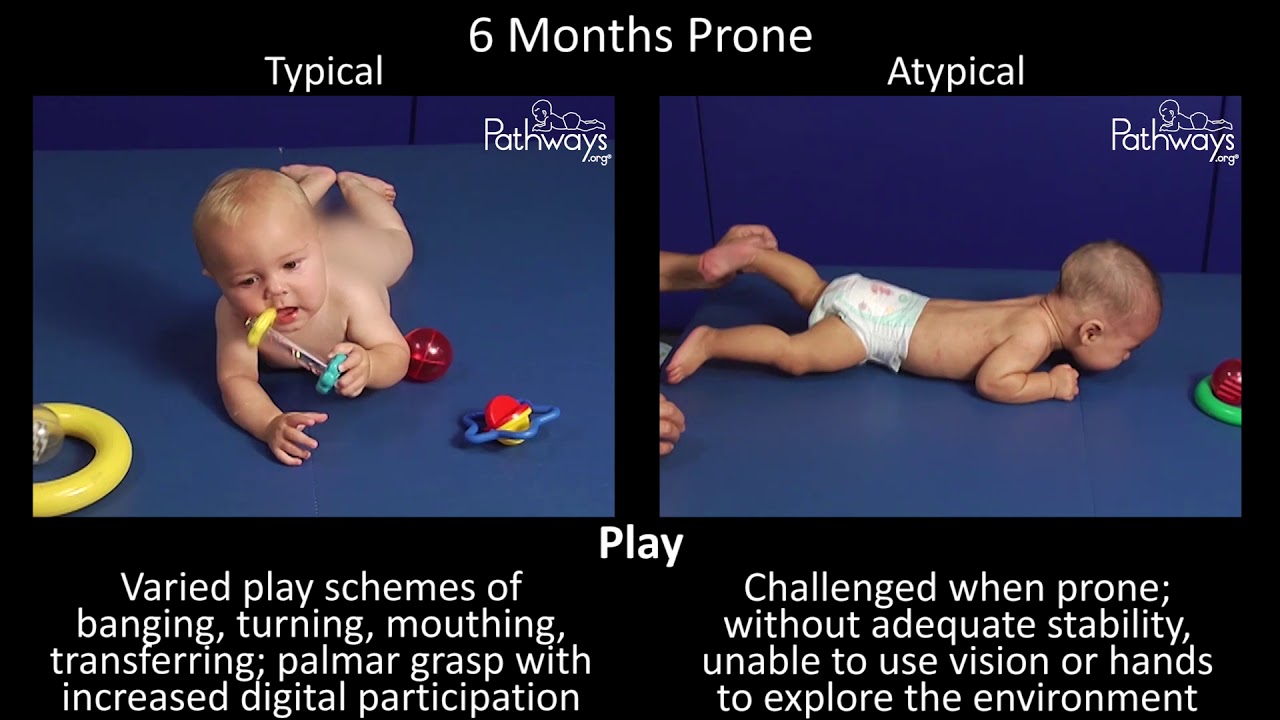
roll position three prone head lifts typically-developing baby moves his arms forward to reach for an object and turns his head freely a typically developing baby uses only neck extension to turn his head instead of forearm weight bearing his head lifting is unsustained elbows and shoulders baby on the Left can bring his shoulders and upper arms forward with elbows in front of the shoulders baby on the right keeps his hips flexed which shifts weight forward keeping his elbows well behind shoulders lower extremities baby on the Left shows progression toward lower extremity extension and adduction baby on
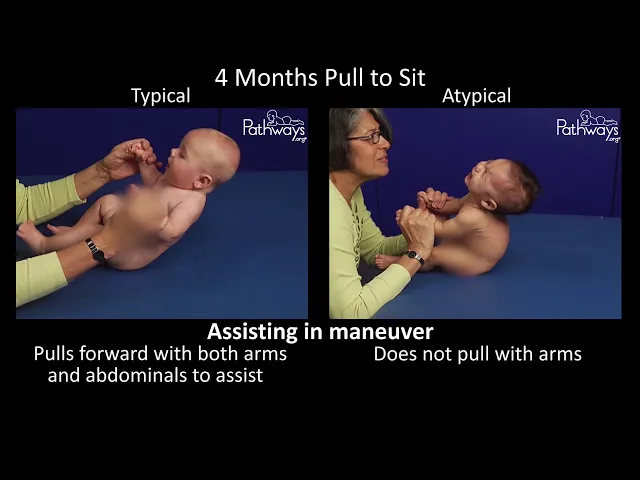
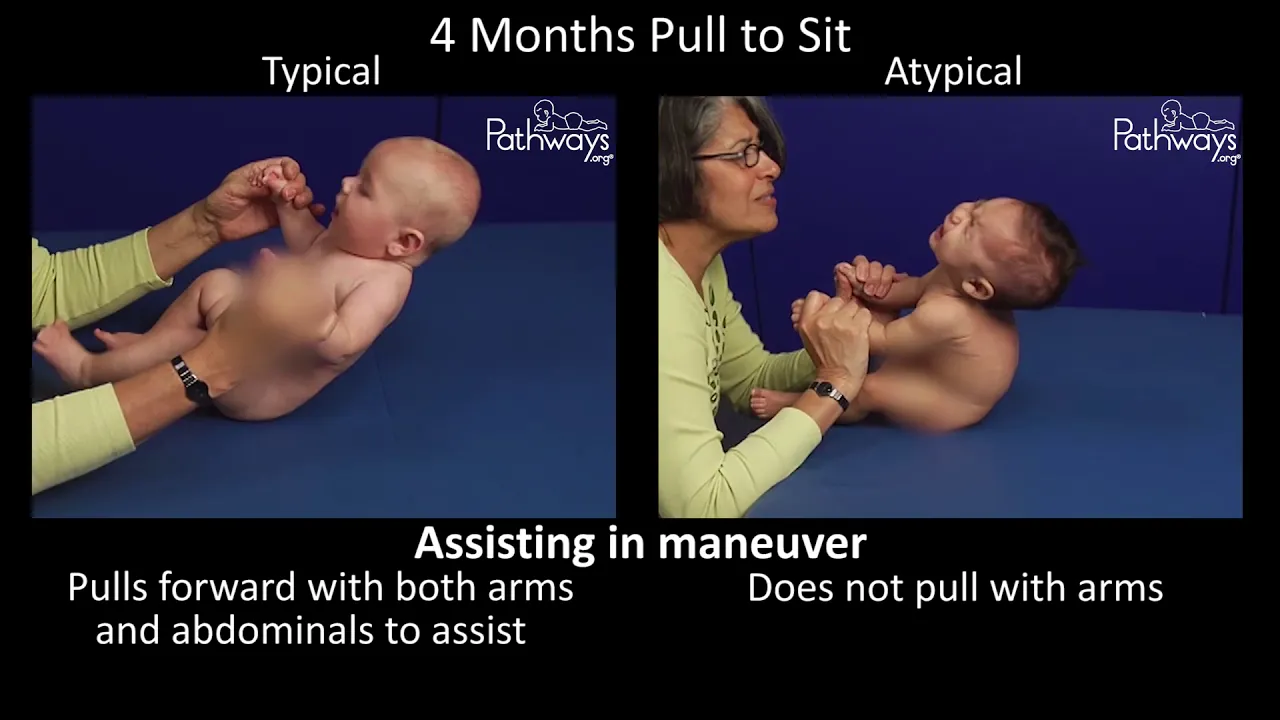
the right does not have the capability to shift weight onto his lower extremities position for pulled to set head typically-developing baby maintains his head in midline with no head leg and good chin tuck a typically-developing baby demonstrates head leg throughout maneuver he cannot sustain head lifting once upright assisting in maneuver baby on the left pulls forward with both arms and abdominals to assist in the maneuver baby on the right does not pull with his arms or upper extremities position 5 sitting head baby on the left has good head control and chin tuck with head in
the midline and he is able to turn his head in all directions baby on the right does not sustain head lifting in this position and cannot turn his head or look side to side with control vision notice the typically-developing baby is able to visually fixate on and begins to track a toy the a typically-developing baby is unable to use his vision in his posture support typically-developing baby's body needs support only at the hips and pelvis he has extension up to the mid thoracic spine a typically-developing baby needs support at his upper arms and shoulders with
maximum assistance to maintain this position in sitting we see the typically-developing baby moving into anterior and posterior planes reach for toys then returns to Syd the a typically-developing baby uses extremity posturing to compensate for decreased proximal strength in sitting position six horizontal suspension head the typically developing baby is able to keep neck and trunk extended with his head upright 45 degrees and hold it steady in the midline in this position the a typically developing baby can only hold his head up briefly and cannot maintain extension or midline position trunk in horizontal suspension the typically developing
baby has good trunk extension with scapular adduction and is able to freely move his arms and legs the a typically developing baby is unable to maintain trunk extension while moving his arms and legs position seven protective extension upper extremity responds the typically developing baby is using his arms to help sustain trunk extension he cannot bring them forward into a full protective response which should be present by six months notice the a typically developing baby uses excessive asymmetry and keeps his arms closer to his chest to sustain neck and trunk extension extension the baby on the
Left has good extension through the neck trunk and hips during forward movement the a typically-developing baby on the right is unable to sustain neck trunk and hip extension during the forward movement position eight standing posture typically-developing baby can maintain his head in midline and is able to move freely he keeps his hips just behind his shoulders and ankles in plantar flexion notice the a typically developing baby achieves head lifting using neck extension his hips are well behind his shoulders and he intermittently flexes at the hips and knees activity and lower extremity and trunk the typically
developing baby demonstrates active extension into lower thrust and lumber spine and no full hip extension while the a typically-developing baby lacks adequate hip and trunk control for sustained supported standing you