i'm starting this video out the same way i would do it in a class now this video and this section we're not covering everything about the refrigeration cycle what i'm going to do is break this down into steps that allow them to be digestible allow you to start understanding this information and then we're going to be adding to it in future videos this is also a video we're going to be following along so what you're going to need to have is a blank piece of paper turned sideways paper printer paper works the best and also
at least three colors a blue a red and a black so as we come riding on the board behind me you're not going to be able to see these words and i do that on purpose i want you to see that i'm writing this stuff down and i want you to also write this information down if you really want to learn hvac these are the steps that's going to help get you there now when i write these words down you can always pause the video back it up and hear those same words again and i'm
also going to be repeating them over and over because i want you to really get these down lots of vocabulary words in hvac so let's begin so we talked earlier about thermodynamics and we don't create cold we simply move heat so we move heat from inside the house and reject that heat outside the house as i take heat from inside the house there's less heat the temperature of the house and starts to drop that's how we cool the house we're moving heat from inside the outside so i'm deciding to make this video focus mainly on
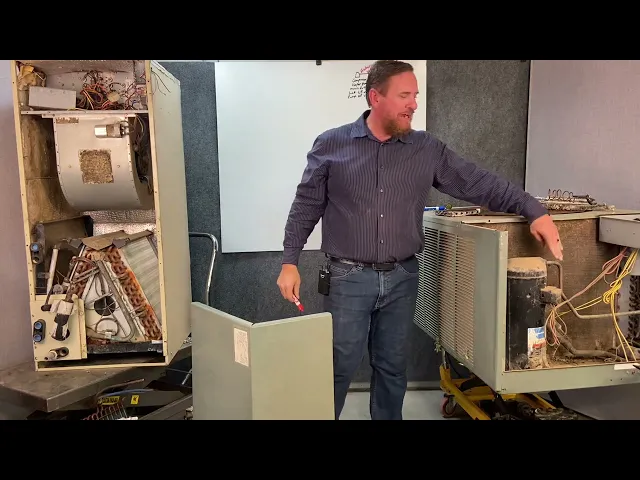
residential and then we're going to add to this but this refrigeration cycle i'm teaching you you can apply it to any system that there is so just to help you start out with residential people live most people live in a air-conditioned home so this helps you understand that concept this would be our indoor unit this would be inside the house maybe you open up a closet it's there it could also be located in a basement or it could be located in an attic now even though it's in the attic it's still considered the inside unit
you're going to have ductwork bringing air from the house through this unit and back out into the house so this would be our indoor unit and then here's going to be our outdoor unit this unit's going to be located somewhere around the outside of the house maybe even on the roof now if we're talking refrigeration it's going to be outside of a box you'd have inside of a box and outside of a box or refrigerator inside of a box versus outside of a box so it's going to be our outdoor unit for residential this is
where we're rejecting the heat so we're absorbing the heat out of the house here and rejecting the heat out of the house here first law thermodynamics the second law of thermodynamics is to make that happen i need to have something cooler than for the heat to go into so we're going to do is run refrigerant through an evaporator coil and that coil is going to be lower than the temperature of the air so the heat is going to leave the warmer air in the house and go to the cooler refrigerant then we're going to have
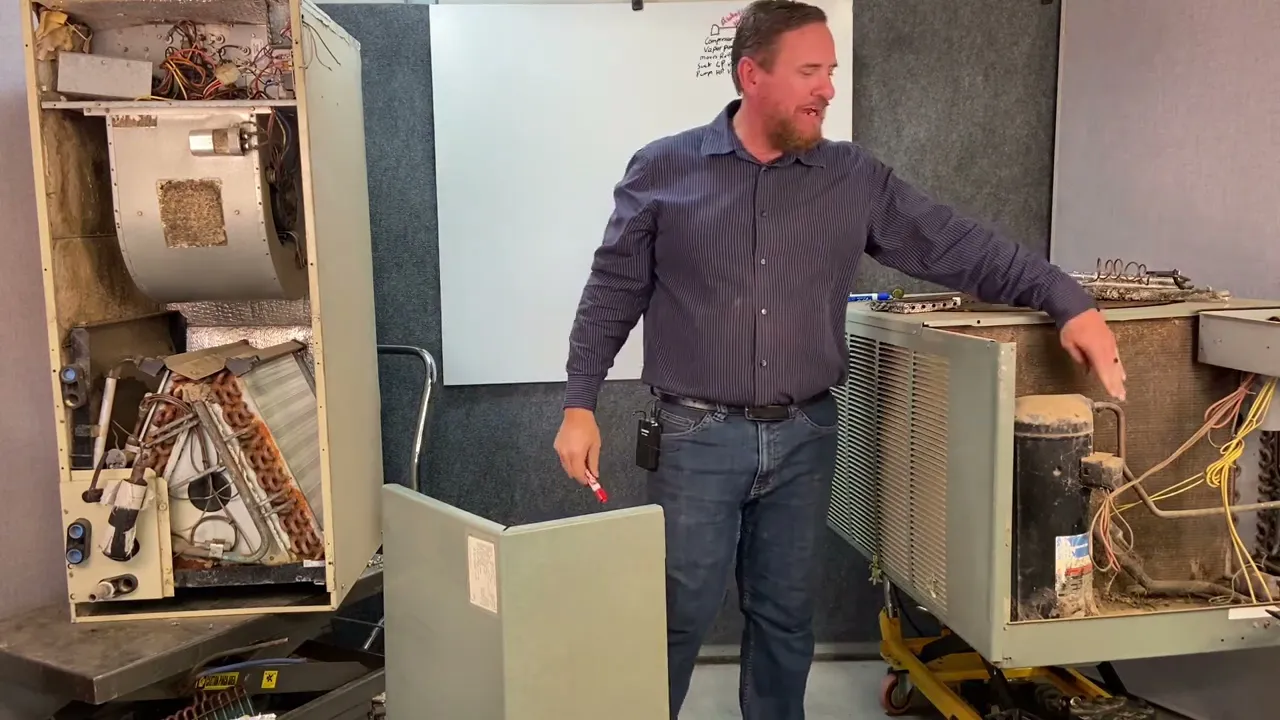
to trick the refrigerant we're going to have to raise the temperature of the refrigerant to make the refrigerant warmer than the air temperature so now the heat and the refrigerant is warmer than the air and it's going to leave and move to the cooler air outside so to make this happen we have a few other things to talk about we have fans in both of these we're going to pop the cover off of this unit right here and you get to see exactly inside what we're talking about here i have a blower motor this is
pulling air from the house and pushing air back into the house through the duct system and the lower side on this particular model we have our evaporator coil or indoor coil so here we can have access we can actually see this evaporator coil so we're pulling air across this evaporator coil and pushing it back into the house this particular model has evaporator coil below the blower but it could also be above the blower it doesn't matter where it's at in the airflow as long as we're pulling air and it's essential that we move air across
this coil because we want to take heat out of the air in the house i put that cooler air back in the house and i do this until i get the temperature of the house where i want it to be outside we have something very similar we also have a coil and what we're doing is making sure this coil is warmer than the air temperature so this way the heat from the condensing coil wants to leave to the cooler air outside a lot of steps into making this happen so we're going to start right here
with this video and what i'm going to start with is the compressor every single instructor will start with what they prefer i prefer starting with the compressor because it's the easiest thing to identify in this video here we have the compressor right here this is a ream red unit it's the easiest to film with because their compressor even though it's inside of the outdoor units it is outside of the coil so here's our condensing coil and this one's very dirty but a lot of times you'll see your compressor right here in the middle but this
is our compressor so we're going to start right there this could be our first notes so this is what the compressor looks like what i'm going to do is i'm going to draw the compressor just simply like this i just do this little half top thing that's how i draw my compressors draw something in your paper towards the top right hand side now we know the word that we learned was compressor so we're gonna write that word in as well compressor now let's assume that you can see my writing i am the worst speller in
the world i know hvac i do not teach english i do not speak do writing or grammar so the words however they translate for you compressor but in hvac almost everything has at least two words so the compressor has another word the other word we're going to call it's called a vapor pump so it is a compressor it's also called a vapor pump both those words are important so we're going to interchange those words you're going to know both words now in class what i have my students do is actually go outside and physically touch
the compressor so we get used to seeing them we'll also look at a variety of compressors we're going to talk more about compressors in this video and also we're going to do a separate video later of all the different types of compressors and go into detail about them right now it's a compressor it's also called a vapor pump now that compressor does a few very important things so the first thing that compressor does is it simply moves the refrigerant it moves the refrigerant so we're gonna have a refrigeration cycle and that compressor's job is to
make sure we move that refrigerant without the compressor the refrigerant's not moving we're not having air conditioning we're not moving heat from inside the outside nothing's gonna be happening so that compressor is easy to identify because it has wires going to it most times there's some kind of a motor there and it's going to be moving the refrigerant but also it has another job its job is to suck low pressure vapor suck and i'm going to abbreviate lp for low pressure vapor some students find it better to ride out low pressure whatever works best for
you but that's a compressor also called a vapor pump it sucks in low pressure vapor and it pumps i'm going to abbreviate hp for high pressure vapor so compressor sucks in low pressure vapor pumps out high pressure vapor it moves the refrigerant so this compressor simply takes it from a low pressure to high pressure and the reason is we want a high pressure because when the pressure goes up the temperature refrigerant is going to go up too so as the temperature of that compressor goes up the refrigerant is going to go up and we want
higher temperature refrigerant going through this condensing coil i want to raise the temperature of this refrigerant higher than the air temperature so heat will leave the condenser and go to the cooler outside so a compressor vapor pump moves refrigerant sucks in low pressure vapor pumps out high pressure vapor now the next thing that we have coming off we're going to switch now to a red marker red is going to represent high pressure we know that this compressor pumps out a high pressure vapor this particular model is pumping out the smaller line it's pumping at high
pressure we're going to use red for high pressure so high pressure is coming out so i'm going to come out of my compressor with an arrow and this red is going to represent high pressure now this line right here is going to connect it from the compressor to this condensing coil it's a smallest line in the whole refrigeration system but it's very very important it has also two names it is called a discharge line a discharge line but hvac everything has at least two names so it's also called a hot gas line hot gas line
two names the hottest part of this system is going to be right here coming out of the compressor if you touch this line it will literally burn you it is hot hot hot hot hot hot that's why i call it a hot gas line and it's vapor coming into the compressor vapor coming out vapor and gas can be interchanged many times but that hot gas or high temperature high pressure superheated vapor is very hot right here what we're going to do is send that hot vapor to our next component and we're going to add more
words into this we're going to be adding to this coil so it's not done next i'm going to do is run my marker back and forth back and forth back and forth now i've done this many times many students say that doesn't look like the unit at all and i get that my compressor isn't like a compressor at all doesn't look like condensing it at all but the idea is you see these little tubes going back and forth back and forth back and forth on our coil this is a small condensing coil out of a
refrigeration system i'm representing the refrigerant going back and forth back and forth back and forth through this condensing coil this is where that second law of thermodynamics come into play heat's going to move from a warmer place in a refrigerant to the cooler place from the air outside so heat's going to leave the refrigerator and go to the cooler air now that's really important we also learned what affects the speed of the second law of thermodynamics and that is surface area so here we have a lot of surface area we have a lot of aluminum
a lot of copper there's going to be a lot of refrigerant touching a lot of metal a lot of metal touching a lot of air and we have this fan on here so we're going to be pulling air through it as well so there's a whole lot of surface area there's a lot of air touching a lot of this metal and also the refrigerant is going to be a higher temperature than the air so heat's going to want to move and we also use aluminum and copper this aluminum and copper allows us to transfer heat
from the refrigerant to the cooler air so second law of thermodynamics come into play right here on our condensing coil and this condensing coil in this case is much larger than this it's running around this whole entire section right here so we're going in this kadensico there's a whole lot more steps we're going to add to this but right now we're just going to simply learn that this is a condensing coil condensing coil that's it it's a condensing coil so we go into the condensing coils a hot gas we're going to come out of this
condensing cold we're still going to be red this we're coming out of the coil and we're going to have a very special line right here and this line is going to be called a liquid line and luckily the liquid line is the only line that we have one name for so liquid line it's fantastic it's great we're going to add more to this about the state of refrigerant in this line it's very very important but to start off it is a liquid line so the first major component we learned is compressor second major component is
called the condensing coil but we have a new component we're going to add next on this liquid line and it is considered an accessory it's a mandatory accessory in most cases but it's still going to be called the accessory and this accessory is going to be called a liquid line filter dryer so our liquid line filter dryer looks something like this it'll have an arrow on it and we're wanting to send refrigerant away from the condenser so we want our arrow pointing away from the condenser there's many different kinds this one's a solid desiccant type
material and it looks like a rock but it still allows for refrigerant to flow through here refrigerator is going to flow on the outside section first through this rock material and through the inside and it filters the refrigerant and also pulls moisture out of the refrigerant we don't want moisture in that system but if there is it'll pull moisture out so another example of how they would look would be something like this the refrigerant goes around that system through the rock to the middle and to the outside section so we're going to draw that accessory
here and i find it extremely important that we learn where that is in the system and it can be anywhere in the liquid line i'm going to put it halfway but we're going to use this in black because it's not changing anything it's simply two names though liquid line filter dryer it's really all one name on this one it's liquid line filter dryer it's all one ginormous name liquid line filter dryer it has to go in a liquid line and it's going to be a filter dryer it's going to filter the refrigerant and also it's
going to pull moisture out of that so we're going to continue refrigerant into that filter dryer out of that filter dryer and we're going to come to our next component and our next component is a key essential part and it's drawn with simply a circle and an x through it and this component is called our metering device again we're going to go into more detail about all these components this is our basic most refrigeration cycle but this is our metering device so i'm going to write over here metering device metering device that's an hvac everything
has at least two names so what we're gonna do is add the second name it's a meteor device it's also called an expansion device that's a key word we're gonna talk about expansion later it's super awesome it's fantastic how it works we're gonna call this meeting device and also expansion device metering device and the expansion let's take a look at what that would be if we look on this coil it's going to be back in the side this is a fancy one it's actually a thermostatic expansion valve this is one example of several we're going
to go into this types of all different types of mini devices but this is a thermostatic expansion valve but all of them are going to be an expansion valve all of them are going to be a metering device we have a liquid line coming in we have our metering device in this example and here we have multiple little lines coming out these are called distribution tubes and they're distributing refrigerant to multiple locations we'll get a little bit more detail about these two a little later on but it's a meteor device also called an expansion device
and it has a few jobs here one of the jobs is going to restrict or meter the flow of refrigerant from a high pressure liquid to a low pressure saturated mixture so we have high pressure liquids coming in and a low pressure refrigerants coming out so we're having a massive pressure drop across this metering device so it's going from high pressure to one side to low pressure inside there's many many kinds of media device we're going to go over those but right now let's just learn it's a meteor device also called an expansion device restricted
from a high pressure liquid to a low pressure saturated mixture and since we changed from a high pressure to a low pressure we're now going to use blue so pull out your blue and again we're going to now make a coil again just the circles back and forth back and forth back and forth back and forth et cetera et cetera et cetera and this coil here is going to have a very special name and this is called our evaporator so we are going to write that word over here evaporator evaporator coil and here is our
vap protocol now notice that our metering device is located right up on our map evaporator coil so it's right there connected to it so we drew it our metering device is right here next to evaporator coil so here our refrigerant is flowing through here and our refrigerant is going to be low temperature low pressure is going to be absorbing heat so we're going to absorb heat into our refrigerant so as we absorb heat into our refrigerant then we're going to connect our line from our evaporator all the way back to our compressor and now we
have a complete cycle so we're going to be going into the liquid line through our median device it drops it to a low temperature low pressure saturated mixture our refrigerant is going to be flowing through evaporator coil it's going to come out to this larger line this line here has a special name also it's called a suction line it's also called a gas line and the state of refrigerant iron we're going to be adding that to it but we're going to have vapor coming all the way back to a compressor so the big pipe here
is going to be connected all the way to the big pipe on the outside unit and we end up all the way to the bigger pipe going back into our compressor so now we have a circle now there's many ways that we can draw the circle many different instructors draw it different ways i specifically have it drawn this way for a reason to prepare you for some future videos we're going to be doing as you get this down we're going to be adding tons and tons of information what we need to do is make sure
we add a few little notes over here let's add a note here so that we know that this is the outdoor unit so we're going to write here outdoor so we know that this is located outside notice our compressor is located right near a condensing coil so we've drawn a compressor right next to a condensing coil on this side we have our metering device it's right next to our evaporator coil and here our meter device is right next to evaporator coil so this is going to be indoor so the outdoor coil and indoor indoor here
outdoor here the other thing that we need to know is inside is doing what they eat is it absorbing heat or is it rejecting heat well refrigerant is going to be a lower temperature than the air the heat is going to leave the warmer air go to the cooler refrigerant so it's going to be absorbing heat so we're going to make a little note here under evaportico i'm going to put this in blue the evaporator is absorbing heat so here we're absorbing heat and on the outside coil we are rejecting heat so we're going to
put over here rejecting heat so rejecting heat absorbing heat from inside the house rejecting heat outside the house to absorb heat my evaporator has to be a lower temperature than the air so that heat leaves the air and goes to the cooler refrigerant the outdoor unit has to be a warmer temperature than the air so the heat leaves the refrigerant and goes to the cooler air outside we don't cool the house but we simply take the heat out of the house and the temperature of the house drops let's go with the refrigeration cycle this is
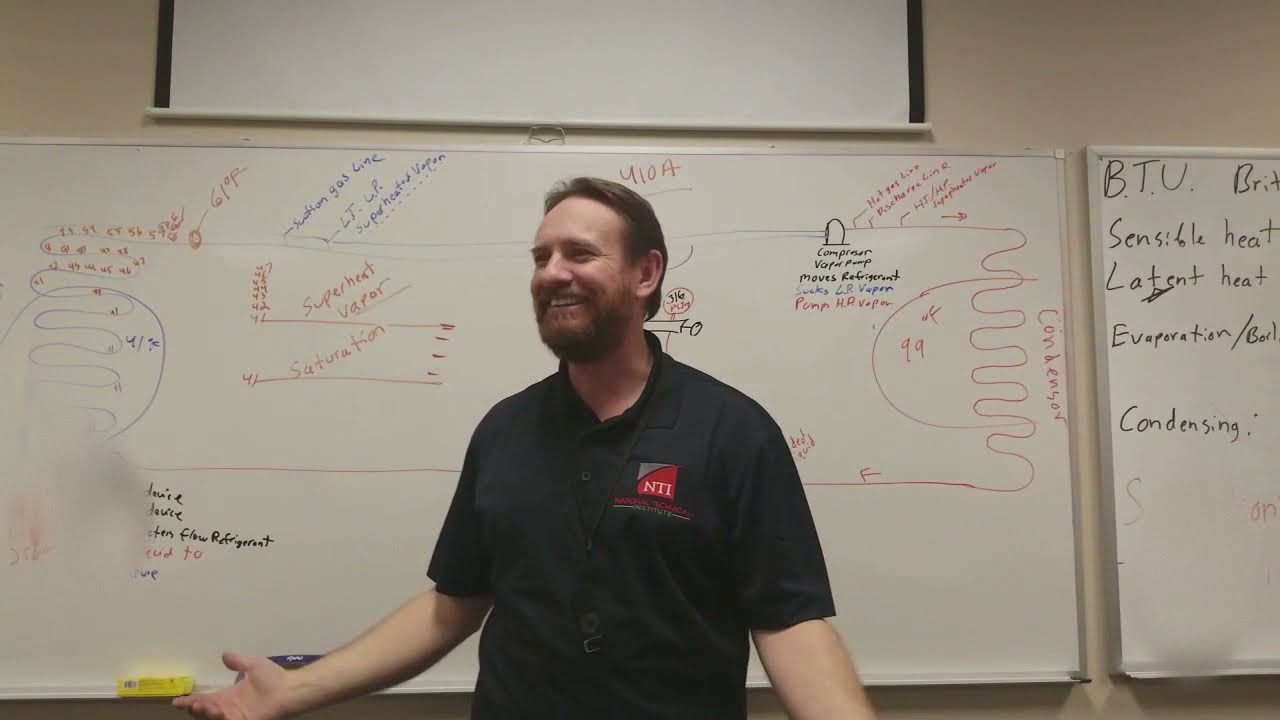
the basic basic version it's not enough we're going to need to add lots more here but memorize this study this use these vocabulary words because we're going to be adding to this on that next video so let's go through real quick again the compressor here's a compressor it's also called a vapor pump it sucks in low temperature low pressure vapor and it pumps out high temperature high pressure vapor this line is called a discharge line also known as a hot gas line refrigerant leaves the compressor and goes into the condensing coil this is outside this
is going to be rejecting heat it's going to be warmer than the temperature of the air heat's leaving the refrigerant going to the cooler air then we leave the condensing coil as a liquid line we're going to go through our accessory which is a liquid line filter dryer that liquid line filter dryer can be anywhere from here here here all the way over here but it's going to be in a liquid line the liquid line is going to be the smaller 3 8 line our liquid line then goes to some sort of metering device and
our meter device has two names also called an expansion device which restricts it from a high pressure liquid into a low pressure saturated mixture from there we enter through all these little bitty tubes into our evaporator coil the evaporator coil is now a lower temperature lower pressure and the temperature is below the area temperature so heat leaves the air and goes to the cooler refrigerant so from there the refrigerant then flows through our suction gas line suction gas line all the way back to the suction line here into the compressor we now have our basic
most level of the refrigeration cycle so have this down now take this paper and go look at things go look at your house system see if you can don't open up anything electrical don't open it but look inside see if you can see the compressor see if you can see the condensing coil don't open up any panels unless you're you've gone through some osha training and understand safety but take a look at where your lines are see if you can identify it do a web search in some of these components this is only the first
level we have a long ways set to go but this is digestible it's what i call the first plane or the first level once we get this level down we're going to build on this just like this video built in the last video the next video is going to build in this video before long you're going to have a lot of questions now but they're all going to be answered by the end of this series