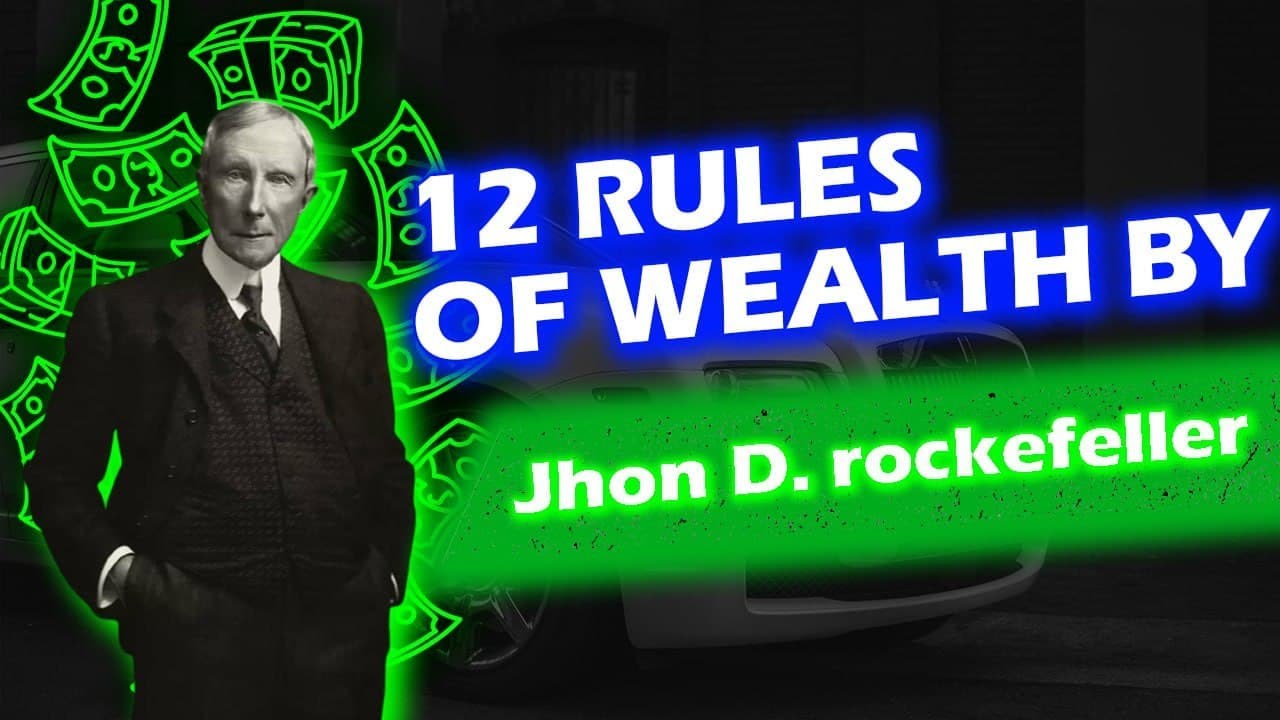
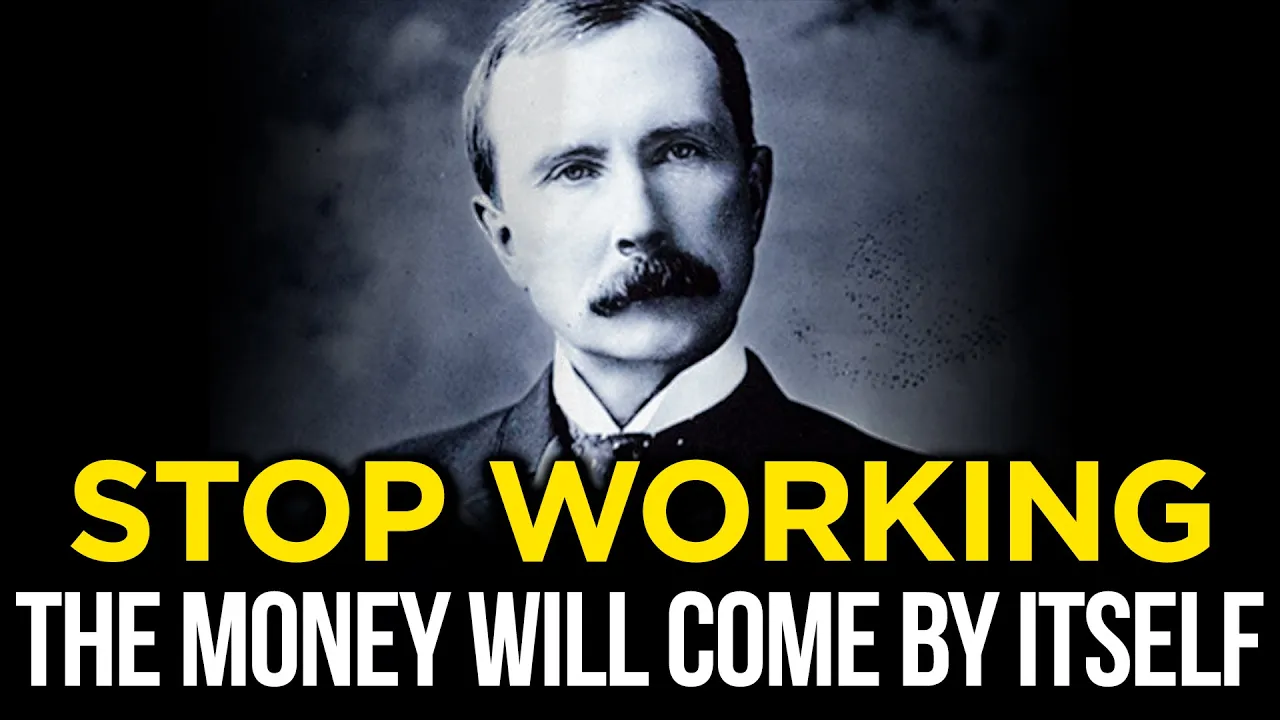
Did you know that most billionaires today follow the same pattern of making big money? It's all for a reason, because John D. Rockefeller once said, "The most stable thing in the world is the ability to make money in the right form; it is unshakable.
" Imagine you could earn any amount of money you could wish for. It may seem you can only dream about that, but today I will destroy this myth. Because if you go back to John D.
Rockefeller and how he made his billion dollars, you'll find some revolutionary money skills to help you get rich. Still don't believe it? Then watch the video until the end and see for yourself.
Welcome to the main channel on finance! If you dream of getting rich, then subscribe right now. John Rockefeller is the world's first dollar billionaire.
Rockefeller contributed two thousand dollars to the startup capital of his first business. Of these, twelve hundred dollars he borrowed from his father. In 1937, when Rockefeller died, his fortune was estimated at 1.
4 billion dollars. In today's realities, this would be 318 billion. For comparison, the wealth of the wealthiest man in the world, Elon Musk, is estimated at only 219 billion.
After studying the biography of John Rockefeller in more detail, I realized that the secret of his financial success lies in just a few monetary skills. And while you are giving this video a thumbs up, I will reveal to you the essence of these skills. **1.
Keeping Track of Your Money:** At seven, Rockefeller earned his first money on a neighbor's farm, where he helped collect potatoes and raise rabbits. Then he followed his mother's advice and made his first entry in the ledger, where he put down everything to the last cent: how much money he received and how he spent it. These analogs of the modern cash flow statement are one of the tools used to keep track of a business's finances.
He held this habit until his death; John lived for 97 years. Rockefeller biographers like to mention that he grew up in a low-income family. Information on how much his father earned was not found, but what we know for sure is that the father of the future billionaire was a traveling salesman, and he traveled a lot around the country.
While the head of the family was absent, Rockefeller's mother had to save money; hence, she developed the habit of counting every cent, which she instilled in her children since childhood. John saw how keeping track of money helps to multiply it. His parents wanted him to go to university, but Rockefeller chose a commercial college and accounting courses.
After studying, he got a job as an assistant accountant. His love for numbers was quickly noticed and appreciated by his superiors. None of Rockefeller's colleagues liked to tinker with completed periods and projects, but his eyes would always shine when he got such tasks.
Rockefeller's starting salary was 17 dollars per month; from the second month, it was already 25, and a year later he became a manager with a salary of 800 dollars a year. It is important to emphasize how strongly John was committed to financial literacy, and it was his monetary knowledge that became the foundation for his future wealth. Therefore, I advise you to turn your attention to personal financial education.
**2. Don't Be Afraid to Borrow:** Entrepreneurs often regard borrowed money as an evil to be avoided. Rockefeller's example shows they don't have to be.
If Rockefeller hadn't taken the amount missing to enter the business from his father, most likely he would have worked for all his life for hire. Borrowed funds were a constant companion of Rockefeller's business; he preferred to sell shares to the next investor even when he had enough of his own funds. He also invested his own money, but he kept it as a reserve.
Even if there were no investors, he would take the financing of the next project entirely on himself. Rockefeller's first business was a small logistics company. In the first year, Rockefeller took on orders for half a million dollars.
Money to support them soon became scarce, already owing a lot to his father, who gave not just a loan but at 10 percent per annum. Rockefeller borrowed the missing amounts wherever he could. It wasn't easy, but he managed.
It is believed that only financially illiterate people are not afraid of loans. The difference between them and Rockefeller is that he borrowed wisely. **3.
Fulfill Obligations:** Rockefeller was always careful when it came to fulfilling his obligations, including financial ones. No matter how difficult it was, in the first years of doing business he faced many challenges. He would always find the right amount by the correct date.
In his memoir, "How I Made 500 Million Dollars," Rockefeller recalls how his father came to his office for another loan payment at the most inopportune time and insisted that he needed the money right now. Rockefeller himself finds it difficult to say whether it happened by chance or whether his father specifically chose the dates for educational reasons. Anyway, each creditor, including his own father, received from him how much and when it was supposed to.
Over time, bankers would take Rockefeller at his word, getting out all the contents of their savings for him. His reputation in financial matters was the best guarantee. So you should not forget to monitor your credit history and financial reputation carefully.
**4. Each Decision Has Its Price:** Rockefeller was able to borrow without fear and regularly fulfilled his obligations because he did not act randomly. Each decision was carefully calculated in advance.
When he borrowed money, he always took into account when and how much he would have to pay back, how he would return it, and how much he would earn on borrowed funds if he invested his. . .
Own money, he calculated when and how much he would multiply it. Rockefeller invested millions of dollars in his enterprises if the investment showed an increase in production or a reduction in costs, which was converted into an increase in profits. Rockefeller did not skip.
Rockefeller was the first in the United States to stop hauling oil in wooden barrels on horseback and to start transporting oil in tanks by rail, driving entire trains across the country. It was he who stopped saving on the safety of refineries when he assessed the damage caused by constant fires, and the first American refineries were literally sheds. The oil men thought oil is a profitable business, but soon it will be all pumped out, and therefore they did not see the point in investing in the infrastructure.
When Rockefeller began to export oil, he required devices to transfer it from tanks to tankers quickly. Rockefeller, at his own expense, equipped the necessary railway stations with him. At first glance, he just gave them to the railroad for free, but this, in addition to the volume of transportation, became an argument for lowering the tariff and allowed Rockefeller to transport oil by rail three times cheaper than his competitors.
Rockefeller also owned several iron mines. When he realized it was more profitable to transport ore to blast furnaces and ports on ships than on trains, he built his own fleet from scratch. Rockefeller's partners considered his innovations too risky and did not want to invest in them.
In such cases, he said, "Okay, I will invest the money alone, but all the profits will be mine too. " After that, the partners immediately became accommodating. Everyone knew that since Rockefeller was ready to invest the loan, there would definitely be a profit.
The concept of wealth: there are truths in the world of finance that have long gone gold and are guaranteed to make a lot of people rich. That's exactly what John Rockefeller's money skills are about. Their simplicity and accessibility may scare away most of you, but those who find the strength in themselves and can properly manage those will achieve their personal financial goals in no time.
It's the main channel on finance. Subscribe and get rich.
![How To Turn Your Yearly Income Into Your Monthly Income - Bob Proctor [ The Law of Compensation ]](https://img.youtube.com/vi/IHlXgCaJvR4/maxresdefault.jpg)