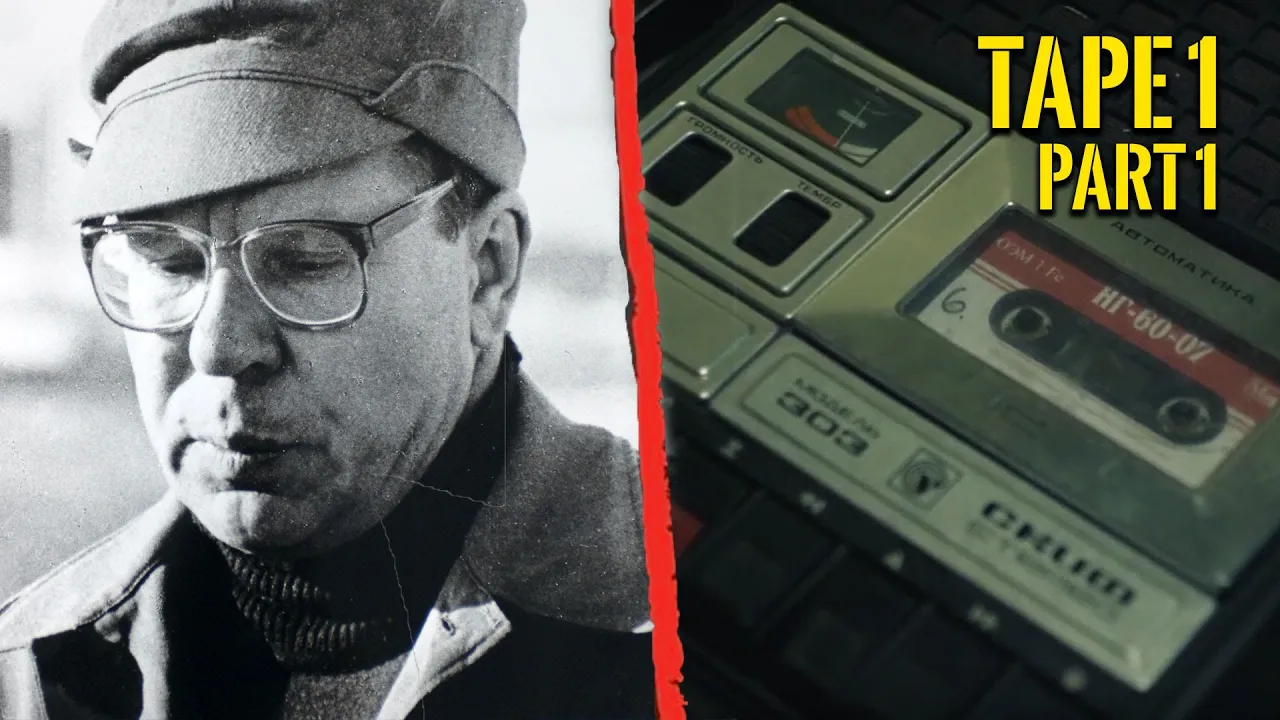
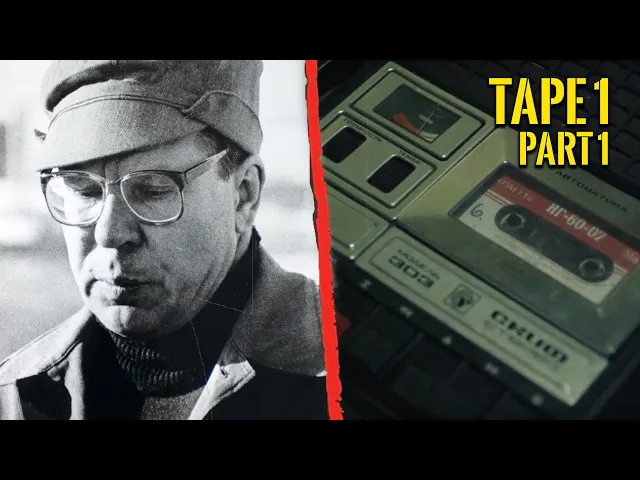
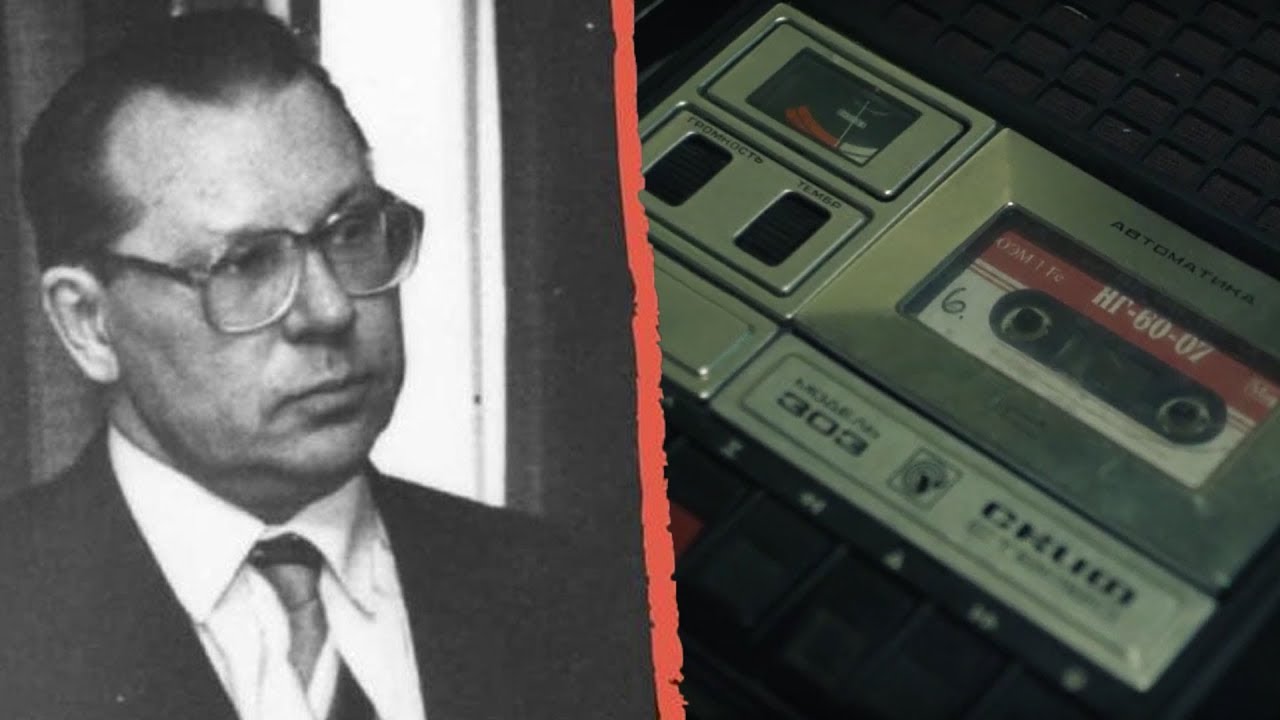
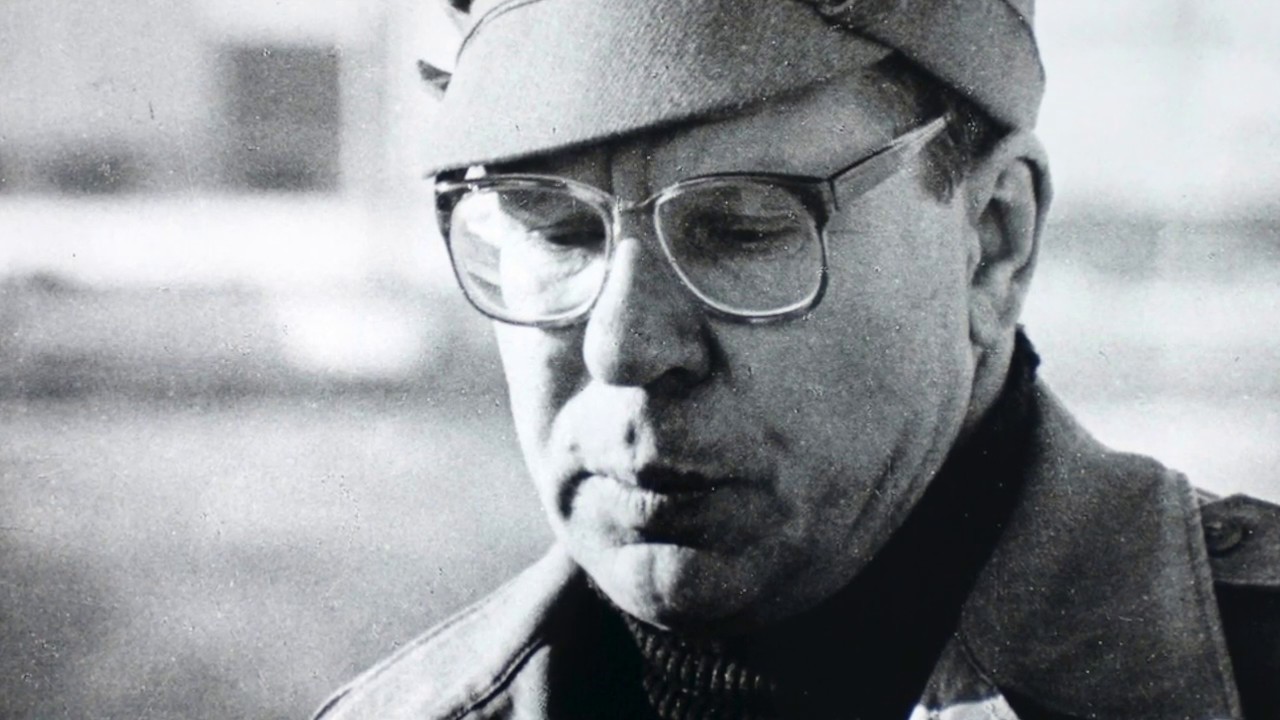
[Legasov speaking in Russian] I would never have guessed in my whole life that at the age of 50 I will have to reach back to memories of my life, the recollections of the tragic, unclear and tangled events. But since those events were of such a great scope, involved so many people with conflicting intentions, involved so many mistakes and victories, strokes of luck and misfortune, and had so many interpretations of what happened and how the events unfolded, I believe it is my duty to tell what I know, what I understand and how I saw those events happening. April 26, 1986 was a Saturday, a great day: I was pondering whether I should go to the university and do some errands for the university department, or if I should let things slide and take a break, together with Margarita Mikhailovna, my dear friend and wife, or if I should attend a party meeting, which was scheduled at 10 am at the Ministry that belonged to the Kurchatov Institute for nuclear energy.
Of course, my long-term habits and my character made me call a car and join the party meeting. Before the meeting started, I heard of a terrible emergency situation at the Chernobyl nuclear plant. It was Nikolay Ivanovich Ermakov, the head of the 16th Central office, who told me about the incident.
He told me about the emergency in a calm tone, although with some annoyance. Then, the Minister, Efim Pavlovich Slavsky, started speaking. His report was standard and dull.
We have long got used to this senile master of demagogy: he used to talk for hours, in a loud and confident voice, about how the Ministry was doing great and more than great. According to his words, every performance indicator was perfect: the collective farms were the best we could have, the plants were the best we could have, the plan quotas were perfectly achieved. It was nothing but self-congratulations.
At some points, if they deserved his particular attention, he would stop and criti? ize a certain executive or a specialist, either for a high rate of accidents, or for financial missteps, or for a specific operation at some department of our sizeable Ministry that was technically imperfect. This time again, he was praising our nuclear energy industry and the efforts that went into building this industry when he momentarily mentioned that indeed, there was some emergency at Chernobyl.
The Chernobyl power plant was part of another Ministry, the Ministry of Energy. He quickly mentioned someone making a mess there, some kind of emergency, which nevertheless will not stop the development of nuclear energy in its path. He went on with his conventional report for a total of two hours.
A break was called at around noon. I went to the second floor to visit the academic secretary, Nikolay Sergeevich Babay, to discuss the main points of the report. It was then that Aleksandr Grigoryevich Meshkov, deputy minister, dropped by and said that a State committee was created to investigate the Chernobyl emergency and that I was part of this committee.
He also told me that everyone from the committee will have to get to the Vnukovo airport by 4 pm. Immediately, I left the party meeting for my Institute. I was trying to find someone from the reactor group.
After a lot of effort, I found the head of the department which developed and maintained the RBMK-type reactors, exactly the type of reactor that had been installed at the Chernobyl plant. This person was Aleksandr Konstantinovich Kalugin, who was already aware of the accident. He told me they received an encrypted distress call from the plant that night.
It was encrypted using the code typical for the nuclear energy industry: In this case, the signal was 1; 2; 3; 4, which meant: a situation that involved a nuclear danger, a radiation danger, a fire danger, and an explosion danger. All possible kinds of dangers were there. The situation seemed to be severely bad, but Kalugin told me a team was already designated by appropriate orders.
Depending on the type of emergency, the team either had to assemble, stay at the facility and guide the on-site personnel, or fly to the plant. I was told that the team was assembled last night and flew to the plant within three or four hours. Mid-flight, the plant reported that the reactor, specifically the reactor no.
4, was under control. Operators were trying to cool it down, even though we had reports of two people dead. One was injured by the debris from the damaged constructions, and another was burned in a fire.
Radiation injuries were not reported, and the information was unclear, and less worrying than it really was. After taking the technical documentation and learning from Kalugin about the plant design, about the three possible troubles that could happen, I dropped by my home. As we agreed, my wife came home from work: we had to meet and solve our family problemsÖ which, of course, were left unsolved.
I briefly explained that I left for a field trip, that nothing was clear and I didnít know when I would return, and then left for Vnukovo. At the airport, I learned that Boris Evdokimovich Scherbina, the head of the department for fuel and energy sector, was appointed the head of the committee. He was outside of Moscow, in some other region of the country, at a party meeting.
We were told he was taking a plane from there. As soon as he arrives, we would board the plane and fly to Kiev, and drive to the emergency site from there. The state committee included, to the best of my memory, Scherbina; the minister of energy, Mayorets; the deputy minister of healthcare, Evgeny Ivanovich Vorobyev, who arrived at Vnukovo from some other region a bit earlier than Scherbina.
Next, the committee included the deputy head of State, nuclear energy supervision service, Viktor Alekseevich Sidorenko, my long-time colleague at the university and a corresponding member of the Academy of Sciences. The committee also included Soroka, the deputy prosecutor general, Fyodor Alekseevich Scherbak, a head of department from the KGB, the deputy head of the Ukraine council of ministers, Nikolayev, who was waiting for us at the site and the head of region administration, Ivan Plyusch. This is how I remember the committee list.
As soon as Boris Scherbina landed at Vnukovo, he switched the planes and we left for Kiev. In flight, I was trying to tell Boris Evdokimovich of the Three Mile island accident that had happened in the USA in 1979. I was trying to prove that the causes of this earlier accident are not the same to those that caused the Chernobyl accident, because the plant designs were substantially different.
We spend an hour-long flight discussing and guessing. As soon as we disembarked the plane in Kiev, we saw an array of black official cars and a restless crowd of Ukrainian officials, with the head of the Ukraine council of ministers, Aleksandr Petrovich Lyashko, leading them. Everyone was anxious, no one had exact information, but the things were assumed to be pretty bad.
Since we got no information there, we drove towards the nuclear plant. I happened to be in the same car with Plyusch. The plant was 140 kilometers away from Kiev.
On our evening trip, we had little information, we were getting ready for an unusual job, so we talked briefly and often made long pauses. Everyone was stressed and eager to get to the site, to understand what happened, to understand the scope of events we were facing. When I now recall this trip, I realize I had no idea we were facing a planet-scale event, an event that, presumably, will go down in history, similar to the great volcano eruptions, the Pompeii destruction or something of the kind.
We knew nothing, we were only thinking of the job we had to do and its scope. Will it be easy or difficult when we arrive? We were only thinking of what was ahead.
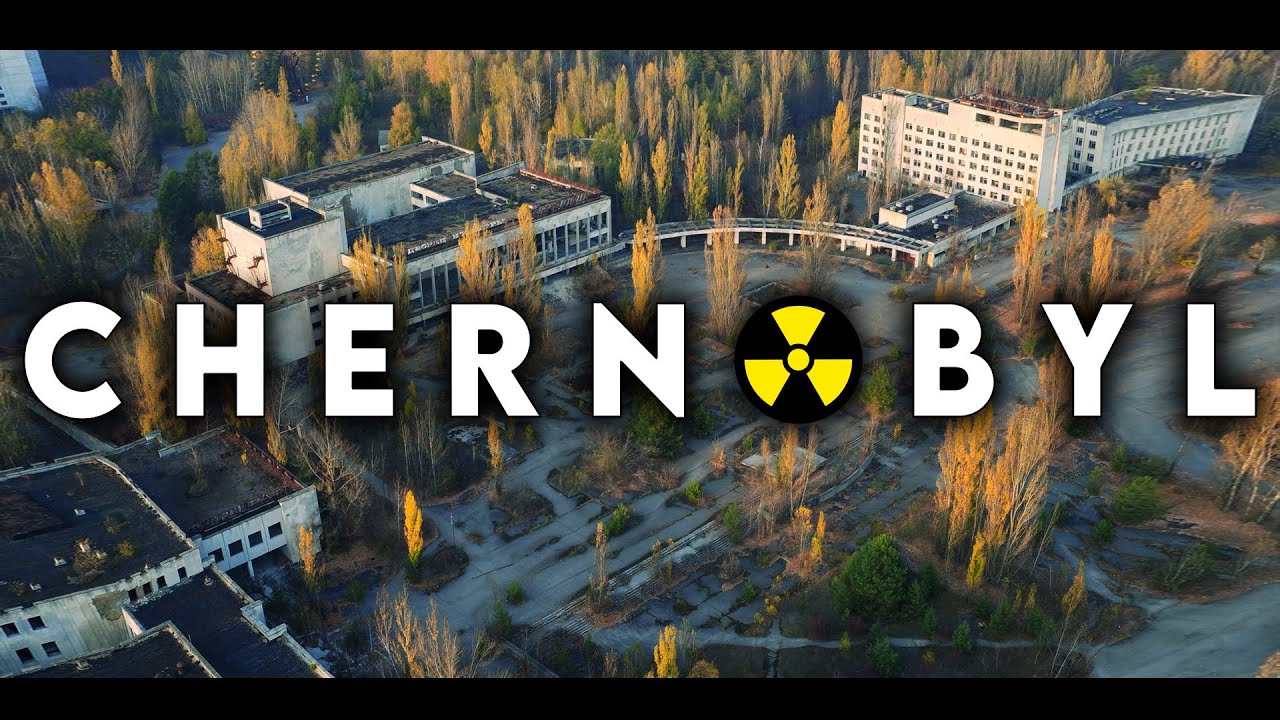
In a few hours, we reached the town of Chernobyl. Even though the nuclear plant had the same name, it was located 18 kilometers away from the town, a green and a nice town that made a quiet and a rural impression as we drove past. It was quiet and calm, absolutely ordinary.



![[4K] Chernobyl Drone Film](https://img.youtube.com/vi/KJWMop9OpOg/maxresdefault.jpg)