engine ignition and liftoff as the countown to Mars continues the perseverance of humanity launching the next generation of robotic explorers to the red [Music] planet and Atlas Tu has gone to close loop [Music] control [Music] we have indication that cruise stage separation has been confirmed by the spacecraft am reports the electro radio is powered on ready to receive signals from the Lander we have confirmation of Entry interface prance is currently going 5.3 km/ second at an altitude of about 120 km from the surface February 2021 the Lander carrying the perserverance Rover has entered the Martian
atmosphere the suspense in the control room is almost unbearable the team has no control over what will happen in the next few minutes we are starting the straighten up and fly right maneuver in preparation for parachute deploy report good Telemetry lock for the engine Engineers from NASA and cnes the French national space agency this was what's referred to as the seven minutes of [Music] Terror perseverance had to touch down as gently as possible on the red planet the navigation has confirmed that the parachute has deployed and we are seeing significant deceleration in the velocity our
current velocity is perseverance was carrying a dozen sophisticated instruments which would be used by one of the most ambitious space missions to search for traces of past life on [Music] Mars first Advance now slowed to subsonic speeds and the heat shield has been separated this allows both the radar and the cameras to get their first look at the surface here the Rover was less than 2 km above the Martian surface this was the last stage of the landing and likely the riskiest appr that the back shell has separated the ground station could only watch signals
took 11 minutes to reach Earth either the maneuver had been successful or perseverance had crashed man started 20 M off the surface [Music] you is good touchdown confirmed persever saf on the surface of ready to begin taking the stand [Applause] of that s minutes I think was the shortest and the longest seven minutes of my life for me the really special moment is the few minutes after landing when we got the first picture of [Music] Mars I'll station standby for the images yes wow my robot that was here 7 months ago that's been in space
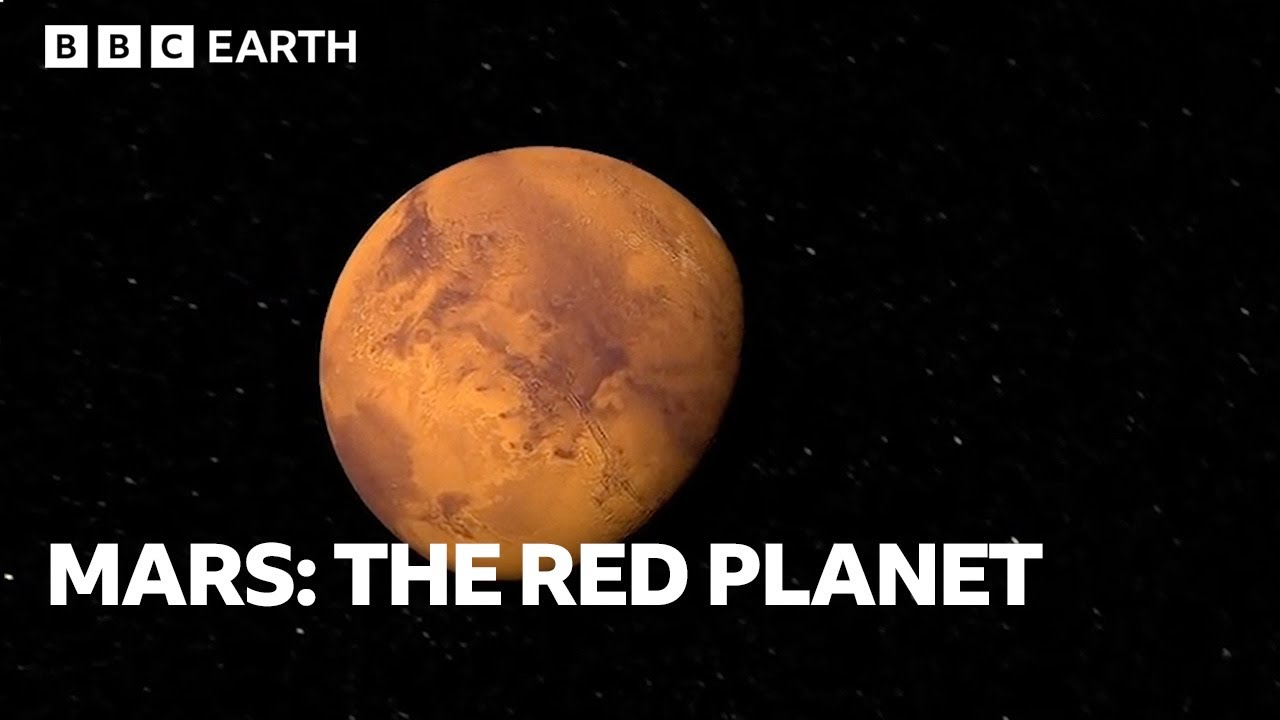
this whole time is on another planet congratulations to the mission this image was among the first sent from the Martian surface the perseverance Rover was apparently intact and fully operational the robot was tasked with uncovering the secrets of the red planet perseverance was sent millions of miles from Earth to help answer a question as simple as it is exciting did life once exist on Mars what would the Rover discover in its first year of [Music] exploration [Music] Mars has long fascinated astronomers but it wasn't until the 19th century when Giovani skelli discovered the supposed Martian
canals that the question raised of intelligent life on our neighboring Planet first emerged the American astronomer persal Lael mapped these canals mistaking them for artificial structures buil to irrigate cities that had long since disappeared the myth of the Martian was born J Invaders from Mar starting in the 1960s probes were repeatedly sent to explore the Martian surface without [Music] success in 1976 the Viking Mission ran three experiments looking for organic Life on Mars they found nothing so they lost interest in Mars for 20 years since then several Rovers have been sent to explore Martian soil
the Pathfinder probe carrying the small Sojourner robot was the first in 1996 followed by spirit and opportunity the last two proved that water must once have flowed on Mars Curiosity the big brother to perseverance landed in 2012 its mission was to find out whether water could once have facilitated the development of life on the red [Music] planet curiosity went to Mars to establish its habitability was Mars habitable 3 3.5 billion years ago we found that yes it could have been habitable it had the right ingredients so then perseverance takes it one step up right and
it says okay well if it was habitable was there life on Mars just like for curiosity NASA commissioned the jet propulsion laboratory to build several prototypes for perseverance each with different sizes and different technological profiles perseverance was built based on the idea of curiosity we took a lot of the systems that existed on curiosity and used that as our Baseline for [Music] perseverance they may look very similar but the internal mechanics signal a new generation of [Music] Rovers sophisticated high-tech developments specialized cameras spectrometers lasers ground penetrating radar an oxygen production instrument and a robotic arm
for cing and storing Rock samples these are extremely complex robots there are 200 to 300 scientists behind each vehicle it took six years to develop build it and and launch it and then another seven months to land on [Music] Mars it takes an incredible amount of time to design everything build it make it space rated test it because we also have to test and demonstrate that it's going to work in that Martian environment condition on Mars are hostile to life the biggest problem is the extreme temperatures and perseverance also had to generate its own energy
the problem with using solar panels on Mars is that you're so much further away from the Sun that you need a much bigger area to get the same energy as you would here on Earth we sometimes have dust storms on Mars and so that's often how uh Rovers meet their demise uh on Mars for perseverance we use a nuclear s which over time creates heat and that heat is transformed into electricity this generator would ensure that the Rover and its instruments could function on the Martian surface without disruption for years to [Applause] [Music] come when
we build missions like perseverance it's not just an American Mission so when we build this Rover yes it's built here at the jet propulsion lab but pieces are built all over the United States all over the world and so the super cam instrument for example is a French instrument super cam acts as the eyes of perseverance one of its features is a powerful laser that vaporizes tiny Rock particles to analyze their composition this allows chemical particles to be identified Within a radius of up to 10 m in the plasma generated by the [Music] laser I
developed it together with Roger W from the Los Alamos National Lab in New Mexico we were thinking about how to measure the chemical composition of Martian rocks and soil I asked about his lab's capabilities and he said we know how to make spectrometers and analyze light what about you I told him in France we know lasers so we divided the labor and 20 years later we had designed the super [Music] camam super cam uses a system of lasers and spectrometers with this telescope we can obtain extremely detailed images of the surface of Mars you can
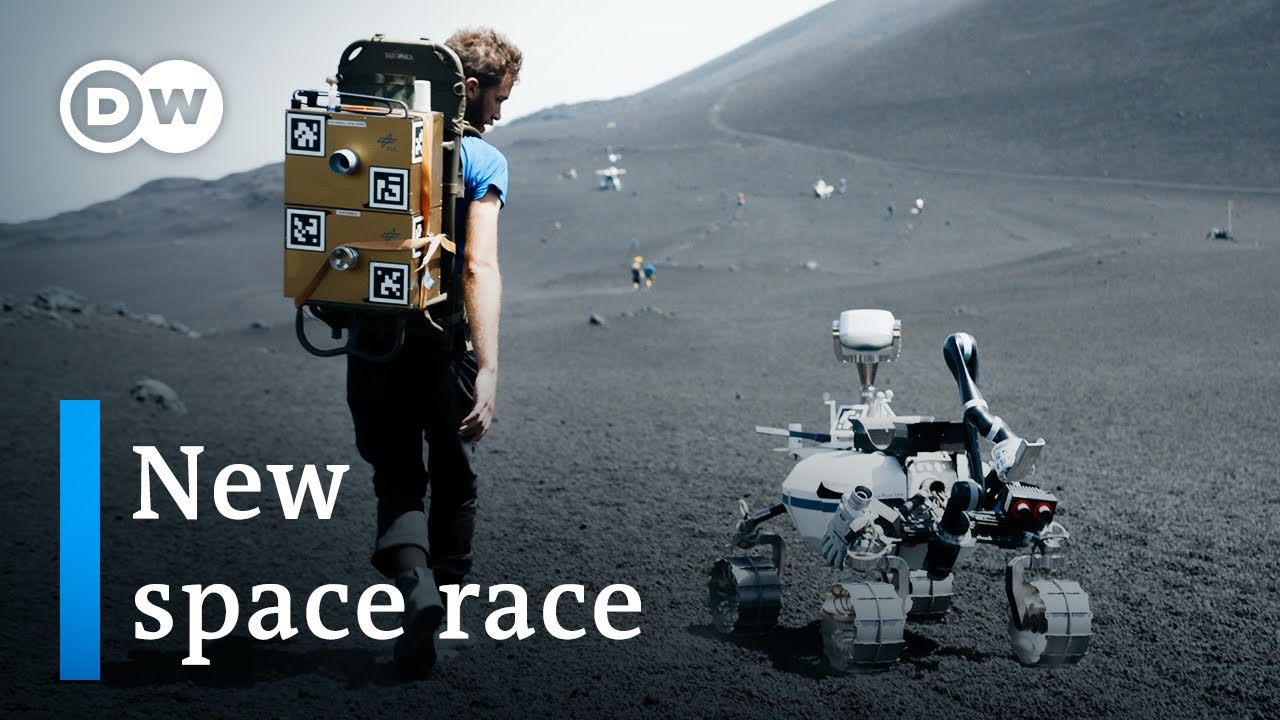
see details of around 20 microns per pixel when the camera is close to the ground this is the first Super cam [Music] image these instruments conduct precise chemical and mineral composition analysis and can even detect the presence of organic [Music] material laner millions of years years of volcanic activity have shaped this unique [Music] landscape these Geographic properties make it the ideal training ground for space travel including the exploration of Mars the simulations help to train missions with robots and soon perhaps even with humans geologist charl franel is an expert on Mars and has taken part
in several simulations [Music] himself you see this volcanic landscape really resembles the Martian landscape it's even aligned along a fault like the red planet and the oxidization is red like on Mars [Music] [Music] at first Mars and Earth were very similar because they had the same origin at one time there were Rivers which fed the lakes and there was a magnetic field or a protective shield that stopped the atmosphere from being eroded by solar wind but it changed ically about 3.7 billion years ago the magnetic field from the planet's core abruptly vanished Mars was so
small that its atmosphere dissipated into space the red planet became a freezer a sort of Ice Age suddenly took over and it never recovered turning it into the Dead Planet it is today has Mars retained traces of its past the scientists hope so the mission begins uh the teams from the French national space agency or cnes and NASA are adjusting to Martian time the days there are longer than on Earth each Martian day known as a soul lasts around 24 hours and 40 minutes so the clocks have to be synchronized plan over thank you the
mission has started we have a reference period of 3 years if the Rover fails before that then we have also failed another thorough check to make sure all the instruments on board are working our Rover has an autonav system so it can self drive on the surface of Mars driving on Mars isn't that easy right we don't have a map we don't have a phone that we can just say hey send me in that direction so what the Rover does is it takes pictures in front of it it actually looks 5 m ahead and so
that way it can actually drive from 2 to 300 M A day um on autonomously so it will drive itself we can say hey at the end of the day just drive in that direction for an hour and a half and we'll see you tomorrow and it will do that there is a time delay in communicating with perseverance although the signals travel at the speed of light it takes them a number of minutes to reach the [Music] Rover a command from control center then millions of kilometers away perseverance starts moving [Music] at night the Rover
remains stationary it transmits The information collected during the day to Earth and receives a program with tasks to complete the next [Music] day each point is assigned coordinates so when we tell the Rover to Target a point it knows exactly how to turn its head to fix on the point we want then it sets Five Points in that Direction with the laser with infrared and the [Music] camera she was very quick to get everything done and I suggest we release her first we ran extensive tests for 3 to four months we made sure the arm
was working properly if the wheels were okay if the head turned correctly then we checked if super cam could fire its laser twice than the green laser then toward the Sun and not at the Sun but at the sky we learned how to use our [Music] instrument supercam even captured a martian solar eclipse for the first time produced by the moon phobus [Music] finally operations could begin the first job was to study the Martian soil the Rover landed on yero Crater a huge depression created by a meteorite NASA chose it from hundreds of other locations
because it was the most likely place to find fossilized traces of past life we chose the yero site because it's a very old impact crater with traces of a Delta we have proof that a river once flowed into a lake there because to have a Delta you need a river and a lake [Music] the crater is about 45 kilm wide with a lake several hundred met deep enclosed by a Delta the lake held about 5 Cub km of water and a layer of sedimentary deposit 70 M [Music] thick above all we wanted diversity rocks from
the bottom of the lake from around the sides and from the Delta so we chose a site with all this diversity in a concentrated area perseverance at [Music] work the Rover's cameras have already shown that the area consists of very different geological layers one day the camera person pointed out a hill in the distance and and we said let's take a photo and use it as a reference point when we saw the incoming data we said that's fantastic we're at the bottom of a lake so we had our first results the photos were revealing but
virtual exploration of the crater provides limited insights so the Rover made its way to the Delta for its own safety it moved extremely slowly [Music] in 200 days we moved about 2 and 1 12 kilm so only a dozen or so meters each [Music] day enough to work at leisure but not enough to explore the huge yero crater quickly a little more speed was [Music] needed Ingenuity a small helicopter was brought along precisely for such [Music] tasks Ingenuity is a technology demonstrator there's three challenges to to proving that your helicopter can function on Mars right
atmosphere is one of them um the atmosphere of Mars is 1% the density of Earth so very very thin atmosphere the other two aspects though is the temperature gets very cold 90° C overnight the third aspect that's different from Earth is the gravity it's about 1/3 the gravity of Earth uh the way we test that here at JPL is we have a chamber about 5 six stories tall and in that chamber we were able to balance the atmosphere the environment the temperature uh and the gravity of Mars here on [Music] [Applause] Ingenuity weighs just under
2 kilog its two counter rotating rotors turn 10 times faster than those of a conventional helicopter on Earth for me one of the most difficult moments on Mars is the day that we dropped the helicopter from the belly of the Rover where it was attached down to the surface of Mars I was in charge of those activities and it was I can tell you incredibly stressful to make sure that our little friend was on Mars [Music] [Music] carefully we popped 3 m off the surface of Mars hovered for for 39 seconds and then came back
down we had that first flight there were four remaining uh to round out our five total in our 30 days and thank at the end of those 30 days Ingenuity was still healthy the perseverance team and NASA decided there's value here in continuing to fly on Mars Ingenuity can act as a scout we can fly to a cliff wall we can dive down into a cave right we can go to very high altitude and loiter or or you know do a lawn mower pattern over a region of interest for example ingenuity today is already providing
reconnaissance for for the perseverance Rover sent ahead as a scout Ingenuity sent highresolution images to help perseverance find its way to the [Music] Delta on its 26 reconnaissance flight Ingenuity even found the burst heat shield and Parachute from the Rover's Landing the route was clear now perseverance could tackle its real Mission the search for traces of Life on [Music] Mars we weren't looking for some macroscopic animal roaming around that would have been easy no we were looking for traces of life that already existed on Earth at that time and maybe on Mars primitive bacteria [Music]
Michelle viso is a veterinarian and works as a scientific consultant for the French space agency cnes he is one of the world's leading experts in exobiology when we talk about extraterrestrial life we focus on the simplest microbiological form microbes so if we find bacterial traces on Mars we've found a new form of life if we find a concrete trace of life even fossilized that is evidence of another life form in the universe that's what we're looking for even if it doesn't lead to [Music] martians there was a period of 500 million or perhaps even a
billion years when conditions on Mars were suitable for life but was that enough for life to actually develop I tend to think so because chemical traces prove that 3.7 billion years ago life emerged in Earth o I would like to believe that the same thing happened on Mars and if life developed on Mars where is it [Music] now after a 5 km Journey perseverance finally reached the yero crater Delta [Music] if the origins of Life evolved from some Prebiotic chemistry then it most likely would have been in an environment of carbonates and Clay minerals so
these are primarily what we're looking [Music] for we think that certain organisms living in very particular places on Earth today could also develop in certain micro environments on Lopez specializes in microorganisms that thrive in extreme environments the hydrothermal Dalal area in Northern Ethiopia is certainly one of the most impressive examples of a biosystem where life seems impossible but despite extreme temperatures and acidity levels single- celled organisms can be found in some [Music] areas at the edges of D there are ecosystems sustaining life particularly AA these are unicellular microorganisms like bacteria particularly well adapted to very
high temperatures of up to 120° and extremely fluctuating pH levels studying these extra files lets us better Define conditions in which life could have appeared and persisted in extraterrestrial systems if life emerged on Mars that could survive under such conditions it could effectively exist in these systems as well provided there was liquid water and an energy source unlike the Earth the Martian crust has never been reshaped by play tectonics this allows perseverance to examine very old clay [Music] minerals if there was once Life on Mars these minerals might still contain its components like nitrogen or
carbon to find intact organic molecules it's best to dig a little deeper and the Rover's core can drill holes several centimeters beneath the surface to penetrate rock where they've been protected for millions or even billions of years perseverance took its first sample of soil that might contain traces of organic material [Applause] I would argue that that sample caching system is just as complex as the rest of the Rover it has to be able to take sample cores from the surface of Mars process them put them in the tube and then pass that tube to another
robotic arm inside the Rover that then takes pictures does some certain alyses of those samples seals them because the samples are going to stay on Mars for a long time and then it has the ability to deposit those sample caches on the surface of [Music] Mars we hope these samples will one day come back for lab analysis to conduct a detailed sediment analysis we need a laboratory with electron microscopes and high resolution chemistry that's not possible on a [Applause] Rover perseverance will only store some of the tubes not all of them so rather than make
one big pile with all the tubes and risk losing them all of the mission aborts we leave a trail of scattered piles like Hansel and grle leaving a trail of [Music] breadcrumbs they hope to eventually recover the samples from Mars and bring them to Earth for analysis [Music] it's an ambitious project especially because it's not yet clear exactly how this would [Music] work if you thought that collecting those samples and dropping them on the surface of mors was already extraordinary and hard enough eventually we're going to want to go bring those back and so the
teams here at the jet proportion lab and at Nasa are already working on thinking as to how we might want to do that that's the first time we're going to launch something off of another planet and then we have to bring it back home here to Earth um and bring those samples back home safely and keep them contained um there are any number of challenges here that kind of dwarf anything we've done before the space flight system for the return Mission should be ready in a few years researchers are already working on the new assignment
these tubes will be covered by a European built Rover which will gather them with an arm put them in a basket and deliver them to a rocket which shoots the container and its tubes into orbit around [Music] Mars This rocket will probably need its own Lander it will need to land very precisely near the tubes it won't work if it lands 100 km away the sample retrieval Lander has a concept that we're working on right now which allows the rocket that's going to take those samples from the surface of Mars to uh to space to
be thrown up in the air we toss the uh toss the rocket up in the air and then fire it it's kind of like an air launch and that's really the the biggest Advantage is that we don't have to uh to deal with any kind of erection system right to put the uh to put the rocket in some kind of position that we want the rocket is almost 3 m long and weigh 400 to 500 kg you fire it in the air the rocket ignites and it's gone before it can come back [Music] down once
the orbiting sample kister that o is up in Mars orbit we've got to find it with the Earth return Orbiter remember we're looking for something that's kind of basketball sized that's pretty difficult right it's not a very bright thing it's not very big and we're going to have to find it from uh you know tens to hundreds of kilometers away a small white balloon into orbit around Mars and catching it with an Orbiter not easy so we start by looking for the uh the other parts of the rocket that have gotten with it that are
bigger the upper stage of the uh of the rocket has a radio on board with a beacon that will kind of scream at us every now and then uh telling us where it is the captured container gets loaded into a Space Capsule which returns to earth 6 months later if all goes to plan Martian rocks will one day be transported to Earth it is crucial to ensure the samples are not contaminated by organic molecules brought by perseverance from Earth though the risk is low the consequences would be [Music] devastating the first Space Explorers in the
19 60s remembered one thing their own predecessors lack of caution the spread of disease following the exploration of the new world is a dark chapter in human history and that contagion went both ways biological contamination of a Martian life form would be irreparable the same is true in Reverse what would happen if an astronaut was contaminated by an unknown species what would you do with them could they be brought back to Earth or leave them there forever should they be brought back to Earth but put in confinement for the rest of their lives this is
the stuff of science fiction movies a huge number of questions remain unanswered but the ultimate goal remains one day humans will fly to [Music] Mars but how can they survive there and return to [Music] Earth so for perseverance in addition to establish whether there has been Life on Mars in the past one of the other goals is to prepare for the eventual coming of humans on Mars and so we we have a few instruments on board that allow us to prepare for that there's the meta instrument which is a weather station it allows us to
understand weather patterns on Mars not just wind but also dust pressure there's a ground penetrating radar called rimax that allows us to understand the structure of the ground below us if we're ever going to build anything on Mars understanding the Martian regolith is really [Music] important Jean Fran clairo is a French engineer engineer and Astronaut he has been involved with three NASA space missions and knows how important remote projects are before the first humans travel to [Music] Mars we need to be able to remotely fly to and return from Mars before doing it with humans
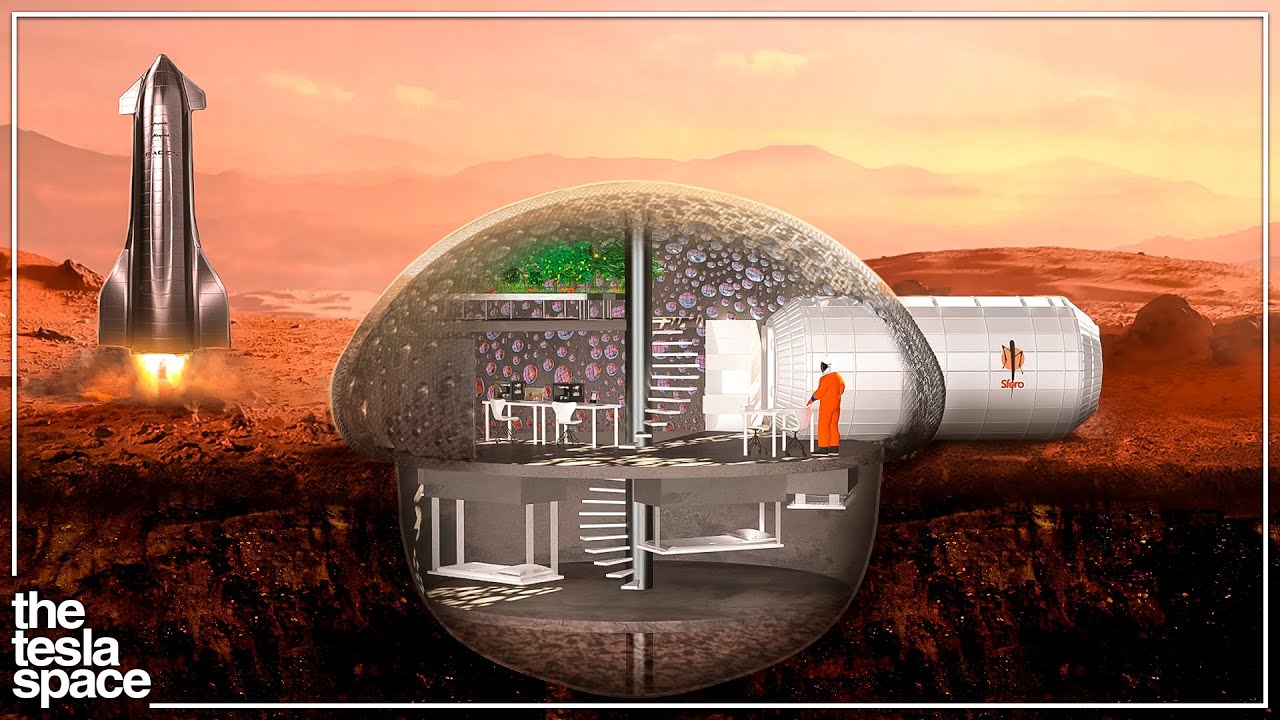
that's why this test mission with perseverance is important for deciding if we conduct a human flight to Mars but to do that you need to be able to mine as many local resources as possible for eating drinking breathing and supplying the return trip so everything doesn't need to be sent from [Music] Earth it is impossible to land on Mars carrying 30 tons of material including oxygen and stay for several months but perseverance is is already helping to solve the [Music] problem perseverance is not just studying Martian geology it's preparing Mars for humans the Rover is
carrying a small box the size of a car battery called Moxy it weighs 17 kg and converts the Martian atmosphere into breathable air there is less than 1% as much air on the surface of Mars but that air is 95% made up of carbon dioxide So within each carbon dioxide molecule is an oxygen molecule combined with carbon so the job of Moxy is to take those [Music] apart Moxy sucks in carbon dioxide from the Martian atmosphere and passes it through an electrolyzer which separates the oxygen and releases the carbon monoxide then the oxygen atoms combine
to form breathable oxygen molecules that can be inhaled now you or I would take 20 to 30 gram an hour just to live and to go about our business so far Moxy has run eight times on Mars and it made a little more than 50 g of oxygen which means it would Keep Us Alive for a couple of hours we hope with a larger version of Moxy to make all that oxygen in situ to support a human mission on [Music] Mars humans will discover a lot more than robots once they land on site artificial intelligence
is quite sophisticated but it only does what it's programmed to do a robot Will Never Shout oh look I long for the day when humans with robots and cuttingedge scientific tools will be able to answer the question of extraterrestrial life [Music] [Music] the question of alien worlds in extraterrestrial life haunts philosophers theologians and now scientists are we alone there are two distinctly terrifying possibilities one is the fear of being completely alone if we are the responsibility is terrifying if life on Earth vanish tomorrow there would never be life in the universe again but the possibility
that we are not alone is also scary if we are not alone then we are perhaps not the most beautiful or the most intelligent that would bruise our egos for some philosophies and some religions that's difficult to accept [Music] ad our dream is to go to Mars one day and I hope it will come true that's the challenge of the 21st century but this dream cannot be used to justify the idea that what we do to the Earth doesn't matter because there's a Planet B no there's only one Earth and we need to take care
of it it's just about exploring another planet and that's hard enough to do I don't know who named it perseverance but I think that's one of the most important qualities of a great researcher perseverance could be used to name basically any scientific [Music] program perseverance will continue its search for Life on Mars the lone robot is not just exploring it will also help make one of Humanity's greatest dreams come true taking people to [Music] Mars in the CL I do is dreaming faceing the stars all of them are BL thinking and I I feel smoth
[Music] and I love to know that there's no