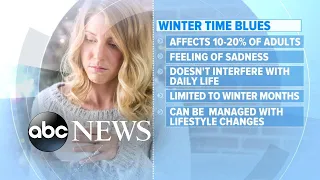
[Music] when tur is coming and with it comes the winter blues you might feel tired and lazy or put on a few pounds you're basically hibernating and there's nothing wrong with that there's some people though winter is really depressing literally seasonal affective disorder often abbreviated to sad is a type of clinical depression in which a person experiences depressive episodes at the same time of year for at least two years it's more common in women than men and weirdly enough it can happen to people during the summer too although it's much less common to be diagnosed
with sad a person has to meet the criteria of major depressive disorder but certain symptoms are particularly linked with sad including low energy sleeping more than usual overeating and weight gain people have known that mood can be affected by the changing seasons for a long time Norwegians have built giant mirrors on mountains to reflect sunlight into shadowy Valley towns and the Danish have embraced the concept of hygge for centuries which is that feeling of well-being that comes from sitting in front of a fireplace all cozy with friends but seasonal affective disorder wasn't officially described until
1984 when 29 patients was sad were identified from over 2000 people who responded to a newspaper ad put out by a scientist who worked at the National Institutes of mental health the researchers found that sad usually lasted from October to March for these patients and that their symptoms were strongly affected by their latitude moving farther from the equator caused the depression to kick in earlier while vacationing closer to it could help reduce symptoms eleven of the patients in the study were treated with light therapy where they were instructed to spend around three hours in certain
fluorescent lights at the beginning and end of their days and all of them had some improvement because sad is associated with seasonal and latitude changes and light therapy helps most researchers hypothesize that it's caused by being exposed to less natural light to it how that becomes depression is more mysterious changing light may disrupt circadian rhythms which play an important role in telling our bodies when to do things like eat and sleep a few studies have found evidence that differences in the genes that control circadian rhythms might help determine who's more susceptible to sad more specifically
melatonin a hormone that helps regulate sleep and wakefulness might be a culprit your body typically secretes less melatonin when it's light out which is why you might have been told to avoid screen before bed screens mimic natural light and could mess with your body circadian rhythms and a 2001 study of 55 sad patients and 55 volunteers found that the patient's secreted melatonin for longer than usual each winter night while volunteers didn't according to the researchers this process is similar to how other mammals especially the hibernating ones regulate seasonal changes in their behavior some scientists also
believe that the neurotransmitter serotonin could play a role in sad serotonin helps regulate mood sleep and eating and is often involved in major depression many antidepressants work to increase the amount of serotonin in the brain studies have also shown that serotonin production is linked with sunlight exposure so it could also be part of why sad is usually a winter thing although it doesn't explain the rare summer form of sad all of this research seemed to suggest that sad is a real phenomenon which is why the findings of a 2016 study of CDC data are interesting
every year the CDC conducts a large survey of the US population throughout the year and asks a variety of health questions and a team of researchers use the 2006 study of just over 34,000 adults to see whether depressive symptoms in general changed throughout the year but the researchers didn't find anything people who responded in the winter during times with less sunlight or from higher latitudes didn't seem to have worse depressive symptoms than people who responded under different conditions this led the researchers to suggest that sad might not be a valid way to think about depression
and that the results of other studies might have happened because of how they collected data for instance it's harder to think back across an entire year than it is to report how you've been feeling in the past two weeks like people did with the CDC survey but to be fair the CDC survey wasn't collecting data from the same people over a period of time the researchers also suggested that if you're asked about seasonal changes in your symptoms you might be primed to remember changes between seasons and they point out that sad has made its way
into pop culture so people might expect to feel more depressed in the winter and that might affect what they experience but here's the thing even though there might be doubt about seasonal affective disorder as a condition the symptoms of it can still be treated in multiple ways scientists still think that light therapy can work just as well as cognitive behavioral therapy although expectations can impact how effective both of these treatments are so for people who feel at straight down during the winter time it probably can't hurt to turn that happy light on thanks for watching
this episode of scishow psyche if you want to learn more about depressive disorders you can check out our episode on anti depressant misconceptions and don't forget to go to youtube.com/scishow psyche and subscribe [Music]