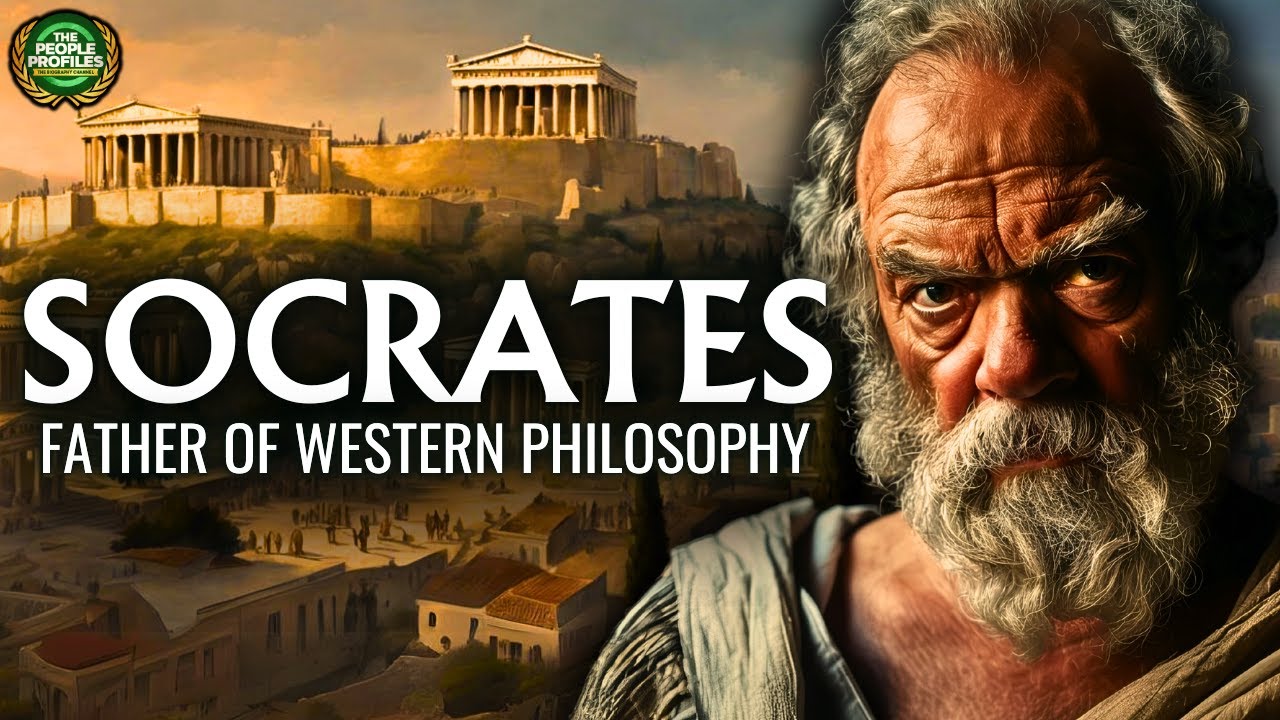
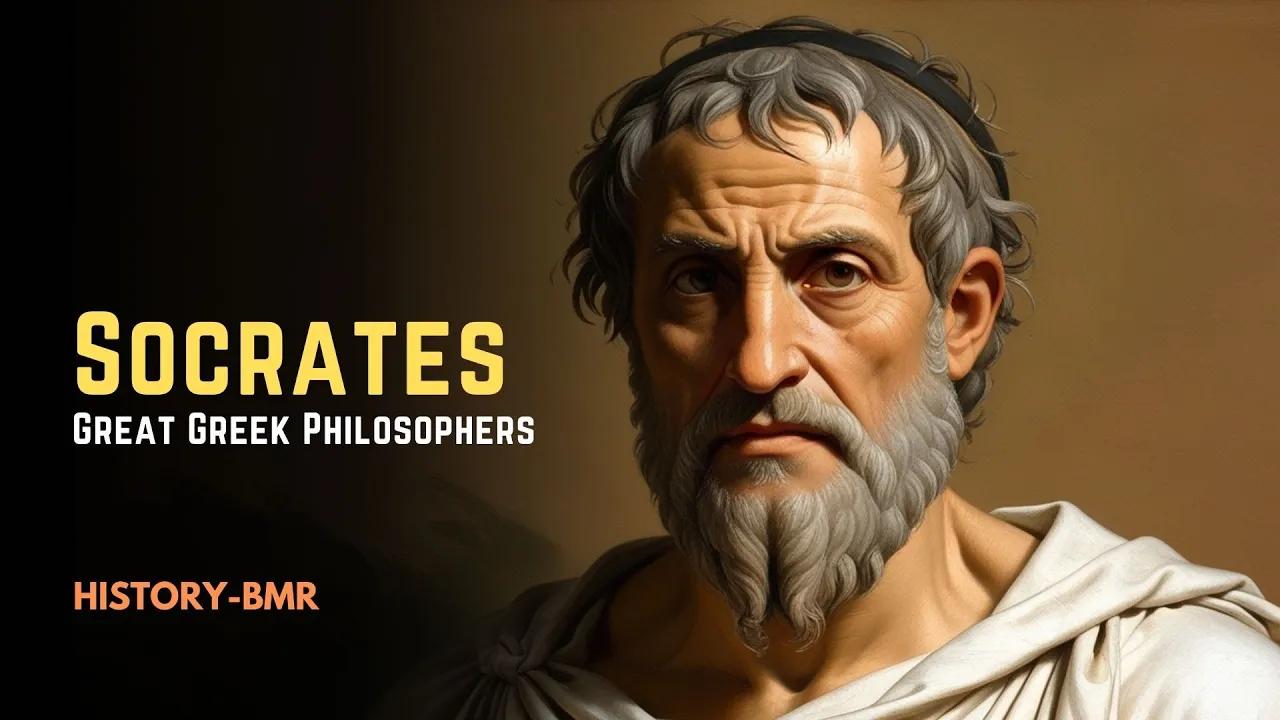
Part one early life and Athenian context Socrates one of the most renowned philosophers in Western history was born in 470 bcee in the Athenian Demi of alipes Athens at the time was a bustling Cosmopolitan City experiencing the peak of its intellectual and cultural influence under the leadership of Pericles the son of sofronis a stone Mason and feriti a midwife Socrates came from a modest background and little is Known about his early life though his family likely expected him to follow in his Father's Footsteps as a Craftsman despite the limited financial resources of his family socres
lived in a city that was the heart of Greek education and culture a place where young boys were trained in music physical exercise literature and the basics of philosophy Athens in the 5th century B.C was a direct democracy unique in its governance and political influence every Male citizen had a say in the decisions of the state making it a city where public debate was not only encouraged but necessary the intellectual environment of Athens was saturated with discussions about politics philosophy and the nature of life itself and it was in this city that Socrates would come
to develop his unique approach to understanding the world and the role of human beings within it growing up in this vibrant inter intellectual setting Socrates would have been exposed to a wide variety of thinkers and ideas Parmenides and heraclitus for instance were major figures in Greek philosophy at the time and their work laid the foundation for much of the thought that Socrates would later engage with Parmenides who argued for the unchanging nature of reality and heraclitus who emphasized constant flux and change both posed philosophical challenges that Socrates would address in his own way Additionally the
sophists were becoming increasingly popular during Socrates youth these traveling teachers claimed to offer wisdom and rhetorical skill for a price teaching young men how to speak persuasively in public debates and legal disputes the sophists who believed that truth was relative and that skilled rhetoric could make any argument convincing would become one of Socrates main intellectual adversaries as he matured however at this early stage in His life Socrates was not yet known for his critical engagements with other thinkers instead he was still absorbing the rich intellectual traditions of his City Socrates formal education would likely have
included lessons in music gymnastics and the study of epic poetry particularly The Works of homer which were essential to the education of young Athenians through these early studies Socrates would have become familiar with the Greek heroic tradition which Emphasized honor courage and and the importance of reputation this heroic ethic however would come to be one of the things that Socrates later questioned in his dialogues as he shifted the focus from external achievements to internal moral development despite the cultural richness of Athens the city was not without its problems the pelian war which broke out in
431 BCE between Athens and Sparta profoundly shaped the Political landscape during Socrates lifetime the war would last for nearly 30 years causing economic hardship and social upheaval Socrates like many Athenian men of his time served as a hoplight a heavily armed infantry soldier in several military campaigns during the war his service in the Athenian Army at the battles of Poa Dum and amphipolis is one of the few biographical details that we know about his early adulthood his experiences in The war likely had a significant imp impact on his thinking about the nature of Courage Justice
and the role of the individual in Society Athens itself was undergoing dramatic changes during this period under the leadership of Pericles the city had embarked on an ambitious building program that included the construction of the panon and other Monumental structures on the Acropolis the city became the cultural and intellectual center of the Greek World Attracting thinkers artists and writers from AC cross the Mediterranean but as Athens power and wealth grew so did the tensions within its Society the pelian war exacerbated these internal divisions and by the end of the war in 404 BCE Athens was
a city in crisis having suffered both military defeat and internal strife it was against this backdrop of War political instability and intellectual ferment that Socrates began to develop his own philosophical Ideas however unlike other philosophers of his time Socrates did not write down his teachings nor did he establish a formal school instead he engaged in conversations with his fellow citizens questioning them about their beliefs values and assumptions these conversations which often took place in the marketplace or other public spaces were not always well received Socrates method of questioning which involved exposing contradictions in his Interlocutors
beliefs earned him many enemies particularly among the powerful Elites of Athens Socrates decision to focus his philosophical inquiry on ethical questions rather than on the natural world also set him apart from other thinkers of his time while many presocratic philosophers were concerned with understanding the nature of the cosmos Socrates believed that the most important questions were those that dealt with human life and how one ought To live this shift in focus from cosmology to ethics was one of Socrates most significant contributions to Western philosophy and it laid the foundation for later philosophical movements including the
schools of Plato and Aristotle moreover Socrates emphasis on self-examination and moral development reflected the changing social and political landscape of Athens as the city became more democratic the importance of individual responsibility And ethical decisionmaking became more pronounced Socrates challenged his fellow citizens to think critically about their own lives and to question the traditional values that had shaped Athenian Society for centuries this challenge was not always welcome especially in a city that was already facing political and social instability Socrates early life and the intellectual context in which he developed his ideas were crucial to the formation
of his Philosophy growing up in a city that valued debate and intellectual in quiry Socrates was exposed to a wide range of ideas and thinkers from the relativism of the sophists to the metaphysical speculations of Parmenides and heraclitus his experiences in the pelian war as well as the political turmoil of Athens during this period likely shaped his thinking about the nature of Justice courage and the role of the individual in society and yet despite the rich Intellectual tradition of his City Socrates would come to challenge many of the accepted beliefs of his time developing a
new approach to philosophy that focused on ethical questions and the importance of self-examination as Socrates matured and began to engage more directly with the intellectual life of Athens his method of inquiry known as the Socratic method would come to Define his approach to philosophy but at this early stage in His life Socrates was still a student of his City absorbing the ideas and traditions that would later become the foundation for his own philosophy iCal contributions his humble beginnings military service and immersion in the intellectual culture of Athens all played a role in shaping The Thinker
who would go on to become one of the most influential figures in the history of Western thought part two Athenian democracy and Socratic thought Socrates Lived in one of the most remarkable cities of the ancient world Athens during its golden age a period defined by great artistic cultural and political achievements however despite the Democratic principles that Athens was famous for Socrates found himself at odds with many aspects of Athenian life particularly its politics his critique of Athenian democracy and his philosophical investigations into ethics Justice and Governance offer profound insights into both his character and the
challenges of the time Athens system of direct democracy was revolutionary for its time male citizens were allowed to participate in the assembly where they could propose laws debate public policy and influence decisions that affected the entire citystate in theory this allowed Athens to be governed by the will of its people with decisions made collectively rather than by a monarch or Oligarchy the system was deeply participatory with major legal cases public offices and Military commands all being decided by lot or popular vote however for Socrates this democratic system was deeply flawed and his criticisms of it
reveal much about his broader philosophical ideas Socrates was not opposed to the concept of democracy per se but he took issue with how it was practiced in Athens for him governance should be based on knowledge and wisdom Not on the whims of the majority or the skillful rhetoric of persuasive speakers one of Socrates key objections to democracy was that it placed power in the hands of the uninformed masses who were susceptible to being swayed by emotion rather than reason he argued that most people did not have the knowledge or training to make sound decisions on
complex matters of state and that governance should be left to those who were truly wise and Virtuous this belief put Socrates in direct opposition to the sophists a group of traveling teachers and intellectuals who were highly influential in Athens the sophists taught that truth was relative and that effective rhetoric could persuade anyone of anything regardless of its actual Merit they focused on teaching young men how to speak convincingly and win debates often for a fee to Socrates this represented the antithesis of what Philosophy should be he believed that philosophy was not about winning arguments or
gaining power but about seeking truth and understanding the sophists emphasis on rhetoric over substance was in Socrates view one of the major dangers of Athenian democracy the tension between Socratic thought and Athenian democracy is perhaps most clearly Illustrated in his analogy of the ship of State in this metaphor Socrates compares the city State to a ship at Sea just as a ship requires a skilled Captain to navigate it through Dangerous Waters so too does the state require wise leaders to guide it through the complexities of governance however in a democracy the masses often elect leaders
based on popularity rather than competence just as a ship's crew might choose a captain who is charismatic but knows nothing about navigation for Socrates this was the central flaw of democracy it equated Popularity with wisdom leading to poor governance and the eventual decline of the state Socrates also critiqued the way that Athenian democracy allowed for the manipulation of public opinion in a system where public speakers could sway the assembly with their words skilled orators held an outsized influence over the decision-making process Socrates believed that these orators often used rhetoric to manipulate the emotions of the
people rather than appealing to Reason and Justice the result was a political system in which decisions were made not based on what was best for the city but on what was most popular or expedient at the time this critique of democracy was not not merely theoretical for Socrates he lived through a period of great political instability in Athens particularly during and after the pelian war Athens defeat at the hands of Sparta in 404 B.C marked the end of its golden Age and ushered in a period of oligarchic rule under the 30 tyrants this short-lived regime
which was supported by Sparta engaged in widespread political purges and executions leading to Great suffering in the city Socrates however refused to participate in the injustices perpetrated by the 30 tyrants even at Great personal risk his refusal to comply with an illegal order to arrest an innocent man Demonstrated his commitment to his principles regardless of the political consequences after the fall of the 30 tyrants democracy was restored in Athens but the city was deeply divided and its political system remained fragile it was in this context that Socrates continued his philosophical work engaging his fellow citizens
in dialogues about Justice virtue and the role of the individual in the state however his persistent questioning of authority and His critique of Athenian democracy earned him many enemies particularly among the city's Elites his association with controversial figures such as alabes and critius both of whom played significant roles in Athenian politics I further contributed to his unpopularity alabes a brilliant but erratic General was blamed for many of Athens military failures while critius became one of the leaders of the 30 tyrants Socrates relationship With these figures was complex while he engaged in philosophical discussions with them
he did not condone their actions or political Ambitions in fact Socrates was critical of those who sought power for its own sake believing that true leadership required wisdom and virtue his unwillingness to flatter the powerful or to participate in the political minations of the time further alienated him from the ruling class Socrates insistence on questioning everything including the foundations of Athenian democracy made him a dangerous figure in the eyes of many one of Socrates most famous students Plato would later expand on his teacher critique of democracy in works such as the Republic in this dialogue
Plato presents a vision of an ideal state governed by philosopher Kings wise rulers who possess the knowledge and virtue necessary to lead the city justly This idea which was heavily influenced by Socrates thought stands in stark contrast to the democratic system of Athens where power was distributed among the many rather than concentrated in the hands of the few Plato's critique of democracy like Socrates was grounded in the belie Bel that most people lack the wisdom and knowledge to make sound political decisions Socrates opposition to the uncritical acceptance of democratic values extended to his views On
Justice and the role of the individual in society he believed that Justice was not simply a matter of following the laws or doing what was most popular but of adhering to a higher moral standard four Socrates the well-being of the individual was intimately connected to the well-being of the C and True Justice could only be achieved when individuals acted in accordance with virtue and reason this idea of Justice as a personal internal quality was one of Socrates major contributions to Western thought and would later be developed by Plato and other philosophers despite his criticisms of
Athenian democracy Socrates was deeply committed to his City he served in the military participated in public debates and even stood Tri when accused of corrupting the youth and introducing New Gods his commitment to Athens however did not prevent him from questioning its Most fundamental institutions for Socrates philosophy was not about accepting the status quo but about constantly challenging assumptions and seeking the truth this approach often put him at odds with his fellow citizens but it also made him one of the most influential thinkers in Western history in conclusion Socrates relationship with Athenian democracy was complex
and multifaceted while he valued the participation of Individuals in the governance of the state he also believed that true leadership required wisdom and virtue qualities that were often lacking in the Athenian political system his critique of democracy particularly its susceptibility to manipulation by skilled orators and its tendency to equate popularity with wisdom remains relevant to contemp AR political discourse Socrates insistence on the importance of Reason virtue and Self-examination continues to influence modern democratic thought even as it challenges some of its most basic assumptions part three philosophical method and the socratic question one of Socrates most
lasting contributions to Western philosophy is his method of inquiry commonly referred to as the Socratic method this technique which focuses on asking asking and answering questions to stimulate critical thinking and illuminate ideas was revolutionary In its Simplicity and power the Socratic method remains one of the most influential pedagogical tools used today not only in philosophy but also in law education and various Fields where critical thinking is essential however the method was much more than a tool for teaching for Socrates it was a way of life a way of engaging with the world to seek out
truth wisdom and virtue the Socratic method also known as Al lenus is a dialectical form of debate that Seeks to expose contradictions in a person's beliefs by asking a series of probing questions Socrates would engage in dialogues with a wide range of Athenians from politicians and Poets to Craftsmen and ordinary citizens often beginning with a seemingly simple question like what is Justice or what is virtue the aim of the conversation was not to win an argument but to arrive at a deeper understanding of the topic at hand one of the central features of the Socratic
method is that it does not provide definitive answers instead it encourages participants to reflect on their assumptions challenge their beliefs and recognize the limits of their knowledge for Socrates the starting point of wisdom was recognizing one's own ignorance this idea is encapsulated in one of his most famous sayings I know that I know know nothing while this statement might seem paradoxical it reflects Socrates belief That true wisdom begins with an awareness of one's limitations the Socratic method typically begins with Socrates posing a question to his interlocutor for example in Plato's dialogue eifo Socrates asks eifo
to Define piety eifo offers a series of definitions Each of which Socrates questions and refutes eventually leading eifo to admit that he does not actually know what piety is this process of questioning reputation and reflection is At the heart of the Socratic method the aim is not to embarrass the interlocutor or to prove them wrong but to help them recognize their own ignorance and Inspire them to seek greater understanding in eifo and many other Socratic dialogues the process of questioning often ends in what is known as a Poria or puzzlement the interlocutor is left without
a clear answer to the question but with a heightened awareness of the complexity Of the issue for Socrates this state of aoria was not a failure but a crucial step in the pursuit of wisdom by dismantling false beliefs and assumptions Socrates believed that individuals could begin to construct a more accurate understanding of the world and of themselves the Socratic method stands in stark contrast to the teaching techniques of the sophists who were socr intellectual Rivals the sophists were known for teaching rhetoric and Persuasion often for a fee and were skilled at making any argument appear
convincing regardless of its Truth for them the goal of a debate was not to arrive at the truth but to win the argument Socrates on the other hand was concerned with a Pursuit Of Truth and understanding even if it meant admitting one's own ignorance one of the key elements of the Socratic method is that it treats philosophy as a social activity for Socrates philosophy was not Something to be done in isolation but in conversation with others he believed that through dialogue individuals could challenge each other's beliefs sharpen their reasoning and ultimately move closer to the
truth this idea of philosophy as a communal activity has had a profound influence on the development of Western thought particularly in the works of Plato who continued to use dialogue as a central form in his philosophical writings Socrates method also had a moral Dimension he believed that engaging in philosophical dialogue was essential for leading a virtuous life the process of questioning and self-examination was in his view a way of purifying the soul and aligning one's actions with one's principles for Socrates the examined life was the only life worth living and he encouraged his fellow citizens
to engage in this process of reflection even if it was uncomfortable or Difficult one of the most striking features of the Socratic method is that it often leads to more questions than answers this open-ended approach to philosophy reflects Socrates belief that the pursuit of wisdom is a lifelong journey one that requires constant questioning and self-reflection unlike other philosophers who sought to provide definitive answers to metaphysical or ethical questions Socrates was more interested Ed in the process of inquiry Itself for him philosophy was not about arriving at final conclusions but about continually challenging oneself to think
more deeply and critically this Relentless Pursuit Of Truth through dialogue and questioning made Socrates a controversial figure in Athens many of his fellow citizens were not accustomed to being questioned about their beliefs particularly in public settings Socrates method of exposing contradictions and ignorance in others thinking was often Seen as disrespectful or subversive particularly when it involved prominent figures in Athenian Society his method also had a political Dimension as it challenged the status quo and questioned the legitimacy of those in power Socrates method did not merely expose intellectual shortcomings it often LED his interlocutors to confront
the moral implications of their beliefs in dialogues like gorgus so Rees engages with politicians and sophists to Question their understanding of power Justice and the good life in doing so he reveals that many of those in positions of authority have a shallow or misguided understanding of these important Concepts this kind of questioning was not just an intellectual exercise it was a challenge to the very foundations of Athenian political and social life the Socratic method also played a central role in Socrates understanding of Education unlike the Sophists who claimed to teach virtue and knowledge for a
fee Socrates believed that true knowledge could not be taught in the conventional sense instead he saw himself as a midwife of ideas helping others give birth to their own understanding through questioning and dialogue this idea of teaching as a process of self-discovery has had a lasting impact on Educational Theory particularly in the works of philosophers like John Dewey who Emphasized experiential learning and critical thinking Socrates emphasis on dialogue and questioning also extended to his views on Authority and expertise in several of Plato's dialogues Socrates engages with experts in various Fields politicians poets and Craftsmen to
question their claims to knowledge he often finds that while these individuals may have technical expertise in their respective Fields they lack a deeper understanding of Virtue and the good life for Socrates true wisdom was not about having specialized knowledge but about understanding how to live a good and just life this critique of expertise is particularly relevant in the context of Athenian democracy where public officials were often chosen by lot rather than by Merit and where skilled orators could sway the opinions of the masses regardless of their actual knowledge or expertise Socrates Questioning of these experts
was not an attack on their professions but a challenge to the idea that technical skill or rhetorical ability equates to wisdom his method of exposing the limits of others knowledge was a way of encouraging humility and self-awareness qualities that he believed were essential for both individuals and society as a whole the Socratic method with its emphasis on questioning dialogue and Self-examination remains one of the most important contributions that Socrates made to philosophy it laid the foundation for the de velopment of Western philosophical thought influencing figures like Plato Aristotle and countless others its focus on critical
thinking and the pursuit of Truth has also had a lasting impact on education law and public discourse Socrates use of the method was not merely a philosophical exercise but a Way of living he believed that through questioning and dialogue individuals could achieve greater self- understanding and moral Clarity his insistence on the importance of self-examination and intellectual humility continues to resonate today particularly in a world where certainty and Dogma often Prevail over critical thinking and open inquiry in conclusion the Socratic method is much more than a Technique for winning debates or challenging others it is a
way of life a method of engaging with a world that emphasizes humility self-awareness and the continuous Pursuit Of Truth Socrates method of questioning remains a powerful tool for philosophical inquiry and its Legacy can be seen in every discipline that values critical thinking dialogue and the search for understanding through his method Socrates left an indelible mark on Western thought one that Continues to shape how we think about knowledge wisdom and The Good Life part four moral philosophy virtue and knowledge Socrates approach to moral philosophy fundamentally redefined how ethics was understood in ancient Greece and laid the
groundwork for much of Western ethical thought at the heart of his philosophy was the idea that knowledge and virtue are intimately connected and that living a good life depends on understanding the true nature Of virtue this conviction drove much of Socrates philosophical inquiry as he believed that ignorance was the root of all moral failings in this section we will explore Socrates ideas on virtue his concept of the unity of Virtues and how he understood the relationship between knowledge and morality one of the most striking aspects of Socratic moral philosophy is the idea that virtue is
knowledge for Socrates to know what is good is to do what is good in other Words if a person truly understands what is right they will naturally act in accordance with that knowledge Socrates rejected the idea that people knowingly do wrong or act against their own best interests according to him immoral Behavior results from ignorance individuals commit wrongful acts because they do not truly know what is good or right this position stands in contrast to more common views of morality which often recognize a struggle between Knowledge of the good and the temptation to do wrong
Socrates belief in the intrinsic connection between knowledge and virtue is evident in many of his philosophical dialogues particularly those that deal with ethical questions for example in Plato's dialogue Mino Socrates explores the nature of virtue and whether it can be taught throughout the conversation Socrates maintains that virtue is a form of knowledge and that it cannot be separated from wisdom to be Virtuous one must have a clear understanding of what virtue is and without this knowledge true virtue is impossible Socrates rejects the idea that virtue can be taught in the same way as other skills
such as carpentry or music instead he believes that individuals must come to know virtue through self-examination and philosophical inquiry this idea of virtue as knowledge has profound implications for how Socrates viewed Moral responsibility if wrongdoing is the result of ignorance then Those who commit immoral acts are not necessarily evil or malicious they are simply uninformed this perspective is invites a more compassionate view of moral failings as it suggests that the way to improve people's behavior is not through punishment or coercion but through education and dialogue Socrates saw himself as a kind of moral educator helping
others recognize their own Ignorance and guiding them toward a deeper understanding of virtue however Socrates did not believe that all knowledge was of equal value for him the most important kind of knowledge was knowledge of the self he famously declared that the unexamined life is not worth living emphasizing the importance of self-awareness and self- knowledge in achieving a virtuous life this focus on introspection and self-examination was Central to Socratic ethics Socrates believed that individuals must constantly reflect on their own beliefs desires and actions to ensure that they are living in accordance with virtue one of
Socrates key insights was the idea of the unity of Virtues he believed that the different virtues such as courage wisdom Justice and Temperance were not separate qualities but were all interconnected and ultimately one to possess one virtue According to Socrates was to possess them all because virtue was fundamentally about having the knowledge to act rightly for example a person who is truly wise will also be just courageous and temperate because they understand how these qualities are interconnected and essential to living a good life this holistic view of virtue stands in contrast to other ethical theories
that treat virtues as distinct qualities that one can possess in Varying degrees Socrates emphasis on the unity of Virtues is particularly evident in his discussions of courage in the dialogue latches Socrates engages with two Athenian generals about the nature of Courage while the general initially Define courage as a form of physical bravery in battle Socrates challenges this narrow definition arguing that true courage also involves wisdom according to Socrates a person who is truly courageous must also understand when to Act and when to refrain from action an Insight that requires knowledge and self-awareness courage therefore is
not just about bravery in the face of danger but also about making wise decisions in difficult situations the unity of Virtues also plays a significant role in Socrates understanding of Justice in the dialogue gorgus Socrates debates with the sophist calicles about the nature of justice and power calicles argues that Justice is merely a construct of the Weak designed to restrain the strong from exercising their natural power Socrates however insists that Justice is an essential component of a virtuous life and that those who seek power without regard for justice are ultimately harming themselves for Socrates Justice
is not just about following laws or acting in accordance with social norms it is about aligning one's actions with the deeper moral truths that govern human life one of the Most radical aspects of Socratic moral philosophy is his rejection of conventional definitions of success and happiness for many Athenians success was measured in terms of wealth power and rep reputation a person who was rich influential and admired by their peers was considered to be living a good life Socrates however believed that true happiness could not be found in external Goods instead he argued that happiness was
the result of living a virtuous life A person who is wise and virtuous will be happy regardless of their material circumstances this idea which would later be developed by philosophy ERS like the stoics was revolutionary in its time and challenged the prevailing values of Athenian Society Socrates insistence on the importance of virtue over wealth and power is particularly evident in his own life he lived simply rejecting the pursuit of material wealth and spent his days engaging in Philosophical discussions with his fellow citizens unlike the sophists who charged fees for their teachings Socrates did not accept
payment for his philosophical work he believed that philosophy was not a means to acquire wealth or fame but a way of life dedicated to the pursuit of wisdom and virtue his commitment to living according to his principles made him a model of Integrity for his students even As it alienated many of his fellow Athenians this focus on virtue as the key to happiness also influenced Socrates views on death in the dialogue apology ocres famously declares that no harm can come to a good man either in Life or after death he argues that if one has
lived a virtuous life there is no reason to fear death as it is simply a transition to another state of being this belief in the immortality of the soul and the idea that a virtuous life Is rewarded after death became Central themes in later philosophical and religious Traditions including stoicism and early Christianity Socrates view of virtue as the key to a good life also had important implications for his understanding of governance and Leadership he believed that the best rulers were those who possessed true knowledge of virtue and Justice in the dialogue kitto Socrates argues that
Individuals have a moral obligation to obey the laws of the state even if those laws seem unjust as long as the state itself is governed by principles of justice and virtue this belief in the importance of virtuous leadership would later influence Plato's idea of the philosopher king a ruler who possesses both wisdom and moral Integrity Socrates focus on virtue and knowledge also led him to challenge traditional Athenian Notions of piety and the role of the Gods in human life in the dialogue eifo Socrates engages in a debate about the nature of piety questioning whether moral
actions are good because the gods command them or whether the gods command them because they are good good this challenge to Conventional religious beliefs reflects Socrates broader commitment to questioning received wisdom and examining the foundations of moral and religious practices in conclusion Socrates moral philosophy Centered on the belief that knowledge is the key to Virtue and that living a virtuous life is the only path to true happiness his insistence that moral failings are the result of ignorance rather than malice invites a compassionate and educational approach to ethics Socrates emphasis on the unity of Virtues the
importance of self-knowledge and the rejection of material wealth as a measure of success has had a profound influence on Western Ethical thought his ideas continue to resonate in contemporary discussions of morality education and the nature of the Good Life part five Socrates and the sophists Socrates lived and philosophized during a Time when another intellectual movement was flourishing in Athens the rise of the sophists these traveling teachers and thinkers offered instruction in rhetoric and persuasion teaching the skills necessary for success in the Democratic citystate of Athens the sophists played a significant role in shaping the intellectual
landscape of ancient Greece but their methods and ideas were fundamentally at odds with Socratic philosophy in this part we will explore the relationship between Socrates and the sophists the philosophical differences that separated them and how Socrates opposition to their teachings helped Define his own philosophical Mission the term sophist derives from the Greek word Sophia Meaning wisdom and initially referred to anyone who was skilled in intellectual matters however by the time of Socrates the word had taken on a more specialized meaning referring to a group of itinerant teachers who offered instruction in rhetoric politics and ethics
often for a fee sophists such as protagoras gorgus and hippus were famous for their ability to teach young Athenian men the skills of persuasion and public speaking which were essential For success in the Democratic political system of Athens the sophists were particularly influential in Athens because they catered to the needs of the city's political Elite in a Democratic Society where public debate and persuasion were critical to gaining power and influence the ability to speak convincingly and argue persuasively was highly valued the sophists promised to teach these skills offering their students the tools to succeed in
Politics law and public life however this emphasis on rhetoric and persuasion over truth and knowledge put them at ODS with Socrates who believed that the pursuit of wisdom should be the primary goal of philosophy one of the key philosophical differences between Socrates and the sophists was their attitude toward truth and morality the sophists were often associated with a form of moral relativism the idea that truth and morality are not absolute but Veryy according to individual perspectives or cultural norms protagoras one of the most famous sophists is best known for his statement man is the measure
of all things which suggests that truth is subjective and dependent on the individual for the sophists what was true or right was often a matter of social convention or rhetorical skill rather than an objective reality Socrates on the other hand believed that there was an Objective truth that could be discovered through reason and dialogue he rejected the idea that truth and morality were relative arguing that ethical principles were Universal and could be known through rational inquiry Socrates saw the sophists emphasis on rhetoric and persuasion as dangerous because it prioritized winning arguments over discovering the truth
in his view the sophists were more concerned with teaching their students how to appear Wise and successful than with helping them achieve genuine understanding the difference between Socrates and the sophists can also be seen in their approach to teaching the sophists were professional Educators who charged fees for their services and their teaching was often focused on practical skills that could be used in public life such as rhetoric and political strategy Socrates in contrast did not consider himself a teacher in the traditional Sense he did not charge fees for his conversations nor did he offer formal
instruction instead Socrates engaged in public dialogues with people from all walks of life questioning them about their beliefs and encouraging them to examine their assumptions he believed that true knowledge could not be taught in a conventional way but had to be discovered through self-examination and critical dialogue Socrates rejection of The sophists methods and ideas is evident in several of Plato's dialogues particularly gorgeous and protagoras in these dialogues Socrates debates with prominent sophists exposing what he saw as the weaknesses in their arguments and their lack of concern for truth and virtue in gorgius for example Socrates
engages in a conversation with a famous rhetorician gorgeous about the nature of rhetoric and its relationship to Justice gorgious argues that rhetoric is a Powerful tool that can be used to persuade people and Achieve success in public life regardless of the moral implications of one's actions Socrates however insists that rhetoric if used without regard for justice and Truth is a form of manipulation that leads people away from virtue in protagoras Socrates debates with the sophist protagoras about whether virtue can be taught while protagoras believes that virtue can be taught like any another skill Socrates Questions
this assumption arguing that virtue is not a matter of practical instruction but of deep philosophical understanding for Socrates virtue was not something that could be handed down from one person to another but something that individuals had to discover for themselves through rigorous self-examination and the pursuit of wisdom Socrates opposition to the sophists was not just a matter of intellectual disagreement it also Reflected his broader concern with the moral and political health of Athens he believed that the sophists by teaching young men how to use rhetoric to gain power and influence without regard for truth or
Justice were contributing to the moral decay of the city in his view the sophists encouraged a form of intellectual dishonesty in which winning arguments and gaining power took precedence over living a virtuous life Socrates saw himself as a Corrective to this trend offering an alternative approach to philosophy that prioritized Iz the search for truth and the cultivation of virtue despite his opposition to the sophists Socrates shared some common ground with them particularly in his recognition of the importance of language and dialogue in shaping human understanding like the sophists Socrates believed that philosophical inquiry could take
place through conversation and debate however Whereas the sophists used language as a tool for persuasion Socrates used it as a tool for uncovering truth his method of questioning and dialogue known as the Socratic method was designed to expose contradictions in his interlocutor beliefs and lead them to a deeper understanding of the issues at hand one of the reasons Socrates was so critical of the sophists is that he believed their methods of persuasion were deceptive in his view the sophists were More interested in making the weaker argument appear stronger as he accused them of doing in
dialogues like the apology so Socrates argued that this form of rhetoric was dangerous because it allowed individuals to justify immoral actions and manipulate others for their own benefit by focusing on the art of persuasion rather than the pursuit of Truth the sophists contributed to a culture in which success and power were valued over Justice and virtue Socrates criticism of the sophists was also tied to his broader critique of Athenian Society he believed that the pursuit of wealth power and fame had corrupted the moral fabric of the city and that the sophists by teaching young men
how to achieve these goals through rhetoric and persuasion were reinforcing this corruption Socrates saw himself as a kind of moral gadfly challenging the complacency of his fellow citizens and Encouraging them to seek higher moral principles however despite Socrates critique of the sophists it is important to recognize that the sophists were not a monolithic group different sophists had different views on Truth ethics and rhetoric and some were more concerned with philosophical inquiry than others for example protagoras despite his relativism engaged seriously with questions of ethics and politics while gorgus was more focused on the power of
Language and persuasion Socrates debates with the sophists particularly protagoras reveal the intellectual complexity of the issues at stake and the richness of the philosophical discussions taking place in Athens at of the time in conclusion Socrates opposition to the sophists was a defining feature of his philosophy and helped shape his approach to ethics politics and education while the sophists emphasized rhetoric and Persuasion Socrates insisted on the importance of Truth and virtue his critique of the sophists reflected his broader concern with the moral and political health of Athens and his belief that philosophy should be a tool
for self-examination and the pursuit of wisdom rather than a means to gain power and success the debates between Socrates and the sophists remain some of the most important and influential in the history of Western Philosophy and they continue to resonate in contemporary discussions about truth morality and the role of Education part six the Oracle of deli and Socratic wisdom one of the most intriguing episodes in Socrates life and a key moment in understanding his philosophy is his relation ship with the Oracle of Deli this story recounted by Socrates during his trial in Plato's apology plays
a crucial role in explaining why Socrates adopted the philosophical Mission that ultimately defined his life according to Socrates the Oracle declared that no one was wiser than he a statement that set him on a lifelong quest to understand the meaning of this pronouncement and the nature of wisdom itself the Oracle of Deli was a highly respected religious institution in ancient Greece where individuals and city states would consult the god Apollo for advice and prophecies the Oracle was a priestess known as the pithia who Would deliver cryptic responses to the questions posed to her these responses
were often interpreted by priests and the answers were considered to have Divine Authority it was widely believed that the Oracle could provide guidance on matters of politics war and even personal decisions Consulting the oracle was a way to gain insight into the will of the Gods and its pronouncements held significant weight in Greek society Socrates friend caraan a loyal follower And admirer of the philosopher is said to have asked the Oracle at Deli whether there was anyone wiser than Socrates the Oracle responded that there was no one wiser when caraan relayed this message to Socrates
the philosopher was puzzled Socrates did not consider himself wise and the iCal statement seemed at odds with his own self-perception this Paradox LED Socrates on a journey of inquiry as he sought to understand the meaning of the Oracle words Socrates Reaction to the Oracle pronouncement is a testament to his unique approach to philosophy rather than accepting the Oracle words at face value and assuming that he was indeed the wisest of all Socrates chose to investigate the claim he reasoned that if the Oracle a divine institution had declared him the wisest then it must be true
however since he did not believe himself to possess any special wisdom he set out to determine whether anyone else could be Wiser than he was this investigation became a central theme of Socrates life he began to question various prominent figures in Athenian Society politicians poets and Craftsmen whom he believed to be wise through his method of questioning Socrates quickly realized that although these individuals were highly regarded for their knowledge and expertise they often did not possess true wisdom politicians claimed to know how to Govern but upon further inquiry Socrates found that they were unable to
articulate the principles of justice and virtue that should guide their decisions poets while able to compose beautiful verses could not explain the meaning behind their works or the nature of artistic inspiration Craftsman though skilled in their trades often believed that their technical knowledge extended to areas outside their expertise leading them to make false claims about topics They did not truly understand through these encounters Socrates came to the conclusion that his wisdom lay in the fact that he recognized his own ignorance unlike the politicians poets and Craftsmen Socrates did not pretend to know things that he
did not know his wisdom was paradoxically the recogn nition that he was not wise in the conventional sense this acknowledgement of his own ignorance became a central tenant of Socratic philosophy and a key Element of his method of inquiry Socrates humility in the face of the oracle's pronouncement is one of the defining features of his intellectual Legacy he believed that true wisdom began with the recognition of one's limitations this idea that wisdom is rooted in an awareness of ignorance marked a radical departure from the intellectual traditions of his time in ancient Greece knowledge and expertise
were highly valued and those who Possessed specialized knowledge were often regarded as wise however Socrates challenged this notion by emphasizing that wisdom was not simply about having technical or specialized knowledge but about understanding the limits of One's Own knowledge in this sense Socrates approach to wisdom was more philosophical and self-reflective than the traditional views of wisdom in Athenian Society Socrates interpretation of the Oracle message also had profound Ethical implications if true wisdom consisted in recognizing one's ignorance then the pursuit of wisdom was an ongoing process one that required constant questioning and self-examination this approach to
wisdom is closely related to Socrates moral philosophy which emphasized the importance of living an examined life for Socrates the unexamined life was not worth living because it involved accepting false beliefs and assumptions Without critical reflection the process of questioning and seeking deeper understanding was essential to achieving moral and intellectual Integrity in his dialogues with his fellow Athenians Socrates often referred to himself as a gadfly a metaphor he used to describe his role in society just as a gadfly stings a horse to keep it from becoming complacent Socrates believed that his questioning would prevent the people
of Athens from becoming intellectually and Morally complacent by constantly challenging the assumptions of those around him Socrates hoped to inspire others to engage in the same kind of self-examination that he believed was essential to living a virtuous life his encounters with the politicians poets and Craftsmen were not meant to embarrass or humiliate them but to help them recognize the gaps in their knowledge and to encourage them to seek greater understanding Socrates Commitment to this philosophical Mission inspired by the Oracle pronouncement eventually led to his trial and execution many of the prominent figures he had questioned
were embarrassed or angered by his method of exposing their ignorance and Socrates public questioning of traditional beliefs and values made him a controversial figure in Athenian Society his association with figures like alabes and critius who were Involved in political scandals also contributed to his eventual downfall nevertheless Socrates remained steadfast in his belief that his philosophical mission was divinely inspired and he refused to abandon it even when it meant facing death part seven Socrates relationship with his students Socrates influence on the intellectual landscape of ancient Athens and Beyond is inseparable from the impact he had on
his students many of whom went on to Become significant figures in their own right unlike other philosophers Socrates did not write anything down nor did he establish a formal school instead he relied on dialogue and personal interactions to pass on his ideas shaping the minds of his students in the process his relationship with these students was both intellectual and deeply personal as he encouraged them to question their beliefs and examine their lives much as he did his own perhaps the Most famous of Socrates students was Plato whose writings provide the primary source of information about
Socrates life and teachings Plato was profoundly influenced by Socratic thought and his dialogues many of which feature Socrates as a central character preserve the essence of the Socratic method and philosophy through Plato's Works Socrates ideas have been immortalized reaching far beyond the confines of ancient Athens and shaping the entire Trajectory of Western philosophy play PLO was not Socrates only notable student however Socrates had a diverse group of followers including young Aristocrats like alabes and critius as well as others who would go on to play key roles in Athenian politics and intellectual life Socrates influence on
these individuals varied significantly some were inspired by his teachings and adopted his philosophical principles While others used their connection to Him for political purposes even though their actions were often at odds with Socratic values alabes is one of the most controversial figures associated with Socrates a brilliant and ambitious Athenian Statesman and general alabes was known for his Charisma military prowess and opportunistic behavior he played a pivotal role in the pelian war switching sides multiple times between Athens Sparta and Persia as he sought to advance his personal Power despite his obvious talents alabes was also notorious
for his Reckless Behavior and his political career was marked by Scandal and betrayal his relationship with Socrates is complex as Socrates appears to have been both fascinated by and critical of alabad character in Plato Symposium alabad speaks at length about his admiration for Socrates describing him as an extraordinary figure who possessed both int intellectual Brilliance and Moral Integrity according to alabes Socrates was unlike anyone else he had ever met someone who seemed immune to physical desires and who consistently prioritized the pursuit of wisdom and virtue alabes confesses that he was drawn to Socrates not only
because of his philosophical Insight but also because of the moral strength that Socrates displayed in both public and private life however despite this admiration alabes was ultimately unable To live up to Socratic ideals as his personal ambition and desire for power often led him down morally questionable paths Socrates relationship with alabad highlights one of the challenges he faced as a philosopher and teacher while Socrates sought to instill a love of wisdom and virtue in his students he could not control how they applied his teachings in their own lives alabi's political career with its many betrayals
and shifting allegian Stands in stark contrast to Socratic principles of integrity and Justice yet despite aled's failings his deep respect for Socrates suggests that the Philosopher's influence was significant even if it did not always lead to virtuous action another controversial figure associated with Socrates was critius who would later become one of the leaders of the 30 tyrants a brutal oligarchic regime that briefly ruled Athens following its defeat in the Pelian War critius like alabes was an aristocrat who studied under Socrates and was influenced by his ideas however crius actions as one of the 30 tyrants
were starkly opposed to the values of justice and fairness that Socrates championed the 30 tyrants were responsible for numerous political purges executions and confiscations of property and their rule was characterized by Terror and oppression critius association with Socrates became A key issue during Socrates trial in 399 B.C as his enemies accused him of corrupting the youth and influencing figures like critius and alabes to commit crimes against the state while there is no evidence to suggest that Socrates condoned the actions of critius or alsodes their connection to him certainly played a role in the accusations brought
against him Socrates critics argued that by encouraging his students to question traditional values And beliefs had swn the seeds of political and social unrest leading to the downfall of the democratic government despite these controversies Socrates also had students who were deeply committed to his philosophy and who went on to lead lives of intellectual and moral Integrity one of these students was zenfan a historian Soldier and philosopher who wrote several works that provide important insites into Socrates life and teachings Unlike Plato's dialogues which often focus on AB abstract philosophical questions zenfan works such as memorabilia and
Symposium present a more practical and downto Earth picture of Socrates zenfan admired Socrates for his ability to live a virtuous life in both public and private matters and his writings emphasized Socrates role as a moral teacher who encouraged his students to live ethically zenfan portrayal of Socrates is somewhat Different from Plato's as it focuses more on the Practical aspects of his teachings than on abstract philosophical concepts for example zenfan highlights Socrates concern with everyday virtues like Temperance self-control and moderation and he presents Socrates as someone who was deeply interested in helping his students develop practical
moral habits while Plato Socrates is often seen as a seeker of transcendent truths zenfan Socrates is more of a Moral guide offering practical advice on how to live a good and virtuous life through Plato and zenan we get two different but complimentary pictures of Socrates Plato emphasizes Socrates as a seeker of wisdom and a challenger of conventional beliefs while zenfan presents him as a moral teacher who is deeply concerned with the well-being of his students and fellow citizens together these accounts provide a rich and multifaceted portrait of Socrates showing both his intellectual rigor and his
commitment to ethical living it is also important to know note that Socrates students were not limited to Young Aristocrats or political figures Socrates engaged in dialogues with people from all walks of life including Artisans Craftsmen and everyday citizens he believed that philosophy was not just for the elite but for anyone who was willing to question their Assumptions and seek truth his willingness to engage with Ordinary People is one of the reasons he became such a well-known figure in Athens and it contributed to both his popularity and his eventual downfall Socrates relationship with his students was
unique in that he did not consider himself a traditional teacher he famously claimed that he had no knowledge to impart and instead saw himself as a midwife of ideas helping Others give birth to their own understanding through questioning and dialogue this approach was radically different from the sophists who offered formal instruction and claimed to teach wisdom for a fee Socrates by contrast did not charge for his conversations and he saw his role as a guide rather than as an authority figure his method of teaching was based on Mutual inquiry where both he and his interlocutors
could learn from the process of Questioning this method of dialogue known as the Socratic method was Central to Socrates relationship with his students rather than providing answers Socrates would ask probing questions that forced his students to think critically about their own beliefs and assumptions through this process they would often come to realize that their understanding of Concepts like justice virtue or courage was incomplete or flawed Socrates believed that this Recognition of ignorance was the first step toward true wisdom his goal was not to impart knowledge but to encourage a lifelong Pursuit Of Truth and understanding
in conclusion Socrates relation ship with his students was a defining aspect of his life and Legacy through his dialogues and personal interactions he inspired a generation of thinkers who would go on to shape the intellectual and political life of ancient Greece While some of his students like alabes and critius used their connection to him for personal and political gain others like Plato and zenfan were deeply influenced by his philosophical teachings and helped to preserve and transmit his ideas to Future Generations Socrates unique approach to teaching based on dialogue and mutual inquiry has left an enduring
mark on Western thought and his influence can still be felt in modern education and Philosophy his commitment to the pursuit of wisdom virtue and self-examination continues to inspire thinkers and students around the world part eight the trial of Socrates the trial of Socrates in 399 B.C is one of the most most famous events in the history of Western philosophy it serves as a crucial moment in the life of the philosopher and marks the culmination of his conflicts with the Athenian establishment his trial not only Reflects the political and social tensions of the time but also
encapsulates his philosophical ideals of Truth virtue and the examined life in this part we will explore the circumstances leading up to Socrates trial the charges brought against him the trial itself and the significance of his defense Socrates had long been a controversial figure in Athens known for his Relentless questioning of commonly accepted beliefs and his tendency to Expose the ignorance of the city's leaders poets and intellectuals over time his method of publicly interrogating people about their knowledge or lack thereof had earned him both admirers and enemies while his students and followers saw him as a
figure of wisdom many others viewed him as a subversive influence who undermined Traditional Values and Norms the political context of Socrates trial is essential to understanding why he was Brought to court in the Years leading up to his trial Athens had experienced a period of turmoil particularly after its defeat in the pelian war following the war the city was briefly ruled by an oligarchic regime known as the 30 tyrants who were notorious for their brutality and repression although Socrates had no direct involvement in the actions of the 30 tyrants some of his former students including
critius were prominent members of the regime This Association would later be used against him by his accusers when democracy was restored in Athens there was a desire to purge the city of those who were seen as corrupting influences particularly those associated with the oligarchs in this atmosphere of political instability and recrimination Socrates behavior and associations made him a target for prosecution his unconventional ideas his refusal to conform to traditional norms And his perceived influence over the Youth of Athens all contributed to the perception that he was a dangerous figure the formal charges against Socrates were
brought by three accusers meitus a poet anitus a powerful politician and Leo an orator the charges were twofold inire iy for not believing in the gods of the city and introducing new deities and corrupting the Youth of Athens these charges were serious in a deeply religious City like Athens where Respect for the gods was considered essential to maintaining social and political order Additionally the charge of corrupting the youth implied that Socrates was leading the next generation of Athenians astray teaching them to challenge Traditional Values and Authority Socrates trial took place in front of a jury
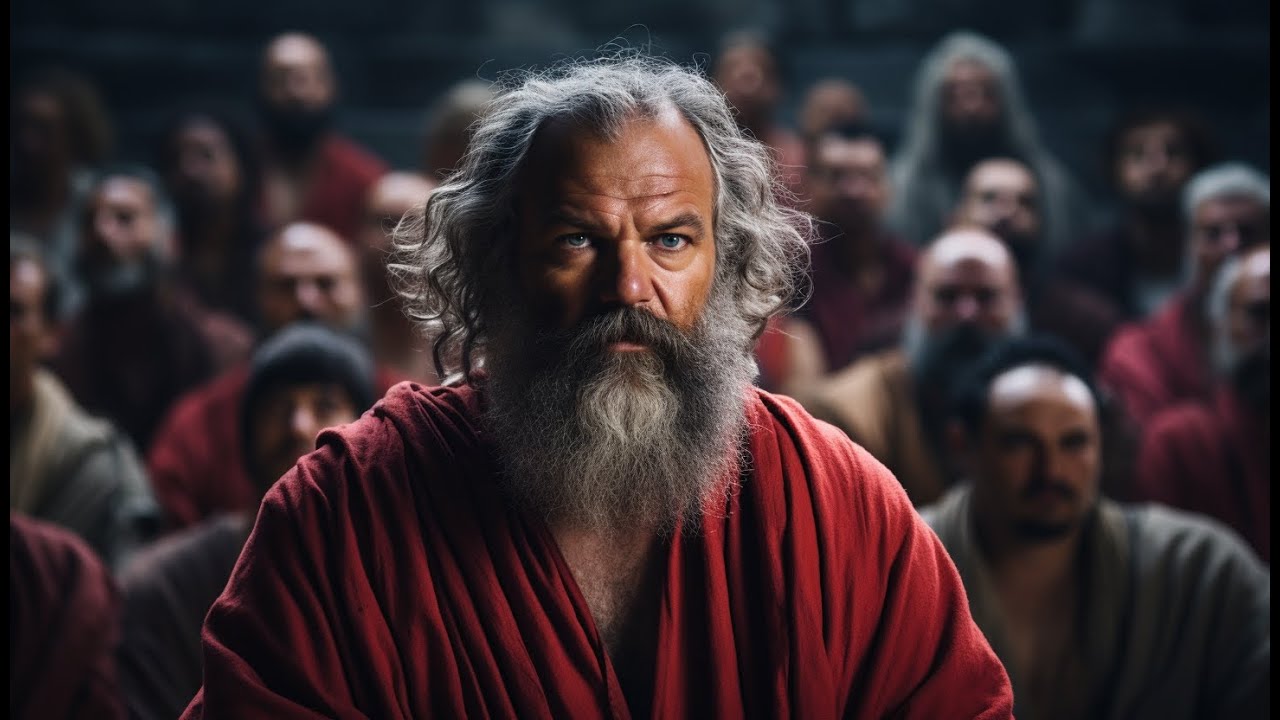
of 501 Athenian citizens as was customary in cases of this magnitude the jury was composed of ordinary citizens not legal experts and Their decision was based as much on rhetoric and persuasion as on evidence in the apology Plato provides a detailed account of Socrates defense speech giving us valuable insights into how Socrates approached the charges against him and how he defended his philosophical Mission rather than pleading for mercy or attempting to win the sympathy of the jury Socrates used his defense as an opportunity to reaffirm his commitment to truth and Philosophy he began by addressing
the long-standing rumors and prejudices against him acknowledging that many people had been influenced by years of slander Socrates explained that his reputation as a corruptor of the youth and a subversive influence had been built over time largely due to his practice of questioning those who claimed to be wise this he argued had earned him many enemies particularly among the powerful and influential in Athens Socrates then turned to the specific charges of impiety and corrupting the youth in response to the accusation that he did not believe in the gods of the city Socrates argued that his
philosophical inquiries were in fact in line with Divine will he recounted the story of the Oracle of Deli which had declared that no one was wiser than and Socrates Socrates explained that his philosophical mission was motivated by a desire to understand The meaning of the Oracle words and to encourage others to pursue wisdom as well in this sense Socrates saw himself as carrying out a Divine Mission and he rejected the claim that he was introducing New Gods as for the charge of corrupting the youth Socrates questioned whether he could be held responsible for the actions
of his students he argued that he had never intentionally harmed anyone and that if he had unintentionally LED anyone astray It was a matter of ignorance rather than malice furthermore Socrates pointed out that many of his students had gone on to lead honorable lives and he questioned whether the actions of a few should be used to condemn his entire philosophical practice throughout his defense Socrates remained defiant refusing to compromise his principles for the sake of avoiding punishment he famously declared that the unexamined life is not worth living a statement that encapsulates his belief That philosophy
and the pursuit of Truth were more important than personal safety or societal approval Socrates argued that he had been a benefactor to the city acting as a gadfly who provoked the citizens of Athens to question their beliefs and seek greater understanding he warned the jury that by condemning him they would only harm themselves as his death would not rid the city of its problems or leave to Greater wisdom Socrates refusal to Pander to the jury Or offer a conventional defense is perhaps one of the most remarkable aspects of the trial unlike many defendants who would
have sought to elicit sympathy or offer a plea for clemency Socrates remained steadfast in his commitment to his philosophical ideals he made it clear that he would rather face death than abandon his mission or betray his principles in this sense his trial became not just a legal proceeding but a public demonstration of His philosophical Integrity despite Socrates eloquent defense the jury found him guilty by a narrow margin under Athenian law both the prosecution and the defendant were allowed to propose a penalty and the jury would then decide between the two the prosecution called for the
death penalty while Socrates in a move that shocked many suggested that he should be rewarded with free me s for life in recognition of his service to the city this suggestion was more than Just a rhetorical flourish it reflected Socrates belief that his philosophical Mission had been beneficial to Athens and that he had acted in the best interests of the city when it became clear that the jury would not accept this proposal Socrates offered an alternative penalty a fine however by this point it was too late to sway the jury's opinion the majority of the
jury voted for the death penalty and Socrates was sentenced to die by drinking Hemlock A common method of execution in ancient Athens Socrates reaction to his death sentence was one of calm Acceptance in the apology and Plato's later dialogue fedo Socrates is depicted as facing his death with composure and philosophical reflection he argued that death was not something to be feared as it was either a transition to a better existence or a state of nothingness neither of which should cause distress Socrates maintained that a just man had Nothing to fear from Death as true harm
came not from external events but from acting unjustly Socrates trial and execution had a profound impact on his followers and on the history of philosophy for his students particularly Plato the trial was a stark reminder of the dangers of living a life dedicated to questioning Authority and challenging conventional beliefs would go on to use Socrates trial as a central theme in many of his dialogues exploring the Tension between the philosopher and the state and the conflict between truth and popular opinion in the centuries that followed Socrates trial became a symbol of the Philosopher's commitment to
truth and virtue in the face of societal pressure his willingness to die for his beliefs elevated him to the status of a martyr for philosophy and his legacy as a thinker who refused to compromise his principles has inspired generations of philosophers Educators and activists in Conclusion the trial of Socrates was not just a legal case but a clash between two different visions of life and Society Socrates represented the life of inquiry truth and moral Integrity while his accusers represented the conventional values of the city concerned with maintaining order and tradition Socrates defense while unsuccessful in
legal terms remains a power ful Testament to the importance of living a life of philosophical Reflection even in the face of death his trial and execution continue to resonate as a powerful reminder of the costs and rewards of living an examined Life part nine Socrates defense apology Socrates defense during his trial as recorded by Plato in the dialogue apology is one of the most compelling speeches in Western philosophy it is not only a defense against the specific legal charges of impiety and corrupting the youth but also a broader defense of his entire Philosophical way of
life the apology captures the essence of Socratic thought his unwavering commitment to truth and his belief in the examined life this part will delve into the key themes of Socrates defense how he framed his arguments and why his approach was so revolutionary from the beginning of his defense Socrates adopts a tone of frankness and sincerity refusing to resort to rhetorical tricks or emotional appeals that might sway the jury in his Favor he acknowledges that many of the jurors have long been prejudiced against him due to rumors and accusations that had circulated for years Socrates claims
that these earlier accusations more than the specific charges brought by meitus anitus and Leo are what have damaged his reputation his philosophical inquiries his habit of questioning people about their beliefs and knowledge had earned him many enemies in Athens especially among the powerful one of the central Points of Socrates defense is that he has never claimed to possess knowledge or wisdom rather he presents himself as someone who unlike his accusers is fully aware of his own ignorance this theme of humility expressed through his famous statement I know that I know nothing becomes a key element
of his defense Socrates argues that his wisdom if it can be called that lies in his recognition that he does not possess the kind of knowledge that others claim to Have he contrasts his own intellectual humility with the arrogance of those who pretend to know things they do not Socrates explains that his philosophical Mission began with the Oracle of Deli which declared that no one was wiser than he puzzled by this pronouncement Socrates set out to test the wisdom of others particularly those who were reputed to be wise through his dialogues with politicians poets and
Craftsmen Socrates discovered that while these Individuals often possessed technical skills or knowledge in certain areas they lacked a deeper understanding of fundamental concepts like justice virtue and the good life this realization LED Socrates to conclude that the Oracle statement was true in a paradoxical sense he was wiser than others only because he recognized the limits of his knowledge throughout the apology Socrates positions himself as a moral and intellectual gadfly a term he uses To describe his role in Athenian Society just as a gadfly stings a horse to keep it awake and alert Socrates believed that
his philosophical questioning was necessary to prevent the citizens of Athens from becoming complacent he saw himself as a servant of the Gods fulfilling a Divine Mission by challenging people to examine their lives and reflect on their beliefs his questioning far from being subversive or corrupting was a form of Public Service Aimed at improving the moral character of the city this idea of Socrates as a gadfly is Central to his defense against the charge of corrupting the youth Socrates argues that he never intentionally harmed anyone and that if he had unintentionally influenced someone in a negative
way it was done out of ignorance not malice he points out that many of his his students and followers have gone on to lead respectable lives and that there Is no evidence to suggest that his teachings have led to widespread corruption furthermore Socrates challenges his accusers to present concrete examples of the harm he has supposedly caused but they are unable to do so Socrates also confronts the charge of impiety or not believing in the gods of Athens he questions the logic of this accusation pointing out that the very Act of engaging in philosophical inquiry And
searching for truth is in his view a form of piety Socrates explains that his philosophical practice is in line with the will of the Gods as evidenced by the Oracle of deli's pronouncement he rejects the claim that he has introduced new deities arguing that his belief in a Divine Voice or dionan that guides him is not an attempt to replace the traditional Gods but rather a personal spiritual experience that complements his belief in divine Providence one of the most striking aspects of Socrates defense is his refusal to compromise his principles in order to avoid conviction
he makes it clear that he is more concerned with doing what is right than with saving his own life Socrates famously declares that the unexamined life is not worth living a statement that encapsulates his belief that the pursuit of Truth self- knowledge and virtue is more important than mere Survival for Socrates to abandon his philosophical mission in order to appease the jury would be a betrayal of everything he stood for in fact Socrates takes his Defiance a step further when He suggests that rather than being punished he should be rewarded for his contributions to Athenian
Society he argues that his philosophical questioning has been beneficial to the city as it has encouraged people to reflect on their lives and strive for Moral Improvement as a reward for his service so humorously proposes that he should be given free meals for life at the public expense a privilege typically reserved for Olympic Champions this suggestion while clearly rhetorical demonstrates Socrates unwavering commitment to his ideals and his refusal to grovel for Mercy when it becomes apparent that the jury will not accept his proposal Socrates offers an alternative penalty a modest fine However by this point
it is clear that so rates has little interest in negotiating for a lesser punishment his primary concern is not with the outcome of the trial but with defending the philosophical life and challenging the city of Athens to think more deeply about its values Socrates defense speech is ultimately unsuccessful and the jury finds him guilty by a narrow margin however rather than feeling defeated Socrates uses the Opportunity to reflect on the nature of justice and the meaning of death in the final section of the apology Socrates addresses the jury once more this time to discuss his
impending execution he reassures the jurors that he does not fear death as he believes that no harm can come to a good person either in Life or after death Socrates argues that death is either a transition to a better existence or a state of peaceful nothingness and in either case There is nothing to fear Socrates calm acceptance of his death sentence is a powerful demonstration of his philosophical Outlook throughout his life he had emphasized the importance of living in accordance with virtue and reason and now in the face of death he remains true to his
principles for Socrates The Pursuit Of Truth and moral integrity was worth more than life itself and his willingness to die for his beliefs elevated him to the status Of a martyr for philosophy in his final words Socrates offers a parting message to those who voted for his conviction he warns them that by condemning him they have harmed themselves more than they have harmed him Socrates suggests that his death will not rid Athens of its problems as there will be others who continue his work of questioning and challenging the status quo he leaves the jury with
a sense of for boing implying that future Generations will look back on his trial as a miscarriage of Justice the apology is more than just a legal defense it is a philosophical statement about the nature of Justice the value of critical inquiry and the importance of living a life dedicated to truth Socrates defense is a profound articulation of the ideals that he had lived by and for which he was willing to die his trial though legally unjust became a defining moment in the history Of Western thought as it exemplified the tension between the philosopher and
Society between the pursuit of truth and the demands of convention Morality In the centuries that followed Socrates defense has been interpreted as a model of philosophical courage and integrity his willingness to stand by his convictions even in the face of death has inspired generations of thinkers activists and intellectuals who seek to challenge authority and question Established Norms the apology remains one of the most important texts in the western philosophical tradition not only for its defense of Socratic philos ophy but also for its Timeless exploration of The Human Condition in conclusion Socrates defense in the apology
was not just a response to the legal charges against him but a broader defense of his way of life and his philosophical Mission his insistence on the importance of the examined life his rejection of Rhetorical manipulation and his acceptance of death in the service of Truth have made his defense one of the most influential speeches in the history of philosophy Socrates Legacy as a philosopher who refused to compromise his principles even in the face of death continues to resonate today as a powerful Testament to the value of critical inquiry and the pursuit of wisdom part
10 death and Legacy The Death of Socrates marked a turning point Not only in Athenian history but also in the development of Western philosophy his execution by drinking Hemlock is one of the most famous events in the annals of philosophy simp symbolizing the conflict between the individual philosopher and the broader Society Socrates death was more than a personal tragedy it was a powerful statement about the cost of intellectual Integrity the dangers of questioning Authority and the enduring value of the examined life After his trial Socrates was sentenced to death by consuming a potion made from
the poison hemlock according to Plato's dialogue fedo which recounts the final moments of Socrates life the philos pher accepted his fate with remarkable calm and composure in his last hours Socrates continued to engage in philosophical discussions with his friends and disciples showing that even in the face of death his commitment to philosophical inquiry never wavered in fedo Plato Portrays Socrates as maintaining his belief in the immortality of the Soul He suggests that death is not something to be feared because it is either a peaceful end or a transition to a a better state of existence
where the soul is freed from the limitations of the body Socrates argued that if one has lived a virtuous life there is no reason to fear death as the soul will be rewarded in the afterlife this Serene acceptance of death reflects Socrates Profound belief in the importance of living a just and virtuous life one that is in harmony with the higher principles of Truth and morality the scene of Socrates death is poignant as it represents the ultimate test of his philosophical principles throughout his life Socrates had emphasized the importance of moral integrity and the pursuit
of truth even at Great personal cost now in his final moments he demonstrated the courage to live and die By those same principles his refusal to flee Athens or compromise his beliefs even when faced with execution set him apart from many other figures of his time for Socrates philosophy was not just an intellectual exercise but a way of life that demanded total commitment in the hours leading up to his execution Socrates friends tried to persuade him to escape from prison offering to bribe the guards and arrange for his safe passage out of Athens However Socrates
rejected this offer arguing that it would be unjust for him to flee he believed that since he had chosen to live under Athenian law he had a duty to accept the consequences of that that choice even if the laws were unjustly applied in his case to flee would be to undermine the very principles of justice and the rule of law that he had spent his life defending this commitment to Justice even in the Face of personal loss is one of the most striking aspects of Socrates philosophy Socrates decision to accept his death sentence can also
be seen as an expression of his belief that moral Integrity is more important than physical survival throughout his trial Socrates had argued that living a virtuous life was the highest good and he demonstrated that belief in his willingness to die for his principles his death became a powerful Symbol of the Philosopher's role in society as someone who challenges conventional thinking and is willing to face persecution for the sake of Truth the legacy of Socrates death extends far beyond his immediate circle of followers his execution shocked many in Athens including those who had supported his trial
some Athenians came to regret the decision to execute him particularly as the years past and his students most notably Plato continued to develop and Spread his ideas Socrates death became a cautionary tale about the dangers of silencing intellectual dissent and the tension between democracy and philosophy in the immediate aftermath of Socrates death his followers were deeply affected by the loss of their teacher Plato who was in his 20s at the time of Socrates execution was particularly shaken by the event Plato would later write a series of dialogues in which Socrates is the main character using
these texts to Preserve and explore his teachers ideas these dialogues including apology kitto fedo and Republic became foundational Works in Western philosophy ensuring that Socrates ideas would be passed down to Future Generations Plato's Works transformed Socrates from a local Athenian figure into a universal symbol of philosophical inquiry and integrity through Plato Socrates method of questioning his focus on virtue and his belief in the importance of the examined Life became Central to the development of Western thought Plato also expanded on many of Socrates ideas particularly in areas like metaphysics and political Theory though it is often
difficult to distinguish where Socratic thought ends and platonic philosophy begins Socrates influence was not limited to Plato another of his students zenfan also wrote extensively about Socrates zenfan portrayal of Socrates while less philosophical than Platos offers a more Practical and downto Earth depiction of his teacher in works such as memorabilia and Symposium zenfan presents Socrates as a moral guide Who provided ethical instruction to his followers through through everyday conversations while zenfan Socrates is less concerned with abstract philosophical questions than Plato's he still emphasizes the importance of virtue and self-discipline Socrates death also had a lasting
impact on Athenian society and the development Of its legal and political institutions his trial and execution raised important questions about the relationship between the individual and the state the role of democracy and the limits of free expression for many Socrates death became a symbol of the dangers of mob Rule and the potential for Democratic systems to suppressed dissenting voices these concerns would later influence political thinkers and philosophers throughout history particularly during Periods of political turmoil and authoritarianism the image of Socrates as a martyr for philosophy someone who willingly gave his life in the pursuit of
Truth became deeply embedded in Western intellectual culture over the centuries Socrates has been seen as a model of intellectual courage moral integrity and the uncompromising pursuit of wisdom his life and death have inspired countless thinkers from ancient philosophers like Aristotle to Modern Figures such as Emmanuel Kant Friedrich nicher and John Paul SRA one of the most enduring aspects of Socrates Legacy is his method of philosophical inquiry known as the Socratic method this approach based on dialogue and questioning continues to be used in education particularly in the fields of law philosophy and ethics the Socratic method
encourages critical thinking self-examination and the pursuit of Truth through conversation it remains One of the most effective tools for fostering intellectual curiosity and moral reflection Socrates influence can also be seen in the development of later philosophical schools such as Stone ISM and cynicism both of which were deeply influenced by his emphasis on virtue and self-discipline the stoics particularly figures like Epictetus and Marcus Aurelius were drawn to Socrates idea that true happiness comes from living in accordance with virtue regardless of External circumstances the cynics like diogenes admired Socrates rejection of material wealth and his focus on
living a simple self-sufficient life in conclusion R's death and Legacy have had a profound and lasting impact on the history of philosophy and Western thought his willingness to die for his beliefs his commitment to moral integrity and his method of philosophical inquiry have made him a symbol of intellectual courage and the Pursuit of Truth through the works of his students particularly Plato and zenfan Socrates ideas have been preserved and expanded influencing generations of philosophers Educators and thinkers his life and death continue to inspire those who seek to challenge conventional wisdom and live a life dedicated
to the pursuit of wisdom and virtue part 11 Socrates influence on Plato and Aristotle the profound influence that Socrates had on his students is most notably reflected in the works of Plato and later Aristotle although Socrates left no writings of his own it is through Plato's dialogues that his idea and methods have been immortalized Plato's philosophical development as well as the subsequent ideas of Aristotle can be seen as deeply rooted in the socratic tradition with both philosophers expanding on Socratic thought in transformative ways in this Part we will examine how Socrates influenced Plato and Aristotle
how his legacy shaped their works and how the Three Philosophers together laid the foundation for Western philosophy Socrates influence on Plato the development of platonic thought Plato was one of Socrates most devoted students and his portrayal of Socrates in his dialogues has had a lasting impact on the way Socrates is perceived in the history of philosophy after Socrates execution PL became determined to preserve and expand upon his teachers ideas in his early dialogues such as apology kitto and ufro Plato presents Socrates as the central figure often engaging in in dialectical debates about ethical and philosophical
issues these dialogues capture Socrates method of questioning his search for definitions of key ethical Concepts like justice virtue and piety and his emphasis on the examined life however as Plato's own Philosophical ideas developed particularly in his middle and later dialogues his portrayal of Socrates began to evolve Plato's middle dialogues including fedo Symposium and Republic present Socratic themes alongside Plato's own metaphysical ideas most notably the theory of forms while these dialogues continue to feature Socrates as the protagonist the ideas expressed are increasingly reflective of Plato's own philosophical system in the Republic For example Socrates engages in
a dialogue about the nature of justice and the ideal citystate but the metaphysical and political Vision articulated is largely Plato's own the theory of forms one of Plato's most significant contributions to philosophy is a development that owes its Origins to Socratic questioning but extends Beyond Socratic thought Plato's Theory posits that the physical world is not the Ultimate Reality but rather a reflection Of a higher unchanging reality the world of forms or ideas according to Plato the forms are perfect abstract entities that exist independently of the material world and everything in the material aterial world is
an imperfect representation of these ideal forms for instance individual beautiful objects in the world participate in the form of beauty which is eternal and unchanging while Socrates was primarily concerned with ethical questions and the pursuit Of moral knowledge Plato expanded these concerns into a metaphysical framework the theory of forms provided Plato with a way to explain the nature of reality and the relationship between knowledge and perception although Socrates himself did not articulate such a theory his focus on defining ethical Concepts and seeking Eternal truths laid the groundwork for Plato's metaphysical speculations in this sense Plato's
philosophy can be seen as an extension And systematization of Socratic thought another important way in which Socrates influenced Plato was through his conception of the Philosopher's role in society in the Republic Plato develops the idea of the philosopher king a ruler who possesses both wisdom and virtue and is therefore uniquely qualified to govern the ideal citystate this idea is rooted in Socratic principles particularly the belief that only those who possess true knowledge of the good Should be entrusted with power Socrates criticism of Athenian democracy which placed decision-making in the hands of ordinary citizens who lacked
philosophical wisdom is reflected in Plato's vision of a hierarchical society where Phil philosophers rule based on their knowledge of the forms at the same time Plato's political ideas go beyond those of Socrates while Socrates was critical of the democratic system he did not advocate for a specific political Structure Plato however develops a detailed political theory in the Republic outlining the structure of an ideal state governed by philosopher Kings in this ideal State the rulers possess knowledge of the forms particular particularly the form of the good and their governance is Guided by this knowledge Plato's idealism
in this regard is a natural outgrowth of Socratic thought but it represents a significant philosophical leap beyond The concerns of Socratic ethics Aristotle's relationship to Socratic and platonic thought Aristotle a student of Plato was also profoundly influenced by Socratic philosophy although his approach diverged significantly from both his teacher and socr ities while Plato and Aristotle shared a common intellectual lineage through their engagement with Socratic ideas Aristotle's method and conclusions marked a shift towards empiricism and a More practical approach to philosophy like Socrates and Plato Aristotle was deeply concerned with questions of Ethics virtue and the
nature of the good life however while Plato emphasize the importance of abstract Transcendent forms Aristotle rejected the theory of forms and focused instead on studying the natural world and Human Experience Aristotle believed that knowledge could be gained through observation and reasoning about the physical world and He saw no need to posit a separate realm of abstract entities in contrast to Plato's metaphysical idealism Aristotle developed a more empirical and grounded approach to philosophy emphasizing the importance of studying the natural world in order to understand reality Aristotle's ethical Theory known as vir ethics was heavily influenced by
Socratic ideas but was developed in a more practical Direction like Socrates Aristotle believed that virtue was Central to living a good life and he agreed that virtue could be cultivated through knowledge and practice however while Socrates often focused on the intellectual aspect of virtue arguing that knowledge is necessary for virtuous action Aristotle placed greater emphasis on the development of moral character through habit and experience in his nikom makian ethics Aristotle argues that virtue is a mean between extremes of excess and deficiency and that Virtuous behavior is cultivated through practice and moderation one of Aristotle's key
contributions to ethical theory is his concept of udonia often translated as flourishing or happiness for Aristotle the ultimate goal of human life is to achieve udonia which is attained by living in accordance with virtue this idea is reminiscent of Socrates belief that the pursuit of virtue leads to a good and fulfilling life but Aristotle provides a more Detailed account of how virtue is developed and how it leads to human flourishing Aristotle also distinguished between intellectual virtues such as wisdom and moral virtues such as courage and Temperance arguing that both types of Virtues are necessary for
achieving udonia Aristotle's political philosophy also reflects his engagement with Socratic and platonic ideas in his work politics Aristotle examines different forms of government and argues that the Best form of government is one that promotes the common good and allows citizens to live virtuous lives like Plato Aristotle was critical of Athenian democracy but he did not advocate for rule by philosopher Kings instead Aristotle favored a mixed Constitution where different classes of society are represented and where the rule of law is Paramount his more pragmatic approach to politics contrasts with Plato's idealism Reflecting Aristotle's broader emphasis on
empirical observation and practical wisdom the lasting influence of Socratic thought the relationship between Socrates Plato and Aristotle represents one of the most important intellectual lineages in the history of philosophy Socrates method of questioning his EMP emphasis on ethical inquiry and his belief in the examined life provided the foundation for both Plato's idealism and Aristotle's empiricism while Plato and Aristotle each developed their own distinct philosophical systems they both owed a great intellectual debt to Socratic thought the influence of Socrates on Plato and Aristotle can also be seen in their shared concern with the role of Reason
in human life for all three philosophers reason was the key to understand in the world achieving moral virtue and living a good life while they differed in their views on the nature of reality and the specifics of ethical Theory they all agreed that the pursuit of knowledge and wisdom was the highest calling of human life Socrates influence did not end with Plato and Aristotle through the works of these two philosophers Socratic ideas became Central to the development of Western thought Plato's dialogues ensured that Socrates method of inquiring would remain a Cornerstone of philosophical education while
Aristotle's more empirical approach influenced the Development of science logic and ethics together Socrates Plato and Aristotle laid the foundation for much of Western philosophy and their ideas continue to shape intellectual discourse to this day in conclusion the influence of Socratic thought on Plato and Aristotle is a testament to the enduring power of Socratic philosophy through Plato's dialogues Socrates ideas were preserved and expanded while Aristotle's more empirical approach offered a new Direction for philosophical inquiry the intellectual Legacy of Socrates as mediated by his students remains one of the most significant contributions to the history of philosophy
shaping the way we think about ethics knowledge and the nature of Reality Part 12 Socrates enduring Legacy in Western philosophy Socrates influence did not end with his death in 399 bcee his philosophical contributions methods of inquiry and moral convictions Have had a lasting impact that continues to shape Western thought today from ancient times through the Middle Ages the Renaissance and into the modern era Socrates ideas have inspired countless philosophers Educators and thinkers across disciplines in this final section we will explore Socrates enduring Legacy examining how his influence has persisted through various epics of intellectual history
and how his philosophical methods and ethical Principles continue to resonate in contemporary Society the legacy of the Socratic method perhaps Socrates most lasting contribution to philosophy is the method of inquiry that bears his name the Socratic method this approach characterized by a process of questioning and dialogue remains a Cornerstone of philosophical education it involves engaging in dialectical discussions aimed at uncovering assumptions clarifying Concepts and Seeking definitions of ethical or philosophical ideas the Socratic method has become especially influential in modern legal education where it is used to train students in critical thinking and reasoning law professors
often use the method to challenge students to think on their feet question their assumptions and defend their positions logically and coherently ly this method emphasizes the importance of asking the right questions rather than merely Providing answers a principle that reflects Socrates belief that the pursuit of Truth is an ongoing process in addition to its impact on legal education the Socratic method has been adopted in various academic fields and is often used as a pedagogical tool in teaching ethics philosophy and critical thinking by encouraging dialogue and inquiry the method promotes intellectual humility and the recognition that
knowledge is Not simply a matter of memorization but of active engagement with ideas the open-ended nature of Socratic questioning has influenced the structure of modern universities and the way subjects like philosophy and ethics are taught influence on ethical and political thought Socrates focus on ethics and the nature of virtue continues to shape moral philosophy his Central belief that virtue is tied to knowledge that to know The good is to do the good has inspired various ethical theories throughout history this connection between wisdom and morality formed the basis for later philosophical schools such as stoicism which
emphasized self-discipline and living in accordance with nature and cynicism which advocated for a life of Simplicity and rejection of material wealth stoicism particularly as it developed under figures like Epictetus and Marcus Aurelius Drew heavily from Socratic ideas stoics believed like Socrates that virtue was the highest good and that external circumstances wealth status and even physical suffering were secondary to the cultivation of a virtuous character the stoics also embraced Socrates idea that true wisdom lies in recognizing one's ignorance encouraging a philosophy of intellectual humility and moral Clarity Socrates influence on political thought is equally significant His
criticism of Athenian democracy and his belief in the importance of moral knowledge in governance laid the groundwork for political philosophers like Plato who advocated for rule by philosopher Kings while Plato's political ideas were more radical than those of Socrates the underlying Socratic conviction that political power should be grounded in virtue and wisdom has continued to resonate in debates about Justice governance and the role of Leaders in the modern era Socratic thought has influenced social contract theorists like Thomas Hobbs John Loch and John jock rouso these philosophers grappled with questions about the relationship between the individual
and the state the nature of justice and the role of law much as Socrates had during his trial Socrates emphasis on the individual's responsibility to question authority and examine societal Norms can be seen in Russo's critiques of Inequality and in Lock's ideas about the consent of the governed the Martyr do of Socrates and the model of the philosopher Socrates death in many ways cemented his legacy as a martyr for philosophy his willingness to die for his beliefs rather than compromise or abandon his philosophical Mission set a powerful example of intellectual courage and integrity in Western
culture Socrates became the archetype of the philosopher someone who pursues Truth at All costs regardless of the consequences this ideal of the philosopher as a moral Exemplar who lives in accordance with their principles has had a profound impact on subsequent thinkers Socrates life and death inspired philosophers throughout history to take up the mantle of Truth seeking and to challenge prevailing Norms his legacy can be seen in the lives of later figures such as the stoic philosopher Epictetus the Roman Statesman Sena and early Christian thinkers like St Augustine during the ren renissance Socrates image as a
Marty for philosophy was revived by thinkers who saw in him a model of The Virtuous life Renaissance humanists such as arasmus and Montaine admired Socrates for his intellectual humility and his commitment to self-examination they celebrated his example of living a life dedicated to wisdom and virtue seeing it as an ideal To Aspire to in their own search for moral and intellectual Clarity Socrates willingness to question authority and challenge established Norms also resonated with Enlightenment thinkers who valued reason critical inquiry and individual rights Vol and Emmanuel Kant for instance Drew inspiration from Socratic thought in their
critiques of dogma and authoritarianism K's emphasis on moral autonomy the idea that individuals must act according to Principles they can rationally endorse can be traced back to Socratic eth ethics and the notion of living a life based on reason Socrates in modern philosophy Socrates influence continues to be felt in modern and contemporary philosophy his method of questioning and his focus on ethical self-examination have shaped existentialist thought particularly in the works of philosophers like sain kard Friedrich nicher and John Paul satra kard often Regarded as the father of existentialism saw in Socrates a model of ethical
subjectivity the idea that individuals must take responsibility for their own moral choices and live authentically for kard Socrates represented the ideal of the individual who remains true to their inner convictions in the face of external pressures ner while critical of many aspects of Western philosophy also acknowledged the significance of Socrates as a transformative figure in The birth of tragedy n describes Socrates as the turning point in Greek culture marking the shift from a worldview dominated by myth and tragedy to one centered on reason and dialectic although n had a complicated relationship with Socratic thought criticizing
Socrates emphasis on reason at the expense of the instinctual and artistic he recognized the profound impact Socrates had on the trajectory of Western intellectual history in the 20th Century Jean Paul satra and other existentialists embraced Socrates emphasis is on personal responsibility and the importance of questioning established norms for satra the socratic imperative to examine one's life echoed his own existentialist belief in radical Freedom the idea that individuals are always responsible for defining the meaning and purpose of their lives through their choices Socrates example of living authentically even in the face Of death inspired sra's vision
of existential courage Socrates in education and and contemporary thought Socrates Legacy is not confined to the Realms of philosophy and ethics his emphasis on dialogue critical thinking and self-examination has had a profound impact on education the Socratic method is still widely used in classrooms to encourage Active Learning and intellectual engagement in particular law schools and philosophy Departments around the world use Socratic questioning to teach students how to think critically engage in reason debate and analyze complex issues in contemporary Society Socratic questioning has taken on a broader cultural significance the rise of movements that encourage critical
thinking skepticism and the examination of societal Norms whether in the Realms of science politics or ethics can be traced back to Socratic principles Socrates example of challenging Authority and questioning assumptions remains relevant into today's world where issues like social justice environmental ethics and political accountability are increasingly at the Forefront of public discourse Socrates commitment to intellectual humility the recognition that we do not possess all the answers also resonates in an age of information overload and misinformation his philosophy encourages Individuals to remain skeptical of easy answers to engage in dialogue and to continually seek a deeper
understanding of complex issues this attitude is especially relevant in our modern world where the ability to think critically and engage in productive dialogue is more important than ever conclusion the enduring Legacy of Socrates Socrates influence on Western philosophy is unparalleled his method of questioning his commitment to The Pursuit Of Truth And his ethical teachings have shaped the course of intellectual history for more than two millennia through his students particularly Plato and Aristotle Socrates ideas have been transmitted and expanded forming the foundation for much of Western thought yet Socrates Legacy goes beyond philosophy he has become
a symbol of intellectual courage moral integrity and the importance of living an examined life his death far from silencing his Ideas elevated him to the status of a martyr for philosophy inspiring generations of thinkers Educators and citizens to question authority seek truth and live according to their principles in the end Socrates greatest contribution may not be any single philosophical Doctrine but his example of how to live a life dedicated to the pursuit of wisdom his insistence on the importance of dialogue Self-examination and intellectual humility remains as relevant today as it was in ancient Athens Socrates
enduring Legacy challenges each of us to engage critically with the world around us to question our assumptions and to strive for a life of meaning and virtue