hey crazies electronics are pretty amazing indoor lighting computers phones calculators televisions hearing aids but none of that would be possible without electric current it's kind of the life essence of electronics and every school kid knows that current takes the path of least resistance right well that rule is actually kind of wrong [Music] okay to be fair it's not a hundred percent wrong maybe more like 50 it it could use some improvement is what i'm saying hmm maybe we should start with a demonstration experiment clone your time okay you talk i work that's the plan okay
switch on one of your light bulbs isn't bulbing well no it's causing it to start [Music] here's a relatively simple circuit all these light bulbs are connected by wires on both sides the circuit diagram would look something like this there's also a multimeter so we can measure any electric current we want these bulbs have different wattage ratings which means they have different resistances if the current takes the path of least resistance we'd expect it to pass through this ball so let's measure the electric current in each bulb and see what happens [Music] [Music] [Music] as
we can see the current did take the path of least resistance but it also took every other path it took every closed path that was available and that makes perfect sense if you think about it if water was flowing slowly and steadily down a stream but encountered a split you wouldn't expect the water to only take the bigger path it's gonna take both the same thing happens with electric current in a circuit if there's a path it can take it's gonna take it it went through every available path in this circuit it just didn't do
that in equal amounts there's more current in the paths with less resistance so let's try rewriting this rule current takes the path of least resistance incorrect more current takes the path of less resistance but some current takes each and every path it's not nearly as catchy as the original but at least it's correct maybe an acronym fuller bisque tape nope never mind where was i oh right uh to understand this rule we need to dig a little deeper electric current or just current for short is the flow of electric charge you can imagine a bunch
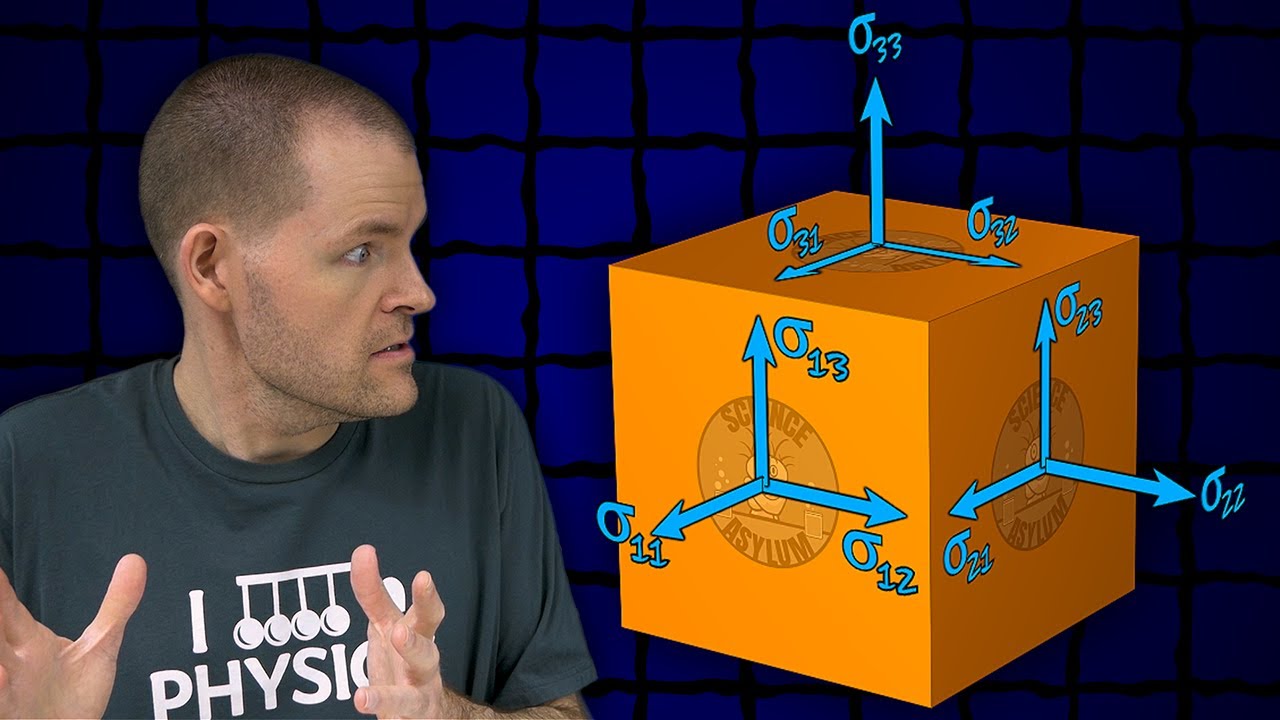
of tiny balls or some kind of fluid neither is 100 accurate but they're both good enough for today this charge does obey certain rules fundamental rules like the conservation of charge in science conservation just means keeping things the same so conservation of charge just means the amount of charge stays the same conservation of electric charges and no exceptions this time because quantum mechanics seriously i did a whole video on it if you can handle some math speaking of math here's the conservation of charge yes i know that can look a little overwhelming if you've never
seen anything like this before perfectly normal reaction but i'm gonna explain every little individual piece and we're gonna visualize them as we go so it'll make sense by the time i'm done okay so this greek letter rho is charge density that's how closely packed the charge is if it's tightly packed then the density is big if it's loosely packed the density is low this t on the bottom stands for time which means this whole fraction is how density changes in time if the density isn't changing the fraction is zero if the density is going up
the fraction is positive if the density is going down the fraction is negative not so bad so far right we all kind of understand how density works next this triangle right here means changes in space when that triangle is followed by a dot we're only concerned with into and out of a space for all you math nerds out there we're talking about divergence the j is the electric current remember that's just the flow of electric charge that means this whole thing tells us how much charge is moving into or out of a space visually let's
imagine a sphere in closing a volume of space if charge is flowing into the sphere we get a negative number if charge is flowing out of the sphere we get a positive number if just as much charge flows in as flows out we get a zero answer now let's put it all together all this equation says is that if charge is getting more or less dense in one spot over time then that's because charge flowed into or out of that spot seriously that's it that's all it says electric charge can't be created or destroyed so
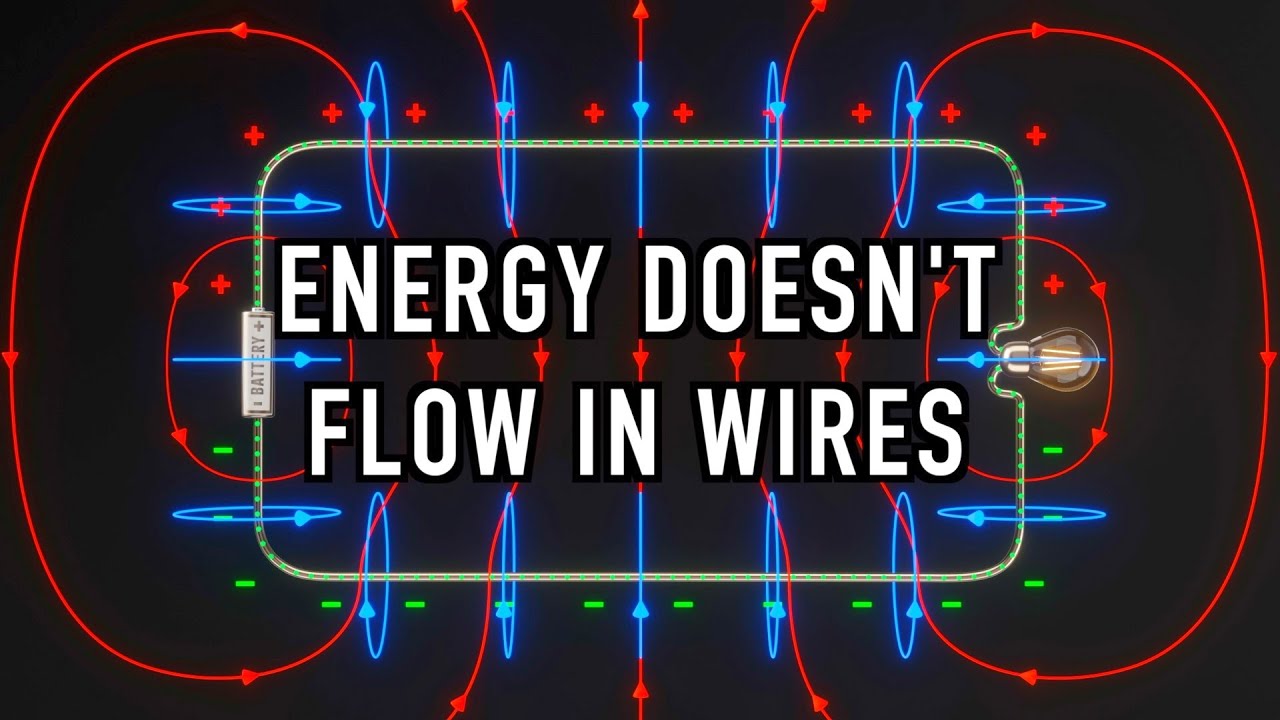
we know any change in density is the result of a flow and net flow is how all electronics work that's why we call it electronics they're based on the flow of electrons circuit design is all about predicting where this electric current will go back in 1845 a guy by the name of gustav kirkoff based one of his circuit laws on this principle of charge conservation but he made one more assumption so what's this extra assumption he made that the electric current is very well behaved he assumed that every part of a circuit has a consistent
amount of charge it's not going to bunch up anywhere or pop out of the circuit the flow is nice and steady to put this in terms of what we were just talking about he assumed the charge density doesn't change how accurate is that well pretty accurate actually i mean it's not always true off the top of my head a high voltage long distance lines are an exception the charge actually bunches up and spreads out in a kind of wavy pattern but that's an extreme case for ordinary everyday electronics steady current is a reasonable assumption and
that leaves us with just the flow term and the conservation of charge the total flow into or out of a volume is zero or better yet the flow into a volume equals the flow out of that volume since electric current is that flow we can say the current in equals the current out that's kirchhoff's current law or kirchhoff's junction rule as i like to call it it goes by a lot of names what's a junction it's kind of like a fork in the road you mean like this no no no not literally a fork in
the road it's a metaphor it's just a visual analog see it kinda looks like the prongs of a fork anytime there are three or more wires coming together at a single point we call it a junction say there's an imaginary sphere surrounding a junction no matter what the current entering that sphere must equal the current that exits we know that because of kirchhoff's junction rule technically it applies everywhere including the middle of a straight wire that just isn't very interesting we don't actually need the rule unless there's a junction if a single charge comes across
a junction it has to make a choice which path does it take we don't know what each individual charge will do in that situation it's random but not equally random we do notice some patterns when we look at what a bunch of charges will do remember more current takes the path of less resistance but some current takes each and every path if we know the resistances of each path we can make a prediction about how much current will go that way more resistance means less current and vice versa as you can see the new rule
matches our experiment really well just remember every path is going to have some current in it including birds on power lines power lines are not insulated so even though they have less resistance than the bird there is a little current passing through that bird i wonder what that feels like how shocking was this news about the current rule let us know in the comments thanks for liking and sharing this video a special thanks goes out to all my patreon patrons and youtube members for making all this possible don't forget to subscribe if you'd like to
keep up with us until next time remember it's okay to be a little crazy we're done now right i can stop working yep okay cool oscar said he would have been happier if we had mentioned the word mass at least once in the last video i was trying to keep the video focused on weight versus normal force mass isn't even a force so it can't be measured on a fourth scale although based on the bad comments i've been getting maybe that was a mistake anyway thanks for watching