oh this current starts ready hopefully it gives you hints of why the voltage across the two resistor doesn't happen to be the same you can when you have resistors in series across a battery we find that the voltage across it is not the same but the current everywhere stays the same why does that happen it's as if the circuit is conspiring for some reason to keep the current same and that's why keeping the voltage different but why how does it do that how does it actually put the voltage that's the question that you asked me
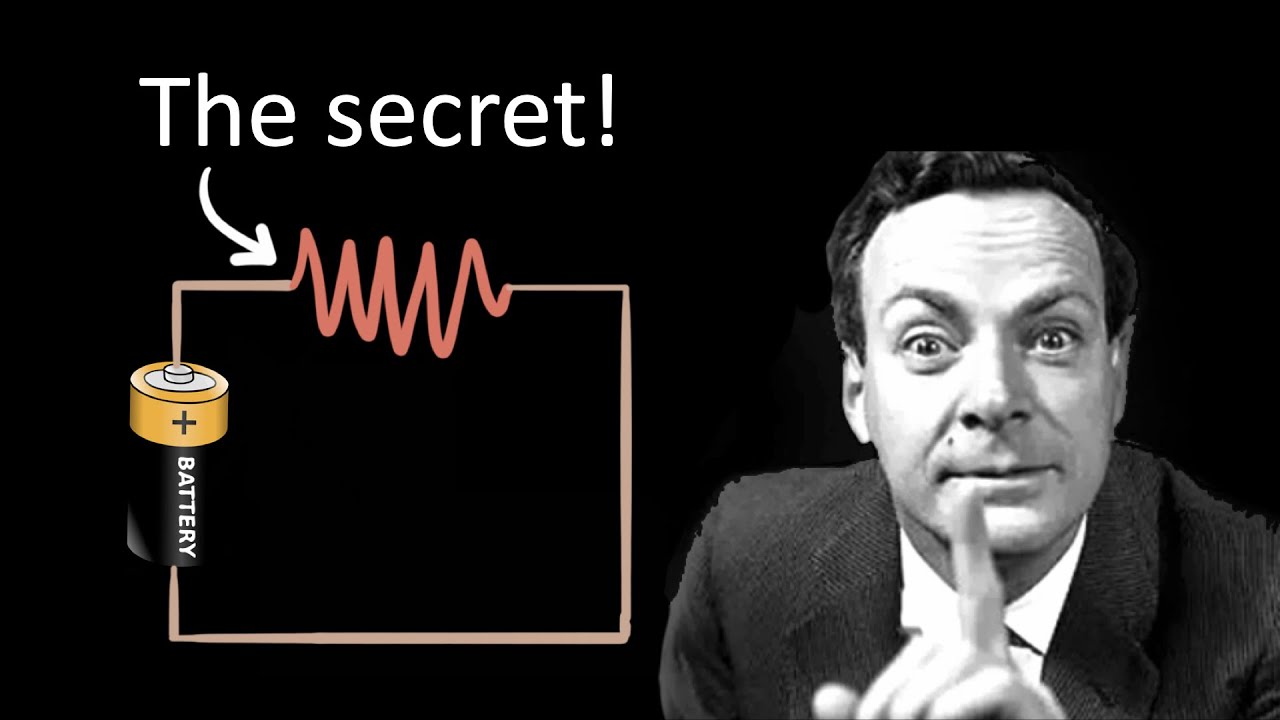
that's the question we're going to answer and to answer this question we're going to look at a moment a moment just after closing the circuit that moment lasts for a few milliseconds but this is the moment during which the current is not the same everywhere the voltage is not yet formed things are still chaotic the circuit is still trying to figure out what to do it's a very complicated moment this is the moment that's completely skipped in your syllabus it's completely skipped in your curriculum but it's this moment that has all the secrets to unlock
the Mysteries that we're trying to solve and therefore this entire video will be dedicated to this very very small moment that that occurs just after closing the circuit and that small moment which lasts for a few milliseconds we give it a name we call it the transient stage or the transience so let's look at the transient stage in this entire entire video so we have just closed the switch we have closed our circuit and let's slow down time what's going to happen well we have electrons everywhere and these electrons have not yet started moving we
have yet to have a current we've yet to have a voltage what's going to happen to these electrons well the battery is going to start pulling and pushing on them the negative charge is going to push on the electrons the positive charge is going to pull on the electron so there'll be a force that every single electron will feel due to the battery and all these forces are pretty much the same right now the battery is not conspiring to do anything the battery doesn't care where the resistors are the forces are the same what's going
to happen because of that well now the electrons will start moving and we're going to have a current if you look at this section of the wire with no resistance the electrons are going to go very very high speed and therefore we're going to have very very high current so we'll have huge current in these sections of the wire which have no resistance I'm going to draw thick wires thick lines of current for that what about this section of the wire which has some resistance well electrons are going to go also lower they're gonna find
a little harder to go and therefore the current over here will be smaller and I'm going to draw a little thinner Direction little thin Arrow mark and what about this section of the wire it has the maximum current and so they have transfinded very hard to flow through and therefore it'll have the least current so we'll have a very tiny current I don't [Music] know and at this moment right in front of your eyes you can see in the transient stage the current is not the same everywhere this is the stage where the electrons are
experiencing the same Force as of now but the current is not the same and eventually later on by the time you open your textbooks when the circuit is settled down we will go from this stage to a stage where the current rate stays the same but you'll find that the forces on the electrons are different and so the whole idea is to see how we go from here to there automatically how does it happen Okay to see how that happens we need to look at the ends of the resistor that's where things are interesting because
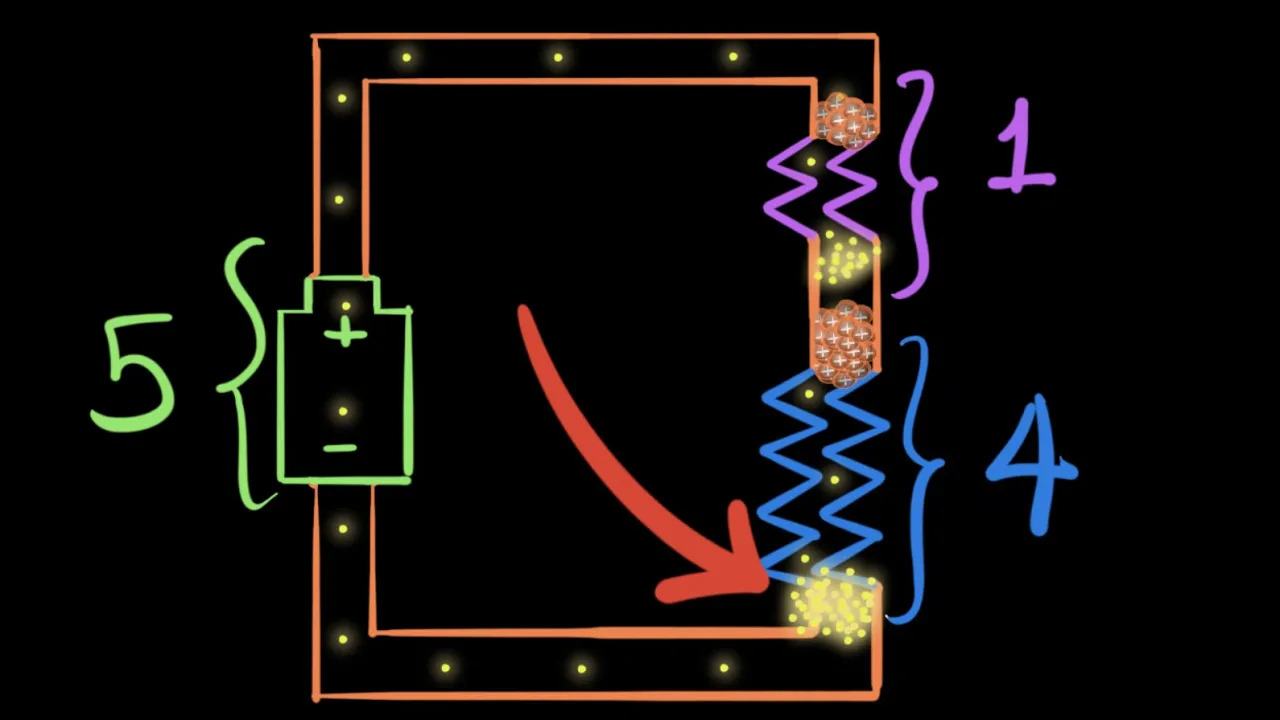
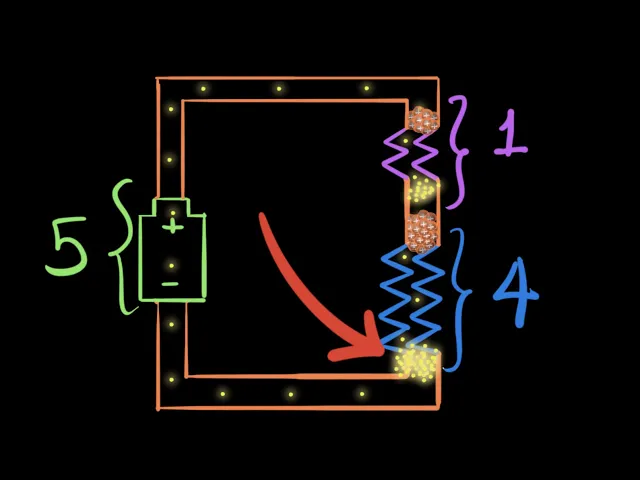
that's where the current changes right so let's look at the ends of this resistor if I focus on this end you can see electrons are coming in at very high speeds a lot of electrons will be coming in per second but the electrons going out of this point into this resistor will be less per second what's going to happen because of that because because of that you will have traffic jam you'll have electrons getting accumulated over here imagine you have 10 electrons coming in per second and only two electrons going out per second eight electrons
will get accumulated right so you have electrons accumulated which means you have negative charges accumulated let's draw that so here are our negative charges getting accumulated and similarly what's going to happen here you have electrons going out of this point very quickly but you have less electrons coming into that point and therefore the opposite effect is going to happen it will be deficient of electrons and therefore you'll have positive charge on this end so you have charge accumulation happening at the ends of the resistor the same thing is going to happen over here as well
but my question to you is do you think the charges accumulator here would be more than what we get over here less or it's going to be the same what do you think well because the difference in the current is much higher here than over here the effect is Amplified so if I look at over here you have a lot more electrons flowing in per second and a lot less electrons flowing out and therefore you'll have a lot more charges accumulated a lot more negative charges being formed okay per second any given moment in time
you'll have a lot more charges accumulated I'm going to draw so many so that we can clearly see the difference between these two and right at this moment hopefully it gives you hints of why the voltage across the two resistor doesn't happen to be the same you can sort of see why the voltage across the bigger resistor starts becoming more than the voltage across this resistor can you see that but anyways we're getting ahead of ourselves it's just hint that's we're still not solved anything the question now is what's going to happen because of these
accumulated charges these are going to have a huge role to play they're going to have a very important role in what happens next what are they going to do how are they going to affect our circuit well see so far the electrons were experiencing a force the the force only due to the battery right but now these charges are also going to start influencing these electrons they're also going to start pulling and pushing on them as a result the forces will change as a result the current will start changing how will it change let's look
at each section of the wire if I look at this section of the wire notice the electrons are running into negative charges the negative charge is going to repel it it's going to push away from it so what's going to happen to this Force that is going to be smaller so this force will be smaller I'm going to draw a smaller Force what happens to this one notice electrons are moving away from the positive charge the positive charge is going to pull it back which means again the net force is going to be smaller this
force is also gonna be smaller same thing is going to happen over here as well the forces in this reduce the same thing happens here so what happens to these currents this current starts reducing this current over here starts reducing I'm going to draw a smaller error mark or let me just write reduce reduce current reduce current reduce so these currents are going to start reducing what happens to the current in the resistor well for that let's look at the forces in the resistor what's going to happen well if I look over here notice this
electron is being pushed away uh by the negative charge and pulled towards the positive charge which means the electron is going to experience more Force the forces are going to add up can you see that as a result as a result this force is going to be larger the force on the electrons over here adds up due to the accumulated charges what's going to happen here the same effect but even more magnified even more magnified you the electrons are going to be repelled are going to be attracted and so the force due to the charges
is going to add up to this force and therefore this Force I'm going to draw that over here now so I can draw big out of Mark okay that force is going to get Amplified so it's going to experience even more Force inside the resistor and as a result what happens to these currents oh that current is going to increase so this current is going to increase and this current is going to increase and the stage is set couple of things are going to happen first you see the high currents are becoming lower and the
low currents are becoming higher the second thing which is a slightly subtle even though that's happening as long as the currents here stay higher than the currents here the charge accumulation continues to happen which means as time passes by the effect only gets Amplified the current over here reduces even further even more quickly the currents over here is going to increase even more quickly so not only are these current levels coming closer to each other but as time passes by because the charge accumulation increases the current levels are coming closer to each other quicker and
quicker and that gives you some insights into why the transients only last for a very small moment this is happening super fast in milliseconds this all happens and now we can answer our questions what causes the voltage across the resistors in the first place how does the battery put voltage notice the battery doesn't put any voltage it doesn't transfer any voltage at all the voltage across the resistor is set up due to the charges accumulated due to the differences in the current that's how the voltages are set up over here and because bigger resistors have
more charges accumulated across its ends because there's more current difference automatically you end up with More Voltage why do we say there is more voltage because these accumulator charges are pushing more on the electrons transferring more energy into the electrons and therefore we say there is a higher voltage across this resistor whereas there is lower voltage across the smaller resistor you see that do you see how it automatically have happens if this resistor is let's say four times as big as this resistor the charge accumulated will also be four times as big as this resistor
and therefore the push that will get over here will be due to the charges will be four times as much as what we get over here and therefore the voltage across this will also be four times as much as the voltage across over here that's why the voltage splits in ratio of what the resistances are okay so we have voltages that are rising inside the resistor we have voltage over here four times as much the voltage over here we have the currents trying to equalize when is it all going to stop well eventually there comes
a point when the current here in this section of the wire exactly equals the current in the resistor why would that happen because until that happens charges will keep on getting accumulated and forcing this current to increase forcing the current to reduce So eventually that situation must happen if one thing is reducing and another thing is increasing continuously eventually at some point in time they must equalize right so that moment has arrived the current now has equalized everywhere when the current is equalized when the current is the same throughout the circuit we will find that
the forces over here are very high much higher in the bigger resistor compared to the smaller resistor and the force is inside the wire is almost zero in fact if this is a perfectly resistance less wire we would have zero force and the reason for zero force is because if there is any Force the electrons will accelerate to insanely high speeds and again the current would be very high again the charge accumulation would happen and it will not allow that so until the forces are completely canceled out in this wire the charge accumulation continues to
happen but once the forces are all canceled out the current has equalized the forces over here have disappeared only forces exist inside the resistor and now the charge accumulation stops it no longer continues I didn't inside the accumulated charges disappear of course they're there they're the ones that are providing the voltage but it doesn't continue to increase anymore they stay wherever they are the transients are gone the transient is done we have now reached the things that you see in your textbook we've reached the steady state and in the steady state we have the same
current we have different voltages we have if you this resistance is four times as big as this resistance we have four times as much voltage in this compared to this and therefore the voltage of the battery gets split in the ratio 4 is to 1. what I find fascinating is that it's the chaotic moments the transients that last for a few milliseconds which is mostly ignored it's these transients that hold the key to understanding how the voltage at the current gets set up in a circuit let me know in the comments what other Mysteries should
we be diving into next until then see you




![Why less energy means more stability? [Pure Logic]](https://img.youtube.com/vi/76n7BmqAeOs/maxresdefault.jpg)