Thanks to Astro Space for sponsoring this content. Learn more at the end of this video. Comets are regular visitors to the inner solar system.
Some are spectacular, known as Great Comets, which are visible to the naked eye , sometimes stretching across a large part of our sky. Yet most comets come and go without much fanfare, invisible to the naked eye, and we wouldn't even be aware of them if it weren't for telescopes constantly monitoring sections of our sky. Billions of comets are believed to exist in our solar system.
And we can classify them into three categories: short term, intermediate and long term. Short-period comets orbit to Jupiter. Intermediate comets can be found around Neptune's orbit and in the Kuiper belt .
And many more beyond that are found in the Oort cloud, which are known as long-period comets. Comets tend to have very elliptical orbits, with most taking tens of thousands of years to orbit around the sun. Due to their tiny size and great distance from us, most are only discovered when approaching the Sun in their orbits.
The volatile material on its surface, such as water ice and carbon dioxide, heats up as it approaches the Sun, sublimating into space and producing its glowing coma, especially the most famous ones: the tailed comets. This makes it much easier for astronomers to detect them, but once they revolve around the Sun and back toward the outer solar system, we usually never see them again, at least not in our short life cycle. Most of the Great Comets we see are long-period comets, which means we'll only see them once in their millennial orbits.
All but one: Comet Halley. Although Halley is an intermediate period comet, each orbit always produced a fantastic spectacle for those who observed it, making it the only great intermediate period comet . Its orbit takes about 75 years, which means someone can see it twice in their lifetime.
And, incredibly, there are records of Halley's comet dating back to 467 BC. With our scientific advances ensuring regular and predictable observation of these events illuminating our night skies, it's no surprise that, approaching the 1980s, many space agencies expressed a keen interest in the chance to get a close-up view of the core of a Great Comet for the first time. And the result?
Something known as the "Halley Armada". I'm Dennis Ariel, and you're watching Astrum Brasil, and together we'll investigate the history of Armada Halley, and unravel all the discoveries about this object that sparked interest in astronomy around the world. The Halley Armada is the unofficial name of five separate missions from three different space agencies that approached the comet at almost the same time.
The probe called Giotto was an ESA mission, Vega 1 and 2 came from a partnership between the Soviet Union and France, and the latter two, Suisei and Sakigake, came from ISAS, later known as JAXA, or Japanese space agency . Each of them has a very interesting story. We'll start with Vega 1 and 2.
Designed primarily to launch probes on Venus, the Vega mission had its mother ship redirected to Comet Halley using Venus's gravitational assistance to ensure a timed flyover. This gravitational aid has proven very useful not only because of the speed boost the probes gained from overflying the planet, but particularly important as Comet Halley has an unconventional orbit that makes an encounter very complicated. Its orbit is highly elliptical, retrograde compared to planets in our solar system , and tilted 18° to the ecliptic, meaning that it is most often below or south of the solar system's plane.
They were twin probes; two identical spacecraft launched from Kazakhstan within a few days. They arrived on March 6 and 9, 1986, respectively. These two probes, while perhaps not the highlight of the armada, collected a host of data, including photos of the comet's core, observations of its temperature, its surface properties , and the coma's composition.
Both flew by Halley at a distance of just 8,000 km. But, interestingly, their positioning data were then passed on to the Giotto rig team , which was due to arrive a few days later. This allowed Giotto a much greater precision in overflying Halley's Comet, at an altitude of just 600 km!
But before Giotto arrived, the Japanese space agency probes were approaching. This was Japan's first space mission, and as such, the Suisei and Sakigake probes were pretty basic; they were more a demonstration of the launch vehicle than the probes themselves . Sakigake was launched first and didn't even have a camera on board, but instead had instruments to measure magnetic fields and plasma in interplanetary space.
After the success of the Sakigake spacecraft, Suisei was launched a few months later, but this time with an image capture system and a solar wind detection instrument. Japanese scientists were interested in the comet's massive coma, which was photographed continuously as Suisei passed it on March 8, at a distance of 150,000 km from the comet's core. Even at this distance, Suisei hit two dust particles during his flyover.
In its closest approach on March 11, the Sakigake spacecraft observed everything from a much greater distance : about 7 million km. Then it was ESA's turn. On March 13, Giotto made the most ambitious flyover of all time.
Equipped with a color camera, scientists were eager to get their first close-up view of a comet's core. Flying just 600 km over a very active comet, scientists feared the spacecraft would not survive. A protective shield was installed in order to avoid collisions with the most important scientific instruments in the body of the probe.
As it approached, the Giotto probe took many pictures, as can be seen in this interpolated motion video. An incredible record for the 1980s! However, shortly after this approach, and just as the scientists feared, Giotto was hit by some particles that made her spin out of control, meaning her antenna was no longer pointed at Earth.
For an agonizing 35 minutes, all the mission controllers could see was the absence of any contact with the probe. But then, when all seemed to be lost, they had contact and the mission controllers' screens flashed again. Giotto stabilized and re-established contact with Earth, sending back the valuable data he had collected.
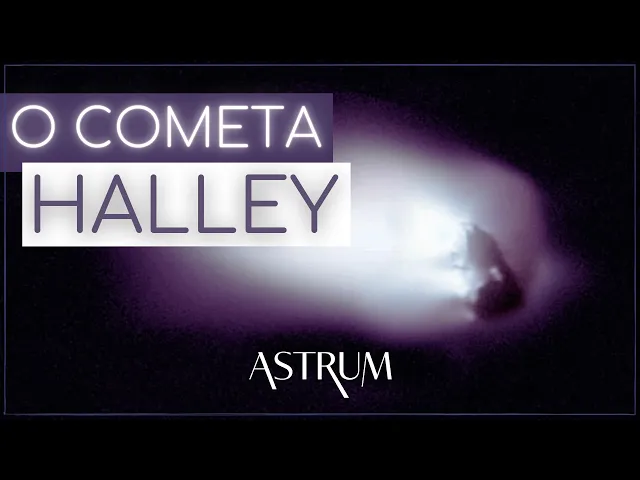
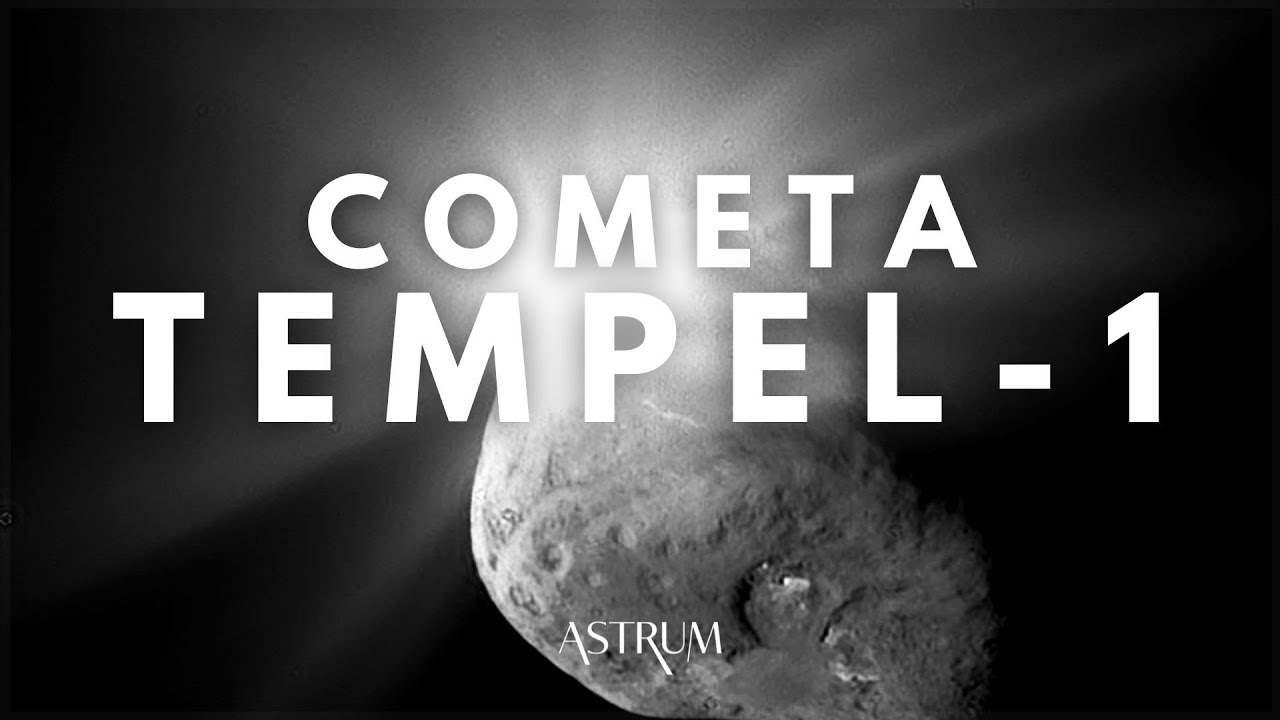
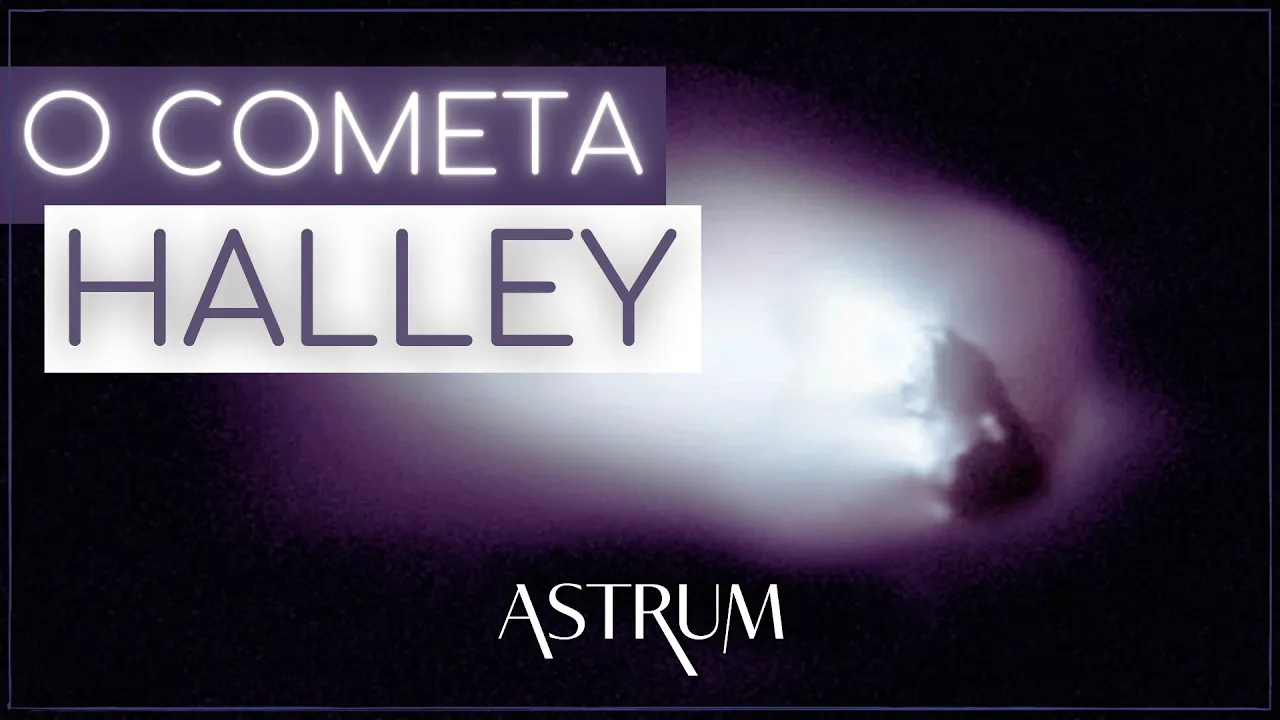
Giotto had survived and was happily able to record images at his closest approach to the comet; although a particle had hit and deactivated the onboard camera after recording. So what did all these missions find out about Halley's Comet? First a fact that really surprised many scientists: Comet Halley was much darker than they predicted, as dark as coal.
It was so dark that it was beyond the technical capabilities of the cameras to define the details. The image you are seeing here is the result of extensive image processing to define details of the original images. Also, only a small part of the comet appeared to be giving off gas, seen mostly around these beams here.
This contradicted the "dirty snowball" theory of comets. Instead, these data indicated that comets were more like "snowballs of dirt". The armada also found that the coma and tail of the comet mainly included water ice , but also carbon dioxide, methane, ammonia, iron, hydrocarbons and sodium.
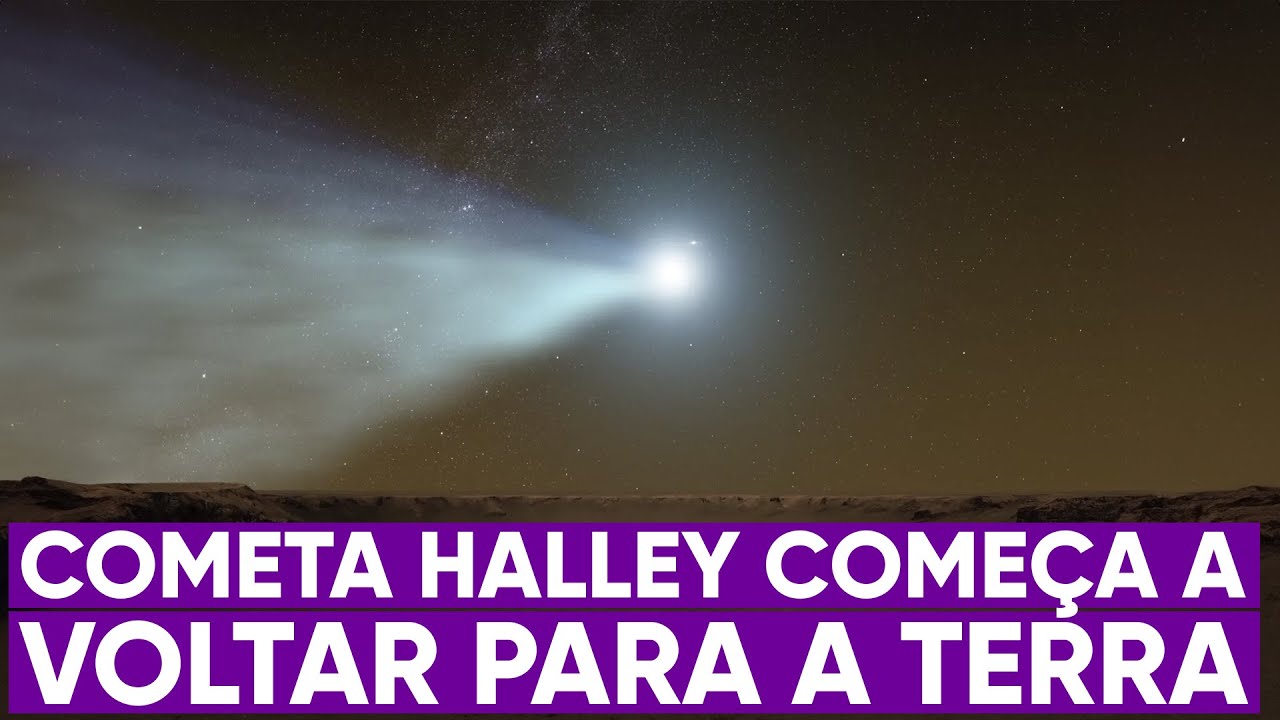
The dusty particles are likely trapped in the jets as the comet releases the gases, blasting them away from the comet in its own tail. And here's something very interesting: it's the dust particles ejected from comets that we see as “shooting stars” here on Earth. This is how scientists are able to predict when meteor showers are likely to occur , as we can predict when the Earth will pass through the remains of a comet 's tail .
The glow of the coma is due to sunlight being absorbed and re-radiated by the ejected ice and, to a lesser extent, due to the reflection of sunlight on the dust particles. Therefore, a comet's brightness depends on how much gas it releases during its approach to the sun. Scientists have also found that Comet Halley is very "soft", with a density of only about 0.
6g/cm³. So it's likely to be porous or like a pile of rubble. Measurements showed that Halley's surface temperature was 27-127°C, meaning that only 10% of the surface was active while these missions were passing.
But perhaps the most surprising discovery of all was the proportion of deuterium found in its water ice. Scientists until recently believed that comets were the source of water found on Earth. But both Halley and Churyumov-Gerasimenko have shown that this is probably not the case.
The proportion of deuterium, or the key indicator to show whether water shares the same origin or not, is different between water found on Earth and water found in comets. This probably means that we need a new theory about the origin of Earth's water. Perhaps studying asteroids could be the next option.
The Halley Armada, an ambitious multinational project to examine a frequent visitor to the inner solar system , revealed a wealth of information about the outer solar system and the role of comets in Earth's formation. And remember to put a reminder for the year 2061 on your calendar, because when Comet Halley comes by again, it promises to be a fantastic spectacle! So that's it.
THE MOST FAMOUS COMET of all time. Thank you so much for watching. Are you also fascinated by these amazing records of the night sky?
How about you start making these records yourself? Even with your smartphone? I want to introduce you to the Astrophotographer's Success Journey by Astro Space.
A complete astrophotography course brought by our dear professor Alberlan Barros. In this course you will learn Astronomy and Photography Concepts, everything about astrophotography, image capture techniques, editing and post processing, advanced techniques, and many bonus content such as lectures, tutorials, workflow, among others. Click on the first link I'll leave in the description of this video and learn about the best astrophotography training in latin america.
And when you close the cart, include the ASTRUM20 discount coupon, offered exclusively to you who are subscribed here on the channel. And if you want to discover the wonderful work of Alberlan Barros, subscribe to the Astro Space channel on YouTube and start your journey in astrophotography. There you will find hundreds of videos with many tips, techniques and exclusive lives on the subject.
Want to be on top of astronomy news? Discover the Giro Astronômico project, with live every Sunday at 8pm, with news, tips and special guests on astronomy. Do you want to help Astrum Brasil to maintain itself?
Check out our page for supporters at suporte. se, and also the Clube de Canals here on YouTube. In addition to helping the project sustain itself, you 'll also have access to lots of exclusive content.
I especially want to thank all our dear members and supporters who have been helping Astrum Brasil every month to maintain itself. Thank you very much, and until the next video.