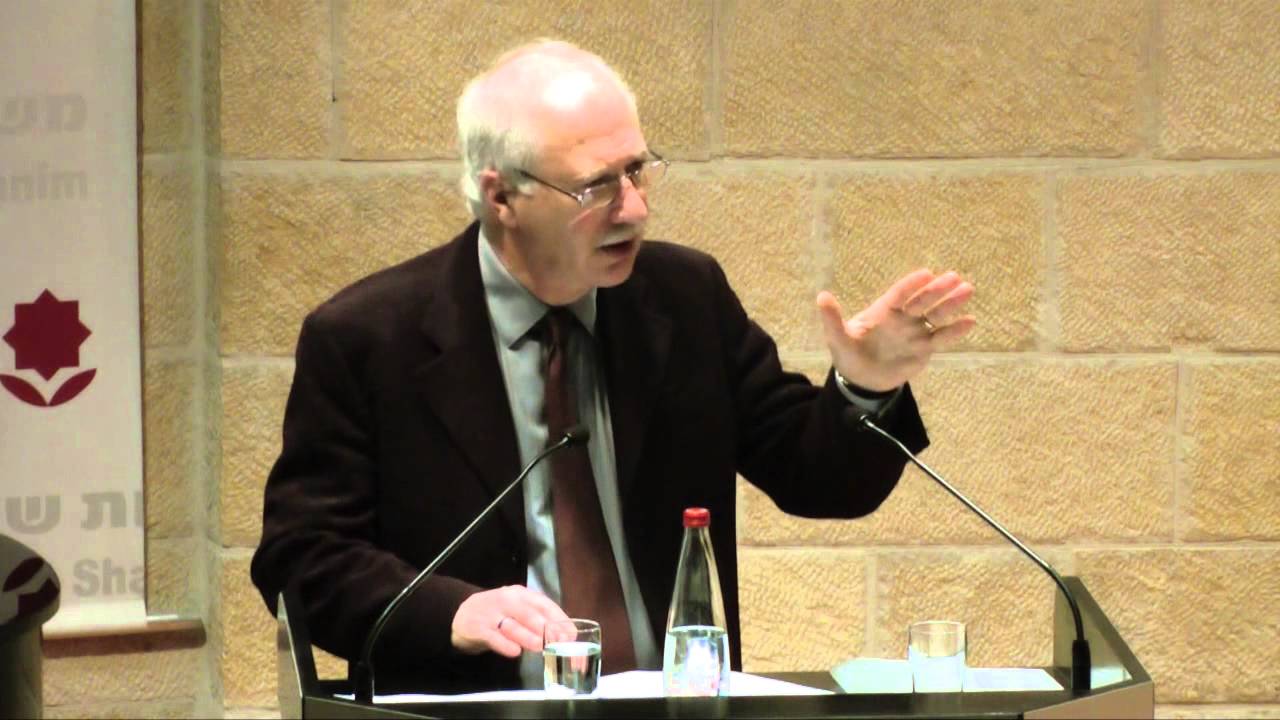
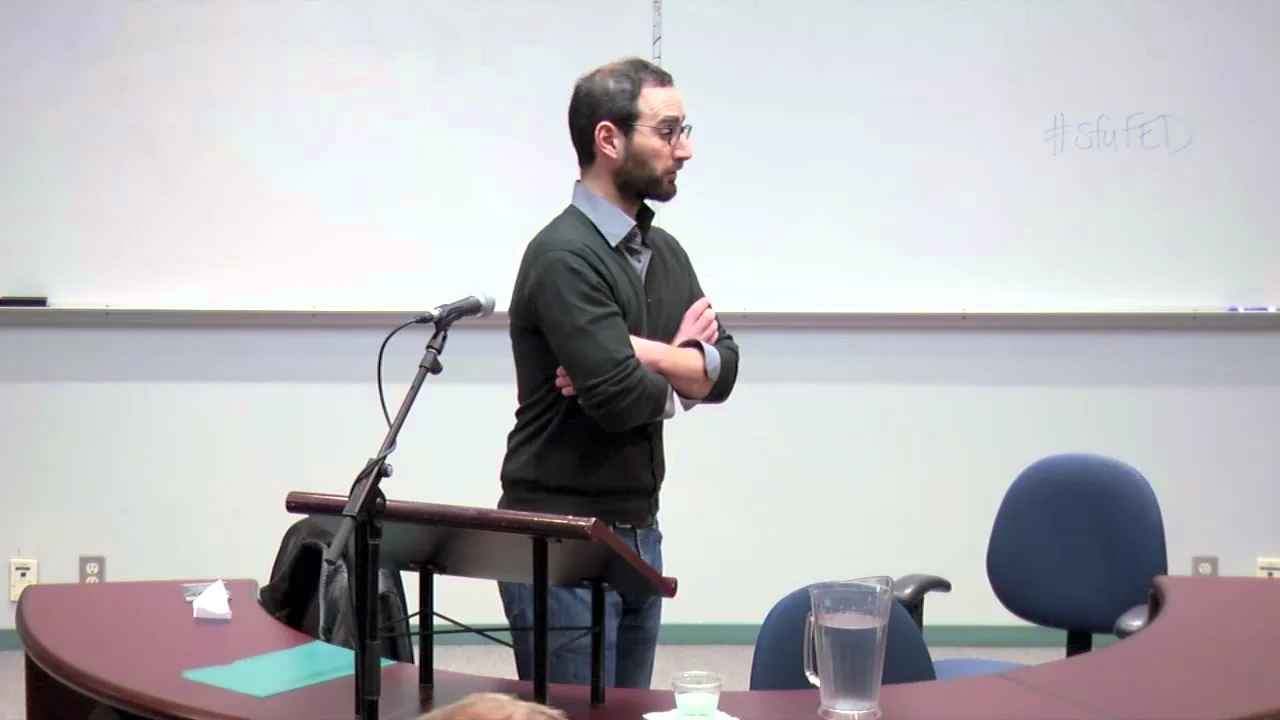
It's great to be here. Thank you for inviting me. Uh the title of my talk is mapping critical theory today. Now mapping is a crucial yet very difficult task today. As Frederick Jameson has pointed out, one aspect of the crisis of the left, of the crisis of history more generally, lies in our difficulty to represent or to totalize the present, to make sense of the historical period we find ourselves in, Of the moving scales of politics, and of the existing social forces. As military strategists know well, mapping is a condition of strategy since no strategic
thinking is possible without good maps. The strategic deadlock of the left, for example, in France, where I come from, is in part a consequence of this difficulty to draw accurate maps of the battlefield and to understand the interaction of the forces that operate on it, forces of the left And forces of the right. Of course, mapping critical ideas is part of this more general attempt to draw accurate maps, political maps. One could argue that ideas have always been more important to the left than to the right. The left's goal is to break the existing consensus
to come up with new ideas that will be the foundation for new possible worlds. This is why since the first modern revolutions, the left has been in a state of permanent intellectual Innovation. This is not to say, of course, that the right doesn't have ideas. Obviously, it has produced very powerful ideologies throughout modern history. Neoliberalism being the left last of these. But when the right finds itself in a situation of intellectual deadlock, most of the time it can fall back on the existing consensus and wait for better times. This the left can do because the
existing consensus is almost always conservative in Essence. So the question is in what state is the left today from an intellectual point of view? What are its main ideas and in what political and social conditions are these ideas produced? This is the question I will try to address and I will be concerned with the content of contemporary critical ideas as well as their social and political conditions of production. In fact, what we need to understand in my opinion is the interaction between The two. Three quick points before I start. First, I will be using the
terms critical or radical theories to refer broadly to the ideas of the left. A more precise definition of these terms is of course required. We can come back to this problem in the discussion. The main point being that the definition of critical theories is historical. This is not a transhistorical or transcendental Category. Obviously, what counts as a critical theory today is not necessarily the same as in the past. For example, liberalism or some forms of liberalism was a critical theory in the 18th century when absolutist regimes ruled. It is no longer a critical theory today
obviously. Secondly, what I am referring to here is critical theories in the plural and not critical theory in the singular and with a capital C and T. Critical theory in the singular commonly refers to the Frankfurt school to Max Hokima's famous distinction between traditional and critical theory. Critical theories in the plural is a much wider and vagger category that includes past and present members of the Frankfurt school but also many other critical schools of thought I will be talking about. Thirdly, not so long ago, one would have referred to Marxism rather Than critical theories because
Marxism was so dominant as a critical theory for a century. But it is no longer dominant. So we have to widen the categories we use and make room for for non-Marxist critical theories. We are in a sense stuck with this unsatisfactory notion of critical theories until maybe new political and intellectual events allow us to clarify our categories. So what are the main aspects Of critical theories today? A first aspect is that critical theories are increasingly globalized. Globalization affects trade, finance, communication, literature. It also concerns critical theories. So the first question I want to ask is
what is the nature of this globalization of critical ideas today? Now ideas have always moved around the globe. Of course the globalization of thought in general and Of critical thinking in particular is certainly not a new phenomenon. Among many others, French historian Serge Grizzinski has studied in his great book the mestiso mind what he calls the intellectual dynamics of colonization and globalization that starts according to him in 15th century Latin America. This dynamics concerns critical doctrines as well. Jose Carlos Mariati, one of the Founders of Latin American Marxism is a very interesting case from that
point of view. In 1928, Maratei published his classic book entitled Seven Essays of Interpretation of Peruvian Reality Peru. In this book, Maratigi adapts a critical theory, namely Marxism that was born in Europe in the middle of the 19th century to the Latin American context and particularly to the Peruvian social reality. And to do this, Mariati was led To innovate theoretically inside of Marxism because the working class was numerically weak in Peru at the time and that there existed a massive Indian peasantry. Maratigi is one of the first to unite Marxism and Indianism in Dhanismo, a
theoretical hybrid central to contemporary Latin American progressive politics in places like Chapas, like Ecuador, like Bolivia for instance. So Mariotti is a clear example of Traveling critical theory so to speak and there are many others. We can think of CLR James for instance of France Fano of Tranduko the great Vietnamese Marxist phenomenologist and others. However, and this is the important point, starting from the last third of the 20th century, say the end of the 70s, there has been a clear acceleration of this globalization of critical theories. Since the 19th century, up until that time, critical
theories were Mainly elaborated in accidental and oriental Europe. Today, on the contrary, they are more and more disseminated across the globe. Thus among the most dread and debated critical thinkers today we find for example the Peruvian Alibal Khano the Slovin Slavo Xek the Chinese Wangi the Indian guy gayatric spivac the Japanese coin karatani the Cameroon Ashil mebe etc. This geographic diversity is Clearly new in the history of critical theories. Europe remains of course an important center for the production of critical theories today. One can think of writers like Alamaju, like Tony Negri, like Jacier, like
George Gamban or Axel Honet. But for the last 30 years or so, a profound movement has started that has led to the deloization or decentering of critical theories in new countries. I am not saying, of course, That these countries didn't produce critical thinking until now. I'm saying that on the model on the model of Pascal Kazanova's world republic of letters, a world republic of critical theories is currently in the process of formation and that theories elaborated in countries until now absent from this republic world republic of critical theories are becoming increasingly visible. This globalization of
critical theories Is closely linked to their Americanization. Globalization and Americanization in other words are two interlocked aspects of critical theories. In this world republic of critical theories I was talking about as in globalization in general there are hegemonic powers and there is one in particular the United States. Historically, the hegemonic center of gravity of critical theories has moved westward. First, Eastern and C Central Europe for classical Marxism, then Western Europe for so-called accidental Marxism, and now Anglo America. If this westward movement continues, Asia might become a new center of gravity for critical theories in the
future. All the thinkers I just quoted, including the European ones, teach in US universities on a regular basis. Some have made their entire academic careers there. Others have been visiting the US more recently. Some teach at the same Time in universities of other countries, for example, in universities of their countries of origin. Others only teach in the US. But in all these cases, the US academ has been a strong attractor for them and this of course has important consequences in terms of the content of the critical theories they elaborate and also from the point of
view of their relationship to politics and I will come back to this in a minute. Two main reasons explain this Attraction of US universities for contemporary critical thinkers. I will mention one now and the other in a minute. The first is that the US academ has a long history of integrating intellectual exiles of or refugee scholars as Luis Koser has famously labeled them. During the second world war, many scientists n natural scientists or social scientists settled in the US. This is the case of members of the Frankfurt school for example and since then the US
academ has become a sort of global intellectual hub. So the globalization of critical theories has really two components. First a diversification of the national origin of critical thinkers but secondly the Americanization of their careers. Now this Americanization of critical theories doesn't mean that these thinkers have lost any political or intellectual specificity related to Their country of origin. In this word republic of critical theories I'm talking about, national origins still matter. Two examples of what I have in mind. First, the case of Ernesto Laclau. Laclo moved to Great Britain in the 60s and he has since
then participated in Anglo-American debates about say postmarxism, hegemony, the empty signifier etc. Yet his theories have always been influenced by his Argentinian origins and in particular by A typically Argentinian political phenomenon which is Peronismo in its classical form that of Juan Domingo Peron himself or its contemporary form that is Kishnerism. One cannot understand in my opinion Laclo's theory of populist reason without taking this fact into account. In fact, as a young philosopher in Argentina, Laclo was a member of the local nationalist left of a member movement led by a certain Horge Bilardo Ramos. And in
the years before his death last year, he became Laclo became a strong advocate of Neestor and Christine Christina Kishner's policies. Second example, Guyati Spievak. Spivac came to the US in the 1960s as well. She is the translator of Jacida's grammatology and she has been an important protagonist in debates about feminist theory, postcolonial theory, mainly formulating her ideas in the theoretical language of post Structuralism. Yet in her case two, national origins matter, for instance, in her famous text, can the subalan speak? She discusses the racial and gender dynamics involved in the practice of the sati which
is the Indian religious ritual by which widows emulate themselves with their husband and which was banned by the British in the 19th century. So in this case too in the case of spac 2 national origins still matter in some Americanization implies a degree Of intellectual homogeneity but this homogeneity is not total. The personal biography of critical thinkers still matters. And what also matters is the relative power of their country of origin in this world republic of critical theories. Coming from a small country with no critical tradition with poor institutions of higher education or no public
publishing houses and a non- international language is obviously not the same as coming from the US or Europe Etc. A third aspect of critical theories is their professionalization. That is a fact that critical thinkers today are almost exclusively academics. Journalists, union leaders, party leaders, gueros like the subcommandant de Marcos in Mexico produce critical theories too of course but in most cases these theories are elaborated by elaborated by professors and more Specifically by professors in the human sciences. In the past one could find critical theories thinkers with a background in the n natural sciences like say
cropotkin or pancuk or amado bordiga etc. But this seems to be less the case today for reasons that have to do with the evolution of natural sciences. For instance, Donna Haroway is originally a biologist by training, but she's in my opinion clearly an exception from that Point of view. Now, this professionalization of critical theories has several consequences. First, it in part explains explains the Americanization of critical theories. And this is the second cause of Americanization. I was telling you about the fact that critical thinkers are mostly academics implies that they are subject to the sociological
laws that govern the global academic field and this field is dominated obviously by US universities in terms of financial means for instance as well as intellectual influence. So Americanization and professionalization are linked to one another in the sense that professionalization reinforces Americanization. The fact that the English language is dominant globally today also of course contributes to this dominance of US universities. Secondly, professionalization doesn't only concern Critical theories. This is a much wider process that affects the produ production of knowledge in the natural and social sciences in general today. This professionalization is a consequence of increased
division of labor. As Karen Marx saw a constantly deepening division of labor is a condition for the accumulation of capital in the work process in general and the intellectual labor in particular. Critical theories like any other other kind of theory are caught in this very process. A third consequence of this professionalization is that this is a major break with previous periods in the history of critical theories and particularly with classical Marxism. Now Marx, Lenin, Trosky, Rosa Luxembourg or Gshi were obviously not academics. They were political leaders and journalists. If and when they taught and wrote,
which they often did, it was In party schools and journals and not in mainstream universities and academic journals. At the time, universities were in fact elitist institutions that had little to do with the mass institutions they have become since then. Of course, the fact that today's critical thinkers are mostly academics has important implications for the way their ideas are shaped, the conceptual language they use, and also of course for their relationship to Politics. A fourth aspect of critical theories is indeed their increasingly distant relationship to real politics. This aspect is connected to the previous one
since the logic of professionalization has diverted critical thinkers from the political field. In fact, the political and the intellectual fields have become more and more separated or autonomous in the second half of the 20th century. Here it is useful to go back to Perry Anderson's understanding of the transition from classical to accidental Marxism. According to Perry Anderson, the failure of the German revolution in 1923 provoked a split in the history of Marxism that gave rise to the distinction between classical and accidental Marxism. The classical Marxists Kowsky, Lenin, Trosky, Ros Luxembourg etc. had two distinctive features.
First, they were historians, economists, sociologists that is their Writings were mostly empirical. Most of these writings in fact had to do with the immediate political conjuncture. Secondly, classical Marxists were organization leaders. They were political strategists confronted to real political problems. These two distinctive aspects of classical Marxists were connected to one another. It is because they were political leaders that they needed empirical knowledge about the societies They operated in. On the other hand, their leading positions in the workingclass movement provided them with firsthand knowledge of the social world. Now, accidental Marxism emerges when these two features
of classical Marxism start weakening. In the middle of the 1920s, workingclass organizations were defeated in most European countries. This historic defeat gave rise to a new relationship between Marxist intellectuals and working-class Organizations. The prominent Marxists of the following historical period that is Adorno S altoair de Lavaruza although different in many respects have features that are exactly the opposite of the ones of classical Marxists. First, they no longer have organic ties with working-class organizations and in particular with communist parties. They certainly no longer hold positions of leadership. In cases where they were Members of communist parties,
as in the cases of Altus, for instance, or Lucash or Devulpe, they maintained conflictive, very conflictive relationships with the leaderships of these parties. Furthermore, the ideas accidental Marxist elaborate are abstract ideas. Abstraction is a central feature feature of accidental Marxism according to Perry Anderson. Whereas classical Marxists were empirical in their approach to the social world, accidental Marxists are mostly philosophers often specialized in epistemology or aesthetics. And as in the case of classical Marxism, the two features of accidental Marxist are connected. The abstract language in which they write finds its origin in the fact that they
are increasingly distant from working-class organizations. So a sort of flight towards abstraction is typical of accidental Marxism according to Perry Anderson. This transition from classical To accidental Marxism can be explained by several causes. With the emergence of Stalinism in the second half of the 1920s, an orthodox dogmatic Marxism arises and it becomes the official doctrine of the Soviet Union and of affiliated parties in the west. This puts Marxist intellectuals in a difficult very difficult situation. They either have to conform to this new orthodoxy or to distance themselves from working-class organizations. Remaining intellectually creative most of
the time leads Marxists to distancing themselves from these organizations. So how can we situate contemporary critical theories in relationship to this distinction between classical and accidental Marxism? The separation this separation between theory and practice that started with accidental Marxism has clearly increased in critical theories today. It is almost never the case today that Critical thinkers be members of working-class organization and even more unlikely that they hold positions of leadership. Slavo Xijek, for instance, was a dissident in Slovenia in the 1970s and 1980s. He even ran as a candid candidate for the presidential election in the
year 1990. But he has no organic ties to political organizations today. And this can be said of most critical thinkers Today. There are a few exceptions. French philosopher Daniel Bened for instance who was a leader of the new anti- capitalist party in France is one of them. But this organization is very small. The new anti- capitalist party in France is very small compared to say the German social democracy of the beginning of the 20th century or the Italian communist party of the 1960s who both had millions of members. There is another very interesting Exception to
this rule which is the case of Alvaro Garcia the vice president of Bolivia. Garcia is the author of influential writings on the indigenous question or social movements in Bolivia and of more theoretical writings say on Lenny Negri or Bourju but he's also committed to mass politics to the point of becoming vice president of his country. So one could say that Garcia is a kind a kind of classical Marxist in a historical age where there are very few In fact. What about the abstraction typical of accidental Marxism? Are contemporary critical theories abstract in the same sense?
Well, they certainly are. One could argue that there is a return to metaphysical themes even religious themes as we will see in a minute in critical theories today as in the work of Alamaju for instance the critique of the subject one can find in feminist theory or postcolonial theory or in the Ljubljana school that is Lavoek muladen dollarar alenazubanchich etc is another example of metaphysical questions widely discussed today on the other hand an object object so central to classical Marxism as the capitalist state has received no original treatment since the classic debate between Pulanas and
Milliband in the 1970s with the exception in my opinion of Leo Panic and Sam Gindon's great book the making of global Capitalism which is in my opinion a maj major contribution to the understanding of the functioning of the American state as a global state at the same time there has been a return to empirical anal analysis starting from the 60s and 70s. Class analysis by Eric Olen Wright for instance the study of long waves of capitalist development by Jovanni Arigi or of capitalist crisis by Robert Brener are examples of this tendency this Tendency. So the
flight towards abstraction I was talking about is continuing within contemporary critical theories with however some counter counter tendencies. One could argue and maybe hope that the great crisis of capitalism that started in 2008 will change the intellectual landscape and reinforce uh these counter tendencies. Another very interesting aspect of critical theories is that they Contain many references to religion mainly to Christianity and Judaism not so much to Islam. In fact, here are a few examples. Alan Badu wrote an important book on St. Paul entitled St. Paul the foundation of universalism. In this book, Badu argues that
St. Paul is a typical example of a subject who is constituted in fidelity to an event, a religious event in this case, but an event that can be political, scientific or artistic. This relationship between subject and event is further elaborated in Badu's books being an event and logics of the world where there are also references to religious doctrines for example to bless Pascal. Giorgio Agambin also wrote a book about St. Paul entitled the time that is left which is a commentary of the epistle to the Romans. References to Roman sacred law in Homosaka, for example,
Christian esquetology or the Hebraic tradition are Frequent in George Aabin's work. In their book, Empire, Michael Hart and Tony Negri refer to St. Francis of Aizi, the so-called po. Negri has also written a book about job entitled the labor of drop. Several of Slavo Slavoek's books refer explicitly to religious questions. For example, uh the fragile absolute whose subtitle is why is the Christian legacy worth fighting for. Apart from Badu, there is another Pascalian strand in contemporary critical theories in the work of Daniel Bened. Bened is the author of a book entitled Lear Melancholic, the melancholic
wager, where revolutionary commitment is presented as similar to Pascal's famous wager. Ben Sed is also the author of a book about drone of ark and another about the Maranos. The Maranos are the Jews who were forced to convert in Spain and Portugal starting from the 15th century But who continued to practice Judaism in secret in these dark times. According to Daniel Bened, revolutionaries are a bit like Marannos. They have to secretly keep on believing in revolution. How are we to explain this presence of religious references in critical theories? Now two quick points before I try
to answer this question. First, this relationship between crit critical theories and religious doctrines is of crucial Strategic importance. The way critical theories conceive of religion will have an impact on the way progressive and revolutionary movements will interact with religious movements in the future in the western world and elsewhere. And I am referring here to the greatest revolution of our time that is the so-called Arab Spring. So this is a very important strategic question. Secondly, past critical theories had already made references to religious doctrines. Roland Boore has written a great book on this topic entitled criticism
of heaven. One can think of Ansblock's study of Thomas Muner published in 1921 entitled Thomas Muner theologian of revolution or of Lucian Gman's the hidden god a study of the tragic vision in Rasin and Pascal. In fact, Lucian Gulman compared the belief in socialism to a former religious faith. Jose Carlos Mariatigi wrote an an article about Joan Ovar in 1921. Walter Benyamin's project of connecting historical materialism and some aspects of Jewish messianism is also well known. However, these references to religious thought were relatively marginal in past critical theories. In the Marxist cannon, that is the
main Marxist thinkers until the 1970s. Religion was certainly an object of analysis. But it is one thing to study the function of religion in capitalist society as Marx or Lenin or Gshi have done but quite another to be inspired by religious doctrines like Goldman and Benyamin have or like Baju Negri Xjek and Menai today. So how can we explain this presence of religion in contemporary critical theories? The answer has two components in my opinion. First, these religious references are concerned not with religion in general but with one particular theological problem which is the problem of
belief or faith. It is The case of Pascal, St. Paul, the Maranos and Job. The question these religious figures raise is the following. How is it possible to keep on believing to maintain faith in God when circumstances are hostile to belief? Why should one believe in God when the word seems so unfair or irrational? Contemporary critical thinkers have felt the need to answer a similar question because in the n in the 20th century all attempts at constructing a socialist society have failed or ended in disaster. At the end of the past century the historical record
is obviously not very good for the belief in socialism. And this is why this belief like the belief in God needs justification against all evidence in a sense. And this is when Pascal or St. Paul come in. Justifying belief against all evidence is what theology does best. And this is why critical thinkers are so Interested in such arguments today. In my opinion, a second aspect of this question is more political or sociological. The so-called return of religion at the end of the 20th century is not only observable in critical theories. It is a much more
general phenomenon. Whether the disenchantment of the world as Maxra would have put it continues today or a return of religion Is taking place is in fact a debatable question. But what seems certain is that religion has made a comeback in the political field with currents like Islamism or evangelical fundamentalism. This new alliance of religion and politics is an important aspect of contemporary politics of course and this is why some critical thinkers Terry Eaggleton or Michael Lovia examples have taken up the challenge and try to demonstrate that there is a progressive Or even revolutionary side to
religions. This is basically what Terry Eaggleton has been saying in his many debates with Christopher Hitchens or Richard Dawkins or in the introduction to a new edition of the Gospels he recently published. This is also what Michael Loey tries to show in his many writings about liberation theology in Latin America or on Walter Beyamin. The last aspect of contemporary critical theories I will mention is Maybe the most important or one of the most important. It is the fact that Marxism is no longer hegemonic in critical theories. Now as a theory, Marxism is alive and well
today. One could even argue that never in its history Marxism has been analytically so rich and interesting. In particular in the Anglo-American world, but not only authors like Robert Brener, Jovanni Arigi, Emanuel Valerstein, David Harvey, Mike Davis, etc. have de developed in their respective fields innovative Marxist perspective. Marxism has also been able in recent years to take on new objects. For example, ecology, environmental issues. Thus, ecological Marxism with authors like John Bami Foster, Paul Burkett, Ted Benton, James Okconor is one of the most creative areas of Marxism today. This capacity to adapt to the intellectual
challenges of a new epoch is maybe the Main criterion by which one can judge the vitality of an intellectual tradition. And I think it is quite obvious that Marxism has passed this test. However, and this is the important point, even if Marxism is analytically at its most interesting today, it has lost its hijgemony over critical theories, the working class and social movements more generally. From the end of the 19th century to the 1980s more or less, Marxism was the main Language in which the experience of injustice was formulated not only in the west but in
many other parts of the world. Marxism was not only a theory elaborated by and for intellectuals. It was an ideology for organizations and political regimes that included millions of people. Almost all of these organizations and regimes have now disappeared. Today, for the first time in their history, Marxists have become a minority In a wider set of critical theories where non-Marxist critical theories dominate. The dominant theoretical language in this wider set is certainly post structuralism. The one uh that one can find for instance in postcolonial theory or cultural studies today. Now a hypothesis one can make
is that the current economic crisis which is an organic crisis of the system as a whole is going to change intellectual relations of force inside of critical Theories. Maybe Marxism is a theory of crisis par excellence whereas non-Marxist critical theories like post structuralism or Jacon's philosophy or Axel Honet's recognition theory have in fact very little to say about crisis. So after a postmarxist parenthesis, it is possible, in fact desirable in my opinion, that Marxism in a more classical form will make a compact. To conclude, I would like to conclude to Compare two forms of intellectual
commitment that are separated by almost 50 years. During the Zukati Park occupation in New York in the autumn of 2011, acclaimed critical intellectuals among them Slavo Xek, Judith Butler, and Cornell West came to support the occupiers and to give speeches in front of them. You may be recall that their speeches were aired through the so-called human microphone. A weird law In New York forbids the use of electric microphones in public space. So the only way for the speakers voices to get through was for the front rows of the crowd to loudly repeat each of their
sentences. And these speeches were then rapidly posted on YouTube. You may have seen some of these speeches. This of course is not the first time politically committed intellectuals have spoken in support of a movement of occupation. The zucoti Park scene recalls a famous speech given by French philosopher Jean Paul Sart at the Renault automobile plant at Bulon Biancur near Paris in 1970. A famous photograph shows Sart perched on a cask addressing the workers on strike and telling them that the alliance between intellectuals and the working class that once existed should be rebuilt. These were times
of revolutionary upheaval in France and elsewhere and intellectual intellectuals Were urged to take sides. You can find this photograph on the this very famous photograph on the internet if you like. Now despite visual similarities these two scenes separated by almost 50 years are in fact very different profoundly different. First S spoke in front of automobile workers that is industrial workers whereas Xijek Butler and West addressed a more indeterminate audience. The exact sociology of the occupy movement and of Recent global mobilization is still up for debate. A more middle class recruitment than the workers movement of
the 19th and 20th century seems obvious. Secondly, Xiek butler in west spark spoke not in front of an occupied factory as S did but in a public place. The occupation of public places is a trademark of these new movements. Not only the occupy movement but the Arab Spring as well for instance. The difference with past movements is very Important. Occupying public places is certainly a matter of reclaiming the street or of demanding a right to the city as David Harvey would put it. But it is also a symptom of these movements not knowing what else
to occupy. One occupies factories when one wants to speak to and organize the working class. When one thinks that the working class is a revolutionary class, but who do current movements want to organize when they occupy public places? Well, maybe The 99%. But this is obviously a very vague category. There is a third crucial difference between the two scenes. S was never actually a member of a working-class organization but his political and intellectual universe was organized was organized around their existence and they structured the political field in which he spoke when he addressed the work
the workers s was a fellow traveler first of the French Communist party the PCF and then of mauist organization what about zek butler and west as I said before today's critical intellectuals noatter matter how politically committed and radical they may be are free floating and not organically linked to any kind of organization. When we try to understand what contemporary critical theories are, it seems to me we need to make sense precisely of the differences between These two scenes. Jean Paul in 1970 on the one hand and Jek Butler and West in the autumn of 2011
on the other. There obviously is no going back to Sat's time. It is neither possible nor desirable. But with the ongoing crisis of capitalism, intellectual commitments at once more connected to existing political and social organizations and based on more precise maps of the existing social forces of the revolutionary potential of different Classes are certainly required. Thank you. Excellent. We have plenty of time now for uh Q&A. So, let's throw the Ian um the task you've taken on of critical theory today is a is a prodigious one and and um congratulations for taking on something quite
so so big. Uh let me just make two comments about about the map. Um um in the first place with the the the Notion about professors and uh and so on. It's it's a it's a fair observation. Um you say that therefore there is no relationship to to practice. I believe uh and therefore move from there into the question of abstraction. Now it would seem to me that all university professors do in fact have a practice and it's teaching um and that teaching occurs in an institution. I mean the enormous number of young people and
people of all kinds really pass through That institution. So that requires an analysis. Um it's not a lack of practice. It's a different practice for for reasons for sure and all of those could be explored. But one of the one of the consequences of that would seem to me to be the influence of universities and university uh educated people on the arts um and various other kinds of uh uh factors in things that are going on in society and eventually the media. So that a lot of university based critical Categories have become have become fairly
widespread in the society. So that's something that it seems to me you kind of ruled out and I I wouldn't I think that's pretty important actually. The second thing is with regards to English as as the language the the language of the uh uh republic of critical theory that you uh that you talked about you you briefly mentioned that but I think that's actually really also very important and um nobody Becomes a major figure in this interview or or cosmopolitan republic or however you phrase it global republic without being published in English. So the politics
of translation indeed the economics of translation uh things like for example the French Ministry of Cultures support for translations into English and French philosophers uh has a lot to do with who becomes a big figure in this. So this also leads on to other questions about Popularity. Uh who becomes popular? Uh who therefore becomes a necessary reference. You know you can't go to the toilet without hearing people. So you know all of that uh is a whole other dimension of this uh which I think you passed over a bit too quickly. Yeah. Should we take
a number of questions? Yeah. maybe three at a time and then you can answer. So we have here well my question actually goes in a a Very different direction that you kind of followed followed Perry Anderson's trajectory of the rise of accidental Marxism and then its globalization/ Americanization but you made a few references to individuals like Bened and I was wondering uh what you would say to the following question. Wasn't there a precursor to the globalization of critical thinking? And isn't there still a subterranean existence of it? uh and kind of the Household names would
be uh the third international up to a point possibly then the fourth international for sure but also um like the intergalactic meetings initiated by the zapatistas and then the world social for the uh let's say proletarianization of much of the academic workforce maybe u there is a chance of bringing the subterranean critical theories and the still let's say co-opted critical theories together again and then in the future it might be Uh intellectuals from wherever they come from addressing academic workers instead of auto workers. One more question in this round. Yeah, Andrew. Yeah, I was going
to add another uh aspect that that perhaps is underemphasized which is the 1960s. All those people were activists or were influenced by what happened in the 60s. So there's a historical event just as in the the end of World War I there were was a great offensive that produced a Great flowering of theory even though it failed politically. Similarly, after the 1960s failed, there was this flowering of theory. And I think that's important to articulate the development of theory in relation to these historical experiences rather than simply in relation to phenomena like professionalization or Americanization.
Thank you for these questions. Should I speak in the microphone or um I don't have answers To add a few comments. I agree fully with teaching as being a sort of practice of course u but it's a specific kind of practice um and uh as we know in universities at least in uh French universities that I know uh the idea of politicizing the practice of teaching is resisted by authorities very clearly. So as professors we have to at least in France in France we have to teach programs that are determined in part by us but
in part Also by the states or ministry ministry of education and that makes uh the politicization of the practice of teaching not impossible of course but difficult and moreover the dominant strands of intellectual activity in trends and elsewhere are not critical neoliberal or other things but Uh so the question is how would it be possible to uh politicize teaching as a political practice more than it is today and uh the answer is uh by in part considering That teaching is a form of work as other types of works. Uh but this um comes back to
the question of of how uh unions of intellectual workers are organized or not inside of universities. And from my experience in France, uh the fact is that uh organizing in unions, professors, university professors has been very very difficult and in fact impossible in recent years. So there's a form of absence of politics that exists in French universities at least and I Don't know how it is here that is structurally embedded embedded in the functioning of universities. So I have no solution to know how how how that could be transcended and and be transformed. um into
into something different. Surely there has to be uh a form of opening of universities towards other types of practices. But clearly in France at least in the universities I know uh this has not been possible in recent years. So some form of Contradiction has to be brought inside of university from the outside. It seems to me but I can see today what that could be in a sense. I don't know if it's clear what I'm saying, but some form of alliance between social movements that exist outside universities have to has to be built with say
teachers unions or students unions and this hasn't happened until now. Uh, of course, English as a dominant language I I didn't say it but In the book I developed that point uh more fully. uh it is of course uh impossible to be a dominant or non thinker without publishing in English. And this uh implies that publishers publishing houses uh have a very important role in deciding who is an important critical thinker and who is not. Of course uh and this is a problem of course because uh they make choices like as everyone else and these
choices are in part political Choices. Uh so this is something uh we have to take uh take account clearly. Uh now is there if I unders understood your question correctly are there alternative forms of globalization or more ancient form of globalization in the intellectual critical field uh that go back to the internationals especially the third and fourth internationals and you mentioned Daniel Ben in fact I was a member of Daniel Ben organization and and so I I knew him well and I consider Him uh as someone very important in fact I think he's not enough
translate into English. There's one or two books. Verso just published his autobiography which is great if you want to have a look at it. But I think there's only two books of Daniel translated to English. And that's that's too bad because he's a great thinker. And moreover, he was someone who traveled a lot who traveled to Latin America. He knew very well Argentina, Brazil. He traveled to Africa, Northern Africa. So he's clearly an example uh like Marati not from the same generation of course but he's clearly an example of a traveling theorist thinker who uh
brought with him categories made travel categories from continents to continents. So clearly there there are some forms of earlier forms of of globalization of freedom working that were related to the international that's that's that's clear but um it Um it seems to me that today the dominant form of globalization is not that it's globalization that is linked to universities to the to the globalization of the global intellectual field and the academic field. So uh it doesn't mean that it will not change maybe it will change in the years to come but today what is dominant
is that is the fact that it's universities that globalized team and not political internationals. Um with regard to the question of historical experience and defeat what is very interesting and very complex it seems to me is to understand where exactly theoretical innovation starts. Is it in contact with uh political experience or is it the experience of defeat when social movements are defeated that after a while theorists or thinkers start elaborating new ideas and I suppose both cases exist. Some uh historical events go with their new Forms of thinking. They are as Ramshry would say philosophical
events. Branch said of the 1917 Russian revolution that it was not only a political event but a philosophical event. So he said that 1917 produced its own categories in a sense but in other cases it's not the event itself that produces cate new categories or theories. It is the defeat of the of the events and it's maybe the case uh after 1968. uh it's clearly after the defeat of the 1848 movements that Marx started a new cycle of collaboration. So there's a link there between defeat and maybe innovation from the theoretical point of view. The
it seems to me the important point is that we certainly live today in a a period of historical defeat. Uh I'm sure everyone would agree I don't see many victories from the point of that yet. uh I it seems to me that today critical theories are very sophisticated and interesting and I've named a few. So There's no direct causal link between a rise in social movements and a rise in critical innovation or theoretical innovation. We can have historically we have had historically periods where social movements are down or not in a good shape and where
nonetheless critical innovation inside of Marxism or psychoanalysis or or say postcolonial theory or feminist theory has been very interesting and sophisticated. So the link is complex to establish. I Wouldn't consider it as a direct cause also link between experience and uh and intellectual information. So another round. Yes. Here. Okay. Uh what would what would be a a a comparison? What kind of comparison would be between critical theories between pyonism and culturalism? Yeah. Uh my question is um where will you place in this map of critical thinking political movements like cities In Greece or bodemos in
Spain where academics are engaging in politics? Do you think they constitute kind of anecdotes or exception to the trends that you just described or they could uh represent a shift in all these trends? Good question just uh around related to your your map um how you see the strain of uh French Mauism where at least some within the bifurcations of that movement viewed the the death of the political party as a site of Emancipation and that's partially where the distancing from the state comes from from traditionally socialist or Marxistoriented thinkers Okay. Um, perism andism. Uh,
that's a difficult question and I'm not a specialist of Argentina. What I was saying is that Neestollo is a thinker that was very rapidly globalized in a sense because he arrived in a paper written at the end of the 50s or 60s. uh but on the Other hand he was always in a sense more or less distantly connected to the experiences of uh of Argentina and particularly with paranism. Now uh I would say that Kishnnerism um in a sense Kishnnerism can't be understood without taking into account the continental situation that is the situation in Venezuela
the situation in Bolivia situation in Brazil the situation in Chile all of these progressive so-called progressive Governments uh were very different from one another they all had uh specificities related to their countries. But on the other hand, this was clearly a continental movement. I don't know if you would agree, but I think there's something really uh continental from this point of view. And we can add that this continental dimension is clearly today in crisis since most of these governments with the exception maybe of Bolivia are today in Uh very very big difficulties. For instance, in
Argentina, the situation is obviously not very good lately. Uh whereas in my opinion, but here maybe I'm wrong, uh this at the beginning, perism was more strictly an Argentinian phenomenon was linked to this strictly Argentinian social structure, historical experiences, the role of the army, which existed in other countries as well, but which maybe in the case of Quandoming Peron was more specific. So that's maybe An important difference. The fact that of course the Kishners was no were no militaries. Peron himself was the military that made a big difference of course. Uh whereas in the case
of the Kishners they were they were not from the army. Hugo Chavis was the military which maybe makes for a comparison between him and on that point of view. But I don't know one you should ask someone more specialized in the history of Argentina. uh in the case of Lacro what interested him seems to me at the end of his life and he passed away two years ago uh was the fact that um in his eyes Kishnnerism was a a kind of populist reason adapted to the conditions of Argentina. So it was it was a
form of politics opposed to neoliberalism uh that was according to him a form of illustration of what he was saying in his last great book. Now siza and bodeos that's a great question sirza has been labeled and Government of academics you may have read that u big part of these there are two kinds of academics in siza it seems to me one type of academic is academics that were in Greece Greek universities uh and uh the second kind is academics that uh were internationalized globalized like Varuakis himself used to teach in Austin Texas for instance
Gostas which is a a great economist is a teacher at soas London. There are many Other academics that taught in international universities in England, in the US, etc. Is this uh uh an an exception to the rule I tried to elaborate or is it does it confirm it? Well, maybe it's an exception. Maybe the uh coming to power of siza is the start of a new cycle of interaction of interplay between theory and practice. This is maybe the case. It is too soon to tell in a sense and the same goes for Fenos. But it
seems to me that the Specificity of this situation is that these intellectual were uh teachers, academics and they uh connected with social movements in not all cases but in some cases relatively lately in their trajectory. For instance, Barafakis is not even now a member of city. I think I don't know if maybe he has become a member recently but historically wasn't a member of SISA. Uh Costa Sabas the economist we're talking about I don't think he's a member of SISA. So there's A connection that is established at at a recent time when Sisa maybe two
years ago when Siza went up in the in the pose uh and uh but but they they from from the social sociological point of view they remain academics it seems to me. So they don't have uh the type of connection that existed between theory and practice at the time of of the classical Marxism. But I would I would say that this is maybe the start of of something Different possibly. Well, this situation has not been good for sizes in the past few weeks as you know of course to say the least. So maybe it's not
the start of something new. I don't know. We'll see. It's too soon to tell. Now about Mauoism and French Mauism. Uh the the question was the link with uh the question of the party the political party. Is that it? Yes. uh for Baju or uh the um the type of the radatical elaboration They uh they have made in the past decades is elaboration that uh are very critical of the French and international communist movement party movements and which are also very critical of their own experience as Mauists in the 60s and 70s both were members
by D and Hier of different types of Mauist organizations ations and the conclusion they come to both of them through different roles is that the political party belongs to an era of politics of political cycles that Is now finished in a sense. So to them a form of political spontane spontaneism doesn't exist in spontane which is thought of different differently for um seems to be the kind of solution they come to uh and this is what leads to his famous theory of the event now I was I was talking about earlier has written a great
text about Baju entitled the miracle of the event and where Danielle which was a member of a political party until his death in 2010 Said that when one um forgets the importance of political parties and organizations in politics while the only alternative is spontaneism and and this leads to a form of theology in a sense a form of belief in the fact that events will happen no matter what and that when these these events happen well politics will start again but the thing is then it said uh that when that happens and that the left
is not ready not organized in political parties and unions and Other types of political forms well the event will start and it will stop and nothing will happen in sense so I think that text is that article of Daniel is translated to English it's a very sharp critique of BU and also and Daniel wasn't um he thought of course political organizations had to evolve. He wasn't advocating a kind of return to Lenny or to Branch even. He he thought that political parties should clearly adapt to the current conjunction but at the Same time they would
remain political parties and not something else. So for him political parties are a condition of politics in a sense. So, so I have a question builder Fernandez uh then also has a question and then we have a third question here and then the next round. Okay. Um so, um my question has to do with your um reliance on on Perry Anderson's uh approach to western Marxism um in tracks of historical materialism and Considerations on western Marxism which has been quite highly contested. Uh and um I'm wondering if you were to have drawn in somebody like
Russell Jacobe, he's he's actually been somebody who's been quite associated with with the institute over the years. Um you might be able to draw some somewhat different conclusions. First of all, I I I think in terms of um the the question of empirical research to say that the um the Institute for Social Research uh Really did try to develop an interdicciplinary um empirical empirically oriented theoretically informed research program, right? As a way of understanding the conditions of uh defeat, right, and the rise of fascism. uh one can point to the authoritarian personality right as an
example of an attempt maybe not an entirely successful one but I think quite a significant attempt to uh carry through this uh um research uh program. Um Russell Jacob is also somebody who who like you wants to do a kind of sociology of of of intellectuals and intellectual activity. And so in the last intellectuals, he he talks about the hollowing out of these um uh independent relatively independent spaces for intellectual work, right? In in ways that remind one a little bit of of Havas's uh public sphere book, right? That the public sphere emerges in these
in these coffee houses in in in uh in Europe in the late 18th century, which in some ways seems a little quaint to us today. But there is a sense of a a different sort of space in which intellectual activity can can take place which has has really been hollowed out by by neoliberalism then there's a movement into the academy specialization professionalization Americanization. So I'd be interested in hearing your thoughts on that. So my question is a little bit um Whether or not there was an implicit um proposal about the efficacy of the approach um
being the Marx system uh between the connection in the between the theory and the practice more efficient or more uh successful which then later you say well has failed right um versus the post structuralism right that that's one question, but um a reflection that I um got to think right now is um whether or not the structural um theory of poster structuralism being About fragmentation might be playing this free floating um not um relational horizontal kind of a um encounter within this uh theory and practice. And I was just thinking I'm a a Mexican living
here in Canada and thinking about aotinapa and all these horrendous uh situation that is going on with the narco state in Mexico and how um whether or not theory is absolutely uh necessary for a movement whereas right now is is Happening that people are organizing in the uh social um uh population by means of an ethical stand against this horrendous taking over the government. I I wonder if that theory is absolutely necessary. So that would be the question. Um hi, I just want to comment uh one in the in the situation of uh this p
this critical thinkers teaching. I think that uh in the industrialization point uh the only thing that is uh remarkable or Worth to remark is that what it creates is just uh a uh balance point of being comfortable. uh there is a uh you have there created a group of people that that work enough to be in that point of equilibrium uh to produce something to be published but not uncomfortable enough or worry enough to produce something really meaningful you know there is there are works that would been worthless here to 50 years You know uh
it's it's not about uh so the the profession of teaching I think that it's more about this point of the liberties creating this mass of people that lives in that point, you know, too comfortable and maybe not to worry. I I appreciate uh I was very amazed by this lecture. I was expecting a much more uh unconnectable uh level of understanding and I I I map a lot the thinkers and I map a lot uh every everybody who has created some Sort of meaning. Mhm. to understand what was the way or what was the uh
what were they thinking at that moment from where they come from and what was the political moment. So I think it's a very landed way to understand these people. Um especially because things are are changing right now a lot and I want to make that was my first comment. Uh my second comment is about uh that globalization yes make us all to have to know English. Uh I have to go through That. Uh it was really painful. Uh was pretty terrible. Uh but it also give us uh there's a certain level of anarchism within uh
the way we communicate with each other. We have the Iranian government funding by spontane podmos uh their program which uhas uses to communicate his ideas. uh the Greece government, the left which has been elected has used this anarchctic force for now uh to communicate to the uh the German Government about what is their position about the depth and the the cutting of the funds. So uh I think that it's a little bit uh negative the way we talk about globalization where we can also uh play within this new uh level of anarchy with these new
uh worlds right because uh I don't know the the girl that commented before me uh is a Mexican that worries about Mexico but she's here but you can be you know there is no way anymore to Be just in one place because it's not that I sent a letter and it takes three months to take arrive to my home in South America anymore. So there is there is a lot of changing in the way we can impact and yeah I think that's it. Thank you for these questions. Should I Yeah, Russell Jacobi I know his
work of course but uh for some reason Perry Anderson's approach was more um productive for me. I mean I'm not saying there's no Criticism Penderson of course I think there's clearly a way in which Penderson uh idealizes classical Marxism saying that the connection between theory and practice is obvious in the case of classical Marxism is debatable and each case it is clear that the case of Gry is not the same as the case case of which is not the case the same case as Ksky etc. one should be much more precise as to the way
theory and practice are connected in each national working class Movement each uh paper etc. So there's many criticisms to be made to very Anderson but to me it was very useful to understand this question of the link between theory and practice and this was again to come back to Daniel Ben I don't know why I'm talking about him so much today but it's useful I think Daniel was maybe one of the last classical Marxists in the sense that he was always a member of a party and he also wrote books uh so what I wanted
to understand in a sense Is why in uh his case something was remained possible the connection practice And in many other cases cases of Vajuier or others well this there was a clear dissociation distinction practice and it seemed to me that Panderson was more useful to understand that uh so it was really something practical in the sense of it was linked with this project of this book but I'm not saying of course that there's no criticism to be Made to comparison's approach. There's a great text um I don't know if it's translated into English but
statis who is one of the intellectuals of the left platform of cities you may have heard about him uh he published a great interview on jacket magazine a month ago about uh he wrote very important criticism of parent as a coach in French uh so I'll send it to you maybe I'm I'll ask him if it's translated or not but there's a very very sharp criticism of Parents u the the question of is theory necessary? There are of course many movements where uh theory exists but not maybe in a very formalized way and that's absolutely
fine. uh of course movements can exist without theory but I think and from this point of view I remain a leninist in a sense I think what the function of theory is is connecting struggles is making a connection between One struggle at one place say in Mexico and another struggle say in France or in Australia or Canada etc in other words it's a function of totalizing different types of struggles of experiences and to totalize you need theory I think that's the main purpose of uh of theory. So v various kinds of movements can exist but
uh for them to become one movement and to have a global impact on a country for example or on many countries at a continental level say for Instance Europe well something like a theory is needed something like a theory that connects theory and practice and that also gives some strategic perspectives it's used to uh I I I this is really the main function of theory so so ethical stances are of course absolutely needed and all good theory contains also ethical models of course uh implicit or explicit obviously but to totalize to represent a global situation
or at least a national situation or a Continental situation one needs theory. So that that's it seems to be the main argument in favor of theory and the main argument in favor of you know uh being interested in such matters and not only in day-to-day struggle in a sense considering that the two should be connected. Um, one aspect about about the question of violence, uh, it seems to me that there are very interesting theories of violence in contemporary theories and I Think in the book I don't talk about them enough from the perspective of theories
of violence and in France of course we have Etien Balibar which is a great post at philosopher who has written many very interesting things about violence uh, not so much about the situation in Mexico uh, but I'm Sure, there are people in Mexico that are, you know, inspired by his ideas and and and he's somewhat very very interesting and and there are other perspectives like The one of Jojo Gamb state of exception and all that. So, so I think I think that is something that is going to be because the violence of the system and
the context of the crisis will necessarily increase theories of violence will also be more and more interesting or sophisticated in a sense. I suppose um the question of anarchy and the the anarchy in the system. I I fully agree that there exists anarchy in the System and that progressive movements, revolutionary movements, social movements can make use of anarchy, but anarchy doesn't mean that there uh there aren't hegemonic powers. I mean the Greek government can make use of whatever it wants. when he goes to Berlin which is the minister of finance says no you're not going
to not pay your debt and this is not a question of anarchy this is a question of hgemony inside of the Europe you know so so I I Think there are spaces of liberty spaces of autonomy existing that exist in weak society for instance as much as in France in Canada everywhere else but I think the recognition that there exist anarchy or multitudes in the sense of community uh shouldn't make us forget the fact that interstate relations exist, Germany exist, international relation exist, uh social classes exist that are structured in national formation and international formation
And that well to make real differences politically in a sense it appears that one has to engage in good old-fashioned politics in the sense that the Greek Greeks have they participate in elections eventually they get elected and then then the problems part uh politics in a sense. Um so uh so I I would recognize the existing the existing the existence of networks on etc. But the question is how how to Connect the two and this is very difficult. I think we don't have today a satisfactory theory of you know there's many criticism to be made
to Tony's notion of multitude of anarchy etc. But on the other side it is quite obvious that he captures something real that exists at the international level as well as the national level. So one uh we should work on trying to connect u older versions of politics with you know new types of elaborations about networks and Multitude right one last round. Oh, that's right. You did my question. My question got partly answered by what you just said, but if I could still go ahead with it. Is that are Butler and company addressing the wrong audience
or is that the only audience available to them and they have to make do with that independent mass? And uh it's the problem of critical theory today that it's unable to really theorize conceptualize as to what to do With this indeterminate mass. Is this is the only reality and um is it that there is a structural limitation in this indeterminate mass that they will unlike the working class they will have a stake in within the existing system. So I'm starting thinking if all the critical thinkers are in academia, do you think is in the education
systems and in the education problem and any way we can Identify consequences or practice from the thinkers to the actual systems? Then maybe I'm I'm thinking maybe student movements or maybe schooling as practice. I don't know. Yeah. Yeah. Um yeah, I was trying to think through what you're talking about earlier with, you know, Anderson's critique of Western Marxism as this sort of theory of defeat from these sort of declass intellectuals. And I was Wondering if it would be possible to maybe to go a bit further and think about the role of publishing houses and the
universities in in deciding who gets to become part of critical theory because the people you mentioned like Spac um Jac etc and with some exceptions now Daniel Bansy for English it's pretty recent but you have to hunt quite hard to get at his works on strategy whereas his works on high theory are relatively Easily available and then you know spiel is available easily but black feminist Marxism is much less sort of like integrated theory right like um sort of similarly like the trosk for international hal draper the nearkius in the UK sort of much less
integrated and I'm wondering well like is that a fair critique am I maybe just missing something like why has it developed in that way and uh like is university the death. Um thanks. Um yeah, just in terms of the parsing of practice versus um and the analytic or the production of how labor is divided within the university. I think this is really interesting, but I'm just curious to know what I mean. almost as if you're pitching the kind of the kinds of labor that and the kinds of activity that happen within the space of theorization
that focuses on the um on analytical approaches whether um develop the development of metaphors and Concepts. Um I'm just wondering if you're just pushing that a bit into a space that sort of presents the university as an ivory tower. And given that what I worry about there is um is that true you know is there such a thing as a kind of a redundant analytical you know is you know in the production of concepts and analysis is it is it as redundant as as I'm understanding you to be suggesting um is it not the case
that that becomes part of a vocabulary that Precipitates that the the boundary between the university and the general kind of public if you like if we're to picture it like that that's a bit more porous perhaps and concepts about and they're also informed empirically as well and surely that's what the humanities does. It is the interface of just that there's the porocity and the and the space uh uh the kind of um space of reflection that's permitted within the university in in essence works Imperatively. It's at the at the for the forefront of of producing
concepts. Difficult questions. Um I will try to say a few words but I don't have answers to um the the best strategic thinking today in my opinion in Europe comes out of two countries Greece and Spain. In other words, it is in the countries where social movements and new political parties are emerging that the interesting concepts, notions, Strategies are elaborated by these social movements or sis and Greece and not in other uh uh countries. Of course, there are strategic ideas interesting in in other countries too, but clearly there's something going on in Greece and Spain
seems to very obvious and this it seems to me answers in part your question which is that without political movements, social movements, well uh thinking becomes uh a form of uh Activity of its own without connection with you know so the question is not really uh uh if Butler is uh addressing the wrong audience. or I think there are structural conditions in which uh ideas uh thinkers become connected uh in mysterious ways with social and political movements and there are other conditions where this connection is not possible or and this is not a question of
an individual having volunteeristic stance trying to you know elaborate Strategic concepts in abstract in sense. So social and political conditions are required in this sense uh to uh make the connection between theory and practice visible. And again uh in the past few years in Europe at least in Greece and Spain something very important is happening. I mean the Siza experience may might well end up in a disaster. That's of course possible. But even if it's the case in a sense it has already been productive politically and Theoretically. that is it has asked uh questions to
the Europeans. It has uh explored some strategic hypothesis. Uh the fact that SA came to power by electoral means for instance is very surprising. I mean the old theory is that radical governments don't come to power through elections. So this is already something interesting to think about in a sense even if it's a failure in the end. You see, so these questions which are strategic questions uh are put In certain context and not in other contexts and and this is in my opinion not a question not a question of thinkers um trying to answer this
question by themselves in their offices or uh the question of student student movements there is very interesting movement uh in the US which is the movement I don't know if it exists in Canada devstrike the idea that students would not uh repay their debt and that exists also in Great Britain. So this is a very interesting question because it brings together the question of debt repayment and the question of the condition of the student in a sense the fact that students are uh more and more even in France today France had a system very public
system but that help that didn't make students uh take loans to study uh but that now is becoming more and more close to the Anglo-American system. So it seems to me that in the connection Between these two problematics, political problematics, there's a question of depth in the in the question of studying etc. something very interesting is going to come up and maybe in the in the few years if we have a discussion of this of this kind maybe have become something central in a sense uh in our uh strategic thinking. Um the question uh about
uh why are certain if I understood you well why are Certain uh uh thinkers famous others not or less famous what was that the question what what is the reason of the success of people like or speedback or as opposed to say Ben etc and the particular texts of Beni that are chosen for translation I think are also not accidental you mean the text on marks and the autobiographical text. Yeah. Versus more personal text directly strategy type question. Yeah, that's an interesting question. I I I I don't really know. I mean, I know well the
person who uh made the efforts to translate and to you know to uh to chose the text and u maybe it's a text more accessible to to an English audience. I don't know. I mean many texts of Daniel uh are deeply connected to the French situation and would require of course a contextualization that is the fact that it's not necessarily easily available to Audiences in in other countries but there are many texts for example his book about or his book about John which are wonderful texts and that could be translated into English very very easily
without without the context being very very difficult obstacle. So, so I don't know there is um I don't know Danielle is u maybe he was um um too busy being involved in politics and not enough busy you know traveling In universities and all that and that's maybe one one of the reasons that that happened. Uh but of course there are other uh aspects of the question. the fact that let's say remained a Marxist in a fairly classical sense of course in a period historically the 1980s and 1990s where post structuralism was more uh alamote as
we say in France was more prominent of course was also reason that Marxism wasn't declining in the 80s and 90s and Daniel remained a Marxist in a Sense rendered his books less interesting maybe for an Anglo American audience. I don't know. It's it's a difficult question. I I'm not really sure to have an answer to that question. And uh the question of uh uh the more or less open situation of universities uh in relation to society. If I understood you correctly, I think the question of uh U the circulation or diffusion of categories or concepts
outside of universities is a is certainly the case but the case differently according to the country we find ourselves. Now I I when I finished my PhD I went to Argentina for six months to to do a postto and what was very fascinating at the University of Buenocides was the fact that politics was everywhere. Maybe some of you have have been to when I to the university there there was Really a connection a deep connection between the society or some parts of society when scientists and the universities in the sense that for instance people that
were not students came for instance to listen to uh not only conferences but organized assemblies and the the the university is much more open uh towards society than in other cases For instance, in France today, universities are very closed on themselves in the sense the circulation Of categories of concepts of experiences is very difficult today in French universities. I'm sure around May 68 and the years that followed the situation was much different. But one of the consequences of neoliberalism has been to close universities on themselves to make uh uh students university students much more interested
in their own trae trajectory and studies um as opposed to open to other experiences dialogue with other parts of society etc. So this is Really something we have to think about in different national context it seems to me uh and to think about as well in a historical with a historical dimension in the sense that uh the tendency has been for universities and see I don't know how it is here but in France it's obvious it seems uh that in the past 15 years 20 years universities have become more and more uh closed not dialing
with other parts of Society. It's interesting that the articulation of neoliberalism comes out of the university, you know, comes out of Chicago primarily. And I think it's interesting that how that sort of lit up or how it was implemented through um the practices of the World Bank etc. implement the implementation of it I think is another kind of question. It still doesn't deny or at least it's still you know we're think probably mostly thinking about forms of Resistance and it still seems to be perfectly available to us as people who are here embodying the university
to to recognize that we are in that position of being able to produce if you like the armor too. Even though, as you say, one ideological or economic kind of um doctrine has precipitated and become dominant. It all seems to me we're in this interesting moment where yes, the thing we don't have is connection connection with powerful institutions Like the World Bank of course or others. I mean in the case of new liberalism there was groups of intellectuals small groups at the beginning associated in Melan and others uh and what they found uh in after
the crisis of keynism was a way to connect with governments with international institutions and what we don't have as critical thinkers and etc is this first step that would connect us with institutions that could in a sense have an influence more Generally more more powerful on various sections of society. What has started what could have started in Greece is this connection with stateis in the sense connection between ideas transformational ideas and we'll see what happens in the weeks and and this is a very important connection. If I could also just make a make a quick
remark um to to this point and also your very interesting point about how um contradictions that uh um are external To the university should in a sense be manifested invited in or um uh to the university and I think in some ways that's what we're we're trying to do uh especially with this conference because we have number of uh um you know academics for sure um but there are also other intellectuals who are not tied necessarily to the economy. And of course, there are a lot of um uh grassroots um uh uh land defenders from
various first nations communities who Coming to speak to put on workshops and so on. And that's that's in a way fulfilling the mission of of this institute which is to bridge create that paracity you know between uh the larger uh public sphere uh um and uh and the university and there's a bit of a contradictory space. Something very depressing is that in French universities a conference like that one would be impossible today. In my university for example uh introducing Political themes, political discussions is quite impossible. It's very difficult. Of course it would different in the
1970s and ' 80s. Obviously France universities were very poor. But today one of the evolutions of French universities and I think this is the case in many universities throughout Europe is the fact that politics is kept out of universities and activists of different kinds cannot enter universities even physically. This is a Kind of sarosi effect. Yeah. Yeah. And even before Sarosi of course has has has has made this worse. So this is something we have to work on. All right. Yes. Uh my question is uh almost following up on a public sphere comment um following
outside public spheres and particularly around technology. Um I'm thinking especially of how he hgemonic as an a neoliberal institute like Facebook is or Google or so on is in the way we communicate and The way um we also organize and mobilize and it's um these tools are commonly considered as just tools which is not obviously the case um and to what extent do you think this can This maybe um is there an insufficiency of sophisticated theory with respect to technology that kind of leaves it out or um like how can we move towards a a
liberation of social sphere um by connecting theories to technology social. You've got the expert right here [Music] under my show. So we can just go one one at a time. Yeah. Um well, so at least in the book there's no uh part devoted to technology and this is maybe maybe something very wrong here. Um But it doesn't mean that it doesn't exist. Of course, it exists. But maybe In the new edition of the book, I will add some things. So uh so yes, I don't I don't know. This is something this is obviously something we
have to think about uh uh in relationship of course to social movements. The Arab Spring is said to have been in part made by etc. Of course, we we have to be very critical about about this, but I'm not uh I don't know enough about the Arab Spring to something like That happen in part at least or not. Uh so uh so I don't know I don't really know how to how to answer your question. Um there are theories of technology of course Don Harowway of course Nul and others u but um in in the
cases I know of it these are general theories of technology and maybe not on the practice side of how uh you know day-to-day practice of these technologies or political practice uh in relationship to these new Technologies can bring change in the way social movements and revolutionary movements will in the future. So this is something I still have to work on. Are there any final questions? Okay. Well, in that case, I mean, we we have made president very hard in the question period. Uh so I think it would be good now to bring it to very
close. I I'd like to thank him again for






![Rick Roderick on Marcuse - One-Dimensional Man [full length]](https://img.youtube.com/vi/WNAKr1TQ0xc/maxresdefault.jpg)