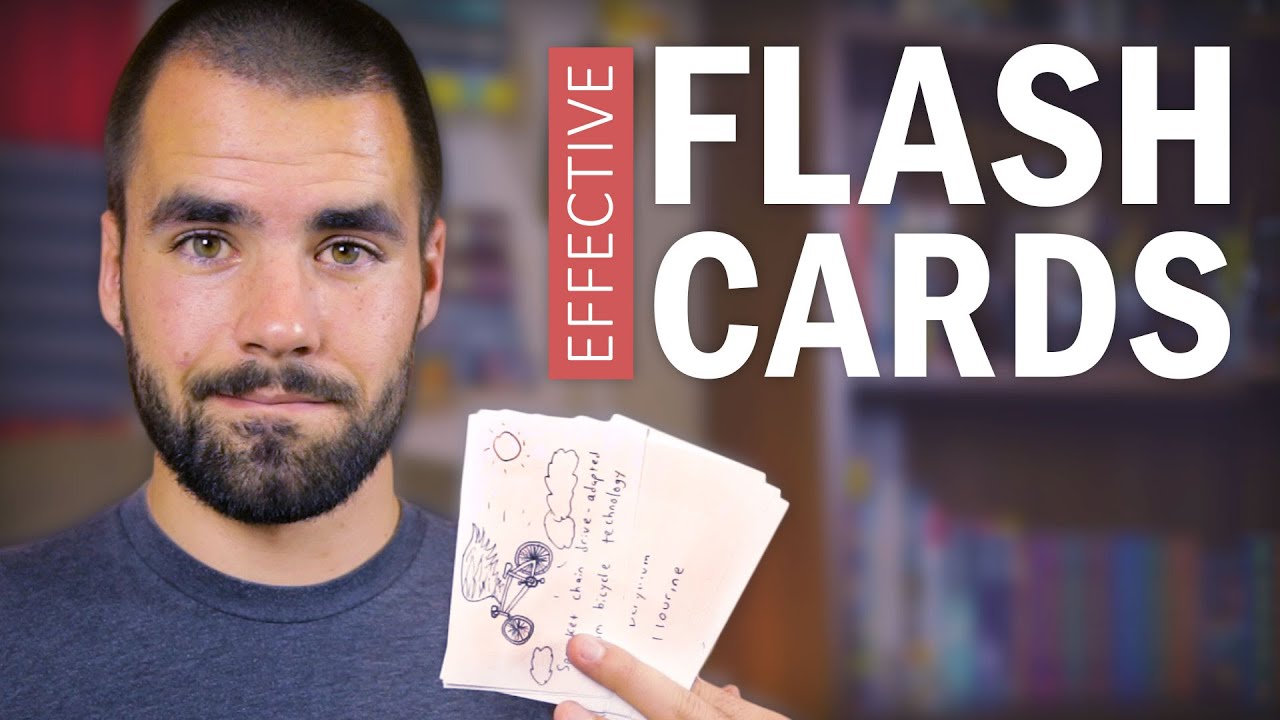
oh hey there welcome back to another episode where i check random household bottles of liquid for no apparent reason at all today featuring sriracha now i'm just kidding as you saw from the video title today i'll be sharing tips on making better quality flash cards it's been a pretty highly requested video from fam and i get it it's easy to make a ton of flash cards but quantity doesn't always equal quality and of course i'm talking about making digital flash cards because let's be honest nobody should be making handwritten flash cards anymore stop that just
don't do it this isn't game of thrones alright we have these things called phones now and laptops and apps the flash card game has evolved like a pokemon all right don't be a diglett keep up you can use whichever flash card program you want i'm using rem note because i love the workflow in the built-in space repetition but these tips should apply over all the different sophisticated flash card apps on the market so let's just get right into it guys 10 steps for better quality flash cards plus a bonus tip at the end of the
video for you flash card fanatics let's go don't put too much information on any flash card ideally you want it to be one piece of information per flash card because if you have two or three or more pieces of information then it'll be easier to remember the easy stuff but you'll have to keep practicing the card over and over to remember the hard stuff my solution is to actually just break down these bigger flash cards into more specific separate flash cards don't be afraid to make too many flash cards because if you're using a space
repetition system then naturally over time the easier cards will be shown to you less just leaving the difficult ones and then eventually you can just disable the easy ones completely and next is to be as specific and concise as possible ask a specific question or use very intentional wording the idea is to not leave yourself wondering what that flash card is actually asking for example making a flash card called mitosis is too vague like what about mitosis what's the definition what cells undergo mitosis where am i going to find it in a textbook a better
flash card would be list out the specific steps in mitosis in order now if i see that flash card ah it's super clear and i know exactly what it's asking for next is to give your flashcards context learning isn't just about memorizing facts facts i want to understand the information's context and how to apply it so when i study flashcards i try to mentally slot each bit of information into the bigger picture so i can see how it relates to all the other concepts that i'm learning about i include context for my flash cards on
the answer size using the extra card detail feature in remnant i prefer not to put clues or contexts on the front side of my flashcards because sometimes it gives away the answer and hinders whether or not i truly know the concept so here are some examples of what context might include so what's the big picture concept that this piece of information belongs to or is it part of a process what other concepts are commonly compared and contrasted with this piece of information and where can i go to find more information about this topic if i'm
a little rusty and there are a lot of ways you can add that context i use images or diagrams flow charts even link youtube videos sometimes and add hyperlinks to papers and stuff if you're taking multiple classes or studying a field that's really interconnected then it's likely that you're going to come across contradictory information throughout your flashcards so having the context on the backside of the flashcards always clues me into the topic that i'm learning about the source so i don't have to go digging through my notes or the textbook to find a little bit
more information about that next is to use images our brain prefers to remember imagery over words for example if i were to tell you to think of the word ramen the letters r-a-m-e-n probably wasn't the image that you had in your mind it was most likely a deliciously huge steaming bowl of broth and noodles and then you shoveling that into your mouth so quick and easy way that i incorporate images into my flashcards is to just take a screenshot on my computer using the snipping tool or the mac equivalent i'm not sure what that's called
and then just pasting it right in my flash cards i know that rem note and other similar flash card apps have the image occlusion feature which is really cool you can actually block out certain parts of images and then study those as flash cards check out this video up here if you want to learn how to do that in remnant next is to make less decks instead of making a separate deck for every chapter every lecture in my course i'm just going to make one giant deck for the entire exam i prefer studying from a
bigger pool of information because my flash guards are all randomized so it forces me to think about multiple different topics during a single study session and most exams that you take are also randomized right they're gonna be questions from lecture one lecture five lecture ten so having that randomization also emulates how you're gonna be taking your test so might as well study the same way next is to use tags a lot of information will overlap with each other in medicine a lot of drugs are used for multiple diseases and certain infections affect multiple organ systems
so instead of wasting time by making and organizing repeated information i use tags to further categorize all my flashcards by topics in rem note i can take it one step further and use references to deepen the connections between all of my flashcards but the main goal is to just focus and prevent redundancy next is to use mnemonics this involves using patterns of numbers or letters to associate with your knowledge for better memory and i generally put the mnemonics on the back side of the flash cards in the extra card detail again for the same reason
as before i don't want hints while i'm answering the flash card but once i see the context of it i want to know when i need to apply that mnemonic if i come across some buzzwords on the test next is to use the memory palace or the method of loci it's a technique where you associate pieces of knowledge with imagery and again i put these images on the reverse side of my flashcards in the extra card detail i'm not going to go into too much information about the method of loci you can check out this
video up here if you want to learn more about that next is to use enumeration to make stepwise flashcards enumeration means naming all the items in a list one by one in order because naming a list without any order is really difficult so using enumeration for a list will prompt you to remember that order specifically and that's going to reinforce the same neural pathways in your brain to solidify that in your memory this strategy is really effective for learning processes in mathematics or medicine when things are very algorithmic and you have to go down a
specific pathway in rem note you can turn your flash card into an enumeration by using two colons followed by one followed by the period with no spaces in between and then you can type out your list and when i study that flash card i'll be prompted every step down the list and the last tip is to practice both forwards and backwards when you make flash cards it's usually the front being the question and the back being the answer but during the tests you'll never know if the exam might give you the answer and then ask
for the question or vice versa so when i make flash cards now i always ask can this flash card actually be two flash cards one going forwards and one going backwards alright guys so here is the bonus tip if you're a super lazy human being like me and you don't like making a whole bunch of flash cards then what you should do is to phone a friend or reach out to the smartest kid in the class and ask to use their flash cards let me show you how it's done luckily i got someone on speed
dial alright let's see if he answers hey hey what's up bro hey what's up man hey i heard from a friend that you wrecked the hematology exam in medical school is that true uh i mean i can't confirm nor deny that sick uh could i get your flash cards for that uh sure they'll be 500 bucks 500 bucks they're really good flash cards okay though yeah i'll send it to uh info at my committee for sure for sure oh hey by the way have you seen uh invincible that show oh the show on amazon yeah
dude that show was so good she's so good i watched the first episode i was like already like all about it and then the ending just blew my mind on the first episode yeah definitely finish it if you haven't like i would just drop everything and just binge it like so you can move on i mean if you're giving your flash cards they might as well not do that so yeah for sure sick all right yeah i'll send it over all right man i'll see you later and that's how you do that little bros always
be mooching anyways i figured instead of just sharing flashcards between the two of us why not share flashcards with everybody so in the description below we will link one of our step one study decks feel free to download it and import it into your revnote account and use it for your study purposes or you can just take a look to see how we structure our flash cards also speaking of free stuff we went ahead and compiled all the key points of this video all 10 steps into an ebook that you can download for free from
our library so i'll link it down below if you get a chance to check out either of these two things our flash cards or our ebook i'd love to hear some feedback in the comments we're not flashcard experts or anything but we have been working on improving our flash card game for years now to the point where we don't really take notes in class anymore and we recently made a video about not taking notes and not even going to class and if that's something you're interested in you can watch it by tapping on the screen
right here [Music] you