hi I'm Robert Saburo from the University of California at Berkeley and today I'm gonna give a talk titled transforming cities with transit I have to say I'm presenting this from midtown Manhattan so you might occasionally hear traffic in the background but I think that's really appropriate given the nature of my subject matter cities are becoming much more motorized worldwide this is being driven by rapid increase in income spall warned people moving the cities creating longer distance trips and all of this is giving rise to astronomical increases in auto ownership patterns take a place like China
which is adding some 15,000 cars to the streets every day in Chinese cities they're projected by 2050 to have as many automobiles as currently exist on all the planet Earth some 800 million cars many very rapidly growing but lower-income countries like Vietnam the growth is not so much private cars but two-wheel scooters motorcycles there you have five times as many motorcycles as private cars so it suffice to say cities are becoming much more motorized creating tremendous challenges I and others have done a fair amount of work on the effects of these trends of rapid increases
in cars and urban sprawl a place like China for instance which I've studied on and off of the years we did a recent analysis where we showed that people that moved from the historical centers of the city compact mixed-use development with great bicycle infrastructure good walking environments organically evolved communities and moved to the suburbs some voluntarily some were displaced often moved to these masterplan gated isolated residential towers separated from many urban activities dramatic increases in vehicle kilometers traveled per person in the case of this study we did of Shanghai 275 percent increase in vkt per
person we used vehicle kilometers traveled per person as a metrics of sustainability in the transport sector as it increases so do tell type and tailpipe emissions so does energy consumption so does the use of land car dependent cities we know carry with them very high cost the car is a wonderful invention it's provided unprecedented levels of mobility it allows people to get around on demand any and everywhere at all times of the day we know that the cumulative cost of a car oriented lifestyle begins to catch up with you air pollution both local and global
global being greenhouse gas emissions but also local this one image shows Sao Paulo they have 3,500 deaths per year because of asthma bronchitis upper respiratory illnesses most of these associated with the massive growth in cars social exclusion if you don't have a car you're isolated from the many opportunities for a job for education and so forth neighborhood disruption freeways and major transport infrastructures can uproot neighborhoods but mounting congestion I think is one of the key cost that we associated with a car oriented lifestyle congestion becomes a dragon economic development but also it rapidly deteriorates quality
of life we find that people who spend time in congestion become less involved in community affairs because they spend so much time trying to get about the city there's less quality of time left to spend with their family neighborhood and loved ones what some people refer to as time pollution another thing we well know is you can't build yourself out of this traffic congestion many studies we've done particularly of the developed world show that very quickly the added Road capacity provide gets consumed people change mode of travel time of day of travel route so that
within a couple years you're back to as congested as you were at the very beginning so supply-side solutions in and of themselves are not enough this is a lead to really a movement what has been referred to as the a sea movement a void shift and improve we need to avoid more trips about a better transport and land use integration creating shorter trips where people have to use motorized cars less often invest very heavily in sustainable modes like bicycle pedestrian and in public transport and to the degree people do use mechanized motorized forms of transport
like buses hopefully they're doing it in clean fuels diesel electric hybrid buses or using compressed natural gas the image here I think says volumes about why we need to be promoting public transport it's an inherently it's the most sustainable form of mobility you make far less use of scarce resources like urban space per person travel than virtually any other mode it's very important though that any and investment and transportation including public transportation be carefully integrated with urban land use planning it's pretty axiomatic but it's so true that we don't hop into vehicles trains cars or
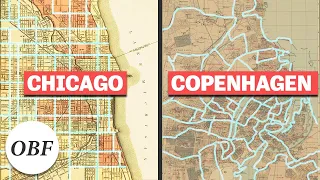
buses to be moving we're going to places and it's places that matter most it's what we value and care most about cities it's places of work places of residence places of shopping places of learning places of worship it's really what we care for first and foremost about cities and not the process of necessarily getting in these places so cities that have understood that had a fairly well articulated vision of how they wanted to grow such as Copenhagen and Denmark they started in the late 1950s with a master plan called the finger plan and they identified
five well-defined linear corridors where growth would occur they also importantly identified the green wedge as a way they would protect land from development and natural ecological preserves open space watery shed areas and so forth they proceeded to invest in advance of demand in rail transit to channel and guide the growth along these well-defined corridors and urbanization very quickly followed these happen to be a few images of compact mixed-use development around some of the train stations and in Copenhagen but you can find virtually every example worldwide of cities that have good sustainable transportation system they got
it right they understood you had to first have a clear vision and a plan in place of how you wanted to grow and then they in used investment in public transport and other infrastructure to help achieve that desired urban form now in the case of Copenhagen it wasn't just good regional planning they also at the micro scale invested very heavily in bicycle infrastructure cycle tracks bicycle parking protected zones at transit stops so you find 35 percent or so of all trips even on days of the year when it's raining or by public transit and a
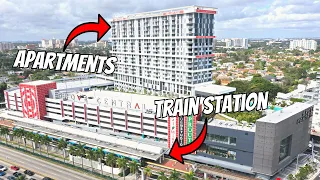
very high share of access trips to transit stations or bikes we call this Copenhagen style form of development compact mixed-use walking friendly development around transit stations we call that transit oriented development or Tod the image here of Pleasant Hill California the Bay Area Rapid Transit System in the San Francisco Bay Area where I'm from I've studied this station for a number of times number of years now we show that people who live there are taking transit five to seven times as much as people in the surrounding immediate neighbor community and a good part of this
is because what we call self selection for lifestyle reasons people are sorting themselves into these places buying for your car is taking transportation more often so it's absolutely essential that we work with these kind of market lifestyle preferences to ensure we're building sufficient good-quality housing opportunities across all income levels to serve this market demand now Tod is more than about creating neighborhoods where people can get on and off of stations some of the best Tod s are community hubs they really become the centerpiece for urban regeneration for building great quality communities and a big part
of this is urban design softened people's perceptions of density so you can really get density high enough to make sure you have a very sustainable cost-effective form of transportation a place like Portland Oregon for instance light rail transit cohabitate s-- the streets very well with pedestrians so it's what we call place making places where people feel comfortable where they want to be an example of a city that has really done this for Matt Tod one of the prototypes if you will is vowing be in Stockholm Sweden where early on in their planning at the tunnel
bonnez system they built master plan communities or gonna rent organized around the transit station and placemaking again was a big emphasis when you leave the tunnel bono station in stockholm you're not hit by tall buildings what you immediately see actually is a public space a civic square this Civic Square really plays a very important role of placemaking it's where people concentrate for public celebrations demonstrations one day it's a farmers market the next day it might be an open-air concert but it really is that community hub after work people meet friends they might socialize and shop
or go to a restaurant together so they're able to couple those trips using transit with other activities near the transit stations and eventually get to home so you really try to consolidate a lot of activities around the transit hub through good urban design making these vibrant viable communities what I showed in the case of Allenby was a Tod on a green field cities like Stockholm I could show samples and many other parts of the world are now moving towards Tod on brownfields as part of an urban regeneration process a good example of this as Tamra
bay show stead where they took a industrial site former industrial site and redeveloped it as the green Tod invested very significantly in tramway traffic calming techniques community gardens congestion pricing if you go on the edge of pamorah be show is dead they actually have a cordon where if you pass during the peak hour you have to pay a congestion toll so it's not just good land-use planning it's also trying to get the economics right really passing on true charges to motorists which is part of their success but hammered be show us dead and I could
cite other examples or what we call green Tod what they've managed to do is integrate this transit oriented development with green architecture and greenery urbanism minimal or zero waste through recycling self-sufficient energy production they have biofuels and other ways of creating their own energy on-site photovoltaics and so forth but one of the key things is if you link Tod with this kind of green urbanism you get a lot of efficiencies for instance land that otherwise might be given over to parking you need less parking because people have fewer cars it's now land then instead can
go to parks community gardens towards photovoltaic arrays other kind of activities and when we've done studies of these kind of green D Hodes such as in hammer B shows dead we find that their carbon emissions their energy consumption is roughly 1/3 less than comparable communities of similar incomes so we know that this really can deliver significant environmental sustainability benefits if we design it well I do like to on this point about transfer Manor development and efficient transport land-use integration I try to make the point that this is not just about place making you can also
make money if you do it well take a place like Hong Kong extremely land constrained area where there's a tremendous demand for good assessable sites for development the transit agency their MTR leases the air weights above their development and they make roughly 2/3 of the income of the transit agency comes from value capture recapturing the value of being near a transit stop but they've also put a lot of emphasis in recent years on placemaking prior to the year 2000 there wasn't a lot of emphasis that was just putting buildings on top of stations now they've
enhanced the quality of pedestrian environments architectural integration a much better urban Malou they have found that not only their revenues have gone up basically twenty five percent increase in profits but so has a ridership so sustainable mobility sustainable finance I think our wholly consistent ideas based on experiences like Hong Kong I'm going to close by emphasizing bus rapid transit BRT is one of the fast-growing areas in terms of trying to promote high-quality high-capacity public transit but using a rubber tyred bus based system you see it's a dedicated exclusive right away with many other features such
as off vehicle fare pavement not unlike what you would pay on a metro rail system but if these systems are designed well they're at a much cheaper cost Latin America by far has been the global leader in advancing BRT systems they're roughly one third of vehicle kilometers the BRT systems worldwide you can find in Latin American cities but some two-thirds of all either ship of the hundred and fifty BRT systems worldwide you can find in Latin American cities this graph might be a little difficult to read but it really shows the productivity of BRT in
Latin American cities the number of passengers per kilometer of BRT route in Latin American cities is two and a half times as much as you find in Asian cities and much higher than in North America and Europe now part of this is because they've been very successful at integrating transportation and land use Curitiba is is a world-class example of using bus based BRT systems not unlike Copenhagen or Stockholm to drive growth along well-defined linear corridors these are compact mixed-use corridors they used a number of tools such as density bonuses overlay districts urban design standards to
create good quality urbanism and urban Baloo's along these transit corridors if you look at Curitiba versus a unabashedly car-dependent City a city designed for autumn ability like Brasilia the master plan capital of Brazil you find that it has roughly three and a half times less vehicle kilometers Travel per person and many more transit trips per year I'm gonna close by taking an example of another Latin American city Bogota which actually has built a wonderful BRT system but it was designed purely from an engineering perspective to move a lot of people 40,000 people Direction per hour
on buses very high achievement in terms of ridership 1.7 million passengers per day a dual carriageway system so they can move a lot of people up and down this corridor but because this was an engineering system the focus was on low-cost cheap right away acquisition putting in a median of a very busy road they filled the leveraged development in fact they put the corridors and some of the more suppressed urban districts in in Bogota it's also very crowded not a terribly good urban Malou we did a study recently where we showed there actually was more
development turned its back on the BRT corridors away from the BRT quarters than near it partly because these were engineering designs not place making designs a city like Wang Zhao China actually has taken a much different approach where their BRT system has very high passenger carrying capacity and unlike not unlike Bogota but they've done a much more effective job of blending in the transit stops with the surrounding urban will Lewis second story sky walks a much more intimate human scale kind of urban development pattern I'm gonna it's simply close by three key points I'm trying
to make in my talk today one is that vision and planning matters if we really want to create these inherently sustainable urban development patterns Tod and so forth we really have to have good planning in place to leverage private development it's also important that we seize upon these opportunities and realize that these aren't just mobility investments we're already we're also creating places we have to create tree theses is City shaping investments they have to be an integral upfront part of the early planning they can't be an afterthought and then lastly I'll make the point that
there's tremendous opportunities particularly in the global South where the vast majority of future growth is being projected to do bus rapid transit oriented Tod in fact between 2010 and 2030 90 percent of urban population growth has projected to be in small to medium sized cities a hundred thousand to a half a million these are the very places that can't afford expensive metro rail systems but above rapid transit system with Tod type of development is imminently well-suited to such places thank you