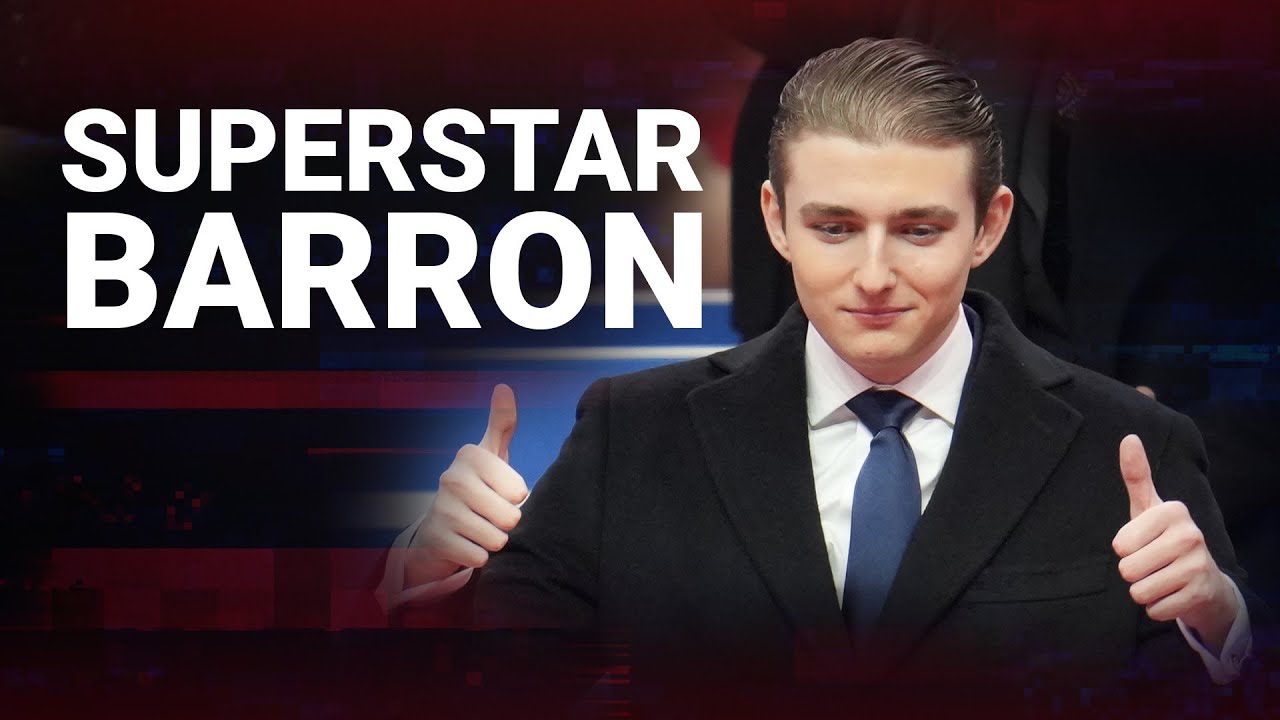
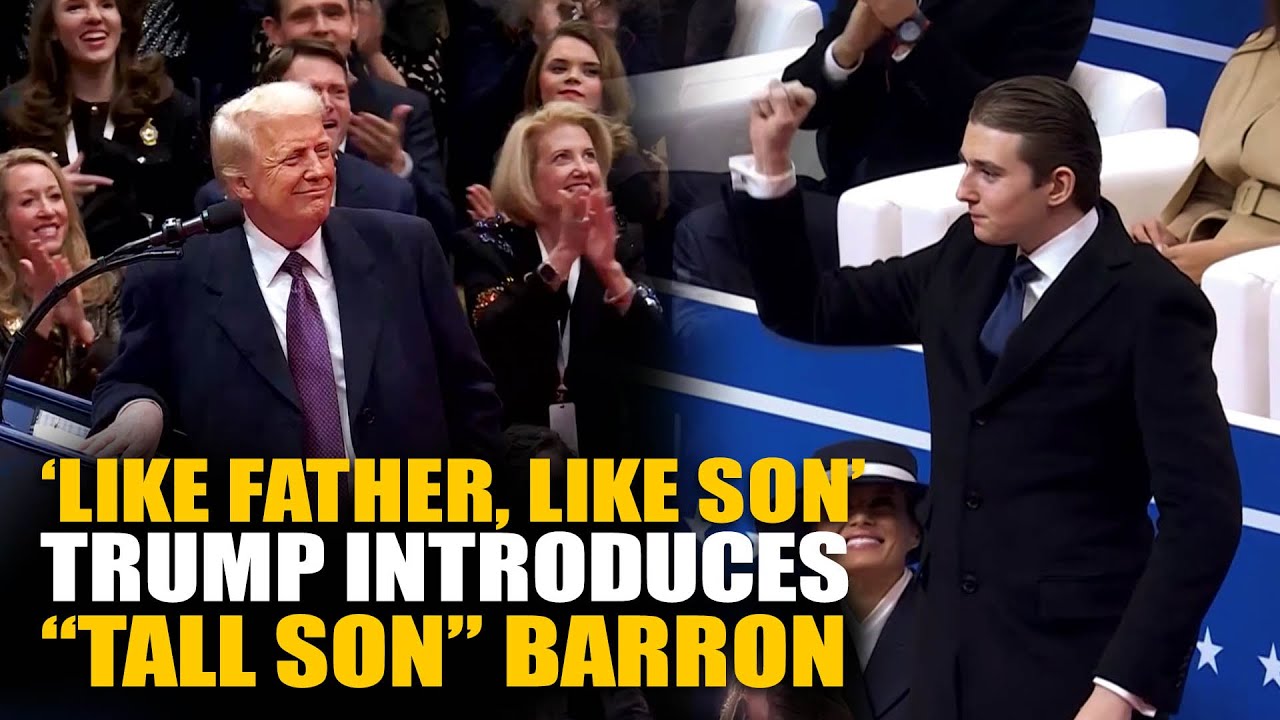
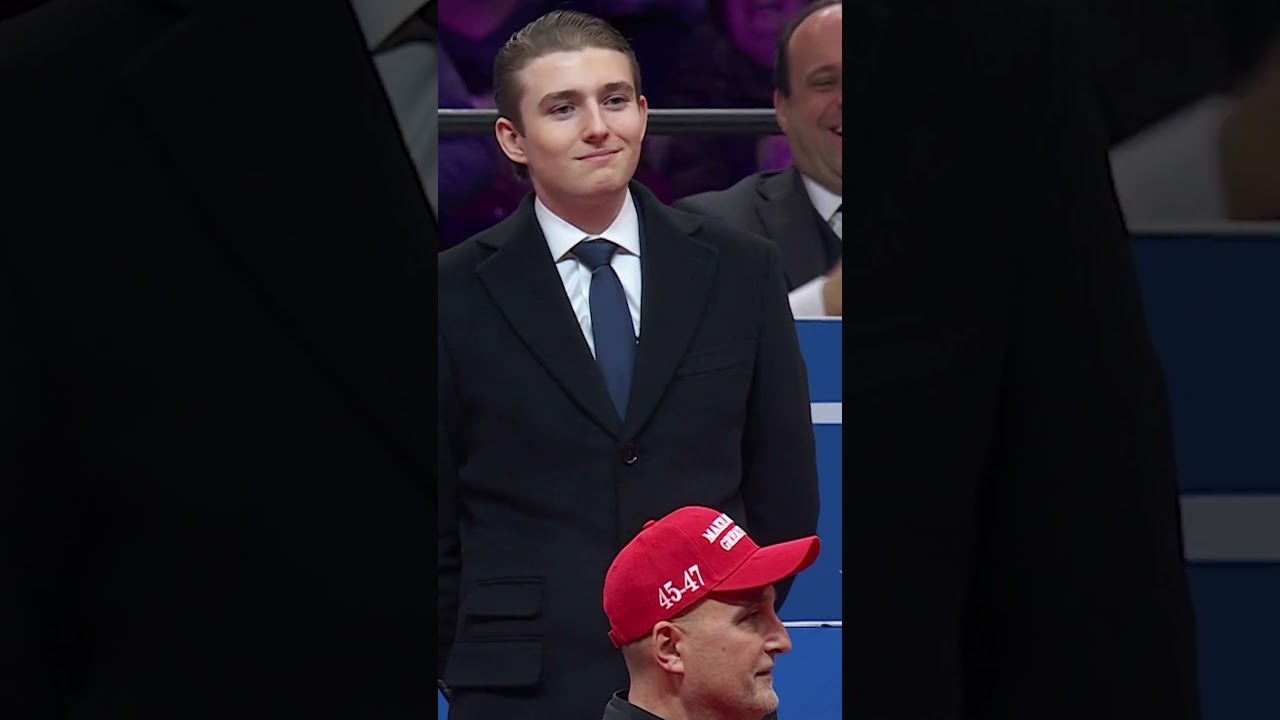
Baron Trump stuns the entire nation. His first-ever speech is shocking; he's been silent for 18 years, but tonight everything changes. Baron Trump, a name everyone in America knows, yet no one has truly heard for years.
He has stood in the shadows, quietly observing, growing up amidst political storms, relentless media scrutiny, and countless watchful eyes. No one expected him to speak; no one believed he would ever step onto that stage. But then, under the blinding stage lights, as Baron's gaze swept across the packed auditorium, something unimaginable happened: America fell silent.
In just a few short minutes, a young man once dismissed as an outsider made an entire generation stop and listen. The question is, what made Baron Trump break 18 years of silence? And more importantly, what did he say that left the entire nation in shock?
Let's go back in time and uncover the truth behind the speech that shook America. Baron Trump, a name tied to one of the most powerful families in America, yet in the midst of political turmoil, amidst the endless stream of breaking news and controversies, he remained silent for years. The world only saw glimpses of Baron through fleeting photographs—tall, composed, with piercing eyes that hinted at something deeper, something unreachable.
He wasn't like his father, whose words could shake headlines in an instant. He wasn't like his mother, whose elegance and mystery captivated the public. He was Baron, always on the sidelines.
To outsiders, it seemed like he had everything: wealth, status, privilege. But there was one thing Baron had never truly possessed: a voice that was his own, a voice that wasn't twisted, manipulated, or turned into a weapon for someone else's agenda. From a young age, Baron learned a hard truth: every word, every action he took could be turned against him.
He watched as his parents faced relentless attacks, sensational headlines, and fabricated stories—narratives crafted to fuel public curiosity. He had tried to speak up before, but the moment he did, his words were taken out of context, dissected, and spun in a hundred different directions. Every syllable became ammunition for someone's narrative, and so he made a decision: silence was the safest shield.
But that didn't mean Baron wasn't paying attention. In fact, he saw everything. He saw America changing—young people like him burdened with crushing student debt just for a chance at higher education.
Stable jobs disappearing, replaced by automation and artificial intelligence—the gap between the rich and the poor widening while politicians bickered without offering real solutions. He remembered the charity events he attended with his mother—children in struggling neighborhoods who smiled at him, yet their eyes carried the weight of a future they already feared. Some of them already knew they would never escape the cycle of poverty.
He scrolled through thousands of comments on social media—young people expressing frustration, hopelessness, and disillusionment. And then one comment made him pause: “We don't have a voice; they don't care what we think. Maybe it's best to stay silent and accept our fate.
” His breath caught because, for the first time, he saw himself in those words. And then another thought surfaced, one that refused to let go: “If we all stay silent, who will change this? ” The question haunted him for days.
For the first time, his silence no longer felt like a shield; it felt like surrender, like complicity in everything that was going wrong. But even after realizing that truth, he still wasn't ready—at least not until that day something happened, something he couldn't ignore—a moment that made it impossible for him to remain an outsider any longer, and it changed everything. The world kept spinning whether Baron Trump spoke up or not, but deep within him, a storm was brewing—not a storm of nature, but a storm of unrest.
The economy was spiraling into recession; inflation soared, prices skyrocketed to the point where even middle-class families struggled to make ends meet. Companies across the country announced mass layoffs; artificial intelligence and automation replaced human workers at an alarming rate, leaving millions jobless. And then protests erupted across America.
The streets were flooded not with celebration, but with young people standing shoulder-to-shoulder, holding their signs high. They weren't asking for handouts; they weren't demanding the impossible. They wanted only one thing: fairness—fairness in education, fairness in employment, fairness in the way this country was being run.
But no one was listening. That night, Baron sat alone in his massive room, the glow of his computer screen illuminating his face. News of the protests dominated every headline.
Banners flashed across the screen: a reckless rebellion or a desperate cry for help? Are young people asking for too much, or has the system truly abandoned them? On television, politicians argued back and forth, pointing fingers, assigning blame, yet not one of them offered real solutions.
Baron scrolled through hundreds of social media comments; some people stood with the protesters, others mocked them, saying today’s youth complain too much instead of working harder. Then a video caught his attention. In the footage, a group of students stood outside a government building.
They weren't yelling; they weren't causing chaos; they simply held up their signs: “We don't want a future drowned in debt. We need real jobs, not empty promises. Listen to us.
” Then a young woman stepped forward. Her face was calm, but her eyes burned with determination. Her voice rang out in the heavy silence: “We are not lazy.
We are not asking for what we don't deserve. We just want a fair chance—an education that won't bury us in debt for life, a job that allows us to live, not just survive. Is that really too much to ask?
” She paused, looking up at the towering government building before her, but the doors remained shut, the curtains behind the windows stayed closed. No one responded. A sigh rippled through the crowd.
That silence—the silence of being ignored—was more painful than any rejection. And then the worst happened: a group of officers approached, ordering the crowd to disperse. No one resisted; yet somehow, the tension escalated.
Someone was pushed. Someone stumbled. A scream rang out.
The young woman was shoved backward. It wasn't a violent act, but the way she fell—the way her trembling hands clutched onto her sign as if it were the only thing keeping her standing—made something inside Baron shatter. He wanted to run to her, to help her, to do something, but he could only sit there, watching it all unfold through a screen, powerless.
For the first time in his life, he felt rage—not the kind that explodes in reckless fury, but the kind that burns slow, deep, and unforgiving. At that moment, Baron knew silence was no longer an option; he had to do something—not because of who he was, but because he knew there were millions of others who felt exactly the same way. That night, Baron couldn't sleep.
He sat in front of his laptop, staring at a blank screen. His mind raced; thoughts flooded in—memories of every injustice he had witnessed, every face he had seen filled with frustration, every voice that had gone unheard. And then just one thought remained, echoing louder than the rest: if I don't speak up now, then when?
His hands trembled as he placed them on the keyboard, but he didn't hesitate. He started to type the first words of a speech—a speech that would change his life forever, and not just his. After what he had witnessed, there was no turning back.
Baron Trump could no longer remain an outsider, but stepping forward and speaking up—that was an entirely different challenge. He wasn't a politician; he wasn't an activist. He had never given a speech, never stood before a crowd.
So how could an 18-year-old—someone who had spent his entire life in silence—make an entire nation listen? The days following the protest felt like a whirlwind of doubt and restless thoughts. The images replayed in his mind over and over again: the desperate cries, the silent suffering, the people left behind in a country that seemed more divided than ever.
And one question refused to fade: if not me, then who? If not now, then when? But no matter how determined he felt, he had no idea where to start.
To truly understand the depth of the problem, Baron made a decision: he had to step outside his world of privilege. No more just watching through a screen. For the first time, he needed to walk into the reality of those struggling every single day.
He left behind the walls of luxury and stepped into the real America—the bustling streets filled with both resilience and hardship. No bodyguards, no media—just him, quietly observing and listening. The first person he met was Marcus, a college senior drowning in hundreds of thousands of dollars in student debt.
Marcus had once believed that hard work and good grades would secure his future, but now, even with top honors, he wasn't sure if he'd ever find a job that could sustain him. "Sometimes I wonder: does the American dream even exist anymore? " Marcus muttered, forcing a sad smile.
Baron listened—truly listened—and for the first time, he felt the brutal reality that people his age were living through. Then he met Linda, a single mother working back-to-back night shifts just to provide for her two young children. She had once had a stable job, but automation had made her role obsolete.
Now she worked for minimum wage, barely scraping by. "I don't need pity," Linda said, her calloused hands tightening into fists. "I just want a fair chance to take care of my family.
" Story after story, voice after voice—each encounter was a lesson. Each voice was a piece of a much bigger picture, a picture of a country struggling under the weight of change. And then a realization hit Baron like a tidal wave: despite their different circumstances, all these people had one thing in common—they didn't feel heard.
When Baron returned home, his mind was heavy with everything he had seen. He wanted to do something, but how? For the first time, he sat down across from his mother and opened up about the storm of thoughts raging inside him.
"I want to help them, but I don't know where to start. " She studied him for a long moment before speaking. "If you want to help them, the first thing you have to do is let them know you're listening.
" Her words lingered in his mind for days. And then he began to write—not political speeches, not rehearsed statements, but stories. The stories of the people he had met, the faces he couldn't forget, the pain he had witnessed.
He didn't use his real name; he didn't need to. He was just one voice among millions. And then something unexpected happened: his words began to spread.
People shared them, commented on them, added their own stories. Young people found solidarity; older generations began to reconsider. One day, Baron's inbox lit up with a message.
It was from a student organization planning a youth forum on the future of their generation. "We read your writing. We want to invite you to speak.
" He stared at the screen. Was this the moment he had been waiting for—a chance to say out loud what had been weighing on his heart? But then that old fear resurfaced.
He had never spoken in public, never faced a room full of skeptical eyes, never answered difficult questions. What if he failed? What if they laughed at him?
But then he remembered Marcus's eyes. He remembered Linda's trembling hands. He remembered all the voices that had gone unheard and.
. . He knew if he stayed silent, so would they.
He took a deep breath and typed back two simple words: "I accept. " The next morning, as he looked in the mirror, he saw someone different—no longer a shadow, no longer an outsider, but someone about to step onto a stage and change everything. Baron sat frozen in front of his computer screen, his eyes locked on the message he had just received: "We've read your writing.
We'd like to invite you to share your story. " He read the words again—once, twice, three times. A student organization, one made up of young people who dared to speak out against injustice, had found his writing, and now they wanted him to stand on a stage in front of a packed auditorium and use his voice to talk about the very issues he had been witnessing, listening to, and struggling with.
His heart pounded. The opportunity to speak had come, but almost immediately, fear crashed over him like a tidal wave. He had never spoken publicly before; he had never stood under bright lights with countless eyes watching, waiting for every word.
What if he failed? What if they laughed at him? Doubt swirled in his mind, threatening to hold him back.
He could refuse. He could keep writing, stay behind the screen where no one could judge him, where no one could pick apart his every word. But then an image surfaced in his mind: Marcus, his face heavy with the weight of student debt; Linda, her voice trembling as she spoke about raising her children alone.
The people he had met, the stories he had heard—none of them had the luxury of staying silent. Baron took a deep breath, placed his fingers on the keyboard, and typed two words: "I accept. " Two simple words, but for him, they were a decision that would change everything.
The days that followed were restless; sleep was a luxury he couldn't afford. He buried himself in preparation, reading speech after speech, studying the art of public speaking. But no matter how much he practiced, he never felt ready.
One evening, as the house lay silent, he sat on the balcony, staring out at the city lights stretching endlessly before him. The door behind him creaked open. His mother stepped out, wrapped in a light shawl, her expression both gentle and knowing.
"You're nervous," she stated. Baron didn't respond, but his silence said everything. She sat beside him, letting the cool night air settle between them before she finally spoke.
"Do you remember when you were little? Every time you had to stand in front of a crowd, you'd always reach for my hand. " A weak smile tugged at Baron's lips.
Of course he remembered—every time he stepped onto a stage for school events or ceremonies, he would grip his mother's hand, his anchor, his reassurance. But this time he whispered, "I have to stand alone. " His mother turned to him, her eyes filled with quiet strength.
"No, Baron. You're not alone. The people you've met, the ones you've listened to—they'll be standing with you.
Your voice isn't just yours anymore; it's theirs. " He looked up at her, a flicker of realization in his blue eyes. "But what if I fail?
" She placed a hand on his shoulder. "The only true failure is not trying. " The next morning, Baron stepped into the car, his destination set.
The sky above was clear and blue, yet his mind was a storm of uncertainty. The event hall was already packed—students, reporters, activists—they were all there waiting. A door near the side of the stage swung open.
The young event organizer walked in, extending a hand. "Baron, are you ready? " His heart pounded.
He could say no; he could turn around and walk away. But instead, he took a deep breath, clenched his fist just like he used to as a child, and then he stepped onto the stage. Outside the auditorium, the air buzzed with energy.
Conversations overlapped, laughter rippled through the crowd, and debate sparked between eager voices. Inside, hundreds had already taken their seats, eyes fixed on the stage, waiting for the event to begin. But behind the curtains, an entirely different world was unfolding.
Baron stood in the waiting room, gripping his notes tightly, but he wasn't even looking at them anymore. Everything in front of him blurred, drowned out by the pounding of his heartbeat. He had never felt pressure like this before.
His phone kept buzzing—texts from friends, people who had heard about his speech. Some messages were encouraging; others, not so much. "I don't think you should do this, Baron.
The media will tear you apart. " "This is your moment; make them listen. " He took a deep breath, but the air felt too heavy, too thick to fill his lungs.
Then a familiar voice broke the tension. "Nervous? " Baron turned sharply; it was James, one of the event organizers, a senior at the university.
He was the one who had reached out to Baron after reading his posts. "A little," Baron admitted, his voice barely above a whisper. James smirked, crossing his arms.
"Did you know that every speaker goes through this? Even the most seasoned politicians have been terrified before stepping on stage for the first time. The real question is, why are you here?
" Baron hesitated. James continued, "You don't need to be perfect; you just need to be real. " Something about those words struck a chord.
Baron wasn't here to be a politician; he wasn't here to chase fame or power. He was here for the people he had met, for the stories he had heard, for the voices that had been ignored for too long. Fear still lingered, but beneath it, something stronger had begun to rise.
"Baron Trump, you're on in 5 minutes. " He inhaled deeply, and this time the breath felt full. He stepped out into the hallway at the.
. . end of it stood the door that led to the stage, and beside that door, his mother.
She didn't speak; she didn't need to. Her eyes, filled with pride, said everything. He didn't have to ask; he knew she believed in him.
"Thank you, Mom," he whispered. She smiled. He turned, eyes locked on the door ahead.
This was it. The air inside the auditorium was thick with anticipation as Baron Trump stepped onto the stage. Every eye was on him; some were curious, some were skeptical, and some were waiting to see if he had anything worth listening to.
The stage lights illuminated his face—long composed, but with a fire burning quietly beneath the surface. He stood in front of the microphone, scanning the crowd. In the front row, journalists were poised with pens and recorders; further back, young people—people like Marcus, like Linda—watched intently.
Baron took a deep breath, then he began, "I have been silent for 18 years. " A wave of murmurs spread through the audience; some furrowed their brows, others leaned forward, waiting for what would come next. "People always ask me: Why haven't I spoken up?
Why haven't I shared my thoughts? Is it because I don't care? Is it because I have nothing to say?
But that's not the truth. " He paused, his gaze sweeping across the room. "I have been silent because I thought my voice didn't matter, and I know I'm not the only one who has ever felt that way.
" The room grew still; young faces in the back nodded, connecting with his words. "But then I realized that very thought is what's holding us back. I have met people struggling to find a way forward—young people working themselves to exhaustion just to survive in a world that's moving fast; a college graduate drowning in over $100,000 of debt, yet still unable to find a job that pays enough to live; a single mother replaced by machines, now working two shifts just to keep her family from becoming homeless.
" Baron let the weight of those stories settle over the crowd. He could see expressions shifting from indifference to contempt. "These people aren't asking for sympathy; they don't want anyone to fight their battles for them.
They just want a fair chance— a system that doesn't crush them under debt, a workforce that doesn't discard them the moment technology advances, a country where their voices actually matter. " Scattered applause broke out from the back of the auditorium, but Baron wasn't finished. "And the scariest thing isn't that these problems exist; the scariest thing is that so many people believe their voices don't matter, that no matter how loud they speak, nothing will ever change.
" Silence fell over the room. Then Baron looked up, his voice steady. "But I stand here today to tell you that is a lie.
" The energy in the auditorium shifted. The young people in the audience sat up straighter, their eyes burning with recognition. Baron could feel the momentum building.
"If we keep waiting for someone else to fix things for us, how long will we have to wait? If we don't stand up, if we don't speak out, who will? " The applause grew louder, stronger; some people stood, others whispered urgently to those beside them.
"We are not the future; we are the present, and if we want to change something, then now is the time to start. " As the final words left his lips, the entire room erupted in thunderous applause. Some people rose to their feet, clapping relentlessly, even in the front row, where the older audience members had remained composed.
Their expressions were no longer indifferent. Baron took a step back, drawing a deep breath. He knew this was only the beginning.
Overnight, Baron Trump's speech became the most talked-about event in America. The video of him standing on stage, eyes unwavering, voice steady, had been shared millions of times. Major news outlets dissected every word he said.
Young people praised him as a rare voice of truth, a representative of their generation. But just as many were quick to criticize. Some dismissed him as a privileged rich kid playing activist; others accused him of staging a political stunt, and a few even called him a disgrace to his own family.
The debate spread like wildfire—finally someone from his world daring to speak the truth we've all been thinking: easy for him to talk about inequality; has he ever actually struggled? This is nothing more than a carefully planned move for his future in politics. Baron scrolled through the comments, the articles, the endless streams of opinions.
A part of him wanted to respond, to defend himself, but he knew that if he got caught up in pointless arguments, he would lose sight of his real mission—to amplify the voices of those who truly needed to be heard. But then the attacks became personal. On television, political analysts debated whether he truly understood the issues he spoke about.
Some questioned if he was being coached, if there was a hidden agenda behind his words. One article went viral: "The Truth About Baron Trump: Does He Really Understand America's Struggles? " It cast doubt on his credibility, framing him as out of touch, privileged, and naive.
And the pressure wasn't just coming from the media. That evening, Baron's phone rang; a number he recognized—his father. The voice on the other end was calm yet firm.
"Do you have any idea what you've just done? " Baron remained silent. "You've just put yourself at the center of a battle you are not prepared to fight.
" Baron tightened his grip on the phone. "But this is something I need to do. " There was a long pause before his father exhaled.
"You think one speech can change the world? The world doesn't work like that. Politics doesn't work like that.
" "So what do you expect me to do? Stay silent? " "Only way to protect yourself," the words echoed in Baron's mind long after the call ended.
But instead of making him hesitate, they only strengthened his resolve. He had seen too many people forced into silence; he refused to become one of them. The next morning, the controversy escalated.
A veteran politician appeared on a morning news show, shaking his head at the camera. "He's just a kid who grew up in luxury. He can talk about fairness all he wants, but has he ever worried about tuition, about putting food on the table?
Does he really understand the struggles of everyday Americans? " The conversation ignited further outrage. Some defended Baron, arguing that he was using his platform to bring awareness to real issues.
Others doubled down, claiming he was just another privileged figure trying to play the hero. The entire nation seemed to be spinning around his words, and in the middle of the chaos, Baron knew he had to make a choice: did he retreat, let things die down, and return to his life of anonymity, or did he stand his ground, no matter the backlash? He sat by his window, staring out at the city lights flickering in the night.
Then he thought of Marcus, he thought of Linda, he thought of every person he had met on this journey, and he realized there was only one option. He stood up, reached for his phone, and opened his laptop. This time, he wasn't just writing another post or preparing another speech; he was preparing for something much bigger.
In the days following Baron Trump's shocking speech, he did not retreat. Instead, he felt something stirring, something bigger than himself. Messages poured in, not just from supporters but from people ready to act: students, workers, teachers, even young politicians.
They all had one thing in common; they wanted to be heard. And that's when Baron realized this was no longer just about him. A speech wasn't enough; he needed to create a space, a platform where every voice could be amplified.
The first step: action over words. Baron began by organizing online discussions where young people could share their stories. He didn't want to just talk; he wanted to listen.
His first live streams attracted thousands. This wasn't just social media chatter anymore; people were speaking, and others were finally listening. A college student from California shared, "I'm working three jobs just to afford tuition.
I want to finish school, but every day I ask myself: should I just drop out? " A factory worker from Ohio said, "I had a stable job, then I was replaced by a machine. I don't know what to do next.
" Stories flooded in from all over the country, and the more Baron listened, the clearer it became. People didn't need empty promises; they needed real action. A movement took shape from those conversations.
The movement began to take form. In New York, a group of students planned a meeting with local officials to propose real tuition reform. In Texas, factory workers demanded a discussion with corporations on retraining workers rather than replacing them.
In Chicago, a group of educators launched a campaign to teach financial literacy in schools, something they believed should have been part of the curriculum long ago. No one waited for the government to act; they took matters into their own hands. And Baron, who had sparked it all, kept showing up—not as a leader above them, but as one of them.
New challenges arose, resistance from those in power, but not everyone was pleased. As the movement gained real influence, the old establishment felt threatened. Seasoned politicians began attacking Baron; some media outlets claimed he was just using this to build a political career.
Corporate leaders grew uneasy as workers started demanding change. One headline read: "Baron Trump: A true activist or just a rich kid using his name? " Yet despite the criticism, Baron refused to engage in pointless debates.
He had no time for distractions because he knew if people in power were pushing back, it meant he was on the right track. A pivotal moment when a generation finally gets heard. Then something unexpected happened: Baron received an invitation from a major youth organization in Washington, D.
C. They wanted to host a National Youth Summit where young voices could propose real policies to lawmakers. For the first time in history, a generation wasn't just protesting; they were changing the system from within.
Baron knew this would be his biggest challenge yet. He could accept the invitation, step into direct political combat, and face those truly in power, or he could keep his distance, let the movement grow on its own, and avoid becoming the center of controversy. He thought about it for a long time.
Then he remembered a message he received from a high school student after his first speech: "I used to think my voice didn't matter, but because of you, I know it does. Thank you. " And in that moment, Baron knew what he had to do.
He took a deep breath, picked up his phone, and responded, "I accept. " This wasn't just another television interview; this was the moment—the biggest test Baron Trump had ever faced. The studio was packed, millions of Americans watched from their homes, their phones, their laptops.
Waiting across social media, #BaronTrumpInterview was trending. Half of the country was eager to hear what he had to say; the other half was just waiting for him to fail. The studio lights were blinding, the silence so thick you could hear a heartbeat.
Then the interview began. The tough questions: Baron holds his ground. The veteran journalist leaned back in his chair, tapping his pen against the desk.
His expression was unreadable, sharp, analytical, waiting for the perfect moment to strike. "Baron, your speech shook the entire nation, but let's address the real question everyone wants an answer to: do you actually understand what you're. .
. " Talking about you're 18, born into privilege, raised in wealth—do you really think you can speak for people who are struggling just to get by? The air in the studio tightened, a direct hit, blunt, pointed, designed to knock him off balance.
Baron didn't react immediately; he met the journalist's gaze, calm and steady. "I won't pretend that I've lived through the same struggles as they have," he said, voice even but firm. "But I've listened, I've met them, I've heard their stories, and it changed me.
The truth is, they don't need me to speak for them; they need someone willing to amplify their voices. And if I have the chance to do that, I won't stay silent. " The studio remained completely still; even the journalist seemed momentarily caught off guard, but he wasn't finished yet.
"Do you really think you could make a difference? These issues aren't new. Hundreds of speeches have been given; thousands of movements have started and faded.
What makes you think you're any different? " Baron hesitated just for a moment, then shook his head. "I don't think I'm different, but if we all keep waiting for someone special to come and fix everything, nothing will ever change.
" A small round of applause rippled through the audience. The journalist smirked; he had been waiting for this moment. He leaned forward, setting his pen down on the desk.
"The final question, the defining moment: you talk about change, about giving this generation a voice, but let's be honest, Baron. Are you doing this because you really want to help people, or are you just building an image for a future political career? " This wasn't just a question; it was the question—the one that could determine how the world saw him.
If Baron hesitated for even a second, he could lose everything, but he didn't. He looked directly into the camera, eyes sharp, voice slow and deliberate. "I don't care why people think I'm doing this.
If someone wants to criticize me for speaking up, let them. But I'm not doing this for myself; I'm doing this for the people I've met, the ones who don't get the chance to sit in this chair and tell their stories. And if anyone wants to question my motives, don't do it with words; do it with action, because words alone don't change anything.
" Silence, then a single clap, then another, and suddenly the entire studio was on its feet—a standing ovation. Social media exploded. "For the first time, I actually believe a young politician isn't just saying what we want to hear.
Baron just proved he's not just a name; he's a movement. This isn't a rich kid playing politics; this is a young man who understands his power to make a difference. " Baron scanned the room; he hadn't done this for applause, he hadn't done it for headlines, but he knew something had changed.
He was no longer an outsider; he had stepped onto the battlefield, and this time he was ready. The air in the studio was still electric—the echoes of applause, the tension of the interview—all of it lingered in the atmosphere. Baron Trump had just stepped off the stage after facing one of the toughest questions of his life, but instead of dodging or deflecting, he had answered with honesty, conviction, and courage.
His phone buzzed relentlessly—messages from friends, young activists, supporters, and even skeptics who had been watching. Across social media, clips from the interview were being shared at lightning speed. Baron glanced at the newsroom monitors; the bold headline flashed across the screen: "Baron Trump—From a Silent Observer to the Voice of a Generation.
" But he didn't care about headlines or titles; the only thing that mattered was whether his words had made a real impact. A production assistant approached him, holding out a phone. "There's a call for you.
I think you should take it. " Baron hesitated before pressing the phone to his ear. "You did well, son," the voice on the other end was deep and calm—an unfamiliar man, yet someone who had clearly been watching him closely.
"I'm a teacher at a public high school in Ohio. After your speech, my students spent over an hour debating their future. They've never spoken up like that before.
You made them believe their voices matter. " Baron stood frozen for a moment, absorbing the weight of those words. It wasn't pride he felt; it was validation, proof that what he had done wasn't meaningless.
"Thank you," Baron finally responded. "I just hope they keep speaking up. " As he hung up, he turned to his team—a group of young people just like him.
They weren't seasoned political strategists; they weren't media moguls; they were just people who wanted to see the world become better. "We can't stop here," Baron said firmly, all eyes locked onto him. "We started a conversation, but if we don't act, then nothing changes.
We have to keep pushing forward. " One of his team members nodded. "So what's the next step?
" Baron paused, thinking for a moment, then with certainty he answered, "We take this conversation where no one else has. The movement is born. " Not long after the interview, Baron and his team began organizing open forums in schools and communities across the country.
For the first time, young people were given a platform—not to be told what to think, but to voice what they thought. They spoke about education, about the job market, about their future in a world that was changing faster than they could keep up with. Businesses took notice, stepping up to create new opportunities instead of just chasing profit.
Lawmakers, whether they wanted to or not, were forced to listen, and the most important thing—young people started believing in their own power. A single speech may not change the world, but it can ignite a movement, and that's exactly what. .
. Was happening. Baron's final message months later.
Baron appeared on television again, but this time he wasn't being interviewed. This time, he looked straight into the camera, speaking directly to those watching. "When I was younger, I believed that silence was the safest option.
I saw how words could be twisted, how a single statement could be turned into a weapon. But I've learned something important: Silence has power too, and if we're not careful, it can become the most dangerous weapon of all. " He paused, letting the words sink in.
"Today, I'm not asking you to agree with me. I'm not asking you to take my side. I'm asking you for one thing: don't let anyone convince you that your voice doesn't matter.
If you think the system is unfair, speak up. If you think something needs to change, act on it. And if you think you're just one person, too small to make a difference, remember this: every major movement in history started with one person who decided not to stay silent.
The future isn't something we inherit; it's something we create. " The screen faded to black. One final message appeared: "All change begins with one question: if not me, then who?
If not now, then when? " Baron Trump did what no one expected. The boy who once lived in silence had become the voice of a generation.
But his story isn't just about a speech or an interview; it's about courage—the courage to step outside his comfort zone, to speak up when the world needed to listen. And this story? It's not just Baron's story; it's our story.
It's the story of those who have felt unheard, the story of those who believed their voices didn't matter, the story of those who wanted change but didn't know where to start. And if you're hearing this, then remember: you have the power to make a difference. So what will you do?
Share your thoughts. Do you believe that young people can change the world? Have you ever felt like your voice wasn't being heard?
Leave a comment below, because this story doesn't end with Baron; it continues with you. If this story inspired you, don't forget to like, share, and subscribe. By doing so, more people will get to hear stories that empower, inspire, and ignite change.
Together, we can create a community where every voice matters. Thank you for staying with us until the very end. Keep believing in your own strength and never underestimate your ability to make an impact.
Wishing you and your loved ones health, happiness, and hope. See you in the next story. Disclaimer: This is a work of fiction inspired by real-world themes, but not based on any actual individuals, organizations, or events.
All viewpoints in this video are meant to encourage thought and discussion, not to criticize or promote any political stance. Thank you for being part of this journey.