I'm okay with proving it from the very beginning and getting out there with them. That's what's going to build trust a lot faster. Sales gig can be tough sometimes. You're out there trying to kiss babies, pet puppies, and shake hands, but you know what you're doing is getting your teeth kicked in. So, getting out in the field is the number one thing that you can do with them. Sometimes you got to talk yourself into things. I am the queen of post-it notes on my mirror and all around my desk and I have one right now.
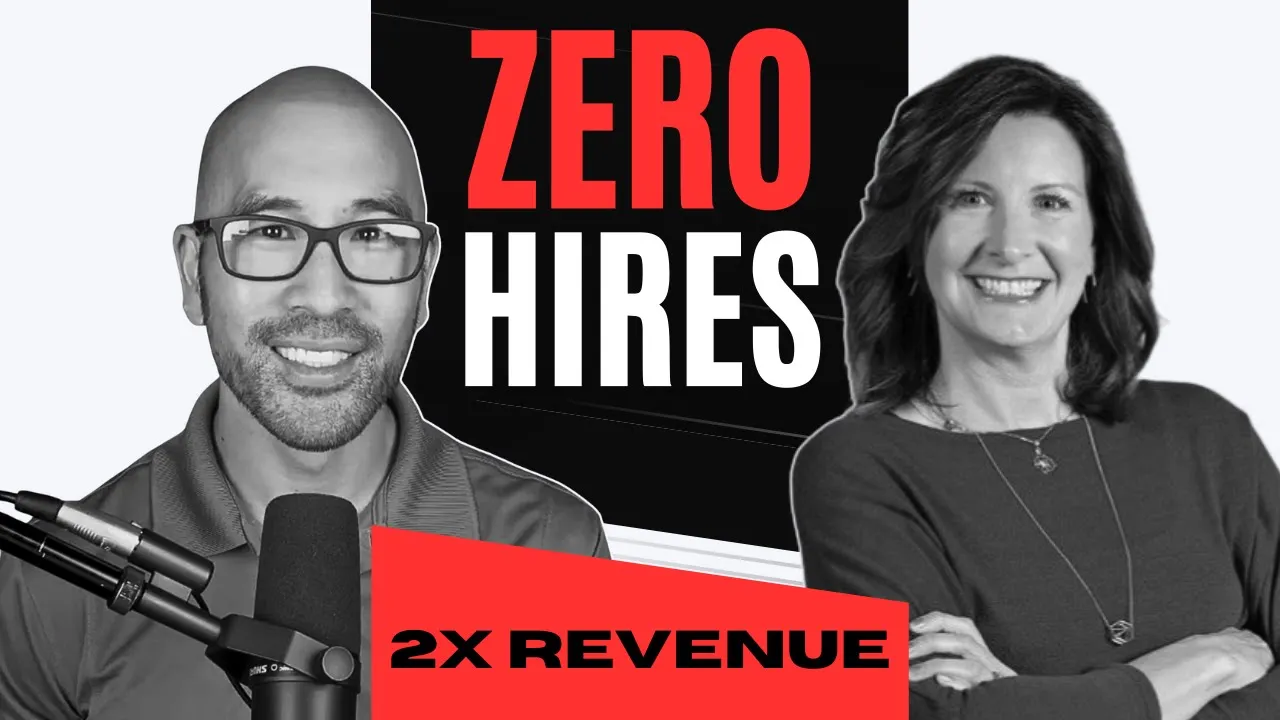
It's just you can do this. That's it. We have another one that says win the day. If it's important to you, you will find a way to make it happen. You will find a way to win. Work ethic beats talent every day. On the field, off the field, doesn't matter. So, I hired for the right attitude. >> Having that optimism, that positive attitude, and then looking for that person that [Music] [Music] This is the revenue vault where relentless sales leaders build bulletproof revenue machines. Hey, I'm Mark Shen, CEO of Enley. We're breaking down the systems
that separate quota crushers from quota missers. Today's guest is Jesser Wayne Groy, a media sales exec who's developed dozens of reps and leaders at present for over 22 years. Her philosophy, people first performance follows, and she proves it by spending 10 days a month in the field with their team even as a sales VP. We unpack her blueprint for doubling revenue without adding headcount, her crown strategy that turns reps into peer coaches, the 17 touch cadence that converts between touches 11 and 14, and why the biggest constraint isn't your CRM or your leads. So, skip
the armchair quarterbacking. This episode reveals how trustd driven leadership creates teams that run through brick walls and the scoreboard that follows. All right, Jessica. So what's one thing your revenue or is doing today that you believe puts it in the top 10%. >> Yeah, my philosophy on leadership is people first, performance follows. So at the start of taking over any underperforming team and leading it to a successful team, you need to start by building that trust, that relationship, really understanding what's motivating your people, their wise >> and the performance will follow. There's a lot of
things that we can do and we can list out the things in our playbook all day, but at the heart of making sure our team is collaborative and wants to run through brick walls for us, uh, it starts with trust and putting the the people first and understanding them and everything else falls into place. >> I love that focus, right? Learn to really build that trust first and you know, you've ran some big orgs across the board, right? from, you know, 22 years over at Hibu to, you know, advanced local now. And I got to
imagine you have a couple different situations, right? You have maybe one situation where you're taking over an organization, they already know you already. So, there's a little bit of trust already, at least at least some of the people on there. And then you have situations where it's like they don't know you at all. You're just taking over a whole new org. So, like there's no they just like, "Oh, who's this Jessica? Who's this leader?" And there's the trust isn't quite there. So I guess to kind of warm up into it, if you will, let's just
say if there's a little bit of trust already, what do you do to maybe drive more trust or to kind of spread to more people in case it's not just fully fledging the organization? >> Great question. So I picked up Portland, Oregon, uh, which was a this is the story that pops in my head when you ask that question, Marcus, is it was an underperforming team. >> There were pretty some pretty disgruntled people on the team. didn't really have a whole lot of trust with the leadership that was there. So, I was brought in and
the first thing that I went and did is got in the car with them and just understood what their dayto-day was. So, another philosophy is just leading from the front and being that person that gets out there with them, shows them how the job is done, see how they're doing the job, understand their roadblocks, and that's really going to build trust. They need to know you know what you're talking about. I'm okay with proving it from the very beginning and getting out there with them, right? Like that's what's going to build the trust a lot
faster and aligning yourself with them. They want to know that you have been in their shoes, that you understand what it's like to be in their shoes. And I mean, let's be honest, the sales gig can be tough sometimes. You're getting beat up all day. You're getting your teeth kicked in. You're out there trying to kiss babies, pet puppies, and shake hands, but you know what you're doing is getting your teeth kicked in. And so getting out in the field is the number one thing that you can do with them. Be aligned, watch their process,
have them do the process for them >> to really build that trust is going to be a great foundation and lead from the front. >> You know, I I love that because um I don't I think most leaders are almost like armchair quarterbacks. >> They sit back, they behind their laptops, they look through reports. they're not willing to see, hop on Zoom calls, go into the field, go on into to see what their team is already into. How did you how did you come to realize that's a key way to build trust, especially early on
with a new org? >> Yeah, I'm really fortunate that I had amazing mentors >> um myself and it was always just known that that's what you did as a leader in our organization was you were in the field with your people 10 days a month. And so it was really part of it was it was all I knew, but also it was I didn't have sales experience coming in. I was a graphic designer and I didn't want to sit behind a desk all day anymore. I wanted to be interacting with people and someone had faith
in me and took me on and took me under their wing and she took me out into the field and she showed me how it's done. So having that mentorship and that leadership, it's all I knew. And I knew that that >> built trust with her and I watched her do it and I wanted to be like her. I watched her do it in the field and I'm like, she's incredible. >> Um, and so she was such an inspiration to me >> and that's really why eventually I wanted to get into leadership is the impact
and the influence that the mentors and the leaders that I've had believed in me before I even believed in myself. And I think that's a really key part of leadership is to make sure that you're putting faith and finding that crown that the person that you're leading and coaching can wear >> and I had that. So I didn't know any different. So I really am so incredibly fortunate that I had that from the get-go and it was very easy for me to continue on with. I realized that's not something that everybody gets. uh and how
fortunate I was to, you know, have gotten in with an organization that really was lead from the front philosophy from the get-go. So, and I will take that everywhere I go. >> I love that. I think it's so powerful, right? Because um and there's a couple things you mentioned, right, which is like it's part of the culture, but also as a leader, you're able to see what I I call see the invisible and make it visible. So you see what's inside them that they don't see and you make it visible for them which I think
is very powerful. I love that especially if you're going from like a rep to a frontline leader and you're getting the feel with them. What about as a VP level? Were you able to also get in the field as part of that process if you had like a new new market that you took over? >> I just got here about a year and I think I'm on a year and five months now and I didn't change my philosophy. >> Yeah. Lovely. I I went in and I tried to understand from the rep level to the
leadership level what's been going on, what are the roadblocks, what are they struggling with. In this particular organization, we were struggling with some fulfillment communication and it was laborsome and taking hours and it was taking us away from being in the field and doing what we do really well and selling. And so we had some big roadblocks to >> to solve for to be able to get to the point where we could really focus on sales. So nothing different. Just >> listening. The power of listening. It's no different than a discovery call when you're that
sales rep on the front line, right, Marcus? You're >> It's asking the right questions, being curious, understanding what you can do to help. Leadership is serving your people. >> And the only way that you can serve is to understand the pain points that they have and what you can do to make it easier. I can't make their job easy, but I can definitely make it easier. And so, every day I go into it of what can I do to help someone and make this a little bit easier for for today. And so, I don't think
it matters where you are. >> Yeah. It's building that trust and and getting the conversation going where people feel comfortable to open up to you and and share. So, the first month or two, people were pretty reserved on sharing some of their roadblocks and their pain points and what was holding them back. By the time we got to month three, >> I heard it all at that point. Now, I could go into problem solving mode and to see what I could do to support the team. But if I hadn't had those individual conversations with every
single person on the team, had those individual conversations with the leaders, I wouldn't have really understood what I'm solving for. It's just like a discovery call. >> Well, I think it was really powerful is um the mistake I see a lot of leaders make, new leaders, is they take over a market and they just start to deploy solutions or they just take purely data off what off the scorecards versus actually diagnosing, getting deep, right? The data is just one piece of the puzzle. You're talking to the reps. You're in the field. You're seeing what what
real obstacles are so you can figure out what are the biggest constraints. Now, I'm sure you probably saw this, right? So, you're jumping in, you're meeting with these reps, you know, directly. You have frontline leaders who maybe have aren't really doing that. Like, number one, I guess, did you see that across the board? Like frontline leaders who weren't necessarily in the field do that level of coaching and and guiding? And if you did see that and how did you get them to be on the same page of actually making sure they're in the trenches with
their team? >> Yeah, great question. So that's going to start with communication and setting expectations. >> So we didn't have a whole lot of expectations at first and it makes it really hard to achieve goals when there aren't expectations there. >> It's true. So first we had to define >> what's our vision >> and we started painting a picture about if we had a magic wand >> what could we what what does this perfect sales organization look like to us? What is the vision? How do we help our client? How do we help our sales
team? >> So we aligned on what our vision was. We got really clear about that. Then we were able to set the expectations and step by step on how we get there. >> And we said what kind of leaders do we want to be and what's important to us? What are those values? And whatever values we carry, we know those are the same values that the team is going to carry. >> So we had to be very methodical about how we went to work and what we were going to stand for. And so once we
were able to communicate the vision to the team, the leaders had buyin on that vision, something we came up collaboratively. It's not something I wrote down on a piece of paper and handed to everybody. It was something that we put our brains together and said, "Okay, this is how we're going to this is how we're going to go to market. This is how we're this is what we're going to be." >> And getting that buy in is a key part to changing anything. People don't naturally like change. They want to steer away from it. So,
you can't come in and be a bulldozer and start changing things off the bat. You've got to understand and take some baby steps first. But once people can see a vision and a mission and they have to buy into it, >> they're going to start running through brick walls. >> I think it's so vital, right? Because you didn't go right into the tactical, right? You know, you really made sure they could see the whole bigger picture, the actual vision. You got alignment on the value system, understanding what great looks like before we start deploy some
of the tactical things, >> right? >> So when you think about, you know, scaling a team, right? It's really because that's what breaks down how we scale results, how we scale the team. What's something maybe your peers often underestimate about scaling a like a sales team or sales or? >> Great question. I think scaling a team starts with getting the right people on the bus. So, you're driving the bus, you know where you're headed, but do you have all the right people on the bus heading in the right direction that all want to go to
the same place? >> So, you're taking a look at the people that are surrounded there currently. And listen, this is where the bus is headed. This is where we're going. Are you in or are you out? And you have to be really thoughtful on who you bring in. So recruiting I think is probably one of the hardest parts >> of leadership. >> Sometimes the best sales job they ever did was during the interview and then you bring them on and you realize >> there's not a whole lot more. Right. We've all been sold. We've all
been sold there. I've practiced and taught for years now how to now my picker is not perfect but how to to pick amazing people to join your team. I want to work with people who care. I can't want it for them. I can't want it more than them. >> So being very methodical about bringing the people >> on. Now that's one part of it, right? So, first you're making sure that all the seats on the bus are filled with the right people and so you're coaching up hopefully, but sometimes you have to make some tough
decisions to coach out. Bringing in someone who is able to show all the amazing things that are possible. You always have to have one or two people that can show what's possible. Really helping those people elevate. And then I mean scaling we can talk about well if you can't hire and you can't recruit what do you do with the people that you have on your team? You can teach them how to sell bigger deals. Go after the right people. Trim down how many discoveries they need to a close. Right? There's lots of different things there.
But if you don't have the right people on the bus, you won't be able to get where you're going. So when you're you're so spot, right? I think it's like no one talked about it enough which is like if you want to scale your or you have to be like a collector of talent like make great but also like you need to be a collector of talent like you need to be able to find great people consistently >> and it's like it can go 50/50 right you can like they can you can every part of
the process and they can still kind of go sideways. Is there any question or strategy or something you implement in the in the interview process that you have seen be effective in helping you >> increase your likelihood of success? >> There's actually a book I really like. This is a shame and I this is, you know, not a paid plug at all, but it's uh >> never hire a bad salesperson >> again. I think it's the whole title. >> Yeah. >> And this book was changing for me. Not only does it tell you what to
look for and hire, but in the back of the book, it gives you the questions to ask. And so, >> I've always believed in hiring for drive and attitude. >> Yeah. >> And that drive and attitude, I didn't have any sales experience and I figured it out. Work ethic beats talent every day. On the field, off the field, doesn't matter. So I hired for the right attitude, having that optimism, that positive attitude, and then looking for that person that has that drive, little bit of chip on their shoulder, Marcus, something to prove >> and the
element of competition. >> So one of my favorite questions to ask is, would you prefer to win or do your best? Now, there's no right or wrong answer. >> Yeah. >> But I like to see how people answer that question. and I stole that. That was 100% plagiarized from an old boss that I had. Gotta give him a shout out. >> But the I've done the I I think I've asked that question for 15 16 years and the answer is extremely telling as you ask that question on how people how people answer that one. But
in the back of this book, it gives you questions to ask about competition. a lot of very open-ended situational tell me a story about when XYZ happened. I found that to be really beneficial in getting the right people on the bus. But there's also this little piece of is this someone that I can sit in the car and go out and ride with all day and >> do I understand what they're motivated? Can I get to a point where I understand where they're motivated by and I can I really feel that I can help them?
Do I want to help them? You have to have an invested interest in that person. You're going to be spending an awful lot of time with them. But hire for the right attitude. Hire for that optimism. Find what's driving them during the interview process if it's if at all possible. Make sure they have that element of competition, that need for achievement. And typically that has not led me wrong. >> I love that. What about for sales leaders, right? Whether you're having like a frontline or like a regional type of like, you know, director or VP
role. >> Does that shift? And are there other questions you might ask kind of help find that? >> Yeah. So that's a yes and a no at the same time. Does it shift? >> No. I think very often we think our top sales rep is going to be an amazing leader, >> right? That's not always how it is. >> Yeah. >> The best sales leaders, a great question to ask them there is, do you get that rush when you make a sale? We all know when you make a sale, you get that rush. You get
that sugar high that we're all looking for, right? And that sugar high gets you excited when you make a sale. When you move into a leadership role, that high comes from helping somebody else and impacting them and watching them get so excited and getting in the car and start calculating what commission they just ma, you know, made. And so for a leader, do they get more excited about helping others? Do they get that sugar high from that or are they still that individual contributor who wants to get the sugar high from making their own sales?
I started when I was a sales rep. I don't know. One of my leaders was like, "Hey, Jess, can you go out and ride with this potential new hire and let us know what you think?" This was part of our recruiting process. They had to do a ride day in the field all day, shake hands, kiss babies, pet puppies, and we went out there. >> As I was doing these buddy days >> as part of the recruitment process, I was still an individual contributor. And I realized at the end of every one of those days,
I would come back and I would be more excited about seeing what this potential person could do or not than I was about going and making it happen for myself. >> And so when you're recruiting or looking for your next best sales leader, keep in mind what they're getting their sugar high from. >> I think it's so key, right? Learning to uncover their true core motivation, right? because that really helps you understand what's going to drive their behaviors consistently across the board. Are they going to be that selfish leader who tries to get you just
deals done and they take over the throw reps or they can focus on >> helping develop an organization self- sustaining and they create more leaders as a result? I think it's really really powerful. Now, as you look at your current or can you kind of walk us through the current revenue motion from, you know, lead to closed deal? walk you through the current process where I'm at from lead to closed deal. >> Exactly. You know, you're you're brand you have a brand new hire or brand new rep. They're taking over a territory. What's that look
like? Some orgs, some orgs have purely inbound lead flow. It's super easy. They're just taking calls and closing deals. Some it's like you got to build it from scratch. What's kind of the overall go to market motions current or >> So, our teammates start out with a smaller book of business. uh they're they probably have about eight to 10 accounts that they're starting with. >> They're looking for their ideal client profile prospects. Um we provide them with a list that we would think is profitable. They're going to have to vet that out a little bit,
do some research, some look. And so they are our cadence for prospecting >> is connecting with people on LinkedIn and then uh following them possibly sending a message right if you follow someone you can see that they saw you so then you're go you're curious and then you go and check out their profile. We don't always connect with them right away. A lot of times it's following them first. But once you find that prospect and you've done your research to recognize that they are somebody that we would like to work with, start with LinkedIn. That
way they see your face and they see your name and by the time you pop into their inbox or their LinkedIn message, it's not the first time that you've communicated with them. So from there, one of the really powerful tools that we've been using is videos or Photoshop. So, we recently had a day where we went out into the field and if we were not able to get to the decision maker, we either took a photo or a video of us in front of their place of business >> and showed that we were there. And
then we followed up with an email or a LinkedIn message that said, "I'm so sorry that I missed you. I was here. I wanted to shake your hand, introduce myself." And that has really helped bridge the gap with some stranger popping into my business or calling me multiple multiple times. There's that face they it humanizes it. One advantage that we do have is our people do live and work in the communities that they serve. So we're very easy it's very easy for us to get there. But if you're far away, you can still use the
same tactic with a video. Uh, a lot of times what I like to do is is use Loom and we put the bubble head over in the corner and their websit's in the background and they see a thumbnail of their website in the background. They get curious. >> So, we have about 17 touch points in our cadence. Uh, we find that anywhere between 11 14 is kind of that sweet spot where we start gaining some traction. >> So, knowing your numbers for your own particular business is certainly very very important. It's taken us a bit
to figure out what that sweet spot is. I really love leveraging video. Um, in the in the thumbnails, we have some people who even hold up a a white board with a fun message that says, you know, >> click here, Marcus. Um, you know, I've got a funny joke to tell you, uh, whatever it might be, right? So, uh, anything to to peak their attention, uh, is helpful. >> You know, I love that, right? I think not enough leaders are thinking that way. It's like how can I arm the organization with simple tools that you
know maybe it's not as scalable if you will but they cut through the noise and differentiate from kind of the the noise that everyone else gets from all the AI messaging and all out there right now. >> Yeah. >> So when you kind of look at your overall org, where do you see maybe the most consistent like friction and drop off right now? Is it like in pipeline creation? Is it like deal stall midway through the funnel closing? Where do you kind of see it as an org overall? Yeah, I think in any sales team
that I have run, the sticky part is always the team finding time in their calendar to block out prospecting. >> You will not build a successful pipeline if you're not continuously prospecting. So, our team goes from beginning to end. We don't have BDRs and then account managers. We are it from beginning to end. And so, It's intentionally having that self-care scheduled on your calendar that says, "I'm not going to let anything stop me from making sure that I get my prospecting in today." I call it the big rocks. >> Big rock theory. You got to
put the big rocks in the bucket first, Marcus, in order for the pebbles and the sand and the water and everything else to fit. >> Our big rocks are prospecting. If you put those big rocks in first and you time block your calendar, owning your calendar is really hard. really hard as a salesperson. There are things that are coming at you. You got a customer service issue. You got people teasing you. You got people texting you. You got emails popping in. >> Owning that time and saying, "I'm going to push everything out for this hour
and to two hours to just prospect will allow the pipeline to build. It won't you won't have an up and down roller coaster pipeline." And I love roller coasters, but not when it comes to your pipeline. >> Not our pipeline. >> Not the pipeline, right? So, consistently prospecting is always the biggest challenge. But I've found that >> we need to help our team block out the calendars. >> We call them power hours. We have power hours and we don't make them mandatory. >> We started those a while ago, decided not to make them mandatory. And
it's amazing. Everybody showed up and it's evolved. It's turned into even something better where people are partnering up and listening to each other and and prospecting together so that they can steal lyrics and talk tracks and whatever you might call it. And that's been really helpful for us. >> I love that. And And how right now, how often do you guys do power hours? Is it like once a week it's set up or is it like I know it's not mandatory, but what's the cadence right now? Yeah. >> Yeah, right now it's just two days
a week. We have a morning uh version on Tuesdays and we have an afternoon version on Thursdays. So, we did a little little research. Yeah. >> And on the best times to prospect of the week and the you know, Chat GPT gave us back uh that the best times uh to prospect would be on Tuesdays, Wednesdays, and Thursdays. Uh and that we should have a morning block and an afternoon block. Now, depending on what type of business you're trying to get in with, if it's a dentist, >> call them at lunch because their gatekeeper is
probably not there. >> That's right. That's right. That's right. You be strategic with it. Yeah. I love it. I think it's so critical. Right. It's um if you take a step back, what you did was you put together a system in place for the team to be successful in. You know, I think it's so vital. I think most orgs are too flexible. They say, "Oh, you should prospect. You should do these things." But if we don't create the environment for them to be successful, they're unfortunately they're just not going to do it. They're going to
be reactive to the situation. So if you had to name one constraint that if you saw it would unlock the most growth in your sales or what do you think that might be? >> Can you repeat one thing that you said that would unlock >> Yeah. One constraint? If you could solve that constraint, if I could solve that constraint, yeah, >> would drive the most growth. people changing their mindset, getting out of their own head. I think the biggest roadblock most people have is their own mindset, their belief in their ability to do it. And
I know that might I mean, >> we could talk about fulfillment. We can talk about order entry. We can talk about all of these things as the thing that's holding us back from getting where we need to go. >> But most times it's ourselves. We don't take the leap to go prospect because we're nervous about getting the no. We don't make the leap to go to a networking event because we're too comfortable prospecting from our house. >> We don't get out into the field because we think, well, most people aren't going to be there anyways,
which is sometimes true. >> But what if they are there? >> Yeah. >> And the what if they do answer the phone? What if they do say yes? So I think most any constraint is always the mindset. So >> I work on my own mindset. Not only am I coach, but I also have my own coach that I consistently work with. And a big thing that we talk about is mindset. It's the number one thing that holds anybody back. Myself and myself included, Marcus. I mean, you sometimes you got to talk yourself into things. I
am the queen of post-it notes on my mirror and all around my desk and um you know like I have one right now that it's just like you can do this. That's it. I have another one that says win the day. If it's important to you, you will find a way to make it happen. You will find a way >> to win. And so the mindset helping your team >> have the mindset that they can do hard things. >> Yeah. And building up that confidence will allow them to be resilient to whatever comes their way.
>> Oh yeah. You know, I would say I've always said for the longest time, the hardest territory to manage is the one right between your ears. >> Yes. >> You'll get so locked into all these uncontrollable things, right? You know, and it kind of piggybacks off it, right? So, and this might be kind of same response, but what's one invisible tax your team is paying right now? it doesn't show up on the dashboard. It impacts performance. >> Ah, very similar answer. >> Yeah. >> Yeah. >> So, I guess maybe then if that's the case, then
what are some things you're working on or doing to help guide them towards because it's never it's never going to stop. But how do you help as a as a VP? How do you shift the whole org to start having that growth mindset? >> Yeah. So, a lot of that is culture. >> We have a culture of curiosity. We have a culture of collaboration. We have a culture of communication. They're all C's, by the way. >> I like it. >> Th that that's all built into what our culture is right now. >> Yeah. >> So,
if you have a problem, you don't want to make any assumptions. You want to ask and be curious as to why someone did what they did. Get curious with our customers to understand. Open communication and being extremely transparent is very important in that if you are not transparent with your team then you don't have trust and one of the other C's is conviction. So, when we get on our power hours, we're running through case studies and success stories. And every time we have that power hour, we have a nugget that you can leave with that
day to help build up that conviction and that confidence so that you have the right mindset. Right? All those they might seem like tiny little things, but all of those tiny little things add up to how you're feeling. You can't transfer your excitement, your emotion to your potential client or customer unless you have it yourself. So read through those case studies, go back through this, have your stories, and until they're your stories, you got to steal other people's stories if you're a new sales rep, right? I think at the at the end of the day,
conviction will build confidence >> and that confidence will then build conviction >> with your client. So >> having constant, you can't assume that even though you've been there 10 years that someone still believes in what you do. >> So you have to constantly resell yourself as well. >> Right? We're in advertising and marketing and people want results. They want the ROI. They need those leads. They need to feel it in their business. >> We look back and we and we take a client who started with us and didn't have any leads coming in to we
put their strategy in place. Their campaign started running and every month got better and better and better. And now 6 months later, they're high-fiving and belly bumping us because they're excited about the results and now they're up, you know, they're increasing their their spend um because they're getting the results that they want. That builds the conviction and the excitement that what we do is helping other people. >> I think it's so vital, right? I think real super tactically one of the things that I did as a sales leader as a frontline sales leader overseeing a
market like whenever I ran a training before we dove into it I would I say let's go around the horn and just share one win you've had so far this week >> yes >> like this week and that was so critical because it got them to think even if they had they felt like they had had a bad week so far or bad prior week they have to think but what was it so now I challenge them if they were like well it wasn't a great week or you know it's only Wednesday. It has been
kind of rough so far, but like doesn't matter. What's one you had support? It could be something super small like they made a commitment to make 20 calls that day and they did. It doesn't matter. Like it's it's like something to help shift them back into that mindset which I think is critical. >> You call it intentional prospecting. >> When we go into our prospecting, what are we intending to do? Yes, I want to get an appointment. I want to score a discovery. But if my intention is to prospect 20 people and send 20 emails
and I accomplish my I could feel good about that, right? But also that highlight that win doesn't necessarily mean I made a close. That win is I set a discovery from someone that I have been prospecting for two months and I'm finally just getting in with. The win is I took the first step to record a video as nervous as I was >> and I didn't watch it back 10 times. I just sent it. I just I recorded it. I had confidence in it. I just sent it because you know you're going to record 800
times. >> That's right. >> If you if you keep watching it, right? >> I love that. I love that. Now, if you had to double the revenue of the or in the next 12 months without adding more any headcount at all, >> right? >> Uh what do you think you would have to change? Yeah, if you can't hire in and bring in new people, >> you're going to have to think about are you prospecting to the right people, are you can you what can you do to increase your close ratio? You're going to are you
calling on the right people? Are you saying the right things? Are you doing it the right amount of times? Do you know your numbers so that you know what that is and how can you decrease that? Can you sell bigger deals? How do you sell the bigger deals? Are you using your strategist to help you propose bigger deals and building up that conviction in multiple products and services at once? >> So, I think this is a hard one >> in that people always say, "Well, I've got to increase my bottom line. I have to hire
new people. I can't do it without doing that, >> right?" >> Well, work with work with the mindset. work with are you doing look really diving in and and doing a discovery on your own process. >> So you're trying to diagnose where in that process your doctor trying to diagnose and you need to write a prescription. Is it that I need to call on the right people and I'm not prospecting. I'm prospecting people with smaller budgets. Do I need to go after bigger whales? Do I not have enough of both in my in my book
of business? because you can't just hunt whales, right? >> So, you're really diagnosing where you can move that needle and then writing the right prescription and then work on one little thing at a time. So, we subscribe to a philosophy that's kaizen and it's tiny little improvements that will change the outcome. You Rome wasn't built in a day. Very cliche there, but Rome wasn't built in a day. These tiny little improvements in that process when you diagnose it will help you. No different than if you're trying to figure out what you're allergic to. Well, first
you got to cut out dairy, then you got to cut out gluten. Right. >> Exactly. >> You're you're slowly trying to add in or cut out something in your process that will make that kaizen tiny improvement. >> Yeah. I love that. I think it's um it's it's a highly underrated philosophy way of thinking which is you're going in you're diagnosing first and really figure out what what the real constraint what what the biggest constraints and then solving for specifically and I find so many leaders they just start throwing money at the wrong things to fix.
Maybe they're throwing bodies at it. Maybe it's just throwing random sales training or they're just like dumping money in the wrong areas adding in new sales tech where it's like but what's the core root issue that's really going to solve the problem otherwise you're just putting band-aids on these symptoms right >> so that's that's key so I think going back to I think mentioned one year five months into uh into your current company now >> what's maybe one decision that you made in the last six months that you look back now you're like whoa there's
some unexpected upside now as a result of I got that. I didn't see didn't see that coming. >> So, the byproduct of investing in people early is what you're going to get out of it in the end. And it's hard to say that I didn't know that, Marcus. I mean, I I just didn't know that it would it doesn't always turn out as good as you want it to be, right? But there wasn't a whole lot of collaboration happening between the sales teams, the sales leadership, >> and now we have a whole lot of that.
I mean, people are calling each other and they're going out. I think I had mentioned this earlier. They're going out on ride days with each other. They're prospecting together. >> I was looking for us to get on a power hour for us to be able to up our number of discoveries and prospect. And it now it's turned into I I love facilitating a good leadership call, right? So or a good brainstorm rather. And so what ends up happening is we get on these calls and someone will bring to the table, this is a roadblock that
I ran into and it's not me answering how do I handle this objection or it's not one of the sales leaders, it's their peers teaching each other. And I think our job as leaders is to facilitate that type of environment where they come now, it's not mandatory. They come because they know they're going to get something from a peer because someone else has run into that roadblock. Somebody else can handle that. I'm just there facilitating everybody to get together and share ideas and roundt. So I think the caveat of putting the time in and understanding
holding people back there wasn't a sense of >> collaboration. There wasn't a sense of trust between people. >> What's neat about our industry and I've been in marketing advertising my whole career other than this one tiny little bit that I sold ferret hammocks to pet stores Marcus but uh that's a whole another story. But the marketing advertising field, the more that each person on our team sells, the better everybody else does because we have more stories and success in the marketplace that our organization helps businesses with their marketing, digital advertising. So, we need everybody to
be successful. And so having that that the I guess that sense of collaboration where we are a community and we're going at this together as opposed to I'm an individual trying to drive through this wall. >> We're working together for it. >> And I love that. I think it's so key. We see across the board where it's very disjointed communication, collaboration across the board from all through the sales work to other departments. So, as you reflect back, what are maybe like one or two really tactical things that you did that you can like that someone
listening to this is who's thinking that sounds awesome, but how do I do that? How do I create that culture of collaboration? Like what are one or two things that you would do ASAP or that you did do to help drive towards that? >> Yeah. Okay. So, if you take every person on your team today, I want you to give them a crown. >> They are the king of XYZ or the king of the king or queen of XYZ. Right? So, I came into I'm in Boisee, Idaho, >> and there's 16 sales reps, >> disgruntled,
not happy. I spent time with each of them. And I knew that Mary was the queen of retention. Her customers absolutely loved her. Scott was unbelievable at new. >> I had Raleigh who was really great at upsell and increase. and make each person on your team the king or queen of whatever it is that their strength is and really dive into that. Then have them peer coach out to the team on why they're so good at that. So you get in the field, you observe it. Now you're >> making sure that everybody else on the
team knows how great they are at that shows the numbers, but you're also sharing stories about how they got there. Now they're teaching their peers how they upsell. They're teaching their peers what their key is to prospecting. So I think you should be able to look at every person on your team and know what the number one strength is they bring to the table. Now I'm sure they bring multiple, right? But what is that one crown that they can wear no matter what that they can teach other people on the team to know how to
do? I'd say that is probably one of my favorite things to do is to figure out what's what do they bring to the table, right? And >> and a part of that is having gratitude for what they bring to the table. >> And this helps build that trust that we're talking about as well, right? To build that culture, you need to know and have a sense of gratitude >> what they bring to the table and why you're thankful for that. And if it's not an actual measurable, trackable sales indicy, what is it? Is it that
they're always willing to help and go out on a ride day? There's there's got to be something that you can have gratitude for. So once you pass on gratitude to somebody else, how much do they want to return that? >> So find that gratitude that you're thankful for each person on that team and start spreading that like wildfire. I love this so much because I think a lot of leaders, they come in, they're looking for what's wrong, right? They're looking for like, let me just like criticize them versus, hey, let me reinforce what they're doing
great at and then use a multiplier effect to help them spread the love to the rest of their peers. Because I've always had the same philosophy. It's like even if they're maybe the results aren't the best, but they're a good player in other areas, how can we leverage them to help improve the rest of the team? So, for example, I'm has one one guy on my team. He always they always had his number, but he's never blow it out. He was never like this like 300%, you know, he he never hit presence club, but he
was really consistent and hit his number every single year. And he sold really good sticky business, highly profitable. So operations love to and there's certain way how he structured his deals that still made him a lot of money and helped the organization. So like when we when I realized it's about him having him show the team how he did this, it it like actually made his results better because he would want to reinforce what he is doing even more because of that. >> Here's the deal, Marcus. >> Yeah. >> You can't yell at a scoreboard
and get it to change. >> That's right. >> The scoreboard changes as a result of training, mentoring, coaching, showing up every day and showing how it's done. So focus on your people and the scoreboard takes care of itself. If that's the only takeaway that somebody had from this conversation, I would be okay with that. >> Focus on people first. Love your people. >> Get in the field with them to build that trust and the scoreboard takes care of itself. >> Amazing. Absolutely love it. Where can people find you? Hit me up on LinkedIn. This is
going to be the best place right now. My website's in progress. More to come on that. Very excited. And I'd love to connect on LinkedIn. And coaching leaders and helping them grow is what is at the core of what I'm passionate about. And uh you know, I think of myself as a gardener on any given day. I I you don't have a you know the plants don't grow if you yank on them. No different than yelling at the scoreboard. The plants don't grow if you yank on them. You got to water them. You got to
make sure you put the right soil in. And that's what I'm I'm here to do uh is be that professional gardener to help people make sure that they can cultivate that that what they're looking for in their sales organization. So >> awesome. >> I appreciate it the opportunity to learn more. >> That's a wrap on this episode of the Revenue Vault. Now, Jessica nailed it. You can't just throw bodies or budget at revenue problems. You need to diagnose first, then prescribe. And just like she said, are your teams calling the right people? Are they saying
the right things? Do they even know their numbers? Or is it a frontline leadership issue? Now, if you got value, here's your next step. Go to venting consulting.com/team to get a free performance scan of your sales or will. We'll help you with the diagnosing so you can figure out exactly deals are stalling and how to actually fix it. Now, this episode gave evil one insight worth sharing, send to a sales leader you respect. Hey, I'm Marcus Shen. Thanks for joining us in the vault.