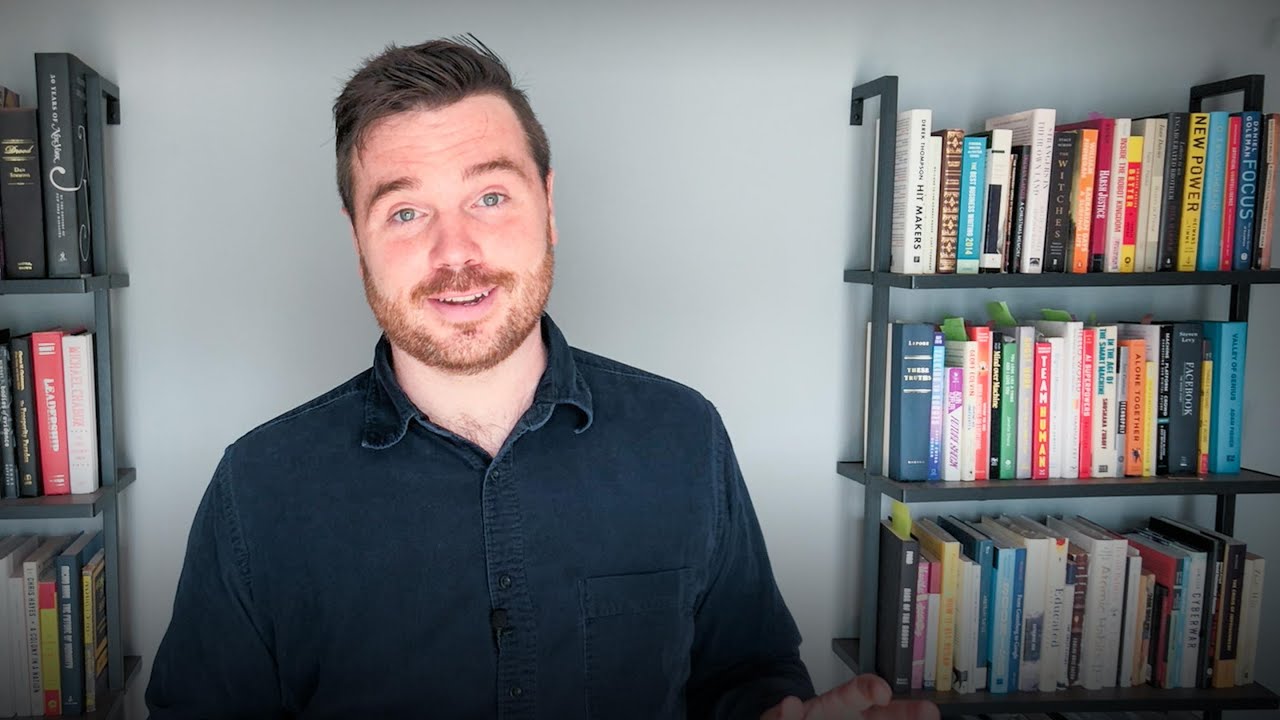
every year the machines we use are becoming smarter and faster and cheaper so how are we supposed to compete with them for jobs this is ted business i'm and that is the question kevin roose explores in today's talk and in his book future proof nine rules for humans in the age of automation kevin's a technology writer for the new york times and makes the case that in order for us to compete against ai we have to bring more of our humanity to work focusing on what we do well as people instead of trying to outdo
the robots this might sound familiar a few weeks ago we played a talk by kaifu lee who also proposed that ai can actually help us be more human ai is taking away a lot of routine jobs but routine jobs are not what we're about why we exist is love when we hold our newborn baby love at first sight when we help someone in need humans are uniquely able to give and receive love so as ai takes away the routine jobs i like to think we can we should and we must create jobs of compassion jobs
of compassion in addition kaifu says more of our jobs should require creativity so really he's helping us figure out how the job market as a whole needs to evolve so there you have it a blueprint of coexistence for humans and ai and what kevin's going to do in this talk is make it personal and help us figure out how to make any job more human starting with his own [Music] i was in my mid-20s the first time i realized that i could be replaced by a robot at the time i was working as a financial
reporter covering wall street in the stock market and one day i heard about this new ai reporting app basically you just feed in some data like a corporate financial report or a database of real estate listings and the app would automatically strip out all the important parts plug it into a news story and publish it with no human input required now these ai reporting apps they weren't going to win any pulitzer prizes but they were shockingly effective major news organizations were already starting to use them and one company said that its ai reporting app had
been used to write 300 million news stories in a single year which is slightly more than me and probably more than every human journalist on earth combined for the last few years i've been researching this coming wave of ai and automation and i've learned that what happened to me that day is happening to workers in all kinds of industries no matter how seemingly prestigious or high paid their jobs are doctors are learning that machine learning algorithms can now diagnose certain types of cancers more accurately than they can lawyers are going up against legal ais that
can spot issues in contracts with better precision than them recently at google they ran an experiment with an ai that trains neural networks essentially a robot that makes other robots and they found that these ai trained neural networks were more accurate than the ones that their own human programmers had coded but the most disturbing thing i learned in my research is that we've been preparing for this automated future in exactly the wrong way for years the conventional wisdom has been that if technology is the future then we need to get as close to the technology
as possible we told people to learn to code and to study hard skills like data science engineering and math because all those soft skills people those artists and writers and philosophers they were just going to end up serving coffee to our robot overlords but what i learned was that essentially the opposite is true rather than trying to compete with machines we should be trying to improve our human skills the kinds of things that only people can do things involving compassion and critical thinking and moral courage and when we do our jobs we should be trying
to do them as humanely as possible for me that meant putting more of myself in my work i stopped writing formulaic corporate earnings stories and i started writing things that revealed more of my personality i started a financial poetry series i wrote profiles of quirky and interesting people on wall street like the barber who cuts people's hair at goldman sachs i even convinced my editor to let me live like a billionaire for a day wearing a thirty thousand dollar watch and driving around in a rolls royce flying in a private jet tough job but someone's
gotta do it and i found this new human approach to my job made me feel much more optimistic about my own future because you can teach a robot to summarize the news or to write a headline that's going to get a lot of clicks from google or facebook but you can't automate making someone laugh with a dumb limerick about the bond market or explaining what a collateralized debt obligation is to them without making them fall asleep and as i researched more i found so many more examples of people who had succeeded this way by refusing
to compete with machines instead making themselves more human take russ russ garofalo is my accountant he helps me with my taxes every year russ is not a traditional accountant he's a former stand-up comedian and he brings his comedic sensibility to his work i swear i've had more fun talking about itemized deductions with russ than at actual comedy shows that i've paid real money to see russ knows that in the age of turbo tax the only way for human accountants to stay relevant is bringing something to the table other than tax expertise so he started a
company called brass taxes get it he hired a bunch of other funny and personable accountants and he started looking for clients in creative industries who would appreciate the value of having a human being walk them through their taxes now technically i should be very worried about russ because tax preparation is a highly automation prone industry in fact according to an oxford university study it has a 99 chance of being automated but i'm not worried about russ because he's figured out a way to turn tax preparation from a chore into an entertaining human experience that lots
of people including me are willing to pay for or take mitsuru kawaii 60 years ago mitsuru started as a junior trainee at a toyota factory in japan he made car parts by hand and this was the 1960s an era when the auto industry was undergoing a huge technological transformation the first factory robots had started coming onto the assembly lines and a lot of people were worried that auto workers were going to become obsolete mitsuru decided to focus on what in japanese is called monozukuri basically human craftsmanship he studied all the nuanced intricate details of auto
design and he developed these kind of sixth sense skills that few of his other colleagues had he could listen to a machine and tell when it was about to break or look at a piece of metal and figure out what temperature it was just by what shade of orange it was glowing eventually missouri's bosses noticed that he had all these skills that his co-workers didn't and they made him really valuable because he could work alongside the robots filling in the gaps doing the things that they couldn't do he kept getting promoted and promoted and just
this year mitsuru kawaii was named toyota's first ever chief monozucuri officer in recognition of the 60 years that he spent teaching toyota workers that even in a highly automated industry their human skills still matter or take marcus books marcus books is a small independent black-owned bookstore in my hometown of oakland california it's a pretty amazing place it's the oldest black owned bookstore in america and for 60 years it's been introducing oaklanders to the work of people like tony morrison and maya angelou but the most amazing thing about marcus books is that it's still here so
many independent bookstores have gone out of business in the last few decades because of amazon or the internet so how did marcus books do it well it's not because they have the lowest prices or the slickest ecommerce setup or the most optimized supply chain it's because marcus books is so much more than a bookstore it's a community gathering place where generations of oaklanders have gone to learn and grow it's a safe place where black customers know that they're not going to be followed around or patted down by a security guard as blanche richardson one of
the owners of marcus books told me it just has good vibes earlier this year marcus books temporarily closed and like a lot of businesses its future was uncertain it was raising money through a gofundme page and then george floyd was killed the streets filled with protests and orders poured in to marcus books from all over the country first 100 books a day then 200 and 300. today they're selling five times as many books as they were before the pandemic and their gofundme page has raised more than 250 000 and if you look at the comments
on its gofundme page you can see why marcus books has survived all these years one person wrote that we have a duty to preserve gems like this in our community someone else said i've been going to marcus books since i was a child and blanche richardson showed me many kindnesses gems kindnesses those aren't words about technology they're not even words about books the words about people the thing that saved marcus books was how they made their customers feel an experience not a transaction if you like me sometimes worry about your own place in an automated
future you have a few options you can try to compete with the machines you can work long hours you can turn yourself into a sleek efficient productivity machine or you can focus on your humanity and doing the things that machines can't do bringing all those human skills to bear on whatever your work is if you're a doctor you can work on your bedside manner so your patients come to see you as their friend rather than just their medical provider if you're a lawyer you can work on your trial skills and your client interactions rather than
just cranking out briefs and contracts all day if you're a programmer you can spend time with the people who actually use your products figure out what their problems are and try to solve them rather than just hitting next quarter's growth targets that's how we become future proof not by taking on the machines but by excelling in the areas where humans have a natural advantage by living and working more like humans we can make ourselves impossible to replace and the good news is that we don't have to learn a single line of code or deploy a
single algorithm in fact you already have everything you need thank you [Music] we're keeping this one short so that's it for today our dream team is kim nader fame petersen our producer sam bear is our mixer fact check for this episode was done by eliza solomon and special thanks to anna phelan michelle quint corey hayjim and colin helms i'm madupa aganola i'll talk to you again next week