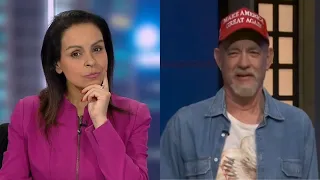
She did not run a great campaign and you're going to keep losing if you insist that she ran a great campaign. I'm saying that, look, there was no model for the campaign that she Alright, folks, let's dive right into the swirling cauldron of political turmoil. So, here's the thing—Bill Maher, well, he's basically ripping the band-aid off, exposing the raw wounds of Kamala Harris' campaign failings.
And, I mean, it’s not just a small hiccup we're talking about. Immigration and inflation—two massive issues that were kind of just, you know, ignored. The big issue, right, was immigration and inflation, immigration, those two are very big issues.
And you asked Vice President Harris, why did you let all these people in for the last four years? She did not have an answer. I still don't know the answer.
They actually could, with an executive order, shut it down as they did earlier this year. So why did they not do it three years earlier? And I think people felt she did not respond to that in any way.
She had no answer on inflation. And she also seemed to represent that whole woke zone that people are sick to death of. And I think those three did it.
Well, I agree with the first two, but I'm not going to get into this, oh, the people are too damn woke. That wasn't an issue. How do you even do that?
Meanwhile, Donna Brazile tries to cover up by clinging to the narrative that everything was just dandy. It’s, uh, sort of bizarre, if you ask me. The Democratic Party's denial is more like a stubborn refusal to face the music and, seriously, it's, um, unraveling at the seams.
Wait a sec! If you enjoy content that challenges the norm and keeps it real, hit that subscribe button. Go on, I’ll wait.
. . Done?
Welcome aboard! Now, let’s jump back in. Right, so let's get into what Bill Maher had to say about Kamala Harris’ campaign performance, and, um, folks, it's not pretty.
You know, Maher didn’t exactly mince words. He cuts straight to the chase, pointing out that Harris didn’t really connect with the voters. And why was that?
Well, primarily because of what he calls her lack of response to critical issues like immigration and inflation. He suggests the campaign was more of a disconnect than anything else. It’s like they kind of sidestepped the major concerns and, needless to say, that did not go unnoticed.
I agree with the first two, but I'm not going to get into this, oh, the people are too damn woke. That wasn't an issue. What happened?
Yeah, it was. I disagree with you. I know.
And that's why you're going to keep losing. No, man. Look.
I mean, it's not to go. Yeah. Yeah.
On January, on July 21st at 1. 41 p. m.
when Joe Biden announced that he was not going to he was going to step down, Kamala Harris had to step up. Now, what other Democrat could have stepped up in that period of time? We're not arguing about that.
All right. We're in the campaign. She ran.
They asked her what she would do differently. She said, I can't think of anything. That's terrible.
How do we trust a party that was telling us with a straight face that Joe Biden could be president for four more years without any problem whatsoever? That's what that's what the Democrats were telling us. It was a massive lie.
We saw through it. Everyone saw through it. Did you see him this week?
Could you imagine if we were just starting on the next term? That was first of all, happy birthday, Joe Biden. Happy birthday.
Joe Biden turned 82 this week. Maher argues that Harris missed an opportunity to address these pressing issues head-on. Immigration—let’s be real—was a significant factor in this election.
I mean, allowing an influx of people without clear solutions or policies left many, including Maher, questioning Harris’ strategy. Maher criticizes her for not having answers when asked directly about this, especially when she had the, uh, the standing as Vice President to push for effective changes. It's like she was consulted and.
. . crickets.
It really makes you wonder why there wasn't more action, doesn’t it? Harris' response to inflation—or the lack thereof—also drew heavy fire from Maher. He pointed out how this was a big issue weighing on the minds of Americans who were already struggling with rising costs.
Yet, the campaign never fully confronted it or, you know, offered concrete solutions. And, well, it’s hard to resonate with voters when you're virtually silent on things that matter to them the most. Maher, whose no-nonsense approach really, um, shined here, made it clear that silence isn't always golden.
And then Maher didn’t hold back when discussing Harris’ representation of what he calls the ‘woke zone. ’ Right? He says people are just, like, sick of it.
According to Maher, the overemphasis on politically correct rhetoric instead of practical solutions was just another nail in the coffin for her campaign. It seems like many voters felt alienated rather than supported. Maher believes that this disconnect with the grassroots base led to Harris not resonating with the electorate, kinda like being sold something you don’t want, or never actually asked for.
Now, you know, the problem Maher has isn’t with the issues themselves, it's, like, more about how they’re being handled—how the narratives are built around these concerns. He feels that this naivety and, honestly, refusal to engage in real, grounded discussions, is what’s driving people away from the party. It's not like these issues don’t matter; it’s more that they’re being addressed like ticking boxes rather than reshaping lives.
Then there’s the Democratic Party’s, uh, seeming self-deception. Maher goes on about how they continue to act as though these losses don't reflect on them. He calls out this almost chronic denial, as though simply ignoring the flaws could make them disappear—it’s, I guess, absurd?
By doing so, they are repeating the mistakes of the past and, well, it's hurting their credibility. Maher also tackles this idea of severing familial ties due to political disagreements, you know, which he sees as another way the partisan divide is being widened. And here’s where it gets interesting; Maher challenges us to think about this withdrawal from our own family members due to differing political opinions.
It's, um, definitely a major societal issue. He talks about the dangers of cancel culture seeping into personal lives and, you know what? I think he might be onto something.
When political allegiance is prioritized over personal relationships, it shows how polarized we’ve become. And while Maher isn’t just, like, blaming one side exclusively, he makes it pretty obvious that he believes the Democrats have to, kind of, step out of their echo chambers. They have to face up to these realities that are drifting their staunch supporters into becoming critical skeptics or apathetic non-voters.
Maher presses on the fact that without addressing these issues, the chances of reconciliation and unity become slim. By challenging his audience to engage with differing opinions instead of cutting ties, he’s advocating for an America that prioritizes dialogue over discord. It’s a call for us to look at each other as, you know, kind of whole people, rather than ticking a box that suits our labels.
So, Maher's truth bombs are not just critiques, but a thoughtful examination of the broader societal issues that shape our political reality. The chief psychiatric resident at Yale University, Amanda Calhoun, recently told Joy Reid it's okay to cut off family members if they voted for Trump and tell them, I'm not going to be around you this holiday. Oh, how pure.
It's like not letting certain people sit with you on the bus. She also said that it shouldn't be automatic that family members think they're entitled to your time. She said that's just a societal norm.
Family. Who do they think they are, family? Think about that.
A mental health professional advising people to isolate during the holidays. Don't forget to drink too much and put on weight. And this Thanksgiving before the big meal, remember to take turns saying what you're hateful about.
You know who I really wouldn't want to have Thanksgiving dinner with? This overly educated, i. e.
extremely stupid, ivory tower academic. But I would, because if we ever want this nation to heal, this is what we have to do. Force ourselves to reach out and find out why someone feels the way they do and make the choices they make without prejudging them.
Whether it’s addressing unchecked campaign strategies or the need for a more open and understanding dialogue amongst friends and family, there’s a lot to unpack. Alright, folks, what do you think about all this? Do you agree with Maher’s, uh, scathing critiques?
Drp a comment below with your thoughts—we'd love to hear your take on this crazy political landscape!