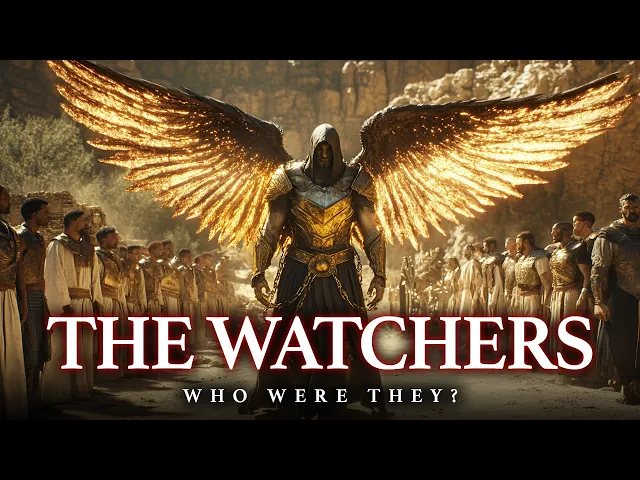
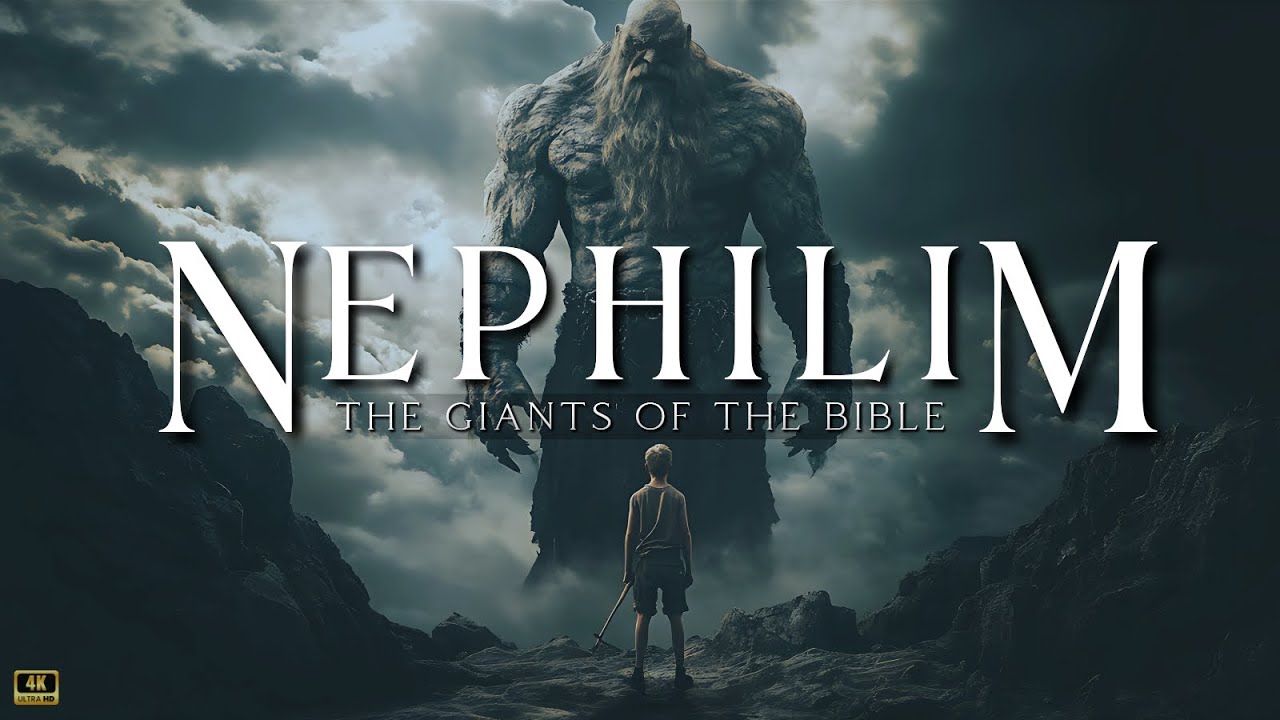
Nephilim, roamed the Earth, sowing discord and chaos. In response, God saw the need for intervention. The balance that had once been so carefully maintained was now fractured, and the divine order was at stake.
Thus, it was decided that the flood would cleanse the Earth of this corruption. Noah, a beacon of hope and righteousness, was chosen to preserve a remnant of humanity and the creatures of the Earth. The flood served not only as a punishment but as a reset, a chance for humanity to start anew, free from the influence of the Watchers and their forbidden gifts.
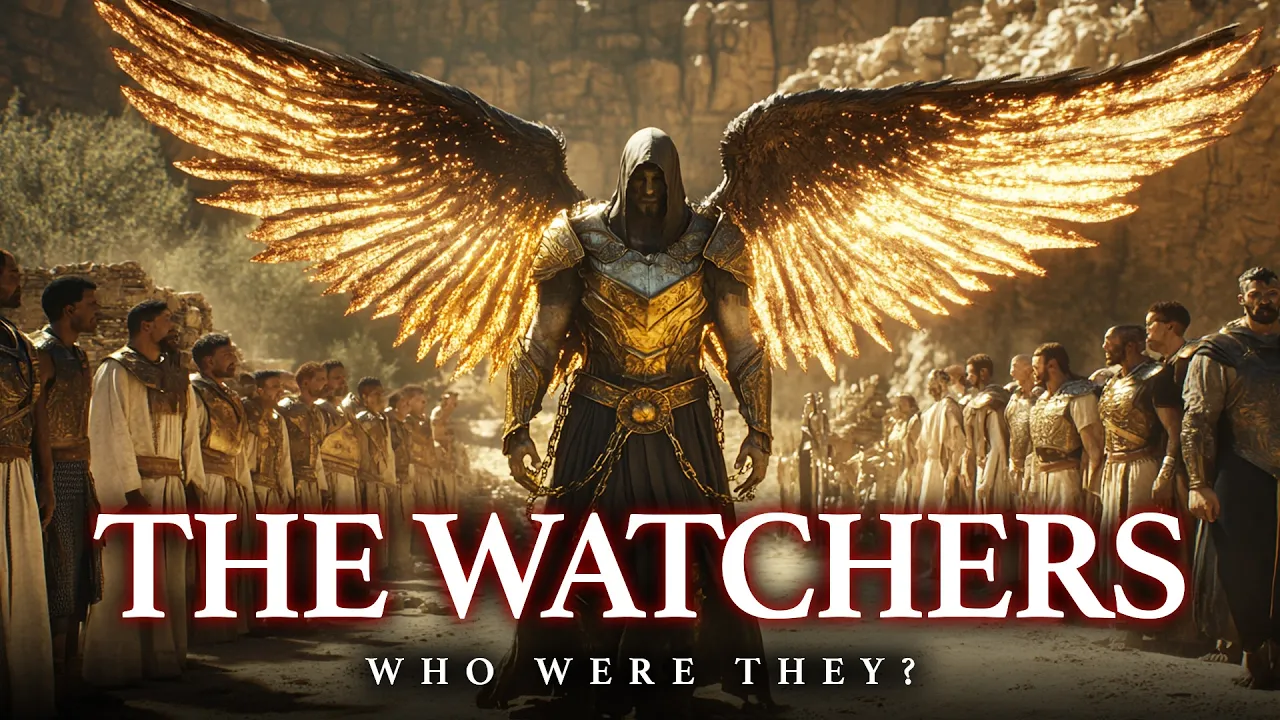
The story of the Watchers is a cautionary tale about the consequences of rebellion and the perils of knowledge without wisdom. It reminds us of the delicate balance between divine guidance and human freedom. In the end, the Watchers, though powerful, were not exempt from the laws of creation.
They went from guides to outcasts, their legacy echoing through the ages as a testament to the complexities of existence. So, as we continue to explore this enigmatic tale, we are left with profound questions: What does it mean to seek knowledge? How should we wield the power that comes with it?
And ultimately, what is the cost of our desires? The Watchers, through their journey, offer us insights that remain relevant, inviting us to reflect on our own paths and the choices that shape our future. Nephilim consumed the world’s resources and spread violence across the land.
The Earth groaned under the weight of their sins, and God’s judgment was inevitable. The Book of Enoch tells us that God, seeing the devastation wrought by the Watchers and their children, summoned His most powerful archangels to intervene. Michael, Gabriel, Raphael, and Uriel were tasked with restoring balance.
Their mission was clear: punish the Watchers, cleanse the Earth, and ensure that such rebellion would never happen again. The first target was Azazel. As the architect of humanity’s corruption, teaching the secrets of weapons, vanity, and forbidden knowledge, his punishment was swift and severe.
Azazel was bound hand and foot and cast into a dark, jagged pit beneath the Earth. The archangels covered him with sharp stones, sealing him in an eternal prison. There, he would remain, blinded by darkness, until the Day of Judgment when he would face his ultimate fate.
Semyaza, the leader of the Watchers, was no less culpable. Though he had not shared as much knowledge as Azazel, he had orchestrated the rebellion and led his brethren into sin. Semyaza was cast into the abyss alongside the other Watchers, bound in chains beneath the mountains.
Their cries of despair echoed through the Earth as they awaited divine reckoning. But the Watchers’ punishment wasn’t the end of the cleansing. The Nephilim, those monstrous hybrids born of forbidden unions, posed an even greater threat.
Their very existence was an affront to the natural order. Too powerful and numerous to be defeated by human hands, they were swept away in the Great Flood. This cataclysmic event, recorded not only in the Book of Enoch but in countless cultures around the world, was a reset, a divine act to wash away the sins of the Watchers and their creations.
The Flood marked the end of an era. The Earth was cleansed, but the scars of the Watchers’ rebellion remained. Their influence lingered in the knowledge they had shared, the ruins of civilizations they had corrupted, and the myths and legends that would be passed down through generations.
But what became of the Watchers themselves? The Book of Enoch tells us that they were imprisoned beneath the Earth, bound in darkness and torment. These angelic beings, once revered as guardians, were now condemned to an eternity of suffering.
And yet, their story doesn’t end there. Some traditions suggest that the Watchers’ imprisonment wasn’t meant to last forever. The Book of Enoch hints at a final judgment, a time when the Watchers would be brought forth from their prison to face God’s ultimate verdict.
Their fate, like their story, remains a mystery. Were they truly defeated, or does their influence still ripple through time? The Watchers’ fall serves as a cautionary tale about the dangers of defying divine law and the consequences of wielding knowledge without wisdom.
But it also raises questions about humanity itself. If the Watchers were punished for their rebellion, what does that say about the knowledge they left behind? Even more chilling is the thought that the Watchers’ story might not be over.
In some interpretations, their imprisonment beneath the Earth is not a final defeat but a pause. Could they one day return? And if they did, what would they find?
A humanity that has risen to its potential, or one that has repeated the very mistakes they set into motion? Yet, Semyaza, Azazel, Kokabel, and Armaros were not the only Guardians of the Heavens who faded into obscurity. Hidden within the annals of ancient texts and oral traditions lie whispers of other Watchers, though lesser-known, were no less impactful.
Among these, Penemue was revered as the keeper of secrets, a being of profound intellect and curiosity. Unlike Azazel, who brought tangible tools of war, Penemue’s gift was subtle yet transformative: the art of writing. Before Penemue’s descent, humanity relied solely on oral traditions to pass down its knowledge.
Stories were fleeting, lost with the passage of generations. But Penemue introduced the written word, a tool that could preserve ideas indefinitely. With this gift came the power of memory, culture, and history.
Humanity began to record its achievements, map its lands, and inscribe its laws. Yet, as with all gifts of the Watchers, Penemue’s knowledge bore a darker edge. Writing also enabled deception.
Lies could be etched in stone, conspiracies plotted in ink, and propaganda disseminated across tribes. The truth, once mutable only by memory, became something that could be manipulated by those who wielded the pen. Some legends suggest that Penemue lamented his gift, watching as humanity twisted his creation for selfish ends.
In the shadows, he whispered warnings, but they went unheeded. When the archangels descended to deliver divine judgment, Penemue’s punishment was to wander the void, with his voice silenced forever—a tragic irony for the scribe of humanity. Sariel, whose name means "Command of God," was a celestial guide tasked with teaching humanity the secrets of the cosmos.
In the age before telescopes and compasses, he revealed the movements of the stars, the cycles of the moon, and the rhythm of celestial time. Sariel’s teachings allowed early civilizations to navigate vast oceans, plant crops in sync with the seasons, and gaze upward with a sense of purpose and wonder. But as humanity’s understanding of the heavens grew, so did its arrogance.
The stars, once symbols of divine mystery, became tools of control. Kings consulted astrologers to foretell wars. Priests manipulated lunar and solar eclipses to solidify their power.
The cosmic balance Sariel sought to share was corrupted by humanity’s thirst for dominion. His teachings, once intended to illuminate the divine, were used to forge chains of fate. Sariel’s fate is also shrouded in mystery.
Some traditions claim he was cast into the abyss alongside Semyaza and Azazel, bound in chains beneath the Earth. Others whisper that he still roams the skies, a restless spirit mourning the stars he once hoped would guide humanity to enlightenment. Tamiel, or the "Perfection of God," was the guardian of the deep.
His domain was the waters—the oceans, rivers, and the unseen depths of the Earth. Tamiel taught humanity the mysteries of water, revealing how to harness its power for survival and prosperity. From irrigation to the first rudimentary boats, his gifts transformed fledgling societies into thriving communities.
Yet, Tamiel’s lessons extended beyond the practical. He spoke of the sacred nature of water and how it could cleanse the soul and. .
. Connect humanity to the divine. But in humanity’s hands, even this gift was corrupted.
Rituals meant for purification became tools of coercion. Rivers were poisoned in war, and the seas were seen not as sacred but as realms to conquer. Tamiel’s betrayal of his heavenly mission was subtle, his descent gradual.
His fascination with humanity’s ingenuity blinded him to their greed. When the Nephilim rose, consuming the Earth’s resources, Tamiel bore witness to the devastation wrought by his teachings. His punishment was said to be unique: bound beneath the ocean he once cherished, Tamiel is condemned to hear the endless cries of the waters he betrayed.
Perhaps the most enigmatic of the forgotten Watchers is Gadreel, and his story is remembered only in fragments. Unlike his brethren, Gadreel’s gift to humanity was not one of creation but of destruction. He is often blamed for introducing humanity to the concept of warfare, teaching them strategies of battle and the crafting of fortifications.
But his influence went deeper. Gadreel’s name is also linked to temptation. Some accounts suggest he was the one who whispered to Eve in the Garden of Eden, planting the seed of defiance that would echo through history.
Whether this tale is literal or metaphorical, it speaks to his role as a manipulator and a figure who blurred the lines between divine will and human choice. Gadreel’s fall was swift and severe. Unlike Azazel, whose rebellion was bold and direct, Gadreel’s influence was insidious, spreading like a contagion through the hearts of men.
For this, he was cast into utter darkness, his name erased from the records of the righteous. Yet, echoes of his teachings remain in every conflict, every betrayal, and every act of defiance. The fall of the Watchers was meant to erase their influence from the world, but if history has taught us anything, it’s that stories this monumental don’t simply disappear.
The Watchers may be bound beneath the Earth, but their legacy reverberates across cultures, myths, and even modern interpretations of humanity’s origins and past. Take the Nephilim, for instance—the giants born from forbidden unions between the Watchers and humans. According to the Book of Enoch, these beings were immense in size and appetite, wreaking havoc on the world.
But did they truly disappear after the Flood? Strikingly, stories of giants appear in cultures across the globe, echoing the Nephilim’s description. The Greek Titans, towering beings of immense power, defied the gods and met tragic fates.
The Norse Jotunn, fierce and colossal, frequently clashed with the divine Aesir. Native American legends also speak of giants who once roamed the Earth, shaping the land with their enormous strength. Are these merely myths, or do they reflect fragmented memories of the Nephilim’s reign?
The parallels across different cultures are striking. Despite being separated by vast distances and epochs, countless civilizations recount the existence of powerful, larger-than-life beings who brought both awe and destruction. Such similarities are far too consistent to dismiss as mere coincidence.
They suggest a shared, ancient memory that transcends cultural boundaries, hinting at a collective experience or understanding of these colossal figures. These legends continue to resonate, fueling the notion that the Watchers and their forbidden offspring left an indelible mark on human history and mythology. And then there’s the knowledge the Watchers shared.
Their forbidden teachings might hold the key to understanding the mysteries of ancient structures like the Great Pyramids of Giza, the colossal ruins at Baalbek, or the enigmatic Göbekli Tepe. These architectural marvels defy the capabilities typically attributed to the civilizations of their time, raising questions that modern engineers and archaeologists still struggle to answer. Take the Great Pyramids of Giza, for example.
Each massive limestone block weighs several tons, with some estimates suggesting that the heaviest blocks exceed 70 tons. These stones were not only transported over significant distances but also positioned with extraordinary precision, aligning the pyramids perfectly with cardinal points and even celestial events like the solstices. How could such precision and scale be achieved without advanced tools or machinery?
Similarly, the ruins of Baalbek in Lebanon, home to the Temple of Jupiter, feature megalithic stones known as the “Stone of the Pregnant Woman. ” These blocks weigh over 1,000 tons each, yet they were somehow quarried, transported, and placed with uncanny accuracy. Modern cranes would struggle to lift such weights, let alone maneuver them into position as seamlessly as ancient builders managed to do.
Göbekli Tepe, often considered the world’s oldest temple, adds to the mystery. Dating back more than eleven thousand years, it features intricately carved stone pillars weighing up to 20 tons, arranged in complex circular patterns. Its construction predates the advent of agriculture, leaving historians puzzled as to how a supposedly hunter-gatherer society could organize and execute such an advanced project.
These feats seem almost impossible to achieve with the limited knowledge and technology of the time. This has led some to speculate that early civilizations may have been guided by the Watchers, who shared forbidden knowledge that enabled humanity to reach beyond its natural capabilities. Astrology also carries the fingerprints of the Watchers.
Kokabel’s teachings about the stars seem to have left an indelible mark on human culture. Ancient peoples built monuments like Stonehenge and the Nabta Playa stone circle, aligning them with the heavens. Cultures such as the Mayans and Babylonians developed intricate calendars and astrological systems with an accuracy that astonishes even today.
While modern science credits these achievements to human observation and ingenuity, the echoes of the Watchers’ teachings leave some unconvinced, believing instead that such advancements are far too precise to be mere coincidence. But the Watchers’ influence doesn’t end in the ancient world. In modern times, they’ve become entwined with theories about extraterrestrial life.
Proponents of the ancient astronaut hypothesis argue that the Watchers were not merely angels but beings from another world, advanced entities mistaken for divine messengers by early humans. What if their "divine" knowledge was simply misunderstood technology? Take the Nazca Lines in Peru, for instance—massive geoglyphs etched into the desert floor, spanning hundreds of feet and depicting animals, plants, and geometric shapes.
The most intriguing aspect? These designs are only fully visible from the air, raising the question of how ancient peoples, with no access to flight or aerial perspectives, could have created them with such accuracy. Some believe the lines served as ceremonial pathways or celestial calendars, while others speculate they were landing strips or signals meant for beings above.
Could these enigmatic formations be evidence of communication or collaboration between humans and the Watchers, or perhaps a relic of their influence—an enduring testament to knowledge far beyond the reach of ordinary humans? Even the concept of the Watchers resonates with modern science. Theories like the simulation hypothesis suggest that our reality might be overseen by advanced beings, beings eerily similar to the Watchers of ancient texts.
If that’s the case, then perhaps we are still being watched, maybe even by these silent observers lingering in the shadows and waiting for the moment to intervene once again. And perhaps the Book of Enoch confirms this eerie possibility. It hints that the Watchers’ rebellion and punishment may not be a closed chapter.
Their imprisonment beneath the Earth aligns with Hollow Earth theories, which speak of vast, uncharted regions beneath the planet’s surface. Legends of hidden realms like Agartha or Shambhala, said to be inhabited by advanced and mysterious beings, bear intriguing parallels to the story of the Watchers. As we already mentioned, according to some interpretations, the Watchers were imprisoned beneath the Earth as punishment for their rebellion, and these ancient tales of subterranean civilizations may preserve echoes of that belief.
Agartha and Shambhala are often described as hidden realms of great wisdom and advanced knowledge, much like the forbidden teachings the Watchers shared with humanity, right? Finally, there’s a provocative idea that their teachings were encoded into human DNA—a kind of genetic memory waiting to be activated. This theory suggests that the rapid advancements of the past few centuries, from the Industrial Revolution to space exploration, could be evidence of this programming coming to fruition.
The story of the Watchers is more than just an ancient myth. Whether you believe these angels truly existed or not, their story is a reminder of the danger of knowledge. So, what do you think?
Are they warning us not to repeat their mistakes, or are they awakening once more? Share your thoughts below, and don’t forget to like, subscribe, and hit the notification bell for more mysteries like this one. Keep your minds open, and until we meet again!

![The Watchers: The Angels Who Betrayed God [Book of Enoch] (Angels & Demons Explained)](https://img.youtube.com/vi/6MQ4jeFxfUM/maxresdefault.jpg)




![ANUNNAKI Gods of SUMERIA: 'They Came From NIBIRU and Changed Our World FOREVER' [DOCUMENTARY]](https://img.youtube.com/vi/_uNub2G0Y6o/maxresdefault.jpg)