(bright jingle) - [Falcon] When we say game consoles, you think PlayStation 5, Xbox Series, Nintendo Switch, stuff that's successful and good and works. But there's way more gaming consoles out there. There's your total failures, the bad consoles, and there's the ones that don't work.
Hi folks, it's Falcon, and today on GameRanx, the top 30 worst gaming consoles of all time. We're gonna start this off with a bang, a console known as the PlayStation 3 controller with a screen on top. Look at this stupid thing.
It's a PlayStation 3 controller mold with a tiny screen on top. They took out the sticks, replaced 'em with speakers. 'Cause you know, great, that's what this needed.
You couldn't have put the speakers anywhere else. Like, I don't know, maybe you could have put them where the back buttons were because they took those off too. But don't you worry, to make up for it, they added two new buttons in the middle of the controller.
They advertised that this thing has 520 games preloaded in it, which is pretty pathetic compared to the seven billion games that usually get packed in these cheapo Ali Express bootleg consoles. But hey, at least the price is right, just $1. 78 at time of writing.
I've seen these things sell for as low as 99 cents. So hey, it may be a pile of garbage, but it's not gonna set you back a whole lot. I love that it advertises it has a direct connection to high definition television, but doesn't have an HDMI cable, it's a two color RCA and it doesn't even have stereo sound.
I guess it's not lying, you can connect it to a high definition TV, which some of them have RCA inputs. So not necessarily your high definition TV, but a high definition TV. Sure, the console only outputs in SD, but you can connect it to some HD TVs.
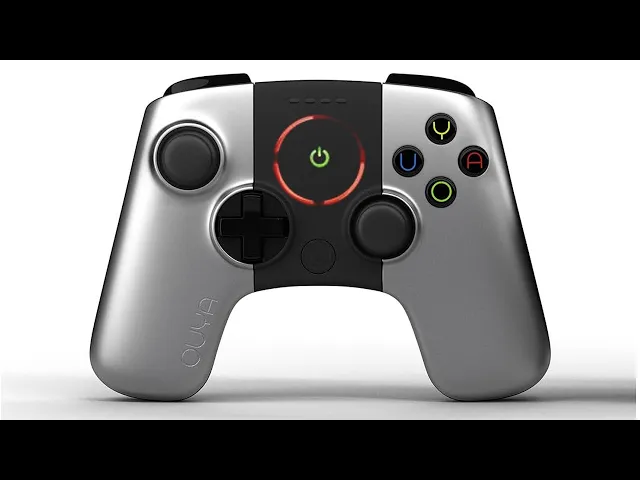
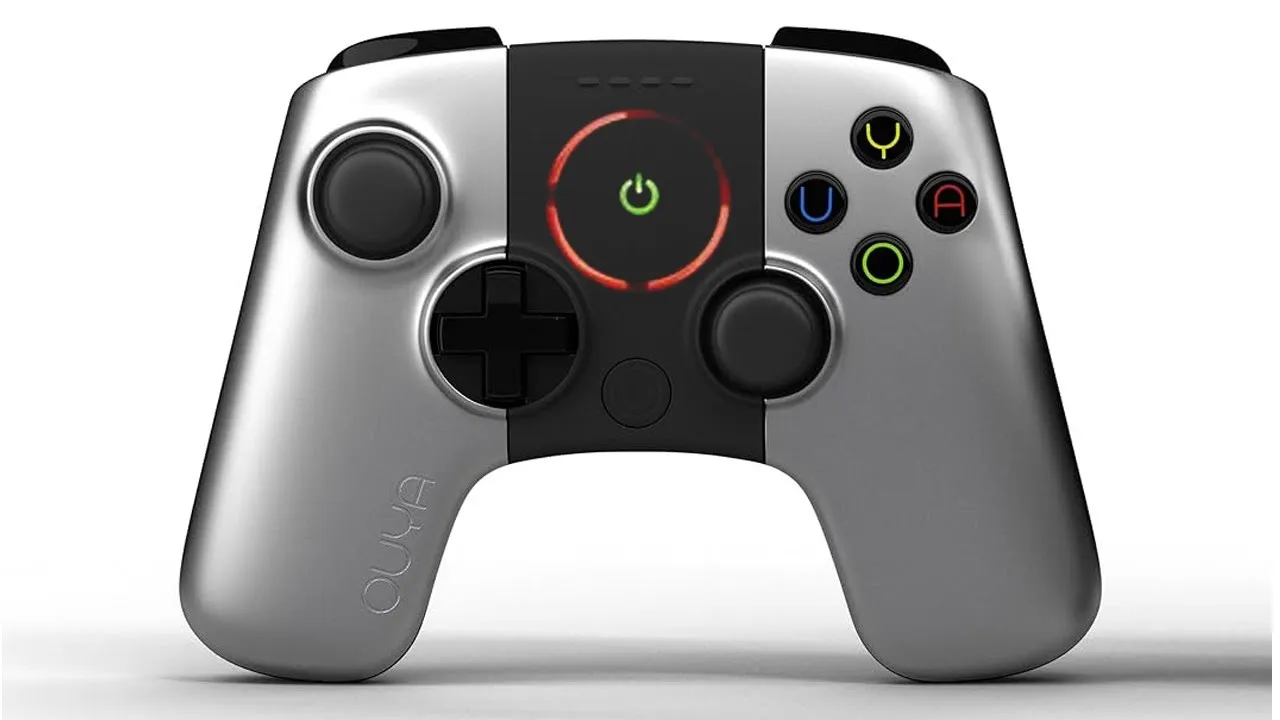
Eh, cool! And number 29 is the Ouya, the little indie console that couldn't. The Ouya was a third party crowdfunded video game console that was meant to save us from the stranglehold that companies like Nintendo, Sony, and Microsoft had over the gaming industry.
It was a console for the people, a new kind of video game console. And the rose was still in bloom for Kickstarter projects at the time, so the money came a-rolling in, more than nine times the original funding goal. People wanted this thing.
But after years of broken promises and mismanagement, the final result was really underwhelming. The thing was primarily sold as an Android console meant for more casual gamers, but the only people who actually got any use out of it were the hardcore enthusiasts who turned it into a low cost emulation box. And even then it wasn't great.
The controller was cheap and poorly designed. Even for a cheap little console, this thing was extremely underpowered for what it was meant to do. And by the time it actually came out, actual emulation boxes were starting to come out using cell phone CPUs, which were way more powerful than this thing had on offer.
So the only real value it had left was that Ouya Games had to be free to play, or at least some of the game had to be free to play. Essentially, it meant every game had to have a demo. So that's actually not a bad distribution model.
The problem with it is that you had to have an internet connection to play. Every single game was like that. Which as you know, with a good internet connection can be a problem.
But the wireless hardware in the Ouya was cheap and spotty, and obviously the servers are down now, so every game on the system has been rendered unplayable. So much for freeing the games. And number 28 is the Apple Bandai Pippin, Apple's first and so far only foray into the world of video game consoles.
Came out back in 1996, costing $599 US, double that of the Sony PlayStation which released a year earlier. For that price, this thing better have some impressive graphics for the time, right? Well, no, it didn't even have a dedicated graphics processor.
All the games made for the system run like crap and look significantly worse than games made for the PS1. So what did the Pippin have? Well, it had a hideous boomerang controller that was wireless, which was unique for the time.
And also you could install Mac OS 7 on it. So it was sort of a hybrid PC-console with all the negatives of both and none of the positives. If you actually did install the OS, it would take up most of the available system memory and games would run even worse.
The few exclusives the system got were completely pointless too. They could just work on a standard Mac, so there was almost no reason to get them. It ended up being the worst selling console of the fifth generation, which is impressive 'cause there were some pretty big duds during this era.
The failure of the console wasn't entirely Apple's fault. The driving force behind the console was mostly Bandai. They were the ones that actually manufactured and marketed it, so they ate most of the losses when it inevitably flopped, while Apple pushed forward pretending the whole thing never happened.
And number 27 is the Nintendo Virtual Boy, probably Nintendo's most high profile flop. The Virtual Boy was meant to be their big follow up to the success of the Game Boy. So instead of taking the super popular handheld, making a few improvements and calling it a day, Nintendo decided to make this abomination that is only technically portable.
I mean, you really can only barely call this portable. It has a terrible controller, only 22 games, and most importantly, it gives you a searing headache using it for more than five minutes. The display it put out was only red and black with a mixed parallax effect.
And that was virtual reality, I guess. I mean, on some level the red was kind of cool, but not the way that they used it because it just didn't work. It'd be cool as a theme on like a Game Boy emulator, but not as this.
I will say there were one or two decent games on there. The Wario game on the console is legitimately good. But man, everything else about it is just so horribly misjudged.
Nintendo is usually on point with its controllers, but this one sucks. Like it's got this cable that comes out of the top in a weird way. It's got this big block of a battery that can easily fall out with only a little bit of pressure.
It's nonsense. Wearing this thing was awkward. It was really heavy, so it made your neck hurt.
And if you use the included stand, then you'd awkwardly have to hunch over a table or something to see anything. This thing was such a piece of crap that not even the Nintendo brand could get people to buy it. It sold less than a million units and was discontinued in less than a year.
And number 26 is the Game Gear Micro, otherwise known as that thing that destroys your eyes because you're straining so damn hard to use it. The console, the Game Gear Micro, was an absurd Japan-only series of tiny versions of the Game Gear. And when I say tiny, I mean extremely small.
They're less than four centimeters tall. The screen is half that. And they're I guess probably about as tiny as you could make a handheld game console and still have it be theoretically playable.
You would have to be a madman to try to play this thing. I mean, look at how tiny the screen is. I hope you have a microscope handy or don't mind holding it directly in front of one of your eyeballs.
Seriously, you have to have it really close to your face to have a chance of seeing any of this, especially if you're playing one of the RPGs these things inexplicably came packed with. The funny thing is it's not a poorly made device or anything, it's a funny little novelty, but actually trying to use it to play games for real is all but impossible. And it make matters worse, Sega cheaped out and made it so that each version only had four games total.
They could have easily packed the entire Game Gear catalog onto one of these things. But no, you get four. I guess it doesn't really matter, I mean four games, 400 games, not really a big difference on a device that you're really only buying for novelty.
But they could have made it literally a couple of centimeters larger and made it so you could play it on more than like a technical basis. And number 25 is the Phillips CDI. Released back in 1991, this console was meant to be a lot of things and ended up being nothing.
It was gonna be a home computer, a video player, a CD player, a video game console, and it was gonna be all that in one thing, in one big crappy package. Named after the disc format Phillips developed that was meant to rival Sony's compact disc, the system is mostly known today for two things, its embarrassing FMV games and the laughably bad legend of Zelda CDI games, which were made as part of the deal that Nintendo made with Phillips, mostly done to spite Sony. For a 1991 console, this thing could do some impressive things.
It could even connect to the internet, at least in Britain. But the PC side of the console was really undercooked. And the gaming part, well, you know what the gaming part looks like.
You're looking at it. It was just embarrassing most of the time. Not every game on the console was unplayable bad, but there was more junk than not.
There really was a lot of junk made for this thing and just bottom of the barrel trash. It cost $700 at launch and that's in 1991 money. Translated in today's money, it's more than double, it's $1,600.
What did you get? Well, to paraphrase Bill Gates, it was a terrible game machine and a terrible PC. When you're right, you're right.
And that billionaire dork was right. And number 24 is the Zeebo. Bad name right off.
Released exclusively in Brazil in 2009, this console was meant to serve the growing middle class with a less expensive gaming option. You know, compared to the extremely expensive imported first party consoles that only the rich could afford. It was a noble idea, but the whole thing ended up being a flop.
It was outdated before it even came out. The controller was bad. And the games were mostly ports of phone games or shovelware slop.
Even though it was designed as a cheaper alternative console, it was still too expensive for a lot of Brazilian families. So it sold poorly right from the start. And even with the price cuts that came months later, this thing never ended up being profitable.
About 40 games came out for it, including noteworthy titles like Resident Evil IV's phone version, which by the way plays much better on a phone. And that's bad, but Ridge Racer was worse. It didn't just play poorly, it could, no joke, actually kill the console.
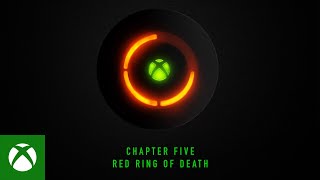
According to a comment by rafamottaa, the game would leak data into the memory which would fill up and corrupt the memory, breaking the entire Zeebo OS. You generally hear of game-breaking bugs, not console-breaking bugs. Like I can't remember any other console besides the Xbox 360, which that was all fixed, that could just be bricked.
And the Xbox 360 was from overheating. This is just software that didn't work right. And number 23 is the Nokia N-Gage.
You know that this is quite a list of bad consoles when number 23 is the N-Gage. Colloquially known as the Taco, you know, because the awkward placement of the speaker and the microphone made it look like you were talking into a taco, this thing was a handheld console and a telephone all wrapped up into one. A phone that can play games, get out of town with that!
What? Obviously this thing came out in 2003. And although like, some phones could play some very rudimentary games at that point, the Nokia Taco was in a lot of ways actually way ahead of its time.
It had Bluetooth, you could go online with it, it had MP3 playback. It could do pretty much everything a cell phone at the time could possibly do while also being a dedicated gaming handheld. It's a good idea, but the execution was fatally flawed.
Look at it, the face buttons double as a phone keypad. And it's awkward for most games to say the least. The screen was weirdly narrow for a handheld.
And if you actually wanted to insert a game, you had to remove the battery. Yeah, the game card slot was behind the battery, similar to how most phones worked back then. But instead of swapping out SIM cards, instead of that, you were basically swapping out micro SDs all the time.
Like you put one in and it stayed there until you took the battery out. It made zero sense for a handheld console. Nokia had no clue what they were doing.
It sucked as a handheld and it sucked ass as a phone. It did actually have a pretty cool Metal Gear game on it. Not vital to play or anything.
I would go with an emulator rather than digging up one of the fabled Tacos. But it shows off that despite its many flaws, it actually did a pretty good job of graphics, shockingly enough. Just everything else about it was wrong.
It's not even that it didn't work, it was just wrong. And number 22 is the ZX Spectrum Vega Plus, a Kickstarter failure that makes the likes of the Atari VCS and the Intellivision Amico seem carefully planned and professional in comparison. Getting into the nitty gritty of this particular disaster would take all day so let's just talk about the console itself.
All it was supposed to be was a handheld version of the previously released mini console, ZX Spectrum Revival. The thing that drew heavy criticism was its build quality, but backers hoped these guys would get it together and put out a quality product this time. There's actually a pretty big fan base for Sinclair Microcomputers in the UK.
It's a nostalgic brand for a lot of people. So the promise of a high quality handheld that was preloaded with 1,000 classic Spectrum games was something a lot of people wanted. However, the final product was not what anyone wanted.
After struggling for years to stay afloat and weathering many self-made disasters, they finally managed to release a few of the Vega Pluses, even if it was way lower than the original expected run of about 400 units. The handhelds that people did get were in terrible shape. They were flimsy and cheap, relied on batteries, and had no charging cable.
A lot of the release handhelds people got were straight up broken with faulty ports or bad batteries. Even the boxes they came in were slapdash. Instead of proper packages, a lot of them came loose in boxes with nothing protecting them other than some crumpled up paper.
Oh yeah, and those 1,000 games? They got cut down to just 14 when they lost the license to Spectrum's game library. The entire thing was one big shit show.
And the only reason they even released it was because I think it would've been fraud if they didn't. And number 21 is the Sega Genesis Flashback. Anyone remember those AtGames consoles you used to see all over the place?
People let the crap quality of those things slide back when nobody really cared about miniature consoles. But when the NES Classic came out, expectations changed. People wanted more mini consoles, and they wanted ones that were well made, but we didn't get that with the Sega Genesis Flashback.
Instead, we got a borderline bootleg piece of crap that barely ran the games it came packaged with. The wireless controllers it came with used infrared rather than Bluetooth, which was ubiquitous by the time this thing came out. And infrared is terrible.
And a lot of the 80 included games weren't even actual Genesis games, they were knockoffs produced by AtGames. I often see people knock this thing, but I bought one when it came out. I didn't know what happened to my Sega Genesis and it seemed like this would be a good way to, you know, play it.
But I booted up Sonic the Hedgehog and was introduced with off-key music. Yes, lots of the on this console play the music out of Key. It's a real piece of junk.
Also, it only supported mono sound for some reason and didn't really look like a Sega Genesis. It was vaguely reminiscent of the refreshed console design that they went with later in the console's lifecycle. But the point of the mini console was, you know, nostalgia, right?
It should probably look like a Genesis. After this thing failed, Sega dumped AtGames and switched over to M2 to make their next mini console, which was way better received. Moving on to number 20, it's the Super Wonder Boy.
I know almost nothing about this thing. There's very little information on the internet outside of a short blurb on Hardcore Gaming 101, but that's all the information I need to put it on this list. This bootleg Korean console has a silly name and a unique feature, an alarm clock that goes off every 30 minutes of play.
Doesn't that sound like fun? You're playing your game and suddenly the console starts beeping. (Falcon imitating alarm clock) Happens every 30 minutes on the dot when you turn this thing on.
I guess it was done because some kind of epilepsy scare was going on in 1993, not related to that episode of Pokemon that triggered epilepsy in a bunch of kids in 1997. That was another thing at a completely other time. I don't really know anything else about the console, but it's so much in terms of a bad console.
Like in the intro of this video, I kind of nebulously said bad. This was what I was alluding to. It's not a failure and it's not non-functional, at least from what we know.
But an alarm that goes off every 30 minutes, like I don't know, to track how long you're playing a game sounds like fricking torture. I feel like every single time it would happen, it would just piss me off. I would die a little inside but also become very agitated.
Like it's bad enough when some Nintendo games tell you to take a break after like an hour. Imagine that, but every 30 minutes and instead of a little text box, you get the alarm clock sound. And number 19 is the Zone 3D.
This 2011 bootleg console looks like a PlayStation 3. It has two controllers that look like Wiimotes. And last, but certainly not least, it has two anaglyph 3D glasses.
Yes, it's a 3D console and it comes packed with 20 3D games, all of which use pre-rendered graphics. If you don't know anaglyph 3D is the real cheap, real crappy kind of 3D, the kind where you have the red and blue in the glasses. It looks terrible.
It kind of hurts your eyes to look at. And even when it kind of works, it's not like good. I'll say this, at least the 3D glasses with this console were plastic.
They're better than the paper ones they used to give out all the time when I was a kid. Which, lord, that's gonna have a lot of you side eyeing me in terms of age. So if you ever wanted to play a bunch of cheap knockoff garbage with pre-rendered 3D graphics that give you a headache, this is the console for you.
There are 80 other non-3D games in the package, but they're all junk too. It's all junk. You'd be better flushing the $60 retail price down the toilet.
At least looking at that wouldn't give you a headache. And number 18 is Tiger Game. com.
It's the N-Gage but worse. It tried to be some kind of hybrid between a Game Boy and a PDA. It was absolutely terrible at both of those functions, though.
What makes this thing so bad other than the stupid name and terrible ergonomic design is the screen. It's ungodly, it's poorly lit, it ghosts like crazy. And when it's ghosting, the image, it's smeared to hell and back.
They managed to get some big names on this thing like Resident Evil 2 and Duke Nukem 3D. But the games can't be played. They're just a blurry mess of gray pixels.
This thing seriously has some of the worst graphics I've ever seen. Like, it's abysmal how bad this screen is. There's only about 20 games that ever came out on it and it's 20 games too many, 'cause look at this slop.
What developer in their right mind would look at this and go, "Yep, that's the platform for me. I'm gonna spend years of my life making a game for this. " And the games are total garbage.
But hey, at least you can connect to the internet. Yeah, well, if you don't mind attaching it to a modem. There's no wifi.
And you can only view text, which you know, that's what everybody does on the internet. Like, who asked for this? If you ever wanted to experience what it's like to suffer from glaucoma or maybe something worse than what people with glaucoma see, get the Game.
com, 'cause man, it's that. At number 17 is the Commodore 64 Games System. No, I am not talking about the Commodore 64 microcomputer, I'm talking about the Games System, the ill-fated console version that came out back in 1990 and managed to sell a total of 2,000 units.
Yes, 2,000. Not 200,000, not 20,000, 2,000. The Commodore 64 was a staple of the UK game scene was hugely popular as an affordable PC.
But Commodore wanted to compete with Nintendo and Sega so they put this thing out. It looked like the standard Commodore, but instead of a keyboard, there's nothing. It's a keyboard with no keys, which is kind of a problem 'cause the game they packed in it was Terminator 2.
And well, let's just say you have to press keys in that game to properly play it. I don't even know how you make that mistake, but it illustrates the fundamental problem with this thing. It's just a Commodore 64 that can't play the vast majority of the games built for the system.
It's fundamentally a Commodore 64, that's what it is, except for it's designed without the apparatus, the keyboard, necessary to play most of the games the Commodore 64 had. It wasn't even a lot cheaper than the main one. It was only $50 less than the full microcomputer so really it had no reason to exist.
At number 16 is Battman. It's a Nintendo 64 box with an Xbox console, two PlayStation 1 controllers, a light gun, and art stolen from the "Batman and Robin" movie. You know, the one that was widely considered to have killed the Batman franchise until they tried again like more than a decade later with "Batman Begins".
Oh, and also it's a famiclone, meaning that it is a Nintendo entertainment system inside the old original Xbox exterior that has different colors and the PlayStation controllers and the light guns. I mean, the light guns seem like a no brainer. Sorry, if it's got NES games, I am playing Duck Hunt.
But beyond the fact that it includes a light gun for Duck Hunt, I assume, nothing about it makes sense. It raises so many questions that'll never be properly answered. There's no point in trying to figure it out.
It's Battman. Seriously, look at this box. I have no idea why this is the box.
At number 15 is PX-3600. Is it an Xbox 360? Is it an Xbox original?
Is it a PlayStation? Kind of, who knows? It's the PX-3600, a bootleg console from Cheertech boasting no less than 3,600 games.
And that is a lot of games. Oh sorry, no, there's 36 games. Each game just repeats 100 times each.
Well, at least the controllers rumble or one of the controllers has rumble. Here's a positive for you, it's got stereo RCA cables. So you get two channel audio with this one.
You can't trust anything about this system, even the game names. Street Fighter is actually Super C, Teletubbies is actually Mario Brothers, somehow Duck Hunt is split into two games. It's a big old mess.
There are so many bootleg consoles practically identical to this thing, but its ridiculous name and bizarre design make it noteworthy enough to show up on this list. At number 14 is the Power Player Super Joy III. Okay, one more bootleg console, but I will say there's a special something to this one.
It was everywhere, a staple of swapmeets and cheapo junk stores for years. If you got a bootleg console of some kind, it was probably one of this one or its derivatives. I gotta bask in the glory of this box here for a second.
Nintendo 64 controller, messed up buttons though. Six button Genesis controller. And the gun packed in.
Star Wars in the middle too. The text that says, "The Original New Addition". What?
Typo aside, it's not the original if it's a new edition. It's magic, pure magic. The stick on the Nintendo 64 controller doesn't even work.
It's completely non-functional. Like the 3600, it's got 100 multiples of the same game so the actual number of games packed into this one is 76. And to top everything off, they're prone to overheating and the soft plastic actually has the potential to melt.
That's right, a mediocre 3D print is more durable than this thing. At number 13 is the Game Wave Family Entertainment System. While it's maybe not the worst console of all time, it takes its top spot as the lamest console of all time.
Made by ZAPiT games and released in 2005, this thing only ever had 13 games made for it. And they're boring, family trivia type games or basic puzzle type games, not good ones. And let's be honest, this thing's barely, barely a game console.
It's more of a DVD player with some interactive elements and four controllers, which are just remotes with different colors. If you had really strict Christian parents, you might have had this thing because it seems like that's the only demographic it found any success in. Imagine it's 2005, you want an Xbox and you see what can only be a game console box under the tree.
You stay up all night imagining all the cool games you're gonna play on your brand new state of the art Xbox 360, only to wake up in the morning and find out Santa didn't get you an Xbox with Call of Duty. He had got you the Game Wave Family Entertainment System with the Veggie Tales Veg Out Family Tournament Game, which is, by the way, from what I can tell some kind of ironically unholy combination of "Veggie Tales" and DVD menus. Seriously, that's the best I can describe the gameplay I looked up.
And number 12 is the 3DO Interactive Multiplayer or the 3DO for short. This 1993 console was in some ways a leap forward in technology, could render textured 3D graphics natively a year before PlayStation even hit the market. But the price tag killed the thing stone dead before it had a chance to take off with $700 in 1993, which is better than $700 in 1991.
Not a lot though, you know, like the Phillips CDI. You know, the CDI and the 3DO really make me wonder about luxury products. Like, is the point of buying them to be able to say you bought a $700 game console in 1993 or '1?
'Cause it's not the games, like having those games is not the point. Those suck. But anyway, the 3DO only had one game on launch day.
The only game that was ready in time for this thing to come out was Crash and Burn. It just wasn't ready for prime time. It struggled to get any traction, and the only games getting made for it were mostly ports of PC and arcade games and a whole lot of FMV garbage like the truly embarrassing "Plumbers Don't Wear Ties".
The system did eventually get some good games, even if pretty much all of them were available elsewhere, but it never justified the inflated price tag and the PlayStation 1 ate its lunch when it came out in 1995. And number 11 is the Advanced Game Player. It's a Nintendo DS with a calculator screen and a directional pad that looks like it came off a remote control.
A very cheap pile of off-white plastic with only eight games on it. But for some reason if you wanted to access them, you had to put a card into the big active slot so you couldn't just play any of the games you wanted. No, there wasn't anything actually stored on these cards.
All of the games were pre-installed on the game player. You just couldn't play them unless you put in a specific card, at least some of the time. Sometimes a different game would pop up instead just randomly.
Didn't matter which card you put in. There's four face buttons. Only one of 'em actually did anything.
I guess the rest were just there for show. And to make this thing even more baffling, the face buttons and the directional pad would switch mapping randomly when you're playing the game. So it was essentially unplayable.
I'm used to these bootleg handhelds being sloppy, but this was way beyond the usual jank. It's truly impressive how broken and worthless the Advanced Game Player is. And number 10 is the RDI Halcyon.
One of the rarest consoles ever made, it's also easily one of the worst, at least from a consumer perspective. Not much is actually known about the Halcyon's release. I'm not even sure if it was ever officially released anywhere, but it exists and it's in the hands of a few dedicated collectors so it must have proliferated somehow.
Just look at some of the pictures of this thing. It's a beast. Released allegedly back in 1985, this thing was basically a computer and a laser disc player daisy chained together.
Its central gimmick was that it had voice recognition software so the player could talk to the system, which was probably pretty mind blowing back in 1985. But you know how inconsistent voice recognition is now in 2024, as anytime I use voice typing, it changes the word she to you, which are not even vaguely similar words. Eh, that's now.
We're talking about something that used voice commands back in 1985. Everything about this system was clunky, and that definitely includes the games, which had both a cartridge and a laser disc. The cartridge contained the game data and the laser disc was the video.
And yeah, only two games ever came out for it and they were already arcade games. I mean, at least this thing gave you one other way to interact with the machine other than using voice. You could also use this really crappy looking membrane keyboard.
So you get a giant, impossible-to-control brick of a console all for the low, low price of an estimated $2,500. Yeah, seriously. Factoring in inflation, that's over $7,000 of today's money, which is just nuts for a video game console with two games and no proper controller.
At number nine is the Wireless Air 60. This is the bootleg console your grandparents buy when they want you to suffer or just, you know, don't know anything. You know how bad and uncontrollable the Kinect was?
Well, get ready for the Wireless Air 60, a bootleg Kinect that exclusively decided it had to have motion controls. There was no controller, not even a power cable. You have to power it with four AAA batteries.
It doesn't actually do anything like the Kinect. It's probably got some extremely rudimentary motion tracking stuff that's going on, and that's really it. But that doesn't make it any less unplayable.
Games just apparently do whatever they want. There's a game called "Crash Zone" that just crashes the system. Guess I should have seen that one coming, right?
At number eight is the Mattel HyperScan. Released in 2016, Mattel HyperScam, uh, HyperScan tried to combine collectible cards with video games. Every one of the phone game-quality discs made for this thing were very cheap, only around $20.
But along with the game, kids could buy booster packs that were used to power up their games. I would call it the originator of the microtransaction, but horse armor came out a few months prior to the HyperScan so they were behind the times in more ways than one. One way they were definitely ahead of the curve, though, was pricing, which was ridiculous.
Take the Ben 10 game, for example. The base game was $20. If you wanna get all the cards, that was 13 booster packs, $10 a pop.
So for the kids who had to have everything, a $20 game suddenly cost mom and dad $150 for one game. And the games aren't even good. Like look at these.
All the things released for this look like absolute crap. Everything looks like a cheap bootleg, but it was an official product from Mattel. And number seven is the Atari Jaguar CD.
The original Atari Jaguar had some redeeming features, but not a lot. Jaguar CD, though, no reason for it to exist. Released in 1995, this thing only saw 13 games released for it compared to the standard Jaguar's 50.
And most of the games released were stuff like "Drgon's Lair" or "Myst" or "Primal Rage", which got released on other systems. One of the Jaguar CD's only exclusives was "Highlander, the last of the MacLeods", which is a terrible tank control action game based on the "Highlander" cartoon that no one on earth remembers. Seriously, if you say you remember watching it, you're lying.
I don't. I believe somebody played this terrible game over them watching the cartoon. It did not happen.
Along with the limited library, it was also prone to hardware failure. And trying to get the CD working on one of 'em these days is pretty difficult. CD drives tend to be spotty, but this thing was much more shoddily made than your average one.
Sometimes the connection between the system and the CD fails, sometimes the drive fails, sometimes the laser fails. There's no guessing what will cause it to stop working. But there's a good chance it will stop working.
However, it would be a much bigger issue if there's anything worth playing on the system. And number six is the Nuon. This mostly forgotten console came out back in the year 2000.
Cue Conan O'Brien bit. It had the goal of being nothing less than the next 3DO. They pretty much copied 3DO's manufacturing model exactly, only without the whole mandate that all games had to work with all versions of the console.
So this thing somehow ended up being a bigger mess than the 3DO. It looks like a DVD player 'cause that's what it primarily was. It had special features to make the DVDs more interactive.
Only four movies ever actually used them. And there were only eight games ever out for the system. Most of them were old or were only available packed with certain players, or were literally just incompatible with different models like "Iron Soldier 3", which had to be recalled because of that.
It's amazing that Logitech was able to survive as long as they did with controllers that looked this bad. I mean, look at this stupid looking thing that came packed with the Nuon. It's just a standard Logitech from that time.
But seriously, that's the kind of controller you force your friend to use when you're playing "WWF No Mercy". Yeah, it's another in a long line of crappy forgotten consoles. But you'd think by 2000, somebody would've had a sanity check and canceled this pointless thing before it ever got on store shelves because of course it failed.
And number five is Amiga CD32. Commodore's final attempt to break into the console market was somehow even worse than the previous, and that's saying something. Designed to break into the lucrative North American market during the company's dying days, they got hit with a debilitating $10 million patent infringement fine from the US government, which forbade them from releasing products in the United States until they paid up.
They didn't have the money, of course, so they didn't release in the US even though they already manufactured them so they were stuck with a whole lot of products they mostly couldn't sell. This thing only lasted eight months on the market before getting discontinued. And that's where Commodore's story mostly ended.
If the console was some kind of secret gem, it would be a sad end, but it's not. It's got all the same issues their previous attempts at a console had but with even more unforced errors. Once again, it's essentially an outdated Commodore that doesn't really offer anything new for most of its library.
Most of the games can be played elsewhere and there's a whole lot of shovelware crap on the system like "Kang Fu" and the incredibly bad Akira movie adaption game, which has to be seen to be believed. I'm not joking here, Tetsuo fights giant teddy bears. Giant teddy bears!
And number four is the Tiger Gizmondo. This awkward little novelty is honestly a lot less interesting than the behind the scenes story behind its creation. But make no mistake, that doesn't mean it's good.
The form factor alone killed the handheld. It's just too small and awkward to use as an actual game system. The top buttons are weird and dig into your fingers.
The directional pad is spongy. Nothing feels good about using it. Only 14 games ever came out for it.
They were all launch titles, nothing else was ever made for it. It only managed to sell around 25,000 units and was an all-around failure. The screen at least was all right and the games looked okay for 2005 standards, but the whole thing ended up being a big pile of nothing.
Well, okay, it was ahead of its time in one way. There were two models, an expensive one that cost $400 or a $229 model that would show you advertising all the time. Yes, it would cut to ads while you're playing the device back in 2005.
Maybe phone games were already doing that back then, I don't know, but either way, I don't like it. The Gizmondo sucked. But the real interesting story has to do with the sleazeball behind the whole project, a Swedish game developer and former mob affiliate, Stefan Eriksson.
The story of what this guy got up to before and around the development of the Gizmondo is pretty nuts. And he ended up getting arrested and pleading guilty for two counts of embezzlement and one count of illegal gun possession, spending three years in US jail, which then he was deported to Sweden where he faced even more charges including aggravated assault and drug possession. Wild stuff.
And number three, the Action Max. This 1987 console really stretches the definition of what counts as a video game. It's a light gun game console and all you get is a toy gun.
If you wanna play the games, you need a VHS player. Because seriously, all the games for this thing are just tapes. So it's not really a light gun game.
Nothing on the screen actually reacts to what you're doing. You might as well be doing finger guns on your computer screen 'cause that's only slightly less interactive than what the Action Max offers. It had five VHS tapes released for it, died a quick death because what's the point?
I guess you get a score, but it doesn't even show up on the screen. It appears on the TV mounted score signal. So seriously, all you're doing is watching a VHS.
That's the game. And number two is the LJN Video Art. It's a console with one game, a terrible paint program that doesn't even have a tablet interface.
You have to use joystick to draw. And oof, that is not good. It only had 16 colors.
And putting in a cartridge into the slot made the picture appear that you could edit using some of the worst controls imaginable. That's it. It is a basic and ugly paint program with 16 colors.
Yes, 16 colors. The pre-programmed images even look amateurish. I'm pretty sure a child could draw something better than this.
As a digital art program, completely worthless, not fun to use, serves no function. And finally, at number one, it's the R-Zone. And I've already made an R-word joke once in this video, but it's been long enough since I did that.
Guys, step into the R-Zone. If you grew up in the '90s, then you remember all those cheap Tiger Electronics games and being able to say the R-word. The Tiger Electronics games, I mean, sucked pretty hard.
They were basically unplayable with nonsense controls, inexplicable rules and indecipherable artwork. But they were everywhere. All the kids had them 'cause they were real cheap.
Now imagine one of those things combined with the Virtual Boy and you have the worst handheld console of all time. Look at it, it's literally one of those Tiger handhelds, but red and projected on a piece of glass in front of your eye. There's no actual graphics on it, it's all just a single image and certain parts light up to give the impression of movement or action.
Nobody's falling for it, though. It's usually just a mess of black blobs twitching about the screen. Now imagine that, only it's red projected on some clear plastic.
And you can only see it, see it might be a bit of an exaggeration too, but you can only see it with one eye. In a technical sense, it's not even a video console. There's no video signals generated here.
But what the hell, Wikipedia says it counts so that's good enough for me. Tiger Electronics handholds are about as primitive as video games can get, and the R-Zone somehow found a way to make it worse. That's all for today.
Leave us a comment, let us know what you think. If you like this video, click like. If you're not subscribed, now's a great time to do so.
We upload brand new videos every day of the week. Best way to see 'em first of course is subscription, so click subscribe. Don't forget to enable notifications.
And as always, we thank you very much for watching this video. I'm Falcon, you can follow me on Twitter at @FalconTheHero. We'll see you next time right here on GameRanx.