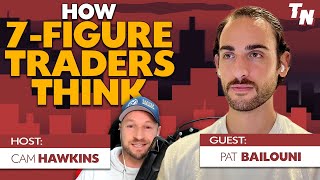
you know what I've observed with the the best Traders I've worked with um and that I've observed and had the opportunity to to get coaching from etc etc is that they're very humble to the market they're very curious they have this almost this this sense of curiosity of I don't know what's going to happen next but I'm very curious to see what's going to happen next so welcome with Pat B look for to talk about psychology of trading and how we can actually perform better in trading so p back on the podcast good to have
you here again of course it's been a while so I want to kind of catch up and tell me kind of what's been going on since we last spoke I think a year ago or so yes I've been uh been quite busy I've been uh working with a lot of Traders um trying to really understand what's going on in their heads their their behavior their psychology um I did I did some travels uh for the last eight months meeting with clients and meeting with students just to uh have more face-to-face interaction as well to get
the to help them understand what's going on in their heads um and yeah developed some new trading Cy psychology principles and some new ideas um which I'm really really excited to share today so when it comes to psychology people are trying sometimes to I feel they're trying to force it too much like they they have a discipline issue then they try to force discipline or they cannot hold their trades or they they try to like force themselves to hold their trades and it doesn't really work too well in that case so how can you actually
kind of fix your your your psychology and trading yeah it's a that's an interesting question we can we could talk about that for a couple hours I think um but I think I think one thing that Traders tend to overlook or um they they misunderstand is that um you need to have a good strategy a good trading strategy and a very clear mechanical trading plan um if you want to expect your mindset to be on point um a lot of Traders uh they're trading a strategy that isn't necessarily profitable they haven't put that strategy into
a mechanical trading plan and then they come to the market and they're overwhelmed by the market they're overwhelmed by decisions and what tends to happen in the psychology when you're overwhelmed is your your brain goes into more of a survival State your amydala gets heightened and uh you become more reactive in the markets and uh you put your psychology in a very vulnerable situation if you don't have a clear set of rules a checklist a trading plan to guide you I sometimes use the analogy that the Market's like a jungle you can't expect yourself to
navigate the jungle if you don't have a clear map if you don't have a clear objective um so one of the easiest things Traders can do um obviously I talk only exclusively about trading psychology but what you should be doing before you focus on your trading psychology is make sure you have a profitable strategy and then putting that profitable strategy into a clear mechanical trading plan and then the game becomes about managing your psychology so you can actually stick to that trading plan talk about managing fear and greed managing expectations taking care of the other
components of your life so that you know you're not you're not disempowered in any the areas um there's a lot of different components that we can talk about but step number one is having a profitable Edge step number two is putting that profitable Edge into a mechanical trading plan step number three is then managing fear and greed so that you stick to that trading plan that's sort of like a uh how I would ease a Trader into trading psychology all right makes tot of sense so let's kind of focus on Expectations first because I think
that's the the thing for beginning Traders like having the right expectations for trading trying to like not aim for like getting RIS and like a week or something how do you sort of balance out goal setting like you want to be able to achieve goals and like reach a good level in trading but but also not try try to like overly achieve or like overly set big goals that you cannot achieve I like to break it down into two different schools of thought you've got outcome based thinking or an outcome based mindset and a process-based
mindset or process based thinking I think every Trader they come into the markets because they have these ideas of the lifestyle and the money they want to make and the freedom they want to have and they they don't they don't like their job they want to get away from their job etc etc so those are all outcome based goals outcome based expectations or outc based ideas the truth is fixating on the outcome based goal or idea or expectation isn't the thing that's going to actually get you there in the first place what you need to
do is you need to have proven processes that you consistently execute on that are proven and you know shown to be true that you can execute on that will ultimately get you that outcome so what I encourage traders to do and this is really what I share with um a lot of my students is that you have the outcome in your mind you know where you want to get get to you have the expectation of what you want from Trading and then you want to strategize where am I currently and then where is that goal
and then what's the difference what's the strategy that's going to get me from where I am to where I would love to get to and then really what you're focused on day-to-day is the process you can almost forget about the outcome and you can you can write that down in a notion document in your goals you can put it away and then every day you wake up and you focus on executing on the process which is the high priority actions that will get you to that outcome and then in three or 6 months time you'll
look back and you'll be like oh my God I I accomplished the outcome that I set because you work backwards you knew what the outcome was you knew where you were you planned the process the strategy to get there and you just focus dayto day on executing on that process executing on that strategy so have a goal but don't fixate on the goal use that goal as a way to strategize the process and the high priority actions and then Focus put your energy and attention on executing on the on the high priority actions every day
that's what will ultimately get you there in the first place I love that that focus on the process the thing is like there's people on YouTube telling you you can do like 2,000% a year and they will show you like how you can flip your account so quickly I think a lot of beginner Traders are like stuck in that mindset too of like trying to flip things quickly because this is on YouTube because like some some guys told them about it and then they kind of try to risk too much and they have the psychology
issues coming up and then that's kind of why it's hard to maintain displ if you kind of try to gamble your way in trading yeah you question in the first place is that even is that even trading at the end of the day it's not it's it's G G Ling um so you have to be you have to be aware of the hype the marketing you have to be aware of the agenda behind some of these videos and what's being promoted um and you have to understand that uh a lot of it's just hype in
marketing and and and it's it's simply not true and I think Traders have to go through this is why the journey is so important this is why no Trader necessarily makes it overnight it's because you have to fall into those traps you have to go through those experiences to almost you know it's like when you touch a hot stove you get burnt the first time you never touch a hot stove again um or or a hot whatever you know on the stove you you train your psychology to realize that you know the Journey of being
a successful Trader it's very boring um you shouldn't be shooting for these large returns it's about sticking to the process and consistently executing on the process and uh I try and tell traders that sometimes but sometimes it's wise just to leave them let them learn their own lessons and then they typically come back when they're a little bit more grounded and ready to to learn the principles that will actually help them become a successful Trader in trading depending on how you do it there's like pressures like if you let's say want to go and trade
for a Prof fir it's like pressure that you have to perform for that Prof fir if you trade on your own fulltime it's like pressure that you have to make your own kind of salary over time how do you handle these pressures that come with trading yeah there's a lot of them right it's like uh uh being a full being a full-time Trader is a very very good example um there's a lot of traders who have this idea of I want to become a full-time Trader and the idea in their mind is only the positive
side of it they have this fantasy or this idea of what full-time trading will look like and in their mind it looks like I'm going to come to the market I'm going to make money very easily it's I'm going have all this Freedom throughout the day I'm not going to have to have any issues I just I do what I want to do I go to the beach etc etc um and the reality is far from that the reality of being a full-time Trader or being a funded Trader is that you're going to have Advantage
yes you're going to have more freedom you're going to make more money but there's also Al going to be greater stresses and there's going to be greater responsibilities and accountabilities that come with that as well so you got the drawbacks there as well um so it's important to recognize first and foremost that the goal that you you're shooting for whether it's a full-time Trader or a funded Trader has two sides to it it's going to have Advantage but it's also going to have disadvantage and it's actually a process that you can go through of writing
down all the drawbacks all the risks all the things that could go wrong if you're a full-time Trader or a funded Trader so you're aware of those in advance and you can be aware of both sides of the goal and then you plan and prepare for everything that could go wrong so for example one of the one of the biggest challenges being a full-time Trader is that you don't have a reliable source of income through employment for example you don't you're not going to get a paycheck every couple weeks or every month and that's a
true risk or a true drawback where you may not get paid for the month so if you're aware of that in advance you can then ask yourself all right what am I going to do to plan and prepare and if I don't get a paycheck how can I lower you know how can I lower the probability of not getting a paycheck and how can I lower the impact if I don't get a paycheck and you can have cash savings there you can you can be prepared for those vulnerabilities or for those risks my point here
is that Traders are sometimes pursuing fantasies they're pursuing these one-sided you know fantasies that aren't even real in in reality it's not even true so you want to in advance be aware of what could go wrong and plan for what could go wrong and you're automatically going to be more and more grounded um but I also encourage Traders not to jump to becoming a full-time Trader um because you know the reality of it's very different to what's marketed and uh again it's sometimes the lesson you have to go through to you the experience you have
to go through to learn the lesson um but uh yeah I encourage Traders not to I encourage traders to work a full-time or a part-time job if they can use that as a source of income to build up cash savings have 6 to 12 to 18 months of cash savings before you even think about going full-time and then recognize that you can you can trade full-time you can also work a part-time job so you have that source of income as well you can dedicate your time to additional businesses that generate income whatever it may be
but always have that healthy skepticism of being a prop firm Trader or a full-time Trader um because we're inundated by positive marketing and that's just one side of the story you have to be aware of the other side as well um and uh I mean we can talk about prop firms as well we we had the you know some of the recent challenges with some prop firms and that's just the reality of the situation you have to be aware that there's no such thing as a free lunch there's no such thing as free money there
are going to be drawbacks to prop firms there are going to be vulnerabilities and there are going to be things that happen you have to be aware of these things you have to plan and prepare for them I had many clients who messaged me after I don't know if we can use the the the recent prop firm um that went under yeah yeah forther go um and they lost Max allocation um so you know I empathize with them I recognize that uh that's challenging for a lot of people but the the the best Traders out
there were Diversified they knew that these things could go wrong issues could happen so they were planned and prepared for those things in advance so don't be vulnerable to the marketing be healthy healthily skeptical if that's even a word and plan contingencies for everything that could go wrong and you're going to put yourself in a much better position as a Trader rather than pursuing fantasies and thinking that there's this all positive thing out there which is just not true it's not the reality yeah I think it's a really good lesson in diversification diversifying your like
first of all what you trade diversifying your your your incomes you have multiple ways to make money and diversifying the Prof firms like where you get to Capital from it's definitely important 100% I I completely agree and I may even mentioned it on our first interview because I I I spoke about this a lot on my previous interviews because what I noticed is that the language people using around prop firm is that oh it's free money it's easy money there's no such thing as a free lunch and it just takes some time until you see
the other side so I I think what's happened uh with with this recent situation was been a big eye opener to everybody in the industry um that there are drawbacks to prop F Firs that doesn't mean prop fims are bad they're still a great tool to be to utilize but you have to recognize they're going to have two sides them you have to be aware of both sides there are people in trading who not maybe the majority but some people see everything as like a scam they see the broker as a scam they see the
profer as a scam they see this is a scam that's a scam this journal platform is a scam too how do you make your way to trading when you see things as scams everywhere just like any industry there are scams in any industry right um I think it's I think it's important to do research uh important to have a look at what's regulated what's not and all that type of stuff I mean with Brokers you want to you want to stick to the to the more secure bigger Brokers typically the the they're better options um
and uh I think it comes back to what we're talking about edian with diversification recognize that uh it's important to stay Diversified if you have a lot of capital up your Capital put into multiple different Brokers keep you know utilize The Leverage so you can keep your majority of your capital in in in safer interest bearing accounts um and be smart I I really I'm starting to promote this healthy skepticism when I when I speak a lot with Traders I'm trying to promote like just be a little bit skeptical and recognize that just to counterbalance
the positive marketing out there just be a little bit skeptical question things um and recognize that uh there are drawbacks to these things you want to be aware of them you want to be prepared for them that exercise I mentioned before is very very important if all you're seeing is the benefits of a broker all you're seeing is the benefits of an educator if all your seeing is the benefits of a goal you're not prepared for the reality of that and if you're excited over a goal it means that you haven't seen the other side
of it and you're unprepared for the reality of the goal so by asking yourself what are the drawbacks what are the risks what are the disservices what could go wrong in this situation and and sort of balancing yourself out a little bit so you're aware the other side of it you put yourself in a much more stable and balanced um perspective to actually go off and accomplish the reality of that goal you talk about these keys of good train psychology do you want to kind of maybe introduce us to what are some of these keys
or the these key pillars these key lessons for good trading mindset and trading I've put together 48 Laws of trading cycle so eight years ago I think I may have shared a little bit more of my story in the last interview so I won't go into it in detail but when I started my journey 8 years ago I was obsessed with um collecting and cading laws of trading psychology or just laws on psychology in general I've I've scoured hundreds of books I've studied under some great mentors I've I've done an enormous amount of work in
trading psychology because I wanted to know what the psychology of a successful Trader was so I could become a better Trader at the time and uh I put together 48 Laws I would love to share the the first 12 or we can go into we can go into some of them I don't know if we'll have time to go through all of them but there are definitely principles or laws that Traders can take on board to increase the performance their profitability to reduce their stress etc etc these are these are proven laws of the human
psychology that can help Traders um I might just jump to probably the most impactful ones so so we can cover we can cover those we don't you know waste time going through all of them but one of the one of the key principles and and by the way I did a case study on pul chuda Jones recently and this is this is something I noticed he did as well there's a interview of him back in the day I think the documentaries called Trader when Paul chudah Jones was a little bit younger and he was trading
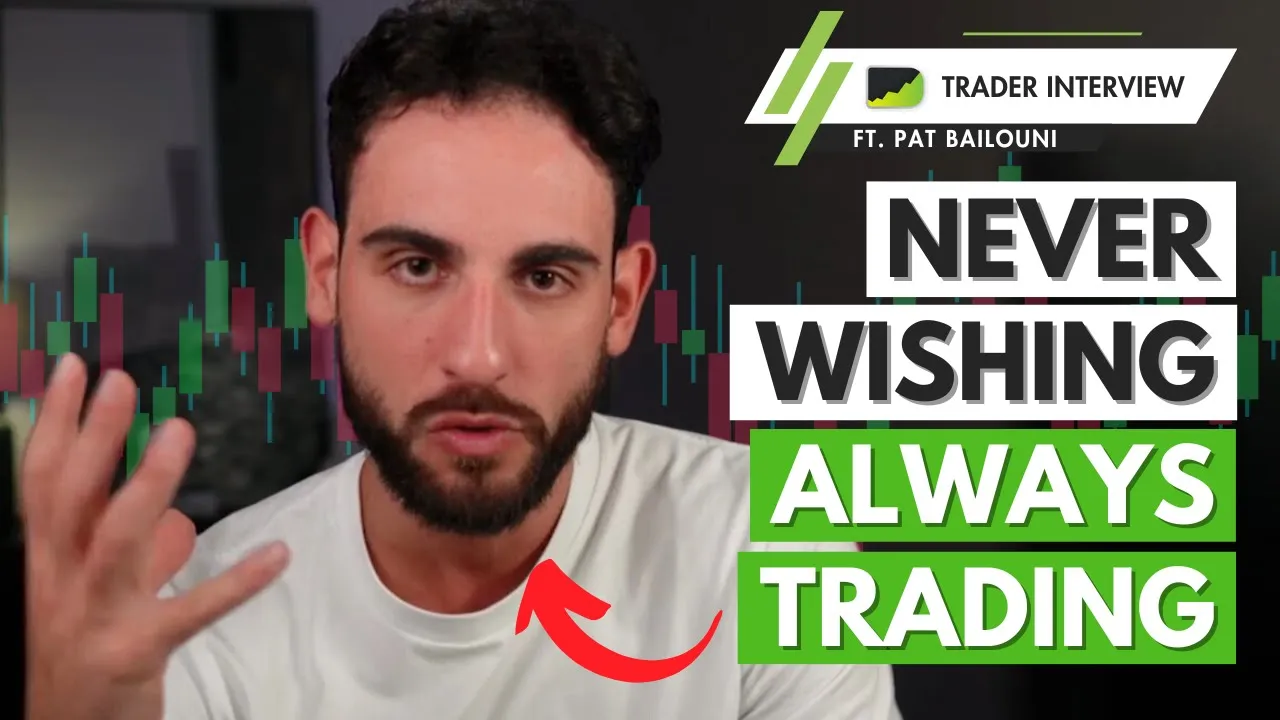
in the markets and he he had this line in there where he said um Traders would do so much better if they stopped wishing and they focused on trading never wishing always trading never wishing always trading that's the language he used and that really aligned with what I'd been what I'd been teaching for a lot of a few years and what I'd been implementing in my own trading for a lot of years maybe because I learned it when I read one of his books ages ago and it was in sort of logged in my mind
and then I sort of implement that into my teachings I don't know but when I rewatched that documentary I was like ooh um that really resonates so what I've what what a it's law five of of the 48 Laws of trading psychology you have to learn to become expectation free so many Traders are caught up in their own head what I call the virtual Market creating ideas of what they think is going to happen next in the market you see you got the virtual Market in your head you got the real Market which is which
is the market on the screen and what Traders are doing is they're creating ideas of what's going to happen next euro dollar is going to move to this price in this amount of time they've created this idea in their mind and then they're forcing that onto the real Market they then expecting the real Market to do that and as every one of you know watching this nobody can predict what's going to happen next in the market on the next individual trade there were just so many factors in the financial markets that moved price that nobody
can actually predict what's going to happen next on the individual trade so to create an idea in your mind about what you think the outcome of an individual trade is going to be is completely unrealistic and it's setting yourself up you're putting your energy on something you can't control you're setting yourself up to be emotional what you do is you anchor in your mind all right euro dollar is going to get to this price in this certain amount of time that's going to get me this funded account it's going to make me this amount of
money that's going to you know get me all this recognition in my community and get me this new car and then if euro dollar doesn't align with that you're extremely disappointed because you not only lose the trade but you also lose all those expectations so Traders aren't able to stick to their trading plan are becoming highly highly emotional because they're caught up in the virtual Market in their head they're not present with the real market so what you can do is before you take a trade you want to become acutely aware of what am I
expecting from the market what do I think the Market's going to do next what ideas am I creating in the virtual market and capture all those have self-awareness over all of those and then question it hey Pat nobody has any idea what's going to happen next who am I to try and predict what's going to happen next on this individual trade and you want to ground those expectations through self-awareness and through questioning and then ask yourself the most important question before you take any trade is is the market aligning with my trading plan right now
because so many Traders are caught up in the virtual Market they're pulled by these expectations and by these fantasies and by these desires for pleasure that they can't actually stick to their trading plan by going through that process of becoming aware of your expectation grounding it through questioning and then adhering yourself with the trading plan you significantly increase the probability of sticking to your trading Plan Building consistent profitability making money consistently scaling up with prop firms reducing your stress it is probably the most impactful thing any Trader can do with their psychology and that is
what Paul chter Jones was talking about when he said never wishing always trading never wishing always trading too many Traders are wishing and they're not actually present with the real market trading um and there were so many there are host of sort of psychological things that we can go into into the subconscious mind we can talk about that actually drive that um but that would be probably the most impactful lesson that um I've learned over the last eight years and I've I've I love to share yeah it's definitely interesting uh people try to predict the
trades for sure they try to predict how quick it's going to take them to get to their their goal and those expectations just don't don't really help that much exactly and one additional thing on that you develop an edge based on you go through back tested data you back test your dollar for example to develop an edge when you're back testing you don't just back test one trade you back test hundreds of hundreds and hundreds of Trades and at the end of that sample space you then look at the profitability of your strategy so your
Edge by definition is determined based on a larger sample space to then come to the market and expect yourself to be profitable on that one individual trade is completely unrealistic you have to bring that same mindset you do to back testing that larger sample space to trading the market in the future and recognize that it's not about the outcome of an individual trade it's about the outcome of of a larger sample space and if you are focused every day on the process not the outcome but the process of sticking to your trading plan over a
large sample space you will approximate your age and that's where consistent profitability comes from it comes from consistently executing on the trading plan that you've developed based on an edge and sticking to that it's about the larger samp space not the individual trade uh so we talked about law four we talked about indirectly at the start about making sure you have a mechanical trading plan uh law five is becoming expectation free um law one 2 and three is um uh what I what I call the aim framework awareness intention momentum a lot of Traders uh
want to set goals they want to accomplish goals uh but they never follow through with those they want to become a funded Trader a full-time Trader they never follow through with those a lot of Traders want to have motivation discipline and focus yet they're distracted so I created the aim framework to help Traders accomplish goals have motivation have Focus awareness means you have to be aware of what your life demonstrates as most important to you right now you have to have awareness of your priorities your value systems what you value in your life right now
your life demonstrates what you value your actions show what you value and if you have an awareness of what you value that's the Cornerstone of human behavior that you can then build your goals on top of there are so many traders that look at people on social media and they admire them because they maybe made a lot of money in a short period of time and they say I want to be that individual I want to be that person but then their life doesn't demonstrate that those actions are valuable to them so they can never
sustain that success so you have to first and foremost be aware of what is a value to you in your life that's the a awareness then you want to set an intention for where you would love to get to so a goal for example I want to become a full-time funded Trader that's my goal in the next year okay so you have an awareness of who you are right now what your life demonstrates as most important to you also have an an eye an intention a goal I want to become a full-time fun Trader in
a year's time then the m in the aim framework aim is you want to build momentum to get you from where you are now to your intention your goal the full-time funded Trader the way you build momentum is through the execution of high priority actions every single day so what I would be doing is I'd be taking a step back and being like all right what are the proven strategies to help me become a full-time funded Trader what have other people done to accomplish that goal well first and foremost you want to develop an edge
you want to learn far and wide through multiple Educators to study the markets and to develop a strategy that's step number one you want to develop an edge a profitable Edge in the market step number two is then putting that edge into a mechanical trading plan how can you expect consistent profitability if you don't consistently execute on an edge how can you consistently execute on an edge if every time you come to the market you feel different and you're trading differently you have to put that edge into a mechanical system that's black and white that
allows you to come to the market and consistently execute step number three is then going off and managing fear and greed learning about the psychology you know maybe watching some of my YouTube videos to manage your psychology so that you actually stick to your trading plan and then step number four is structuring your life to consistently execute on your trading plan with a balanced state of mind so those are the four proven steps that will get you a funded full-time Trader get you consistent profitability so then your day-to-day Focus needs to be on executing on
those four things on those action steps right and then if you want that's that's a goal setting formula there an awareness of where you are right now where you would love to get to and then the proven action steps that will get you there and then a lot of Traders then struggle with motivation and focus to actually follow through with those action steps so you have to make sure that you link whatever is of value to right now in your life to that overall goal and to those action steps so you can see that you
going off becoming a full-time funded Traders actually serving and benefiting what your life demonstrates is of value to right now so little aim framework a goal setting framework that Traders can Implement to ensure that they're following through their goals they're building motivation discipline all those types of things and building momentum towards living the life that they'd love to live so that's those are laws one two and three law four is mechanical trading plan you have to develop a mechanical trading plan law five is become expectation free we've talked about LW 11 that's becoming aware of
the other side of a goal you got funding up on a pedestal you want to have a look at the drawbacks of it to take it off the pedestal and you want to plan and prepare for everything that could go wrong uh another another great one we sort of indirectly talked about this today edian as well is um a lot of Traders are killing their confidence they're thinking that they're they're not very good Traders because they're admiring social media Traders or they're admiring their mentors they're in groups and communities and they're looking at their mentor
and they're comparing themselves to their Mentor thinking and they're not as good as as their mentor and they're self- minimizing they're killing their confidence so law 10 is you have to you have to learn how to see through the dust and the smoke and you have to recognize that your mentors is a human being just like you they've got flaws they've got disadvantages they've got drawbacks they have bad trading days sometimes and you have to learn to take this individual off the pedestal recognize first and foremost that of course the people on social media and
and your mentors are going to be putting their best foot forward right they're going to be promoting their best side but uh they're going to be hiding the side that you don't necessarily want to see everybody does that on social media everybody puts their best foot forward right so recognize that everybody has two sides everybody's a human being and that if they can do it so can you I love Da Vinci what he says he says it's a poor student who doesn't outperform their Master the mentor is laying out a framework for you take that
framework utilize it study other mentors put your own little framework together and then outperform these individual ual you should be able to if they're laying out the framework for you so that's also another important one don't idolize social media Traders don't idolize your mentors study from them learn from them and then use them as a platform to help you accomplish your goals and help you accomplish your dreams that's a good point some people see the their coach or the their Mentor as like the thing to follow and then they want to follow all the trades
that person takes they want to follow all the like the dialysis they have and that that may be good for a while in the very beginning but long term that's just not sustainable plus you need to be able to customize it to your own preference your own kind of profile or personality yep I completely agree and you you're so right it may be something you do initially in the journey like I want to just you know uh mimic my mentor the trades he takes or she takes six to six first 6 to 12 months um
and then but but then absolutely if you want to sustain it long term you have to find and build a system that works for your risk appetite for your lifestyle for all the all the other factors that are part of your life life um the only thing that's sustainable is being congruent with your strategy so yeah what are some of the mistakes people us see make the most in trading is it always like a psychology issu is it always like the discipline thing or is it something else that kind of they tend to do wrong
yeah I think it depends on the individual but I see a lot of traders who are expecting themselves to have good psychologies when they're trading a nonprofit strategy that isn't even put into a mechanical trading plan it's like you need to you need you need to patch the holes in the bucket first before you pour more water into it I think a lot of Traders are just they got they've got a strategy that isn't even profitable in the first place and then expecting themselves to be profitable with the strategy that isn't profitable of course you're
going to beat yourself up of course you're going to be fearful and and and greedy and all those types of things so you have to have a mechanical trading plan that is actually profitable first if you then want to expect your psychology to be on point um I don't know if you can hear that some bells ringing um but uh so first and foremost develop an Ed's profit will put into a mechanical trading plan and then and then learn to manage fear and greed that's probably one of the most common things I see with Traders
then there's a lot of traders who are just who who were thinking in this state of Pride and the state of invincibility that they can predict what's going to happen next in the market you know what I've observed with the the best Traders I've worked with um and that I've observed and had the opportunity to get coaching from etc etc is that they're very humble to the market they're very curious they have this almost this this sense of curiosity of I don't know what's going to happen next but I'm very curious to see what's going
to happen next and obviously they also think that they don't need to know what's going to happen next because their job as a Trader is just adhering to their Edge so the other mistake is a lot of uh newer Traders thinking they can predict what's going to happen next on the next individual trade which has a whole host of problems um truth truth is you don't need to right right that's another big challenge I see a lot of Traders right now emulating and trying to and trying to you know they're idolizing social media Traders and
their mentors and stuff like that another big trap I see a lot of um another one I'm going to elaborate on because this is going to maybe upset some people but there are a lot of people in communities thinking that and I want to do a YouTube video on that a proper one that that you know there's this almost like this cult mentality like they they have this strategy and then if anybody's going counter to that strategy person's evil they're a bad person I need to attack them right and they've got this they've got this
strong bias on their own on their own strategy I'm just going to go on the record and say I'm a big believer in communities um a lot of actually some of my close close friends that that you know some of my best friends I met in trading communities so I'm a big promoter of of trading communities for the social aspect for the for the tribe and the bonding and the ability to learn very quickly from other individuals but you have to be aware that a big tra to fall into with confirmation bias is thinking that
the strategy you're trading is the only way to trade the markets and it's the only profitable way to trade the markets you put yourself at a disadvantage and you put yourself in a in a vulnerable position if you're trapped in that mentality and it doesn't mean that you don't just trade it doesn't mean that you that you trade multiple different strategies or you jump around from strategy to strategy but at least have at the back of your mind that there are vulnerabilities and there are disadvantages and there are drawbacks to the way you trade every
strategy has its pros and it has its cons it's got his its benefits it's got its drawbacks it's got conditions market conditions that it performs very very well in it's got market conditions that it won't perform well in and you have to be aware of both sides of your strategy don't fall into this trap I was guilty of it as well in the past um of thinking that your strategy is the only way to trade the market it's the only profitable way to trade the market because I guarantee you it's not it's just it's it's
seasonal it's depending on the market condition and it's sometimes wise to open your mind to realize that I may actually need need a secondary strategy or or a rendition of my strategy or a different way I execute my strategy in different Mark conditions very important to keep that thought at the back of your mind yeah yeah also a very big one and you see this a lot with the the YouTube kind of gurus about trading when they kind of share that their their way of trading is the only way of trading and like that's the
only thing you can do and that's the only thing that works it's just not the case when you talk with Traders you see there's like so many different ways to trade and so many different things you can do and you'll be like surprised that like people do it like a different way than than you do and it's kind of cool to learn yeah open your mind of course everybody's going to think that their way is the best way that's just how it is right I obviously think that my trading psychology is the best trading psychology
stuff out there because it is it's not maybe I don't know um but it's it's you you put yourself at a disadvantage if you don't open your mind to other schools of thought and this is a a commonality I've seen with the most successful Traders is they're so open they're so teachable they're so humble to recognize that what they're doing now may not work in 2 to 3 years time and what they're doing now may not be the best thing out there um so yeah it's it's it's just a different mentality it's the traders who
stick around are the ones who are more resilient and they're more adaptable they're they're like water they become formalist and if they need to change their strategy or they need to put up a secondary strategy because now the market condition is choppy they do it and they're not attached to to you know that they're they're attached to achieving their goals the way they achieve their goals can change they're not attached to the strategy they trade or the way they they they they do that they become adaptable so uh yeah that's something I've definitely observed with
very very successful Traders you mentioned a couple times having a mechanical system now I know some people who will say the only way to make money trading is with discretion you got to like pick the right trades you got to look at the charts you got a like discretionary how do you respond to that then what do you think mechanical makes it better or or I don't know simpler I don't know look I I can give you two perspectives on this the first argument against sort of what you said is that my my question here
is how can you expect consistent profitability right if you're not consistently executing on an edge it just doesn't make any sense in my mind how can you expect consistent profitability if every time you come to the market you feel different you trade differently you know how can you how can you then reap the the rewards of an edge over a large sample space how can you approxim approximate that probability model so I'm a big big promoter initially when you start off in your journey that you want to identify an edge and you want to put
that edge into a mechanical trading plan and you want to solidify that and you want to make it black and white and you want to stick to trading your Edge however and this is where it become this is where sort of it you differentiate more amateur Trader to more of an expert Trader because I've also worked with Traders um I was working with a in an in-house prop firm in Sydney Australia um with a Trader there who would use intuition right they knew what their base strategy was but there were days when they had intuitive
creative thoughts about what could potentially happen they had this they had this intuitive hunch and they followed that intuitive hunch even if it meant breaking their rules and they be they were profitable because of that because of the intuitive hunch but that Trader had also had 20 years of experience trading an enormous amount of capital and they were very very good at what they did so my argument here is a lot of amateur Traders think they're using intuitive thought but really what they're doing is they're running off on that fantasy in the virtual Market in
their head so sort of the conclusion I came through through all my research and through all that type of stuff is that you want to start with a mechanical trading plan you want to learn how to master your emotions and learn how to uh differentiate fear greed and intuitive thought because when you have a mechanical trading plan when you then learn how to manage fear and greed you hideen your intuitive thought because you're most present with the market and then only after you have experience in the market you know five six seven 10 years in
the market do I think you then start to use uh intuitive thought I um I use the analogy on an other podcast it's like I'm a terrible golfer I was playing golf in the weekend I'm not very good it's like and then you have Tiger Woods if you were to put me and Tiger Woods side by side Tiger Woods because he's mastered the foundations of golf there's there's really is is's one of the greatest golfers of all time because he's mastered the foundations he can then use intuitive thought on the way he you know hits
the ball and how much he hits it with I don't even know right but me who is a complete novice in golf if I was saying I'm using intuitive thought I'd be kidding myself because I haven't even mastered the foundational principles of golf in the first place I think it's no different for trading you have to master the foundational principles you have to master a mechanical system your emotions and then and then will you have intuitive thought because you can't have intuitive thought if your if your emotions are running rampant too many Traders confused intuitive
thought with with greed and that uh that the fantasy and the unrealistic expectations that's a big trap that I see Traders falling into so yeah I um I don't promote intuitive trading unless it's a very Advanced Trader that has certainty in the intuition I think it's very tricky and you got to track what your intuition helps your results too like I know guys have been training for 20 years and more and they still feel like whenever they go on intuition they kind of lose money and they perform bad so they prefer to just stick to
your system so you have to track it see if it makes a difference or not but I think for a lot of people it does make a difference or you actually better just kind of fing something mechanical yeah I I would I would agree and that's that's what that's what I say because that's for majority of people is what's going to is going to be most profitable but I would also question I mean I don't I don't know the guys you're talking about but I would if I was to have a conversation with them I
would go back to that and I would see was that truly intuitive thought or was that just a greed complex where you got caught up in the virtual Market in your head and you in a setad of Pride forced an idea onto the market and got humbled because of that too many too many Traders confuse intuition with greed um and that's a very that's a very tricky one to to overcome it takes a lot of time a lot of experience a lot of mindset work yeah that's a good point yeah pretty cool so where can
people find you connect with your re out after this interview well I have a YouTube channel um I've got uh it's my name Pat Bon if you type that in the YouTube you may even need to type in trading mindset Pat bony trading mindset um I've got hundreds of videos on trading psych I only talk about trading psychology what I encourage traders to do is to go through that watch my videos and uh yeah go through them see if you resonate with what I've talked about etc etc there's a lot of value on that YouTube
channel I've also got my Instagram which is Master your trading mindset um which I'm starting to do more and more on the Instagram as well so if you resonate with what I talked about today check out my YouTube first check out my Instagram second if you have any questions message me on IG or email me or comment on my YouTube I don't know I'll I'll get back to your messages though awesome yeah you have some some good content on YouTube people can check it out I'll leave link below the the video here on YouTube and
a podcast all people can check you out there directly for sure and P I appreciate your time here and the advice you give to the listeners there's been a lot this and I really appreciate and let's catch up soon and discuss more be cool amazing edian thank you so much for having me on again it's always a pleasure speaking with you

![How I Beat the Mental Game of Trading [After 5 Years of Failure]](https://img.youtube.com/vi/4gaaGDldQwY/mqdefault.jpg)