You know what keeps me staring up at the night sky these days? It's not just the beauty of distant galaxies or the wonder of cosmic phenomena. Though, believe me, those still take my breath away every single time.
No, what's been occupying my thoughts lately is something far more human, far more personal. It's the story of the greatest scientific mind of the 20th century admitting he was completely, utterly wrong about the most fundamental nature of reality. itself.
Let me tell you something that might surprise you. As an astrophysicist who spent decades at the Hayden Planetarium teaching people about the cosmos, I've learned that the most beautiful moments in science aren't when we're right. They're when we discover we've been magnificently wrong.
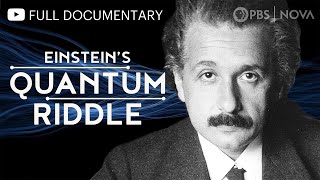
And no story illustrates this better than what happened to Albert Einstein on one particular day in 1929. Here's what gets me excited about this story. It's not just about Einstein being wrong.
It's about how being wrong led to the most profound discovery about our cosmic home we've ever made. We're talking about the moment humanity realized something so shocking about the universe that we're still grappling with its implications today. Picture this.
Einstein, the man who gave us relativity, who revolutionized our understanding of space and time, having to confront evidence that shattered his most fundamental belief about the cosmos. The universe wasn't the static, eternal, unchanging backdrop he had imagined for over a decade. It was alive.
It was growing. It had a history. And you know what?
That moment of cosmic humility changed everything we know about our place in the universe. The year was 1929 and Einstein had been riding high on the success of his theory of general relativity. His equations had predicted that massive objects could bend the very fabric of spacetime and observations had proven him right.
The man was practically a scientific god. But there was one thing Einstein was absolutely unshakably certain about. The universe was static, eternal, and unchanging.
Wait, let me back up here, cuz you need to understand why Einstein believed this so strongly. When you look up at the night sky, what do you see? Stars, constellations, the same patterns humans have observed for thousands of years.
From our earthbound perspective, the cosmos appears stable. permanent, timeless. And Einstein, brilliant as he was, was still human.
He was influenced by this intuition that the universe had always been the way it is and always would be. In fact, Einstein was so convinced of this static universe that when his own equation suggested space might be expanding or contracting, he did something that would later become known as his greatest mistake. He added what he called a cosmological constant, essentially a mathematical fudge factor to force his equations to describe a universe that stayed put.
But then came Edwin Hubble working with the most powerful telescope of his time at Mount Wilson Observatory in California. And what Hubble discovered was about to detonate Einstein's static worldview like a cosmic bomb. Hubble was studying distant galaxies, measuring their light with incredible precision.
And here's where it gets absolutely mind-blowing. He found that nearly every galaxy in the universe was racing away from us. But wait, it gets even more incredible.
The farther away a galaxy was, the faster was moving away from us. This wasn't random motion. This was systematic.
This was the signature of something. so profound that when Einstein first learned about it, he reportedly called it abominable. What Hubble had discovered was that the universe itself was expanding.
Not just the stuff in the universe moving around, but the very fabric of spaceime stretching, carrying galaxies along with it like raisins in rising bread dough. Can you imagine what this revelation meant to Einstein? Everything he thought he knew about the cosmos was wrong.
The universe wasn't static and eternal. It was dynamic, evolving, growing larger every single second. And if you could run the cosmic movie backwards, all those galaxies rushing apart would converge back to a single point.
The universe had a birthday. From a cosmic perspective, this moment represents one of the most beautiful examples of how science actually works. It's not about protecting your theories or defending your reputation.
It's about following the evidence wherever it leads, even when it completely overturns everything you thought you knew about reality. And that's exactly what Einstein did when he finally traveled to Mount Wilson to examine Hubble's data himself, standing there looking at photographic plates showing galaxy after galaxy redshifted by the expansion of space. Einstein experienced what I can only describe as cosmic enlightenment.
He was witnessing the universe in motion for the first time in human history. Einstein later called his cosmological constant his greatest mistake. But here's what gives me chills every time I think about it.
He wasn't just admitting a mathematical error. He was acknowledging that his entire conception of reality needed to be rewritten. The universe wasn't the stable backdrop he had imagined.
It was a dynamic, evolving story with a beginning, a middle, and presumably an end. This discovery opened up questions that still keep cosmologists like me awake at night. If the universe is expanding, what's driving that expansion?
What happened at the very beginning when everything was compressed into an infantessimally small point? What will happen in the far future as space continues to stretch toward infinity? Einstein's journey from certainty to cosmic revelation teaches us something profound about the nature of scientific discovery.
You see, when I think about this moment in 1929, I'm not just thinking about one man's intellectual transformation. I'm thinking about humanity's first glimpse into the true nature of cosmic reality. But here's what really fascinates me about Einstein's story.
His resistance wasn't born from stubbornness or ego. It came from something much more human. The difficulty of accepting that the universe could be stranger than anything we'd ever imagined.
Think about it from Einstein's perspective. For over a decade, he'd been developing the most successful theory of gravity ever conceived. General relativity had explained the procession of Mercury's orbit, predicted the bending of starlight during solar eclipses, and revealed that space and time were woven together into a single fabric.
The man had essentially rewritten the laws of physics. So when his own equation suggested that this space-time fabric might be expanding, stretching like a cosmic balloon, it must have seemed almost absurd. And you know what Einstein did?
He second-guessed the universe itself. He added that cosmological constant, that mathematical band-aid, because he couldn't accept that the cosmos might be more dynamic than human intuition suggested. In hindsight, we can see this as a perfectly understandable human response to an incomprehensible cosmic truth.
But here's where the story gets even more remarkable. When Hubble's observations forced Einstein to confront the evidence, he didn't dig in his heels. He didn't dismiss the data or attack the messenger.
He did what every great scientist must do. He changed his mind. I've stood where Einstein stood at Mount Wilson Observatory.
And let me tell you, there's something almost sacred about that experience. Looking through that same telescope, examining the same type of photographic plates that revealed the expanding universe, you can't help but feel the weight of that moment. This wasn't just a scientific discovery.
It was a cosmic awakening. The evidence was undeniable. Galaxy after galaxy showed the same pattern.
Their light was stretched to longer wavelengths, redshifted by the expansion of space itself. The more distant the galaxy, the greater the red shift. It was as if the universe was announcing its own motion to anyone willing to look carefully enough.
Einstein later described his visit to Mount Wilson as one of the most transformative experiences of his scientific career. Here was a man who had spent years developing theoretical frameworks, working with pure mathematics and abstract concepts. Suddenly, he was face to face with observational evidence that his theoretical universe was incomplete.
But what happened next is what truly defines Einstein as one of history's greatest scientists. Instead of viewing this as a defeat, he embraced it as a revelation. the cosmological constant that he had introduced to maintain a static universe.
He called it his greatest mistake. But from my perspective as an astrophysicist, it wasn't a mistake at all. It was a stepping stone to a deeper understanding of cosmic reality.
You see, Einstein's error led directly to what we now call the Big Bang theory. If the universe is expanding now, then it must have been smaller in the past. run the cosmic clock backward far enough and you reach a moment when all of space, time, matter, and energy were compressed into an inconceivably small point.
The universe had a beginning approximately 13. 8 billion years ago. This realization opened up entirely new fields of scientific inquiry.
Suddenly, cosmology wasn't just about describing the universe as it is. It was about understanding how it came to be and where it might be heading. We began asking questions that would have seemed like pure fantasy just decades earlier.
What happened in the first fraction of a second after the Big Bang? How did the first atoms form? When did the first stars ignite?
How did galaxies come together? And here's what gives me chills every time I think about it. Einstein's willingness to admit he was wrong about the static universe led to discoveries that revealed we live in a cosmos far grander and more mysterious than anyone had dared imagined.
We've since discovered that the expansion Einstein initially resisted is actually accelerating. Something we called dark energy is pushing space apart faster and faster. The universe isn't just growing, it's speeding up as it grows.
Einstein's cosmological constant, which he discarded as his greatest mistake, turns out to be remarkably similar to what we now use to describe dark energy. In a cosmic irony that would have delighted him, his error may have been prophetic. The expanding universe also revealed the cosmic microwave background radiation, the afterglow of the Big Bang itself.
When I explain this to visitors at the planetarium, I tell them that when they tune an old television to static, about 1% of that snow is actually ancient light from the birth of the universe. We're literally seeing the echo of creation. Einstein's moment of cosmic humility also led us to understand stellar nucleiosynthesis.
How the chemical elements that make up our bodies were forged in the nuclear furnaces of stars. Carl Sean famously said, "We are made of star stuff. " But it was Einstein's acceptance of an expanding universe that gave us the theoretical framework to understand how stellar alchemy actually works.
From a cosmic perspective, what happened to Einstein in 1929 represents something beautiful about the scientific process. Science isn't about being right all the time. It's about being willing to follow evidence wherever it leads, even when it challenges our deepest assumptions about reality.
I often think about what it must have felt like for Einstein in that moment of realization. Here was a man who had revolutionized our understanding of space, time, and gravity. Suddenly discovering that the universe itself was far stranger and more wonderful than even he had imagined.
The cosmos wasn't just curved by massive objects. It was expanding, evolving, telling a story that began with a cosmic explosion and continues to this day. And you know what the most beautiful part is?
Einstein's story reminds us that in science, being wrong isn't failure, it's opportunity. Every time we discover our understanding is incomplete, we open doorways to new knowledge, new questions, and new wonders. The day Einstein realized he was wrong about the universe wasn't just a moment of scientific correction.
It was the day humanity began to understand that we live in a dynamic, evolving cosmos with a history as rich and complex as any story ever told. When I reflect on Einstein's transformation from cosmic certainty to cosmic wonder, I'm reminded of something that happens to every serious student of the universe. The moment when you realize that reality is far more extraordinary than human imagination could have conceived.
But let me tell you about the ripple effects of Einstein's revelation. Because this story doesn't end with his acceptance of an expanding universe. It begins there.
Once Einstein embraced the idea that space itself could stretch and grow, it opened floodgates of cosmic understanding that are still flowing today. Consider what this meant for our understanding of time itself. In Einstein's original static universe, time was just a dimension along which events unfolded.
But the universe itself remained unchanged. But in an expanding universe, time takes on a completely different character. The universe has a timeline, a cosmic history that unfolds over billions of years.
This realization led to one of the most profound insights in all of science. The universe evolves. Just like biological organisms, just like stars, just like planets, the cosmos itself changes over time.
We live in what cosmologists call a standard model universe. One that began hot and dense and has been cooling and expanding ever since. Here's what fascinates me about this cosmic evolution.
When Einstein first grappled with Hubble's data, he was witnessing evidence of the universe's childhood. Those distant galaxies, their light stretched by billions of years of cosmic expansion, were showing us what the universe looked like when it was young. We were seeing cosmic archaeology in action.
And this opened up questions that still drive my research today. What was the universe like in its infancy? How did the first structures form?
When did the first stars ignite, flooding the cosmos with light after what we call the cosmic dark ages? Einstein's acceptance of the expanding universe led directly to our understanding of big bang nucleiosynthesis, the process by which the lightest elements were forged in the universe's first few minutes. During those crucial early moments when the cosmos was hotter than the core of the sun, hydrogen fused into helium, creating the cosmic abundance of elements we observe today.
But here's what really blows my mind. Einstein's moment of scientific humility also reveals something deeply personal about our own existence. Every atom in your body except for hydrogen was created either in the big bang or in the nuclear furnace of a star that lived and died before our solar system was born.
The calcium in your bones, the iron in your blood, the oxygen you're breathing right now, all of it is the product of cosmic processes that Einstein's expanding universe made comprehensible. We are quite literally children of the cosmos, made from stellar debris in an expanding universe that began 13. 8 billion years ago.
Without Einstein's willingness to abandon his static universe, we might never have understood this profound connection between human existence and cosmic history. And the discoveries kept coming. Einstein's revised understanding of spaceime led to predictions about gravitational waves, ripples in the fabric of space itself.
These waves were finally detected in 2015, a century after Einstein first predicted them. When two black holes collide billions of light years away, they send gravitational waves racing through the expanding universe at the speed of light. We can now listen to the universe itself, hearing the symphony of cosmic collisions.
The expanding universe also revealed the existence of what we call dark matter and dark energy. As we mapped the cosmic expansion more precisely, we discovered that ordinary matter, the atoms and molecules that make up stars, planets, and people, comprises only about 5% of the universe. The rest is mysterious dark matter and dark energy.
Components of reality that Einstein never imagined, but that his framework made discoverable. From my perspective as someone who spends their days thinking about cosmic mysteries, Einstein's story reminds me that the universe is under no obligation to make sense to us. It doesn't have to conform to our intuitions or expectations.
Our job as scientists isn't to force reality into comfortable boxes. It's to expand our minds to accommodate reality's strangeness. This lesson has profound implications for how we approach cosmic mysteries today.
When we discover that the expansion of the universe is accelerating, driven by mysterious dark energy, we don't dismiss it because it seems impossible. We don't add mathematical fudge factors to make it go away. We follow Einstein's example.
We look at the evidence. We adjust our understanding and we ask new questions. The same applies to quantum mechanics, string theory, parallel universes, and all the other cosmic possibilities that push the boundaries of human comprehension.
Einstein initially resisted quantum mechanics, too, famously declaring that God does not play dice with the universe. But the evidence eventually convinced him just as it convinced him about cosmic expansion. What I find most inspiring about Einstein's journey is how it demonstrates that science is fundamentally a humbling enterprise.
The universe is vast, ancient, and strange beyond our wildest imaginings. Our theories and models are approximations, stepping stones toward deeper understanding. Being wrong isn't a failure.
It's a feature of the scientific process. When I teach students about cosmology, I always emphasize this point. Science isn't about collecting facts like stamps in an album.
It's about building provisional models of reality and being willing to revise those models when new evidence emerges. Einstein's willingness to abandon his static universe is the perfect example of this process in action. And here's something that gives me hope for the future of scientific discovery.
Einstein's story shows us that even our most brilliant minds can be surprised by the universe. If Einstein could be fundamentally wrong about something as basic as whether the universe expands, imagine what surprises await us in the coming decades. We're currently grappling with mysteries that would have seemed like pure fantasy to Einstein.
What is dark energy? What happened before the big bang? Are there parallel universes?
Could the laws of physics themselves evolve over cosmic time? These questions push us to the very limits of human understanding, just as cosmic expansion pushed Einstein to his limits. But that's the beauty of science.
Every answer we discover opens up new questions. Every mystery we solve reveals deeper mysteries. Einstein thought he was wrong about a static universe.
But what he was really wrong about was thinking the universe could ever stop surprising us. The cosmos is stranger, more beautiful, and more mysterious than any human mind has ever conceived. And Einstein's moment of cosmic humility reminds us that our greatest discoveries often come not from confirming what we expect, but from embracing what we never imagined possible.
What strikes me most profoundly about Einstein's cosmic awakening is how it fundamentally changed our relationship with the night sky. Before 1929, when people looked up at the stars, they were seeing what appeared to be a static eternal backdrop, a cosmic stage upon which earthly dramas played out, but which itself never changed. After Einstein's acceptance of Hubble's evidence, everything changed.
Now, when we look up, we're not just seeing distant suns. We're seeing the universe in motion. We're witnessing cosmic history unfolding in real time.
Every photon of starlight that enters your eye has been traveling through expanding space for years, decades, centuries, or even billions of years. Think about that for a moment. When you look at the Andromeda galaxy, the most distant object visible to the naked eye, you're seeing light that left that galaxy 2.
5 million years ago. But here's the cosmic kicker due to the expansion of space itself. Andromeda was actually closer to us when that light began its journey than it is today.
Space has been stretching during the entire time that light was traveling toward us. This is the kind of cosmic perspective that Einstein's revelation made possible. We're not just observers of the universe.
We're participants in an ongoing cosmic story that began with the Big Bang and continues to unfold around us every second. And here's something that still gives me goosebumps. Einstein's journey from certainty to wonder mirrors humanity's own cosmic coming of age.
For most of human history, we thought we lived in a small static cosmos with Earth at its center. First, Capernicus showed us we orbit the Sunday. Then, we discovered our sun was one of billions in the Milky Way.
Then, Hubble showed us that our galaxy was one of billions in an expanding universe. Each step in this cosmic journey required the same kind of intellectual courage that Einstein demonstrated in 1,929. the willingness to let evidence override intuition, to embrace a universe stranger than our minds naturally conceive.
But what fascinates me most is how Einstein's acceptance of cosmic expansion led to what I consider the most beautiful synthesis in all of science. The connection between the very large and the very small. The expanding universe that Einstein initially resisted turns out to be intimately connected to the quantum mechanics he also resisted.
You see, the big bang wasn't just an explosion in space. It was an explosion of space itself. And in those first moments after the beginning, when the entire universe was smaller than a proton, quantum effects dominated cosmic evolution.
The tiny quantum fluctuations in that primordial fireball became the seeds from which galaxies, stars, and ultimately life itself would grow. This means that the cosmic web of galaxies we observe today, the largest structures in the universe, originated from quantum uncertainties smaller than an atom. It's as if the cosmos began as a quantum experiment and evolved into the classical universe we inhabit.
Einstein's expanding universe provided the stage for this quantum to classical transition. And here's where Einstein's story becomes almost poetic. The man who spent his later years trying to find a theory of everything that would unify all the forces of nature was actually living through the discovery of connections he never fully appreciated.
The expanding universe he reluctantly accepted is now central to our understanding of how quantum mechanics and gravity might be unified. Modern theories like cosmic inflation suggest that the expansion Einstein discovered might have been driven by quantum fields in the early universe. String theory, which attempts to unify quantum mechanics and general relativity, predicts multiple dimensions and universes that expand and contract in ways that would have seemed like pure fantasy to Einstein.
From my perspective as someone who works on these cuttingedge theories, Einstein's intellectual journey represents something profound about the nature of scientific progress. We build upon the insights of giants. But we also discover that those giants saw only pieces of a much grander cosmic puzzle.
Einstein gave us the framework to understand spaceime and gravity. Hubble showed us that spaceime itself evolves. Quantum mechanics revealed that this cosmic evolution emerged from submicroscopic uncertainties.
And now we're discovering that reality might be even stranger. Multiple universes, extra dimensions, holographic principles that suggest our three-dimensional reality might be encoded on a two-dimensional surface. Each generation of scientists stands on the shoulders of giants and sees further into cosmic mystery.
Einstein's willingness to admit error and embrace cosmic expansion created the foundation for discoveries he never could have imagined. But perhaps the most beautiful aspect of Einstein's story is how it demonstrates that science is fundamentally an optimistic enterprise. When Einstein discovered he was wrong about the static universe, he didn't despair.
He didn't retreat from cosmic questions. Instead, he doubled down on curiosity. He spent his remaining years working on unified field theory, trying to understand how all the forces of nature might be connected.
This optimistic pursuit of cosmic understanding continues today. We have space telescopes that can see galaxies forming when the universe was only a few hundred million years old. We have particle accelerators that recreate conditions from micros seconds after the big bang.
We have gravitational wave detectors that can hear black holes colliding billions of light years away. All of this cosmic technology, all of these profound insights can be traced back to Einstein's moment of intellectual humility in 1929. His willingness to say, "I was wrong about the fundamental nature of reality opened up a century of discoveries that have revealed the cosmos to be far more magnificent than he or anyone else imagined.
" When I think about the future of cosmology, I'm reminded that Einstein's story is still unfolding. We're still discovering that our understanding of the universe is incomplete. Dark energy, dark matter, quantum gravity, the multiverse.
These are the cosmic mysteries that future generations will grapple with. And I predict that sometime in the coming decades, another brilliant scientist will experience their own Einstein moment. They'll discover that something we take for granted about the universe, perhaps the nature of time or the uniqueness of our cosmos or the relationship between consciousness and physical reality is fundamentally different from what we currently believe.
When that happens, I hope they'll remember Einstein's example. Science progresses not through the accumulation of certainties, but through the courage to embrace uncertainty. The universe is under no obligation to make sense to us, but it is obligated to be consistent with itself.
Our job is to align our understanding with cosmic reality, not the other way around. Einstein's cosmic revelation also teaches us something profound about the nature of scientific legacy. You see, when Einstein finally embraced the expanding universe, he wasn't just correcting a theoretical mistake.
He was modeling how great minds should respond to new evidence. And this lesson has echoed through every major cosmic discovery since. Consider how Einstein's intellectual courage influenced the next generation of cosmologists.
When George's lame first proposed what we now call the big bang theory, many scientists initially dismissed it as too speculative, too philosophical. But Einstein's example of following evidence over intuition helped create a scientific culture where bold ideas could be tested rather than reflexively rejected. The same pattern played out with cosmic inflation theory in the 1,980s.
Alan Guth's proposal that the universe underwent a period of exponential expansion in its first fraction of a second seemed almost absurd. But cosmologists had learned from Einstein's journey. When theoretical predictions align with observational evidence, we must take them seriously regardless of how counterintuitive they seem.
And this brings me to something that absolutely fascinates me about our current cosmic moment. We're living through discoveries that would have blown Einstein's mind. We've detected gravitational waves from colliding black holes billions of light years away.
We've photographed the event horizon of a black hole. We've mapped dark matter through gravitational lensing. We've discovered thousands of exoplanets orbiting distant stars.
Each of these breakthroughs required the same intellectual flexibility that Einstein demonstrated in 1929. When the LIGO detectors first heard gravitational waves in 2015, scientists spent months verifying the signal because it seemed almost too good to be true. Einstein had predicted these ripples in spaceime, but even he doubted we'd ever detect them directly.
Yet there they were, the cosmic symphony of colliding black holes, confirming [clears throat] Einstein's theory while revealing phenomena he never imagined. Two black holes, each dozens of times more massive than our sun, spiraled into each other over millions of years, finally merging in a cataclysm that briefly outshown all the stars in the observable universe combined. This is the kind of cosmic revelation that Einstein's journey made possible.
By accepting that the universe could be stranger than human imagination, he opened the door to a cosmos filled with neutron stars where a teaspoon of matter weighs as much as Mount Everest with black holes that can stretch spaceime so severely that time itself slows to a crawl with quantum fields that allow particles to appear and disappear in the vacuum of empty space. But here's what really moves me about Einstein's legacy. His story reminds us that cosmic understanding is a collective human endeavor.
Einstein didn't discover the expanding universe alone. He needed Hubble's observations, Lamemetra's theoretical insights and decades of work by astronomers mapping the cosmic distance scale. Science progresses through collaboration with each generation building upon the insights of those who came before.
And this collaborative spirit continues today. The recent image of the black hole at the center of galaxy M87 required coordination between telescopes around the world, creating what's essentially an earth-sized observatory. The detection of gravitational waves involved thousands of scientists from dozens of countries.
The mapping of cosmic structure uses data from space telescopes, groundbased surveys, and supercomputer simulation. Einstein's moment of cosmic humility has evolved into humanity's ongoing cosmic conversation. We share data across continents, collaborate across cultures, and build upon each other's insights to push the boundaries of cosmic understanding ever further outward.
This brings me to perhaps the most beautiful aspect of Einstein's story. It demonstrates that wonder is the engine of scientific discovery. When Einstein first confronted evidence of cosmic expansion, he could have responded with frustration or defensiveness.
Instead, he responded with wonder. He marveled at a universe strange enough to grow, to evolve, to have a history. That sense of wonder continues to drive cosmic discovery today.
When we peer into the cosmic microwave background and see the afterglow of the Big Bang, we're not just confirming theoretical predictions. We're experiencing cosmic wonder. When we detect nutrinos from distant supernova, we're not just gathering data.
We're connecting with cosmic events happening billions of light years away. As I reflect on Einstein's journey from cosmic certainty to cosmic wonder, I'm reminded why I became an astrophysicist in the first place. The universe doesn't just invite our study.
It demands our amazement. Every cosmic discovery reveals new depths of mystery and beauty that humble human understanding while inspiring us to reach deeper into cosmic truth. Einstein's willingness to be wrong about the universe opened up a century of cosmic discoveries that have revealed reality to be more magnificent, more mysterious, and more wonderful than any human mind could have conceived.
His intellectual courage created space for the cosmic humility that all great scientists must embrace. The recognition that the universe is under no obligation to conform to human expectations. And so when I look up at the night sky now, I see not just distant stars, but a cosmic story unfolding in real time.
I see light that has been traveling through expanding space for billions of years, carrying information about cosmic epochs when the universe was young and strange. I see gravitational waves rippling through spaceime, black holes devouring matter, galaxies dancing in the cosmic web of dark matter, and the magnificent tapestry of cosmic evolution that Einstein's moment of wonder made comprehensible. The day Einstein realized he was wrong about the universe wasn't just a moment of scientific correction.
It was humanity's graduation into cosmic citizenship. Our recognition that we live in a universe far grander and more mysterious than we had ever dared imagined. And that recognition continues to drive us forward toward cosmic truths that await discovery by future generations of wonder scientists.
In the grand cosmic perspective, Einstein's journey reminds us that our greatest discoveries come not from confirming what we expect, but from embracing what we never thought possible. The universe will always be stranger than we suppose.