Welcome once again to home economics, today we will continue with the free course on business economics. In this chapter we will talk about the 6 leadership styles of Daniel Goleman Leadership can be defined as the influence that a person exerts on the other members of the group. This level of influence will be significant enough for people to achieve the objectives or goals of the company.
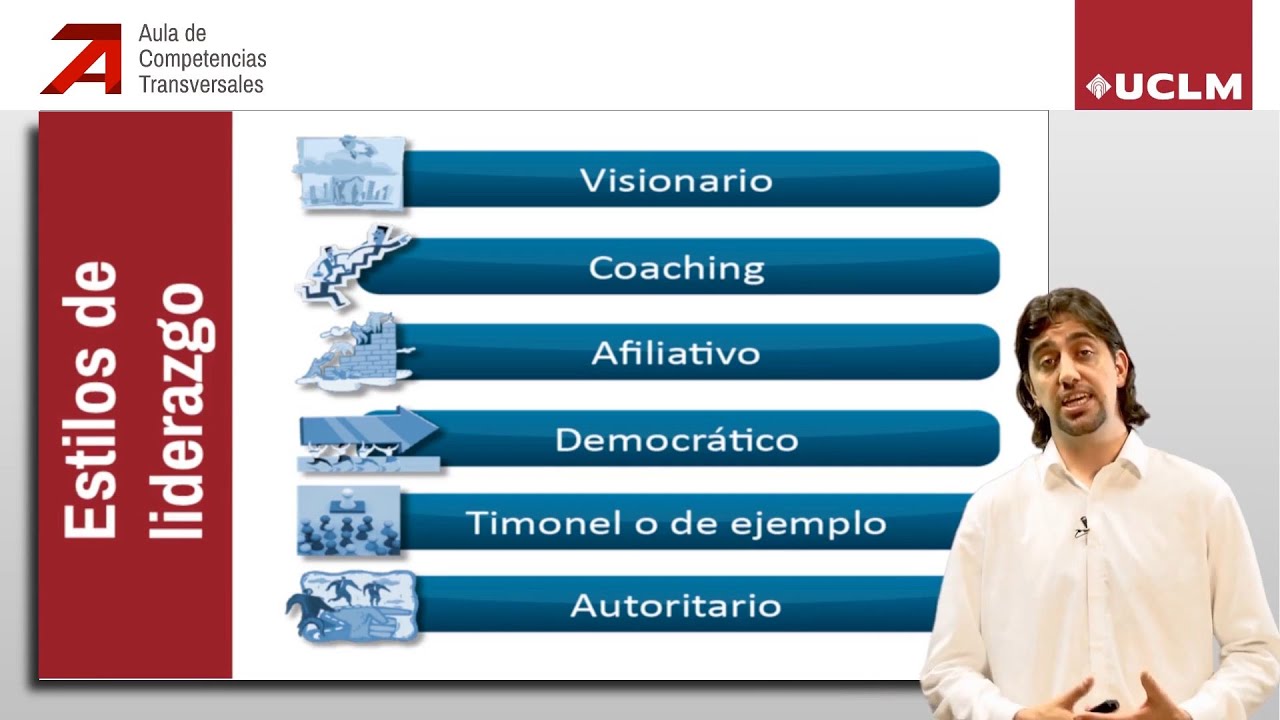
Therefore, in this video we will explain the 6 leadership styles highlighted by psychologist Daniel Goleman and that have become the most used classification when it comes to talking about leadership styles. Each of them is based on a certain component of emotional intelligence . However, what they all have in common is that people who develop such styles get results.
On the other hand, it should be noted that the types of leadership are not incompatible. On the contrary, the best leaders are capable of taking elements from each other and adapting to the needs of the moment. In any case, to know which is the most useful style in a given situation, it is first necessary to know all of them very well.
Visionary or guidance leader A visionary leader is one who has a clear long-term vision for the organization and guides employees at the same address. With this vision, the leader is able to motivate his employees by making them aware of their role in the organization. The most appropriate time to use the visionary leadership style is when the organization is in crisis, since in this situation of instability, providing a clear vision to all members of the organization increases motivation and, therefore, productivity.
As a disadvantage, this visionary style is not recommended when the team consists of professionals with more experience than the leader. Coaching The primary goal of the coaching leadership style is employee development. In this case, the leader acts as a mentor and works closely with his team to identify its strengths and weaknesses.
Help employees turn their weaknesses into strengths through support and understanding from supervisors. These leaders give their employees difficult tasks and are willing to accept short-term failure because their main goal is, as we have said, personal development. Another key aspect of the coaching style is aligning the employee's goal with that of the organization.
The leadership coaching approach works best when employees are aware of their weaknesses and want to improve their performance. On the other hand, it doesn't make much sense if they resist learning or don't accept their weaknesses for whatever reason. Affiliative Leader The third type of leadership revolves around people, that is, the affiliation style is based on the creation of bonds between the members of the group.
In this way, a certain harmony and cooperation is achieved in the company, which will result in an increase in productivity. There is a misconception that emotional ties between superiors and subordinates can lead to unprofessional behavior. However, in certain work environments, especially when conflicts are frequent, affiliative leadership can work wonders as it helps employees overcome personal problems and restore trust in the company.
. Democratic Leader Democratic leadership is based on the idea that the employees of an organization should be able to participate in decision-making, that is, the opinions of the entire group should be taken into account when making a decision. This usually involves numerous meetings.
Therefore, it will be especially useful in cases where you have a lot of time to choose a course of action. On the other hand, democratic leadership is usually used in cases in which the work team is multidisciplinary and, therefore, it is necessary to combine different disciplines to carry out projects. In other words, you have to agree on where the disciplines meet or overlap so that the parts of each fit together.
However, this style is useless if staff are not trained or do not have enough information to give valid opinions. Helmsman Leader The role of a helmsman leader is to set a direction and make sure it is maintained. He sets himself as an example, so he always seeks to act as a model would.
Generally used by people who like to feel like protagonists. This type of leadership is especially effective when the leader is an expert in the field, while the other members have little experience in it. Its main disadvantage is that it prevents the team from adding anything to the final project other than the replica of the model.
This disadvantage makes it a leadership style to be used on specific occasions because in the absence of the leader, employees do not know what to do. Coercive Leader The coercive leadership style, often referred to as the military approach, is a method that focuses on giving precise instructions that must be followed to the letter, without the employees being able to question those instructions. It is recommended to use this type of leadership only in crisis situations or in certain occasions when quick action is required to achieve the objectives.
In the long run, it kills employee motivation and creativity, creating a very detrimental effect on the organization's work culture. With all this we say goodbye for today, if we have helped you and you want to continue learning we leave you two videos for you to click on based on YouTube recommendations. On the other hand, I would appreciate it if you would subscribe to our channel if it has been useful to you by clicking on our logo on the left side of the video.
As always, any questions or suggestions please leave them in the comments so we can respond to you. See you in the next video.