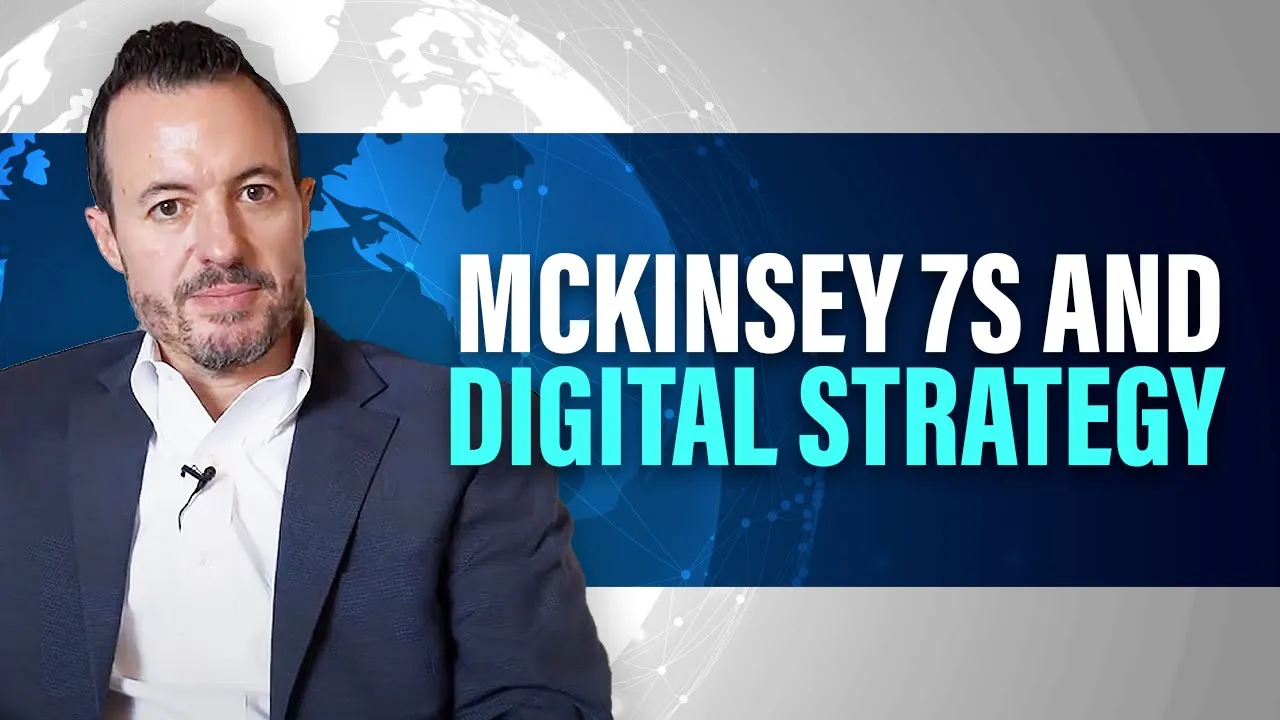
the mckinsey 7s model is an academic model that's taught in many business and mba courses throughout the world but it's also a critical element that can help enable a successful digital transformation and i want to talk about that here today [Music] my name is eric kimberling and i'm the ceo of third stage consulting we're an independent consulting firm that helps clients through their digital transformation journeys and back in the 90s when i got my mba one of the biggest models and most important and influential models that we studied was mckinsey's 7s model and for those
of you that have gone to business school you may remember the name you may remember the model but for those of you that haven't been through business school or aren't familiar with the 7s model i'm going to share with you today what it means and also how it applies and enables a successful digital transformation one of the most effective tenants of a effective digital transformation is having an effective strategy and it begins at the top with your overall corporate strategy and that should translate into a digital strategy that will best enable that overarching strategy and
what we find with the 7s model and what the 7s model teaches us is that strategy is the first of seven s's and that strategy needs to be aligned with all the other six areas that we're going to talk about here today but it all begins and ends with an effective strategy and that's the first s within the 7s model [Music] the second s in the 7s model is style and what mckenzie meant by this model and what the model alludes to with style is your overall management style and the style of the organization so
for example are you a command and control type of management style are you a top-down organization are you a bottom-up decentralized type of organization are you a laissez-faire type of organization where you let different parts of the business do their own things and operate independently and you trust them to do whatever it takes to do their job effectively so whatever our style is we want to make sure that that is in sync with the overall strategy that we're trying to accomplish as well as the other s's in the 7s model now the next component of
the model that also applies to digital transformation is staff do we have the right people in place the right people that are going to enable the strategy and the overall style that we're trying to accomplish as well as some of the other s's within this model so for example when we're looking at a digital transformation project we want to make sure we have the right people and the best people on the project and what we mean by best people is that it should be the people that are most likely or best equipped to enable the
strategy they were trying to accomplish so having the right staff in place not just for the digital transformation itself but also for your entire organization is something that should be assessed and aligned during your digital transformation and when projects and teams don't do that they run into trouble because they get misaligned with the staff they have versus the strategy they're trying to accomplish and the style that they want to enable as well as some of the other s's that we'll talk about here in just a second so once we have the right staff in place
we know we've got the right people now we need to look at the skills they have and this may sound like a subtle difference and it is a subtle difference but skills is different than the people or the staff that we talked about a moment ago and what we do here is we need to ensure that we align the skill sets of the people with the rest of the transformation with the rest of the style of the organization with the strategy and all the other things we've talked about so far we want to make sure
we identify what those skills are that we think we need to enable the transformation and it may be technical skills in terms of learning the technology that's going to be deployed or that is being deployed it might be skills around organizational change just to make sure that we can ensure that the organization keeps up with the transformation and changes in general so those are just a couple examples of the skills we want to make sure we have not just on our digital transformation team but in the organization overall so skills is one of the most
important ones and one of the key parts of this model that is also relevant to a digital transformation [Music] the next part of the model is shared values another way to think of this is your culture what is it that philosophically you're trying to accomplish as an organization what kind of work environment are we striving for and what's the overall culture we're trying to accomplish and with digital transformations this is a big deal because not only are all the other s's important to digital transformation but when we look at shared values in the culture of
the organization oftentimes we're trying to change it we're trying to build on the culture we have and the shared values that has made us successful so far but we need to figure out how can we bend that culture without breaking it how can we add to the model or how can we add to the culture of what's been successful so far now for example a lot of times organizations that have grown through acquisition for example will find that they operate independently and they have a very entrepreneurial spirit and that entrepreneurial spirit is what makes them
successful and allows them to grow and be successful as an organization but as the company matures and grows and continues to scale it finds that it needs to move to more of a standardized operating model or more consistent business processes and become a little less entrepreneurial and a little bit more hierarchical or a little bit more corporate for lack of a better word and again it's not that we necessarily want to throw the baby out with the bath water and abandon the culture that's gotten us to where we are but we may find that like
a dial on a stereo or on a radio we need to turn it up or turn it down or just slightly adjust incrementally what it is we're doing as far as our culture so when going through a digital transformation one of the most overlooked things is this whole concept of shared values as well as culture and that's something that we need to make sure is aligned with the rest of the model as well [Music] structure is one of the other components of the model another word or a synonym for structure is organizational design what do
we want that organization to look like how are we going to organize what are roles and responsibilities how are different departments going to interact what are the business processes going to look like how does this all tie together and what is this vision of what we want our organization to be and this is another component that's often overlooked with digital transformations in general but not only do we need address organizational design we need to make sure we do organizational design and structure in the context of the rest of the model that we've just talked about
ensuring that we're aligned in all the other areas so that we know that the organizational structure we're building is aligned with the structure the strategy and everything else we've talked about here today so when embarking on a digital transformation you'll want to make sure to have this whole structure or organizational design component of the 7s model built into your digital transformation plan [Music] the seventh and final component of this mckinsey model is systems technology and you may notice that not unintentionally i've left systems for last because even though systems are often the focus of digital
transformation on the surface it's all the other six variables that we just talked about in the model that are the more important ones so we need to get all six of those other areas aligned and make sure we're on the same page make sure we have a clear direction clearly defined strategy structure skills etc before we start looking at how systems can fit in and align with all those other areas what often ends up happening during digital transformation is we start with systems and we focus exclusively on systems without looking at all those other s's
that we just talked about throughout this video so systems is almost like a capstone it's an enabler of all the six other things we've talked about and after we've defined those six things then we can move forward with technology that ideally and ultimately enables those other areas [Music] so the key takeaways here are that when you're viewing your digital transformation and assessing your digital transformation use the mckinsey 7s model to help you figure out how aligned we are and also to make sure we've addressed all the critical components of what it takes to be effective
in our transformation as i mentioned a moment ago more often than not companies focus on the systems part of the model maybe they focus on one or two other areas but you need all seven pieces of this model to fit together and align well and all of that should be part of your overall digital strategy and roadmap and so if you haven't done this yet i highly encourage you to incorporate this into your transformation strategy i hope you found this information useful i've also included a number of links and downloads below so i encourage you
to check out some of the articles and videos and downloads so thank you very much for your time and hope you have a great day
![Lessons From 3 Digital Transformation Strategies [Detailed Examples and Case Studies]](https://img.youtube.com/vi/YmwftR4PQFM/maxresdefault.jpg)
![If I Were Your Digital Transformation Leader, What Would I Do? [How I Would Lead Your Project Team]](https://img.youtube.com/vi/Z8QxZURcEBo/maxresdefault.jpg)


![How to Structure a Digital Transformation Project Team [Project Org Structure Best Practices]](https://img.youtube.com/vi/iNnRtSwcrTo/maxresdefault.jpg)