[Music] all relationships experience tensions and sometimes that tension just has to come out we can't argue and fight forever at some point we have to learn to listen it's only when someone feels heard can we move forward and make the relationship stronger the same is true for a society people want to feel heard and right now african-americans as a community want to feel heard there is work to be done at a societal level for sure but that work also starts closer to home each one of us especially white America needs to have some uncomfortable conversations
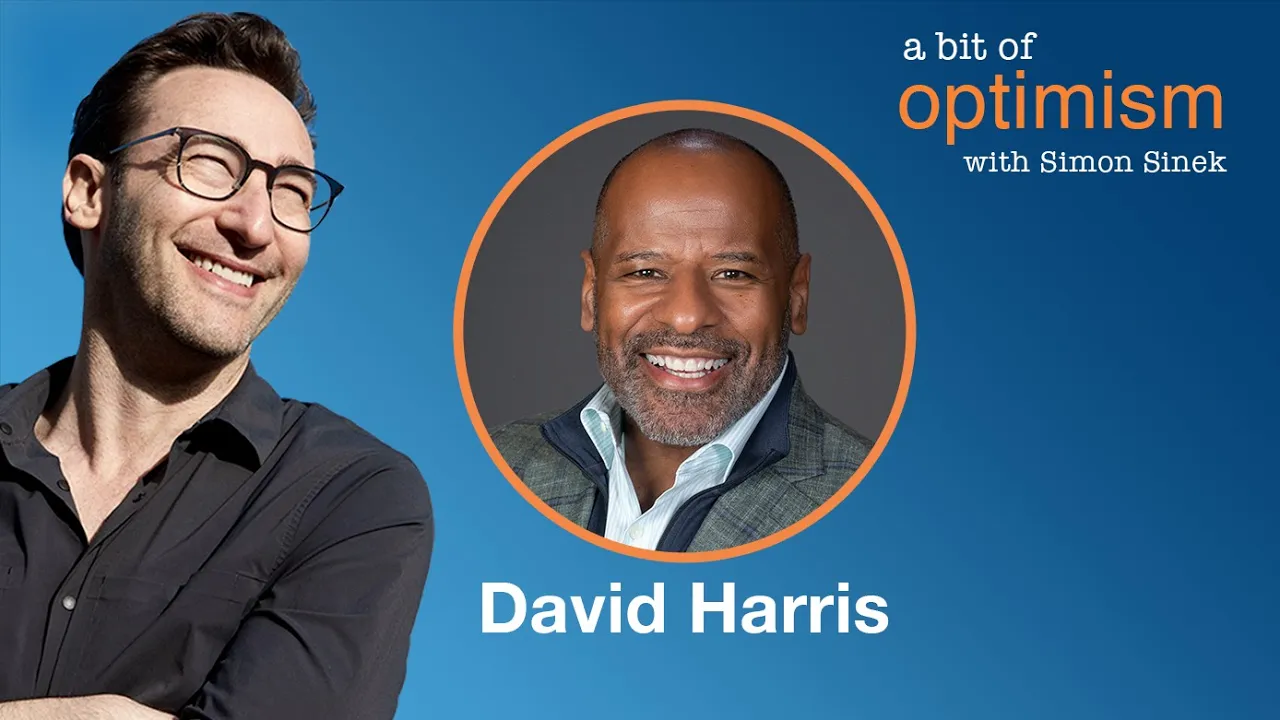
one of the problems is most of us don't know how to start those conversations even if we want to have one over the past few weeks I reached out to my friend and colleague David Harris to guide me and help me learn how I can start uncomfortable and necessary conversations here is one of them and this is a bit of optimism [Music] David thank you so much for agreeing to sit down and talk when we all heard the news of what happened to George Floyd and more importantly when we saw the footage of what happened
to George Floyd I think it ignited something in this nation that that hasn't been ignited in many years that needed to come out and I for one I think like many others didn't know how to respond I struggled to find the right words to say and even how to start a difficult conversation and only through difficult conversations and through listening will we learn to understand someone else's experience and not only is it essential for these difficult conversations to happen as individuals but organizations and their teams need to have these conversations as well so I wanted
to sit down with you now to get your guidance for others on how to start these conversations how to have these conversations how were you so good when I called you and said David I need help well I guess it comes from automatic orientation more toward admitting when you don't know something and asking questions and I think many people are fearful of asking questions in learning situations the problem is is that with this particular circumstance this was a lifeless and life lessons invariably are more loaded particularly something like this because it's traded with history and
when you're dealing with a circumstance that's sprayed with history you're often dealing with lack of exposure and ignorance and I don't say ignorance to be negative I say ignorance in the sense of just not having awareness for whatever reason you know there's a lot of things that I make a lot of things that you're now simply because we don't have the exposure so if you don't have the exposure to something and yet it's becomes a flashpoint then the question should be how can I learn about this not I'm dumb for not knowing it how can
I learn and it's interesting people will apply this to math or English or French or Spanish or science but they won't apply it to basic human sir stance I find that very interesting that's such a good point like I'm ignorant of of trigonometry and I don't feel bad for saying that right but when you say you're ignorant of some sort of social thing or human thing all of a sudden it becomes pejorative for some reason yeah and I think part of the reason that that is the case is because again people are afraid of judgement
they're afraid of being caught with their pants down I don't know what to say because I'm not aware of it right and I think I said to you in a prior discussion that this is very similar to what happens if you have a close friend and that friend experiences a death and you've not experienced really intense grief or loss some people are totally thrown by that they don't know how to interact with it they they are more at a loss for words it's not because they don't empathize it's not because they don't care about the
person it's because they simply don't know what to say well this is interesting because there's that there's a pressure you know some some people have said very publicly that if you say nothing it means that you're not a part of this and so there's this pressure that we have to say something yeah and I think that that comes some of that comes from kind of a bottled up frustration with silence right I mean we've throughout history we've had examples of when cultures did not speak up against believe no trust me Nazi Germany being one of
them Larry Kramer the gay activist said silence equals death you know not speaking up is not a good thing in general I would agree just on it some kind of a moral plane yes it is right to to speak up but it's also important that you know what you're speaking to and if you don't know what you're speaking up to or against or for it's very hard to articulate the thing that I think really helped for you and I to get started in our difficult conversation is I started when I called you up and said
hello I was very it was very blunt there was no sugarcoating getting into it I said David I'm struggling to find words what to say and I need your help and I think what that did is it created a space that I'm not here to tell you what I think and then get you to respond to it I'm gonna start by saying I'm I'm I'm stuck and that's what started our conversation we did it as a team as well yes we had a huddle and I started the conversation by saying that I've gone on this
journey of trying to figure out my feelings in the appropriate way to express them but also that I want to create a space for our team to say whatever's on their heart and mind without any judgment and I went first and I told people everything that I've been feeling and got very choked up and then I stopped talking and it allowed whoever wanted to speak to speak you played this incredible role on our team for us were you helped provide context as people spoke you offered no judgment but rather context to each thing we said
how did you learn where did you learn not to listen where did you learn to listen I guess is is what I'm trying to get it I think some of this comes from my having been the odd man out in so many circumstances throughout my life I'm an african-american man I was forced into a integrated circumstance and perhaps when it was difficult years in US history 1968 as a you know eight or nine year old child going to an all-white school being torn away from my you know from the world that was familiar to me
and having to sing course women in that environment it was a very racially hostile time in the United States but my parents were very intent on having me experience what they felt the real world was they didn't want me growing up in a bubble thinking that everyone was african-american and everyone got along they wanted me to understand what it was to be different and what it was to be perceived as different very early on and I believe that they wanted to inoculate me to toughen me up in a way you know their generation was that
generation of Jim Crow they tell the story of traveling across the United States for their honeymoon in 1949 and having to sleep in their car as they went from Ohio to California simply because there were so many hotels that would not allow black people in and if they found one they would have to check in late at night and they would have to be gone before anyone else saw them in the morning and so flash-forward many years and it's my world now and I you know the world is blowing up there's a lot of rebellion
there's their the Black Panthers there's the Black Power movement there is the assassination of MLK there's tremendous resistance in some white communities to everything african-americans are asking for and we need to remember while we're celebrating Martin Luther King in 2020 he was not celebrated in 1968 I boys found it very interesting that people become lauded after they die but not in their time quite often and that's because we get distanced from it and we sometimes realized that they were right and I think people realize that a lot of the moral tone that he used in
his discourse was absolutely correct and it was inspirational and aspirational and everything that we would want it to be so when you ask me you know how did I cultivate this ability to listen it was from being different and I had to understand my environment very quickly and then add to that being a gay man also I had to figure that out as well you know I had to figure that out within my circle of black friends and people who were black and straight and I had to figure out that with white straight people and
I had to figure out how to be black and you know and then there were kind of all of these overlapping challenges and you know to tell you the truth I would not take any of that experience away it was difficult it continues to be a challenge but I I consider it to be one of the most enriching experiences of my life because it's allowed me to somewhat sit on the outside of situations and to really listen to what's being said because sometimes your survival can depend on yeah individuals and teams have to have these
difficult conversations for multiple reasons one to understand as you said to gain some empathy to gain some understanding of how people who are different than us are going through the world and experienced the world I mean even the story of your parents is astonishing but I think many people are afraid as you said it's like the death in the family which is we cause accidental harm because we're so uncomfortable that we don't want to say the wrong thing or we don't want to offend that we just say nothing or we we don't have the team
conversations because we were so we're so afraid of getting it wrong how does how does somebody start a conversation even if it's wrong what happens if somebody says something that's a trigger I'm gonna give you a great example of this because I I recently had an uncomfortable conversation with a former colleague of mine who I adore she's absolutely a fantastic person I consider her an ally not just in this but in a lot of things and we're very mutually supportive of each other and we got into this conversation about this subject you know I was
talking about the fact that at a company event that we were at together you know all of the black employees got together to have their picture take and that there was a certain pride in doing that but it was a very funny circumstance because you know even though there's a huge group of people the black employees were still in the minority so we all got together and we ran around and searched for each other to have this big picture taken in the lobby of this big fancy hotel and you know my friend asked me well
would it be perceived as exclusionary if the white people did the same thing and I said to her you would need to ask why do the black people feel the need to take the photo together because if you asked that question you would receive the answer that forever we have been in the minority I don't think a white person has ever had to wonder in a white circumstance when they walk into a room that their legitimacy or their right to be there or their color isn't all questioned you move through the world just assuming that
everything's fine because you're in the majority so it's never an issue so when you see more people like you that's a sign of progress actually that there are more of you in this setting and so you could look at this and say that these people for the first time are getting together to celebrate the fact that they've all arrived together in the same place at the same time and isn't that wonderful and isn't that worth memorializing in other words you needn't take it as an insult against you you should take it as this group celebrating
what they have accomplished together and where they are and I think that that is something that a lot of groups identify with the conversations that I'm having with my white friends there's one glaring difference in all those conversations which is we also include Amy Cooper in the discussion because the thing that I find a sort of the the mirror that's held up to to white America from that Amy Cooper experience in in Central Park is that there's a narrative in her head that if I call the police I have this understanding this narrative that the
police will believe me and take my side they will not believe him and not take his side and my problem will be solved and although not everyone would weaponize that like she did every white American knows that narrative we all know that narrative and I think that that conversation that I'm having with my white friends is that that we have that narrative is part of the problem mm-hmm it's not that we like the narrative it's not that we approve of the narrative but we've never stood up and said we should change that narrative and that
is a complicated process that includes the relationship with law enforcement and the culture of law enforcement and how law enforcement responds to things but that's the very uncomfortable conversation that I've been having with white friends that I have not been having with black friends well I think that's good I think it's very important that you point out if anyone's looking for the definition of privilege I think Amy Cooper gave everyone a fine example of that why do I say that because it was grounded in an assumption that her whiteness and her feeling threatened would automatically
result in an outcome because there were assumptions made about the black man who was asking her to obey the law that she would be believed and he wouldn't so it was particularly pernicious on several levels and it required a kind of premeditation of thought that I thought frankly was astonishing actually breathtaking that she would default to that so easily and it was also telling and it said a lot about who she was and where she came from I also find it very interesting that their last names were the same because the likelihood of tracing those
lines back a few generations might put them in the same family mm-hmm I was also struck by her even in that in that racist expression that she chose to be politically correct and say to the police there's an african-american man who's threatening yes you know yeah for fear is saying the wrong thing yeah but my point is is like I think these uncomfortable conversations to your point they they need to stay they need to happen everywhere mm-hmm do you have ideas on how people can have this conversation with their children about what's happening right now
I think it's important for the parents to simply say we live in a world where differences between people are not always honored and recognized and this comes from a lack of awareness about difference there is a historical portion to this that has to do with how one group of people has been subjugated or terrorized for many many decades centuries and so it's got a historical connection and some of these behaviors are handed down from one generation to the next and they're never questioned and sometimes they become institutionalized and they result in terrible behavior and so
my hope for you would be that were you to see something like this you would speak up against it yeah but my niece both her best friends are black and she is completely perplexed her mother's had conversations with her about what's happening and she is completely perplexed she cannot understand why there's a problem like she can't understand why we don't see each other just as human beings and the conversation is fascinating this this little girl completely does not understand the conversation that the world doesn't see the other people like she does which is they're just
her friends well how old is she she's 11 she's about to turn 11 I mean this gets into our education system as well because I think when we are educated on the true history of the United States we can connect it to our present time the sad part of it is is that liberal arts education has long been discredited as having little value because the belief was that it didn't result in economic gain right so you had to focus on the courses that we're going to lead you to a job not necessarily that we're going
to build your awareness of the world around you the culture you come from the government then that you're ruled by the laws that are written that you have to follow I find that very curious that we have relegated that to a position of not being important you know when I went to high school I had to take civics I had to know all of the branches of government I had to know how many in each one I had to know how it all function I had to know how legislation got passed I had to understand
the history of the country from the ground up and then you know when I took Black Studies because that was very fashionable in the 70s and the reason that that became a subject was because American history and American literature and American discourse wouldn't include that in the history it was as though slavery were a footnote to talk about how great Abraham Lincoln was and how we got over it and then we went from you know Abraham Lincoln to Martin Luther King to your grandmother and then you and that and and that was history you talk
about this I've heard you say this before how in February isn't Black History Month it's American History Month yes this is American history and it's a part of American history and there's no getting away that it's a part of in history so one must ask oneself why one never learned those stories what were the social mechanisms behind keeping that he that will take you to some of the truths that are being exposed today no but now the very very difficult conversation which is the very difficult subject which is going back to where we started which
is how to have uncomfortable conversations and how to listen and how not to be triggered but how to create safe space which is those safe spaces in those same conversations those same difficulties now need to happen within police forces it starts by holding up a mirror that white America needs to look at itself and the policing organizations need to have those conversations themselves internally and how does black America white America and police America have a conversation about the way forward that is an unbelievably uncomfortable conversation that has to happen well you know and then these
conversations are not unique to us there are models for this I think South Africa got into these discussions I think Germany got into these discussions you know I found Germany's need to atone for its Nazi past particularly interesting they felt a need to make a public recognition of the fact that this was a terrible event in history that scarred them and egregiously wounded many survivors and killed millions of others their willingness to acknowledge that publicly and to make it part of how they think about their institutions is I think a tremendous example to the world
and it's too bad that you know I think we in our arrogance often do not want to admit that we have done things wrong that there are things to be atoned for and that there are generations that have been damaged as a result of that it goes right back it's the strength and vulnerability I mean and that that these uncomfortable things are part of our history yes I went to the German History Museum in Berlin and Germany's history is a lot longer than America's history oh yeah and yet I was astonished by how much of
that German History Museum was taken up just with world war two yes it was astonishing yeah it wasn't just one room like here was World War two yeah it was room upon room upon room upon room hall upon hall that this is a blight on our history and the only way that we can build a more positive Society is if we own it it's part of our history right we have to learn from it and so when African Americans say that there is a culture of privilege around white culture it begins by not recognizing the
history and I'm not talking about slavery yeah everybody kind of lines a little bit about slavery but no one really discusses what happened in the twentieth century or the really this was a defining moment between reconstruction and civil rights that is the moment because I could run a parallel with Italian Americans Irish Americans everybody else that came here at the turn of the 20th century that were able to carve out and build wealth that did not happen with African Americans and it and it did not happen because a lot of wealth was systematically stolen and
then you know African Americans became like a tool between the two political parties which you know played us to their own ends and I think there needs to be a recognition of that fact because a lot of this racism and a lot of these tensions have their roots in economic disenfranchisement and until we go back and we look at that history we understand the way that that occurred and the impact that that has had we will never be able to course-correct so how do we move forward David well I think it begins with historical recognition
I think we really do to grapple with our history so we have to look back before we can go forward I think you look back to provide context for present discussions not just to look back and say you looked it's to provide the context for understanding of present times and how that informs our future that's worth repeating which is looking back reading a book watching a documentary understanding the history is not just to check a box and say I did it but it's to it's to actually gain an understanding of how people feel or what's
happening now yeah and it's also to place yourself in the continuum you're not just sitting outside watching it you're part of your part of the act of the unfolding of history and so you have to be able to see yourself as part of the stream the thing the thing that I'm taking away from from this this repeating pattern that asking for help admitting vulnerability admitting mistakes you know as a society to admit the blights and our own history but even as individuals if we say something that does trigger something it's okay if that happens if
is immediately if we recognize that it has happened and say I'm sorry and to understand why it was a trigger and that the through line and this whole discussion that you and I have had is about admitting that we're human and and the desire to move forward it's about admitting mistakes and the desire to fix those mistakes it's about understanding context and the desire to appreciate the experiences that another human being has especially people who are different in all its forms and and the courage and this is what it you know to be the leaders
we wish we had the courage to be the first one to say I'm struggling and I need help is the way to start a conversation if I was to departs them and I'm sure there are a lot of companies out there that have white leadership CEOs presidents and they have a substantial number of black employees and if you're at a loss for knowing what to say get into a room of people of black people and just say I want your input and there's a lot I don't know I need to understand this from your point
of view and I'm doing this because I'd like to be part of the solution not perpetuate the problem so I'm just gonna sit here and I want an honest undressing of the leadership of my company when it comes to this because I've not to think about that and I realize that that is something that perhaps I should have done but I'm now seeing that I didn't so I was just in the interest of building a culture for everyone that works and because these are such hot-button topics I would love to know your thoughts now bad
is true vulnerability because the leaders would have to be willing to accept what was said but also the employees would have to have the courage to say something to someone who could fire them David that is a perfect way to end the podcast but the way I went into the saying and that is a perfect beginning yes that is a perfect beginning thanks so much you're welcome thanks so much for having me thank you for listening and if you'd like more bits of optimism please subscribe wherever you listen to podcasts I hope you'll join me
next time take care of yourselves and take care of each other [Music]