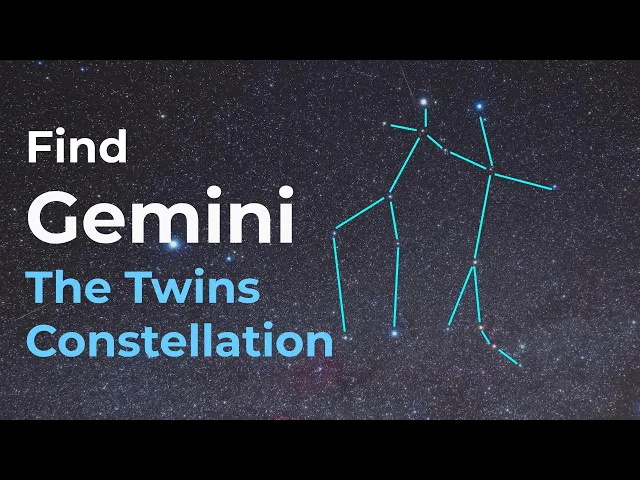
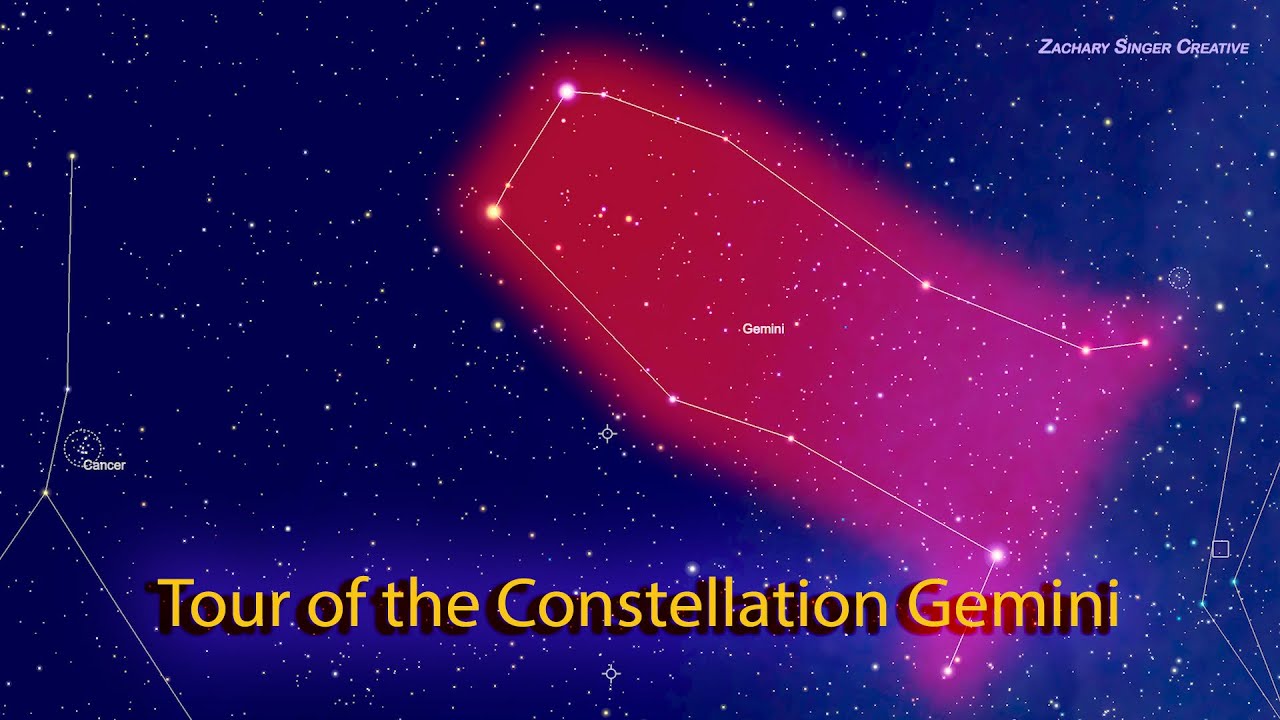
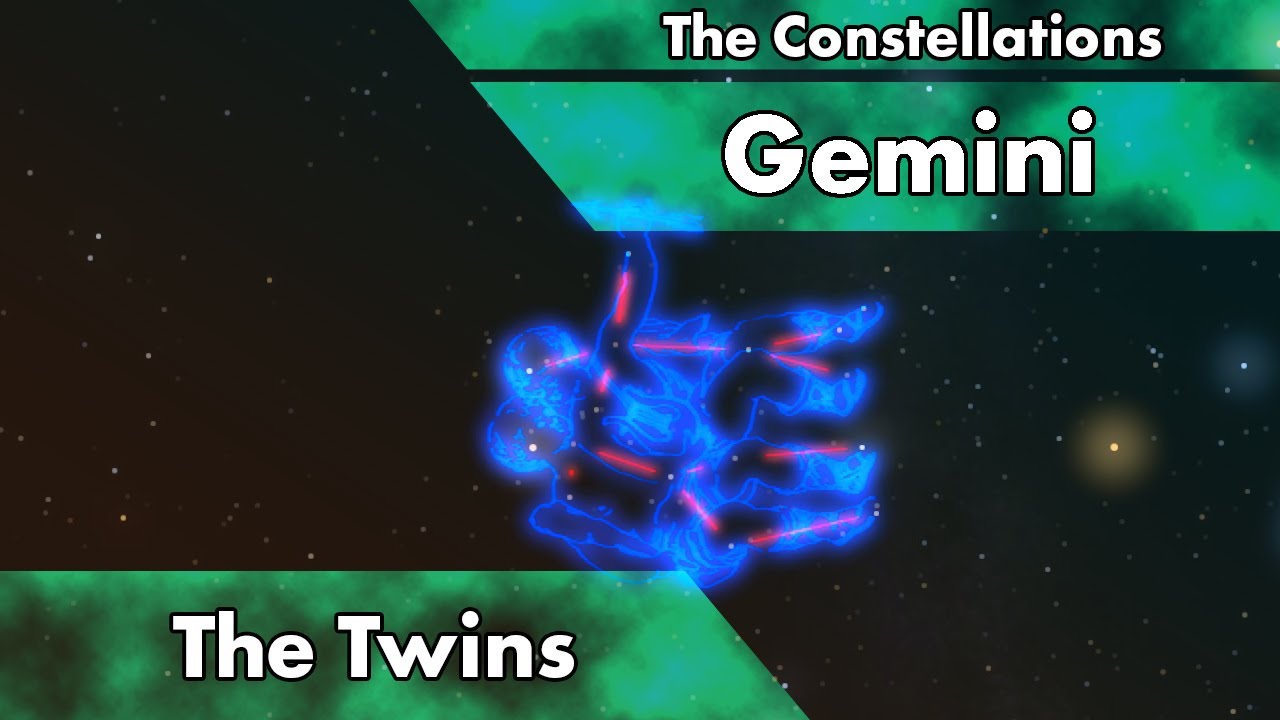
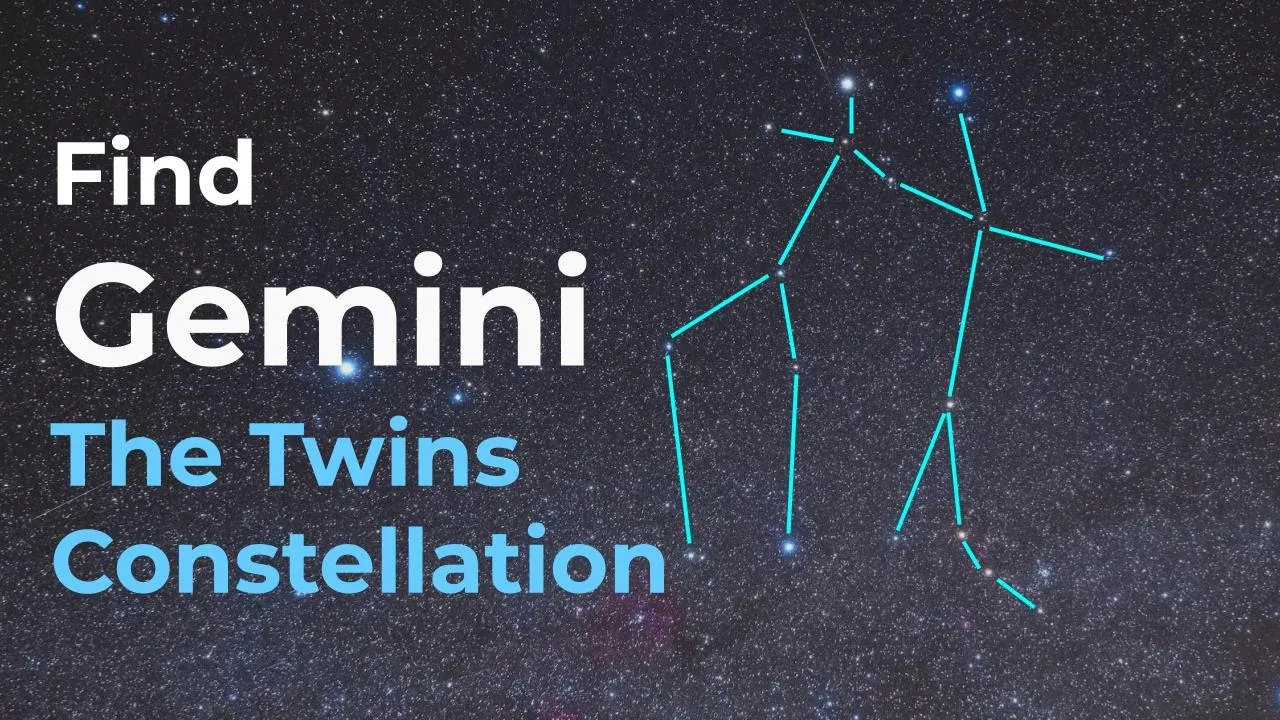
Gemini is one of the constellations of the zodiac which means that the Sun appears to pass through it throughout the course of the Year this pattern represents the twins Castor and Pollock from Greek mythology and it is located in the northern Celestial hemisphere between Taurus to the Northwest and cancer to the southeast in the northern hemisphere it is easily visible during the winter months and into early spring for those living in the southern hemisphere Gemini would be visible in the summer months and into early fall the two brightest stars in Gemini are Castor and pox
pox is the brighter of the two and is an orange hued Giant star while Caster is a multistar system composed of six individual stars in this video we'll look at how to find Gemini the bright stars and celestial objects it contains and the ancient legends connected to this pattern first let's get a broad overview of Gemini it's classified as an anci anent constellation and the earliest records of it date back to the Babylonian Star cataloges Legends of Gemini appear from almost every part of the world including Chinese Legends Greek Roman Polynesian cultures and many more
the name Gemini is Latin for twins and two planets happen to be discovered while traveling through this constellation both Uranus and Pluto it's classified as a zodiacal constellation as well because the sun passes through through its boundaries so when is the best time to see gban if you live in the Northern Hemisphere going out in the winter months is the best time to see this constellation you can start as early as December and Gemini will be out all the way until April when early spring starts to arrive but if you live in the southern hemisphere
this time is your summer months so it's much more comfortable for you to go out and see Gemini during this time you want to look for two stars of similar brightness and that would be pox right here and Castor you want to also use Orion to help you find Gemini and oftentimes I will use orri and canis minor to help me find Gemini as well it is part of the winter hexagon asterism which we will take a look at later on in this video and I do think that it's one of the few constellations that
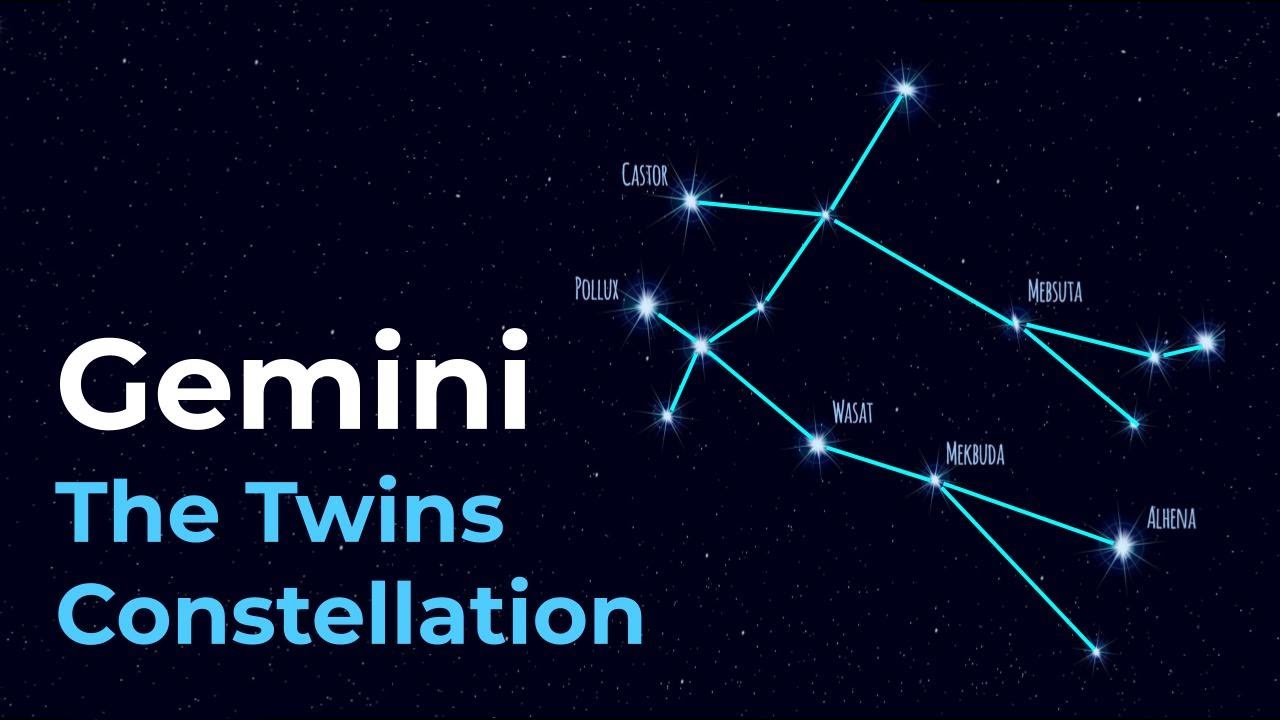
looks like what it actually represents let's examine the pattern that Gemini makes in the sky here we have an official star map of what a Gemini looks like and you'll probably notice the two Bright Stars here Castor and poock there are some other Bright Stars around such as proon in canis minor you have Orion nearby as well as Taurus and Orga so let's take a look at some pictures and see if we can connect the map to what this pattern looks like in the sky so Gemini is right in the center of this photograph gra
and notice that Castor and poock shine brightly together they are different colors though even though they're magnitude is fairly similar and if we were to point out where the pattern is this is what Gemini looks like in the sky now the trick I teach my own students in the classroom on how to remember the difference between the two is that Caster appears to have a cast on his leg in my first year of teaching I had a student come up with that so I can't truly take credit but I am thankful for this way to
help me remember the difference between the two so Caster is here with the cast on his leg and pox is right here now in terms of other constellations that sit nearby we have a few right here is canis minor that's represented as the small dog and up here is cancer and you can tell it's cancer because of this little star cluster right here that's known as the beehives star cluster and it's really the only way I can find cancer but over here you have Orga or some people pronounce it origa and this star Right Here
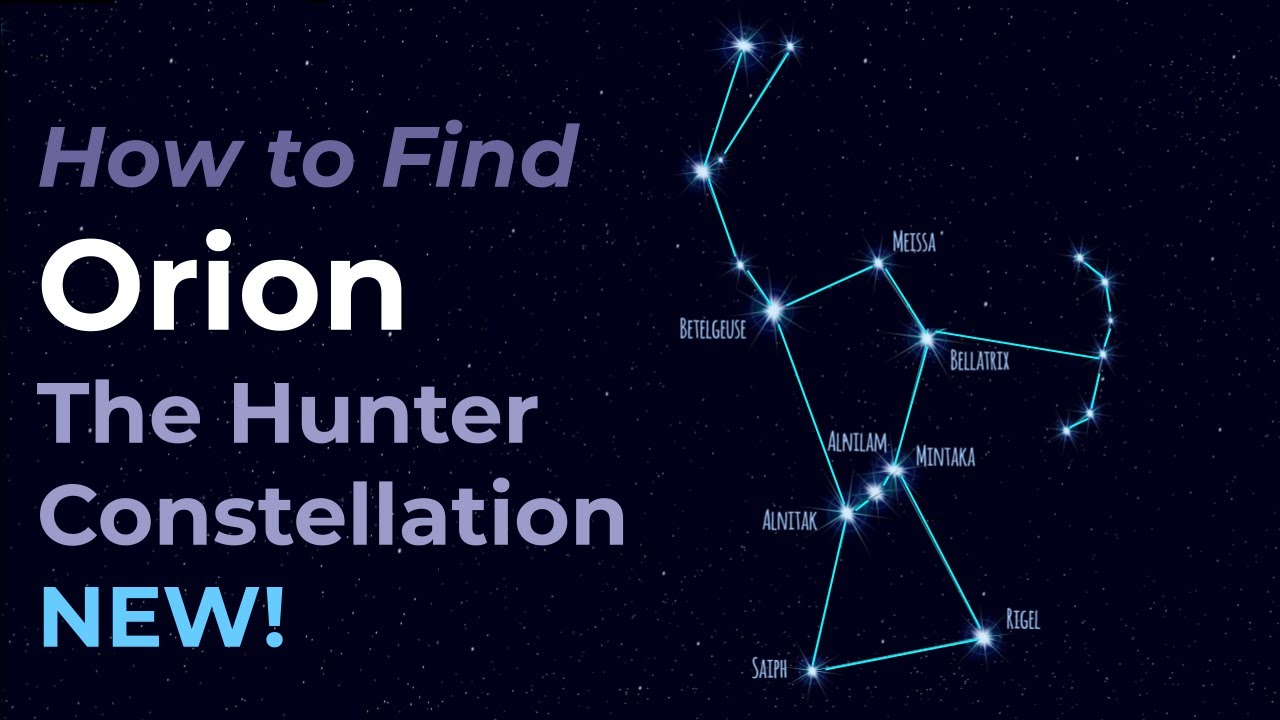
is known as capella another great way to find Gemini is to use Orion to help you out Orion is really the guide to all of this area of the sky so if you look at Orion you want to find Riel and then draw a line from Riel through beetle juice and that will Point towards the twins let's get some practice at this so here if you're looking at this photo take your eyes to the bottom right and that is where Orion is now find beist or Beetle juu there's multiple ways to pronounce that star which
is right here you can draw that line to guide you right to Gemini so if we were to point everything out this is where Gemini is and notice that the orientation of Orion is different than that of Gemini it's like if Orion were standing upright Gemini seems to be tilted onto its side and this here is Taurus and this is orri let's get a little bit more practice using Orion so hopefully you can find Orion towards the right side maybe midline to bottom part of this Photograph and then find Riel draw a line to Beetlejuice
and that is where Gemini will be if we were to point everything out this is what this area of the sky is like you can also use the winter triangle to help you find where Beetlejuice is is or in Orion and then right there is where Gemini is Gemini is also part of the winter hexagon asterism and this looks like a busy picture but if you can just notice the stars in the background instead of the meteorites that's what we're going to focus on here is what the winter hexagon asterism looks like and it is
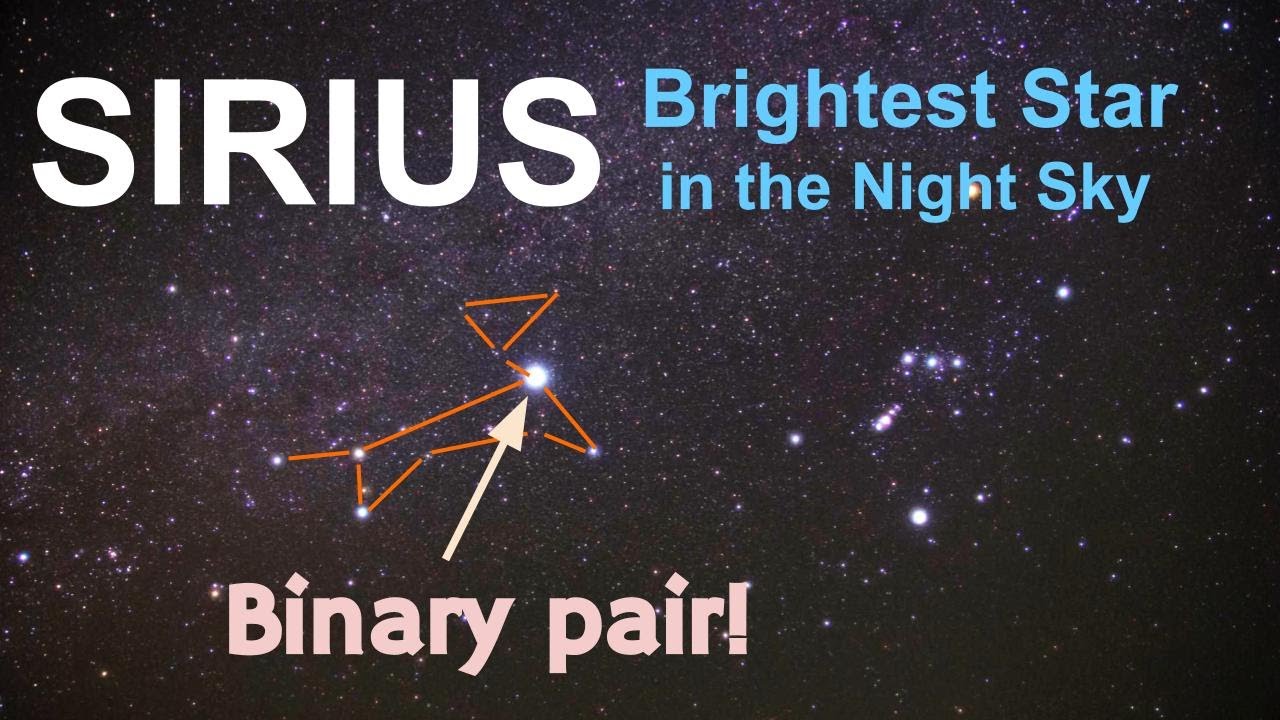
made up of the six brightest stars in this area of the sky and those Stars include pox and pox is in Gemini we have capella a part of or alberon which is part of Taurus Riel which is the foot of Orion Sirius which is the brightest star in Canis Major and proon which is the brightest star in canis minor and if we were to point out where all those constellations would be this is where Gemini is orri is kind of like a pentagon shaped pattern Taurus is right here Orion is very obvious because of the
belt Stars Canis Major is easy to find because Sirius is the brightest star in the night sky and then canis minor is just a simple twar constellation sometimes it could be confused with the heads of Gemini but I don't ever confuse them because I know that the two stars of Gemini are of very pretty much of equal brightness and again this this picture what's really cool about this is it was taken during the Geminids meteor shower and that is the most prolific meteor shower of the year and it usually Peaks mid December I do have
a video about it so go check it out now let's take a deeper dive into the brighter stars of Gemini we begin with poock which is the brightest star in Gemini however it's the 17th bright star in the entire night sky pox is classified as an orange Giant star and it's estimated to be 34 light years away it's already fused the hydrogen inside its core and now it is currently fusing helium and expanding in size it does have an exosolar planet that orbits around it called pox B now when you look at the size comparison
between the Sun and pox pox only has about two times more mass than our own Sun but it is much bigger in size you could fit nine Earths across the diameter of poock casor is the second brightest star in Gemini but overall it's the 24th brightest star in the night sky it's classified as a blue main sequence star and it's estimated to be 52 Lighty years away it is a multistar system consisting of three binary pairs when we break this down you can see the Caster a system is a blue mean sequin star and a
red dwarf star that's the same as the Caster B system but Caster C consists of two red dwarf stars and when you look at all of these stars together notice the size comparison to our own home star alenna is the third brightest star in the constellation and of Gemini and it's classified as a white subgiant star that means it's run out of hydrogen in its core and it's starting to fuse helium and grow in size it's also a possible binary star system and it's estimated to be 109 light years away another cool star I learned
about in Gemini is called Jinga it was discovered in 1972 it's a neutron star that's estimated to be 800 light years away and it's among the brightest pulsars in the sky remember a pulsar or neut star is the crushed core Left Behind when a star that is much more massive than our own Sun ran out of fuel collapsed under its own weight and then turned into a supernova so here in this picture what you're looking at is the halo around the Pulsar let's review some of the celestial objects that are located in the boundaries of
Gemini Gemini is a great place to look for different celestial objects and there are a variety of objects you can can see such as open star clusters and a few nebuli Messier 35 is an open star cluster estimated to be 2800 light years away and situated right next to it is another small open star cluster it's called NGC 2158 and its distance is estimated to be 12,000 Lighty years away and when you're looking in Gemini you want to look for the area in Caster's cast remember I taught you that trick to remember which one is
pox and casor Caster has a cast on his leg and that's where M35 or messia A35 will be what I like about this open star cluster is that it has a magnitude of five so and if you're in areas that have very dark skies you should be able to see it and if you're going to use anything to get a closer look binoculars would be best another object to see is called NGC 2420 and this is an open star cluster located on the Pollock side of Gemini in the same area is the Eskimo nebula it
also has the name NGC 2392 and this is a planetary nebula which means it's a star that is no longer fusing any hydrogen helium or anything it's actually the leftover layers of a Dying star so inside here is a white dwarf and then here there are two different sets of ring that surround it and when you're looking for this celestial object you want to look towards the hip of pox and that's where you're going to find the Eskimo nebula another nebula to look for is called IC 443 it's nickname the jellyfish nebula and it's a
supernova Remnant which means that it's a star that has exploded long ago and then the shell of that explosion is still expanding it's estimated to be 5,000 light years away another beautiful object to spot is something called the Medusa nebula this is also a planetary nebula that's estimated to be 1500 light years away and it's right along the border between canis minor and Gemini and it gets its name after the Greek mythological creature known as Medusa because the filaments of glowing gas tend to look like the serpent hair of Medusa now this is a large
planetary nebula it used to be classified as a supernova Remnant but after further study it was found to be a planetary nebula so the star in this system is at the end of its life and these are the the last outer shells of the star that are just kind of being ejected away from the main core let's examine some of the Legends behind Gemini it is often the stories of the stars that we can connect to in some way that can help us remember the constellations and remember there are lots of mythologies out there so
there is no one true legend for any constellation now in terms of Gemini we begin with the Babylonian star cataloges like many of the ancient constellations this is the name assoc or the names associated with Gemini I'm not going to attempt to pronounce them I definitely would get it wrong but these two legends were set of twin gods and they were identical when they were being displayed they were shown wearing horn caps holding axes um an Axe and a mace and they were identified as the constellation Gemini and the Babylonian star catalogues were useful in
the timing of agricultural activities and in the ancient Mesopotamian time that was really important so the stars were an important guide to many things that happened on Earth in Greek mythology the twins are often referred to as castor and Pollock and both Twins were hatched from an egg after their mother Lita was seduced by the Greek king of the Gods Zeus was the son of pollock where tarius was the son of casor and there are many ancient legends that go along with this in terms of Roman mythology ramulus and Remis that is seen right here
here on a Roman coin this has also been connected with Gemini and these twins have been the symbol of Rome in ancient times and very recognizable icons in ancient mythology but of course you must remember that the mythologies of the Stars vary according to time place and culture there's no one true mythology for any constellation but just a variety of them so let me know in the comments below what kinds of Legends and mythologies uh live in in your area of the world share them in the comments below we've come to the end of our
video about Gemini so let's review everything we've learned so far it's best seen in the wintertime for the Northern Hemisphere but summertime for the southern hemisphere it's classified as a zodiacal constellation which means that the sun passes through its boundaries the best way to find Gemini is to use Orion you want to trace a line from Riel to Beetlejuice and that will aim you in the direction of where Gemini is the bright stars of this Constellation Are Pollock right here and casor remember that Caster has a cast on his leg and that's the best way
to remember the difference between the two brothers there are lots of celestial objects in this constellation including Messier 35 which is right here and there's a few nebula in there as well such as the Eskimo nebula and other open star clusters they thank you so much for watching let me know in the comments are you able to find this constellation in the night sky and do you have any special stories or mythologies associated with it thank you so much for watching and keep looking [Music] up [Music]