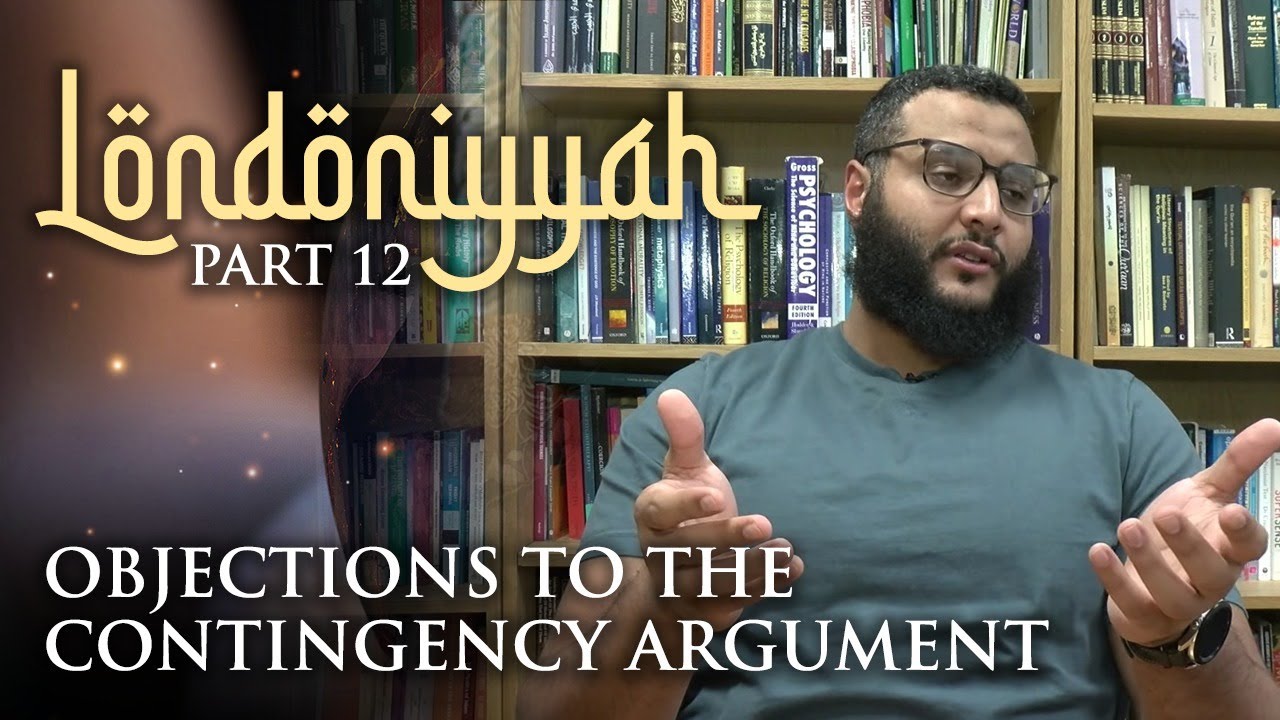
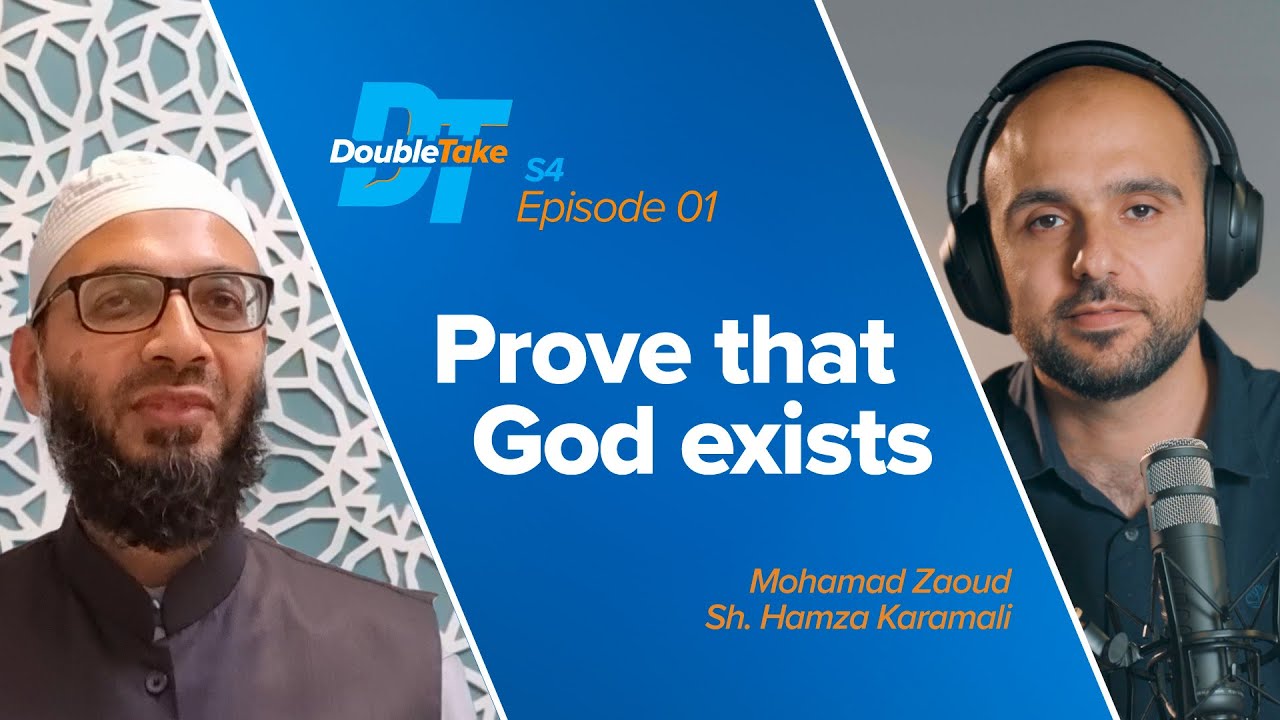
Can you give us, like a summation maybe within 3 minutes of what the contingency argument actually is? The argument can be made in one sentence, which is a postulation there cannot be a world with dependent things depending upon dependent things ad infinitum. That's the argument.
- Yes. - That's my postulation. If someone agrees with this postulation, then they are invoking the need.
The entailment of such agreement or capitulation is the need for a necessary existence or an independent thing. And if they disagree with it, then we have an argument from composition, which we make. So this is the basic thrust of the argument.
Okay and so then when you're talking about dependent or independent things, how does one go about understanding what's meant by this? Something which is dependent is something which relies upon something else for its existence that's different to something being caused by something else. Like, for example, if I cause a house, I can cause a house.
But the house can continue to exist even if I die. So if I cause, I can build a house, I cause it. Now, I can cause my child.
Okay, no problem. Now, i’ve caused this child. But it doesn't depend upon me so in other words, It can outlive me.
Now that child can live on and I'll be dead. So the child doesn't depend upon me. My existence for its own existence.
So causation is defined as something which is defined as something which brings rise to phenomena. That’s the terminological definitions, I mean. But the point is, is that causation is different from dependency because dependance is something that can bring rise to something else, but it doesn't necessarily.
Sorry it doesn't necessarily have to keep existing for it to exist. - Yes. And dependance entails If we say it depends upon something else for its existence, then it does actually imply continued existence.
Like for example, the sun and the rays of the sun. So the sun, the rays of the sun depend on the sun in order to continue existing. So this is a dependency relationship, not just a causal one.
So what we're saying is we're focusing on dependency here. We're not focusing on causation, although we can make the argument from causation. I don't think there's a problem.
You know, for the sake of this brevity and conciseness. So then how do you define independence? Is it just the opposite of dependance, or does it have its own definition outside of dependance?
Well, independent is something which is self sufficient. So we're talking about something which is self sufficient, something which in and of itself requires nothing else in order to exist. And that everything else in this context depends upon it for its existence.
- Yes. Okay, Perfect. So then some might say that the necessary existence, like within this contingency argument, for example, doesn't exactly equal God or Allah.
So how does one get from saying that there is a necessary existence to saying that there is Allah without being accused of a God of the gaps type argument? Well, look, I mean, there's only so much the necessary, the argument itself can actually bring you. We're not claiming that this argument is going to give you 99 attributes of God.
That's certainly not what we're saying. - Yes. - And in fact, we believe that as Muslims, most of the attributes of God are actually found out through the textual proof, which is the Quran and the Sunnah.
- Right. - So first and foremost, there is a point at which this argument becomes redundant, which is points where we're trying to prove the mercy of God or the love of God, all these things. There are certain attributes which can be proved from first principles.
Like we said, pre-eternality, post-eternality, will. We can prove independent sovereignty, <b>قيومية صمدية</b> which are actually plentiful in terms of the number of attributes that there are and once these attributes are, you know, kind of, you know, proven, if you like, or established, you've for all intents and purposes rid the individual from their atheism. The individual can no longer call themselves an atheist and dare I even say can no longer even call themselves an agnostic.
So the argument aims to bring someone from the state of agnosticism or atheism to a state of deism or theism or classical theism. Now, we're not saying that's where we should stop, but that's the minimum requirement and then obviously we say, well, now the question is what kind of relationship would you have with this necessary existence? And the contingency argument answers half the question because it tells you that you are already in a dependent, independent relationship.
In other words, you're in need of the necessary existence. And the necessary existence is not in need of you. The necessary existence is self sufficient and you are not.
So already there are some boundaries that are being established here that there's not an equality in this relationship, that without one the other wouldn't exist without one the other would continue existing. That without the necessary existence, anything contingent couldn't even express a contingent instantiation. So anything we do is with the permission of the necessary existence by necessity, especially if you've explained the will of this necessary existence and so the question is, what is the appropriate relationship to have?
Except, of course, one of submission. Because we’re already in submission, I mean, submission can be established here. So if submission is established, a need based relationship is established.
You know, then we already at a very, you know, promising place. In which case, all that is really left to do. You've got all these attributes of God.
You have the attributes of God like, you know, the will of God. You've got the pre-eternity of God, the post-eternity of God. You've got the the self-sufficiency of God.
You've got, you know, the oneness of God, which, to be fair, needs a separate argumentation, which is that Allah did not have a son, that he doesn't have any إله with Him. Any God with Him and had that been the case that they would have tried to dominate one another and that they would have tried to outstrip one another In other words, they cannot be two all powerful entities. So once oneness is established, pre-eternity is established, post eternity is established, self sufficiency is established, will is established through particularisation and that's another argument.
These are all different arguments you put. Once all of these things are established, the need based relationship is established. Now you're ready to make the argument for the Prophet Muhammad ﷺ being the true Prophet of God and the Quran being the Word of God.
That's what you’re ready for now and ipso facto, anything that comes from the Quran, therefore, is true. - Yes. - Because if the Quran is true, then anything that comes from the Quran in the Quran, especially in reference to who God is, is true.