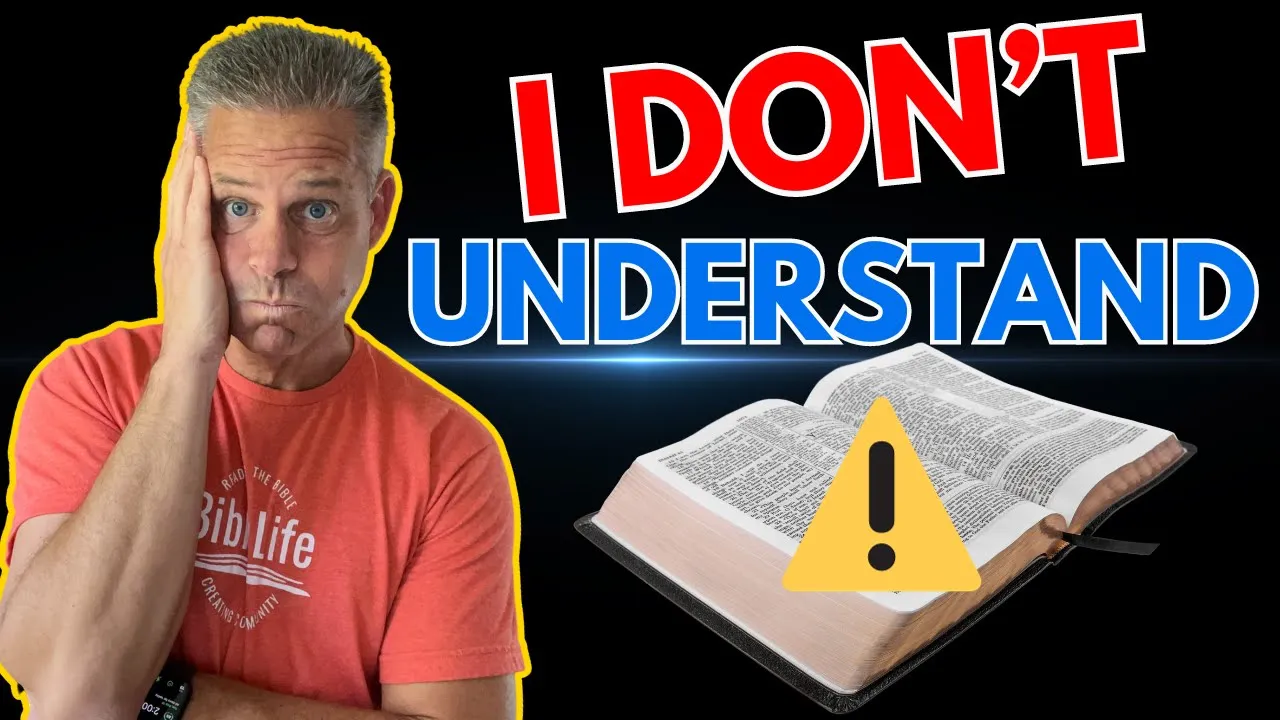
so what do you do when you're reading the Bible and it gets confusing well today I'm going to give you 12 different ideas that will help you better understand the Bible in case you and I haven't met yet I'm Keith faren your Bible coach my passion and the goal of this channel is helping you move from should to want when it comes to reading studying understanding applying and enjoying God's word so that sounds like something you could use some help with and you're going to want to click that little button down there so you don't miss a video now I get it sometimes you're reading the Bible and it gets confusing there's a lot in there it's a pretty big book but there are some practical ways that you can better understand passages of scripture and I'm going to give you 12 because rather than just pointing you toward one or two of my favorites I'm going to give you an array of options that you can use for different passages and different times and you learning style just might simply be different so I'm sure that in here you're going to find two or three of these that are really really going to help you and the 12th one you're going to want to stay till the end because that one actually combines uh several of the other 11 so let's dive in to the first one now the first way that you can better understand what you're reading when you're reading God's word is to talk to God about it to pray now that may sound like the oversimplified Sunday School answer but hear me out if we're going to shift from reading the Bible informationally to reading it relationally then we should probably involve God in the conversation and not only that but in the fifth verse of chapter one of the Book of James James remind us that if anyone lacks wisdom he should ask God who gives to all generously and ungrudgingly and it will be given to him now God is the wisdom Giver the holy spirit that lives in US is our best and First Source of wisdom and understanding so that is the starting point is to pray the second way that you can better understand a confusing passage of the Bible is to look at that passage in multiple translations most people have a translation that is their go-to translation for me that's the Christian Standard Bible the Cs be but I also have a new international version a New Living Translation an English Standard Version I've got a lot of different translations and there are a lot of if you don't own multiple translations you can go to a site like biblegateway. com or you can go to the app my favorite is parallel plus that compares multiple translations at once and you can just take a look at what the different wording sometimes just seeing how different Bible translators Bible scholars translate the same word can just help you out just like when you're in class and and a teacher explains something and then a fellow student explains what the teacher was said using a different analogy and that just helps you out so I find that using a different translation can really be a very quick and simple way that often times will bring Clarity to a confusing passage now the third way that you can better understand God's word is to grab a study Bible now you may have a study Bible there are lots of online study Bibles I will actually link to one a video that I made on my favorite study Bibles and what I recommend for people but this one right here this is my kind of big boy here this is the ESV Study Bible and while I mentioned that the csb is my go-to translation my ESV Study Bible is my favorite Study Bible and I'll link to that one below here but a study Bible whether it's the ESV or whether it's a Life Application Study Bible or a filament enabled Study Bible then there are notes in there and explanations there can be charts there can be graphs there can be outlines and a lot of times the notes that accompany the passage that you're reading will even give you different interpretations of that so you can see what multiple people say in one space there in your or study Bible so again you can do use an online Study Bible or you can buy a physical Study Bible but a study Bible can be a fantastic resource to help you better understand God's word the fourth way that you can better understand God's word is to go bigger and go smaller so what I mean by this is if the passage that you're studying is uh maybe a verse or two verses that just seem kind of confusing then go bigger and look at the big picture maybe read the whole chapter or if it's a shorter book like Philippians or Ephesians or second Timothy or something that you can read in 20 minutes or less then maybe sit down and read the whole book you know sometimes you might see the scene of a movie and that scene you don't quite know how that fits and then you watch the movie and oh that makes total sense right the same can be true when you're looking at a little piece of script uh scripture and that verse out of context is just kind of confusing well reading the whole chapter or reading the uh whole book can be really really helpful and the opposite is also true that sometimes if you're looking at a big piece of scripture it can be helpful to look at the little pieces that that make up that big piece so if you're kind of confused by a whole story or a whole chapter or even a whole book then then take some time to really think about two verses or one verse or even a phrase and just and pray through that and think through that and look at your study Bible some of the things we've already talked about and understanding the little pieces can help you sometimes understand the big piece so I would start by going bigger and then sometimes it can be helpful to go smaller the fifth way that you can better understand God's word is to look for repetitive themes or words or phrases that get used throughout that book or even throughout the Bible one easy way to do that is if you've got a physical Bible a lot of Bibles will have cross references sometimes it's in a middle column sometimes it's underneath but frequently you'll find in in your Bible you'll see references to other places in Scripture that talk about the same idea or even use the same word so cross references can be a really helpful tool and another way in which you can kind of practice this same process is to go combine this with what I just said before about going bigger like for example Romans is frequently a book that is so meaty that people get confused and they look at little pieces of it but when I started reading all of Romans when I look which Romans will take you about an hour to read that I noticed that the first 11 chapters well 12- 16 are lots of application 1- 11 it's almost like you're at a debate and it's Paul's turn right people have been making Arguments for their different beliefs and and Paul says okay now I'm going to make an argument for Jesus and he lays out and just like in a debate he comes back to these different ideas and says them in slightly different ways and so looking at how these themes get repeated over and over again but said in slightly different ways even within the context of that book so cross referencing will help you look at all throughout scripture and looking at a whole book can help you at notice the the themes and the keyw in a specific book and one way to really help that is to use some sort of a color coding system or a highlighting you can highlight different things some people don't like to write in their Bible if you don't like to write in your Bible you could have a journal next to you that you're jotting some things down but if you are somebody who's looking for a simple but effective kind of color code system my friend and Bible teacher Eva kashik has developed something called the word in color and it is a fantastic resource for noticing these themes she's got different colors for different things and and her course the word in color is a fantastic tool so I'll link to that below you can also just go to Keith far. com wordin color and it'll redirect you to the right place and uh that is a fantastic system for fi figuring out these key themes and ideas and Concepts and words and phrases it's really terrific the sixth way that you can better understand a confusing passage of the Bible is to look at the culture and context of that passage now sometimes you can find that right there in your study Bible if you have a good study Bible like the ESV that I recommended then you can look at the pages at the beginning of the book and it will give you an overview about a little bit of the background of of who wrote the book and what they were going through who was receiving the book what they were going through and kind of everything that was going on in the culture and context of the time because man cultural context is so important I'm going to do a a deeper dive video where I open up my screen and screen share to show you some of the resources like Bible Hub and Blue Letter Bible and study light some different online resources that are free that you can do some deep dive into context but for now taking a look at your study Bible or even going to one of those sites and and searching for an overview of a book can really give you some insight into that culture and that context which Can Shed light on a lot so the seventh way which you can understand God's word a little bit better is to read commentaries now commentaries I've heard it said that a commentary is nothing more than another person's comments on the Bible so I think one of the warnings I have with commentaries is that sometimes people give the commentary an equal amount of weight as the Bible itself and that can be really risky which is one of the reasons why I put this this far down in the list is not because I think it's unimportant but I think that reading commentaries needs to needs to be another voice in the conversation not your starting point I think so often we go too quickly to commentaries and we haven't spent time praying and thinking about it and noticing uh themes and all the things we've talked about already we haven't spent time talking to God about it and letting him show us what he wants to show us in that passage we go right to the commentary and I think that at this point after you've done some of these other ones to go to a commentary and to look at what some some Bible teachers some Bible scholars some people who are really wise and have done a lot of research what they have to say commentaries are amazingly amazingly helpful you know just like if you've got a hobby I like thinking about like the hobby of woodworking if I I don't know a lot about woodworking but I have a friend who is an amazing amazing Carpenter and he can do the detailed things and the inlays and all the things whether it's building a chair or a table or a cabinet I you name it he can do it well if I'm going to start learning about woodworking then I need to actually do it I need to actually have wood in my hand I need to go but man if I could go and I could talk to my friend Corey and I could go into his shop and have him show me some things and what he's learned and help me avoid some mistakes that I kind of look at commentaries like going to an expert like Corey when it comes to woodworking if all I'm doing is watching him do woodworking or listen to him talking about woodworking I'm really not going to get better at it I need to be doing it myself just like we've talked about in these first few but uh but man going to an expert afterwards which is what a commentary is can be really really helpful and number eight is similar to number seven number eight is to watch video explanations now there are different sites you're you're here on YouTube watching this and there on YouTube there are a lot of Bible teachers that have put together overviews and put together detailed commentary basically video commentaries on different hard passages of scripture different questions that people have and watching those videos can be really helpful again I'm putting this down on the list because I don't think our first place we should go to to understand a difficult passage of scripture is to look up a YouTube video because while there are amazing videos and wonderful teachers here on YouTube there are also some people who I don't like quite so much and and so I think we need to be cautious so we need to have spent time praying we need to have spent time doing the research and studying it and looking at what our study Bibles looking what other parts of scripture have to say before we go to the videos but that said once we have that Foundation then it can it can be helpful to to type in the passage that you're confused about and see what some other people have said about it now you can also there are some things that can be helpful like looking at the kinds of videos that that person makes looking at their description even looking at the people that subscribe to their Channel if it's somebody that's put something out there that and they only have a a few subscribers or things like that or you look at some of the other videos and it just seems off then let that Holy Spirit intuition be wise about who you listen to for sure and three wonderful places to start uh they have their own websites as well as YouTube channel so you can search for them here or you can go straight to their websites and find out more and do your own research but I really like uh the Bible effect so thebible effect.
com is a really good one with Bible overviews and different questions that they answer they even tackle just some some whole videos on hard questions and they're put out by the people uh by ywam youth with a mission a fantastic video library uh to do your research another one is the Bible project and just Bible project. com their their library of videos just gets more and more robust all the time from overviews of books of the Bible to looking at specific word studies and themes in scripture they're probably the largest video library uh single video library that I've seen on uh Bible resources and then another one is a guy that put together the overview Bible and that's kind of getting the the from the from the last one where I was talking about the overview and context he has great it's called the overview Bible and overview bible. com that uh he has overviews of the different books of the Bible and and similar to some of the things you'll find on Bible project and the Bible effect but overview Bible just his teaching style is a little bit different but he goes really in depth his videos are a little bit longer but I really like what he's done there as well so those would be three good places to start uh but you can also do some other research here on YouTube now this next one I know is going to be a little bit controversial and that is to use an AI tool now notice that this is the ninth one on the list this is way down on the list this again is not the place I think you should start doing your Bible research but when you've done some of the other ones and even some of the ones I'm going to mention coming up that this can be one that can just be one of the pieces in there that there are AI tools the most famous obviously is chat GPT but uh bing had you can just go right to bing.
com and they've got AI built in there's Google's got something with Bard and and my favorite honestly is quick right and the re I've done I've got a whole video that I will link to here uh in the description on how to use Quick write but what I love about quickr specifically is that it is a lot of different AI tools combined so it is more like uh a user interface that combines some things like it uses the engine of chat GPT 3. 5 and four at the time of this recording it uses some image generator things so if you're trying to generate some images with things it's got a translator so you can get things and if you're sharing some of these notes with other people and it's got a way that when doing your research you can save your research and then come back to it and add do more research later so so if you're studying a book of the Bible it's a great way to keep all of your notes in one place and then you can simply export it and it exports it as a Word document so it is my go-to AI tool but any of these AI tools can be fantastic for doing a lot of research in a short amount of time now is this the end all be all no Can it have some mistakes yes it can which is why I wouldn't say an AI tool replaces your study Bible it is a a way to look at doing some more research that you can then check and and make see what see what other people say and see is this accurate is this good but there are lots of different prompts that you can put in I'll I'll link to a resource below where I have 95 different AI prompts that you can put right into you can use it for quick WR you can use it for chat GPT but there are uh prompts that you can give that will help you get some context discover some different applications some help you better understand a passage and and it's it's really been both fun and informative to realize how much robust research can be done with AI and inform a better understanding in of God's word all right number 10 is to talk to people now similar to these other ones about commentaries and AI just listening to other people without doing our own research that's not a good idea but I find that anything that we talk about we get more interested in when we are sit down with friends at a coffee shop and we talk about the Bible we talk about the questions that we have we talk about the passages that are confusing we also just share insights and it it it becomes more fun it becomes more informative there will be people that have seen other things when we talk to other people and we share hey this passage is really confusing to me then often times they will have already looked at that passage before and they will have done some research or they read a book that somebody wrote about it or they heard their Pastor preach on it and I just find that sitting down and talking with people about the Bible is one of the best ways to better understand God's word not to mention it makes Bible study a lot more fun to do it together and not only do it alone now the 11th way that you can better understand God's word is to Simply meditate and reflect on it to spend some time I I know I started with prayer and I think meditating and reflecting is a form of Prayer but it also just takes more time I wanted I wanted to single those out because we can pray for understanding as we're entering a passage we can pray for understanding as we're studying a passage but I also think it's important that afterwards to spend some time just meditating on it to to chew on it to reflect on it that can be done in a journal that can be done by going for a walk after our Bible study to spend some time coming back to God and asking him to give us this long-term wisdom and insight into a passage and part of this meditating and reflecting on it is the reality that sometimes our understanding is going to come later if God's word is living and active which it is then we're not going to understand all of it the first time that we read it there are some parts of the Bible that I that confuse me that challenge me for years and years and years and I would come back and I would chew on it and I would talk to people and I would do some research and I would maybe get a little bit more understanding and in the in the Gospel of John in chapter 16 uh Jesus talking to the disciples about the Holy Spirit and he's going to guide you into all truth well part of uh having a guide is that's a longtime Journey it takes more than just one study and one understanding one prayer and all of a sudden you're going to understand it it takes some reflection it takes some meditating it takes some chewing on it and journaling about it and thinking about it and coming back and revisiting it so taking some time to meditate and reflect is extremely important when it comes to understanding the Bible okay the 12th way in which you can better understand God's word is to join a community of people that are discussing it and uh several years ago I formed the Bible Life Community and it is it combines a lot of these we teach the Bible inside the Bible Life Community we do Bible studies together we have reflection questions where people can give share their insights and answer the questions we encourage each other we have live meetings together on Zoom because people are all over the world with the Bible Life Community but I would love to have you join us and try it out for the study that we're doing so I I'm always kicking off kind of either a one month or a two- Monon usually the book studies or two months and so it might be the middle of a study which is one reason why I always give you the option of having your first four weeks for $ and so you can just go to keith. com trb life and you can join us and see what we're studying and have those discussions have those places where you can ask questions have those places where you can share insights and as we're studying people will who have done some research who have found a video that's been helpful or taken a picture of the page of their Study Bible and shared that in the group and said this was really interesting to me that that whole combination of discussion and questions and feedback and resources all of that happens inside the Bible life community so I'd love to invite you to come check it out for your first four weeks for only $4 go to keith.