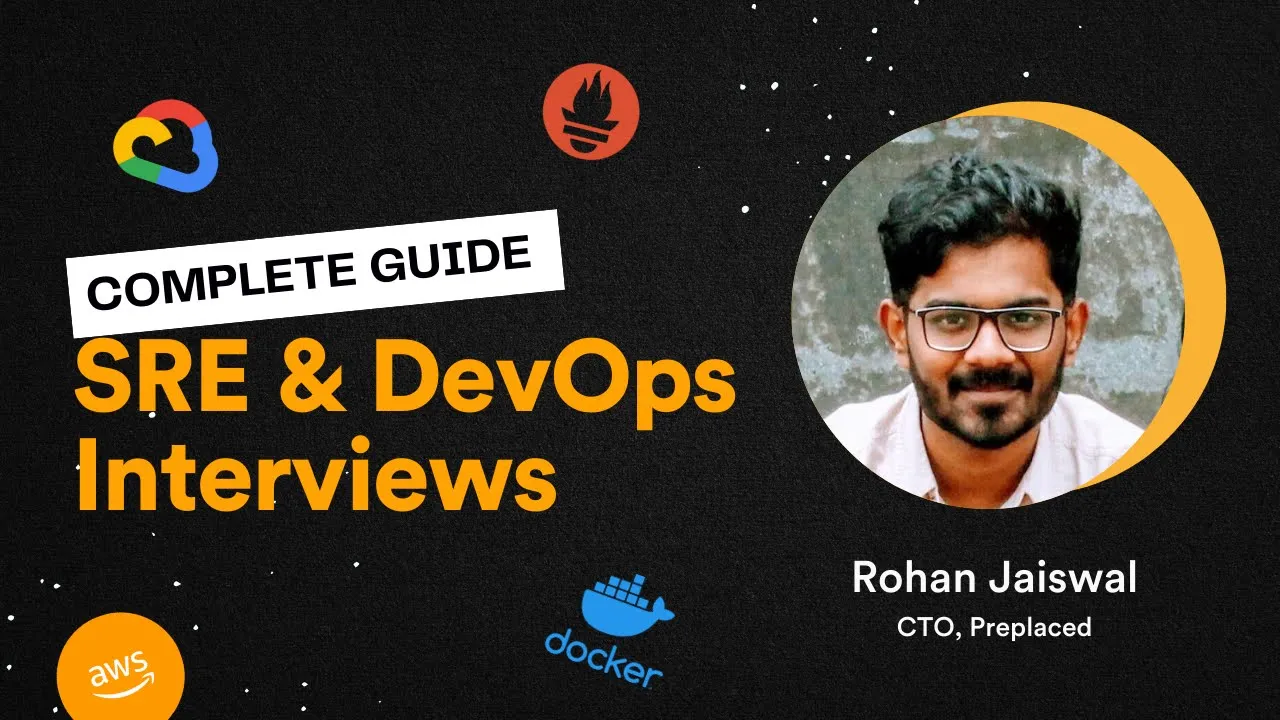
so for me like if if I'm if I'm looking at SRE as a role right so these are the like six things which I which is make or break for me in an interview okay or like in a current interview like if if I go into these six things is something what an Sr engineer should know let's dive into interview preparation strategy you have been you have switch a series of companies and you have been also involved a lot in hiring multiple interviewers have interviews of like candidates basically at more engage at Sky flow building
initial first set of Engineers and teams around you so so yeah so you you are the perfect person to actually what do we companies expect in Sr interview roles and how should someone go about it so let's just break it down into two parts one part is uh probably for people who are learning in learning phase in preparation phase uh what all things they should go through and all and then finally we will at the end cover specific interview preparation probably someone for experienced professionals switching their jobs and all sure sure so yeah so s
like as you said like we will cover these two sections so what I I'll do first is like I I'll just cover up the topics and everything which an Sr engineer should know right and then then we can like probably dive in like what of what all of these are important for someone who is like basically making the first switch or someone who's like fairly Advanced see like U just to explain stuff what I've done is like we have a sort of a mind map where which which we'd be going through in order to cover
like what all topics do we have and there's a fairly top level mind map right so you don't need to dive into the the the exact stuff here so what I'll do is like I'll cover up the main topics and probably I can I can send you a set of resources which which you can give the viewers yeah so so uh let's start with the basics here right so for me like if if I'm if I'm looking at S as a role right so these are the like six things which I which is make or
break for me in an interview okay or like in a current interview like if if I go into these six things is something which what an SRE engineer should know okay so so what you what you notice here is that it is quite different from how a backend engineer would approach right so a backend engineer would typically have three rounds or three three set of rounds right and you'll go go very deep into each right like so if if there is a DSA round so it will go and cover every inch of DSA right but
for Sr it's more important to cover the breadth instead of the depth okay for of stuff so that is I've tried categorizing it in six round uh six things which according to me Define the breadth of an SRE engineer okay so yeah so so let's start with the networking stuff okay so on the when you this into six categories are these General interview rounds or these are like topics which are covered across interview rounds okay so see like uh for an Sr interview so it completely depends on the company like what kind of hiring they
are doing because Sr is not a role which you hire freshers into right what would happen is that because you are an experienced professional and they are kind of expecting certain solutions from your end right what they'll do is ke they'll try focusing on three or four of these rounds okay what would happen is like a company who is very heavy networking okay would probably have networking OS and cloud provider around and script uh skip the uh scripting and containers around okay a company who is deciding to uh kind of move into kubernetes okay they
would do the containers and Cloud providers around more and then skip the script scripting and operating systems around right similarly like when I was going into uh mowing ede right they wanted more exposure on the tool side of things because I was trying to solve that their monitoring site so they they would cover more on uh tools Cloud providers and containers so out of these six what I what I would say is that almost everything uh is is kind of mandatory and and is kind of uh Irrelevant for certain company right but one want all
preparation you will have to sort of cover all these topics to so so like what what I'd say is that once you are exper enough in Sr or like even if you want to get started as an SRE right these six things is the basic stuff which you should know right and like once you grow into an SRE role you'll kind of be developing a depth in each instead of like adding in more topics here so yeah devops rol basically have uh coding rounds programming data such as just like software ERS or it's completely so
here see like for uh like if they are hiring Junior sres right so for junior sres they'll be focusing on this part okay so here is where the like where the python go scripting is the part where they'll cover up the DSA uh section okay they expect that you know how to script not how to write efficient code okay because you are solving for problems okay so there there would be a part which would involve writing efficient code okay but that would come as a secondary priority to something like solving something on the go right
so it would mostly be in involving the scripting stuff and and yeah so DSA is not the primary uh concern here so if you're asking for one topic right which is very important for any s for me it would be Cloud providers because this would be like this would be cover in every company which you are interviewing for be an S role or a devops role right so for me like if if you are asking for a DSA equivalent that would be Cloud providers for me okay understood so so yeah so I I'll just walk
you through U it one by one okay and then I I'll give a quick walk through just to so that we can just cover the topics which I'm mentioning here right so if if you are starting with networking okay so these are for companies who are network oriented uh like for example a company like Sky flow who acts as a database for a lot of companies would have a lot of networking issues right because it it has continuous inout uh from their servers right so most of these companies would have a networking round okay and
then it it would mostly cover like you knowing all the kind of protocols that are that are there right then you you kind of knowing how web servers work so so if if you see like one of the main web servers which you should know is enginex okay like this is the primary web server which is used in almost almost like 80 to 90% of the companies uh which we have like especially in all the startups okay need to cover engx and web servers as a concept and then the OSI model so I'm sure that
you are also familiar with uh the OSI model you being an embedded engineer but OSI model is is something like which is networking one one right if you're covering networking you have to make sure that you know the OSI model inside out so for me like even as an interviewer if I'm evaluating networking I would mostly stick to these three concepts okay try to evaluate the person on these three all right so so coming down let's come to the scripting scripting side okay so for for the scripting part of things right so it's either you
learn shell scripting either You Learn Python or goost scripting okay so it's not mandatory to like know any of like both of these right so shell scripting again like this is something which is slowly dying down okay so like what I'd recommend most of the viewers here is to go with python and go because that is where you can cover up a lot of stuff and you can like do lot more than shell scripting and it's much easier to maintain as code right so uh so yeah on the scripting stuff you would mostly be evaluated
on python go scripting and this is a good checkbox to fill right like this is something which if you are good at this would be very helpful when you're working as an SRE or in devops engineer because you can take up a lot of other side projects in this okay so so this is where your minor DSA would come in okay so you'll not go to the advanced stuff like you'll not be going into uh DP or graphs if if you're uh learning scripting uh for an S role they they'll stick to like the basic
stuff right like array link list so even for even for like Fang top companies also this is the so even even for Fang top companies I'm sure that you'll not be getting a a very hard or a lead code hard DP problem in a scripting room okay so yeah like like what we can do is like you could just cover up the basic stuff here uh when when you're trying to cover of scripting so coming to operating systems so operating system see like there might be a lot of operating systems but I'm guessing that everything
almost runs runs on Linux right now right so again like you you would add to this but uh Linux is something like is the is the only operating system which I'd recommend people to uh learn right now because even the servers are moving away from all the windows servers to Linux now right so so in Linux right so these are probably the six topics which you should uh cover up so so the the above four right are our typical OS topics right like how process is managed how threads work how memory and storage is work
how how do how does file management work but the last two parts here right like service management and startup management so this is something which is specific to SRE and devops preparation right so so because what you do is ke when you are deploying a part of code right it it kind of runs as a service in Linux right you run it as a service in that particular server so it's very important to realize how that service is uh managed and how you can basically start stop and and get the logs from it so this
is the part of service management and startup management is more on the devop side right like when a Linux server is starting up how can you make it quicker how can you execute stuff how can you make sure that a lot of services are binded to the startup process during during startup right so this is what I mean by the startup management side of things here so again like these four are the basics of os and these two are specific to other s side of things okay right so now coming to the most important topic
here which is cloud providers right so for cloud providers what I'd recommend is like especially for people who are getting start in AWS right which I was when I was was moving from Target to Mo age for getting started in AWS right so for me what helped a lot is the AWS Cloud practitioner exam okay so this is one of so Sr is one of the fields s or devops is one of the fields where these certificates are still very valid okay so you have CL practitioner and then you have Solutions architect and you have
Solutions architect associate and solutions architect professional okay so there are levels to these right and then what you can do is like you can start preparing for one of these exams and for for like someone who's just getting started into it it Cloud practice the firstam which you should do right so to to to crack this particular uh interview right or like this particular uh test what what you would require is a timeline of roughly 3 to four weeks Max okay and and these are the four fundamental topics which you would need to cover okay
so I'll just give a brief okay so IM is the management of users in AWS like basically because each and every server needs to have a particular role assigned to it right so that it it doesn't go haywire and access all the servers in your cluster so I am is managing those roles and also managing how we as an outside uh like how person interacts with AWS okay so IM IM is that part ec2 is the server management so ec2 is the primary server so this would involve the actual Linux running instances in the AWS
Cloud network is basically how the ec2 instances which I mentioned here talk to each other and how they are managed and how clusters are formed so and and the last part is S3 so S3 is as I think you might also know is an object storage right so what I mean by that is that this is the this is the primary data dump for most of the stuff that you are storing so for example if you are on LinkedIn and Linkedin asks for your profile picture right LinkedIn would probably store that profile picture in an
S3 bucket right and then this is where like huge chunks of data is maintained and and and also one addition to S3 is like they kind of use it for serving front end as well so and deploy stuff to S3 and use this as a a server for the front end so these are the four parts which I guess you like it's a is a good starting point for knowing AWS right and and once you are completely like leave to the AWS networking system or like AWS Cloud practitioner you can go ahead for the solutions
architect okay so yeah like like we covered the most important part part the other two parts like the container part and the Tool uh like the tool section what what we do is ke for the containers this is a huge concept on it on its own right so if if you see here so the most important thing which I learned in Target is something which comes at a level two here right containers container orchestration and then kubernetes right so basically kubernetes in itself is such a big field that even if if you know kuet is
you might get hired as an S okay be frank because because this is the entire stack which most of the companies are working on right now this is their entire uh container management system so so basically I I'm speaking a lot about containers without giving context of what a container is so uh I I'll just cover a little bit of what what I mean by a container okay so a container is something like a virtual process which runs on a Linux server for you in this case Okay so this is this is a a virtual
uh image which which is run by Docker as the container engine okay so Docker is an engine which you can learn learn into and then you create these micro uh containers right and what you have to do is like in a particular server itself you can run multiple of these instances which was not possible till now so what what was happening is that for one server you dedicated to one application right and and now what has happened is that in one particular server or one particular machine you can have multiple of these or like multiple
of small V uh VMS inside of this right so that that is where the container orchestration comes in or or how to manage these containers there so kubernetes and Docker form are like the the primary examples for it so uh like currently most of the startups would be migrating towards kubernetes because it's extremely stable and open source and a project by Google right so everyone would be going into the kubernetes and it's very well supported by the community so so if if you're uh picking up containers as a topic you can shortly pick up kubernetes
instead of Docker form and this be much more uh beneficial in learning right so you can cover cover the basic concepts by learning Docker and then go to container orchestration and learn kuet is if you're starting in the container section so yeah and then lastly the tool section right so if if you see the tool section like it might look a heavy tree here but primarily what I'll do is ke I I'll distribute it into three things okay so what uh so basically the three things would be cicd okay monitoring logging and infrastructure of the
code okay so cicd is continuous integration continuous deployment and this is one of the key buzzwords which have like which has which has come up right so everyone keeps on seeing cicd and keeps on relating it to devops because that is what devops Engineers were uh like that is where the role started if you see that Loop right the first release right which was connecting Dev and Ops so the release part is managed by the cicd set of tools so one of the most common tools here is Jenkins right which most of the Enterprise companies
use um so Jenkins was primarily for servers before right like when you were having vmss instead of containers that is when uh Jenkins was in use but recently a lot of Argo CD has been coming up which is for managing containers or deploying containers or pods inators and similarly Circle CI is a good CI tool right so CI is basically building stuff uh like building your code into a container image and then the cd part would be getting that container image deployed to a server if so CI is a circle CI is a good uh
continuous integration engine if you want to get into it and then you can so so here what you can do is like you can pick any one of these I suggest learning one CI tool and one uh CD tool so what you can do is you can do Circle CI as a CI you can have GitHub actions as a CI right you can just keep on adding to this if you want like there is GI actions there is G gitlab so so there are like tons of softwares here which which uh a lot of companies
would adopt so this is very fairly easy to get into right hard take you a week to to like gain a good enough expertise in okay so yeah like you can pick up any of the CI tools and then do one of the CD tools uh similarly when we come into the monitoring side of things so so monitoring logging would involve three primary components this is logging which is basically how you manage uh application logs right like how how do you see application logs how do you manage it how do you trace it right and
then there is infrastructure monitoring which is like how your servers are performing right like if a server is down or not and then there is application monitoring which says that if the server is up is the application down in that server right how that so for this like I have I've written down the primary tools here right so again like you can pick one of these if if you want to get into it right so logging you you can you probably pick data dog or elastic search I I recommend people to learn elastic search here
more because this is more generic similarly for infrastructure monitoring Prometheus is something like which is very much on the rise and if you know Prometheus right this is almost in use in like most of the Enterprises and like almost almost 80 90% of the startups okay so and and and in application monitoring again like Jager and New Relic is something which has been up and coming you can also use data dog partly in this okay so what you can do is like you can pick up one of each but if you are only going to
pick up one I'll suggest to pick up Prometheus because it covers up a lot of use case and it is more closely tied to the infrastructure side of things right which is expected from an an SD oh and and the uh yeah so that that I think covers up the monitoring logging part and then the last part is infrastructure as a code so this is something which is which has been coming up right this is something which was not common about two two three years back but this is now the non uh in in uh
s so here you have a very option in Tera okay and then there is a new competitor of called plumi coming up which is for competing against terraform by indirectly using terraform to deploy infrastructure so again like if you wanted to pick one go ahead with terap okay and and you can probably uh like like be done with part so out of the out of the tree which I covered here right so what I just wanted to mention is that it might look like a lot of topics right which I covered okay but but the
good thing about SRE is that even even if you are good at one of the one of these right you get a very good advantage in the interviews right so like if you if you say in your resume that you are very good at terraform okay your interview would kind of uh move towards the terraform Direction because people are or like companies are in need for solution for all of these right so people like the companies would be hiring a separate terraform engineer on its own a separ monitoring stack owner on its own right and
similarly architect guy would would look into Cloud containers by by themselves so even if you are good or like extremely good at one of each one of them right and like are just uh covering all the topics here so you have a very good chance of get of bagging an S role so yeah like I guess for when you say that like so this is a quite sort of if you see the Mind map from a third person perspective it's quite sort of overwhelming right that there are so many things and also when you are
explaining each of those you are saying that you probably have choices of taking up either this or that right so initially you mentioned that it is more about breath in SRE right rather than going into depth of that and also other aspect that you mentioned was that knowing one of those might prove to be very beneficial leading the interview to that direction so uh does it like to summarize does it mean that you have to have sort of basic understanding in terms of breath across different things and probably an expertise in one or two areas
of of these sections that you would like to expect in a candidate or something H so so see like uh when when I'm talking about breath right so when I talk about breath it is mostly for a junior role right because in a junior role I can't expect you to have depth in a tool which is like for two years old two or three years old right like for example kubernetes has matured recently prome has matured recently I can't expect someone to have a in-depth knowledge of these tools right but what you can do is
like you can get a idea of of uh of the stuff which are there or which you might be working on so for a junior candidate I'll definitely recommend that you know what all of these does right like all what particular uh a thing here means at least right you have a basic understanding of where it's used and then how how it's used right so so that is what I recommend for junior s roles for senior roles what what you would see is ke you you would mostly be knowing all of these right and and
then what happens is that you want to solve a particular problem for a company right so that that is when you realize that you need to develop a depth in one of these so for me uh like uh in in moing ag it was Prometheus right for for in in uh skyflow it was ter terraform right and like similarly in Target it was kubernetes so so so yeah like even if you know all of all of these you would mostly be working on a section and develop a depth of one of these topics right it's
it's always beneficial to know um these sections because it will also help you make decisions understood that's a good segregation I would say that in terms of gives Clarity of how someone should approach uh preparation