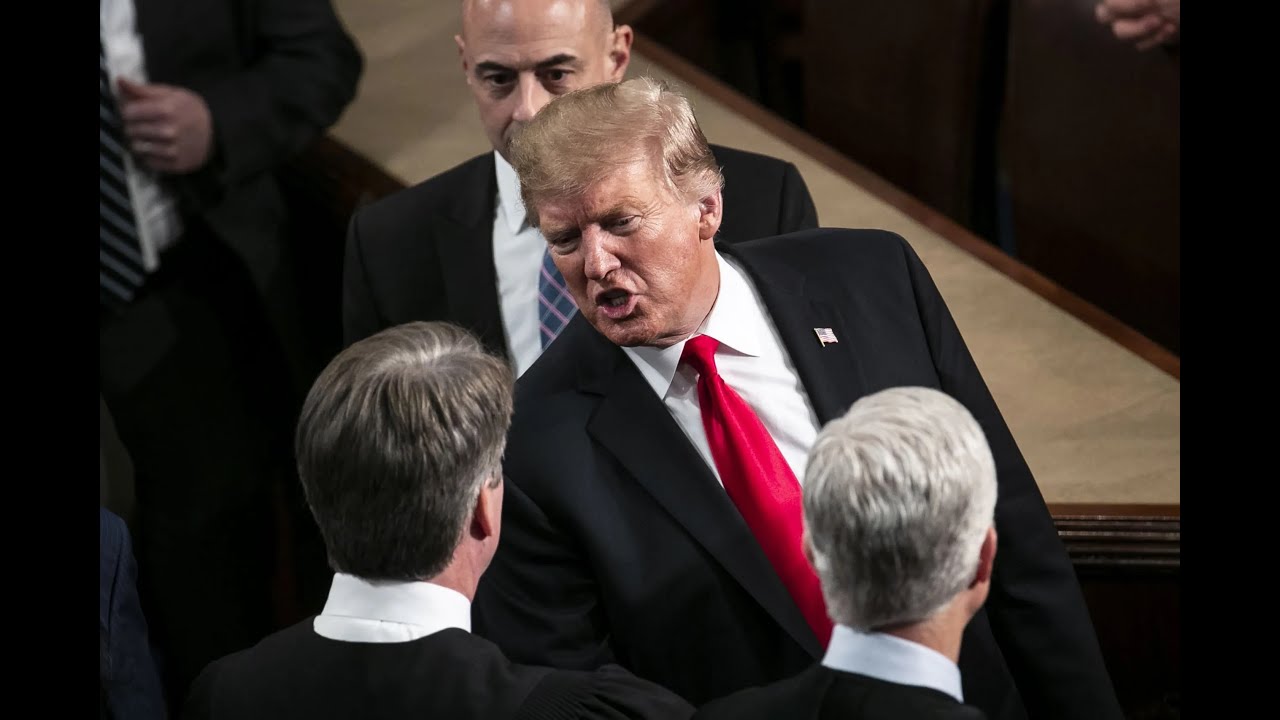
Denzel Washington stood in the center of the Supreme Court chamber, the afternoon light streaming through the high windows, casting dramatic shadows across his composed face. Just moments earlier, Chief Justice John Roberts had pointed directly at the Academy Award-winning actor and declared, "Mr Washington, your blatant contempt for this court's authority leaves me no choice but to hold you in contempt. The marshall will take you into custody until you comply with this court's order.
The assembled crowd gasped collectively. Supreme Court reporters sat frozen, unable to believe what they were witnessing. Never in modern judicial history had a chief justice attempted to jail a respected public figure during proceedings.
The e marshall of the court hesitated, clearly uncomfortable with the unprecedented directive. What happened in the next 5 minutes would shock the entire nation, transform the Supreme Court's relationship with the public, and leave the normally stoic Chief Justice visibly emotional in a way that no legal scholar had ever witnessed. Washington was about to make a move so powerful and unexpected that it would change the course of American judicial history.
Before we reveal exactly what Denzel Washington did that day in the highest court of the land, don't forget to like this video and subscribe to our channel. You won't find this extraordinary story covered in such detail anywhere else in the media. To understand the magnitude of this confrontation, we must first examine who these two powerful figures are and why they found themselves in this extraordinary standoff.
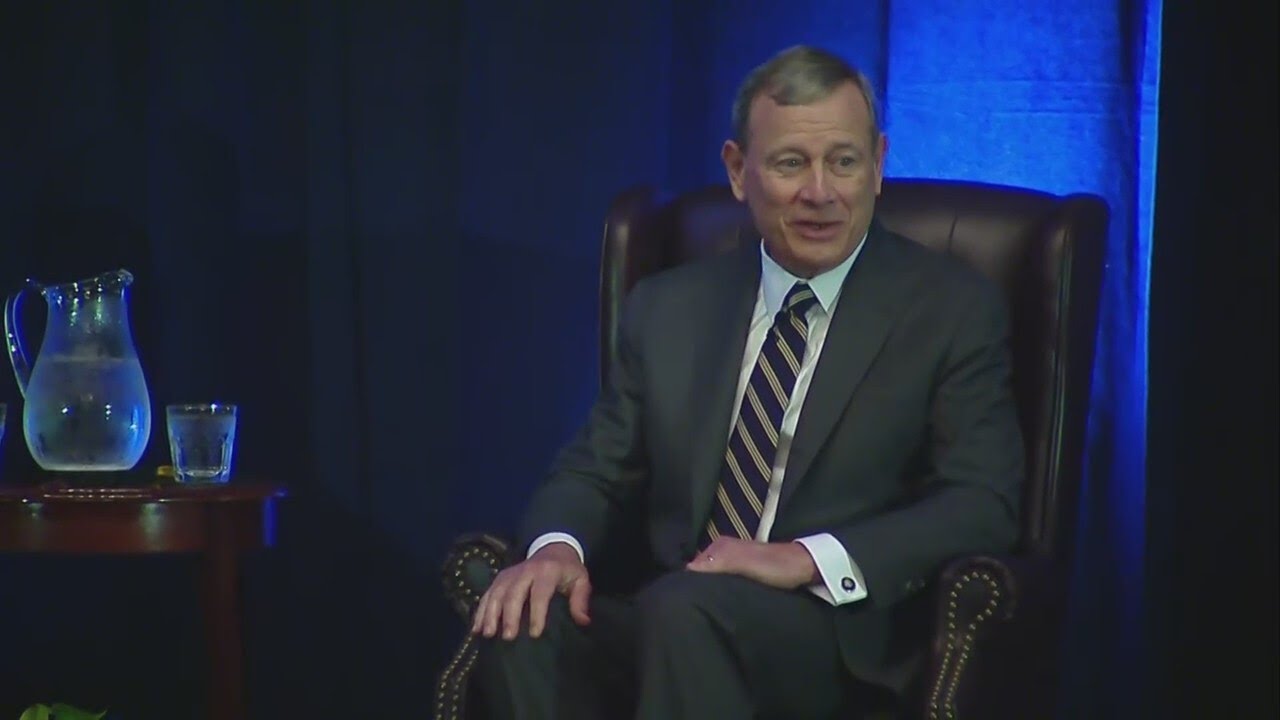
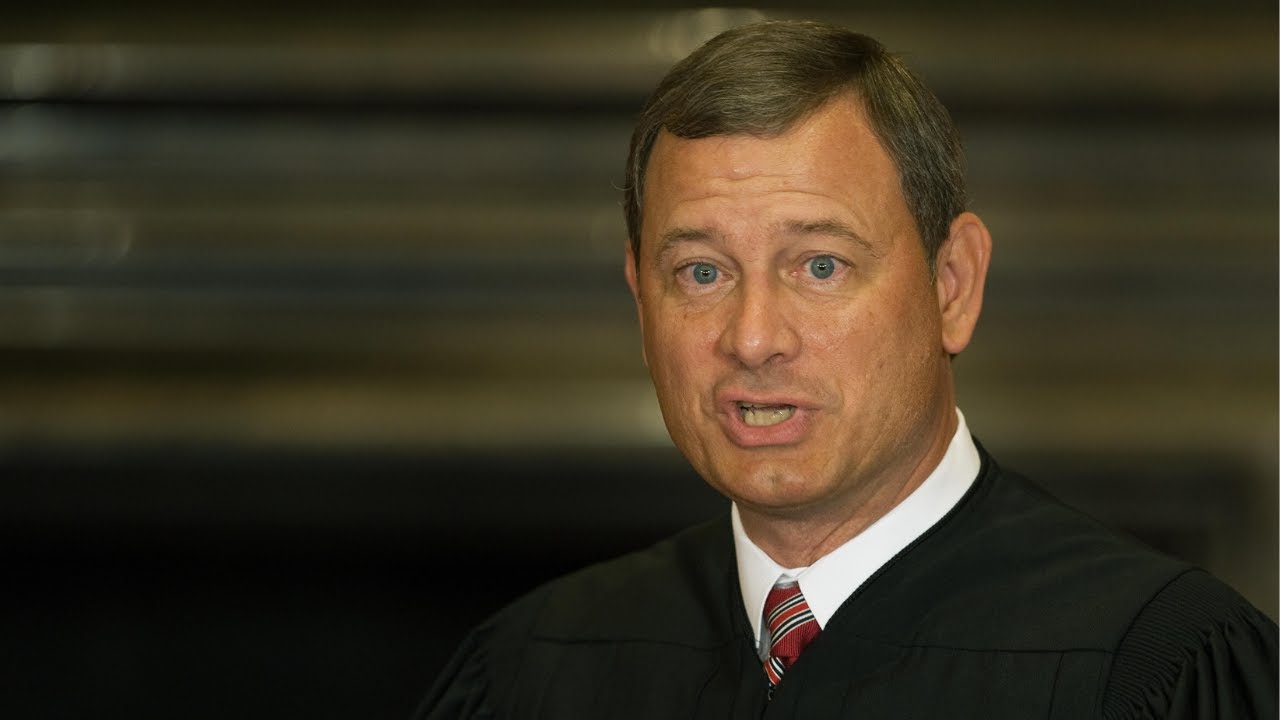
Chief Justice John Roberts has led the Supreme Court since 2005, carefully cultivating an image as an institutionalist committed to preserving the court's credibility and independence. With his Harvard education and impeccable legal credentials, Roberts has guided the court through increasingly divisive cases while attempting to maintain its reputation as being above partisan politics. Known for his sharp intellect and strategic approach to legal questions, Roberts prides himself on maintaining strict decorum in his courtroom.
Court observers have noted his growing concern about the court's public perception, particularly as polls show declining trust in the judiciary. For Roberts, the court's legitimacy remains his paramount concern. Denzel Washington, one of Hollywood's most respected actors, has earned two Academy Awards and built a four decade career portraying characters defined by their moral conviction and unwavering principles.
Less known to the public is Washington's deep personal commitment to justice and community service. The son of a Pentecostal minister, Washington's upbringing instilled in him strong ethical principles and a sense of duty to stand up for what's right. Behind the cameras, he has quietly funded numerous programs supporting education, housing, assistance, and legal aid for disadvantaged communities.
Unlike many celebrities, Washington has avoided partisan political statements, focusing instead on fundamental issues of fairness and opportunity. The two men collided in the Supreme Court. During an extraordinary hearing regarding a controversial case involving housing discrimination, Washington had established a foundation providing legal assistance to families facing eviction in economically distressed communities.
When one such case reached the Supreme Court, Washington's foundation had filed an amicus brief outlining the I realworld impacts of the legal doctrine under review. The court had taken the unusual step of inviting Washington to speak during oral arguments due to his foundation's extensive data collection on housing discrimination across America. This rare privilege for a non- attorney had raised eyebrows in legal circles, but the court occasionally allows subject matter experts to present specialized information.
For Roberts, this case represented a crucial test of the court's approach to interpretations of the Fair Housing Act. For Washington, it represented the culmination of years of work with vulnerable families facing housing insecurity. The stakes extended far beyond the immediate legal question.
At issue was whether powerful institutions would acknowledge the lived experiences of ordinary Americans facing systemic barriers. Roberts, committed to textual analysis and procedural consistency, viewed the case through a lens of judicial precedent. Washington represented a voice demanding that human consequences be considered alongside legal doctrine.
As they faced off in the court chamber, two contrasting visions of American justice hung in the balance, with millions of Americans housing, security potentially affected by the outcome. The tension had been building throughout the morning session. Roberts had appeared increasingly frustrated as Washington presented detailed accounts of families affected by discriminatory housing practices, information that had not been included in the lower court proceedings, but which Washington's foundation had meticulously documented.
Mr Washington, Roberts interrupted, his tone measured but firm. While these anecdotes may be compelling, this court must focus on the legal questions presented. We are not a legislative body designed to address social problems.
Washington nodded respectfully. Your honor, I understand the court's role. However, these are not merely anecdotes, but evidence of how the interpretation of this statute directly impacts citizens constitutional rights to equal protection.
Robert's expression tightened. The constitutional questions were addressed in the briefs. Please confine your remarks to the specific information requested by the court regarding your foundation's data collection methodology.
Several justices shifted uncomfortably. Justice Soto leaned forward slightly, her interest in Washington's perspective evident. Justice Thomas, normally silent during oral arguments, was watching the exchange with unusual attentiveness.
Washington adjusted his approach, turning to the statistical evidence his foundation had gathered. He methodically outlined disperate impact data from 12 major metropolitan areas, demonstrating patterns that the formal court record had not captured. This information should have been presented at trial, Roberts interrupted again, his frustration more evident.
The court cannot consider new evidence at this stage. Chief Justice Roberts, Washington replied evenly, the evidence was presented to the trial court, but it was excluded on procedural grounds. The families affected by that decision lost their homes while waiting for procedural justice.
Roberts's face reened slightly. Mr Washington, you are not an attorney, and you seem to misunderstand fundamental aspects of our judicial process. Evidence excluded at trial remains excluded on appeal that is foundational to our system.
The tension in the chamber intensified. Court observers later described Robert's tone as unusually dismissive. Washington remained composed, standing straight at the lecton.
With respect, Chief Justice, Washington continued. My foundation employs 23 attorneys who have advised me on these proceedings. The procedural exclusion occurred because the families couldn't afford the expert witness fees to authenticate the surveys.
They lost their homes not on the merits of their claims, but because of financial barriers to presenting their evidence. Robert's patience visibly thinned. Mr Washington, this court did not invite you here to critique the judicial process.
Your foundation's involvement does not give you license to challenge established procedures that maintain the integrity of our legal system. The atmosphere grew increasingly tense. Justice Kagan glanced at Justice Barrett, both clearly concerned about the direction of the exchange.
Attorney General Elizabeth Prelligar, seated in the front row, appeared visibly uncomfortable with the confrontation unfolding. Washington reached into his briefcase and removed a document. Chief Justice Roberts, I have here affidavit from 73 families who were evicted while their procedural appeals were pending.
Their stories deserve enough. Robert struck his gavvel sharply. Mr Washington, those documents are not in the record before this court.
I have asked you repeatedly to confine your remarks to the specific information this court requested. Washington remained calm but resolute. Your honor, with respect, justice that ignores the human consequences of legal procedures is not justice at all.
The chamber fell completely silent. Several veteran court reporters would later describe it as the most tense moment they had ever witnessed in the Supreme Court. Robert's face had transformed from frustration to genuine anger.
Mr Washington, you have been invited here as a courtesy, not to lecture this court on justice. You will either comply with the court's directives or conclude your remarks. Washington stood silently for a moment, looking directly at the chief, justice.
Then instead of backing down, he placed the affidavit on the lectern and began reading the name of each family and what had happened to them after eviction. The Williams family, including four children under age 10, currently living in their car, the Rodriguez family, the father suffering from cancer, now separated into different homeless shelters. Robert struck his gavvel three times in rapid succession.
Mr Washington, you are in direct contravention of this court's instructions. This is your final warning. Washington looked up from the document, his expression resolute, but not defiant.
These stories are the substance of justice, your honor. Procedural rules that silence them serve only to Mr Washington, Roberts interrupted, his voice sharp with authority. Your blatant contempt for this court's authority leaves me no choice but to hold you in contempt.
The marshall will take you into custody until you comply with this court's order. The courtroom erupted in whispers. Several justices appeared stunned by Robert's extraordinary action.
The marshall of the court rose hesitantly, clearly uncomfortable with the unprecedented directive to detain a national figure in the ER Supreme Court chamber. As Washington stood calmly at the lectern, the tension in the chamber reached its breaking point. What he did next would stun the nation and transform the relationship between America's judicial institutions and the citizens they serve.
As the marshall approached hesitantly, Denzel Washington reached once more into his briefcase and removed a small worn Bible. With deliberate calmness, he placed it beside the Constitution that always rests on the lectern during Supreme Court proceedings. "Chief Justice Roberts," Washington began, his voice resonant yet measured.
"Before I am taken into custody, I would like to share something with the court. " Roberts, perhaps recognizing the unprecedented nature of the situation, nodded slightly. Washington gently opened the Bible to a marked page.
This Bible belonged to my father, a Pentecostal minister who taught me that justice and compassion must work together. He passed away while I was filming Philadelphia, a movie about a legal system that initially failed a man seeking justice. The chamber remained utterly silent as Washington continued.
Next to his Bible, I've placed our Constitution, another text my father revered. He taught me that both speak to our highest aspirations for justice. Washington then did something extraordinary.
He pulled from his pocket a small tattered photograph and held it up for the court to see. This is Maria Hernandez and her three children. Before becoming an actor, I worked as a youth counselor in her neighborhood.
When I was struggling to find acting work, her family invited me to dinner. Despite having barely enough for themselves, Washington's voice remained steady, but his emotion was evident. Last month, Maria was evicted due to the very housing practices at issue in this case.
The procedural rules this court is upholding meant her evidence of discrimination was never heard. He placed the photograph gently on the lectern between the Bible and Constitution. I am not here as Denzel Washington, the actor.
I am here as a citizen who believes our justice system must see the human beings affected by its decisions. Washington then turned to address all nine justices directly. I have profound respect for this court as an institution.
But institutions exist to serve people, not the reverse. If stating that truth requires me to go to jail, I am prepared to do so. My father would expect nothing less.
The courtroom remained frozen in silence. Several justices appeared visibly moved. Justice Sotoa dabbed discreetly at her eyes.
Washington continued, his voice gaining strength without losing its dignity. The families in these affidavit, their children sleeping in cars, their elderly going without medicine after eviction, they are not asking for special treatment. They are asking only that their evidence be heard.
He turned his gaze directly to Roberts. Chief Justice, I understand and respect your commitment to procedural integrity. But when procedures consistently silence the same voices generation after generation, we must ask ourselves whether those procedures truly serve justice.
Roberts's expression had transformed from anger to something more complex, a look of genuine introspection rarely seen on the typically composed chief justice. My foundation has worked with over 4,000 families facing housing discrimination, Washington continued. 87% never had their evidence fully heard due to procedural barriers.
That pattern should concern us all regardless of our judicial philosophy. Washington then made his most powerful move. He lifted the small Bible again.
My father marked this passage from the book of Micah. What does the Lord require of you? But to do justice, love mercy, and walk humbly.
Those values need not conflict with rigorous legal reasoning. In fact, I believe they enhance it. Washington looked around the chamber, making eye contact with each justice.
I am prepared to accept the consequences of speaking this truth. If that means detention, so be it. But I could not face these families or my father's memory if I had the opportunity to speak in this chamber and failed to truly advocate for justice.
As Washington concluded, the courtroom remained absolutely silent. The marshall stood frozen, clearly uncertain how to proceed with Roberts's contempt order. After what seemed an eternity, Roberts cleared his throat.
When he spoke, his voice had lost its earlier edge of anger. "Mr Washington," he began, then paused, seeming to gather himself. "Your passion for these families is evident, while this court must maintain its procedures.
" He stopped again, uncharacteristically struggling to maintain his composure. To the astonishment of everyone present, a visible sheen of tears appeared in the Chief Justice's eyes. Roberts blinked rapidly, attempting to regain his typical judicial demeanor.
"The court will take a 15-minute recess," he announced abruptly, his voice slightly unsteady. "The contempt order is temporarily stayed. " As the justices rose to exit, several looked at Washington with expressions ranging from respect to profound thoughtfulness.
Justice Thomas, in an unprecedented break from protocol, approached Washington before leaving and briefly placed a hand on his shoulder, nodding once before departing. Court observers would later describe this moment as the most authentic human exchange ever witnessed in the Supreme Court. A moment when the formal barriers between the court and the citizens it serves seemed momentarily to dissolve, revealing the profound moral questions that underlly all legal proceedings.
When the court reconvened 15 minutes later, the atmosphere had fundamentally changed. Chief Justice Roberts, his composure regained, but his demeanor noticeably different, addressed the chamber. Before we proceed," Roberts began, I wish to clarify the court's position.
He paused, choosing his words with evident care. While the court must maintain procedural discipline, Mr Washington's perspective on how these procedures affect real citizens is not without value to our considerations. Legal analysts would later describe this statement as an extraordinary concession from a chief justice known for his unflinching procedural orthodoxy.
The contempt order is vacated, Roberts continued, and the court will permit the submission of Mr Washington's foundation's research as a supplemental appendix with appropriate opportunity for opposing council to respond. This unexpected reversal sent immediate shock waves through the legal community. Within hours, the event dominated news coverage and social media.
Doer justice and mercy began trending nationwide with legal scholars, celebrities, and ordinary citizens debating the proper balance between procedural rigor and substantive justice. The video clip of Washington placing the photo between the Bible and Constitution became one of the most shared moments in Supreme Court history. Despite the court's prohibition on cameras, court artists renderings of the scene appeared on every major news network with one sketch selling at auction the following month for a record-breaking sum.
Inside the Supreme Court building, the impact of Washington's actions continued to reverberate. Court staffers reported that following the session, several justices remained in the conference room for over 3 hours, an unusually long discussion for a single case. Justice Brier was overheard telling a cler that the exchange had prompted the most substantive discussion of procedural justice I've witnessed in my tenure.
The following day, Roberts took the highly unusual step of issuing a statement addressing the incident. The court's commitment to procedural regularity remains unwavering, he wrote. However, we recognize that procedures serve the ultimate goal of justice.
When barriers consistently prevent certain communities from presenting evidence, the court has a responsibility to examine whether those barriers advance or impede our constitutional obligations. Legal scholars immediately recognized this statement as potentially signaling a significant shift in Roberts's judicial philosophy. Harvard law professor Lawrence Tribe wrote that in a single paragraph, the Chief Justice has opened the door to a more substantive examination of access to justice than we've seen from the court in decades.
The impact extended beyond the Supreme Court. Within weeks, the judicial conference of the United States announced the formation of a special committee on procedural barriers to substantive justice, specifically tasked with examining how court rules might be modified to ensure that economically disadvantaged litigants could present relevant evidence. Washington himself remained measured in his public statements.
In his only formal interview about the incident with 60 Minutes, he emphasized that this isn't about me or any individual. It's about ensuring our justice system sees the human beings whose lives are shaped by its decisions. Nevertheless, Washington's actions transformed his public image.
While he had always been respected as an actor of integrity, he now emerged as a moral voice transcending entertainment. Law schools reported a surge in applications from students citing the Washington moment as inspiration, particularly among applicants from underrepresented communities. Within the legal profession, the incident sparked intense debate about the relationship between procedural and substantive justice.
The American Bar Association devoted its annual conference to exploring procedural barriers to constitutional rights with record attendance from judges, attorneys, and law students. Perhaps most significantly, the Washington Roberts confrontation appeared to influence the court's subsequent decisions. When the housing discrimination case eventually concluded with a 6-3 decision, Roberts's majority opinion contained language that surprised legal observers.
While procedural regularity remains essential to judicial legitimacy, procedures that systematically exclude relevant evidence from disadvantaged communities may themselves raise equal protection concerns. This doctrinal evolution, which legal scholars dubbed the Washington principle, represented a subtle but significant shift in the court's approach to procedural barriers. Lower courts began citing this language when evaluating whether to create procedural accommodations for litigants facing extraordinary barriers to presenting evidence.
For Roberts personally, court watchers noted subtle changes in his questioning during oral arguments in subsequent cases involving access to justice issues. While maintaining his commitment to procedural integrity, he began asking more questions about how procedural rules affected different communities ability to present their cases effectively. 6 months after the confrontation at a judicial conference at Georgetown University, Roberts made a remark that many interpreted as reflecting on his exchange with Washington.
The greatest threat to judicial legitimacy is not procedural flexibility, but procedural rigidity that creates the perception or reality that certain voices simply cannot be heard in our courts. Washington's foundation experienced its own transformation, receiving over $50 million in new donations following the Supreme Court appearance. These funds allowed for expanded legal assistance programs in underserved communities nationwide.
More significantly, the foundation established a training program for attorneys representing disadvantaged clients in appellet proceedings with particular emphasis on preserving evidence for higher court review. Law schools across the country incorporated the Washington Roberts Exchange into their curriculum with professors using it to illustrate the tension between procedural regularity and substantive justice. A professor at Yale Law School observed in 5 minutes Washington crystallized a fundamental tension in our legal system that scholars have been writing about for decades.
It's become an essential teaching moment. The confrontation's most profound impact, however, was cultural rather than legal. By humanizing the abstract procedural questions that often dominate legal discourse, Washington had made accessible to millions of Americans the fundamental question of what constitutes true justice in a diverse society.
One year after the confrontation, the Supreme Court announced a new initiative to improve public understanding of its work, including community listening sessions, where justices would hear directly from citizens affected by the court's decisions. While not directly attributed to the Washington incident, many observers saw this unprecedented outreach as a response to the powerful example Washington had set of bringing human stories into the court's chambers. Roberts in his annual year end report on the federal judiciary wrote words that seem to reflect his transformed understanding.
The judiciary's commitment to equal justice under law requires not only that we apply the law even-handedly, but that we ensure all voices can be meaningfully heard within the procedures we establish. Justice that is inaccessible is justice denied. For Denzel Washington, the most meaningful outcome came not from institutional changes, but from individual stories.
Maria Hernandez, the woman whose photograph he had placed on the Supreme Court, Lecton, was able to present her full evidence of housing discrimination in a new hearing. Her family moved into stable housing the following year. Hundreds of similar families found their cases reopened under newly flexible procedural guidelines.
The Washington Roberts confrontation ultimately transcended both legal doctrine and celebrity to touch on fundamental questions about American democracy itself. Whose voices are heard in our institutions? What responsibilities do those institutions have to ensure substantive as well as procedural justice?
How do we balance consistency with accessibility? These questions will continue to shape American juristprudence for generations to come. But one thing became undeniably clear in that electric moment in the Supreme Court.
When human dignity confronts institutional rigidity, even the most powerful judicial figures may find themselves reconsidering the true meaning of justice. As Washington later reflected, "My father always taught me that real change happens when we're brave enough to speak truth with respect, even to the most powerful institutions. " That day in the Supreme Court wasn't about challenging authority.
It was about reminding us all what that authority is meant to serve. If you found this analysis compelling, please like this video and subscribe to our channel for more in-depth coverage of the institutions and individuals shaping American justice. Hit the notification bell to be alerted when we release our upcoming special report.
The evolution of justice. How citizen voices are reshaping America's courts.