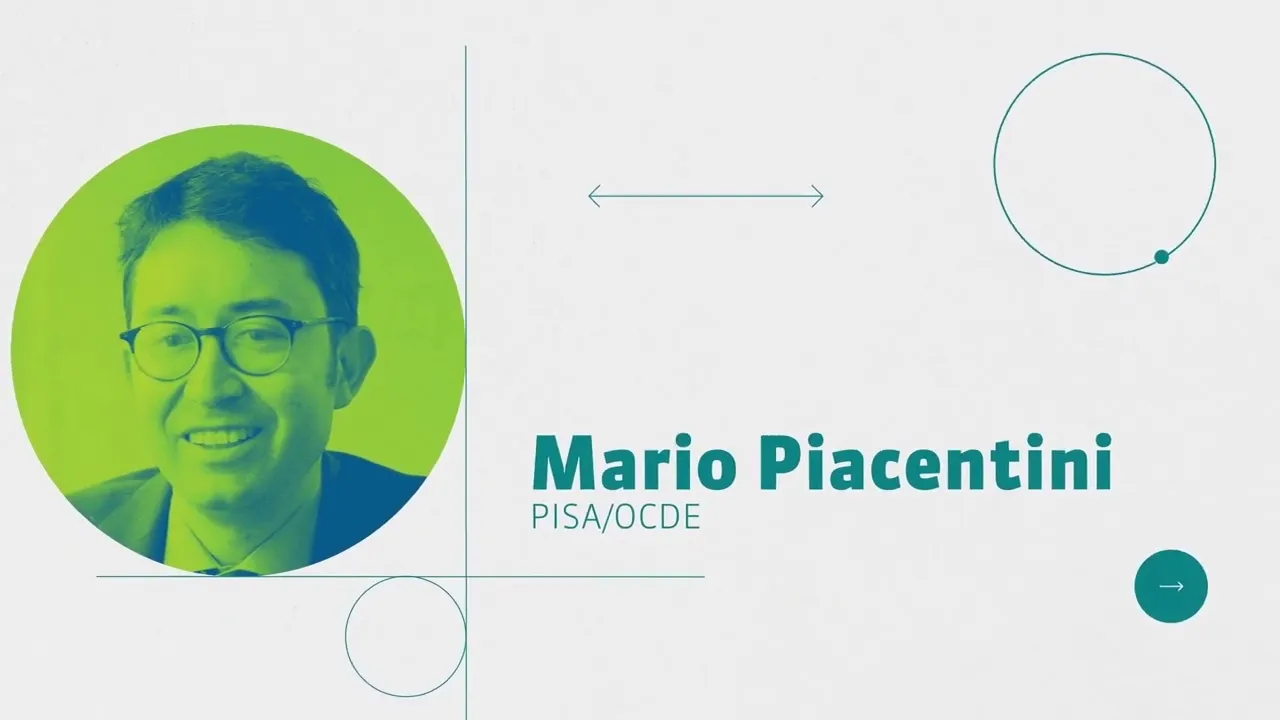
foreign [Music] Tini I've been working over the last 15 years at the oecd the organization for economic cooperation and development in Paris in the in the Pisa program Pisa is the largest International large-scale assessment it has been running since the year 2000 and it's the most influential tool that policy makers around the world have to evaluate the performance of their education system with my team in the Pisa program we developed the Innovative components of Pisa so the purpose of our work is to extend the assessment to other domains and to important 21st century competencies like
critical thinking creative thinking learning to learn it is extremely important because assessments are a major factor driving what gets taught in the classroom essentially we know that in many schools around the world including in Brazil teachers are often judged on the basis of the results of their students on standardized tests so if these tests only measure like busy skills like like reading or the knowledge of some Concepts then um you know all the teachers will inevitably focus on only those discrete discrete piece of knowledge and and knowledge is important it's uh it's important it's fundamental
that every child is not excluded it's not left behind and develops its core capabilities but that is not enough for forming a good citizen so unless we change the content of assessment and we put more focus on this transversal 21st century skills we will not see the change in education that we want to see just knowing where students are just this like snapshot of student competence is not enough to drive changes in education we need a tool uh that is freely available to every teacher in the world to teach and assess these important competencies is
an acronym the word stands for a platform for Innovative Innovative learning assessment and it's a new tool that we have been developing at the oecd together with our partners and Institute of nibanco and the the objective of pillar is to really to complement what we are doing in Pisa so what teachers find in Pila is essentially a repository of good research-based tasks that they can use it in the classroom the students will use this this task this applications in pillar learn important Concepts that are part of the curriculum but also learn other foundational fundamental skills
like how to collaborate and work in a team how to create some beautiful digital artifacts and so these are like very good and research-based learning experiences that are aligned with what we know works better from the learning sciences and what is unique in Pila is that as students learn as they work on the digital platform we capture all the data about what they do and what they don't do and we use this data to provide timely information go to the students and to the teachers on what they should be do to learn better to fill
gaps in knowledge and to to progress so I think it's a unique tool because it Blends it puts together learning and assessment there is no longer this idea that students like work work work work in the classroom and then after sometimes they get tested it all happens together and this is formative because the information that the teacher receives in the Fila dashboard helps them really shape and make decisions on what to teach next in the science of assessment we make one big distinction and this summative assessment and formative assessment summative assessment generally up in a
specific period of the of the year of of a term and their purpose is really to tell the teachers or to tell the policy makers whether the students have reached the level they are supposed to reach so whether they have learned algebra whether they can read fluently these kind of things so it's mostly to drive changes at the level of the big educational system see whether overall learning like education is working formative assessment has a very different purpose as the purpose of accompanying students in the process of learning so it's it's assessment that is done
continuously the more the more you do formative assessment the better and its purpose is really to tell the students to help the students understand what what they are doing what they should be learning next and what are the gaps in their knowledge but mostly to help the teachers to give the teacher an overall view of how their classroom is doing and make decision day by day on how they should be adjusting their teaching the word is changing very fast there are lots of Demands on changing education but then when we when it comes to measuring
uh students outcomes and to judging education system we still use the same Tool uh we use it like 70 years ago why is that because uh because essentially not enough resources and not enough uh creative creativity has been put into the Enterprise of innovating assessment there are big uh you know there are big interests big powers that have really the interest of keeping the system the same because it's much easier you know to to create a multiple choice test than to create like a game-based assessment so um with instruments like the pillar platform at OCD
we are really trying to push the boundaries and trying to imagine assessment of the future that are more valid in terms of determining whether a student is learning or not why are they more valid because they are more engaging the students when they work on the assessment have the feeling that they are doing something meaningful and they are also in some of the assessment we are designing they're also having fun they are pushed to their uh to their limit and um and then we can we can move to like uh the Judgment based on one
singles car this unit is worth 400 the student is worth 500 to a more uh elaborate and Rich profile of the student skills and of all the different capabilities including social emotional skills that are extremely important for life [Music]