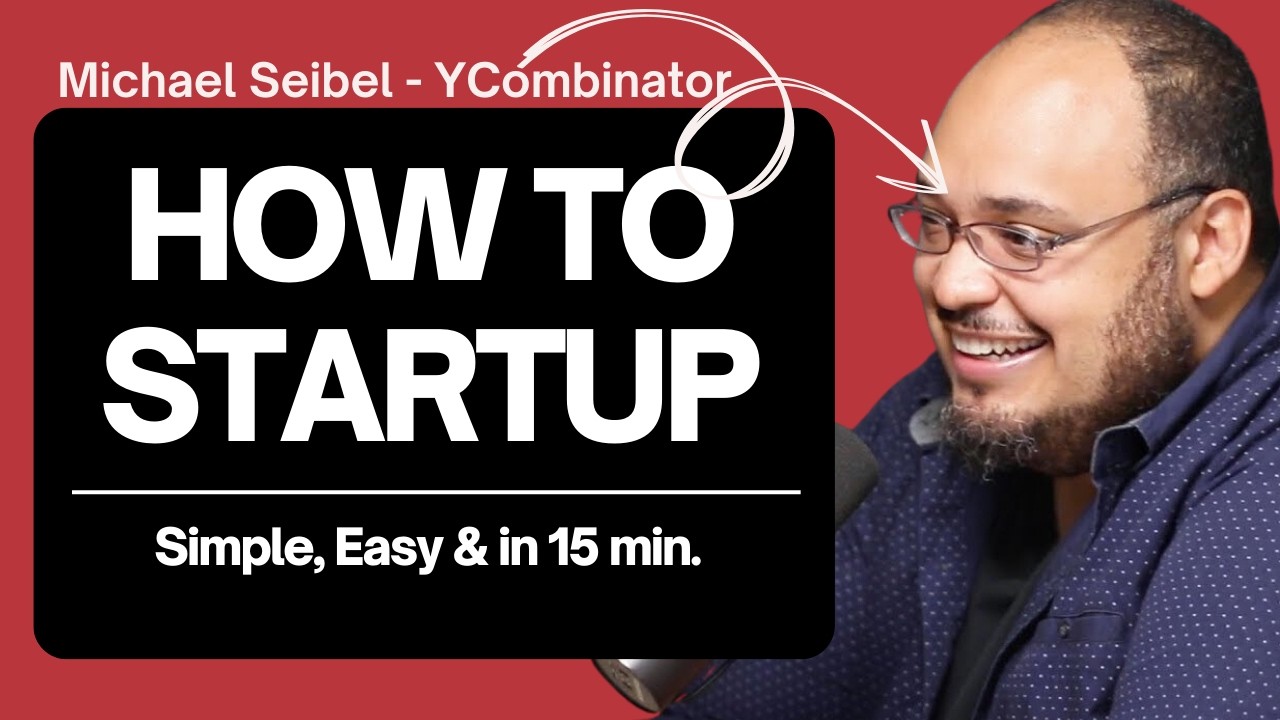
alright Michael Seibel so today we're gonna do something different and talk about a few of the essays you've worked on in the past I think these are maybe the past two years yes so the first one is why should I star startup you start this essay by saying a lot of people ask themselves this question they often mull over one of the one or more of the following facts one the vast majority of startups are not successful - for talented technical people it's relatively easy to get a job and make a large salary and three
large companies offer opportunities to work on very difficult problems that only often occur at scale my answer to why you should start a start-up is simple there's a certain type of person who only works at their peak capacity when there is no predictable path to follow the odds of success are low and they have to talk to and they have to take personal responsibility for failure the opposite of most jobs at a large company yes okay why did you write this essay so I think that um there are two reasons one I talked to a
lot of smart technical people yeah who I think sometimes feel like they should start a startup but they're conflicted because they either don't know if they have a good idea don't have an idea don't have a team and I think they're really trying to figure out like what should with my life you know like what should my real career path be and when I first started giving people advice I think that I really assume that because you could sort of start up you should start a startup mm-hmm you know if you have the money to
afford if you have the time if you have the ability you should be doing it I quickly realized working at YC that's a bad idea and I think what I quickly realized is that there's probably like three sets of people okay there's probably the set of people who the only thing they can really do is work in a radically entrepreneurial job yeah like literally like they will not enjoy their life inside of a big company inside a big rock or see like and I think like back in the day like those are the kind of
people who start small businesses huh and so there's that type of people and like they're relatively few and far between like I wouldn't be surprised if that's only like 1% of the population yeah the second group people are the people who are on the fence mm-hmm they want to be really challenged by work but they can easily apply themselves in either a entrepreneurial world or in a big company world and I think those people are the ones were like they have some choices to make yeah you know yeah I think a lot of people confuse
themselves for this group when in reality and this group is also probably pretty small and then there's a last group pretty small how small like I bet I bet 1% like I bet there's only really well so far yeah I think it's a really small group who can actually be equally capable in either in either role as a founder or as a really effective person inside of a big company huh and I think you do see this like it I think you do see like founders who get acquired who are actually a really functional inside
of big companies and vice versa right exactly go on start companies they do well but few and far between I think the last group is by far the biggest group are the people who are gonna operate best within a large company and like the mindset of this type of person is type of person at least from what I've seen it's like they want a system to optimize like they want an existing system an existing path an existing set of rules they can operate and play play by and like what's interesting is that like almost everything
up to this point in your life kind of has that Yeah right like kindergarten through 12 has this even college has this and they kind of want to continue that someone else defines what's in a and what's in F and then I optimized right and I don't think that there's any like moral judgment to be passed like I think that like if most people didn't feel that way the world wouldn't work so it's like a good thing but there's this mug of people who feel like I want to make the rules yeah I don't want
to follow them yeah and so I think that like when someone's think about whether they start startup they should really be intellectually honest with themselves about which of these groups they're in and anyone who's trying to kind of guilt trip them into one group or another right like it goes both ways like I in the past would go she people to do a fountain to be a founder you have a lot of people parents will guilt trip them into being a big company or being a doctor or Yetta Yetta Yetta I just think like this
is one of these things where you have to actually have some personal you have to go deep and really understand yeah did you ever read the book the e-myth no I haven't have you heard of this book no no no so I read it in college so it's been a while but basically the concept was a lot of people who are you could say craftsmen yes so in our context like a developer yeah I often think that they want to become entrepreneurs so they could do just their craft in just the way they want to
but they don't realize that as soon as they enter the entrepreneurial realm yeah most of their jobs no longer and so I think I think this is a common thing and it's why these indie hackers are so like people love them so much it's interesting point because like artists and craftsmen doesn't equal founder isn't it and even more so what's so sad is that as a founder almost by definition the thing that you're good at is the thing that you stop doing oh yeah and like you have to keep on doing things that you suck
okay with it yeah no it's rare that the founder who's really good at something can like delegate so well that the thing they love is still the thing they do yeah so okay you you get to this at the end what are the questions you know that we've had some time since you wrote this one yeah so what what are the questions that you ask yourself when you have to decide if you're in that do you know 2% of people um I can answer this for myself better the questions that I asked myself was where
am I at my best mm-hmm and where do I feel like I am organically applying effort like I'm 100% self-motivated and like I think anyone who is 20 to 25 has enough life experience to know and certainly anyone who's 30 or 30 plus it definitely is enough life experience to know you know in what types of situations in my I'll just naturally extremely motivated the other kind of question I asked which is an extension of this is like if I think about the moments where I outperform so not only was I released from than one
of it but actually like delivered the best results I did the best where does that happen mmm and like when I think about those moments for myself like they never really happened in the truly structured things like in the k-12 setting I did fine all that stuff of course right I did all the classes and got all the grades but it wasn't when I was like really like kicking into high gear yeah so I think if you're like super honest with like when do you really kick it into high gear that's when like you can
start asking this question of yourself like okay who should I be mmm and what career track should I take I think that like one tricky bit here is you have to be really careful about taking advice from biased people so I eat everyone yeah right like when I was giving founders this advice originally I was so biased I was like well I'm at YC I want you to be a founder like you should be a founder right I was giving you advice I was you know previously giving advice those are self-serving I think that like
a lot of young people are looking for advice givers and are not doing a job of identifying bias and so I see a lot of people who are generally believing the information that they get from either their peers or from companies that they work at and like they don't realize those people are biased a perfect example my brothers at MIT right now the most prestigious jobs are jobs of Facebook and Google and that prestige has actually very little to do with any facts like it actually reminds me of like when I was in high school
and like the crew that I was in the like job everyone wanted to do was be a lawyer and as we were all like government kids they everyone would be a lawyer but then if you ask people like do you actually want to do the work of a lawyer I'd be like no of course not yeah yeah yeah and like I want to like you know change the laws and I want to like debate the Constitution and write all these things like yeah but do you actually want to do the lawyer you're like just driving
model exactly as a model unity right and so I think like similarly when I talk to my brother and I like go to MIT I meet all these people who have this create this imaginary world where when they get to go to Google they're gonna be on the machine learning team and they're going to have high impact from day one and like needless to say Google loves to pitch this story right and like people love to eat it but the reality is when you're on the other side that's often very rarely the case yeah and
so what I would what I would encourage people to do having been an offender myself is to just really look for the bias in the person who's presenting you with options and advice like understand where their biases are and understand that like Google is operating a machine and the Machine has multiple purposes one purpose is to get the smartest people to work on the hardest tasks but the other purpose is to get people who are smart and talented so that they're not working for Google's competitors and then the last purpose is to get people who
are smart and talented so they're not creating companies that will compete with Google yeah and everyone understands the first one and they don't think about two and three No and also when when I find college kids and I'm totally offender of this as well they seek people for advice until the person gives them advice that corroborates with what they want to hear yeah and so you just look around sometimes it feels like you got you got to do some living like you can only listen to advice or so long well and I think the peer
advice thing is actually really tricky it's really hard to go from like I'd argue that like in school especially like K to 12 a lot of peer advice is very helpful like I learned how to apply to a good school from my peers like my parents hadn't done it in years right I learned which classes to take which teachers were good right I like my peers were this like great intelligence source for so long and then it turns out that like with career advice they almost are look horrible and I think it's so hard to
from like a situation where someone goes from a good source of information to a bad source mission so fast but like that's what happens in college like your peers are no longer because like I think what the reality is is that like in many ways there's a simple track and a simple set of rails yeah all the way up through college of court and then college it goes from like one track to a thousand tracks yeah and like your peers don't even know anything about any of the 8,000 tracks so suddenly they're like not the
experts anymore something the kid who's like one year ahead of you really just doesn't actually know anything more than you do no but like your whole old system is still there your old system of like relying on that is still there and it's what's funny is the big companies know this like that's the cool thing oh yeah they are actually relying on you having poor sources information like I everything that a big company does to attract a college kid is 100% orchestrated mm-hmm yeah I mean there's an information gap there yes yeah and that's how
the business works I mean it's fine again like you can go and have fun of these jobs you can go and feel horrible what I regularly for most people that is the job they should take yeah but like man if you're one of those different people don't believe the hype I mean this is kind of harsh and yeah I don't know if it's a hundred inaccurate but my impression is that the world just kind of tends toward wanting you to be average you ask someone for advice they like these are the known outcomes based on
all the inputs you just gave me you should go work at this company and I wouldn't say average I would say like wants to put you in a box there could be a very productive box right it could be like ridiculously productive box but like a well laid out well understood box like an ax plug you in somewhere move on yeah and that doesn't work for some people yeah yeah well more importantly like for some people that's not how you get there best for some people it's almost a guarantee you won't get there best in
that environment and so yeah so what's so weird is like we're not talking about like do you see a good business opportunity or do you see do you have like the like burning problem like those things are important but man if you are not irrationally motivated to do startups and be entrepreneurial like it's going to be frustrating and you're not going to understand the risk reward yeah because like from a pure money-making perspective it's probably better to take the job at Google it's definitely safer definitely safer yeah but from me like will I enjoy my
life perspective like that's the one where like for some people absolutely not right yeah but on the other hand I just say try it out see how you feel like you can do plenty of projects in college again you can see how it works yeah yeah cool you