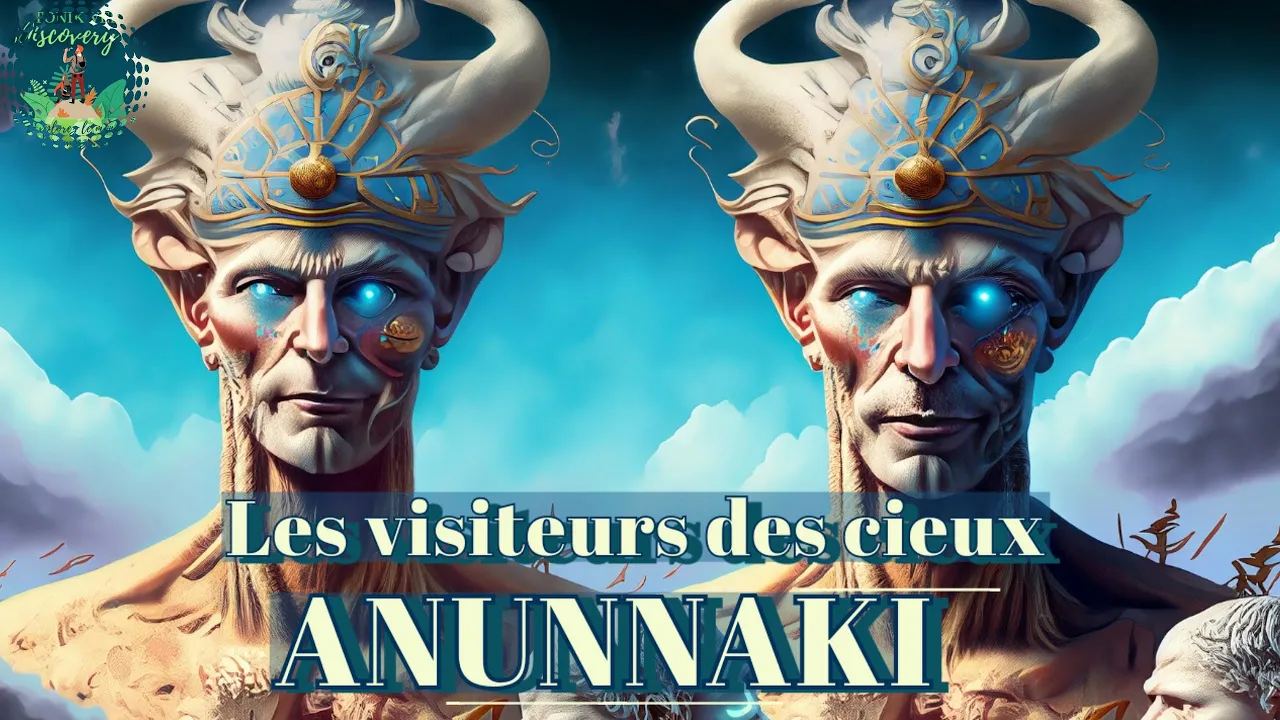
The Cosmic Legend of the Anunnaki In the vast expanses of ancient Mesopotamia, stories were carved in stone, telling of gods from the stars, guiding and ruling over early human civilizations. These gods, known as the Anunnaki, are at the heart of many theories, myths and legends. But who were they really? According to ancient Sumerian texts, the Anunnaki were deities of the Mesopotamian pantheon, originating from the city of Anu, the sky god. They are described as beings of great wisdom, possessed of immense power and having played a key role in the creation and guidance of humanity. According
to ancient Sumerian texts, the Anunnaki were deities of the Mesopotamian pantheon, originating from the city of Anu, the sky god. They are described as beings of great wisdom, possessed of immense power And having played a key role in the creation and guidance of humanity. The Anunnaki are often associated with immense knowledge, mastering astronomy, mathematics, medicine and many other sciences. Some even believe that they would have brought this knowledge to humanity, thus elevating our civilization. But behind these stories lie unanswered questions. Were the Anunnaki simply mythological deities, or is there some truth behind these legends? Were
they aliens from another galaxy, as some modern theories suggest? Through this journey, we will explore the depths of ancient history, navigate between reality and mythology, and attempt to unravel the mystery of the Anunnaki. Prepare for a journey through time , where history meets mystery, where reality is stranger than fiction. Join us, and let's discover together... the visitors of the skies. The Anunnaki in Mesopotamian Mythology In the heart of ancient Mesopotamia, the Anunnaki emerge from the sands of time like celestial enigmas. The name, borrowed from the Akkadian "Anun-naku", and rooted in the Sumerian "A-nun-nak", evokes the
power and mystery surrounding this divine group. These entities were revered for their astonishing powers and pervasive influence. Throughout the ages, the meaning of this term has transformed, just as the sap of a tree changes with the seasons. In ancient records, the Anunnaki were seen as the titans of the Mesopotamian pantheon, majestic figures who ruled the earth and sky. However, as times changed, they became associated with a darker side: the Underworld, the Mesopotamian Underworld, where they presided over the souls of the departed. But that's not where the legend ends. In contemporary echoes of pseudoscience and science
fiction, new light Has been shed on these ancient figures. They are now seen by some as extraterrestrial visitors who came to our planet during the early ages, sharing their advanced knowledge and leaving an indelible mark on our civilization. In ancient Mesopotamia a term, heavy with meaning, and surrounded by mystery stands out : Anunnaki. Dating back to the Sumerian and Paleo-Babylonian periods, these first centuries of the 2nd millennium BC saw these deities shine at the top of the divine hierarchy, under the benevolence of An/Anum, the great celestial god. But what made these Anunnaki so iconic in
Mesopotamian records? To understand it, we must first delve into the stories that celebrated them. The "Myth of Etana", for example, is an ancient tale that recounts a king's quest to find the "herb of birth" to obtain a son to succeed him. He was helped on his journey by a fantastic eagle. In this story, the Anunnaki Are described as supreme deities, deciding the destiny of men. In the Sumerian story of "The Death of Gilgamesh", the eponymous hero, who is also a legendary king, seeks immortality. Before his last breath, he presents offerings to the Anunnaki, hoping to
gain their favor. Gilgamesh is a key character in literature Mesopotamian, embodying the universal themes of friendship, the quest for meaning and the confrontation with mortality. Finally, let's mention the "Code of Hammurabi". This code is not just a simple set of laws; it is one of the earliest known examples of a written legal code, engraved on a stele for all to see and know. In its epilogue, the Anunnaki are invoked as guarantors of this code, ready to curse those who transgress it. Mesopotamian mythology is full of mysterious terms that continue to intrigue researchers and history buffs.
Among these terms are "Anunnaki" and "Igigi", two names often mentioned in Sacred texts. Although the term "Anunnaki" is commonly associated with the major deities of the Mesopotamian pantheon, the word "Igigi" remains shrouded in an aura of mystery. These two terms, despite their similarities, are sometimes used distinctly in ancient texts. Some suggest that the Igigi represent a smaller group of deities of great importance, while others believe that they may simply be a synonym for Anunnaki. To add another layer to this puzzle, it is worth mentioning the Epic of Atrahasis. “Atrahasis” is an epic work that tells
the story of a wise king of the same name. In this story, the gods, overwhelmed by the incessant noise of humans, decide to send a flood to eradicate humanity. However, Atrahasis, warned in time, builds a boat to save his family and various animals. The epic is notable for its narrative richness and theological depth, and it provides a valuable window into the Religious beliefs and practices of the time. In this epic, the terms Anunnaki and Igigi are used, sometimes interchangeably, adding another dimension to their meaning and interpretation. The fascinating pantheon of Mesopotamian mythology is revealed with
the evolution of the terms "Anunnaki" and "Igigi" over time. Going back to the middle of the 2nd millennium BC, the contours of these words begin to transform. If previously they were associated with main deities, they now take on particular nuances: the Anunnaki become the guardians of the dark depths, the deities of the Abyss, while the Igigi rise to reign over the vast firmament of the deities of the Sky . Yet the complexity of Mesopotamian mythology is expressed in its diversity of perspectives. Some ancient texts speak not only of the Anunnaki of the Underworld , but
also of the Anunnaki of Heaven, thus demonstrating the ambiguity and fluidity Of the beliefs of the time. But the influence of the Anunnaki is not limited to Mesopotamia. Anatolian cuneiform texts, emanating from Hurrian-Hittite cultures, also evoke these mythical figures, but with an infernal tint. These writings show a fascinating fusion of myths, as they are mentioned in relation to the Titans, these ancient giants of Greek mythology. Some scholars have postulated a link between these Mesopotamian deities and the Titans, suggesting a possible cultural interaction between these two ancient worlds. Through these interpretations and these evolutions, the Mesopotamian
pantheon reveals itself not only as a rich and complex universe, but also as a a mirror of the cultural connections of the past, where myths and divinities travel and transform through interactions between civilizations. The Babylonian universe, rich in its myths and deities, offers us a fascinating journey through its sacred texts. Among them, the Enuma Elish stands out as one Of the most emblematic. This is the great Babylonian epic creation story, describing the birth of the world and the supremacy of Marduk, the tutelary god of Babylon. According to the Enuma Elish, the cosmos was divided between
the Anunnaki and the Igigi, divine entities of great importance. This ancient text reveals that 600 Anunnaki were divided equally between Heaven and the Abyss, with 300 of them occupying each of these areas. However, another interpretation of the same text indicates the presence of 300 Igigi in Heaven, thus leaving 600 Anunnaki in the Abyss. W. Lambert, a renowned scholar, considers this last passage as an annotation, based on a topographical document from Babylon, called Tintir, which highlights the presence in the city of 600 altars dedicated to the Anunnaki and 300 to the Igigi. Another source, a litany
written in a specific variant of Sumerian used for songs, gives us another vision of this divine distribution. It lists 50 great gods, 7 gods of destiny, 300 Anunnaki of Heaven and 600 Anunnaki of the Underworld. It appears that this division - 300 celestial Igigi and 600 chthonian Anunnaki - was predominant in the Middle Babylonian period. However, beyond this period, Mesopotamian texts detailing the organization of the divine pantheon become rare and sometimes contradictory. This illustrates a major characteristic of Mesopotamian mythology: the absence of a monolithic and unified tradition. The Anunnaki and Contemporary Culture: Between Pseudoscience and
Science Fiction Ancient mythology, with its epic stories and majestic deities, has always captivated the human imagination. But sometimes this fascination takes unexpected forms, incorporating modern and avant-garde interpretations. The Anunnaki, Mesopotamian deities , are a striking example. Today, far from their homeland, the Anunnaki have made their way through popular culture, finding new life in the realms of science fiction and pseudoscience. A particularly intriguing interpretation Is that linked to the ancient astronaut theory. According to this perspective, the Anunnaki are not simply deities, but extraterrestrials who visited Earth in ancient times. Their mission? Transmitting advanced knowledge to emerging
civilizations or even directly influencing the course of human history . Zecharia Sitchin, a prolific author, has become an emblematic figure of this theory. With more than 14 books to his credit, including the famous “The 12th Planet,” Sitchin presented a bold vision of the Anunnaki, placing them at the heart of an epic narrative, mixing ancient myths, archeology and conspiracy theories. Although his ideas are widely contested by experts in history and archaeology, they have nevertheless captivated millions of readers and fueled many passionate discussions. In this mosaic of stories, the line between reality and fiction becomes blurred. The
Anunnaki, simple deities of an ancient pantheon, are transformed into cosmic messengers, Witnesses of a universal history much larger and more complex than one could imagine. In Baku, on July 11, 1920, a child was born destined to shake the very foundations of our understanding of Antiquity: Zecharia Sitchin. The son of a Jewish family, Sitchin would soon venture beyond the borders of Azerbaijan to discover Mandatory Palestine. There, under the Middle Eastern sun, his love for archeology was born and grew. But Sitchin's destiny was not to remain in Palestine. He headed west, studying at the prestigious London School
of Economics and Political Science before earning a degree in economics from the University of London. These academic studies, although far from archaeology, would shape his ability to analyze, interpret and present information in a way that would capture the public imagination. As an editor and journalist in Israel, he refined his pen. But it was in New York, where he settled in 1952, that his Most lasting impact would be felt. In 1976, with the publication of "The Twelfth Planet ," Sitchin raised a theory that captured the imagination of millions. Despite academic skepticism and the eccentricity of his
ideas, his books sold several million copies and were translated into a dozen languages. Today, although Sitchin has passed away, his legacy lives on. Her niece, Janet Sitchin, took the torch, publishing books full of extracts from the “Terran Chronicles” and enriched by letters, articles and unpublished conferences. Sitchin's unique vision of our past, although far removed from traditional views, continues to fascinate and provoke debate. Under the glow of ancient Mesopotamian stars, cuneiform tablets waited to be deciphered, revealing secrets that would overturn understanding of our origins. Zecharia Sitchin, with his bold and highly controversial translations , advanced a
theory that merges the mythical With the scientific. His writings evoke distant deities, the Anunnaki, figures venerated in the ancient Sumerian civilization. But to Sitchin, these deities were more than just clay idols. He envisioned them as beings from another world, interstellar travelers who had landed in Mesopotamia, making this fertile region the first extraterrestrial colony on Earth . The story becomes even more fascinating when Sitchin depicts the genesis of man. According to him, these Anunnaki shaped the human species by mixing their own DNA with that of Homo erectus. For what ? Not out of simple divine whim,
but to create a workforce capable of mining gold, a crucial element in safeguarding the atmosphere of their home planet, Nibiru. Modern science shows us that our genome shares an astonishing similarity with that of chimpanzees. But with tens of thousands of genes defining our being, Even a small percentage variation can result in enormous phenotypic differences. Does this leave us room for the alien genes that Sitchin suggests? The question remains open and subject to debate. Sitchin's influence does not stop with his own writings. Figures like David Icke have taken up some of his ideas, although their interpretations
diverge in some respects, notably on the nature of the Anunnaki. Anton Parks, in his fascinating work “The Secret of the Dark Stars”, embarks on an epic adventure, exploring the origin of the Anunnaki. But unlike Sitchin, Parks describes them as reptilian. These beings, coming from the confines of the universe, were perhaps the true puppeteers of human destinies, guiding us from the shadows of history. Meanwhile, Sitchin, with his inimitable flair, tackles one of the most powerful myths in Christianity: that of Lucifer, the fallen angel. For Sitchin, Lucifer was not simply an angel who had transgressed a divine
prohibition. Rather, It could be a rebellious Anunnaki, perhaps even Enki. This figure would have dared to cross the divine line, not out of pure rebellion, but out of compassion for humanity, refusing to see the human species reduced to the simple condition of slaves. Among these explorers of the unknown, David Icke occupies a unique place. His vision of the past, influenced by neo-Ephemerism and his reading of the New Testament, depicts a story where the extraordinary mixes with archaeological sources. David Icke, born April 29, 1952 in Leicester, is an author of conspiracy books. Icke's thinking takes an
unexpected turn when he approaches the subject of the New Testament. He argues, based on theories put forward by Abelard Reuchlin, that it was not Christ's apostles who wrote this sacred text, but rather Lucius Calpurnius Piso. This assertion, which calls into question centuries of religious teachings, is positioned in a neo-Euhemerist perspective which considers that ancient deities Were in reality historical human beings, mythologized over time. But Icke doesn't stop there. In "Robot's Rebellion," he draws a direct line between Earth's earliest civilizations, such as Sumer and ancient Babylon, and the mysterious Illuminati dynasties. According to him, these secret
societies, often associated with modern conspiracies , find their origins in these ancient cities. But that's not all: Icke merges this idea with the theory of Ancient Astronauts, suggesting that these powerful Illuminati dynasties are actually descendants of extraterrestrials. The personalities who mark our time are often the result of a complex and unique inner journey. David Icke, a controversial and fascinating figure, is a prime example. His journey, from the pain of arthritis to his spiritual awakening, is an odyssey worthy of the greatest stories. From physical pain to an inner quest: The 1980s marked a turning point for
David Icke. Faced with arthritis, he turned to alternative medicine. But what begins as a search for physical relief quickly turns into an exploration of New Age philosophies. These approaches, both holistic and esoteric, open a door to Icke towards a previously unknown dimension: that of spirituality. Political ecology: the bridge between the material world and the spiritual: Icke's growing interest in political ecology is intertwined with this spiritual discovery. He perceives in the environment and nature not only a cause to defend, but also a mirror reflecting the deep interconnections of the universe. According to him: “ Religion has
hijacked spirituality and has largely abused its name…”. The traditional Church, with its rigid dogmas, did not answer his questions. But as he delved into political ecology, he discovered an Authentic spirituality, devoid of dogmas. Archeology and Pseudoscience The Tablets of the Past: The Adventure of Sir Leonard Woolley Mesopotamia, the cradle of the first civilizations, has always been fertile ground for archaeologists searching for vestiges of the past. Among them was Sir Leonard Woolley, a renowned British archaeologist, who played a crucial role in unearthing Sumerian history. In the 1920s and 1930s, Woolley led excavations at Ur, one of
the oldest cities in Mesopotamia, located in what is now Iraq. It was there that he discovered the royal cemetery of Ur, with its incredible tombs filled with treasures, revealing the splendor and wealth of the Sumerian rulers. Among his discoveries, Woolley uncovered cuneiform tablets, the writing system of the ancient Sumerians. These tablets contained a wealth of information, from trade transactions To myths and legends, including stories about the Anunnaki, considered major deities in the Sumerian pantheon. These stories describe the Anunnaki as both celestial and earthly deities, associated with various aspects of life and nature. They play a
central role in Sumerian cosmology, notably in the creation of humanity and the order of the world. With his discoveries at Ur, Woolley not only expanded the world's understanding of the complexity and sophistication of Sumerian civilization, but he also opened the door to numerous speculations and theories about the true origins and meanings of Sumerian myths, including including those of the Anunnaki. Today, thanks to the work of Woolley and many other archaeologists, we can better understand and appreciate the importance of Sumerian civilization in human history and the mysteries it continues To spark. At the heart of the
archaeological discoveries made at Ur by Sir Leonard Woolley, a particular tablet is attracting the attention of experts. This tablet, while similar to others found at Ur, presents a narrative that appears to detail interactions between the Anunnaki and early human civilizations. It evokes a form of pact or alliance and suggests an exchange of knowledge between gods and men. Faced with the potential importance of this discovery, Woolley contacted several renowned experts to help him decipher the tablet. Thus, he called on Samuel Noah Kramer, a recognized specialist in Sumerian texts, to translate and interpret the contents of the
tablet. Thorkild Jacobsen is called upon, in turn, for his expertise on Mesopotamian religion and mythology, in order to contextualize the story of the tablet in the broader framework of Sumerian beliefs. Jean Bottero, with his vast knowledge of Mesopotamian civilization, is also consulted to provide insight into the historical and cultural implications of the discovery. As experts examine the tablet, they realize that while it confirms certain aspects of already known Sumerian stories, it also offers new insights into the relationship between the Anunnaki and humans. The presence of symbols and configurations that seem to evoke astronomical elements also
suggests that the Sumerians may have had a more advanced understanding of astronomy than previously thought. Under Woolley's leadership , this team of eminent specialists is engaging in interdisciplinary collaboration to sort out fact from fiction and to fully understand the significance of this exceptional discovery. Their quest promises to bring important revelations about Sumerian civilization, the Anunnaki and the rich myths and legends of ancient Mesopotamia. When Sir Leonard Woolley unearthed this particular tablet from the depths Of Ur, he immediately knew he had something exceptional on his hands. The cuneiform engravings, finer and more detailed than those on
other tablets he had discovered, depicted interactions between figures clearly identified as Anunnaki and Sumerian human rulers. Oddly enough, entire sections of the tablet were devoted to diagrams that resembled star maps, with meticulous annotations. Some of the constellations were recognizable, but others were foreign, even unknown to modern science. Realizing the importance of this discovery, Woolley quickly contacted Samuel Noah Kramer. Kramer, with his mastery of Sumerian, was intrigued by the linguistic nuances of the tablet, suggesting that the text might come from an earlier period than they thought, or perhaps even from a different region of Mesopotamia .
Thorkild Jacobsen, after examining the tablet, postulated that the story could be an Alternative version or supplement to known Anunnaki myths, possibly lost to time or reserved for an intellectual and spiritual elite. Jean Bottero focused on the cultural and sociological aspect of the tablet. According to him, the presence of these astronomical configurations indicated not only an advanced knowledge of astronomy, but also a desire to integrate this understanding of the cosmos into Sumerian spirituality and religion. Enthusiasm began to build within the team. Each expert brought a unique perspective, gradually revealing a more complete picture of the tablet.
Woolley, coordinating the effort, organized regular brainstorming sessions , where findings were shared and debated. Over the course of the discussions, a theory began to emerge: what if this tablet was in fact a sort of "manual" or guide, used by Sumerian leaders to communicate or even collaborate with the Anunnaki? The implications were both exciting And life-altering. This would mean that the Sumerians not only worshiped these deities, but actively sought to work with them, perhaps for the good of their civilization. The quest for the truth about this unique tablet would require even more research, expertise and, above
all, collaboration. But one thing was certain: it had the potential to rewrite history as we know it. Mysteries That Challenge Us At the crossroads between the distant past and modernity, New Age theories shed new light on the remains of ancient civilizations. Far from being simple tales and myths, these stories can be fragments of an alternative reality. To chart our future path, we must dig into the dust of the past. Take, for example, plants. They align with the mathematical rhythm of the Fibonacci sequence to guide their growth. At each stage, the plant evaluates its past, decides
about his present and plans his future. Similarly, the history of earthly civilizations has its roots in a mysterious past, dating back 500 million years. Imagine the Earth as a celestial jewel, a receptacle for entities from the far reaches of the universe. These cosmic beings mingled with our world, generating new forms of life before disappearing into the cosmos. Each entity evolves through five levels of consciousness, and we, as humanity, are only on the second stage of this ascending journey. The remains of past civilizations are full of mysteries, often misinterpreted or completely neglected. Consider our connection to
the star Sirius, an astral connection barely touched on but crucial to understanding our essence. In the heart of Africa, near Timbuktu, there is a discreet but profoundly erudite tribe: the Dogons. Their traditions and Knowledge, passed down from generation to generation, challenge our modern understanding of history and science. For more than seven centuries, even before the lights of the Renaissance illuminated Europe, the Dogons held cosmic secrets that even the most brilliant minds of the 20th century could not perceive. Their fascination with Sirius, the twinkling star that dominates our nights, goes far beyond a simple admiration for
a brilliant star. For the Dogons, Sirius was not just a star, but a complex system, a celestial ballet of lights dancing in the darkness. To the Western ear, their story might sound like a fantasy tale. A companion star, invisible to the naked eye, orbiting Sirius, composed of the densest substance in the universe. A precise rotation cycle, extending over a period of 15 years. Yet although skeptics dismissed these claims as mere myths, the cosmos still had revelations to offer. It was only with the advent of modern technology, when the Hubble Space Telescope lifted the sails of
the universe, that the truth about Sirius B was revealed. This white dwarf, a stellar relic, confirmed the ancient knowledge of the Dogons. A piece of this star, the size of 2.5 cm square, would have an astronomical mass of 900 kg, eclipsing anything we know on Earth. But the question remains: how could an isolated tribe in Africa possess such knowledge? The answer, according to the ancient Dogons, is as fantastic as their knowledge itself. They speak of an encounter, not with humans, but with beings from another world. These visitors, emerging from a flying saucer, were like dolphins,
creatures of two worlds. They shared stories of Sirius with the Dogons, leaving an indelible mark on the tribe. And imagine that in the heart of West Africa, in the arid regions of Mali, the Dogons are the keepers of secrets beyond imagination. Their Cosmic knowledge, precise and detailed, is a mystery that still astonishes 21st century researchers . If the discovery of Sirius B by the Dogons was already an exploit, it was only the tip of the iceberg. Indeed, their ability to describe the celestial dance between Sirius A and Sirius B, with surgical precision for the period
from 1912 to 1990, is a testament to their deep knowledge. How could a culture without the technological tools of modern astronomy map these stars with such precision, even anticipating their future positions? But the mysteries don't stop there. Far from being limited to Sirius, the Dogons had in-depth knowledge of the solar system. They knew the planets, their characteristics, and even their moons. Once again, we wonder how an isolated tribe, without telescopes, without computers, was able to collect such information. The answer, although speculative, takes us back to their accounts of visitors from Sirius. Perhaps these entities had
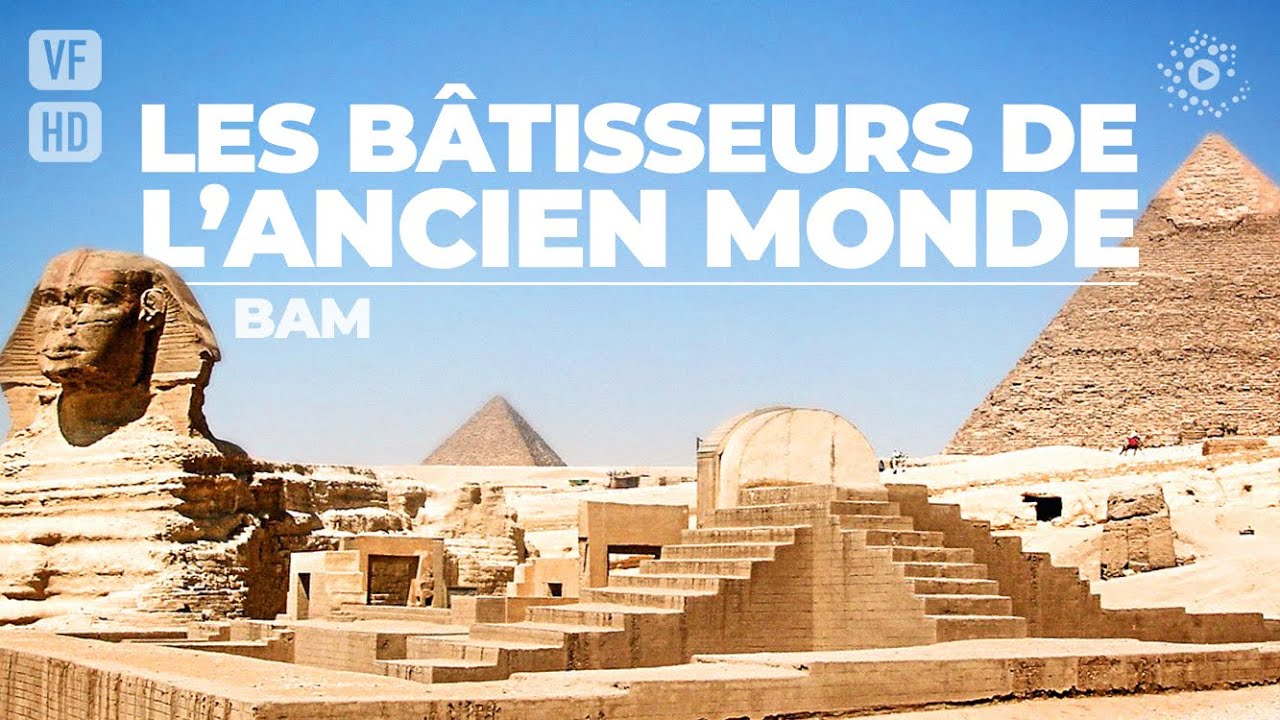
shared with the Dogons not only stories of their own star, but also a map of our corner of the galaxy. Ancestral stories describe encounters where these beings taught the Dogons, using symbols, drawings and rituals to transmit their knowledge. What is certain is that the knowledge of the Dogons is a unique blend of science and spirituality. It reminds us that the universe is vast, mysterious, and that the quest for knowledge is a never-ending adventure. Then, the Sphinx of Giza, this majestic half-lion, half-man statue, is an enigma that has fascinated and challenged for centuries. Yet every grain
of sand in the Egyptian desert seems to whisper a different story, challenging what we thought we knew about our past. Classical Egyptologists place the construction of the Sphinx around 2500 BC, during the reign of Pharaoh Khafre. However, dissenting voices are raised, suggesting a much older origin. One of them Is that of RA Schwaller de Lubicz, who, observing the erosion of the monument, concluded that it was caused by water and not by sand. This idea, although controversial, has been supported by Egyptologist John Anthony West, who also believes that the Sphinx bears the marks of water erosion.
The significance of this erosion is revolutionary. If West and Schwaller de Lubicz are correct, the Sphinx could date from a period when Egypt was not a barren desert, but a verdant region, subject to torrential rains. This would date the Sphinx back to a time when, according to conventional theories, humans had neither the skills nor the tools to make such constructions. So who are these mysterious builders? The references to Thoth and Akashic memory bring a new dimension to this enigma. According to certain esoteric traditions, the Sphinx could be not only a guardian of the secrets of
Egypt, but also a portal to the deep memories of the Earth. The mention of 5.5 million years Suggests a history of our planet much richer and more complex than we could imagine. The hot desert zephyr blows gently through the ancient cities of Sumer, where clay tablets reveal the secrets of a civilization that seems to have arisen from nowhere. The Sumerians, these first city dwellers of the fertile crescent, are shrouded in mystery. It is fascinating to think that cuneiform writing , one of the oldest known forms of writing, appears to have emerged in an already mature
form in Mesopotamia, much like hieroglyphs in Egypt. But what's even more surprising is the contents of some of these tablets. Depictions of the solar system, with planets aligned in the order we know today, challenge our modern conceptions. How could the Sumerians, more than 5000 years ago, have known this? Even more mysterious, a tablet seems to give the distances between these planets, information which, according to our Current knowledge, should have been out of reach for them. But that's not all. The precession of the equinoxes, this slow and regular movement of the Earth's rotation, requires millennia of
observations to be detected. The Sumerians seem not only to have known about it, but also to have transmitted information about it. This discovery suggests astronomical knowledge that dates back well before the Sumerian civilization itself. The enigma of the Sumerians invites us to rethink our understanding of ancient history. Were they the heirs of an older wisdom, lost in the sands of time? Or were they in contact with entities or civilizations who transmitted this knowledge to them? The mystery persists, and these questions remind us of the importance of keeping an open mind and always searching, because history
still has many secrets to reveal. Legacy of the Stars: The Epic of the Nephilim Let's dive into the mystical crucible of a distant era, 400,000 years ago. This period of our history is tinged with mystery, reinforced by writings and stories that come from two distinct but intriguing sources: Thoth, the mystical scholar and Zecharia Sitchin, the prolific author of the acclaimed works “The XII Planet ” and “Genesis Revisited.” Imagine a planet, unknown to most but engraved in ancient Sumerian writings, called Nibiru. Unlike the circular orbits to which we are accustomed, that of Nibiru is elliptical, evoking
the perilous journeys of comets, and completing its celestial ballet around the Sun every 3,600 years. But what is hidden behind these interstellar journeys? The Nephilim, beings from this distant planet, appeared on Earth in this prehistoric period. If Thot keeps their arrival a mystery, Sitchin, for his part, has a fascinating theory: these interstellar travelers were in search of gold. Yes, gold, this Precious metal that we cherish today, was of vital importance to them. On Nibiru, the home planet of the Nephilim, an unprecedented ecological crisis was unleashed. Its atmosphere was deteriorating, threatening every breath of life. The
solution ? An atmospheric shield made of gold particles. And it is here, on our blue planet, that they found the precious metal. However, after two hundred thousand years of laborious and exhausting extraction , a revolt broke out among them. To compensate for this uprising and continue exploitation, they made a decision that would change the course of our history : create a race, us humans, to serve and extract gold in their place. Thus, we, the prodigious human species, were perhaps born from a need, from a necessity for survival of a civilization from beyond space. But the
question remains: who are we really in the great theater of the universe? By diving into the depths of South Africa, where the earth contains priceless treasures, archaeologists have discovered Traces of an ancient civilization. The gold mines, more than 50,000 years old, revealed an even older story: that of the Nephilim, these majestic beings that Sitchin believed to be our creators. But if Thoth's teachings are any guide, the truth is even more fascinating. Far from being the only architects of our existence, the Nephilim have joined forces with the Sirians, beings from beyond the stars, guardians of cosmic
consciousness. Emerging from the depths of the ocean, these half-man, half-fish entities first sought the wisdom of dolphins, establishing a bridge between their worlds. The mysteries deepen when we learn that seven Sirians, in a final act of transcendence, have merged their consciousness to create a flame of unimaginable power, housed at the heart of the "Halls of Amenti". A monument that defies time, whose origin is lost in a cataclysmic event 5.5 million years old. These two races were involved in our creation – one from Nibiru and the other from Sirius. According to Sitchin's interpretations of Sumerian texts
referring to the twelfth planet, after the Nephilim created us to work in the gold mines of Africa, some of us were brought to Mesopotamia to be useful in the garden of Eden. The “gods ” loved us because we were created in their image. However, in the Garden of Eden, the Nephilim had their own orchards and we were told not to eat the fruit of a certain tree called the Tree of Knowledge. We didn't listen. By eating this fruit and gaining "knowledge", it was something representative of our ability to reproduce sexually. Until now, we were hybrids
between different species and, like all hybrids, we were incapable of reproducing. Sitchin interprets the Sumerian texts as saying that we are a cross between the Nephilim and Homo Erectus, the predecessor of Homo Sapiens. Thanks to Thoth, we received additional information about the role of beings on Sirius. It's no surprise that the Nephilim didn't want us to breed. They wanted to maintain control of their experience. The knowledge we have acquired by eating the fruit were not scientific, but knowledge how to procreate, how to transform ourselves from a species of sterile hybrids into a new species capable
of reproducing. The Nephilim were furious when we gained the ability to reproduce and kicked us out of the garden. According to scholars of ancient texts, Sumerian documents precede biblical documents, and the biblical creation story appears to represent a summary of ancient Sumerian texts. Even though we had to leave their garden, the Nephilim allowed us to grow crops to feed ourselves. We then headed to the mountainous area east of the Gardens of Mesopotamia. According to Thot, we stayed there for a long time. But then there Was a new transformation of consciousness and another pole shift which
led to the continent sinking. Many survivors headed to Africa, but most of the more evolved ended up in Lemuria, a land that rose above the water when the old continent was submerged. Lemuria Lemuria is a hypothetical continent which would have existed in the western Indian Ocean, according to certain esoteric and mythological theories. It is often associated with the legend of Mu, another lost continent. Before the time of Atlantis, long before the recording of history as we know it, Lemuria dominated the collective consciousness. This mystical continent, steeped in myth and mystery, continues to intrigue and fascinate.
Legends say that the Lemurians were a spiritually advanced race, blessed with technology far beyond our current understanding. Lemurian consciousness Was primarily intuitive and feminine, an echo of feminine cosmic energies. Their technology, as described by the ancients, was so advanced that it resembled magic. Imagine wands that only activate when mind and heart are in perfect harmony, reflecting a perfect symbiosis between man and machine . At the heart of this ancient civilization were Ay and Tyia. They were not only iconic figures of Lemuria, but also pioneers of a concept that went beyond mortality: ascension. Through the Naacal
Mystery School, they guided souls to physical immortality, a journey that did not require death to transcend the worlds. Despite their advancement, the Lemurians knew that the end of their continent was near. With their keen intuition, they prepared for this inevitability. When the time came, they scattered, finding refuge in remote places like Lake Titicaca and Mount Shasta. These regions are still considered today as energy portals, witnesses to the Lemurian energies that reside there. According to some legends, after Lemuria was submerged, tectonic upheavals caused the emergence of Atlantis. These changes also disrupted the balance of telluric energies,
attracting the attention of spiritual beings, including the immortal masters of Lemuria. When Lemuria disappeared, the 1,000 immortal masters of this school, repositories of ancient knowledge and mystical powers, sought a new place to continue their mission. Their journey took them to the island of Undal in Atlantis. Arriving on the island of Undal, these masters undertook an ambitious project. They erected a colossal wall crossing the island from north to south, dividing it into two distinct areas. This wall symbolized the human spirit, divided into two hemispheres. A second, smaller wall was then built From east to west, further
dividing the island, and representing the four quadrants of the human spirit. Once the structure of the island was established, the masters projected the ten models of the Tree of Life onto the main island. These energetic vortices acted like magnets, attracting souls to Atlantis. Sensitive to cosmic and telluric energies, the Lemurians felt the call of these vortices. Driven by this intangible force, they were drawn to Atlantis, seeing in it an opportunity for rebirth after the loss of their homeland. Guided by these energies, they colonized various regions of Atlantis, particularly the island of Undal. Thus, the Lemurians
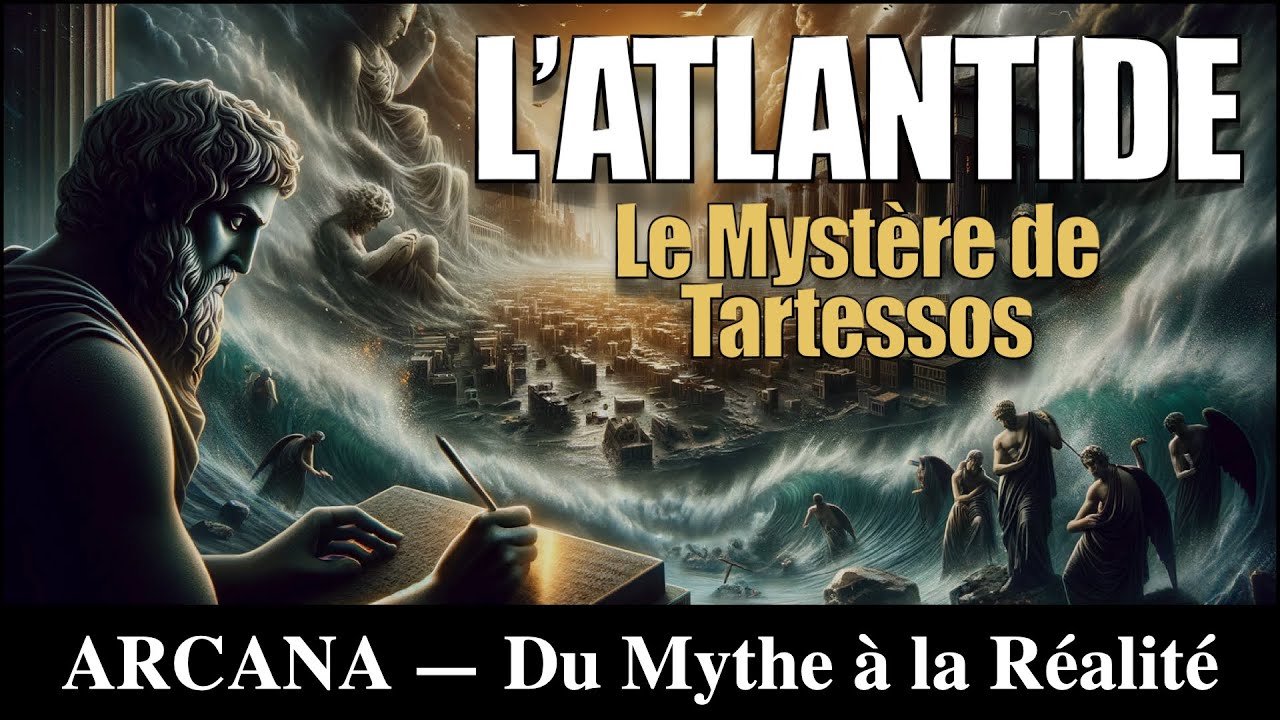
came to populate this island, not only because of the geological upheavals which engulfed their original homeland, but also because of the powerful energies put in place by the immortal masters. The combination of these mystical forces and the need to find a new home led to this great migration To Atlantis. Awakening of the Anunnaki The emerald light of Atlantis reflected off the sparkling waters surrounding the island of Undal. The Lemurians, with their slender appearance and piercing eyes, had adapted to this new home, bringing with them ancestral wisdom and harmony with nature. But what they didn't know
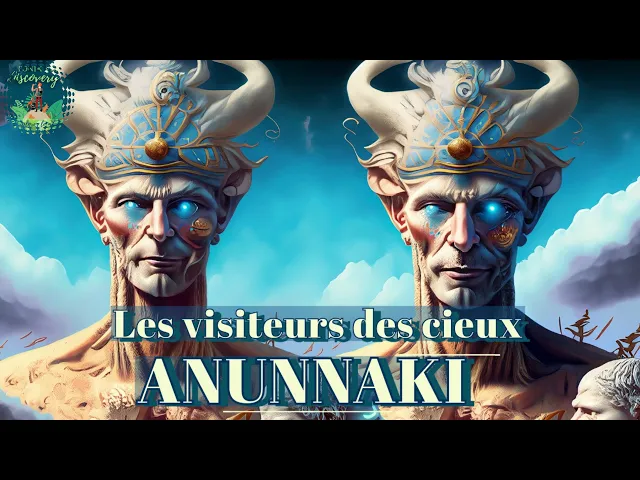
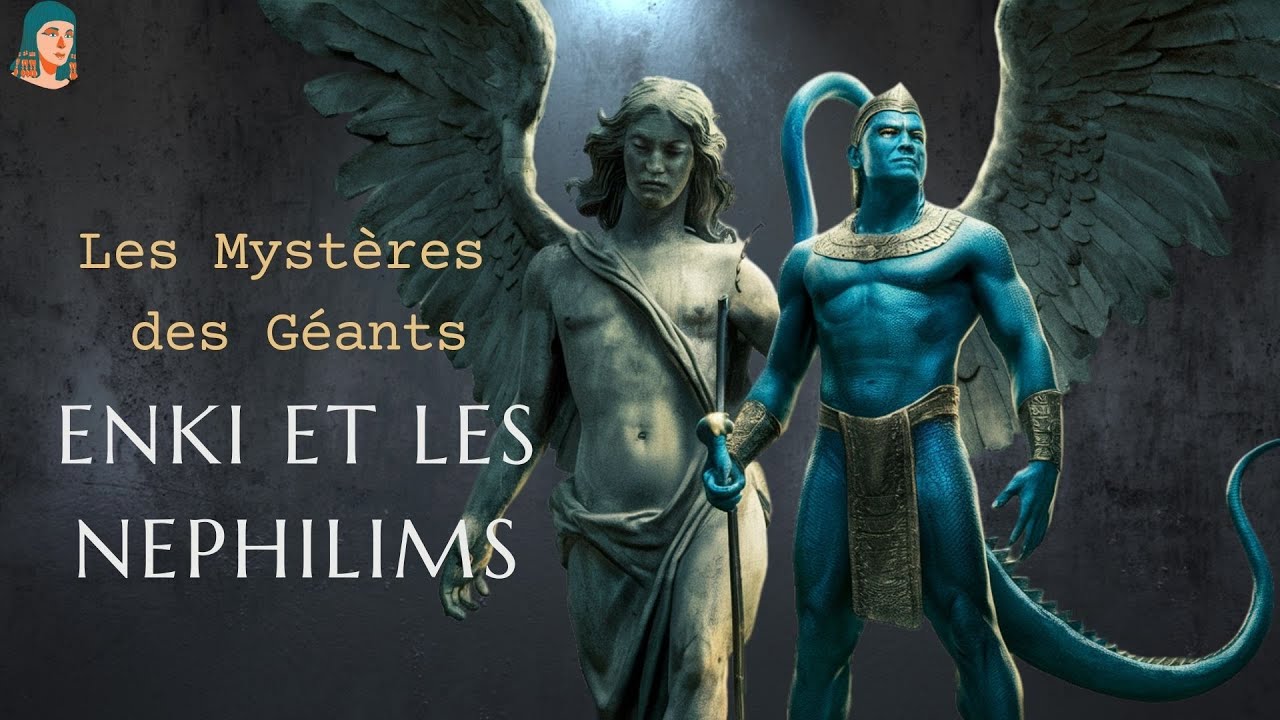
was that each pulse of energy they emitted was like a beacon, sending signals through the ether. Light years away, in a distant corner of the galaxy, lies Nibiru, the “Planet of the Gods .” A world of crimson skies and cities of gold, this was the domain of the Anunnaki. These beings, larger than ordinary humans, with bluish skin and eyes shining like stars, were masters of creation. Nibiru's vast libraries were filled with ancient texts, detailing alchemical formulas and the Secrets of genetics. When the echoes of Atlantis reached the Anunnaki, they were captivated. Enki, one of the
Anunnaki's most prominent leaders and a master alchemist, was the first to detect these signals. Intrigued, he gathered a group of Nibiru's greatest minds to discuss this discovery. “Brothers and sisters,” Enki began, his deep voice echoing throughout the great hall, “we have detected a powerful energy source from a distant planet. Its energy resembles that of the vortices we use to stabilize our atmosphere. This could be the solution to our current problems.” Murmurs ran through the room. Nibiru, although powerful, was plagued by atmospheric instabilities. The ability to access a new energy source was tempting. Anu, the king
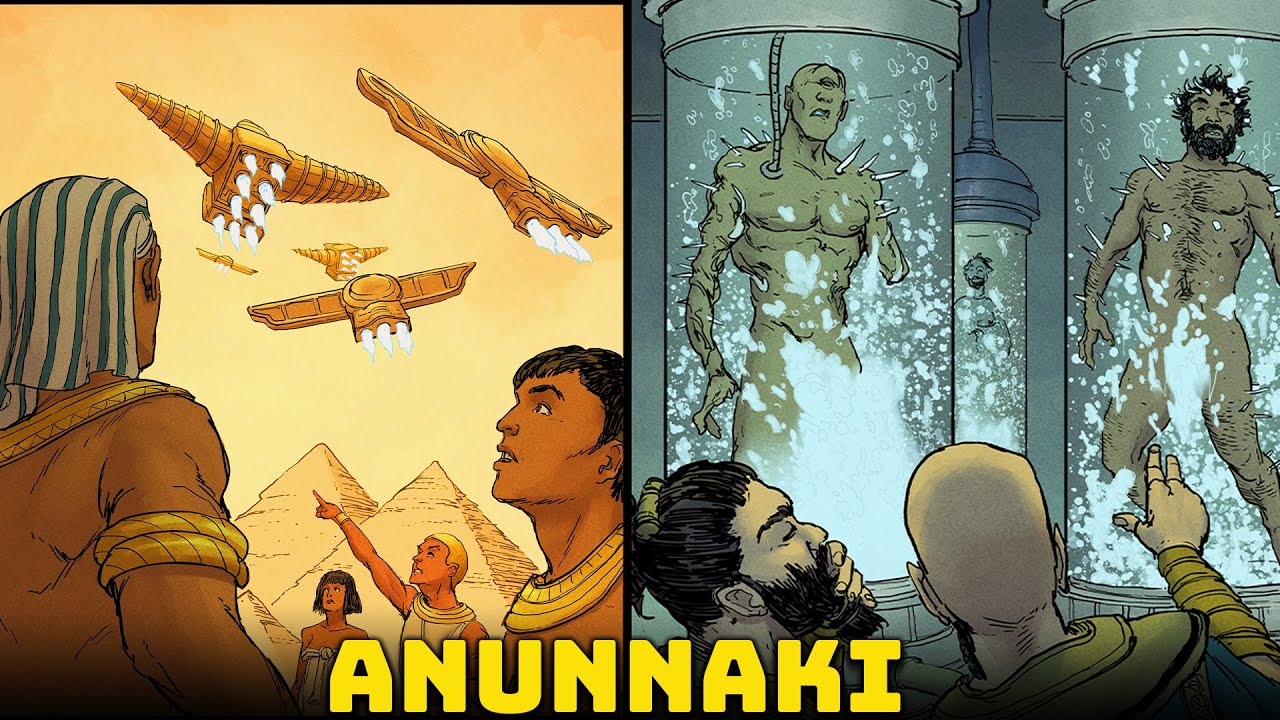
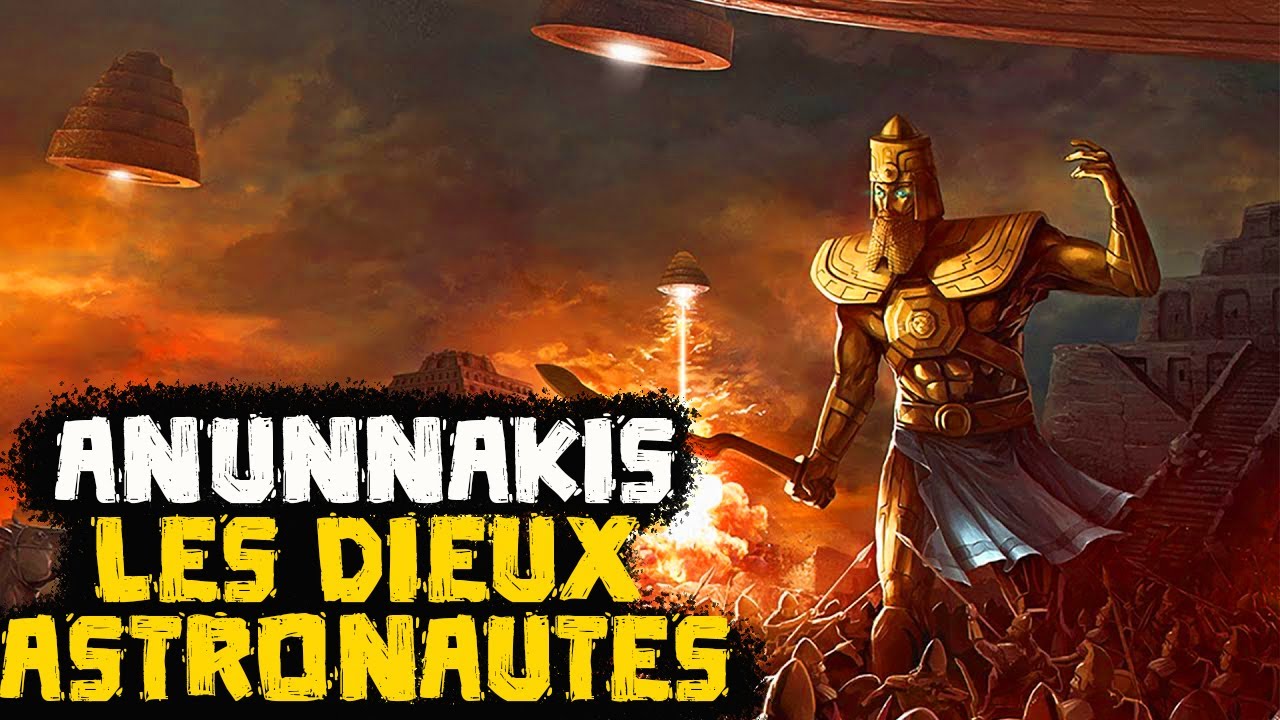
of the Anunnaki, raised his hand for silence. “Enki, are you proposing an expedition to this energy source? » Enki hesitated for a moment, then replied: “Yes, I propose it. But I suggest we approach with caution. We don’t know what forces reside there.” Thus, an expedition led by Enki himself was formed. The Anunnaki's golden ships, resembling brilliant shooting stars, took flight, crossing the interstellar abyss towards Atlantis. The arrival of the Anunnaki would mark a turning point in the history of the island of Undal and its Lemurian inhabitants. The days of harmony may have been numbered, but
a new era of learning and discovery was about to begin. Millennia ago, Earth had already felt the presence of the Anunnaki. They had come, driven by their insatiable thirst for gold, a mineral which, for reasons unknown to man, was of vital importance to the people of Nibiru. Legends spoke of these blue giants who once helped ancient civilizations build architectural marvels, leaving behind traces of their Existence in the form of cuneiform tablets and monolithic structures. But while their previous visit had been motivated by the need to gather resources, this time it was different. The island of
Undal, with its energy swirls and lemur masters, represented a riddle they felt compelled to solve. Vortices, according to Anunnaki sacred texts, were portals to unknown dimensions, containing energies capable of repairing and revitalizing dying atmospheres like that of Nibiru. When the Anunnaki ships entered in Earth's atmosphere, the Lemurians sensed their arrival long before they could see the bright lights in the sky. These masters of meditation and energy were in tune with the vibrational frequencies of the Earth, and they knew that a meeting of destinies was imminent. Enki, aboard the main ship, used ancient instruments to locate
the Energy centers of Atlantis. It was with wonder that he observed the crystalline pyramids of Undal, capturing and redistributing Earth's life energy. The first meeting between the Lemurians and the Anunnaki was marked by mutual respect. The Lemurians, with their deep wisdom, recognized the Anunnaki's desire to save their planet. In exchange for access to the wormholes, the Lemurians asked for one thing : that Earth be preserved and respected. Pacts were made, knowledge was exchanged, and for a time, Atlantis became a crossroads of cosmic civilizations, where the secrets of the universe were revealed and shared. But like
all stories, this one too had to experience trials. Would the union of these two civilizations be the salvation or the fall of Atlantis? Only time would tell. A Heavenly Alliance The heavens opened over Atlantis in a way its inhabitants had never Seen before. Ethereal shadows outlined singular shapes, those of the Anunnaki ships, hovering majestically above the sparkling waters. Unlike the brutal conquests described in legends, they descended with measured grace, a symbol of peace. The island of Undal was the scene of a historic encounter. The Lemurians, guardians of the vortices, stood facing these blue giants, whose
imposing stature contrasted with the serenity of their eyes. Enki, leader of the Anunnaki, stepped forward, extending a hand adorned with symbols engraved in honor of the constellations. “We come in peace and in search of knowledge,” he said in a soft voice, resounding like a melody in the cool air of Atlantis. The Anunnaki, as a sign of good faith, presented their offerings. First, they revealed celestial maps, detailing constellations unknown to the Atlanteans, providing a profound understanding of the cycles of the universe. Then, they unveiled advanced architectural plans, showing how to channel the energy Of stars to
build structures in harmony with Earth and the cosmos. But it was their knowledge of genetics that most fascinated Atlantis. The Anunnaki possessed the power to guide evolution, cure disease, and even prolong life. In exchange for these wonders, the Lemurians agreed to grant the Anunnaki access to the energy vortices of Undal, under one condition: that these energies be used in respect and harmony, and not for domination or destruction. The alliance was sealed with a grandiose ceremony at the foot of Undal's largest pyramid . Melodious songs rose up, carrying hopes of cooperation and friendship across the skies.
Atlantis and Nibiru, although separated by cosmic distances, were now linked by a common destiny. But with such power in their hands, would the balance be maintained, or would human greed turn this gift into a curse? So, on the edge of the island of Undal, where The sea kissed the golden sand, stood an enigmatic structure. Its architecture, half-terrestrial, half-celestial, testified to the fusion of Atlantean and Anunnakian knowledge. It was the sanctuary of experiments, where master geneticists from both civilizations collaborated. In the depths of this laboratory, Nibiru scientists manipulated DNA samples, helical sequences shimmering under the astral
lights. The project was ambitious: to create a genetic bridge between the cosmic beings of the Anunnaki and the terrestrial purity of the Lemurians. Enki, at the head of these experiments, supervised each step with obsessive thoroughness. Crystalline vats contained forming embryos, entities that embodied the potential for a new order of existence. The first attempts were disappointing. The life forms that emerged were unstable, their essence vacillating between the terrestrial and the cosmic. But with time, perseverance, and the expertise of the Lemurians In matters of energies, a harmony was found. Finally, after many solar cycles, the miracle took
place. Beings, with eyes sparkling with a thousand lights, were born. Their skin, an amber hue, emanated a soft glow. They possessed exceptional longevity, with unprecedented energy capacities . These beings could communicate without speaking, sense the vibrations of the universe, and manipulate energies on a quantum level. They were called the "Elementals", because they embodied the five fundamental elements: Earth, Water, Fire, Air and Ether. Each of them was specialized in the mastery of an element, making them natural guardians of planetary balance. But with this power came challenges. Atlantis was divided: some celebrated these beings as the blessed
children of the cosmos, others feared them for their destructive potential. The Elementals, although gifted with incredible abilities, carried within them the duality of their ancestors: the ambition Of the Anunnaki and the deep sensitivity of the Lemurians. As the decades passed, the Elementals began to travel outside of Atlantis, seeking wisdom in the distant cultures of Earth. From ancient Egypt to the Indus Valley, they shared their knowledge and learned from others. Those who encountered them spoke of them as “Gods walking among men ,” because their presence brought peace and harmony. However, with their prolonged absence, Atlantis has
become vulnerable. Without the Elementals to maintain the balance of energies, the vortices on the island of Undal began to weaken. Ambitious factions within Atlantis saw this as an opportunity. Seeking to exploit the wormholes for their own gain, they began to conduct reckless experiments. Misdirected energies have caused natural disasters, from raging storms to devastating earthquakes. News of these troubles quickly reached the ears of the Elementals. They knew they had to intervene, but they were also aware of the dangers. Returning would mean confronting those who wanted to monopolize power for themselves. The Elementals, in all their wisdom,
have chosen a path of peace. Rather than fight, they organized a grand council, bringing together the leaders of the different factions. During this council, they demonstrated the true power of the wormholes, how they were linked to the very life of Earth, and how their reckless exploitation could lead to destruction. With the help of the Anunnaki, who had long observed events from the stars, a new pact was formed. The Elementals would return to their sanctuaries, continuing to serve as guardians of balance, while the rulers of Atlantis would pledge to respect and honor the Earth. The Anunnaki,
witnesses to this agreement, would insist that measures Be put in place to prevent such an imbalance from happening again. A series of crystal pillars were erected across Atlantis. These pillars, imbued with the energy of the Elementals and blessed by the Anunnaki, would act as regulators, capturing and distributing terrestrial and cosmic energies in a harmonious manner. Under this new alliance, Atlantis enjoyed a period of peace and prosperity. The knowledge of the Elementals, combined with the advanced technology of the Anunnaki, propelled Atlantean civilization to heights never before reached. Cities of gold glittered in the sun, and hanging
gardens brought beauty and nourishment to all the inhabitants. The wisdom of the Elementals spread across the world, touching every continent. Distant peoples came on pilgrimage to learn more, bringing with them tales of wonder and magic. However, as is often the case with empires, complacency began to Seep into the heart of Atlantis. Younger generations, never having experienced the disasters of old, began to take their island's blessings for granted. They sought material pleasures, moving away from spirituality and connection with the Earth. The crystal pillars, while still strong, began to show signs of weakness, as they reflected the
inner imbalance of Atlantean society. The Elementals, sensing the impending change, attempted to alert their compatriots. But their warnings fell on the ears of a deaf population, too intoxicated by their own excesses. And then, as the Elementals predicted, tragedy struck. The crystal pillars, overflowing with chaotic energies, shattered. Atlantis, this magnificent island, was swallowed up by the ocean, disappearing forever from the annals of history. Yet even in tragedy, there was hope. Legends tell of survivors of Atlantis, scattered across the world, carrying with Them the knowledge of the Elementals and the hope of a better future. Resonances from
the Past The saga of the Anunnaki, Atlantis and the Lemurians has spanned the ages, generating a myriad of interpretations, beliefs and stories. So what is the truth behind these legends? The answer, as with many mysteries in history, lies somewhere between archaeological facts and mystical beliefs. From a scientific and archaeological perspective, direct evidence for the existence of the Anunnaki as extraterrestrials or a technologically advanced Atlantis is slim. Sumerian stories , while extremely fascinating, are often interpreted as allegories or myths explaining the natural phenomena and sociopolitical concerns of the time. The idea of advanced technology and extraterrestrial
intervention in our distant past is appealing, but it is hampered by a lack of Hard physical evidence. However, from a pseudoscientific and New Age perspective, these stories take on a whole new dimension. For many researchers and enthusiasts of mysticism, ancient texts, such as those of the Sumerians, are proof of a hidden historical reality. They believe that ancient civilizations were in contact with extraterrestrial beings, who helped them reach heights of knowledge and technology. Atlantis and Lemuria are seen as lost lands, utopias that once existed and hold secrets about our own potential as a species. Whatever belief
we adhere to, one thing is clear: these stories continue to capture our imagination. They remind us that, despite our technological advances, there is still so much to discover about our origins and the very nature of our existence. Dear friends, as we conclude this fascinating adventure through the mysteries of history, I thank you for accompanying me on this journey. Whether you believe in these legends or not, I hope they have awakened in you curiosity and a thirst for knowledge. With that, I say goodbye, but it's only a temporary goodbye. Join me for new adventures, new mysteries
and new discoveries. Because, as always, the past is a window to the future, and every story is an invitation to explore the unknown. See you very soon, dear friends, for new epics at the heart of the mysteries of the world!