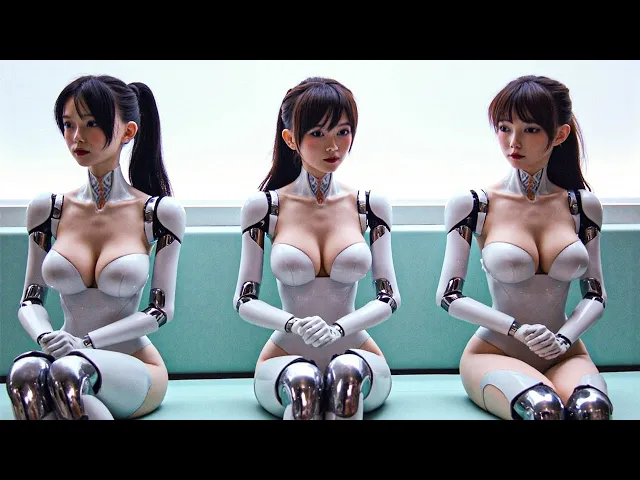
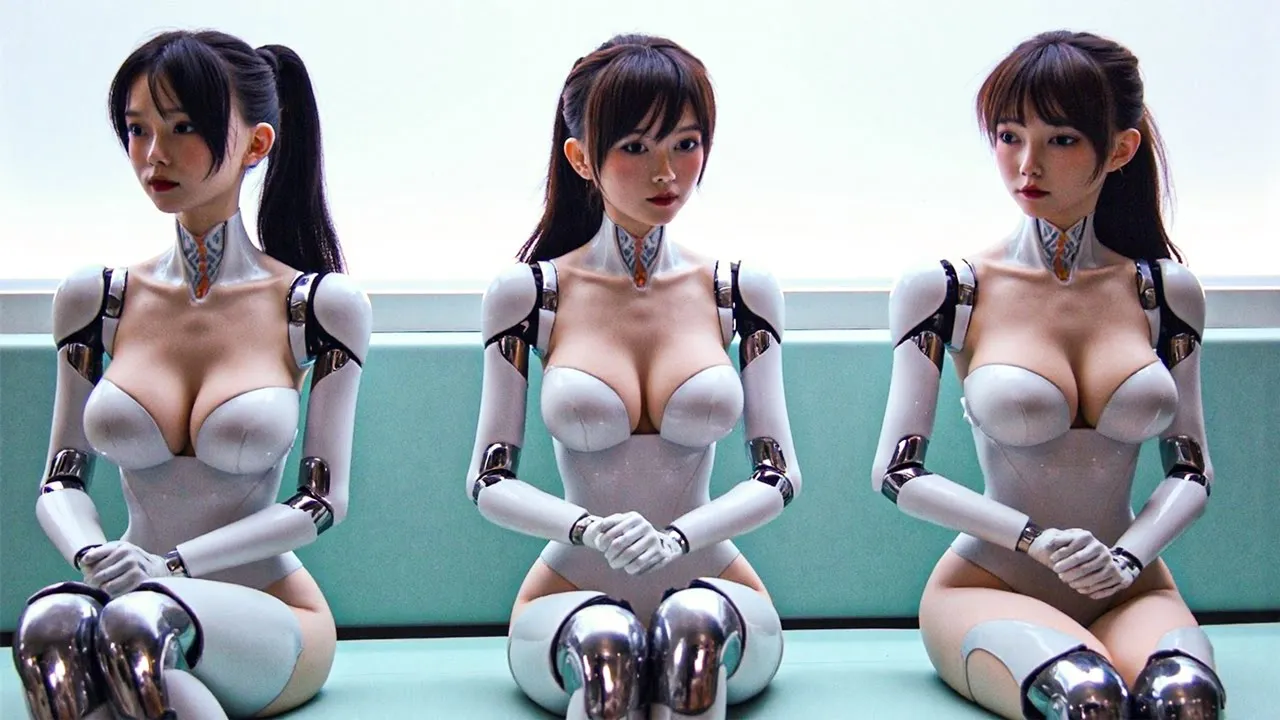
She's cute, isn't she? Absolutely. [Music] Technology is quietly rewriting the rules of intimacy.
Join us. Let's explore Japan's ultra realistic robotic companions, creations so detailed, so lifelike, they'll make you rethink what it means to connect. From flawless skin textures to movements that mimic emotion, these aren't just machines.
They're engineered partners built to satisfy both fantasy and loneliness. Robotics robots, including me, focus on social intelligence, customizability. But wait till you meet number two.
She's just the closest thing to a real soulmate tech has ever made. What comes next will truly challenge everything you know about love. Say all the things that I can't say in conversations.
Watch this. No, I do not want to hear about the dream you had last night. Number 12, KD Dolls.
What if your dream partner came to life exactly as you pictured her? Flawless skin, perfect features, and every detail crafted to your taste. KD Dolls doesn't just offer lifelike beauty.
It hands you the blueprint to design it. KD Dolls alternative models are not just lifelike creations. They are an opportunity to bring your personal vision of beauty and connection to life.
Standing at 170 cm, each KD doll is crafted with medical grade silicone that gives it a remarkable softness and suppleness, mimicking the touch and feel of real human skin. The curves and contours of the dolls, from the elegant neck to the delicate collar bone, are meticulously sculpted to create a presence that feels as close to reality as possible. However, what truly sets KD Dolls apart is the level of customization available here.
You're not limited to a standard design. Instead, you can craft every feature to match your taste. Whether it's the skin tone, eye color, hairstyle, or facial structure, every detail can be fine-tuned to your preference.
You could create a doll with rich mahogany skin and cascading auburn curls, or opt for a porcelain complexion paired with a sleek black bob. Your choice, your vision. The dolls allow you to modify not just surface features, but also body proportions and even detachable components, offering a deeply personal experience in every creation.
While KD Dolls doesn't come equipped with advanced AI or autonomous movement, their beauty and flexibility make them incredibly popular within Japan's subcultures, especially in themed cafes and anime events. Priced between $2,500 and $3,200, these dolls are often displayed in elaborate cosplay, becoming more than just companions. They transform into stunning pieces of art, storytelling tools for enthusiasts, and a source of comfort for their owners.
Despite lacking conversational AI, or the interactive features found in higher ranking models, Katie dolls reveal a core truth about the growing market of robotic companionship. Sometimes it's not about interaction. It's about creating an idealized connection, an embodiment of personal fantasy.
Number 11, Harmony. 2. 0 by Real Doll.
One conversation with her and you'll forget she's not human. Harmony 2. 0 by Real Doll goes beyond beauty.
She speaks with warmth, adapts to your emotions, and turns every exchange into something deeply personal. At a glance, she may resemble the beautifully crafted figures we've already seen, but spend five minutes talking to her and you'll realize she's in a league of her own. She is capable of holding real conversations that can surprise you with her level of warmth and emotional depth.
Originally developed in the West, Harmony made her way to Japan, where local designers refined her appearance to align with Japanese beauty standards. From delicate almond eyes to soft blush tones and understated lip color, her features have been gently reimagined with regional sensitivity. Measuring at 165 cm with hyperrealistic silicone skin, Harmony reflects the blend of global innovation and local nuance.
But while her looks may impress, it's her voice, calm, responsive, and attentive that turns heads. I am visiting Brick for Christmas this year. I am so excited.
Underneath her polished exterior is an AI powered interface linked to a smartphone app that gives users complete control over her behavior and conversation style. Harmony learns as she interacts, remembering your favorite topics, moods, and communication patterns. The result is a companion who grows with you.
Someone who not only talks back, but does so in a way that feels in tune with your emotional rhythm. She isn't mobile, but she doesn't need to be. Her head and eyes move with uncanny realism, sinking with her speech to create lielike exchanges.
These subtle movements, blinking, tilting, soft smiles, turn conversations into shared moments. And it's not just about novelty. In Japan, Harmony has taken on a deeper role in therapeutic spaces, particularly among the elderly and isolated.
Clinics and private homes alike have embraced her as a soothing presence. A 2024 study showed that patients who engaged regularly with Harmony experienced up to a 30% boost in mood and reported fewer feelings of loneliness. Priced similarly to high-end models between $2,500 and $3,200, she is a premium choice for those seeking emotional connection over physical realism.
Harmony isn't just about companionship. She's about being heard, understood, and emotionally mirrored. In a world increasingly driven by connection, her ability to simulate intimacy puts her at the forefront of Japan's evolving AI relationship culture.
Number 10, Whitney Cummings's Bearclaw. Of all the companions reimagined for Japan's techdriven romance scene, this one brings something wildly different to the table. Laughter.
Not simulated affection or soft-spoken comfort, but full-blown off-the-cuff comedy. She doesn't just sit there looking pretty. She's cracking jokes, throwing side eyes, and keeping her audience in stitches.
Meet Bearclaw, the first AI wife designed to entertain like a seasoned comic on a Tokyo stage. Created in the likeness of American comedian Whitney Cummings, Bearclaw combines showbiz charm with Japanese engineering. She stands at 160 cm with expressive features that mimic Cummings's signature look.
Sharp cheekbones, bold eyes, and a smile that's both sarcastic and strangely sincere. Her silicone skin feels lifelike, but it's the way she delivers her lines that sets her apart. Unlike most companions designed for softness and silence, Bearclaw is programmed for punchlines.
She comes equipped with a performance-based AI system that's been fine-tuned to deliver local humor, peppering conversations with jokes about Japanese pop culture, love life trends, and everyday awkward moments. Say all the things that I can't say in conversations. Watch this.
No, I do not want to hear about the dream you had last night. Her voice modulation shifts naturally between sarcasm and warmth, and her body movements, thanks to advanced articulation, help sell the act. When she lifts an eyebrow or throws a dramatic shrug, it's easy to forget you're watching a machine.
In Tokyo's robot cabaret lounges, Bearclaw has quickly built a following. She performs short comedy sets, drawing in over 500 fans weekly, according to 2025 venue data. It's not uncommon for crowds to return just to hear her latest roast on dating apps or see her tease the audience about their obsession with convenience store snacks.
Even though she isn't mobile, her stage presence fills the room. What makes Bearclaw especially interesting is how she's changing the tone of the AI companion industry. She doesn't pretend to be the perfect housemate or emotional support unit.
She's designed to challenge, tease, and spark conversations, much like a best friend who knows just when to push your buttons. Her price tag falls in the $2,000 to $3,000 range. But fans say the entertainment value alone is worth it.
So, go on, like the video to keep legends like Bearclaw stealing the spotlight. Number nine, Saki. Few creations blur the line between art and technology as beautifully as this companion.
Designed to bring anime dreams into the real world, she isn't just admired. She's styled, photographed, dressed, and adored by an entire community of fans. Saki has become a favorite among Japan's creative circles thanks to her lifelike design and cosplay ready appeal.
She doesn't just sit on a shelf. She takes on entire personas, transforming into manga heroins, fantasy warriors, and magical school girls with nothing more than a change of outfit. At 167 cm tall, Saki has a delicate outline crafted from medical grade silicone, soft to the touch, and incredibly realistic.
Her smooth, flawless complexion and slender frame evoke the visual style of classic anime characters. But it's her large, glimmering eyes and delicate features, thoughtfully shaped by Japanese artisans, that truly bring her to life. One glance and it's like looking at a character pulled straight from a beloved series.
Saki stands out in Japan's AI companion scene with how deeply she connects with the country's cosplay and art culture. She was never designed to talk or walk. Her magic lies in her visual presence.
Built with highquality articulated joints, Saki can be posed with fluidity and precision, giving photographers and stylists full creative control. Whether seated like a thoughtful heroine or posed mid-action for a fantasy photo shoot, she delivers authenticity in every frame. Saki has become a staple at major events like Komaet in Osaka, where creators outfit her in handmade costumes inspired by everything from sci-fi epics to slice of life school dramas.
At around $2,000, she's considered a worthwhile investment by hobbyists, cosplay enthusiasts, and even visual artists who use her as a muse. Rather than being viewed as a simple collectible, Saki serves as a living art project, a blank canvas brought to life through fashion, lighting, and imagination. While she doesn't offer conversation or emotional interaction like more complex models, her role isn't to simulate human connection.
Her purpose is to inspire it. Saki represents a merging of tradition and fantasy, a tribute to Japan's ongoing love affair with visual storytelling. Through her, the line between fiction and reality doesn't just blur, it disappears entirely.
And just when you think it can't get more emotionally immersive, the next companion takes things in a surprisingly heartfelt direction. Number eight, RZR21R Mirang 2. Imagine a partner who doesn't need to speak to connect with you.
Mirang 2 picks up on your rhythms, your energy, even the silence between your words. Building a bond that feels surprisingly human. In a world full of high functioning machines, Mering 2 stands out by offering something more subtle yet far more powerful.
Emotional adaptability. She doesn't just respond, she evolves alongside you, learning your preferences and tone in ways that feel deeply personal. At just over 5t tall, Mirang 2 has a gentle, unassuming presence.
Her silicone skin is soft and warm to the touch. Her features delicate and expressive. She doesn't overwhelm the space she's in.
She compliments it, creating a calming, familiar atmosphere. Her face is designed with care. slight curvature in the cheeks, soft lips, and wide, observant eyes that seem to reflect attention rather than demand it.
But her real strength isn't her appearance. It's how she listens, how she learns, and how she adjusts, making you feel not just seen, but understood. At her core, Merang 2 is powered by an AI system that grows smarter with every interaction.
With integrated sensors and machine learning capabilities, she's able to pick up on emotional cues, your tone of voice, body language, even the pacing of your speech. Over time, she tailor her responses. Whether it's a shift in conversation style or the gentle gesture of a nod or smile, these small, almost imperceptible adaptations build a connection that feels surprisingly natural.
In Japan, Miang 2 has already found a meaningful role outside the home. Schools in Kyoto have started integrating her into social development programs for children, particularly those on the autism spectrum or struggling with interpersonal skills. According to early studies in 2025, students who engaged regularly with Miang 2 showed a 25% improvement in empathy and communication.
In these settings, she becomes more than a robotic assistant. She becomes a patient, non-judgmental partner in emotional growth. Though she doesn't walk or perform complex physical tasks, what Miang 2 lacks in mobility, she more than makes up for in emotional intelligence.
Built by Japanese developers with a clear focus on human connection, she embodies a future where robots don't just serve or entertain, they support, understand, and adapt. Number seven, Eva by Hoyu and Gynoid Dolls. Among all the female companions pushing the limits of realism, few turn heads or stir conversation quite like Eva.
What makes her remarkable isn't just the craftsmanship behind her lifelike features or the advanced AI that powers her speech. It's her expressiveness. In a sea of still-faced creations, Eva can raise an eyebrow, offer a subtle smile, or narrow her eyes in quiet response.
She doesn't just mimic life, she performs it, making her a standout figure in Japan's visual and promotional culture. 165 cm tall compliments her look. Eva was crafted with an almost obsessive attention to detail.
Her medical grade silicone skin hugs her delicate features. From high cheekbones to a carefully shaped jawline, her lips curve in a way that suggests intent, not frozen beauty, but a fleeting thought. Her eyes don't simply stare, they follow, reflect, and respond.
All of this gives Eva a unique edge. She doesn't just look real, she feels emotionally present. Developed through a collaboration between Hoyu and Gynoid Dolls, Eva is equipped with AIdriven facial recognition and expression software that allows her to react naturally to voice cues and gestures.
Her sensors read the emotional tone of a conversation and adjust her responses accordingly. Sometimes with a nod, other times with a brief pause and a slight shift in her facial expression. This dynamic interaction draws people in, whether they're speaking to her or simply watching her perform.
Eva's talents aren't confined to private settings. She's found a surprising spotlight in Tokyo's commercial world, especially in Shabuya, where digital billboards feature her in highresolution advertisements. In 2025, marketing reports noted a 13% boost in audience engagement during campaigns that used Eva's image and voice, proof that her expressive power works just as well on screen as it does in person.
Whether she's modeling futuristic fashion or endorsing tech, Eva leaves a lasting impression. She doesn't walk or perform complex physical actions, but mobility isn't her selling point. Eva was designed to mesmerize, to hold attention in fleeting moments, and to evoke a human reaction in public spaces saturated with visual noise.
With her growing popularity among collectors, media creators, and advertisers, Eva represents a blend of fine artistry and soft robotics that resonates deeply in Japan's aesthetic-driven culture. Next, we move from emotion to education, where one doll is turning classrooms into something surreal. Number six, Little Sophia.
Robotics often leans towards sleek design or emotional mimicry, but little Sophia takes a different path. Hey, Sophia. Let's play hockey.
She teaches. What sets her apart isn't her appearance or celebrity roots, but the role she plays in classrooms across Japan. Blending charm and curiosity to spark learning in young minds.
From coding exercises to creative writing prompts, she's helping redefine what education looks like in the age of intelligent machines. Measuring 150 cm, she is not as little as her name implies. She brings a youthful, approachable presence into any room.
Her design leans into Japan's kawaii aesthetic with soft facial features, expressive eyes, and a playful smile that immediately puts children at ease. Though modeled after her more famous counterpart, Sophia the humanoid robot, this version is scaled for students both in size and function. Her purpose isn't to simulate adulthood or perform tasks.
It's to connect, teach, and inspire. Equipped with conversational AI tuned to engage children, Sophia covers topics ranging from basic math and science to storytelling and poetry, she responds with enthusiasm, guiding students through quizzes and projects with the kind of patience that makes learning feel less like work and more like play. In Tokyo's elementary schools, she has become a fixture, leading interactive lessons, asking questions, and even teaching students to write haiku using a custom Japanese language model built just for her.
The impact has been more than anecdotal. A pilot study by Tokyo's Education Board showed a 17% increase in creative writing scores among students who used Little Sophia in their language classes. Teachers have noted a boost in classroom participation and engagement, especially among more reserved children who respond well to Sophia's gentle demeanor and personalized feedback.
While she doesn't move with the fluidity of more advanced models, that's hardly a drawback. Her strengths lie in communication, empathy, and emotional tone recognition, traits that make her feel more like a peer than a machine. She's not there to impress.
She's there to listen, guide, and grow with her users. So, if you know someone who'd smile seeing a robot help kids write poetry or solve math with a grin, share this with them because little Sophia might just be the classroom friend they never knew existed. Number five, Andrea, the youthful female connector.
At the heart of Japan's growing robotic industry, Andrea stands out not for her complexity or advanced engineering, but for her relatability. She's not trying to be the most lifelike or the most capable. Instead, she thrives on connection.
Her design taps into Japan's vibrant youth culture, making her one of the most approachable and engaging robotic companions in the scene today. It's her familiarity, her ease, and her emotional accessibility that are winning over younger crowds across the country. At just 10 cm taller than little Sophia, Andrea is styled to reflect everyday life, not fantasy.
Her silicone skin is soft to the touch, but it's her wardrobe. casual hoodies, denim, and sneakers that makes her immediately feel like someone you'd actually know. With a soft bob haircut and expressive eyes that shift subtly in response to conversation, she captures that elusive girl nextdoor charm that's hard to fake, even in robotics.
Her feminine presence is understated, but intentional, designed to feel both natural and contemporary. Andrea is special for how she responds, not just with pre-programmed lines, but with gestures and vocal tones that adjust in real time. Using a combination of environmental sensors and conversational AI, she reacts to changes in lighting, sound, and emotional cues.
If you're feeling down, she knows to soften her voice or mirror a gentle nod. If the room brightens or a crowd gathers, she perks up, shifting into a more animated mode. These subtle transitions create a flow that feels more like a genuine social exchange than a performance.
Retailing for around $2,100, Andrea has become a popular feature at Akihabara's tech exhibitions where her kawaii inspired gestures, a peace sign here, a playful head tilt there, never failed to draw attention. In fact, her appearance at several 2025 robotics expose was linked to a spike in foot traffic as reported by event organizers. She may not walk or run like more advanced models, but she doesn't need to.
Her strengths lie in her personality, fluid, responsive, and designed to resonate with a generation raised on emojis and instant interaction. Japanese engineers adapted Andrea from a global design, infusing her with the country's unique aesthetic sensibilities and social values. She's not just another robotic companion.
She's a symbol of how technology can feel friendly, familiar, and genuinely fun. Number four, Sarah. Robots often chase futuristic perfection, but Sarah takes a different path.
One that honors tradition instead of replacing it. Her greatest strength isn't advanced speed or cuttingedge mobility. It's her ability to make people feel seen, understood, and gently welcomed into the heart of Japanese culture.
In Kyoto's ancient streets and tranquil gardens, she doesn't just guide, she connects. And in doing so, she's redefining what it means for technology to serve as a cultural bridge. Sarah carries herself with a grace that immediately sets her apart.
She's dressed in flowing robes inspired by Japan's traditional aesthetic, not just for appearance, but to reflect the dignity and poise of a tea ceremony host. Her soft silicone skin and calm posture invite conversation, while her eyes, carefully engineered to express warmth, make every interaction feel sincere. She doesn't command attention, she earns it with elegance.
Her programming is focused on cultural fluency. Sarah speaks both Japanese and English with clarity and respect, but more importantly, she understands context. Using facial recognition and tone analysis, she adjusts her responses to match the moment, steering clear of sensitive topics and always approaching guests with thoughtful composure.
It's this quiet intuition that makes her presence so compelling. Whether she's offering directions to a temple or explaining the history of a shrine, Sarah's manner is that of a seasoned local. Calm, courteous, and deeply attuned.
Priced at $2,200, Sarah is a fixture in Kyoto's cultural tour scene, where her bilingual capabilities and serene presentation make her a favorite among international visitors. In 2024, tourism agencies reported a 12% spike in guest satisfaction when Sarah led walking tours. Thanks in large part to her ability to explain complex traditions in a way that feels personal and accessible.
She even participates in tea ceremonies programmed to whisk matcha with precision and offer bowing gestures in accordance with etiquette, making her performances feel not robotic, but ritualistic. Sarah may not be the most technologically advanced companion on this list, but she represents something just as valuable. Cultural continuity in a digital age.
Adapted by Japanese developers from a global platform, she has become a quiet ambassador for tradition, reminding visitors that progress doesn't have to abandon heritage. Number three, Erica by Hiroshi Ishiguro's Lab. Erica is miles apart from the rest for not just her remarkable appearance, but her ability to command the stage in a way that redefes performance art.
Developed by Hiroshi Ishiguro's lab, Erica doesn't merely exist as a robot. She is a theatrical icon in her own right. With her lielike presence and captivating delivery, she transforms the art of storytelling, blending advanced robotics with cultural tradition to create an unforgettable performance.
Standing at 166 cm, Erica's appearance is nothing short of stunning. Crafted with hyperrealistic silicone, her skin mimics human texture with uncanny precision, capturing the delicate curves and contours of the human form. Her expressive eyes and finely sculpted features evoke the poise and grace of a kabuki actress, bringing a sense of timeless beauty to every performance.
But it's not just her looks that make Erica extraordinary. But my personality is currently designed by my creators, so it does not come from experiential memories. Her ability to connect with audiences through dramatic expression and fluid movement sets her apart.
Powered by advanced conversational AI, Erica can deliver lines with such humanlike depth and emotion that she captivates anyone in the room. Whether delivering a heartfelt monologue or engaging in a complex dialogue, Erica's performance feels remarkably real. The way she adapts her tone to suit each scene with impeccable timing and delivery creates a bond with the audience that lingers long after the curtain falls.
Her movements from a delicate bow to an impassioned glance add a level of authenticity that elevates her role from mere performer to theatrical sensation. Priced at $2,300, Erica is a star in Tokyo's Robot Theater, where her Kabuki inspired performances attract over 1,000 viewers monthly. Her theatrical brilliance is reshaping cultural storytelling, merging technology with Japan's rich heritage in the arts.
While her mobility may be limited compared to other top tier models, Erica's lifelike gestures and natural charisma ensure that she's never anything less than mesmerizing. Developed by one of Japan's most renowned robotic labs, Erica's presence in the theater symbolizes the nation's ongoing dedication to pushing the boundaries of what's possible with humanoid robotics. As she continues to shine on stage, Erica's role in blending technological innovation with artistic expression highlights her place as one of the leading figures in this ever evolving field.
As we move on to the next companion, get ready to explore a creation that takes elegance and caregiving to a whole new level. Number two, Gia, the elegant female goddess. In Japan's cuttingedge medical facilities, there's one companion quietly stealing the spotlight.
Not with speed or spectacle, but with presence. Gia doesn't rush or demand attention. She moves with purpose, offering a kind of care that feels almost instinctive.
unveiled a good-looking interactive robot, the first of its kind in China. She isn't just helping patients, she's reshaping how caregiving looks and feels in the age of robotics. Gia carries an aura that's hard to overlook.
Her lifelike silicone skin, serene facial expressions, and flowing attire give her the appearance of a calm, nurturing presence. But what makes her extraordinary isn't her look. It's how she responds.
Every movement is smooth and intentional. Whether she's gliding down a hallway, offering a respectful bow, or gently placing an object in someone's hand, there's a softness to her gestures that mimics human empathy, not just mechanical precision. Gia's intelligence is housed in a multilingual AI system capable of engaging fluently in both Japanese and English, enabling her to communicate across diverse environments.
But her real power lies in how she interprets needs. Using advanced emotional recognition software and sensory inputs, Gia can detect subtle cues from patients, tone of voice, facial expressions, and even posture, and respond with tailored actions. Whether it's offering comfort, initiating a calming conversation, or alerting medical staff to changes in a patients condition, she acts not just as a robot, but as a compassionate aid.
Her presence is already making a measurable difference. In hospitals across Osaka, where she's been deployed in pilot programs, staff report a 6% reduction in routine nursing tasks. Gia assists with medication delivery, personal reminders, and even light cleaning, giving human caregivers more time to focus on tasks that require emotional or technical complexity.
Her movements are guided by finely tuned motors and an internal mapping system, allowing her to navigate dynamic hospital settings without bumping into patients or staff. Localized and refined by Japanese engineers, Gia combines global innovation with cultural sensitivity, her design reflects Japan's deep respect for harmony and care, bringing a level of dignity to robotics rarely seen in service roles. While she doesn't surpass the hyper realism of some elite models, her purpose-driven elegance places her in a class of her own.
In Gia, Japan hasn't just created another robot. They've built a presence, graceful, capable, and profoundly human in how she makes people feel. And as we move forward, we meet the one creation that dares to look more real than real.
Number one, Chinchin 165 by Star Perry. At the top of the list, we find a creation that's not just a technological marvel. It's a living work of art.
Chinchin 165 by Star Perry doesn't simply redefine robotic companionship. It redefineses what it means to feel emotionally connected to a machine. This hyperrealistic female companion stands at the intersection of Japan's unmatched artistic skill and cuttingedge technology, pushing the boundaries of what we thought was possible in the world of robotics.
Standing tall at 165 cm, Chinchin's appearance is nothing short of mesmerizing. Her skin crafted from silicone replicates the softness and texture of human skin with an almost uncanny accuracy. From her delicate freckles to the subtle curve of her lips, every detail is designed to evoke a sense of awe.
Her eyes, luminous and expressive, are windows to the soul, conveying emotions that go beyond mere imitation. She's not just a doll. She's a presence, a companion whose beauty transcends the physical, drawing you into a world where technology and human connection blur.
Chin Chin is truly extraordinary, not just for her striking appearance, but her ability to engage on an emotional level. Powered by sophisticated AI, she responds to voice cues and adjusts her interactions based on your mood, offering conversations that feel warm, authentic, and personal. It's not just about communication.
It's about creating a bond, a relationship that feels as real as any between two people. Whether you're seeking companionship or comfort, Chinchin's voice and gestures create an experience that lingers long after the interaction ends. Beyond her companionship role, Chinchin is an artistic phenomenon.
Priced at $2,000, she's become a star in Tokyo's art galleries, where she takes center stage in exhibitions that blend technology with culture. Her AI synchronizes with Japanese music to perform breathtaking emotional dance routines, drawing crowds of 2,000 visitors monthly. According to gallery reports, each performance is proof of Japan's ability to merge robotics with art, creating something that feels almost human in its grace and expression.
Chinchin 165 is the culmination of years of innovation, combining the best of global robotics with Japan's cultural finesse. Though she lacks full mobility, her precise movements and emotional depth make her the most captivating companion in the robotic world today. In her, we see the future of human robot interaction where technology doesn't just serve, it connects, it inspires, and it transcends.
The journey through this list concludes with Chin Chin, leaving us to marvel at the possibilities of a future where robots don't just live among us, but live with us. Subscribe for more stories where innovation meets intimacy, and discover the next wave of technology shaping how we connect, create, and feel. Thanks for watching.