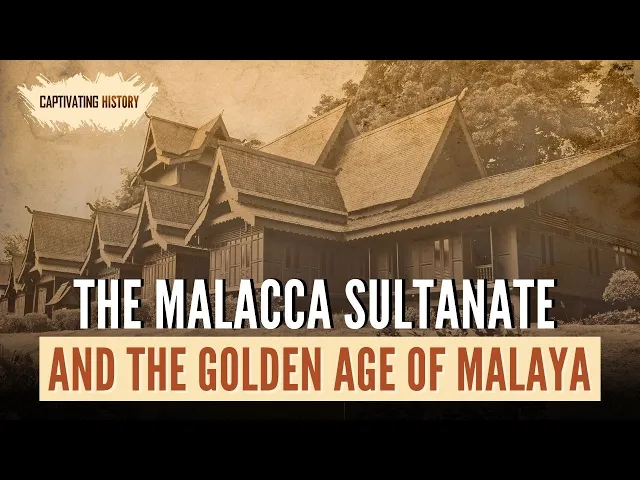
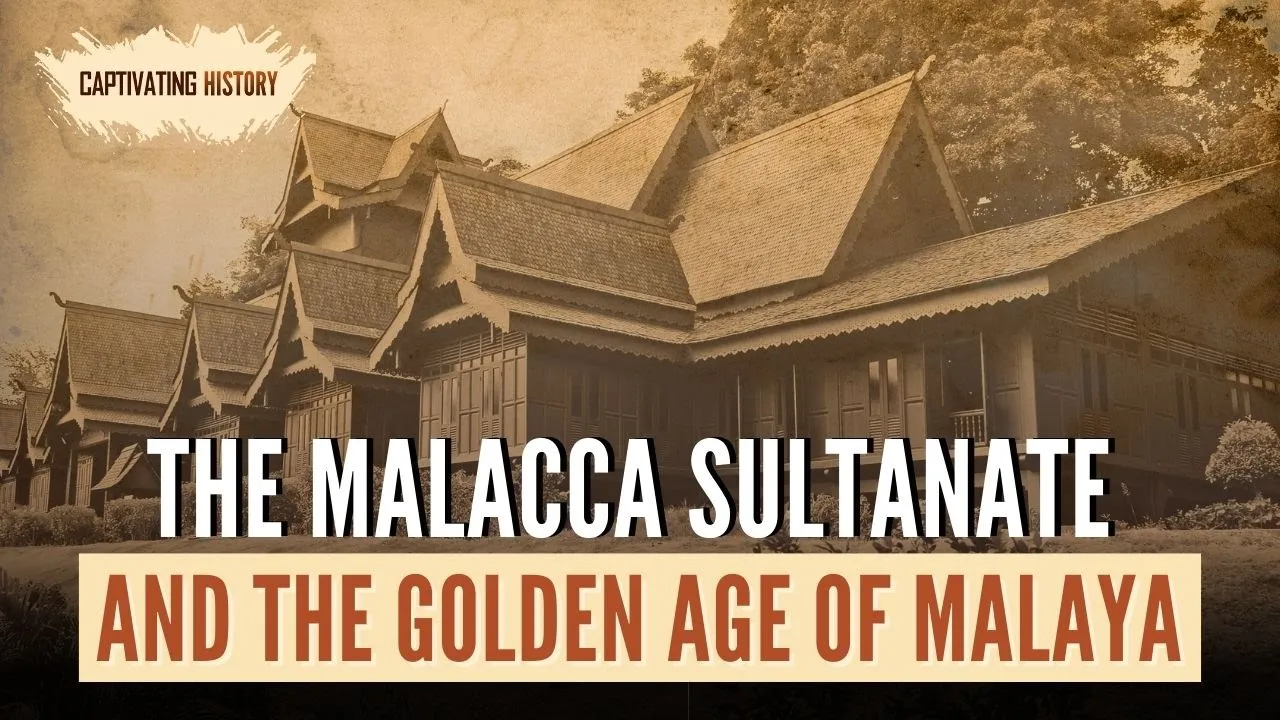
the Federation of Malaya was established in 1957 and became Malaysia in 1963 with the inclusion of sabba sarak and Singapore which left in 1965 during the 15th century the area experienced such a substantial boost in trade that assum came to the attention of European Colonial forces as the malaka sultanate granted Malaya a golden age of trade and prosperity it opened itself up to the Covetous European powers keep watching as we we take a closer look at how the malaka sultanate changed malaya's Prosperity religion and fate from the 9th to the 14th centuries what is now
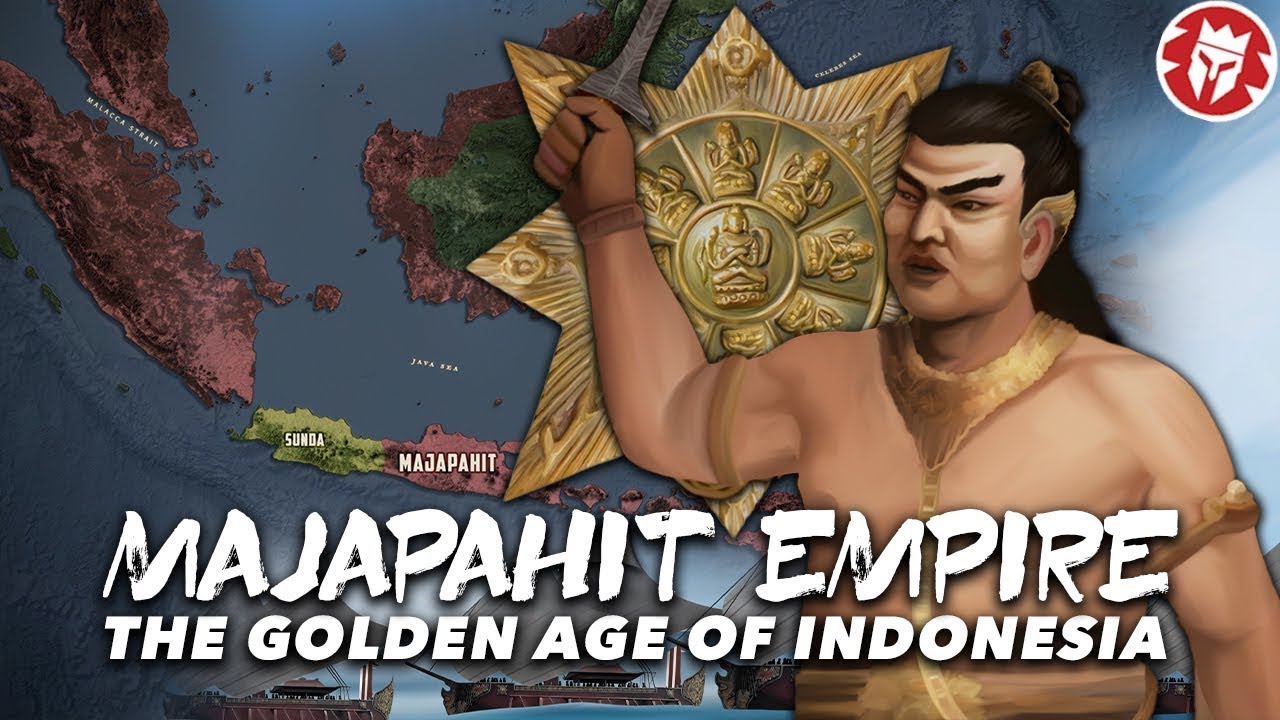
Malaysia was under the Dominion of the Buddhist Kingdom of svaja which originated in palang on the island of Sumatra and at its peak controlled most of what is now known as Indonesia and the Malaya Peninsula during the 14th century svaja had already lost influence and the majapahit Empire began expanding its borders further hindering Sur V's power toward the end of the 14th century majab bahit forces attacked and conquered the city of palom bang a Hindu Prince named par mwar fled with a handful of followers at first he headed for the island of tamasik now Singapore
to stay with the relative who ruled there however task was a vassel of the majapahit and Par miswar was betrayed so he over through his relative and ruled the island himself for around 4 years it wasn't long before the majapahit attack the island paramara was betrayed again when one of his ministers opened the gates to allow the majapahit forces in paramara continued his search for a suitable area to establish a new kingdom under his rule he considered Muir but continued North until he arrived at a small fishing Village at the mouth of the beram river
later renamed the malaka river according to Legend while resting under a tree Hara mwar saw a mouse deer outwit a dog he considered this a good omen and de decided to establish his kingdom right there which he did in the early 15th century the story became such an integral part of the foundation of malaka that the mouse deer is part of the modern City's coat of arms due to its natural Harbor malaka soon became an important trade port and before long commanded the main sea route between India and China paramara also cemented ties with Muslim
Traders marrying a Muslim princess of Pai and adopting the Persian title of sha he declared himself isander sha and brought Islam to Malaya although it is unclear as to whether he converted himself paramara also pursued diplomatic relations with China embarking on voyages to visit the emperor of the Ming Dynasty zi these ambassadorial missions established Ming protection over malaka and guaranteed substantial defense against sayam and majab bahit with suitable protection from Invasion malaka grew into an international trading Hub and dominated trade between China India the Middle East Africa and Europe malaka developed from a small fishing
Town into a multicultural Trading Post with reports of around 80 different languages being spoken although the details of parmar's death are unclear Chinese reports mention that in 1414 his son came to China to inform the Emperor of par mizar's death the transformation of Mala into a prosperous trading Port had a profound effect on the Malay archipelago not only did it increase the prosperity of the region but it also changed the predominant religion from Buddhism to Islam Mala further prospered under the third ruler known as Raja Tenga or raden Tenga before he ascended to the throne
once he became ruler of Mala he took the title of Seri Maharaja but later embraced Islam and became Muhammad sha ruling during the 1400s under Muhammad sha malaka grew into a city state and he began to expand the sultanates territory iies prompting the further spread of Islam during the rule of Muhammad sha tensions grew between Mala and the Siamese Kingdom of Audia with malaka managing to navigate these threats diplomatically later rulers particularly Sultan muzafar sha refused to pay tribute to Audia repelled two siese Expeditions and acquired sangor which enabled malakan forces to take control of
strategic positions along the Sumatra Coast across the straight malaka was run with an Effective Government at a well-defined set of laws at the top of the social hierarchy stood the sultan who served as an absolute ruler beneath him was the bendahara who acted similarly to a prime minister the bendahara was an adviser to the sultan and was usually a noble under the bendahara was the lamana a military official who oversaw the Army and was responsible for the State security next came a position akin to the chief of police the tong and lastly with the treasurers
the p Gula Bahari and those who oversaw trade and ran the ports known as the shabandar in the mid-15th century a warrior named ton parak was appointed chief minister of the malaka sultany and served as the fifth bendahara ton parak had been a successful Soldier Statesman and was appointed bendahara after leading the army that successfully repelled the SES Invasion he was also instrumental in extending the territorial reign of the malaka sultanate tanarak became a kingmaker of sorts and secured the succession of the subsequent three malakan rulers who were all related to him these rulers pursued
an aggressive foreign policy and established the sultanate as an Empire forming tributaries across the Malay Peninsula and Eastern Sumatra at its height the sultanate ruled most of the Malay Peninsula modern day Singapore in a part of Eastern shatra it also became a center for Islam and attracted many religious Scholars who came to discuss philosophy and religion due to the range of merchants that came through the port of Mala the city state became a Melting Pot of cultures and religions although the sultanate was predominantly Muslim it practiced religious tolerance and became a center of cultural exchange
fostering learning literature and arts throughout mala's rule they maintain good relations with Ming China and were the first foreign Kingdom to receive a letter of friendship from the Ming Emperor malaka was both the tributary State and Ally of Ming China thanks to China's ongoing protection as well as its own wealth and Military assertion malaka was able to repel numerous attacks from Rivals for much of the sultanat rule mala's main Rivals were Siam to the North and the majapahit Empire to the South as malaka was extending its power the majab bahit empire was in Decline and
it was eventually brought to an end around the early 16th century due to the spread of Islam and the rise of Islamic States although Siam tried multiple times to invade and Conquer Mala its forces r repelled each time mala's domination of international trade routes between the East and West meant they essentially became the Gateway between the Spice Islands and the demanding Eurasian markets one factor contributing to mala's status was the monsoon winds that enabled Merchants to travel between Arabia and India in the west and China in the East the importance of malaka soon came to
the attention of the Europeans as one Portuguese writer put it he who is Lord of Mala has his hand on the throat of Venice as Europe was well aware of the profitability of the spice trade it wasn't long before the Portuguese King sent envoys to malaka to try and establish trade relations the first European to arrive at malaka was Admiral Dogo Lopez deira in 1509 unfortunately for the Portuguese their reputation for aggressive expansion preceded them due to their previous conquests including the portuguese's capture of Goa which promoted the Muslim trading Community to alert the malakan
sultanate that the Portuguese could be a threat Lopez left the following year after it became apparent that the sultanate would not be the Willing trade Partners the Portuguese had hoped they'd be in 1511 the Portuguese returned a fleet of ships containing 1,00 men led by aonso De alburque left the newly conquered Goa and headed for the city of malaka at first the Portuguese issued several requests including permission to build a fortress near the city that would act as a Portuguese Trading Post rightfully suspicious of portugals intentions the malakan sultanate refused all the requests seeing outright
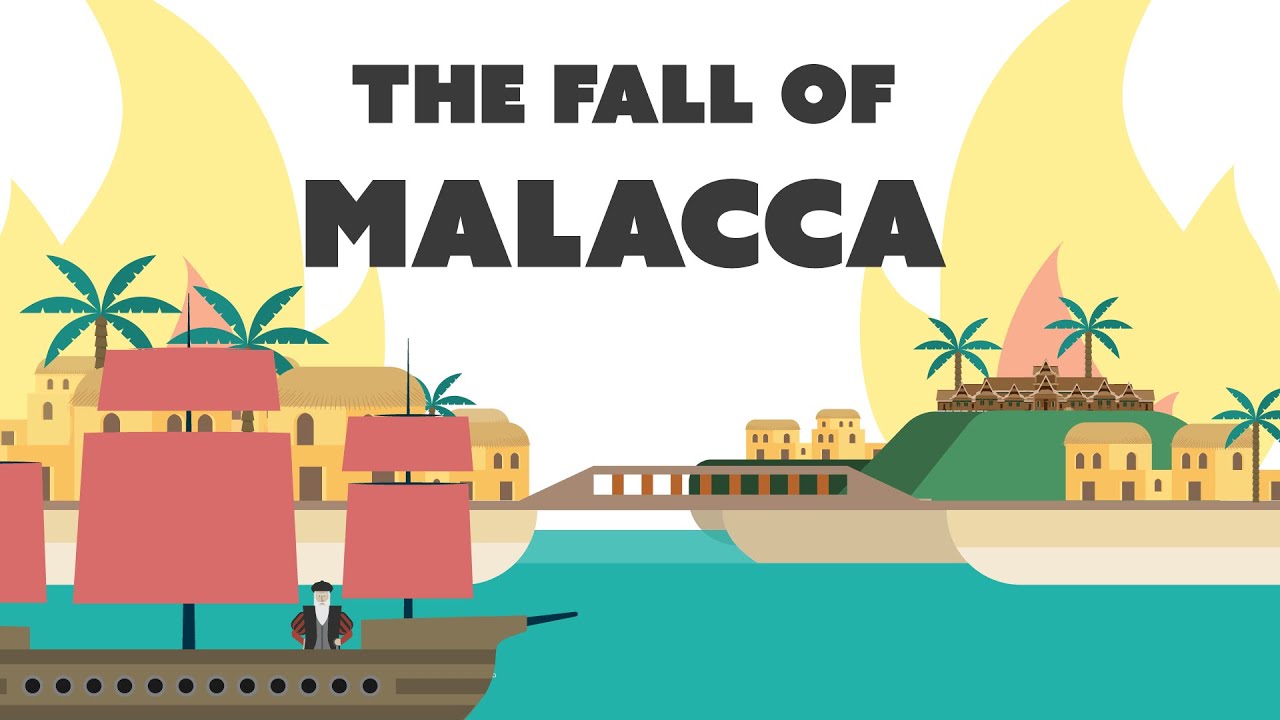
conflict as unavoidable the Portuguese attacked malaka which fell by late August 1511 although malaka was well fortified and supplied it could not match the Firepower of the Portuguese ships in addition several internal factors led to the fall of malaka in the late 15th century Amud sha had been pronounced Sultan at this time malaka was at the peak of its power but its important political adviser and the orchestrator of much of the sultanate's greatness ton parak was now an old man ton pak's death in 1498 marked a turning point for the sultanate under mmud sha the
malakan court became embroiled in intrigue and was rif with favoritism rather than run by strategic Administration the new bendahara tan matahir faced allegations of corruption that increased the instability of the court and weaken the honat administration some sources also cite a rivalry between mmud sha and his son sha which ended with mmud stabbing his son for being unable to reconquer malaka after the Portuguese captured malaka Albuquerque remained in the city until November reinforcing the city's defenses against a Counterattack and mmud sha was forced to flee after the Sultan's attempts to retake malaka failed he fled
with his forces to bahong ultimately establishing a new capital in bintan after establishing his new base the sultan assembled Malay forces to try and drive out the Portuguese organizing attacks and blockades against the Invaders although the raids made life hard for the occupying Portuguese they also convinced the Portuguese that the deposed Sultan was still a threat after numerous attempts to suppress the Sultan's forces the Portuguese destroyed bentan in 1526 the Portuguese finally controlled one of the most important trade ports on the spice route however they soon discovered that location wasn't the only thing that made
the malaka sultanate successful the Portuguese had trouble or organizing and establishing an effective Rule and were hampered by a lack of Manpower funds and efficient Administration the port was also Inc competition with others along the Route as they had disrupted mala's reputation as a safe and hospitable Port many Asian and Muslim Traders now avoided malaka in favor of other trade stops this disruption had a negative impact on the Asian Trade Network scattering trade over several different ports which in turn sparked rivalry and warfare in The Straits despite the reduced importance of malaka the European power
still vied for control of the port with the Dutch clashing with the Portuguese and taking control in 1641 in the 1800s conflict between the Dutch and the British resulted in the anglo-dutch treaty which transferred malaka to the British and established the basis for the current Indonesian Malaysian boundary the malaka sultanate presided over a golden age on the Malay Peninsula inspiring religious tolerance and international trade and cooperation although it could be argued that the sulate would have inevitably declined no matter what the intervention of the Portuguese disrupted a well-established and prosperous trade route that had successfully
connected east and west for over a 100 years how would you like to get a deeper understanding of History impress your friends and predict the future more accurately based on past events if this sounds like something you might be into then check out the brand new captivating history bookl by clicking the first link in the description to learn more about Malaysia check out our book history of Malaysia a captivating guide to ancient kingdoms Colonial Mala modernization and the post-independence years it's available as an ebook paperback and audiobook also grab your free mythology bundle ebook while
it's still available all links are in the description if you found the video captivating please hit the like button and subscribe for more videos like this