A warm welcome back to uh Professor Robert Clancy in Sydney Australia Robert thank you so much for coming back on thank you for having me John Robert of course is a is a friend and a friend of the channel he's a doctor of medicine a doctor of philosophy a doctor of science holder of the Australia medal and uh long-term consultant physician and and Professor so his insights are really quite uh Quite unique into this situation and recently Robert you've had clinics where I know this because I was at one with you where you uh assessing
and treating patients with long covid and and long vaccine injuries that's true I was wonderful having you John um uh I do remember that occasion we you probably saw how how my practice has become dominated by um postvaccine injury it's uh it's become a real a pandemic on its own Mhm now I'm a bit confused between the clinical pictures in people with ongoing long covid which does seem to exist as a phenomena and people with vaccine injuries is is there a commonality in presentation and there's a commonality is there a commonality in response to treatment
yes it's it's a very good question um traditionally tradition in this business is only a couple couple of years cuz remember Co is a pretty new still very new um Challenge and uh this Conditions how we think about it what we understand about it and how we treat it so uh it's very much a um thing in in progress um I think many of us started seeing patients who had uh vaccine but never had Co and noticed great similarity between the symptoms of people following a vaccine and symptoms of those who are traditionally called long
covid which is a sort of catch all phrase to basically say look you know you never really got over co uh and this Has been a real issue uh and and I'm glad you brought it up because uh it's been a focal issue of a very big uh extensive investigation by the Australian government which was just reported a couple of months ago where they denied that there was any any connection and they denied there was any connection with the broader range of of chronic fatigue illnesses which was I think a great disservice to all all
three of these components and I think That what brings the three of them together and now we're just talking about postco uh infection and postco vaccination uh not only is the clinical similarity um but secondly the fact that we now have uh much evidence that the essential cause is the same and that is that the spike protein which uh viewers will remember uh is that part of the virus that binds to the cell so that it can get into the cell uh and then becomes the antigen or the part of the Uh the various vaccines
uh that's used to stimulate immunity so Spike protein is really very important functionally and in terms of management but it's not so important if you don't clear it from the body and the real issue with um CO as an infection is that uh in about 50% of people with significant Co remember the postco uh or long covid is particularly seen in people with quite severe or more severe uh Co is that they get a Viria Which means the the virus spreads through the vascular system through the body and we call that systemic uh spread and
so it sits it it's the messeng RNA of the vaccine um goes into all the cells potentially in the body producing the spike protein so you've got a Persistence of the spike protein and in some people it we know it it lasts well over 12 months uh and possibly a lot longer and with the vaccine you've got the same messenger RNA well you uh the With the infection you you've got a um the virus going into the cell making the protein with the vaccine you've got uh messenger RNA which is you know part of the
genetic apparatus producing Spike protein in potentially all the cells so you have this Persistence of uh the spike protein and that's been very amply demonstrated over and over again uh so you've got this common cause uh and so with common symptoms common cause but but the problem that came up in the uh Australian review was that people giving information it's a bit hard to blame the politicians here because they're trying to synthesize the information they given they were given I thought very uh superficial and restricted information it was all about oh these people have symptoms
uh how on Earth can you say the symptoms of long Co are the same as the symptoms of vaccine damage and so they put it aside but again that's really because people Did not quite understand why there's um people getting different symptoms and the the important point is that the common factor to all these fatigue illnesses is fatigue that's made worse when you exercise or do something I've always called it energy activated fatigue that is the common feature many if not most will also get brain fog uh but what happens with the long Co is
that many of these patients have structural damage they Have cardiac damage they have brain damage they have uh probably the commonest one I see is peral nerve nerve damage I did a clinic yesterday and I saw three patients all with what we call small fiber neuropathy as part of their their problem so these structural damages didn't seem to fit with the fatigue and they became the major factor that individuals were looking at but it was simply because the mechanism of the underlying fatigue is different to the Mechanism of structural damage and we may come around
to to look at that so I think the answer to your question is that they're essentially the same condition um therefore one looks at similar mechanisms and looks at similar therapies so if there's ongoing production of Spike protein let me clarify that is the spike protein hanging around or has there got to be ongoing production of Spike protein oh I think that uh um I think You must be having ongoing production because we know that the messenger RNA vaccines um are basically designed to keep producing uh antigen um I think the Hope was that they
wouldn't but the reality is that they do and I and in fact in in so many of these people with postvaccine uh damage you can actually find the messenger RNA Still Still present uh months or many months U after the the the vaccination M so there's in both Conditions then potentially there's there's two modalities or two pathophysiological mechanisms there's one which causes the small fiber neuropathy and that kind of happens probably fairly quickly and then could take well we don't know a year or several years to to to recover if at all and there's the
other mechanism which is the ongoing production of Spike protein and that causes the inflammation and that's part of the the the ongoing Inflammation is perhaps what's causing the The Chronic fatigue in the brain fog is that yes I I think that's um in both instances you've got a an immune response to the Persistence of an antigen this is common to all chronic fatigue illnesses and what's happening because the immune response is not doing the job as well as it we'd like it to you get what we call inflammation and and I think we probably can
tease that out a little bit later too please but uh The the difference between the fatigue component and say heart or brain damage is it's a different type of immune response in each case they're both immune responses um and what's different between the postco infection and postco vaccine fatigue illnesses is they tend to have a lot more structural damage and this is because the antigen the spike antigen is sitting on the cell surface uh of the cells that for whatever reason messenger RNA or the virus in the cells Somehow are producing this uh antigen antigen
means it's foreign it's going to be attacked by the te- cells of the body and so you get this response of T cells actually against the spike protein embedded in the cells and so you're going to get damage of the cells this was shown very clearly by German Pathologists oh now it must be about 18 months ago where they looked at people dying from uh postvaccine damage and they found the spike protein in the Heart and they found the te- cells clustered around them causing the damage we call that myocarditis if it's in the lining
around the heart we call that pericarditis uh so um we have very clear data on this uh and a very clear evidence that um for the structural damage you've got like an autoimmune disease exactly like an autoimmune disease whereas the fatigue illness you don't get that structural damage the uh we don't really understand the the Precise um parameters of this inflammatory response but it's producing various mediators of inflammation we call them cyto or chemokines depending on what those particular mediators do but they're often small proteins that float around and they seem to have an impact
on on various tissues MH well we know that these inflammatory cyto kindes and chemokines can make you feel pretty awful because that's a big part of why you feel sick when you've got an Infection or absolutely after tissue damage or you know you can feel you can feel pretty rough I mean I was knocked off my push bite once and I damaged a lot of tissues and I felt terrible for days you know as well as the pain um just because you're releasing what whatever it is these inflammatory cyto kindes and of course if you're
ill you feel pretty awful as well is is is am I right there is that is that the same mechanism I was giving a series of Lectures in uh Singapore uh many years ago and uh I got uh the flu uh now that flu virus almost certainly never got outside of my lungs but I was so sick I couldn't even get out of bed they came and found me because I didn't turn up for the lectur I was supposed to give I thought I was dead I really thought I was going to die now that
was massive release of the cyto kindes and whatever now if you do it in a very small amount you're going to get fatigued and uh uh That seems to be uh the common factor all these patients that makes sense and because we now know that this systemic the systemic distribution of the the messenger RNA that codes for the spike protein the mechanism of damage on the peripheral nerves and the mechanism of damaging pericarditis myocarditis for example it's probably the same mechanism it's the tea cells beating up on on the cells that are expressing this foreign
protein Yes I I think you're absolutely right uh and so therefore it's not surprising that you get a combination of two patterns of disease you get the classic features that you see in anyone who's got chronic fatigue illness going back you know back to the flu pandemics of of the 19th century um and and on top of that you're getting structural damage in this case because of the Persistence of expression of the spike protein on the surface of cells in nerves and heart Etc So it's not a secret it's not a mystery uh it makes
enormous sense and I mean every day more and more evidence is is supporting that that Paradigm that set of sequence uh that lead to disease I think problem is just make one and that is that Spike protein itself um is not just an Aden it's a particularly nasty one it itself can have cause damage and SP you've got two two components to this uh tissue damage comp aspect the intrinsic toxicity of the spike protein And it's present as an auto anen if you like on the surface of cells MH indeed and the spike Protein that's
embedded in tissues that have been attacked by tea cells so we know for example if a myocardial cell is destroyed um there's no effective repair there there's no effective mitosis in in myocytes and again with peripheral nerves although they can recover the the rate of recovery is remarkably Slow so um even even though the spike proteins gone from those patients the damage can persist and I think that's been demonstrated that we know that the myocardium the the muscle of of the heart doesn't have the same repair process that say liver cells and certain other or
organs have uh and this has been pointed out by some of the The prominent cardiologists like Peter McCulla in the United States that uh if you get a significant damage a young boy Gets a vaccine gets a significant damage he then has a scar be it microscopic for Life potentially and um if you um have excessive exercise or emotion uh certain times when you're sleeping the adrenaline level goes up and adrenaline plus these scars can lead to a abnormal heart rate and sometimes even fatal tachicardia a ventricular fibrillation or ventricular tachicardia and this has been
attributed to the increase in deaths in uh athletes on the field which Has been noted over the last couple of years I mean it's it's a hard thing to pinned down but it's certainly been widely described and so I'm convin I'm convinced that's true but I suspect that the the time that people are most vulnerable to these aymas dymas is is in the relatively acute phases when the myocardial cells are actually in the process of dying because when they're actually in the process of dying they'll have difficulty Controlling the electrochemical balance across their cell membranes
and and be more likely to throw out um uh ectopic electrical activity and I think that's why it's so important that we should advise people who who are prone to who might be a risk of this not to take vigorous exercise for a period of time absolutely after I have after infection or after well they shouldn't be vaccinated of course but after infection or if they were Vaccinated after vaccine yes I think there's good evidence isn't there John that that there's a sort of peak of of unexpected mortality uh following vaccines uh what a week
or two uh after so you know they they've had the damage um they're getting an inflammatory response they're irritable they they're getting up and they're moving around increasing their their adrenaline uh this is well shown mechanism in in mice I think it was that they found that they The mice poor mice were dying if they had minor cardiac damage and they were pushed in exercise so you know it's not as though this is a fanciful idea oh and it's not new at all I mean when I was on coronary care in in the late 80s
uh late 1980s as as a yeah yeah I was I was a Carri care nurse for a period of time and um that was at the height of the running boom everyone was jogging and running around all over the place but every year in the Local run someone would get a cardiac arrest and and some of the time you wouldn't get them back and you know very often when you look back mtis yeah yeah when you look back they were just recover they had a viral infection they just recovered from a viral infection um it's
not new now the other thing that convinces me about your thinking here Robert is is the the response to iaon um can you just unpack that a Little bit for us what kind of responses are you seeing well I I think one of the big breakthroughs and understanding in co uh has been related to Ivon now again I I think pretty much everyone looking at this uh would understand that Iva mton has been a stalking horse for people who uh basically wanted to protect a vaccine and um it it it it's I mean I've used
the word shameful perhaps on your programs but certainly outside of them that the most shameful thing That I think has occurred in the whole Co Saga is the depriving of people uh from repurposed drugs which could have saved a lot of lives now I have a mean I suspect is probably the best of of these repurposed drugs and um the great argument around uh iaon has always been that um well you've got to have a mechanism you've got to use it early all that sorts of things and um David shim who uh is uh a
very uh interesting American sist um has put together uh the Scenario of what's happening with Iva mchan and and what he's shown is it actually came from three clinical studies I I had my time I didn't have didn't contribute much except write the article I think um on one of them there three studies showed uh that if you treat people with moderate co uh uh with I with icton within 24 hours the oxygen saturation can increase dramatically now no one had an explanation for this first of all people couldn't understand why it Was people who
were didn't appear very sick but uh had Co early on had very low oxygen saturations uh well in the ' 80s it should be up you know 94 95 96 and uh when you treat them with icin over 24 hours this would pop back to normal and what David and some of his colleagues did uh in France was they showed that if you take the virus and mix it with red blood cells they all Clump together and so it started making sense that uh if you had um moderately severe uh Co and The virus was
getting out into the gas exchange part of the uh of the lungs it would Clump those cells so that they couldn't efficiently take up oxygen because that's the job of the lung to put oxygen into the body and carbon dioxide out so um and then what they did was very clever they put icton into the system and suddenly you could stop this aggregation uh in other words I and and other people had been showing that I tightly binds to spike protein so here You had a situation where the spike protein on the virus was able
to Clump these cells causing low oxygen in the body icton could actually prevent that completely and that fitted with the clinical observation that by treating people with low oxygen it came back uh to normal and this changed the way I think people should be thinking about icton and that is that icton works not just late in controlling the viral replication but also very Early uh by acting if you like like a um uh like a putting a clamp over the top of the spike protein so it can't do damage and so a number of us
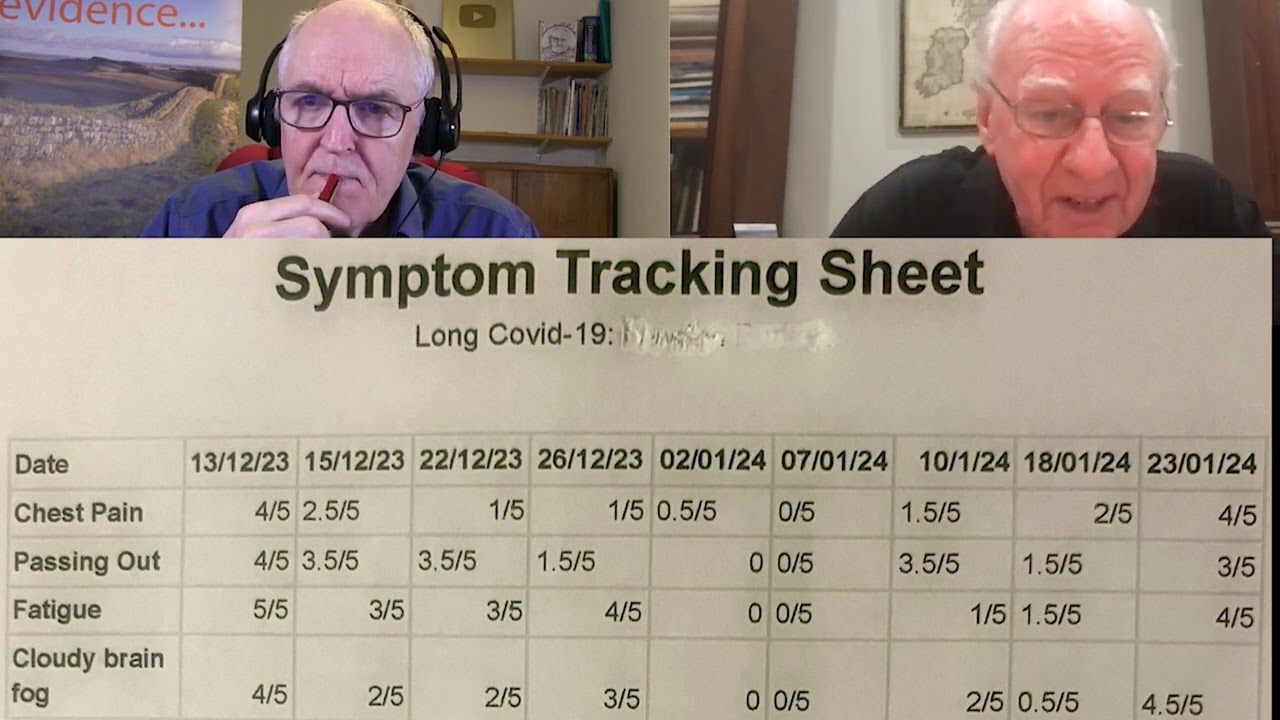
I'm not the the only one who did this as doing this um and you put up a graph which was the first patient that that I actually treated um who had got post vaccine damage of the long Co type uh this particular young boy was immobilized he he uh he was found outside of a a building by uh one of my colleagues uh Tom brod uh Tom saw this guy he couldn't even stand up he was he had what's called POT Syndrome which is a comp a type of uh the um damage that you can
get following vaccination but an absolute classic case anyway uh we treated him um with uh iaon knowing about this new mechanism that been described and I make sure that all my patients do what I call Visual analog scale they take each symptom and what you're seeing on that graph um and this Is a graph that I had nothing to this was done by this Young University student um and I asked them to grade every symptom 0 to 5 uh twice a week before they start the ivaan and then and you can see that after about
2 weeks uh basically all those symptoms are nearly right down the bottom which is close to normal now the sad thing was that after a week was then he stopped the the treatment and the symptoms started coming back Now um the followup of this young fellow is he's now back at University doing extremely well we reintroduced icton he's titrated that against what he needs to get acceptable treatment uh if he stopped the treatment the um the symptoms come back uh so um and I think you were telling me uh off off camera John that you've
had experience talking to patients with you know very similar uh similar types of stories now we've obviously treated quite a few patients Now uh this way and they pretty much if it's a a clear-cut story of either postco uh infection or postco vaccination uh pretty much if not certainly not all there's one or two that haven't but most of these people get a graph like this now they they're not always quite as as good as this but most of them have significant Improvement um and and what I think is happening here is that the iaon
is capping the expression of the spike Protein throughout the body on the various cells um now the symptoms that improve quickly are the ones that relate to non-tissue damage uh a lot of the people we see get what's called small fiber small fiber neuropathy that is it's not the big whole nerve that gets destroyed but the very small fibers and that usually they have burning feet um I had a lady yesterday had burning hands and then she got burning feet but they in our experience uh many of them do Improve but it takes much longer
it might be a month or 6 weeks or eight weeks uh and again because uh we can't quite get people to do large randomized control trials you're not totally certain of whether some of those effects are the natural history of gradual Improvement as we know no I'm con I'm convinced by your cohorts of patients Robert and consistency with other Physicians I've had the pleasure of talking to around the world that the Picture is consistent here you've got rapid reduction in chest pain passing out this pots syndrome the fatigue the the the the brain cloudiness the
the the the brain fog all improving dramatically how how long after starting the itin did these symptoms improve in this young man well well you can see that on the graph John um I think it's about 10 days to two weeks before you can see uh as I'm looking at it the the left side when when the icton was about to start and Then they're treated with uh the icton for 10 days 12 days and then they plummet down to zero or close to zero and about 7 to 10 days L we then stop what
I do is I give a twoe trial uh and then we sto the icton and pretty much all of them exactly the same pattern um I know that uh I was talking to um uh you know colleagues in the states uh where they've actually seen 3,000 patients like this and they say that they see the same the same benefits at Most of their patients are post vaccine as opposed to post viral infection I think you were you actually yeah sorry I was going to say you've actually got the double confirmation there you've got the patient
improving dramatically when you start them on the icin while they remain on the icin they stay improved when you take the icton away the symptoms come back again that's true that's true that was interesting um I really followed the idea of uh the David in the state had had pushed forward and we're been fairly closely associated with with that story that um that this is what what was happening but in the back of your mind you say well is there something non-specific and I I saw a very important patient actually also yesterday that I I
think was important was a patient that really had had a vaccine but the fatigue illness began about 6 or eight months later so the question I had Is can this person have a delayed sort of response now this patient is the single patient that has had absolutely no benefit and it's quite interesting that um although we we we felt it was from a medical Viewpoint a reasonable thing to try because this person was so incapacitated uh the patient didn't benefit but again it was very different to all the other patients we're seeing where there's a
clear-cut relationship between the the insult be it infection Or or vaccine and the generation of the their symptoms so this this patient that didn't fit Robert he had the vaccine then there was a long period of time that he was normal what was the kind of History he was a person who'd had um a relapsing fatigue illness uh and and came along and said well look you know I think it might be all due to the vaccine but you I had the vaccine some months ago um I didn't actually I've had a pretty good period
of time and now they All of a sudden the the fatigue has come back and uh uh we said well you know this is a bit different to what we're seeing but let's see what happens nothing happened so I think there's two possibilities sorry I was going to say there's two possibilities there really isn't there what one is that this is a delayed vaccine injury or presentation w w with a different pathophysiology and of course the other is it's not related to the vaccine at all correct correct And and we were giving this a trial
on the basis of the first of the ideas that there was a delayed effect and the mechanism was similar to the other people you know that we were seeing MH now I think you've been thinking more about the genetics of this uh these conditions as well and again the commonality between the chronic fatigue and the the postvaccine and long covid what sort of what you thinking about the genetics of this well what we noticed Was in a lot of the patients that we were seeing with postvaccine um fatigue or post infection fatigue had a history
of episodes of fatigue illness now it might have gone back years before um uh you know one person I had that had went back 20 years before when she was doing her final year exams at school and uh we call that I call it the HSC disease because the final year exams here are called the high school certificate and when I was In more busy practice than I am these days uh I would be seeing every year uh half a dozen a dozen young kids uh with this and then they'd get through that and they'd
be okay uh other people had uh a viral infection and it took them a year to get over it so there was this story I was seeing in patients and it it suggested to me that there was a a phenotype a particular genetically influenced phenotype a proness to developing a fatigue illness when They're exposed to precipitating factors like a viral infection um a covid vaccine uh and uh it made a lot of sense and then I started looking at at at at markers that we generally used to see as being abnormal in people with chronic
fatigue illness and that is uh did they have a slight defect in the antibody production by what we call a subclass deficiency and um I think it was a German group showed fairly recently that there's a significant what we call ig2 If if you look at antibodies in the blood we say oh that's an IG antibody uh now if I can just go back a little bit of a step to explain this that if you get a virus infection you make progressively better antibody you start off by making an IGM antibody the names don't matter
but it's a it's not a particularly good antibody to neutralize that virus but the body's very smart the T lymphocytes remember there are B lymphocytes that make antibody and then There are t-lymphocytes that do other things and we talked a bit about how they can damage the expression of Spike protein on cells uh causing structural damage now the bosy then makes an IGM antibod great big awkward sort of Affair but the te- cell comes along and says hey this is not good enough so it switches the migm goes down and an IGG antibody comes up
and that's the signature of having had a past infection that will stay with you perhaps for life But when you look at the IGG antibody it's also made up of different components and they're called IG subclasses and there are four main subclasses 1 2 3 and four immunologists have no imagination um anyway um I can I could remember that though one two three and four one I can too I can too Li of my IQ these days but um so what we found in chronic fatigue syndrome is that people are fighting the Infection with one
arm behind their back they have a reduced igg2 or igg3 uh subclass antibody and what they do not switch from the IGM to the IGG now I used to be so confused I'd see people being sent to me by family doctors saying what's going on this person had glandular fever you call it infectious mononucleosis um most people now know that's the EB virus the epstar bar virus and um you make an IGM antibody in fact that's what you use to diagnose the Infection oh they got an IGM antibody and that disappears after a few weeks
and the IGG antibody comes I'm seeing patients who have had fatigue following glandular fever infectious mono uh infection years before with both migm and IG it was confusing and what's happening here is that the tea cells are defective and this is allowing the Persistence of this virus in chronic fatigue syndromes the persistent virus is the glandular Fe the epstar bar virus In postco infection it's the protein and so you can start seeing that there's this common immune deficiency with genetic genc factors the Persistence of the antigen be it a spike protein or a part of
a virus and an ineffective immune response which is the inflammatory component causing the symptoms and so one of the reasons for understanding all of these three components as expressions of the same generic type of problem is that a Paradigm can be built up that explains links them together and so if there's a genetic Factor it may be that if you're getting a problem with glandular fever virus sorry for those who don't live in Australia epstar bar virus that um you you make an incomplete immune response and you get over it sort of get over it
and then come along and you get Co well the same sort of genetic immune defect is there and so you get the problem now that's been I've been finding in a Number of the patients with um postco uh fatigue illnesses that they've got an IGG subass deficiency many of them do and many of them still have the signature of a defective response to the epstar bar virus by still having an IGM IG uh combination of anybody saying hey I've got a phenotype I'm around to get problems if I run into Co now to me this
is incredibly important because you should we be vaccinating those people should we be doing these simple Screening tests I don't know the answer um these are issues that the people who uh have uh access to large uh funding think they should be looking at this and when we started talking I was talking about the the the great disappointment of the outcome of our review government initiated review of long co uh where none of this sort of ECT was looked at it was all very superficial stuff uh you know we need rehab more rehab so they
put $100 million in into that sort of Research not a statement about let's looking at what's going on and how we can understand and maximize the the benefits by looking broadly at this issue of phenotypic uh fatigue illness syndromes if you like so quite a few of the patients you're seeing with with postvaccine long covid whatever we want call these these two things quite a few of them still have IGM immunoglobulin Type n to M to Epstein bar virus not a few not quite a few but some some some Yeah and are you are you
seeing IGM a few have IGG subclass deficiencies yes right and are you seeing ongoing IGM to spike protein as well do we know that uh look I that it's the absolute obvious question and unfortunately the routine pathology Labs uh don't do that as a routine I wish they did um my problem of course is that U uh in the past I had a laboratory with something like up to 60 scientists and I could simply say look I just going and do an IGM anybody but um I'm seriously old these days John and uh uh I
don't have that laboratory access anymore cuz I've retired from the University but that's desperately needed desperately needed and so easy to do yeah it's just so so obvious I mean well if I can think of it it's got to be totally obvious it's a yeah I think to probably properly answer the question you asked um which was the genetic aspect I we have to look at what I think is very exciting and that is the current What's called computational genetics now if if we look at genetics we we understand there's DNA there's messenger RNA there's
um expression on proteins and if if we go back to mandalian genetics people were looking at big chunks of genetic change so that you didn't get that Gene you got a rare disease uh it could be uh pheno Keeton all these things little kids can get um and um single Gene conditions very often a single Gene causing a disease but of Course things changed when in the early 2000s uh we brought in uh the P using PCR uh Technologies uh you could start analyzing genetics and this of course led to the Human Genome Project uh
and we started looking at what's called snps um snps were identifying a u a single uh genetic defect that may not lead to albinism or or some major disease but could influence the outcome of a disease and these were called um single base replacements so you you know you got These four uh base components in DNA or RNA and if one of them was just missing it could not necessarily lead by itself to a major disease but could influence and and when they started using SNP analysis in uh postco um there there were rare findings
but not not a lot and it was a bit disappointing and so we've moved from the mandalian to the snps um using uh genome what's called genomewide analysis uh using um PCR technology and then more recently people said wait a Second maybe we should be using uh an analytic methods that look at the interaction of genes and this is called computational genetics where you actually look to see how this Gene is there a minor defect here that works with another Gene to actually have an expression and when they did that they started finding in chronic
fatigue illness postco vaccine fatigue and post infection fatigue very similar genetic Abnormalities and this to me was a huge breakthrough and there were clusters of these and the Clusters tended to relate to two different biological uh aspects the first was the development of an immune response and that made a lot of sense you know we've got a cluster of these interactive Gene abnormalities related to not making a great immune response to get rid of that Spike protein or the epstar bar virus or the Ross River virus or um CMV any of These other viruses that
can cause a fatigue Illness but they also found a second cluster which related to defects in mitochondria now mitochondria are little tiny organel in the cell which are like the batteries of the cell this is where you gener at the energy uh you make the the uh it's like a a bouncing electron chain and these electrons uh bring together um phosphate bonds that are high energy and they can be used by the metabolic processes of the cell and So this was really really exciting because for the very first time uh there's a potential mechanism of
the major symptoms that characterize every person with pretty much every person with chronic fatigue illness no matter what the cause and that is energy activated fatigue so if you're got a lousy battery then the energy particularly when you're stressing it by wanting to use it in muscles and whatever uh makes a lot of sense I'm not Saying this is the course but to me uh I found that extremely exciting and the other really important thing is the same clusters of genetic abnormalities were present in those who got postco infection long covid following postco vaccination and
in people with chronic fatigue illness not identical but very similar so all of a sudden now the story is starting to evolve that uh as a result of clinical um metabolic and genetic studies we've got this fin People are born with um a proness if you like in certain circumstances to get a fatigue illness and so it's not surprising that when you've got something uh like uh messenger RNA vaccines which cause a persistent antigen and you've got a nasty virus that's likely to um get uh expressed uh on a longer term basis that uh you're
going to get up to 5 to 10% of people uh getting chronic fatigue illnesses plus of course the structural Problems due to a second type of immune response to these persistent antigens does that make sense it does so we have these one or several of these single nucleotide polymorphisms these the atct AC GT letter could be switched T AC several of a T C and G yeah inside of s yeah yeah exactly yeah um I always remember it's a to T and C to G that's how I remember it I want tell you how I
remember it John I I took a I took a Year off in doing medicine I did a bachel of Medical Science research and we were doing the really the first uh messenger RNA analysis in metazone multi cell systems and I had to work with chickens uh chicken egg embryonic 12-day old embryonic chicken eggs and I never ever ever can eat a an uncooked egg uh anymore uh but one thing I did learn was uh uh the base uh the base ratios of nucleic acids and that was in 1963 a long time ago wow some Some
of the pioneering work into into RNA that's that's amazing but so but but what is is now becoming obvious really is this computational genetics where it's not a single gene or even two genes or three genes or four genes it's the whole interaction genes some genes switching on some genes up regulating some genes down regulating and it's almost like a complex emerging biochemistry that Emerges from this from this whole thing giving very in degrees of of um of predisposition it makes it makes perfect sense what what I would like though is some way to U
regulate the immune system so that the the body itself can downregulate the spike protein production um any way we could possibly do that well um I you possibly know I I have certain views on on all of this and that Is that the um I I think we're taking some concerning roots in in how we manage conditions like Co um I think what probably the the biggest mistake we we made uh was to uh I I'm I'm an immunologist so I'm I'm all for vaccination but I think what we did here and and I'm not
not buying into messenger RNA obviously got views on that too but but I think that what the biology the history of biology show Notice uh from 80 years of flu vaccination is that a vaccine will never be a central comp the central the central component for managing a pandemic to an inhaled virus because you're straight away looking at trying to overcome the biology of two separate systems you're injecting one and you're getting infected in the other and they don't talk to each other very much and when they do you get incredible suppression coming from the
the uh Mucosal route now that that was all known right at the beginning um now the um and so um the vaccine was never going to be the the central component and so so the vaccine's only working systemically yes not working it's not working where the virus gets in in the M their impact is is important because they will help when that virus gets into the gas exchange part of the body uh in the lungs that that is handled by the Systemic IG circulating te cell response and so there is no argument from me that
you do get benefit against serious disease uh but um it's um it's it's you did in the early stages at least I'm not sure work yeah the the the vaccine producers have never ever kept up and in any case uh you know the vaccine's got other issues so what I'm really saying is that I I don't think that is going to be any more productive than we have had over 80 years of flu vaccine and that's Great you can the Chinese vaccines are just as good the Australian vaccine produced uh at fenders University is just
as good uh at preventing without without the dangers but they're not going to change the course of the disease they won't affect getting infected or giving the infection to someone else because you're vaccinating inside the body not the mucosal surface which is talking about getting infected and getting other people infected uh so You have to think of something different now the way we thought about this is that um uh trying to answer the question why is it that if you get 100 people getting a a virus flu or uh 95% really do very well you
know I've had Co twice and uh or have treated myself but but even so my whole family none of us have got particularly sick but I've got friends who have got very Sick and uh I know obviously of people who who have died from this it's only a small percentage but when you start off we're all sitting there in a room we all look the same we think we're we've got the same immune system but we don't so what is the difference so my group over many years we we've been looking at where there's a
difference and what we showed uh was that the way the the body protects itself against these inhal virus is by um swallowing the virus and There are little organel in the lining of the the gut called P patches they're little li like little lymph nodes and that's yeah the little organs organel yeah organs and and they make te- cells and B cells anybody producing cells the B cells and the te- cells and they then go through the bloodstream to the lung the lung is a very clever organ it doesn't want to be bothered with having
to learn how to protect itself all it wants to do is put oxygen into the body And take the carbon dioxide out that that's what the lungs are there for they do a few other things but that's really what they're there for and so they if you like have this offsite system where you you make all the immune cells and you tell them what to do by swallowing what you've got sitting here John for if we sat here for 24 hours and I won't do that to you um we'd Swallow at least a cup full
of secretions without knowing it and of course all the bugs that we Have are in that cup full of secretions um now what we found is that one in four people do this process very inefficiently and we can make that far more efficient uh by actually feeding the the one of the bugs that uh make this system work well it's so simple it's so ridiculously simple and yet what it does it dramatically changes the way in which the Airways control an infected virus or a cell so that you actually look at the idea of immune
resilience And while immune resilience is not something that's easy to measure uh it can be done um some people are over here and what if you can push their resilience over to uh the other side you you're actually preventing them getting serious disease so my view is that that what we have to start doing a lot more is looking at making people more able to resist getting serious disease um using what we do know about the the biology uh And this is something obviously my group and others I hope there's others uh seriously looking at
so that we we in a pic comes no matter what that pandemic is youve helped that person respond to the pandemic in a mile away than they would have if they were sitting there without by making their process physiological process far more uh efficient and this will boost their mucosal immunity whether it was a Bacterium whether it was a virus whether it was something cooked up in a lab in Russia or wherever it it would it would just increase our ability to resist inhaled mucosal surface exposure to antigens exactly exactly we've been developing this for
40 years really and uh you know we've shown that in people with chronic damage to the lung people with COPD empis um we we actually reduce admission to hospital by 50 up to 50% in people who have got Chronic cough and sputum um with called exacerbations there when they get a virus infection they get an exacerbation uh and that's the thing that puts these individuals into hospital we can have that uh by making their process work more efficiently we've now started thinking much more about as a result of co uh the normal healthy uh so-called
healthy individuals but particularly people with risk factors like smoking uh older age uh who could do with uh Improving their Delivery Systems and we are not short of people with accused exacerbations of chronic bronchitis in hospitals well we've got PL plenty of those I mean the surgical Wards fill up with them every winter and surgical patients don't have space to fit in so 75% of us aren't really very good at this 75% of us are sitting there swallowing these bugs no 75% of us are very good it's the 2 75% very good yeah 25% aren't
very good yeah But we all get a boost if you increase the number of bugs that we're swallowing by giving these attenuated B to swallow that's going to give everyone a boost to some extent that's right exactly exactly what we're doing is Shifting the resilience so we're making them more able to control the response to a inhaled virus be it a a flu a Corona virus or whatever so interesting questions there very obvious questions because I I I can Think of some of them and and obviously you've thought about these in more detail things that
could easily be tested with basic Laboratory Testing with with I think pretty basic research techniques we're talking about pretty basic prospective research methodologies here and these things could be completely answered if if there was the will to do so yeah it's it's I think about this a lot um what I've noticed uh is that Science uh has been dominated um increasingly by people doing phds in maybe a single cyto a sle chemine uh and the literature is peppered with fascinating observations in the lung you know why have they got these funny cells what is not
happening is that young scientists and unfortunately some of the people who are responsible for the training don't seem to understand that you need to understand the big picture you need to understand the broad Physiological framework uh so that you can inter and understand the uh the specific specifically identified abnormalities uh like a particular chemic and what is a a th17 cell suddenly found in in in a lung what does that mean well if you don't understand that that's the cell that's being delivered from the pis patches um I mean it sounds so basic and simple
but but it happens all the time yeah well that and and in combination that and and in com Combination with the fact that a lot of research is done for commercial ends um a lot of research is is done by people that can afford to pay for it or companies that can afford to pay for it um that kind of epistemological problem that you've identified and this sort of um I don't know what what you would describe it as um uh an unfortunate financial situation there's there's a a deficit between the the money to sense
Ratio uh in in a lot of in a lot of these situations and uh and yeah it's hard isn't it it's the way short shortterm commercial interest yeah I mean we're responsible for allowing this to happen um we've um you know a company uh they see their responsibility is they're focused on rewarding shareholders and they're going to reward shareholders by having a patented product um it doesn't really matter in a Sense from the shareholders Viewpoint whether it's uh very effective or not effective or causes more damage it's it's going to be sold at Great rate
I mean let me let me give you an example I'm just writing a thing at the moment on on different ways of uh of really repurpose drugs and you know this is data that's in the literature that the cost of saving a life with iaon in Co is $25 a life now I mean this is a terrible way to look at medicine but but just to Give you an idea the cost of saving a life with Pax lovid or M new Pur not that there's too many lives saved with them but is $1,500 $15 $500
um no actually no it's more than that was more than that it was much more than that I I can't but we're talking it's probably with that for for a course a short course I would think $25,000 no that sounds more like it no 150,000 I was massive amounts of money Massive massive amounts of money now this is all based on uh relatively objective analysis not and even if these drugs are absolutely brilliant which of course they're not but even if they were brilliant drugs uh the cost precludes whole SES of the world's population well
that's right absolutely I mean we look it's interesting looking at the big studies that are coming out with these specific antivirals you know with their patents they're all repurposed drugs by The way they're they're not brand new wonderfully identified drugs because of Co you know they've been tried out in flu they've been tried out in HIV found to be pretty ineffective so so they recycle them but they've still got that pattern now there's a big study uh showing that PA lobid which was probably the better of the two um has zero impact zero impact in
resolution of symptoms or prevention of going to hospital now that's with the current isolates so in Other words um the earlier studies which showed some benefit even that was argued by many with the pxl but the early studies in your country John with M piew looking at 25,000 patients I think it was the Oxford Group that did this um zero zero uh effect and yet every family practitioner in Australia is writing scripts for these every day at $1,200 a a time I mean it it's just and it's worse than that because of the Problems that
that are being seen with some of these people with the antivirals um and no one seems to want to talk about it or or or do anything about it it shows you what with I IV meon we've got this obvious example and uh in a and chronic and uh I mean nothing again again in treating treating your patient you you I think you got down to 12 milligrams twice a week you know really Really very some of the people when they stabilize these are the postco uh um damaged patients um what we do is we
we tight trait to see how little you need uh because remember you know this is all new we we hav this is a new problem and we you know no one wants to be on a drug for a long period of time but I think what it's showing is that if Iva mechan is acting the way that people like David shine are showing then that as long as you need it all it's doing is is Preventing the immune response getting to the spike Protein that's how long the spike protein is Sting it's an indirect index
of how long the spike protein is persisting Y and you you mentioned there Robert that a lot of this is new but people like yourself who've got a lifetime experience in research and treating patients who a lifelong physician and uh consultant physician researcher you you're in the ideal position to uh transpose your existing Medical knowledge onto this new condition and as a result of that it really disappoints me that more people people aren't listening to U people that are able to synergize the old and the new together uh like yourself and it just seems the
height of arrogance not to listen uh to to people to people with with high levels of medical practical and and theoretical experience it's just we just seem to be in a bizarre Situation why do we bother having professors if we're not going to listen to them it really is well you know this one's a a bit of an Professor these days but look I I I don't know I can't talk about myself of course but what what I can say is that um it's fascinating to look at the decision tree the individuals involved in making
decisions as you go down through all aspects of of any medicine but particularly now it's co where you've got this incredible uh Over o over pinning um uh financial and uh political uh components um what I mean I was looking at the reports that were contributing to this uh uh outcome of the government investigation of postco uh syndromes and the the individuals giving it were were well-meaning Physicians but I don't think there was one immunologist I didn't see anyone I recognized as as having an understanding of the process of the disease and So you you're
seeing If you look at the long Co clinics in in our hospitals um they're being run by Rehabilitation doctors or respiratory Physicians all of whom are important and I would never underpin the uh the not the importance of Rehabilitation uh in managing many of these patients with chronic uh severe illnesses uh at at all but what I'm saying is that that these were the individuals who seem to be giving the information and it's it's not surprising that uh a very competent Person um politician who happened to be a a a very experienced pediatrician um who
was chairing the committee uh I mean you can't expect him to have an intricate knowledge of the Immunology of Co but he's getting the input from my colleagues uh some my and that input's important but there was no input from people who I thought understood the the disease this is the same with all the decision-making uh components of the decision making tree that um you've got Public Health Physicians who uh are very good at aspects of Public Health but quite frankly I've yet to meet one that really understands uh the Immunology of of a mucosal
infection and yet they're the people we see on TV uh many of them haven't even got medical degrees so they can't be expected to to really understand these processes and we're having a we're having a review at the moment of of Co um and an old friend of mine happens to be cheering that who is Fantastic but you know she's uh um not a physician not a scientist uh and the two people assisting uh individuals who a long way from understanding the biology of of the disease so you know I what can I say yeah
well we are biological entities when the physiology goes wrong that becomes pathophysiology and there's no substitute for understanding those mechanisms and then applying those to the clinical pictures that we see it's um yeah it's not something that can be Dispensed is a resistance we have a um a thing called APPA which is um it's a commercially run um Organization for supervising uh the registration of health professionals now um I looked at AA being they were making some pretty silly decisions and um I thought well I'm one person in this country who who has a background
of understanding this type of problem so on two occasions I contacted them and said look I'd be very happy to help you I Mean I'm not trying to be arrogant at all because there are a lot of things I can't help with but this was an area I could I didn't even get I didn't even get a reply not even the courtesy of a reply and that was with two uh and that is a repeating pattern I I tried with several other organizations um um and you know that's just the reality there's kind of an
an obtuse obtuse component to it isn't it the just A refusal to to learn lack of humility arrogance I suppose it's uh it's it's a very strange clent I think what what I've described as arrogant is having a bureaucrat telling me how to treat a patient and you know this is this is getting a little bit away from what we've been talking about but for for I got myself in hot water about 3 years ago when I wrote an article uh for a very interesting good Jour called quadrant And I said look this is I
wrote it at the end of 2020 and it was published in January of 21 and I said look this is what I think is going to happen as a person involved in the biology all of which has basically happened but uh I pointed to the the value of repurpose drugs in a circumstance where people were dying and and uh they were being told to go to hospital if they couldn't breathe and get oxygen that was the you know the way they were being managed now I got into terrible Strife over that and we were having
bureaucrats making decisions people who wouldn't know a sick person from a non- sick person um or or doctors who had never seen a patient for a long long period of time making decisions to basically support a vaccine uh as an experimental uh registration and people died as a result of that now to me the greatest AR um arrogance and and shameful activities was to interfere with the relationship Between a doctor and a patient uh in making a decision with an accepted safe drug that had some common sense value of of trying because you know what
harm are you going to do um and all of us uh use off Lael drugs uh all the time uh to to handle uh patients who don't fit into textbook PE p people don't fit into textbook descriptions textbook descriptions are uh you and me writing a book about disease which seems to put together most of the problems but every Patient's different and needs to be treated differently absolutely professor as always thank you so much and next week we are hoping to have a guest on the channel we won't say who it is at the moment
because we're not quite sure whether we're going to get him but it's going to be very interesting if we can get uh the three of us together uh do tune in next week you won't be disappointed um and uh Uh we'll have lots more interesting things to talk about but but for now um I'd like to say Robert really appreciate the fact that this is this is this is pioneering material that you've chose to release through this um through this medium which is absolutely brilliant it's going from um your experience to people around the world
to consider um without having to go through the cumbersome process of writing papers I I know you are writing papers as well but That does take much longer so we really appreciate this sort of breaking medical news really being released in this format thank you very much for that and well John I I'll just I know you want to finish but let me just say okay let me just say one thing that the uh part of the uh confused process that surrounded Co has been uh the the written written information at one level with the
Legacy press and at another level with the uh uh the once trusted medical journals um Now a lot of what we've talked about would not be accepted by um journals that I've grown up with that I've lived by that I've paid for out of my own money I because I valued valued those journals um the level of corruption I think that has um seeped into uh communication through the printed word uh through the trusted news initiative with the Legacy press uh with uh journals now that are are charging thousands of dollars if you want to
put An article in because it's only the big farmer companies that can afford that that type of money um it's it's it's a disgrace and so John I think what you have done is you provided a third arm of evidence-based medicine and um uh this is respected across the world as you hopefully know and uh uh people like myself really appreciate the opportunity of saying things that that we believe are are really important um and uh absolutely so we're grateful for for This opportunity thank you and of course the irony there is that that you
can now not get published in journals that you've been published in all your life I got over 300 Publications on a lot of this but uh yeah yeah but um I know that uh they wouldn't want to publish uh a lot of the stuff we're talking about it's it's not to do with the data it's it's to do with um a a narrative that's been so oppressively uh overwhelmingly uh influential and I I think people in The public around they understand this better than uh than one might expect and increasingly so yeah increasingly so yeah
well I'm going to go to bed and you're going to start your day so I have another couple yeah good idea so so for now Professor thank you very much as always great pleasure John