You're never going to be able to escape pain and suffering in this life. It is inevitable. It is unavoidable.
It is a fact of life. That life is hard. That it challenges us.
That it throws things at us. This is not new. Imagine what it was like to live in ancient Greece or ancient Rome.
Epictitus spends 30 years of his life in slavery. Senica lives through the time of Nero. Marcus Aurelius has health issues on top of plagues and famines and wars.
People have always gone through challenges. There have always been overwhelming events. And the question is, how are you going to toughen yourself up to be able to deal with [music] it?
How are you going to make it through? And how are you going to derive meaning from it? That's what we're going to talk about in today's episode.
methods that have been tried and tested over the centuries by the ancient stoics to help reduce your anxiety, reduce [music] your anger, reduce your stress, increase your resilience, and make you stronger for difficult times. [music] You think you're the first person to live in political dysfunction. You think you're the first person to live in a time when it feels like the world is falling apart.
You think you're the first person to live in a time when people are shitty to each other. When there's demagogues in power, when it feels like stuff is falling apart. No, you weren't.
The ancient Stoics lived in the time of Nero. You know, Socrates, he didn't live in the golden age of Athens. He lived in the time of 30 tyrants.
He lived through a great power conflict. People have always lived in difficult times. But you know what they figured out?
They figured out you got to focus on what's in your control. You got to figure out how to not let the [ __ ] make you an [ __ ] You got to do good where you can. You got to remind yourself what's important.
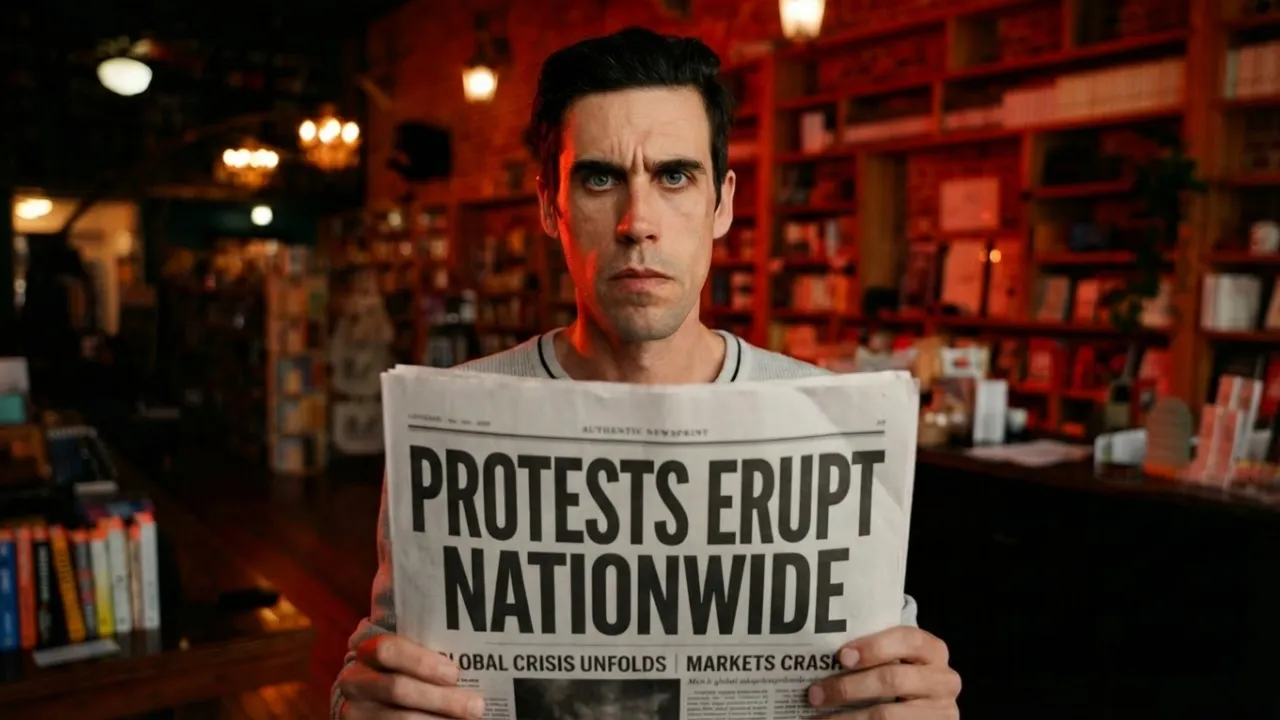
You can't follow every news story. You can't be distracted by every outrage. You can't extrapolate everything into the end of the world.
You have to ride it out. You have to focus. You have to stay good and stay decent.
And then you got to make a positive difference where you can. You can't give up hope. You have to stand strong.
And you have to realize in times like these that there have always been times like these and people got through it and you will get through it. And it may well be an opportunity for you to be great, to be heroic, to make a difference. That's what you focus on in dysfunctional, crazy, scary times.
Are things wonderful or are things terrible? Is this a golden age or a nightmare? Is it a bull market or a bare market?
The Stokes would say, "It doesn't [ __ ] matter because you don't get a choice. All that matters is how you respond to it. All that matters is what you make of it.
" That's where you do have a choice. You don't pick when you're born. You don't control what other people do.
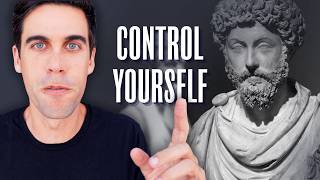
You don't control global events, but you control how you respond to them. That's what Marcus means when he says that the obstacle is the way. We choose what we make of it.
We choose what we do with it. We choose who we become in response to it. Look, a world without [ __ ] is just not possible.
A world without injustice is just not possible. A world where everything works, where everyone gets along, where everything is wonderful? It's just not in the cards.
Has that moment ever existed in the past? Of course not. So why would you expect it to exist in the present or in the future?
This was Ko's big problem. Cicero said that he wanted to live in Plato's Republic instead of facing the fact that he lived in the dregs of Romulus. This is where you are.
This is how things are. The main question is what are you going to do about it? Who are you going to be inside it?
Are you going to let inhumanity turn you into someone who is inhumane? Mark says in meditations, are you going to give up? Are you going to despair?
Or are you going to focus on the good that you can do? Are you going to focus on what's in your control? Are you going to practice the very best revenge, the most revolutionary and transgressive thing you can do, which is to not be like those people?
To not be like your enemies. to not let the [ __ ] make you an [ __ ] That's the goal. That's what we have to do and that's what stoicism can teach us.
>> I am curious about what [music] you see about the let them theory. What you see about it all. >> There's this interesting passage that Marcus opens meditations with that I think it's got a little let me in it.
Tell me what you think. Okay. So the first part he opens meditations with a list of acknowledgements from everything he learned from all his [music] friends.
But then says when you wake up in the morning tell yourself the people I will deal with today will be meddling ungrateful arrogant dishonest jealous and sirly. And he says they are like this because they can't tell good from evil but I have seen the beauty of good and the ugliness of evil and have recognized that the wrongdoer has a nature related to my own. He says and so none of them can hurt me and no one can implicate me in ugliness.
He [music] says, "I can't feel angry at my relatives or hate them because we were born to work together like feet, hands, and eyes, like two >> [music] >> rows of teeth, upper and lower. To obstruct each other is unnatural, and to feel anger at someone and to turn your back on them are obstructions. " [music] And what I like about that is the first part you think is going to be cynical and jaded and nasty.
And then he's like, "But that's them. " And like my job is just to not let myself be like them and also to work with them regardless. That to [music] me is stoicism.
And the idea of you let them be them and you still have to make sure you are who you're supposed to be. When Marcus says the obstacle is the way, he's talking about something very specific in that passage in meditations. He's talking about difficult and obnoxious and annoying and frustrating people.
He's saying they are an opportunity to practice virtue. We don't control them. We don't control what they do.
We don't control what they say. But we control how we respond to those people. We control what we do.
We control who we are in response to them. So frustrating people are a chance to practice patience. People who wrong us are a chance to practice forgiveness.
People are a chance for us to practice our persuasive skills. The idea is that everyone we meet, even the most annoying and frustrating and obnoxious people, are a chance for us to be what we're capable of being. They're testing us.
They're making us better. You don't have to make it [music] worse. They did something to you.
They cost you something. They screwed something up. It's annoying.
It's frustrating. It sucks. This is no question, but you don't have to make it worse.
This is something the ancient stoics talk about a lot. The event, right, the comment that someone makes, the injury, whatever, that's one thing. But then the decision to be angry about it, to be bitter about it, to focus on what's unfair about it.
By responding impulsively, by being like the person who injured you, you are adding to the injury. You're piling costs on top of the cost. Why?
Like, why do we do that? You don't control what happened. You don't control that it happened, but you control how you respond to what happens.
You control the story you tell yourself about it. You control how much you ruminate on it. You control whether you let it ruin your mood.
You control whether you let it ruin your life. It's not just that we suffer more in imagination than we do in reality. As Senica says, it's that we add suffering, right?
So, we're dreading this thing that might happen. And indeed, it might happen. But by thinking about it, walking ourselves through it, going over it over and over and over again, living in it right now as if it will happen.
You know what we're doing? We're adding suffering on top. What we're effectively doing is is borrowing that suffering.
We're like, I want to deal with it now. I want to sit in it now. I want to feel it for longer.
So, we have to remember that that this use of our creativity, the way we're thinking about the thing over and over again, we're living in it. We're actually just adding suffering on top of the thing that may or may not actually even happen. Pain is something we choose.
And I don't mean your back pain. I don't mean the pain you feel when a loved one has died. I don't mean the pain from your chemotherapy.
That would be insanely insulting to say otherwise. I'm actually thinking more about that great lyric from the band Mad Season in River of Deceit. They say >> my pain [music] is selfchosen.
[music] The stoic read on that is that when we decide to feel persecuted or singled out, when we decide that something has been taken from us, when we when we decide that we have been dealt an injustice, that's when we are adding pain on top of the pain. That's when we are choosing to make it worse. Don't feel harmed.
Marcus Aurelius writes in meditations and you haven't been. The Stoics believe that when we add an opinion on top of the objective event, when we throw ourselves the pity party, when we say to ourselves that we've been singled out, that a reputation has been damaged, that something has been stolen from us. That's when we take something that's not about us and we make it about us.
So when you are experiencing pain, when you are experiencing difficulty, try not to make it more painful. [music] Try not to choose pain on top of pain. Try not to hit yourself with, as the Buddhists say, the second arrow.
You are impotent. Your anger is impotent. Mark in meditations, he quotes a a line from a lost play by the playwright Uripides.
And the line says, "And why should you feel anger at the world as if the world would notice? Nobody cares. It doesn't matter.
It doesn't mean anything. your anger, your resentment, your grievance. You are shouting into an enormous void.
You are yelling at an inanimate object. You are mad at forces that are so enormous, that are utterly amoral, completely indifferent to you and your existence, so you might as well let it go. It's kind of insane.
And we we put up with so much [ __ ] from strangers and civil society demands that we be patient with that person in front of us in line, the person who cut us off in traffic, that employee or that co-orker that just never does things right. And so it's kind of strange the way that when we do lose our temper, it's never at those people. It's at the people we love the most.
You'll repeat instructions 30 times to someone you work with, but if you if your spouse says what too many times, you lose it. God forbid your your your son leave his shoes out when you asked him [music] not to. Senica had this great line.
He said, "Let us not be angry with good people. " Right? But that's what we do.
It's not so much a paradox as it is a a problem of proximity. Because they're closest to us, we have the most interactions with them, but it's also because they're closest to us, we know they'll put up with it. And there's something very sad and and tragic and I think fundamentally unstoic about this.
I think stoicism is is first and foremost about trying not to be angry with anyone, trying to be in command of oneself, to to not lose one's temper. But then let's really think about who's getting the brunt of our frustration. Who are we shortest with?
The fact that we can get mad at someone because they love us enough to put up with it because [music] they're kids and they have to live with us. It's not an excuse. Remind yourself of all their positive traits.
Remind yourself of what actually [music] matters to you. Remind yourself of how important they are to you. Remind yourself of all they have to put up with from you.
Let [music] us not be angry with good people. That's what this philosophy is helping us with. Senica has to go into exile days after burying his only child.
Marcus Aurelius is writing to himself about getting up out of bed in the morning even though he has health issues, even though the empire is falling apart. even though his wife might be unfaithful to him. There's a stoic named Rutilius Rufus who shows up every day to his show trial where he's brought up on false charges and everything he owns is taken from him.
I think about how these men must have achd, how sad they must have been, how angry they must have been. Stoicism is not about stuffing these emotions down by any means. But I also think about that Taylor Swift line about how you know you're good when you can do it with a broken heart.
That's part of what stoicism is. You feel it, but then you do what you have to do anyway because it's your duty. That's what Marcus Aurelius is saying when he's having that discussion with himself about getting up early.
He's saying, "Why aren't you going to do what your nature demands? Don't you love your duty, your responsibilities? " This is what stoicism is.
Even if life is kicking the crap out of us, even if something or someone has twisted your insides up, even if you're depressed, even if you're anxious, even if nobody says thank you, even if you're tired, so so tired, you have a job to do, a duty to fulfill. A broken heart can slow us down, but we can't let it stop us. Doing hard things is good for you.
We treat the body rigorously, Senica said. So it's not disobedient to the mind. That's why we go for a run.
That's why we push ourselves a little bit further. That's why we get in a cold plunge. That's why we take on challenging projects because we grow stronger for the resistance.
We unearth new capacities, new abilities in ourselves. Senica said he pies people who haven't been through adversity, who don't seek out challenges cuz they don't know what they're capable of. So whatever you're going through, however tough it is, tell yourself it's good that it's this way.
It's making me better. Doing this hard thing, doing hard things generally is good for me. It is making me better.
It's making me stronger. It's making me wiser. It's making me more resilient.
So, I'm grateful for it and I'm going to lean into it. If it was easy, I wouldn't get better. If you love history, it's really easy to idealize the past.
What would it have been like to live in this era or that era through this event or that event? And I can tell you it would have sucked because things have always sucked. [music] I love ancient Greece and ancient Rome, but you know, Socrates lives through like 30 years of war and then Athens is ruled by 30 tyrants and then what do they do to him?
They put him to death. Epictitus lives through 30 years of slavery. Senica [music] lives in the time of Nero.
Ko sees Rome fall as a republic. Marcus Reelis lives through the beginning of the decline and fall of Rome. Plus, there's a plague, a famine, a flood, a civil war.
He has held it. It's one thing after another, which is, by the way, what history has always been. History has always been one thing after another.
The point is, it's always been this way. It always will be this way. We don't control when we're born.
We don't control the historical events that are happening around us. We control how we respond to them. We control how we live through them.
We control who we are inside of them, whether we let them change us for the worse. We don't control what happens. We control how we respond to what happens.
That's stoic philosophy. We don't control the awfulness of our times. Only whether we're the exception to it, whether we're a bright spot within it, only whether we rise up and meet the challenges of the moment that we're in.
Which, by the way, is what all the historical greats we [music] admire have in common.