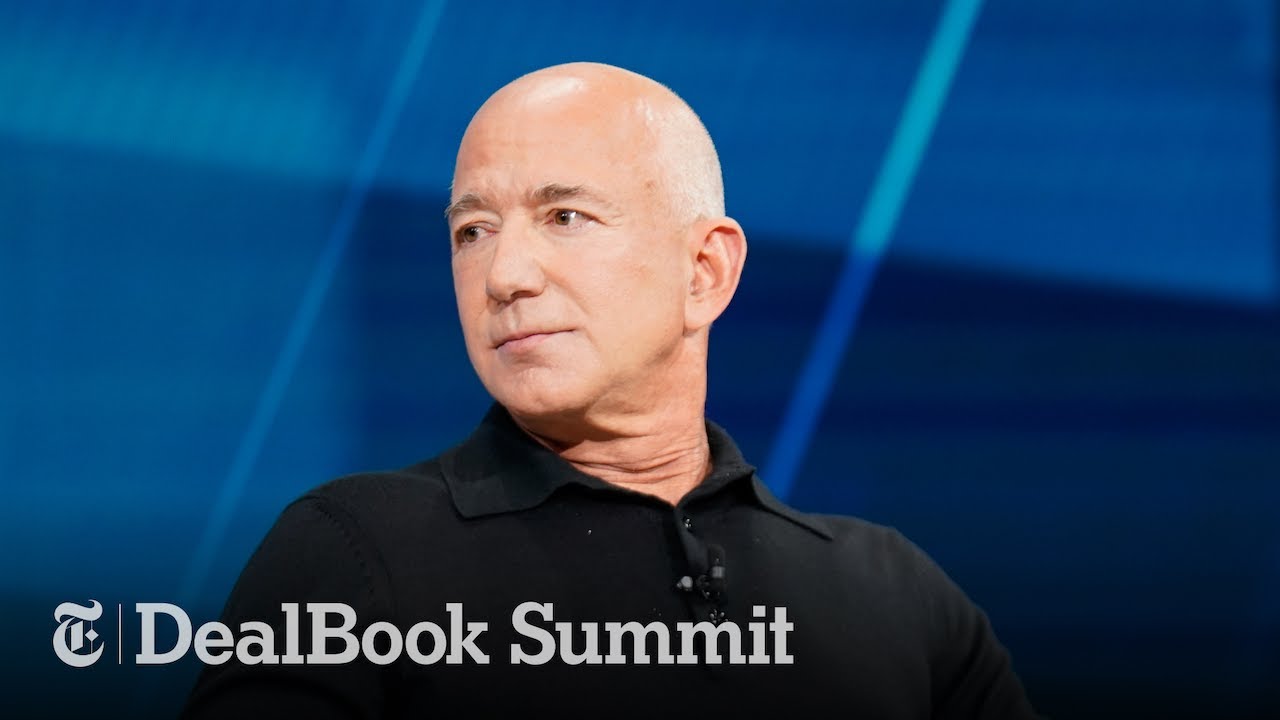
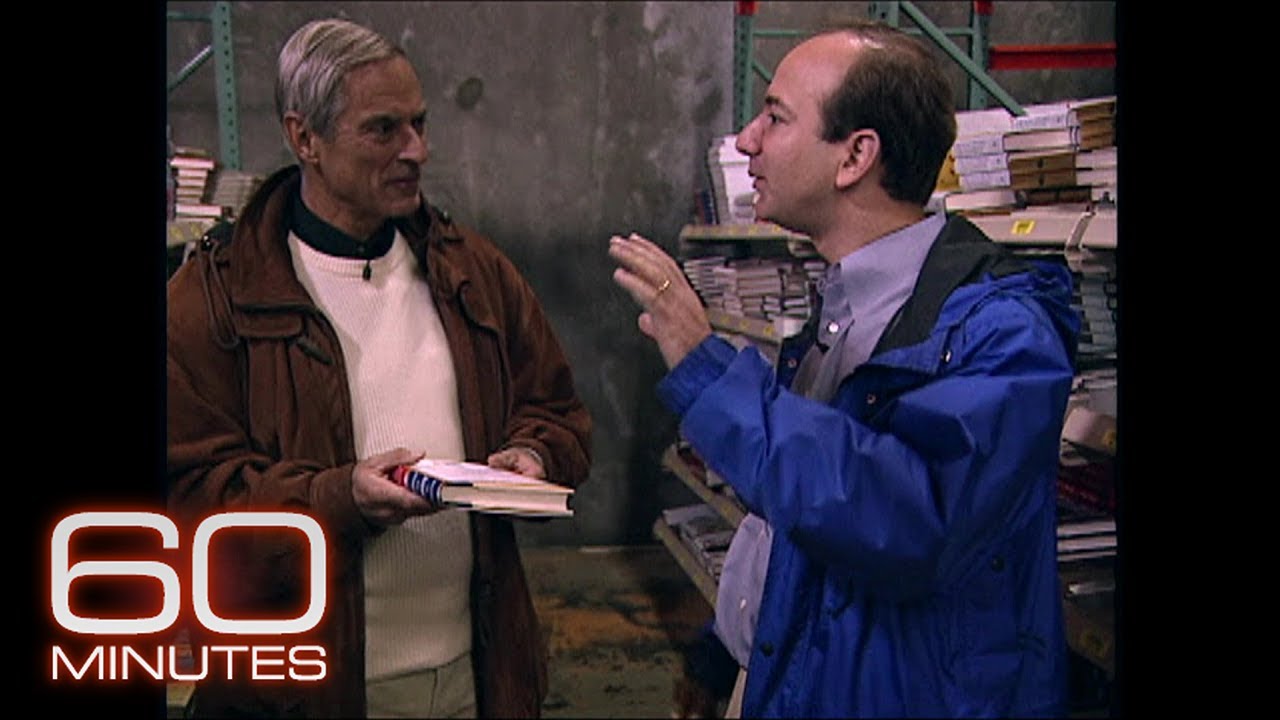
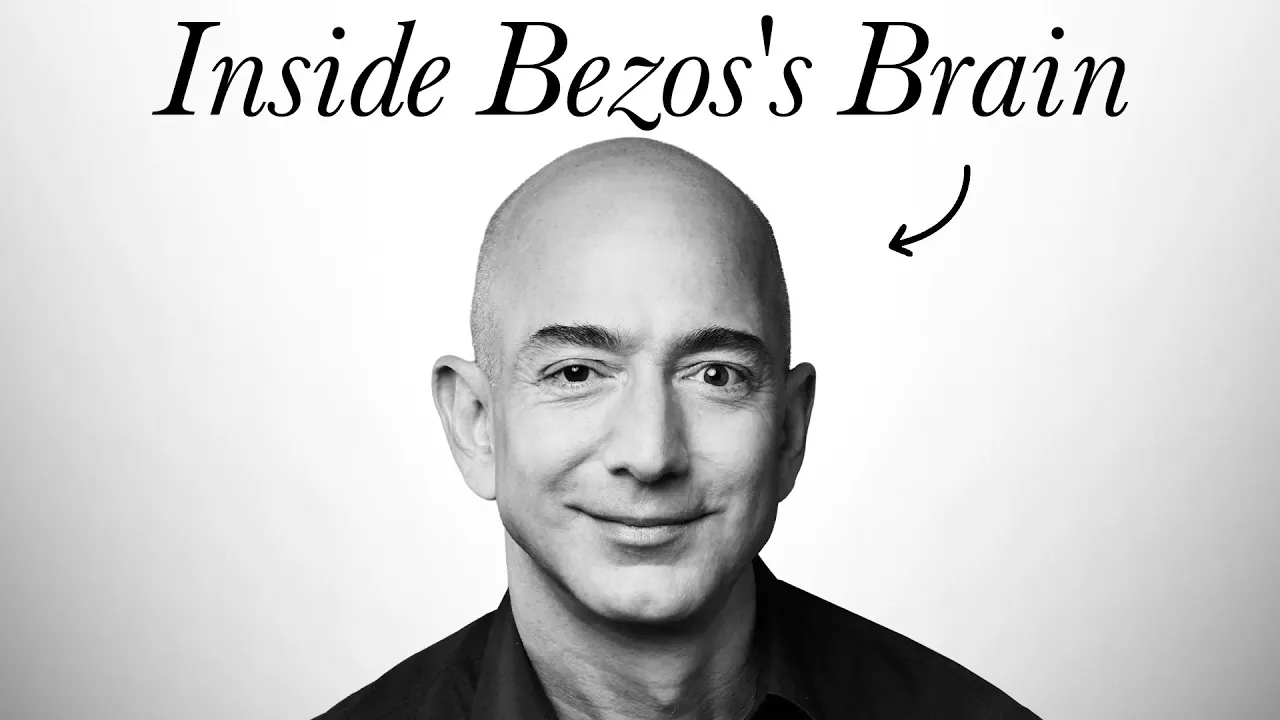
Jeff Bezos just did this interview with Andrew Ross sorin at the dealbook summit and the interview gave me so much energy that I actually printed out after I finished listening to it I printed out the transcript and it's like 45 pages along when you print it out and actually went through the transcript just like every book that I cover on the podcast so I have all my notes my highlights my underlines in there and then what I decided to do is I rearrange my outline in order by topics so if you listen to the full
interview which I highly recommend that you do you're going to see the same topics appear in different parts of the interview so I want to start with one of my favorite things that Jeff bezo said because Jeff is one of my favorite living entrepreneurs and he says that retirement is lame and they start talking about the fact that he says the this retirement thing I've turned out to be extremely lame at so he left Amazon he was always working on Blue origin but now he's back working at Amazon he's going to talk a lot about
what he's doing there but he said something that was very fascinating the importance of building a company that can Outlast you and then he's going to talk about why he is so bullish on AI and he's got a great metaphor for what he thinks AI is so sorcin asks Bezos he says Amazon is your baby you stepped away from that what did it feel like and Bezos say something that's very fascinating he says even when Amazon was a tiny company I always had it in my mind that I wanted to build a company that would
Outlast me so I've always been thinking about it in that framework and how could kind of grow into a young adult and be set off into the world successfully and independently I felt like a parent sending your kid off to college and you're hoping that you've created this independent young adult who can go off into the world you don't want them to be dependent on you if they are you fail and so I want to pause right there because when I got to this section there's two things I thought about uh based on what Jeff
was saying one comes from Daniel e the founder of Spotify the other comes from Steve Jobs and so earlier this year I actually got to have dinner with Daniel e and it was one of the best it was I would say not one of it was the best and most impactful conversation that I've had all year and like an idiot I didn't make an episode about it in fact I just texted Daniel I was like hey we should run that back so I'll see if he's up to doing that and then I'll make sure I
take notes and and make an episode about it because I think Daniel's one of obviously one of the most impressive living entrepreneurs and there's just a ton that we can learn from him but during the conversation that I did have with Daniel he was telling about the history of Spotify and he said something that was very fascinating he has this metaphor that a company ages like a child and anyone that has kids knows that when your kids are really small their behavior and their traits is really just a reflection of you and yet as they
age I'm going through this right now with my my 12-year-old daughter and it's kind of hard to deal with but as they age they become less of like a copy of you and they have more of their like their own like distinct personality emerges and so by the time they're 18 they have traits that are were formed by their own experience and they're completely separate and independent of the control or even the influence of their parents and Daniel X said a compan is the same way at the beginning the company is the founder and is
wholly relling on the founder but now that Spotify is 18 years old it's developed all these skills and traits that the founder one could not have predicted and has have emerged from within the company from its own experience and it's actually the job of the founder to make sure that the company Can Survive and Thrive independent of any one person so it was very interesting for me to hear Bezos use a similar metaphor in this interview I mean he even says I I thought about it in a framework how a company could grow into a
kind of a young adult and be set off into the world successfully and independently the second thing that popped to my mind and I I double underlined it was really important to me Bezos was talking about he's like listen even at the very beginning I always wanted to build a company that would Outlast me and so when Steve Jobs knew he was dying he was working on with Walter isacon on that that biography and he said something was very fascinating and this going to sound a lot like what Bezos saying and so Steve says I
hate it when people call themselves entrepreneurs when what they really trying to do what they're really trying to do is launch a startup and then sell or go public so they can cash in and move on they're unwilling to do the work it takes to build a real company which is the hardest work in business that's how you really make a contribution and add to the legacy of those who went before you you build a company that will stand for something a generation or two from now that's what Walt Disney did and hulet and Packard
and the people who built in Intel they created a company to last not just to make money that is what I want Apple to be and so Steve was very adamant about building Apple to last beyond him and Jeff is saying the exact same thing here in this interview about Amazon and so let's go back to what Jeff's saying in this Amazon so he says so I want Amazon to go off without me I'm still at Amazon by the way I haven't left fully you never stop being a parent later on in the uh interview
he says really funny he's like I'm a 60-year-old man and my parents are still worrying about me so he says my heart is at Amazon my curiosity is at Amazon My Love Is there so throughout this entire interview Jeff will constantly talk about the importance of curiosity he will mention how he follows his curiosity I just gave a talk a few talks at these uh conferences and one of the conferences were for post exit Founders so Founders that have already had a successful exit and they're trying to figure out what to do next and then
when you have conversations with them oneon-one in private a lot of the same questions come come up where they're like I just don't know what to do what should I do next do you have any insight into how I should choose what I work on next or what my next company should be my answer is like very Sim Sim very simple and similar to what Jeff is saying here just you just follow your innate curiosity there is um this great essay by Paul Graham I think it's episode 314 of Founders it's called how to do
great work I want to read an excerpt from it right now because I believe this is what Jeff is saying in this interview and this is certainly what I've done in my own life and I've been obsessed with entrepreneurship history podcasts and reading for my entire life that's exactly what Founders is this is my life's work and it's just a collection of these weird passions that have grabbed hold of me you know since I was a child and so in this essay called how to do great work it says curiosity is the best guide your
curiosity never lies and it knows more than you do about what's worth paying attention to if you asked an oracle the secret to doing great work and the Oracle replied with a single word my bet would be on curiosity this whole process is kind of a dance with curiosity and so later on when Jeff starts telling you and I about how he's spending time what's exciting him you realize like he's just dancing with his own curiosity so back to Jeff he says right now I'm putting a lot of time in at Amazon because I can
help and it is super interesting and so though Andrew sorin asks the followup question what is it that you're doing at Amazon AI Jeff says it is 95% AI we're literally working on a thousand applications internally you have to remember this is this just sings to my soul I love how all these things connect over the time uh I'll explain to what I mean in one second you have to remember modern AI is a horizontal enabling layer it can be used to improve everything it will be in everything this is most like electricity and so
I want to pause there he just said AI is most like electricity this is like going to be an Inception like an idea inside of an idea okay I've been obsessed with studying Bezos for a long time and I'm going to pause where we are in this interview I want to go back to this Ted Talk he gave he gave this Ted Talk 21 years ago I took notes on Jeff bezos's Ted Talk five years ago and so I went and pulled them up his Ted Talk is called the electricity metaphor this is the description
of the Ted Talk it says the doom boom in bust is often compared to the gold rush but Amazon founder Jeff Bezos says it's more like the early days of the electric industry so I'm going to read you some of my notes from this Ted Talk the Ted Talk is Jeff basos on the electricity metaphor of the web's future he's saying this in 2003 okay baso says the internet is so incredible it is hard to get the right analogy for it a lot of how we decide how we react to things and what to expect
about the future depends on how we categorize them the tempting analogy for the boom and bust of the internet that he just went through okay of the internet is the gold rush and so at the beginning of the Ted Talk he starts to compare and contrast the internet rush and the gold rush and he says okay well both of those were very real hu there was huge boom there was a huge bust and lots of hype so many people left what they were doing to join both the gold rush and the internet rush and you
see this obviously now with AI as well so this is the point of why I'm taking these ideas that he said 21 years ago and he's still connecting it with what he's working on today which I thought was very very fascinating in the Gold Rush people literally jumped ship San Francisco Harbor was clogged with 600 abandoned ships entrepreneurs turned turn the ships into hotels you want to hear something wild many years ago probably six years ago it's like I think episode like 33 of Founders or something like that I read Levi strauss's biography and Levi
wind up going and building his business in San Francisco and there is a crazy story about what Jeff is referencing in Levi strauss's autobiography that they call them wildly entrepreneurs really relentlessly resource entrepreneurs they would take the abandoned ships right the people just left the ships in the harbor R got to Shore and ran off trying to get gold and these wildly entrepreneurs pulled them ashore and remade them in into either warehouses or hotels and I just love that the Relentless resourcefulness that you saw back then so then Jeff back to the Ted Talk says
this is where the analogy starts to diverge in a gold rush when it's over it's over therefore there's a much better analogy that allows you to be incredibly optimistic and that analogy is the electric industry which he just referenced he's going to say the internet the metaphor for the internet is the electric industry now 21 years later he's going to say the analogy for AI is also the electric industry and this is why there are a lot of similarities between the internet in the electric industry they are both thin horizontal enabling layers that go across
lots of different Industries it is not a specific thing they both can be used as incredible means of transmitting power they both are an incredible means of communicating information flows the part of the electric Revolution I want to focus on is on the the Golden Age of appliances so in other words he's talking about what comes after the horizontal enabling layers are made and he says the killer app that got the world ready for appliances which did not exist before electricity right was the light bulb but they were not thinking about appliances when they wired
the world they weren't putting electricity into the home they were putting lighting into the home no one said hey I want electricity they said I want lighting and I think that's an important part to pause and think about like no one said I want electricity they said I want lighting they want what your product enables just like no one's saying Hey I want AI they want what is now possible with AI which is again just a better way to do something is all a new technology is anyways so he Jeff goes back and talks about
the appliances appliances benefited from the heavy infrastructure that was laid down by the electric Revolution the internet got to stand on top of all that heavy infrastructure that was put in place because of the long distance phone network just like all the AI now sitting on top of all the work done for the internet so this this part about the early internet remember he's saying this in 2003 uh it gets to stand on top of all the heavy infrastructure that was put in place during uh because of the long-distance telephone Network I was trying to
explain to my 12-year-old daughter that I used to call the internet I even went on YouTube and played her the sound that it would make when you sign on to like AOL she it just had no concept that you used to have to call that the internet was a thing that you had actually access it wasn't on 24/7 in you know in her hand all the time so back to what Jeff is saying about the beginning age of the golden age of appliances they hadn't yet invented the off switch that came much later they hadn't
invented the electrical outlet either this thing blew my mind they I'll leave a link down below for the the Ted Talk I would highly recommend watching it on YouTube in the early days of el of electricity they plug appliances into the light socket there was no such thing as an off switch and there's no such thing as an electrical outlet and there's pictures of in Jeff's Ted Talk it's absolutely nuts and so his point about the internet that he was making in 2003 and I think that what he's making the point about AI today is
that we are still in the figuring this technology out phase so back to this if you think of the internet in terms of the Gold Rush you'd be pretty depressed right now the last nugget of gold would be gone with Innovation there isn't a last nugget every new thing creates two new questions and two new opportunities and this is the last thing I'll read to you from Jeff's Ted talk if you really do believe it's the very beginning then you're incredibly optimistic throughout the this conversation with Andrew rorin Jeff kept saying like today's by far
the most exciting time to be alive in human history so he says if you really do believe this is the very beginning then you're incredibly optimistic I do think there is more Innovation ahead of us than there is behind us we are very very early and again saying that 2003 after the the the do bust you know was controversial but from our vantage point today we knew he was absolutely correct about this and so real quick before I move on I just think this is the most important part to repeat there's a much better analogy
that allows you to be incredibly optimistic and that analogy is the electric industry they are a lot of simulators between the internet and the electric industry they are both thin horizontal enabling layers that go across lots of different Industries they both can be used as incredible means of transmitting power and they're both an incredible means of communicating information flows so now we're going to jump out of the Ted talk back into this latest rare Jeff Bezos interview he's going to draw this analogy of why he thinks the same thing as for AI by of this
trip that inspired him to create AWS so he says many many years ago I went to a brewery in Luxembourg in fact this trip was one of the tiny catalysts for founding AWS the brewery was 300 years old and they were very proud of their history and they had a museum and in that museum was an electric power generator it was 100 years old when they wanted to improve the efficiency of their Brewery with electricity there was no power grid keep that in mind there was no such thing as a power grid so they had
to build their own power station so they made their own electricity and at that time that's what everybody had to do if a hotel wanted electricity they had to have their own electric generator and I looked at this and I thought this is what computation is like today everybody has their own Data Center and that's just not going to last it makes no sense you are going to buy compute Off the Grid that is AWS we were already doing it internally at Amazon for ourselves these kind of horizontal layers like electricity and compute and now
artificial intelligence they go everywhere there is not a single application that you can think of that is not going to be made better by Ai and then I love this part I love what Jeff says here he says we're in multiple Golden Ages at once so it says the world is so interesting right now we're in multiple Golden Ages at once he's calling he's talking about space and Ai and also robotics he says I think there's never been a more extraordinary moment to be alive we are so lucky this section when he's talking about this
you can see he's very excited one of my favorite things that I ever read about Edwin land Edwin L obviously the founder of Polaroid and Steve Jobs hero and he has this great motto and he says optimism is a moral duty and it's obvious in this interview that Jeff is optimistic he's excited about getting the opportunity to work on all these new technologies and so he's talking now he starts talking about blue origin and there's two lines that I heard Jeff say that I absolutely love and I repeat over and over again um it's this
idea that people don't have ideas that ideas have people and that you don't choose your passions they choose you and so he's talking about you know why is blue origin so important why is he dedicating so much of his fortune to it he's like listen I've been thinking about this since I was a teenager in fact there's an article in my high school newspaper about my space plans I would tell everyone and those plans included what I'm still working on which is trying to move all polluting industry off of Earth this is not f Fantastical
this is going to happen we need to lower the cost to access space we can set up the preconditions where the Next Generation or the generation after that will be able to move polluting industry off of Earth if you want to use large amounts of energy and large amounts of pollutants you need to do that off of Earth and he talks about why this is so important we have to have this energy intensive civilization and use ever more energy per capita and we'll get all the benefits of using more and more energy without polluting the
planet if you can move it off of Earth space has Infinite Energy infinite raw materials so he's saying there like we have to have access to them that's what I'm trying to do with blue origin and there was a really fascinating discussion because they were talking about the fact that he hired he was interviewing a CEO for blue origin and Andrew Ross sorin says hey when you were interviewing Dave limp to be the CEO he asked you if blue origin was a hobby or a business and Bezos responded like it's a business it's not a
very good business yet but I think this is one of the wildest Things I think he says in the entire interview that surprised me the most uh I think from a financial returns point of view I think it's going to be the best business that I've ever been involved in but it's going to take a while and so the follow-up was like wait bigger than Amazon Bezos says yes we lost money to Amazon for 11 years Tom broa interviewed me one time about Amazon's losses he said Mr Bezos can you even spell profit and I
said yes p r o p h e t and so then we get what I feel is the best question so far because think about what what Bezos just said you know it's this blue origin is not a very good business yet but I think from one at one point from a financial returns point of view it's going to be the best business that I've ever been involved in bigger than Amazon and so this follow-up question was excellent where do you think your confidence comes from to create a business that requires such scale most people
want to be able to see where they're going in the case of Amazon in the case of space you cannot see where you're going this is excellent Bezos says one observation I would have is that I think it's genuinely human nature to overestimate risk and underestimate opportunity and so I think entrepreneurs in general would be well advised to try and biased against that piece of human nature the risks are probably not as big as you perceive and the opportunities may be bigger than you perceive you say it's confidence but maybe it's just trying to compensate
for that accepting that that is a human bias and trying to compensate against it the second thing I would say is that thinking small is a self fulfilling prophecy so then sorin ask a followup question where do you think you learn this this is something a wise old man would say I remember watching you on 60 Minutes in like 1999 and they were asking you whether this whole thing whether Amazon could work out or not and you said it's not a fear that it can't work it's a fact that it might not work and so
Bezos talks about the very early days of Amazon and I've heard this story before but I absolutely love it he says I sold 20% of the company for a million dollars it took 50 meetings to raise that money and the most common question at the time was what is the internet the whole Enterprise could have been extinguished then in those meetings I would always tell people that I thought there was a 70% chance they would lose their investment and then the followup question from sorin was also great here what do you think the real odds
are with blue origin Bezos says blue origin doesn't have the same level of financing risk because I can Finance blue origin with my Amazon stock blue origin has a lot of Runway and then they're going to start to discuss something that Bezos brings up a few times which is really how you how you want to think about your wealth it's like how much wealth not do you create for yourself but how much wealth do you create for people and so sorin asks or sorcin says you know throughout your whole career at Amazon you paid yourself
like $80,000 a year in salary you never took additional equity in the company the entire time and Bezos was well my view was I was a Founder I already owned a significant amount of the company and I had plenty of incentive and he's not a big fan of the fact that and he talks about this one of my favorite and what I'll end on later is Bezos has this willingness to be misunderstood that I think is very wise and what he doesn't like is the fact that vation for republic figures there's like you know a
handful of things that people can remember about you and many of those things they remember are overweight so for him it's just like everybody's like he's one of the richest people in the world and I love what he says here he's like somebody needs to make a list where you rank people by how much wealth they've created for other people instead of a list that ranks your own wealth like the fors 400 or the Bloomberg billionaire index Amazon's market cap is 2.3 trillion I own about $200 billion of it which means I've created something like
$2.1 trillion of wealth for other people that should put me pretty high on some kind of list and that is a better list the list of how much wealth have you created for other people and then there's a question that goes into a place we might not have predicted beforehand which is why I wish Bezos did more of these kind of interviews or podcasts cuz he's asked well you know do you appreciate that you're one of the most powerful people in the world and I love what he says here this is one of my favorite
parts of the interview I know I keep saying that but they're all my favorite parts of the interview he says I don't think about it that way I don't wake up and think how am I going to exercise my power today I wake up and I follow my curiosity I've always been a Wanderer and I even organize Amazon meetings with this I want crisp documents and messy meetings I want the meetings to wander and so I think you've already know this if you if you've gone through the past episodes I've done I don't even know
I've probably done Eight Episodes on Bezos maybe more and one of if you could only read one book about Bezos I would read invent and wander because it's the collected writings of Bezos so it's his shareholder letters and then it's also transcripts to the few speeches he's given um and he it was he he worked on I think with Walter Isaacson um but just reading his shareholder letters from in that book I think once a year I should probably do an episode on his shareholder letters every year or at least reread them I think they're
very important but the reason I bring that up is because the title of the book is invent and wander he says over and over again he's a Wanderer and when you ask Bezos how he thinks about himself he doesn't he doesn't say even entrepreneur he says inventor so I want to go back to this I want my meeting to wander the only meeting I'm ever on time to is my first one because I won't finish a meeting until I'm really finished I really wander in meetings there's certain kinds of meetings like a weekly Business Review
where this should be a set pattern that can have an agenda and can be very crisp but most of the meetings that are useful need to wander we do these six-page memos we read them together and then we have a messy discussion the memo should be like angels singing from on high it's so clear and so beautiful and the meeting should be completely messy I am very skeptical if the meeting is not messy one time I could tell in the meeting that the team had rehearsed the meeting and I said did you guys rehearse this
meeting and they said yes I said don't do that again you might want to rehearse a sales meeting but for the CEO you're seeking truth not a pitch I do not want to be pitched that is why Messi is good you don't want the whole thing to be figured out and then present it to you you want to be part of the sausage making you want to make sure they're showing you the ugly bits I always ask are there any dissenting opinions I want to try to get to the controversy and so after I read
that part you want to be part of the sausage making you want they want to make sure your team is showing you the ugly bits you need to ask for dissenting opinions I went back and and this is just something it reoccurs over and over again so I pulled some things from my notes and I think this is why so many of the founders that you and I sit in the podcast actually want to get these unfiltered information from the front lines uh they Executives to have a tendency to hide bad infut from them so
I'm thinking of like Aman Orga Jim Casey who's the founder of UPS was talked about the importance of this Sam Walton let me read this line from Sam Walton's autography listen to everyone in your company and figure out ways to get them talking the folks on the front lines the ones who actually talk to your customer are the only ones who know who really know what's going on you better find out what they know and then last week when I was rereading my highlights from Brad Jacob's book how to uh make a few billion he
he he talks about this several times throughout the book he says often when we buy a company we discover that the Frontline employees the middle managers and even some of the senior Executives have never been asked what would you do to improve the company you would think that the owners would want to know that and he also has two questions that he asks when they acquire new companies and he asked the the existing people there what's your single best idea to improve our company and what is the stupidest thing that we're doing as a company
and then Jeff's final idea for meetings he says I go last in meetings too it helps with group group think so he speaks last in meetings he also talks a lot about the fact that he people find it surprising he's a very easy person to influence he's willing to change his mind and he changes his mind a lot and so he says uh I'm a very person easy person influence I change my mind a lot I take an information and I change but a couple percent of the time no force in the world can move
me because I'm so sure of something many people try to talk me out of fulfillment by Amazon as an example and I was like guys you will never talk me out of this I will do this through sheer force of will if need be I think one of the things that might surprise you the most if you listen to the full interview is just how much he talks about emotions energy curiosity optimism and I thought this was very interesting I don't know if I've heard him say this anywhere else and he talks about the fact
of like only really in his family only positive emotions were allowed so optimism was allowed Joy was allowed happiness was allowed but the only negative emotion that was tolerated and he says this is an unspoken family Dynam IC and uh the only negative emotion and this emotion occasionally only occasionally I should say was anger but he says like things like sadness fear anxiety these kind of things were looked down upon in his family and this is the surprising part he says in the scheme of things that is probably pretty helpful for founding a company you
mostly want to be focused on the positive you need optimism optimism and energy I don't know how some glom founder could ever lead a company to success you have to have optimism you have to have energy it's got to be contagious there's going to be a lot of bad days and you're going to need to lift your people up your emotions are sort of an early warning system and this I found what he's about to say here I found true for myself it's like when I'm stressed it's usually because I'm not doing something I know
I should be doing so he says if you're stressed for me that's kind of an early radar detecting that there's something that I'm not taking action on and then another important trait for a founder or leader is the you need to be able to keep the ability to focus and so he he's able to avoid he's probably one of the few people in the world he's able to avoid social media addiction and he's like listen I am on social media sometimes but I'm not addicted to social media I try to mine it for ideas but
this what he's about to say here is exactly my same experience in fact I had a dinner with a Founder friend last night and I was like hopefully like I can work myself in a position where all I do is read books and make podcasts and spend time with family and talk to Founders and you know have other people post to social media for me because I really do feel I'm just happier reading books and I do feel sometimes it's really addicting and the problem is what what Bezos says is true he's like you're you
can mine it for ideas and there's a lot of good ideas but it's a lot of you have to go through a lot of basically to get to a good f a few good ideas he says I try to mine it for ideas sometimes it is a lot of work to find the little nuggets I follow a bunch of people who I think are really smart and Soren follows up well you're really good at compartmentalizing essentially not being addicted and Bezos talks about he's been like this since he was a kid I'm very very focused
when I was in monu school they told my mom that I was problematic because I wouldn't switch tasks and my teacher would have to pick up the whole chair and move me in my chair to the next task Bezos is really good at being in the moment he says I'm a very good focuser and then this ends on Bezos willingness to be misunderstood how he sees himself and then why he doesn't do many interviews and so Sor can ask him I'm curious what you think the world misunderstands about you that was a great question and
bezo says I gave up on being well understood a long time ago as a public figure to be understood is too difficult it is hard enough to be well understood by your loved ones by your kids and your close family members and your closest friends even that is difficult I would pause it to you that if you think you understand any public fig you probably don't and so then Jeff talks about how he views himself which may be misunderstood by everybody else I think of myself as an inventor that is what I am if you
go back and read uh Jeff's biographies uh it says this over and over again when he was a young kid like his Heroes were Thomas Edison and Walt Disney but he thought of them as inventors he wanted to be an inventor and so he says I wake up every day and follow my curiosity there's that word again and I explore I really am an inventor that is how I think of myself I love problems and I love having a team of smart people and we work together to find unusual solutions to things if I could
somehow have a Forbes list of inventors and if I could climb my way up to the top of that inventor list then I would be understood at least in part but as a public figure you have to decide how much energy you're going to put into being understood you can spend a lot of time and it probably still won't work it probably helps to do an occasional interview and he says I did Lex fredman's podcast which I highly recommend uh listening to I will leave uh the conversation between Jeff Bezos and Lex Friedman uh linked
Down Below in fact uh Lex was kind enough to recommend in that podcast listening to Founders in that episode and I exchanged messages with with Lex because he was uh listening to some of my Bezos episodes before interviewing Bezos as a way to get get a better understanding of Bezos which I highly if you haven't listened to the episodes I've done at basos highly recommend you do that but I love this idea he's like well you know you have to really decide how much energy you're going to be put into this into being understood really
this makes me think of like this indifference to being understood by the outside world it reminds me of you know Charlie Munger and Warren Buffett saying that they both had this inner scorecard this inner clock they kind of did what they thought was best they uh what they thought was right and they trusted their own judgment Bezos in other parts of the interview I didn't talk about he says the same exact thing he's like you can't make the wrong decision right for good PR and you can't make the right decision what you know is right
not do it because you think you know the outside world's you're going to get bad you're going to get blowback or people are going to say bad things about you you have to do what you feel is right and I feel that's a very consistent theme with what he's saying here so you know you got to put how much you got to decide how much energy you're going to be put into being understood you can spend a lot of time probably still won't work probably helps to do an occasional interview so I did Lex freedman's
uh podcast and then he says uh I really this is my favorite part and this the last that that bz that Bezos says he says I really value my time I care deeply about the things that I work on and every minute I'm doing something like this like the interview that he's doing with soin and every minute I'm doing something like this is a minute that I'm not doing something else and so that's the end of the interview when I got to that part made me think of what Charlie Munger said because what what basis
is really talking about is like listen every minute I'm doing this is a minute I'm not doing something else he's talking about making all your decisions through opportunity costs which obviously Monger would repeat it's really really important and so Munger this is Charlie Munger on opportunity costs decisions in life are all about opportunity costs and why wise people think in terms of personal opportunity costs in other words it's your Alternatives that matter that is how we make all of our decisions and so when I had dinner at Charlie monger's house he told me that the
week before uh that Jeff Bezos was there and I asked Munger what he thought of Bezos and he said he is ferociously intelligent that is one of my favorite ways I've ever heard another person described and I think it speaks to why it's important to make make for me to make this episode about this interview for you to listen to the full interview and for you to list to read as much as you can about Jeff Bezos uh there's a few episodes of Founders that I'd recommend Before I Let You Go uh after this I'd
listen to episode 321 which is called working with Jeff Bezos and I would listen to episode 282 which is Jeff bezos's shareholder letters and if you want to listen to another episode I did like this on a rare interview uh episode 355 was on a rare Bernard arnol interview that is 3 74 books down 1,000 to go and I'll talk to you again soon