[Applause] the world we live in can seem pretty illogical the things people say the ways we behave the complex choices we have to make what's the quickest way to get home can I trust any of you where did you all come from that process of making sensible distil of sorting between the truths and the nonsense comes down to one of the most simple and yet powerful tools ever created by serious logic yes yes there is definitely beauty and logic who would like to be bits of a computer in the building next door to me at
work there's a door and there's a sign on it that says this door must be kept closed at all times let's just look at this an amazement Julie where did you build a door then is this sentence true or false philosophy maths science and language logic is the engine for all of them in fact it drives the fundamental process of reasoning itself I'm a professor of computer science computer scientists tend to think that logic is the bee's knees so it follows that I think logic is brilliant logic has inspired our greatest waffles or cookies it's
given us transformational technologies and even made us question what it means to be human I'm gonna see if there's any limit to what logic can do for us so join me it would be terribly logical not to [Music] logic is right at the heart of what I do around 15 years ago kind of by accident I created something that had a really big impact here on the trading floors of the city of London [Music] [Applause] it was a computer program I called zip and it used logic to replicate this a centuries-old tradition of human traders
supposedly vested with very special skills crammed into rooms shouting at each other it's ever so simple just a few logical inferences decisions and a little bit of maths it learns from its trading successes and failures its aim is to trade as profitably as possible in a fast-moving market where levels of supply and demand are shifting rapidly [Applause] it turns out that zip built squarely on logic was impressively proficient at this trading lock in fact today in many markets billions or trillions of dollars worth of deals go through with no human intervention at all which is
kind of mind-boggling every day computer programs on their own do deals that determine the cost of everything from our fuel and food to the worth of our pensions it's pretty important stuff and every day scientists like me earn a living using logic to find solutions to all kinds of other real world challenges so why am I not as rich as Bill Gates well I gave away the zip software for free and looking back that was probably not my most logical move so what is logic what does being logical even mean we'll all you need to
explain it are 3 logicians and a boozer logic is actually all about the rules of correct reasoning let me tell you a chunk three magicians walk into a bar the barman says gents were G 3 like a bit and the first logician says I don't know the second magician says I don't know and then the third logician says yes yes we would all like a bit ok so it's not exactly a side-splitting laugh out loud gag more of a choking for nerves but what went on there well forgive me I'm gonna analyze that joke to
death remember the Bauman's question was would all three of you like a beard the key here is the all three bit if any one of those logicians doesn't want to be here then he'd be able to answer no that's because if one doesn't want to be they don't all legitimate on does want to be but he can't speak for the others so he has to say I don't know exactly the same goes for addition to then happily for logicians 1 & 2 magician 3 also wants a pair and so he correctly uses logical inference to
arrive at the right answer to the question yes yes we would all like a bit at last logician 3 ends the torment because he can speak for everyone cheers to that the important thing to understand is that logic isn't knowledge logic doesn't create knowledge what it does is it gives us cast-iron rules for how to organize and the handle knowledge even so the quality is the conclusions you get out depends on the quality of the ideas that you put in time please Janis [Music] it would be a funny old world if we followed the rules
of logic all the time [Music] [Applause] [Music] these days logic is studied and taught in academic institutions the world over its history stretches back two and a half thousand years to the age of the Greek philosopher Aristotle he created the first formal rules of logic that would govern good reasoning clear thought and reliable argument [Music] Aristotle's most famous logical tool is the syllogism a syllogism is is a certain simple kind of argument consisting of three propositions and the first two propositions are the premises the things that we take for granted in the argument [Music] so
for example all men are mortal Socrates is a man those are our two premises and from them we draw the conclusion Socrates is mortal Aristotle's example is good logical reasoning first we take one premise or thing we know all men are mortal yoshi-p or appease then pair it with a second one then we figure out or infer that alas Socrates is mortal [Music] if your premises are reliable and you follow Aristotle's rules you get answers that are reliable - but Aristotle's theory of the syllogism can deal with more complicated arguments that don't just have all
in them but some in them and not you take all these into account and you find there are lots of ways to make a syllogism you know so if you multiply that up you find that there is 256 kinds of syllogism and Aristotle identified 19 of these as being logically valid so that if the premises are true the conclusion has to be true as well and all the others of those 256 forms you can have true premises but a false conclusion so arguing in that way is fallacious those kinds of syllogisms are phalluses it's still
a logical fallacy all cats have four legs my dog has four is therefore my dog is a cat suffering from politicians logic this is just one of Aristotle's fallacies it looks similar to good logic the premises are both true but the way they're organized means the reasoning is completely backwards and the conclusion bonkers something must be done this is something therefore we must do it but doing the wrong thing is worse than doing nothing doing anything is worse than doing nothing [Music] [Applause] such was the power of Aristotle's logic that scholars used and taught him
but actually didn't know a great deal to change it for the next 2,000 years but it wasn't just philosophers that were enamored of logic by the 19th century the public had fallen for it too for this our thanks must chiefly go to a mathematician who spent most of his life working at Christ's Church in Oxford Charles Dodson he's much better known by his pen name Lewis Carroll the mathematics books were mainly and his real name Charles Lutwidge Dodgson but he chose to use his pen name Lewis Cao for the game of logic and symbolic logic
clearly to give it a wider audience [Music] Alice's Adventures may seem a Barney but curiouser and curiouser she was actually up to her eyeballs in logic in the Mad Tea Party the March Hare says you must say what you mean and Alice replies well I mean what I say it's the same thing you know Hatter says you might as well say that I see what I eat is the same as I eat what I see [Music] Dotson was so keen to introduce people to the delights of logic that he drafted a book initially called logic
before ladies he was very conscious the girls in particular were not and they were not given the chance to go to school very few had the opportunity of going to university they certainly weren't able to get a degree happily for us blokes Dodson had a change of heart and logic for ladies was renamed symbolic logic together with the game of logic it did surprisingly well he felt that young people needed a tool to detect fallacious arguments that they might meet in books and magazines he wanted them to have the ability to detect that while Dodson's
intentions would have made Aristotle proud some of his syllogisms stand out today for the wrong reasons what are you meant to conclude no marks for saying Victorian England was intrinsically anti-semitic I think Dodson would have wholeheartedly approved of today's most popular logic game Sudoku there's something really captivating about the fact that logic tells you that the answer must be in there but you need to apply logical reasoning to find it it can be really engaging but it can also be really frustrating and annoying - Charles Dodson had been the first person to popularize the idea
of logical reasoning and critical thinking but for all its growing popularity logic itself was due for an upgrade in 1947 this groundbreaking book was published it's called the mathematical analysis of logic now this isn't logic for philosophers or puzzle fans the author of this book argues that the real purpose of logic is mathematics and this book was written by George Boole born into a poor family in Lincoln Brule mastered mathematics at a fantastically young age and by 20 hit opened his own school balls big idea was that logic was actually closer to mathematics than philosophy
all he needed to do was change the words in a logical argument to symbols and then it could be solved just like an equation he called it his calculus of reasoning first he demonstrated that the letters that we use in algebra to represent numbers can actually be used to represent whole classes of things in the real world so for instance we might have the class X of things that are fluffy and the class Y of things that bulk second introduced a set of operators for combining these classes of things the three most important ones are
and or not and they're known as boolean operators in his honor so if we redraw our classes so they overlap the bit in the middle that's things that are fluffy and bark x and y if we look at the whole area of the two circles where that's things that are either fluffy or they bark so that's X or Y and finally if we think about the area outside well they're neither fluffy nor barking so that's not X and not Y things that aren't fluffy and don't bark like me balls new mathematical logic reduces any logical
problem to symbols that can be combined in new ways and there was one final and crucial innovation in balls new mathematical logic everything's either in or out statements are either true or false everything is either a 1 or a 0 for example if I were to ask my dog floss are you fluffy and do you bark she would have to bark yes taking one to mean yes and zero to meal no with bull we get this it was an entirely new form of logical reasoning seemingly anything could be boiled down to symbols and just to
numbers and it's in my field that Bulls vision would prove transformative almost a century after his death his logic would become the language of computing my logical hero has to be George Boole boolean logic is so simple yet so fundamental to explaining our world and even the world today which is full of complex systems that he could never have imagined and boolean logic allows us to reasonably [Music] I think the application area and the use of logics has changed dramatically in the last twenty thirty years with the advent of computer science and software systems because
fundamentally these systems are about zeros and ones entities that map onto truth and falsity and what I think it's just absolutely brilliant is that we go back to lots of the logical ideas invented and conceived over a hundred years ago before anyone imagined the systems that they'd be applicable to bull never knew it but thanks to him all computers today process their information as binary digits or bits with binary any number can be represented by combinations of ones and zeros I'm gonna do an experiment come on in so the cool thing about binary numbers is
that they're really easy for computers to manipulate to add or subtract or multiply or divide or to compare to each other in fact anytime you see a computer doing anything whether it's adding two numbers together or computing stock market derivatives inside its using boolean logic to do just that I want to demonstrate how Bulls logic can be used for computing at their simplest computers work by passing bits of information ones and zeros through a circuit like the one that we're building here the most important parts of the junctions where the bits of information are combined
and passed on these are called boolean logic gates and the way you order them determines exactly what the circuit can do from simple addition to calculations that we could never do in our own heads they can all be worked out with something like this I'm going to use these guys and some very simple logic gates and not and/or and a circuit that we've got out there in the school hall and what this circuit is going to do is to add together two numbers to come up with one answer who would like to be bits of
a computer and I'll give you out your shirts okay this one is a number one which is for Ishmael where's Ishmael Wow they're not just pretending they will be a computer Charlie T thank you very much for being a NAND gate normally of course computers work on electric currents our computer will be powered by kids who will pass on their ones and zeros by either tagging the next kid in line for a1 or not tagging them for zero it's time for the kids to take their places in our circuit and for the record I've never
tried this before okay some of you are being and gates to remember what a NAND gate has to do the rule for hands is they only get a one to pass on if they're tagged on both shoulders so now some of you are being all gates pores pass on one if they're tagged on one or both shoulders of you being not gates knots are different they get a one to pass on if they're not tagged numbers you are the most important thing that the whole circuit is about processing numbers we're going to put these four
bits into the circuit which arranged like this represent two and three [Music] the bits of information have been inputted they're relayed on by the first set of kids if they're following their rules only some should be carrying ones while others won't at each gate the bits are combined and passed on but they're nearly there at last the output numbers are either tagged or not so we've got a 1 a 0 and a 1 a 4 and a 1 and that makes 5 and the numbers we added at the start were a 3 and a 2
so a three and a two moving through this circuit with all of you just doing very simple things being and or or not ended up with a 5 this end so you have calculated the right number today all our computers are built using Bulls logic gates here we have 13 but a modern computer chip like this one might have 250 million they're all doing exactly what these guys were doing but an awful lot faster we just did a simple sum here but ball heralded a new era for logic in which reasoning about anything could be
done in the language of maths there are lots of different logics because there's lots of different kinds of systems or worlds that we want to reason about I've been applying logic to reason about a wide variety of complex systems I've looked at communications for air traffic control systems molecular biology I've also looked at advanced telephony but regardless of the application all logics have one thing in common amongst all these logics the unifying property is there about axioms and rules so the answer is unambiguous we can automate the procedure of computing the answer in logics but
we still need to pose the question taking exactly those questions and automating the way we logically answer them requires what's known as an algorithm it's the province of my very own breed of nerd the computer programmer and there's nowhere more important for today's generation of up-and-coming young programmers than this the annual International Olympiad of informatics held this year in Brisbane Australia we're trying to find the best and the smartest students when it comes to computational thinking algorithms and programming on each competition day everyone is set three questions which must be answered within five hours the
easiest one you just had a bunch of locked doors and he had a bunch of switches each of the switches was connected to one of the doors but you didn't know which which was connected to which door and what they ask for is to determine before you switch which store it's connected to and which position is the correct one Johnny Howe is last year's champion so there's a lot to live up to but things aren't quite going his way by now I've actually solved all three but I didn't actually solve them during the contest because
there's just a lot of pressure we test the ability of students to come up with clever algorithms to solve algorithmic problems they not only have to come up with the algorithm but they have to write a computer program that runs the algorithm algorithms turn real-world problems into questions that logic can help us answer if for example these guys wanted to spend their day of competition duties defining the group of all animals in a zoo that are marsupials the first step of the algorithm could be to ask of all the animals I see which would I
find in the wild in Australia yes I have to know yes yes yes definitely no time yes certainly not all of the yeses and don't knows will be marsupials so the list can then be refined by asking which of these animals have pouches and here there are options too they could look in a book they could ask Chris he's an expert or they could crowdsource the question and go for the most popular answer each logical algorithm incurs a different cost in effort time or accuracy but whichever way that each get to an answer eventually and
there are certain situations where a good logical algorithm can be the difference between life and death [Music] this is the Nats control center in Swannack southeast England at any one time around a hundred air traffic controllers are responsible for 200 thousand square miles of airspace over the UK landing over 2 million flights a year it's perhaps surprising that until very recently these folk did their job using brain power alone but that's all changing new automated algorithms have started to take on some of that responsibility for guiding the planes in our skies the equipment now is
talking to the aircraft and so whereas before the human was reacting with the human and obviously there are sometimes mistakes made the computers can now double-check that interaction and provide a warning to the controller if anything is amiss equally in terms of capacity because it's reduced the amount of workload for the controller we've seen capacity about 40 percent increase on some sectors because the computers are doing some of the logical calculations and thinking on behalf of the human being I think logics are really crucial as the tool for reasoning about the systems we use in
our modern world we are surrounded by these complex systems like air traffic control railway signalling the electricity grid I think it's really important that we raise the next generation of the users of these systems so that they know it's not magic they also know that they have the tools of logic to understand and reason about the systems that they depend on crucially every single day of their lives back at the International Olympiad of informatics it's day 2 of the contest the judges are looking for programs to do logic that aren't just right they have to
be fast so if you have an algorithm that is technically correct whether we take a hundred million years to run then you would score no points if you have an algorithm that solves the same problem and runs in say five seconds thinkin's or much higher points I think the simpler and argument is the more beautiful it is so if it can be expressed in perhaps just 10 words that argument would be pretty neat it's an anxious wait for the final ranking I think this competition is in all its geeky glory an amazing event with the
ability to implement their problem-solving talents in the language of computing these kids are going to be the future of all things logical in the end is a Chinese one two three it's lucky the Brisbane competitors didn't have this problem to solve it's one that no logical algorithm can cope with all I want to know is what do you think is this sentence true or false it's a true or false you can have this if it's false the point is if the sentence is false then it's true but if it's true then it must be false
it's a paradox but if it's fortis true my sign is inspired by the first known logical paradox from around 600 BC by the Cretan Parmenides of course a Parmenides wrote all Cretans are liars but he was a Cretan so was he lying if so then all cretins aren't liars in which case he would be telling the truth a paradox well done paradoxes are fundamental contradictions that logicians have puzzled over for centuries they've been described as truth standing on her head to get attention and for good reason in the late 19th century round about the same
time that George ball was developing logical deduction as a branch of mathematics paradoxes exactly like this became a really deadly serious matter in fact they came to threaten the very foundation of mathematics itself [Music] the Austrian capital Vienna renowned for its music elegance legendary cafes and exquisite cakes but at the turn of the 20th century it was also is the place to be if you were interested in logic despite its grace and gentility Vienna can lay justifiable claim perhaps more than any other city to being the birthplace of the modern for it was here in
art design philosophy science and psychology that people most boldly challenged the tired conventions and assumptions of the 19th century but what was modern was it about replacing religion and tradition with logical empiricism and Pure Reason or was it about admitting to a new uncertainty the limits of our perceptions and the moral vacuum of the Freudian subconscious until this point it could be argued that logic wasn't exactly a topic on everybody's mind but here it was at the forefront of this titanic clash from the city's coffee houses to the University of Vienna itself the struggle for
modernity played out in 1894 the university commissioned a great ceiling painting for their ceremonial Hall the theme was the victory of light over darkness and it had separate panels celebrating the great achievement of the university's faculties of jurisprudence of Medicine and a philosophy given the subject matter there was perhaps unfortunate that the artists that they commissioned for these paintings was Gustav Klimt in 1900 he presented them with philosophy a depiction of naked men and women drifting trance-like in empty voids it expressed anything but victory certainty or optimism Klimt proto modernist vision of philosophy was shocking
to the people of Vienna and deeply unsettling to the professors at the University he was attacking everything that they stood for and Klimt paintings were rejected outright [Music] hidden away for 40 years the original works were destroyed by the Nazis these replicas were finally installed on the centenary of their ejection klimt dark vision had seriously offended the growing academic aspiration that science and mathematics would provide us with complete knowledge founded on absolute provable truth this was something it was hoped logic could provide in mathematics this problem of definitive truth of certainty had recently become all
too real no one had yet proven the most basic rules of mathematics those rules might say that one plus two equals three but without proof that they will never lead to a contradiction you can never say for sure that one plus two might not also equal twenty or anything else for that matter in the grip of uncertainty a logic fever took hold ball's logic had already been adopted by the greatest logicians of the day but there was a problem his method was simply insufficient to describe all of maths the race was on for a new
and more complex logic over 20 years earlier a German mathematician called Gottlob Fraker had studied exactly this problem and frege's work ensured that logic was up to this search for certainty which was unfolding right here it was in llena Germany in the late 19th century that got logged Frager opened a new chapter in the story of logic for him there should be nothing whether numbers or ideas that could not be described and analyzed using his new logical quantifiers so with his new mathematical logic he could express ideas like everybody loves Frager everybody loves somebody there
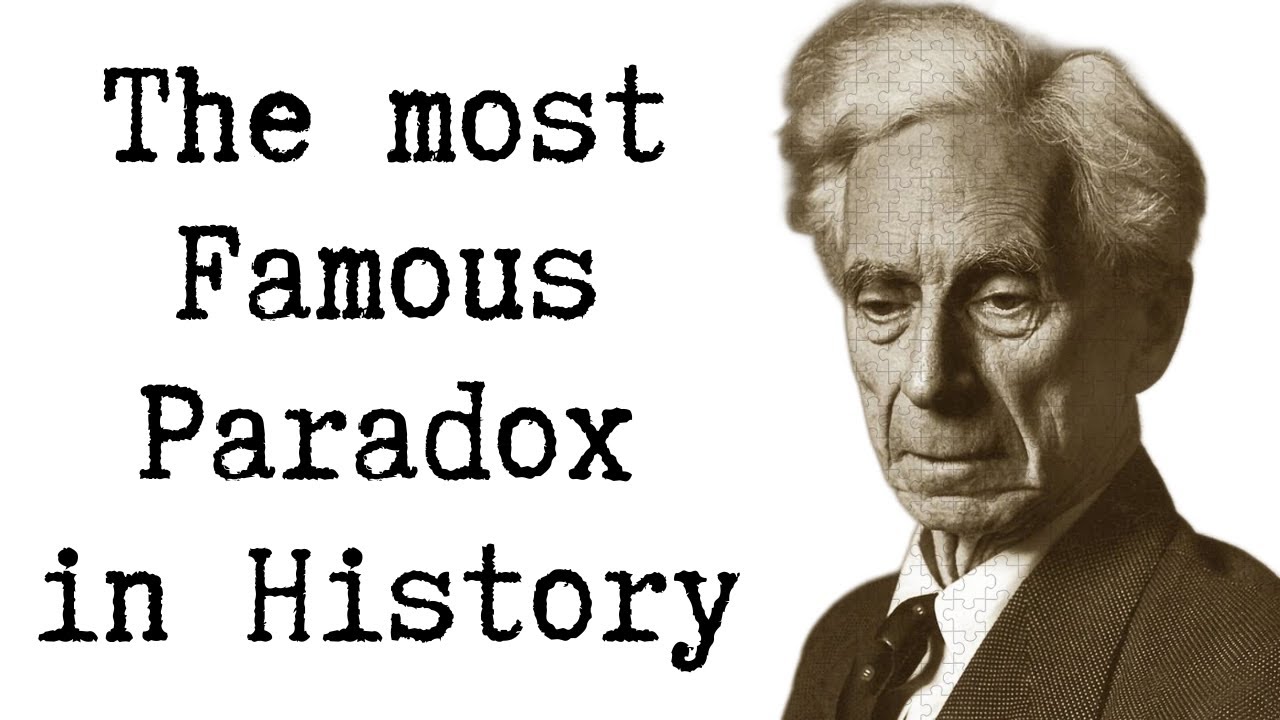
is somebody whom everybody loves there is somebody whom no one loves and there is somebody whom the Frager does not love that somebody who Franco probably did not love was British philosopher Bertrand Russell who independently was engaged in pretty much exactly the same project using logic to firm up the foundations of mathematics in 1902 Frager was just days from publishing the second volume of his magnum opus on logic when he received a letter from Russell and it was the kind of letter that any logician dreads receiving [Music] Russell had spotted a big problem both men's
logic relied on consistently describing sets of things you can have the set of all even numbers or for that matter the set of all mums or the set of all dogs almost all sets aren't members of themselves the set of dogs isn't itself a dog so if you take the dog set and bundle it up together with all the other ones like it you get the set containing all sets that are not members of themselves but this is the set of all sets that don't contain themselves and it doesn't contain itself so this set should
include itself but but then if it does then this is no longer the set of all sets that don't contain themselves so it can't be part of itself it's one of those logical paradoxes Fraker immediately wrote back to Russell dear colleague your discovery of the contradiction has surprised me beyond words and I should almost like to say left me thunderstruck because it has rocked the ground on which I meant to build arithmetic your discovery is at any rate a very remarkable one and it may perhaps lead to a great advance in logic undesirable as it
may seem at first sight Russell now talked on frege's project with an even greater zeal to develop an even more outrageously complex logic that would get round this problem with sets and so be free of paradox after nine years of tutorial the monumental principia mathematica was published it took over 360 pages to logically prove that one plus one equals two it was never going to be a best-seller but here it had a huge impact it was magnificent a whopping great bucket load of logical concrete poured right into the foundations of mathematics definitely a triumph not
a trauma for philosophy but the final word on logic would not come from Bertrand Russell it was here that that project came to a dramatic conclusion centered on a group of thinkers called the Vienna circle they were firmly ProLogic for them Russell's principia mathematica was manna from heaven so Vienna circle had people who inspired them serve as their idols one was Albert Einstein one was Bertrand Russell and these were the most prominent scientists of day [Music] sir interest shifted almost imperceptibly at first from the foundations of physics to the foundations of mathematics and to logic
it came almost against their will that this became the most prominent topic of so Vienna circle once every two weeks they would meet here in this actual room it's now a working physics lab but when they met here they had one aim and that was to purge philosophy of anything that was neither directly observable through scientific experiment or derive abour through the laws of logic this logical analysis of su meaning also essential first step and therefore it was forbidden to talk about such concepts like God for instance or metaphysical statements about the thing in itself
or whatever because you could never find a sentence that could be verified in a scientific way in fact the vienna circle losed the idea of metaphysics so much that when they met here rudolf carnap a former student of frege's appointed someone to shout em during their discussions at the hint of any illegitimate sentence M stands for metaphysic M it's the logicians way of saying bollocks now the thing is he was saying M so much that they got sick of it instead they had him shout non m any time that someone actually said something that was
legitimate NIC despite the purity of their logical methods the problem of uncertainty that had plagued logic likewise stalked the Vienna circle something that may have also imprinted this young generation of Austrian scientists was a scandal that happened in 1913 when it was discovered that as a heads practically of the counter espionage service was a spy and you see the task of a counter spy the service is actually to to make sure that there are no spies around but what happens when the head of that organization is a spy himself this is a fundamental uncertainty yes
as a Secret Service can work very well but can you be sure that the Secret Service is not infected and something similar is happening in mathematics you make sure that there exists no contradictions you build up big balls against uncertainty or so but maybe within these big walls there is a contradiction sitting contradiction bothered one man more the most curt girdle Kirk girdle was the most reclusive member of the Vienna so it had the finest logical training that you could imagine it was in one of Vienna's famed coffee houses in August 1930 that 24 year
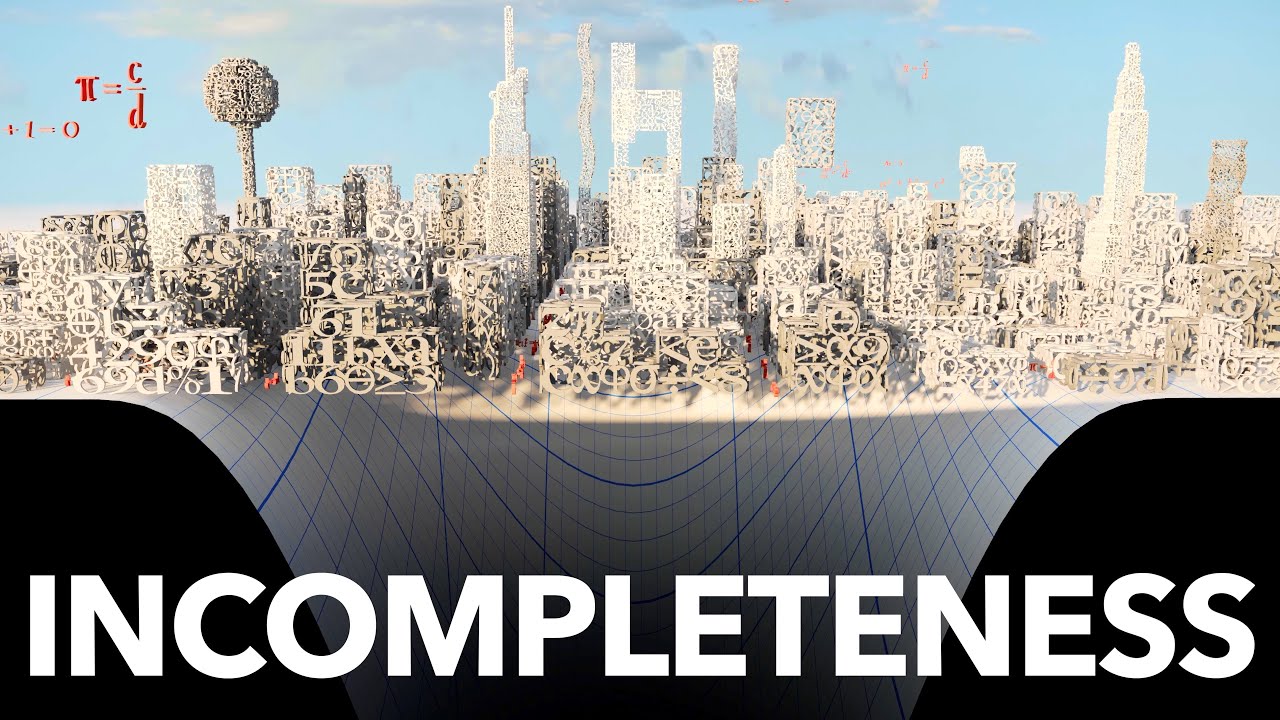
old girdle first revealed a discovery that would end forever the logical quest that Frager Russell and the like had set themselves girdle was one of the few who definitely had read all of Russell's print capilla he knew that for any logical system to be the foundation of mathematics it had to be both complete and consistent girdle told Carnot that by studying the Principia he had come to the conclusion that in any logical system you could either be consistent or complete but you couldn't have both at the same time in Russell's masterpiece girdle had discovered a
contradiction that became known as incompleteness this means that in mathematical logic there are going to be some truths which are though truth can never be proven to be so this result of could girdle about the limitations of mathematics and logics was a terrible blow to the optimism of the Vienna circle and some of the members took a long time to come to grips with it the grand search for absolute provable truth had hit the buffers by the mid-1930s the vienna circle was over the rise of fascism and the looming threat of war meant its members
fled were expelled or killed Kurt Gerda left Vienna for Princeton where his own search for certainty also came to a tragic end girdle became convinced that someone might try to poison him the only person he would trust to cook and indeed to taste his food was his wife and when she fell ill and was hospitalized he starved he literally reasoned himself to death [Music] the fact that all systems of mathematical logic were limited that we could never have complete certainty signaled the end of an era for logic but for one British logician Alan Turing girdles
work was the inspiration he needed to launch inadvertently a new and entirely more practical logic revolution [Music] Alan Turing was just 23 years old when he imagines something extraordinary he called it a universal machine the universal machine is an entirely imaginary hypothetical device and yet it's one of the most influential machines ever in human history the device cheering imagined could tackle any mathematical problem using a logical algorithm encoded in its own limitless memory in 1936 Alan Turing published a paper in which he demonstrated he proved that you couldn't decide beforehand which mathematical problems the machine
would be able to solve and which would just cause it to run on and on and on forever that there are some problems that are simply uncomputable was startling and yet another blow for mathematics but it was also the beginning of something entirely unexpected and destined to cement logics role in the modern world it's an extraordinary or almost exquisite paradox that in demonstrating that some things can't be proved using a logical machine what Alan Turing did almost single-handedly launched a technology revolution Turing's Universal machine is what we today call the computer while stationed here at
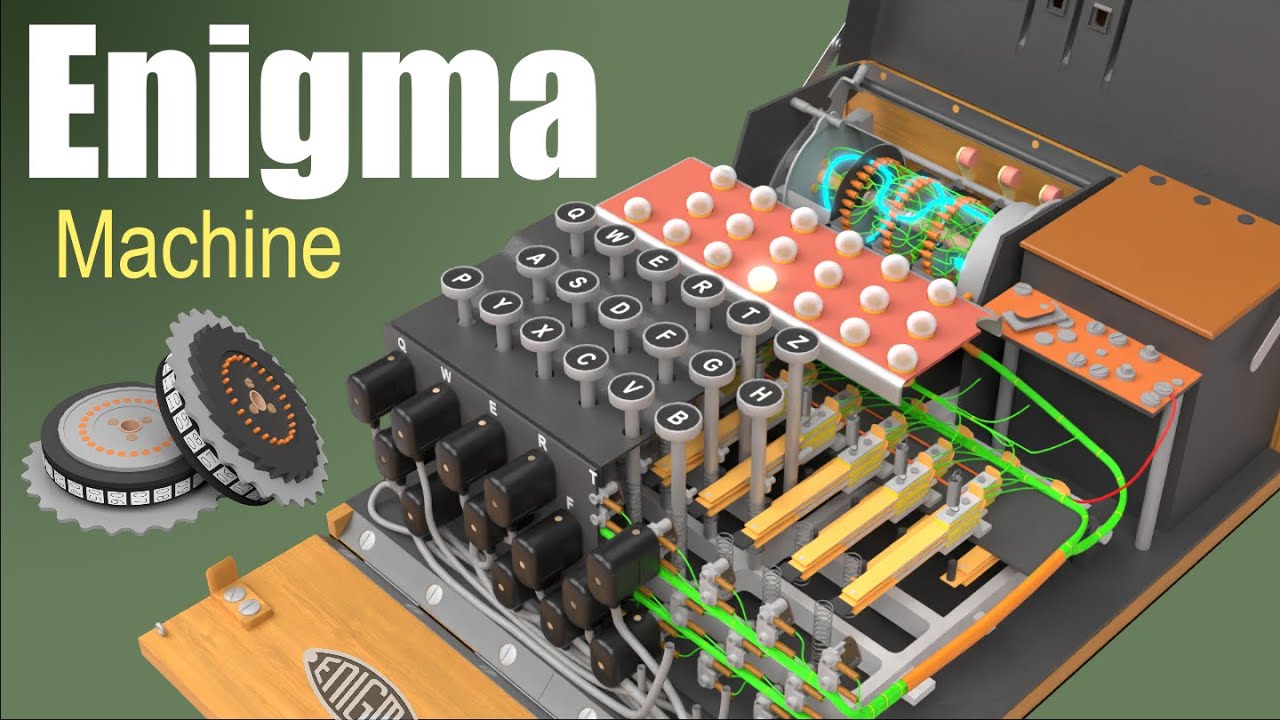
Bletchley Park during the second world war Turing began to implement his abstract ideas as real logical Hardware working with Gordon welchman Alan Turing develops this machine is called the bomb it's a bit loud it's the form of electromechanical computer and it's logical function was to see how the messages that the Germans were sending using their Enigma encryption machine but then Turing's colleague Tommy flowers went a step further this is Colossus it was built to crack another German encryption machine called the Lorenz and for the men and women who built and operated it it was an
astonishing achievement it's shortened the war but I think it's special for another reason you see this is the world's first programmable electronic computer it uses digital information binary the streams of ones and zeros that are in all modern computers and these vacuum tubes down here they're wired together to be our boolean logic gates which perform boolean operations and calculations Colossus might not look high-tech to us but it's hard to express just how important it was the significance of all this as a piece of human engineering is on a par with the pyramids or the printing
press or steam power and yet it was all top-secret all these developments of electronic programmable computers here at Bletchley Park were classified and the details were only Declassified in the late 1970s after the war Turing went on to help build some of the world's first stored-program computers at their core it all comes back to logical reason [Music] think about this we're all surrounded by things that rely on some kind of logical machine or code the failure of logic to deliver foundational answers for mathematics nonetheless gave rise to one of the most significant achievements in all
of science and engineering [Music] it started with those huge secret to single purpose computers and yet right from the very beginning some folk were already imagining the next big thing everybody's cardamon you got a logic anyhow it looks like a vision receiver used to only his car keys instead of dials a punch for keys for what you want to get this hooked in the tank but she has the cars in 1946 science fiction writer Murray Leinster imagined an impressive specimen of interconnected technology he named it logic relays in the tank take over and whatever vision
program snafu was telecasted comes out a large excrete or you punch Sally hang Cox phone and you hooked up with the logic in our house also it does math for you and keeps books and acts as a consultant chemists physicists astronomer the leaf reader with an advice to lovelorn from him it's very convenient well that's extraordinary it's a great characterization of the web that wasn't yet born [Music] the digital world we live in the computers that surround us at their base are running boolean logic in there runing actually electrical currents ones and zeros are the
products of those electric currents but on top of that there are layers on layers on layers of complexity operating systems machine code applications that we use every day from word processors to spreadsheets to the browsers we use and when you have your Skype conversation with your aunt in Australia you don't think of that interaction in terms of those ones and zeros but without them without the underlying processing none of this would work not only did logic launch the digital revolution but it's also the tool we use to sort search and retrieve the information we want
online the world wide web we have today represents the largest information construct humanity has ever created it's 20 years old barely and yet we have billions and billions of pages encapsulating knowledge and information from all of human culture and all of human history the challenge is to organize this massive information this complexity and logic gives us some of the perfect tools to do that [Music] with the worldwide web of information logic means we're all more interconnected and informed but back in the city the march of logical machines has come at a cost and I don't
mean all the traders are spending too much time on Facebook in the year that I was born there were 22 separate stock exchanges in the UK and this now this place the London Metal Exchange is the last venue where traders still go face-to-face first technology squeezed out the need for traders to meet in person and now it's the traders themselves who may be heading for extinction not long after I wrote it IBM did some tests of the zip trading algorithm and not only did they confirm that it worked they showed that it outperformed human traders
when it comes to pure logical reasoning the computers tend to beat us hands down it's an old adage but people in this business joke that soon the only things you'll find on a trading floor will be a big computer a man and a dog the big computers there to do all the trading the dogs there to make sure that no one touches the computer and the man's job on the trading floor the future the man's job is to feed the dog [Music] mind you despite my role in inventing these black boxes I'm grateful that there's
still a human around to pull the plug sometimes the thing is computers still need their logical algorithms to be written for them so they might take our jobs but we still have the upper hand yet ever since their invention the question as to whether this will always be the case has been a matter of fierce debate when the digital revolution was in its infancy the possibility of computers developing human-like intelligence was the hottest topic in town could a machine ever think using the rules of logic alone or is there more to us than that in
1950 Alan Turing published another visionary essay in it he predicted that by the end of the century a computer would be able to converse with a human and the human wouldn't know the difference in trying to achieve this people in my field have created some truly amazing computing machines [Music] this is my university supercomputer and although it's bigger and noisier than Colossus for everyone Lorenz cipher that machine could solve this can solve over 2 million it takes up the whole room machines like this are the workhorses of today's data-centric research all the switches wires and
logic gates have long since disappeared under the hood meaning that fur TV we have a habit of trying to pretend that this doesn't all look like a load of oil well cupboards or a launderette cheering thought that by the time we developed computers as powerful as this we would also be capable of programming a machine with sufficient rules of logical reasoning that its intelligence would rival that of us humans that was then and remains now a very controversial idea we like to think of our intelligence as raising us to a level above the rest of
the creation we associate it with the idea perhaps of an immaterial soul being not just one amongst other animals but special and what Turing was suggesting was that this special quality could belong to a lump of computing machinery and it could reason just as well as we could maybe even better a Bletchley Park cheering had sketched out algorithms for playing chess at that time the chessboard was dominated by some of the world's most brilliant strategic logical mathematical brains and so it became the battleground for an entirely new challenge for logic artificial intelligence in 1997 the
most famous public battle between man and machine took place garry kasparov the reigning chess world champion had previously trounced ibm's chess-playing computer deep blue during their rematch for the first time ever he was beaten because Baro has resigned when I see something that is well beyond my understanding I'm scared and that was something well beyond my understanding it was front-page news the world over people demanded answers was this purely logical intelligence equivalent or even superior to the human brain in the past people have tended to compare humans to the latest technology so maybe the brain
is like a clock or maybe it's like a steam engine now maybe it's like an electronic computer what curing would want to say and I think correctly is that there's something different about the equation of the brain with a computer he put it that both a brain and a computer are information processing systems governed by logical rules in theory there should be logical rules out there that would capture the way we think this was a very big idea with profound even troubling implications if we knew those rules then one day theoretically we could code a
logical rendering of ourselves into a computer all we need to reproduce all of human thought is logic my view is that there remain uniquely human characteristics arguably the best ones like altruism or creativity or or love that computers aren't even close to having programmed within their repertoire of logical reasoning no one has yet created a logical machine that's just like us and arguably that could take a very very long time if indeed it's possible at all and yet surely we should marvel at what we have achieved with logic remember we created the rules of logic
to pin down the truth and certainty that would otherwise so easily evade us we harness logic in machines and in doing so we place the power of pure reason at our fingertips Manji I'm still no good at sodoku [Music] [Music] [Music]


![[SEI' 24] Modern Systems Programming: Rust and Zig - Aleksey Kladov](https://img.youtube.com/vi/4aLy6qjhHeo/maxresdefault.jpg)

![Ordem e Desordem - Ep.1/2 (Documentário-2012) [Full HD]](https://img.youtube.com/vi/IKDxlJNTuU4/maxresdefault.jpg)

![Hands-On Power BI Tutorial 📊Beginner to Pro [Full Course] ⚡](https://img.youtube.com/vi/5X5LWcLtkzg/maxresdefault.jpg)