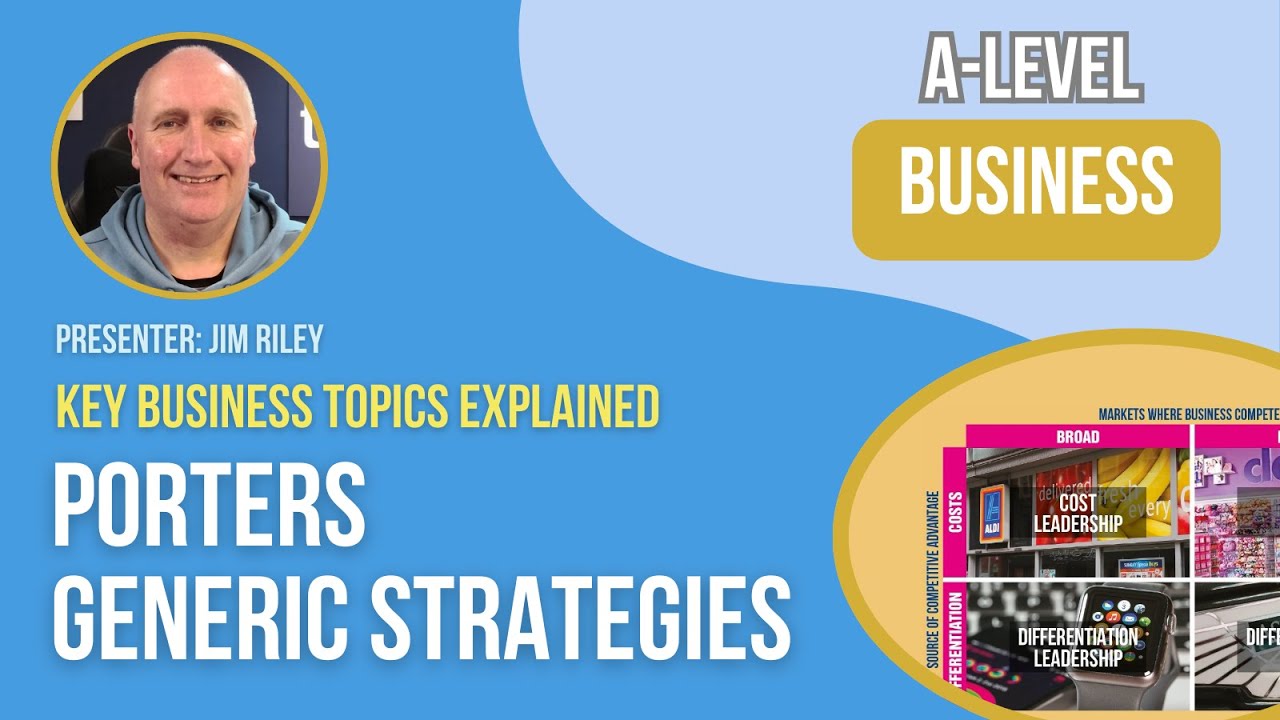
the first competitive strategy we'll examine is cost leadership it's straightforward isn't it you have to be able to produce products or provide services that are cheaper than the ones offered by competitor companies if a company adopts this strategy and sustains costs lower than its peers than it will succeed typically cost leaders will sell at prices lower than their competitors this way they will win price sensitive customers the ones looking for a bargain and given that price sensitive customers are the absolute majority cost leader firms can win a sizable market share and sell a lot of
units of the goods they're selling however the drawback is that the low prices of these products mean lower margins for the firm a margin is formed by the revenue obtained from the sale of a product minus the cost sustained to produce the product so a cost to leadership strategy means more units sold and a lower margin per unit selling at prices lower than competitors is a valid idea however companies must find a way to do that if you want to sell at a lower price then you have to do something differently than your peers there
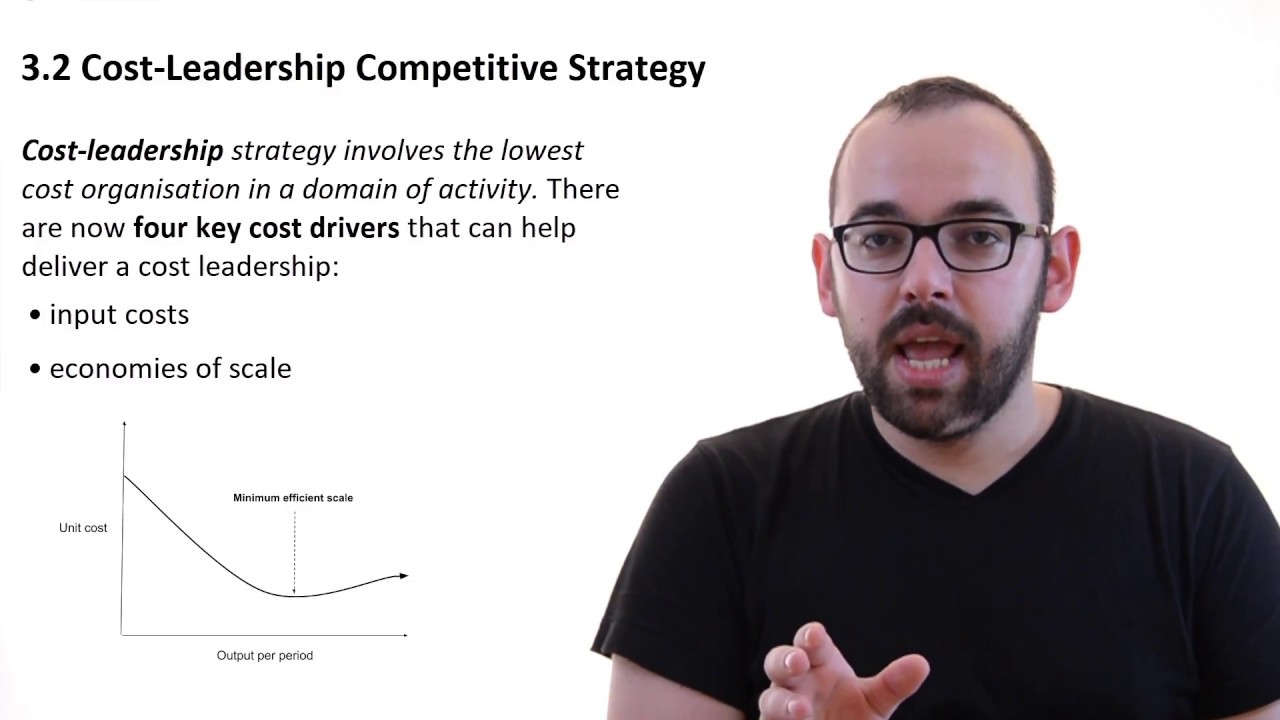
are several ways to establish a competitive advantage related to lower cost and they all have something to do with the concept of efficiency a cost leader must be efficient let's see how companies can do that one of the fundamental ways to push down unitary cost is to leverage economies of scale the more units of a product are sold the lower is its unitary cost the cost of one unit how come well there are several costs which are sustained only once these are the so-called fixed costs there is an inverse relationship between the quantity of output
and unitary costs meaning the higher the output level the lower the fixed cost per unit the reason is that fixed costs are spread over a large number of products and services economies of scale are the main reason for the predominance of large corporations in most industries let's provide an example with the airline industry where the cost for development of a new aircraft is huge Boeing 747 is one of the most successful aircraft project because the company built 1415 aircrafts Concorde turned out to be unprofitable only 20 planes were built however the cost of research and
development of the two projects is comparable right both required engineering teams who worked for years to design the two planes however in the first case the cost was spread among 1415 sales and in the second among 20 planes this is a very important concept the more units we produce the lower the unitary cost we have sustained some companies excel at achieving economies of scope if they operate in more than one business certain firms can often achieve economies of scope which pushes down their costs even lower economies of scope consists in a proportionate saving gained by
producing two complementary products the cost of producing the tube goods under the same roof is lower than the cost of producing them separately a good example for an economy of scope is P Angie's acquisition of Gillette once placed under the same roof the two companies could use the same distribution channels and lower their logistics and sales expenses another good example is the production of milk and cheese it makes sense to produce both products under the same roof as the materials required for their production can easily be combined right another cost driver companies pay attention to
is process design we can obtain a cost reduction from a change in the way a process is being carried out when less input is needed for each unit of output provided a new process may reduce costs dramatically the assembly time of Ford's model-t is a great example initially it took 106 hours to assemble a Model T eventually when the assembly line was improved and made much more efficient the time was reduced to six hours remember for a new process to lead to efficiency it has to be combined with changes in a company's organizational structure product
design management control systems HR management and so on success stories of companies such as Walmart McDonald's and Toyota to match their process technologies with their structures management systems and product design are proof this is true for prospective GM has been singled out as a company that implemented a new process technology without the management and organizational changes GM did not become the world's most efficient car manufacturer which was its primary goal moving on firms with lower input costs can have a significant cost advantage over their rivals lower input costs derive from lower wage rates access to
low-cost raw materials or inability to negotiate well with suppliers and to excel at procurement in today's globalized economy several companies have taken advantage of lower cost of personnel in developing countries the outsourcing industry in these countries is flourishing as call centers customer support centres finance and accounting divisions are being transferred to these lower wage countries the result from these operations is a lower cost of personnel over the long term and a possible source of cost advantage cost leadership is a strategy pursued by several large companies Walmart IKEA Amazon McDonald's Dell computers Zara H&M and Southwest
Airlines are some established names you've heard and they're all focusing on costs so for example IKEA the Swedish furniture retailer sources its furniture from countries where the cost of personnel is cheap in addition the company offers a very basic service it doesn't assemble or deliver the furniture it sells McDonald's uses inexperienced staff instead of trained cooks the company hires few managers and safes from cost of personnel Southwest Airlines minimizes the time its plane spend at airports by organizing more flights and filling up its schedule acquiring a cost advantage is definitely one way to go however
it's difficult in today's highly competitive markets companies that choose this path should focus on efficiency in all its forms and in a continuous redesign of their operating processes