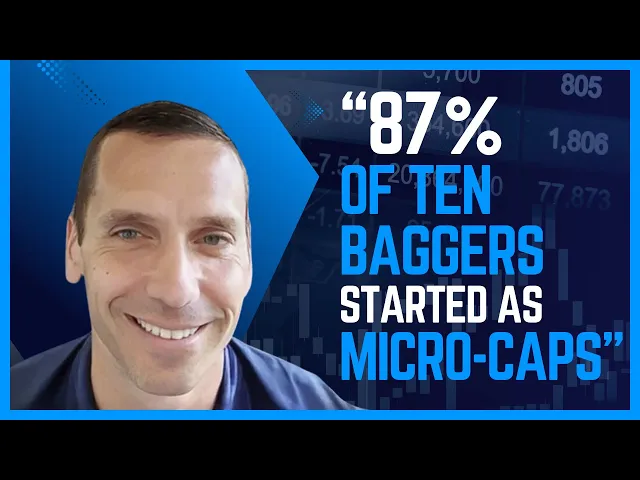
There's 446 companies across the globe that went up 1,000% or more during that 10-year time period 87% of those were started their Journey as a micro cats my intention when we purchase something is to hold forever but very few of any will earn that right I want to find a Picasso I want to find really an overqualified management team running a spure small business that is running a unique business that can Sustain double digigit growth that is profitable you might find 10 or 12 for a year and you pick up a phone as Qui as
he can or get on a plane as see as he can to meet them and you might pull the trigger on twoo if you if I can just find something that is a $10 million Revenue business earning 500,000 that I think can grow to $20 million business and earn 3 million that's a five bagger in my world you know it doesn't need to become the next Google the next meta the Next anything welcome to excess returns will we focus on what works over the long term in the markets join us as we talk about the
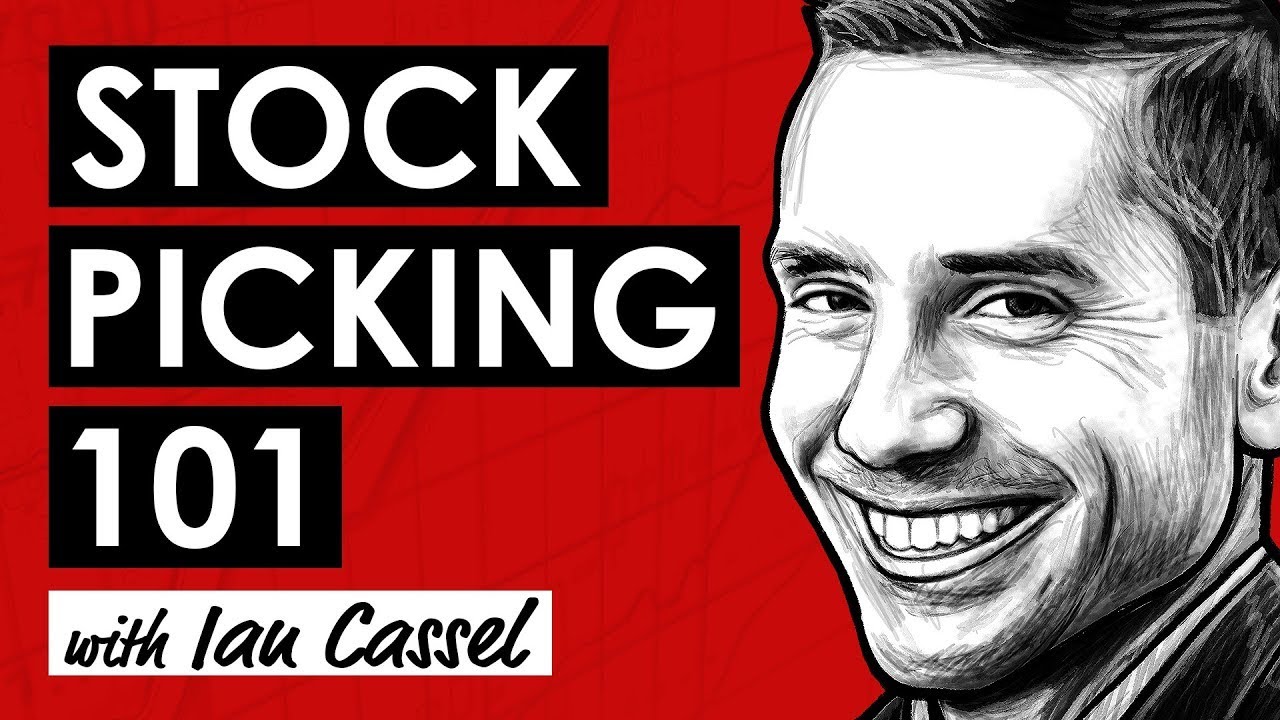
strategies and tactics that can help you become a better long-term investor Jack forand is a principal at Validia Capital Management the opinions expressed in this podcast do not necessarily reflect the opinions of Validia Capital no information on this podcast should be construed as investment advice Securities discussed In the podcast may be Holdings of clients of Validia capital in this episode of excess returns Jack and I have a great conversation with micro cap investor Ian castle of micro cap club and the founder of intelligent Fanatics capital management we talk with Ian about all things micro cap
investing business building and how he thinks about finding an edge in Ultra small companies with management teams who are building good profitable businesses that Offer investors solid long-term opportunities of course it's not easy but Ian helps us to understand the opportunity in the corners of the market where most big investors aren't playing as always thank you for listening please enjoy this discussion with Ian Castle Hi Ian thank you very much for joining us today thanks for having me on it's a pleasure I always enjoy conversations with guests when we have guests on the podcast where
we haven't really had a Shei to talk about the topics that we're going to talk about today and with you specifically that's micro cap investing and sort of your process that you go through when looking at micro caps and building portfolios of smaller companies um but I I thought where we should start and it's important to start is this concept or idea of um intelligent ftic and sort of where that comes from what that means and sort of because I think that's an important thing to sort of get Upfront as we sort of dive into
this micro cap investing idea yeah and I appreciate you starting off with that because not only do I think it's important with any small business investing in the Right leader but I know it's it's really the number one priority for my investing Strate strategy in particular and really the term intelligent fanatic was derived from one of the speeches that Charlie merer gave and you referred to an INT ENT Fanatic In one of those speeches as a sort of a a great business dealer someone that started a business from scratch grew it into a business that
dominated its Niche its geography its industry and not only dominated it for one or two years but did it for decades and he mentioned several individuals in that speech as well as others you know and some of them quite honestly they're probably well known now but back when we co-author the two books that we wrote on intelligent Fanatics in 2016 2017 team um you know they were rather unknown you know people like Les Schwab of of Schwab Tire Centers or somebody like a John Patterson who founded NCR National cash register or um uh Ken Iverson
from new Corp you know these types of folks which you know thanks to uh David CRA you know in the founders podcast and other ones like that these people were kind of really well known but back then even in 2016 only been a few years ago not very Many people have heard of them and because a lot of them ran private companies and so what uh me and my co-author decided to do who was who was also a member and micro cap investor we decided to kind of research these individuals that Charlie merer mentioned and
really kind of just write a a quick 2025 page kind of um overview of their personal life their business life how they grew their businesses and pull out some important lessons from um from Their lives and from their experiences and so I think the first book was eight intelligent Fanatics we highlighted and then we wrote a second book a year after that where these weren't businesses that Charlie moner mentioned but they're ones that kind of fit that framework we pulled I think another 10 in the second book and um you know me and maybe 10
other people actually read the book because we didn't sell too many of them but um but it was a fun project for me Because I always wanted to sort of fine-tune my lens for finding great leaders early because I think that's important when you're trying to invest in small businesses you know you can't grow a small business into a larger small business you know unless you have good leadership and so I always wanted to find tune M my lens for kind of the qualitative element of finding great leaders early and that was really why I
spent the time kind of on two or three Years ready those two bucks with my co-author and um you know it really helped and ironically probably the biggest takeaway for writing those two books and studying you know several hundred of these leaders was really not to focus on the leader themselves per se but quite honestly the types of folks they have around them in their organization because what you found was you know people that were able to scale a business from you know 5 10 million to 100 to 200 billion you know they can't rely
on themselves they need to they put great people around them and um oddly enough before writing those books I probably put too much effort and attention into the founder him or herself instead of concentrating on the team that they were built around them to see if they were building something that was truly scalable and probably the number one takeaway through that exercise for me yeah that's great and It's it's funny because if you think about Buffett right like we all obviously everyone knows who Warren Buffett is and he gets all the head but you know
Buffett's very quick or when he writes a shareholder letters and when he's talking about the people he's putting in charge of those divisions at Berkshire I mean it's it's you know he knows how to allocate the capital and build a great team and it sounds like it's a similar thing to what you found In those Founders yeah that's exactly right I mean we're the number one thing that attracts us to a new idea in the portfolio is the people and the leader behind it and I know we'll get into that in a little bit but
um that's kind of where it overlaps with my investing style so in speaking about the micro cap Universe can you just kind of tell us what that looks like in general maybe and it doesn't need to be exact but how many you know stocks generally are on Micro caps and sort of sector these one sector maybe a little bit more dominant in micro Caps or H how does it look yeah I think in general I me to start sort of at the top I think many people at least in the Western Hemisphere Define micro cap
as sub 500 million USD market cap and you that might change depending on the geography you're investing in you know for example in India a micro cap might be sub 100 million USD market cap um so it really depends but I think you Know for the for mainly you know we're talking about North America Europe Australia you're looking at 500 million market cap or less and so when you kind of look at all public equities and in the whole world and the globe you know 60,000 public stocks roughly half of them are micro caps as
that definition um more or less and you know really when you go then to North America so if you just look at United States and Canada you have 23,000 total stocks that trade In the US and Canada and I think it's around 13 ,000 that are under 500 million market cap so it's about 56% of the investment Universe public stocks in US and Canada would be considered micro cap um ironically enough if you're just looking at Canada I think Canada has around 3600 listed stocks and I think 83% of them would be considered micro cap
by the definition of sub 500 million so I'd like to say Canadians they don't know their micro cap investors but they Are if they're investing in their own markets um you know so it's so micro cap is you know a big portion of the public stocks you know that are out there um you know and to kind of give a I think this research was done seven or eight years ago but if you were actually to add up all of the micro caps in the United States together and aggregated their market cap I think it's
roughly 500 billion you know and it's funny to think about today because I think There's 15 or 16 individual stocks that are valued at 500 billion or more today you know that it that kind of gives you a sense of how big and how small the amount of companies how big and how small the total aggregate market cap value there is in US micro caps you know I think Burkshire has 280 billion in cash when you think about that they they divide by the float of every micro right wouldn't be a good investment decision therefore
I'm not worried about That but you know kind of break it down further I mean a lot of people might get confused with the amount of stocks that actually trade in the US and a big part of that is mainly the fact that the OTC markets is where a lot of micro caps trade and so I think there's like 14,000 equities that trade on OTC markets you know 7,500 of them are micro caps you know so a big portion of the micro caps that trade are on the OTC markets and you know to put that
into perspective Like the major indices here in the US the New York Stock Exchange the NASDAQ there's roughly 56 stocks that trade in on the NYSC and NASDAQ about 2,300 are micro cap so there's actually more micro caps that trade on OTC markets than there are that trade on the entire NYSC or NASDAQ combined of all I'm ju just curious does the sector breakdown follow like something like the S&P 500 would could it map does it map pretty closely in that is there's a lot of differences There no I mean you again kind of depends
on geography but I think okay I think if you're looking at the US I think it's heavily weighted towards Healthcare you know maybe 20% have um maybe another 20 or 25% actually in financials because there's a lot of small banks that are listed things that I think there's like a thousand or 2,000 micro cap Banks you know in the US um and then I think it Goes down from there I think like roughly 10% is usually Industrials it technology another 10 uh and obviously there's there's Industries like utilities where there's just not many small of
companies uh and from your p i me that's more companies than I thought I would have guessed um but it's probably good because it's there's a lot of feral ground there finded ideas but have you seen I'm just Thinking like you know in the last couple years there's been obviously a lot less IPOs just in general you seen a trend in less publicly traded companies overall so it's shrinking even though like you said there's you know a couple thousand microc cap so it's not like there's but is there does any of that affect sort of
the quality any of those Trends affect the quality of micro caps that you're seeing sort of come online or or not really yeah I mean I think I think you hit the nail in the head I think probably the number of micro caps has stayed relatively the same I mean even when you look at the number of IPOs I think in 2023 there's around 150 IPOs about 80% were micro cap yeah I think so far this year when I actually looked at it you preparing for this conversation I think there's 180 IPOs and I think
73% or micro cab yeah there's there's still believe or not 100 spacks done per year here after 2021 and Probably a a vast majority of them are micro cap you still have 100 to 200 reverse mergers done per year which that pre 2010 was the predominant way small companies went public were actually reverse mergers not traditional IPOs there's still 100 to 200 of them done per year um you know those reverse mergers is actually an area that I haven't seen written about a lot but pre 2010 here in the US there would be 800 reverse
mergers done per year you know That and yes many of them probably shouldn't been public and you it's kind of the law of the 8020 rule you know but I I think a lot of the decline in the overall Market the listed listed companies is a result of that 800 per year turn into 100 per year you know because there's just fewer companies that are going up and out of the micro cap ecosystem and becoming listed listed companies and so yeah I mean so so there's but like we Said like there's 9,000 micro caps you
know really in the US that exists and you know that's a pretty big sandbox I me you compare that to you have a large cap domestic us portfolio manager on here their sandbox is 850 companies you know so mine's 9,000 you know and so there's there's still plenty of micro caps that exist the issue has been kind of the the qu what is the quality level of those new issuances coming onto the market and I think that is where we've Seen a degrade of that you know I you know and and I love as a
micro cap investor a proponent of micro cap investing I love to point to Walmart being a a micro cap when it went public in 1970 on an inflation adjusted basis or even Burkshire Hathaway when Buffett took it over you know when he did that was actually a micro caps inflation I love the point to those things but there's fewer and fewer real small companies going public when they are Small and when I say real and air quotes I just mean profitable and growing real businesses um and and you still plenty of companies trying to raise
$10 million to fund a phase one drug you know in a binary event but um you do see fewer real companies going public and what what's become more important as a micro cap investor over time is because of that not to be landlocked to the US because you still have real small companies going in public in places like Canada or Australia and you just have to be open to going these others jurisdictions as you should because in today's day and age especially you know the english- speaking similar rules of law I mean there's no reason
not to look at these other jurisdictions can you talk a little bit about the research supporting micro cap investing I mean this has been a little bit of subject of a debate in our world in the factor investing world because Everyone's debating whether the size premium still exists or not but what research you see on your side in terms of supporting micro cap investing in general you know I think it's a good it's a good question because I think some of the data that I have is dated quite honestly um I think actually a member
of ours Mark vanderwell with through looked at all the crsp data from 1927 I think his ended 2016 and you know obviously shows the the smallest death s Return 177% versus the next V which was 12 you know 500 basis points of outperformance obviously it's probably close some in the last uh seven years or eight years since since that data I haven't seen updated data on that um I found that probably the best research that I've seen recently was I don't know if you guys probably have read it but it's with Jenga Investment Partners out
of the UK they put out um a study on global Outperformers they looked at all stocks that went up a th% or more between May 2012 and I think May 2022 so somewhat recent and there's 446 companies across the globe that went up 1,000% or more during that 10-year time period 87% of those were started their Journey as a micro cat and you know so and that's over and above the fact that micro caps are probably 60% of the market anyway so It's you know it's more so than normal I should say um so that's
probably the clearest evidence that's been more recent and and that ended in 2022 and uh you know I think I think the size offers some signal as a factor but I think there are bigger factors such as ill liquidity and quite honestly just simple profitability that lead to outperformance and I think when you combined small liquid profitable that is the secret sauce that's the signal um And we even quite honestly we we even developed a a little index de inside micro cap Club where you know of all the companies have been profiled on there screen
them all for trailing 12- Monon profitability equal weight them in an index rebalance every quarter and it's outperformed the NASDAQ this year the draw Downs are less when the market draws down it's been pretty I don't I I haven't back tested it but it's pretty interesting just since January how that Has performed versus the NASDAQ and S&P when you have like a days when the NASDAQ and S&P are down like you know 1 and a half% this 395 equally weighted profitable micro cap index is down half that on the down dayss and it's fascinating to
see that and I think that there's some signal there um but with what Jenga Investment Partners what they showed was that yes 87% of all outperformers during that 10-year period With micro cap and 82% of those were profitable or I think 90% had a history of profitability and so what that tells us is not only want to look at small but you want to look at profitable yeah it's your point I would think this would be a bad area and correct me if I'm wrong about this but I would think this would be a bad
area to index because just like the problems with the russ of 2000 in terms of lot lots of junky companies like I remember Aqr's paper which I think has the best title of all time which is size matters if you control your junk where where they were effectively talking about this idea so I would think you don't want to buy an index of micro cap companies this is something where you probably want to be looking for the best companies yeah I mean I've always said that the worst indices are the micro cap indices that ey
shares has or even some of the larger micro cap isn't meant to scale and so When you see an investment vehicle built for scale in M her cap it's usually just meant for asset Gathering and that's just not where you're going to outperform in fact you can look at all those belong to Performance of all those types of vehicles and they underperform everything um micro cap is a place for stock fitting you alluded to this before but you had a great quote liquidity Trump size is a return predictor in the micro Cap space and want
you just expound on that a little bit yeah and I mentioned liquidity a little bit a couple minutes ago but I think it was it was Roger ibbitson who's a real Professor he he used to do an annual update on a paper that he called liquidity as an investment style and he looked at all equities from 1971 to the present and he would publicly update it I think up until 2017 and since then it's been kind of closed off and unfortunately it's not Public but he looked at all public stocks in the US from 1971
to the present and he categorized them by market cap classes of micro cap small cap midcap large cap and he looked at them by Il liquidity and what was interesting was illiquidity had some signal across all those market cap classes it was less signal at the large cap area I think um ill liquid large caps produced 11% return during that time period versus nine for liquid large Caps I think ill liquid midcaps were something like 14% return versus 8% liquid midcaps now micro caps is where you had the biggest variance there you had illiquid micro
caps performed 16% annual return versus what was this is really interesting versus zero on the liquid micro caps so you know actually liquid micro caps fir zero return during that that time frame and we can go down that rabid Trail if you want there and why I think the zero was there cuz I Find that the most interesting of all them um and my reason why I think it was Zero is because the liquid micro caps are institutionalized you know anything 200 300 500 million market cap by that point in time you they're probably 10
to 40% institutionally owned their indust their index through their the ey shares indices the rustles and everything um and quite honestly when you get to a bare Market a lot of times you know it's a risk off across the board and allocations go down and there the first things that people bid whack and they perform really poorly in bad Market environments and so that's why I've always thought that the liquid micro caps perform so poorly you know over time is because of that and it's also a function of why I in my strategy we look
at the very small micro caps that have no institutional Ownership we're going to talk about your approach in a second but I'm wondering have you seen any change over time in terms of how the market reacts like when you find a good company and they have good news and the reason I ask this is this is something we've talked about a lot in the podcast is this idea of indexing at the at the larger stock level a lot of people who are small cap investors and David Einhorn touched on this in a recent podcast are
saying so Many people are indexing right now nobody's paying attention to the small cap space I get good news on my companies I get fundamental improvements the stock doesn't go up because no one cares like does that is that at all applicable in the micro cap space or is this so far departed from that that it doesn't really matter I think you see some of that but I think it's mainly I would say that his commentary was probably more towards his flavor of Investing you know this idea of reversion to the mean based on fundamentals
you know and multiples I think that has somewhat departed um you know from the way it used to be but I mean quite honestly you know I was getting a beer with both you guys I mean I think blaming the markets and blaming anything or anyone you know kind of for this stuff just an excuse for underperformance um you know we're all Dealing with the same circumstances you know and it and it I mean let's just take a factor like uh deep value or even value which I think we would all agree that David einhard
is in you know there's still people that are in that factor that are crushing it you know there's people like uh Michael Melby who R runs Gate City capital he's a friend of mine he's a member of micro cap Club I he's put up 21% net kager since 2011 in a deep value strategy you I don't see Him complaining about indexing um so I think you're always going to have people just complain because their performance is bad or complain because there's nothing else to complain about but um you know I I think for me I
don't see it too much for my investing style I'm trying to find things that are undervalues that can get overvalued you know and I do think about who is going to buy my stocks from me hopefully after They F or 10x you know who is that investor institution going to be and I think historically what we found and anyone's found is that institutions are always attracted to fast growing profitable businesses they don't own and the one factor that everybody is attracted to even if you're deep value is growth and so there has to be some
component of growth there that is kind of like the moth to the flame for institutions and um that's why growth is A a decent part of kind of what we live for as well yeah you just touched on a point that's been a big lesson from my career which is like those of us that are have value as part of our strategy have wanted to like Shake our fists at the fed and be like oh you know the FED is killing us but you got to play the game that's in front of you I mean
it is what it is and like you can complain about it or you could do something about it and and that's one of the biggest Lessons I think I've learned in my career I want to get into your process a little bit because you you mentioned growth and so I think that probably is a Cornerstone of what you're looking for but at a high level when you're looking for a good micro cap company how would you describe your strategy for finding I think it's a good place to start because I think a lot of people
when they think of micro cap investing they think of everyone being the same but you the same Flavors of investing are found at in micro cap that you can find in large cap um and so you know I would characterize and then in micro cap tools there's certainly folks that Focus just on that larger micro cap segment you know the 200 to 500 million market cap because they are more liquid they probably do have more robust businesses you know things like that so for me I really focus on that smallest desile of the market so
that's sub 100 million and Predominantly I'm really looking to invest in these companies initially you know when it's sub 50 million 5 and these are very small they're very a liquid there's no institutional owner hopefully of them but me if I I hate calling myself an institution now but you know I I want to find them first you know and that that way I have the full curve of Discovery ahead of me you know if that business executes and yeah I think when I when you're looking at These small businesses you can still find these
very unique ones and I I I kind of like refer to them as picassos you know I want to find a Picasso I want to find really an overqualified management team running an obscure small business that is running a unique business that can sustain double digit growth that is profitable and that's a mouthful there but those are what you know probably what does that do with Picasso well these situations are just Rare they're scarce there's not very many of them that exist and these like I said earlier I mean these are the types of situations
that institutions will ultimately be attracted to their velocity their scale their profitability and they reach an escape velocity where they hopefully they can get out of micro cap you know into small cap and so that's traditionally what I'm trying to find um and it really starts with finding the great leader um and so a lot Of you know our process is just you know focused on finding great management teams that are just overqualified and what I mean by that is I like to see previous success I like to see management team that build up something
from 0 to 100 million before yeah you kind of see the the glimmer of the bringing the gang back together again to do it again in something small and obscure and by this time they each made $100 million each and they're going to Back stop the funny of the company themselves they don't need Wall Street or anybody's money to do it um and there's like the that's usually the trigger point that gets me interested in something new and you don't find too many of them every year but you might find 10 or 12 for year
and you pick up the phone as quick as he can or get on a plane as see as he can to meet them and you might pull the trigger on too and you know and that's that's predominantly What gets me excited is actually the people first then it's usually the business second and um maybe another kind of part of our flavor of investing it's more so in the portfolio level is just I mean we are we are concentrated and concentrated is just a way of saying the portfolio is volatile and we like to let our
winners run which makes the portfolio even more volatile you know our top three positions are 55% of the portfolio or top five or 75% of the Portfolio and so it's just um it's a very volatile I like to say like you know we we want to Target you know a 20 25% ker but it looks like this you know and it's important for anybody involved in the way we invest to be in it for a duration you know a 5 to seven year period because depending on when you come in you can you know the
next year you could look like a her a hero or villain or an idiot you know and so you just need to be in it for a full Duration of Time how does a company get on your watch list like I assume you have a watch list of companies you're you're following that could potentially be included in your portfolio because as you mentioned you you have like less than 10 stocks in your portfolio right yeah it's I would say it's around 12 you know the I would I kind when I think about our portfolio I
think of it almost like A professional sports team where we have our veteran players they're the largest positions in the portfolio they earned the right to be there because we've owned it for a period of time and their equities have gone up quite honestly um they've earned that position size and then we have you know another seven below that that I would kind of call the rookies of the one the team that you bring on they kind of fit your framework you give them some playing time if they Succeed you give them more money or
you bump them up in position size if they don't you kick them back off the team and bring on somebody else and that's naturally where some of the turnover occurs is kind of when among the rookie team players when they're trying to find the next batch of talent um and so that's that's predominantly um that's predominantly how how the portfolio looks so it's around usually around I would say 8 to 14 depending in any given Time and we get something on the watch list like I'd assume you're about as far from us as possible in
that you're probably not running a bunch of Quant screens to say like here are the stocks that should be on my watch list I assume operating in the space you're probably finding these more organically yeah yeah I mean I I think I think you usually find I ideas in you know a few different areas I think there's three three ways you actually go out and find the ideas And then two ways they come and find you like the three ways you find ideas are just through Brute Force kind of research A through Z kind of
Warr and Buffett style going through journals and manuals you know the second way is screens Third Way is researching you know you're researching something and you bump into something else you know that's how you find something new and then the two ways they find you is just networking which has become really Important in relationships and what I found is we use brute force a lot when we screen we're not screening for quantitative criteria per se on fundamentals what we're screening for is large Insider purchases rights offerings anything that triggers us to scen skin in the
game and a transformation that is taking place and uh you know because that's that's what we're trying to find I mean we you look at like what multi Baggers are I mean it's it's a Combination of earnings going up um Green's going up in multiple expansion you know and so if you can find something at the point of transformation it's probably trading a value price and hopefully it'll get a growth multiple once it starts executing and so that so on the screen side it's mainly around Insider purchases more than anything and you're you know we
we have something set up across the globe that you know kind of flags anything Over 100,000 USD kind of purchase we take a look at and see if there's anything any signal there to that that type of thing um more and more since I've been doing this for 20 years the ideas are coming to us through relationships and and I think that's ultimately any stock picker what the goal is is that you're actually having ideas come to you in different ways because of relationships you built with other investors other CEOs you know Other people that
you're doing scuttlebutt research with where you showed value to them they're reciprocating and you build up that trust over time of 10 to 20 years and all of a sudden when they find the next deal they want you a part of it because they see the value of having you as a shareholder and have somebody on on the team and so more and more we're seeing ideas come to us kind of through that relationship component um and you know It's one of the things that you know founded micro cap Club in 2011 you know was
really just a pet project of mine where I just wanted to get as many smart people in my niche of investing on that site as possible so I could see what they liked and why and that's still what it is today and it's been an incredible resource for that networking and relationships component to finding ideas and I would bet that that must be one of the coolest things about operating in The microcap space like if you if you take it to the other end of the spectrum like I can talk to all the people I
want about Nvidia and you know what's going on there but I'm probably not going to have much of an edge over anybody else but I I would assume like in the micro space you you can develop an edge doing those kind of things yeah yeah you can and I the relationship side of it too not only with other investors but I mean we're very Hands-On as investors with The companies we invest in we have close relationships with the management teams with the CEOs of everybody we invest in and something that I've always enjoyed doing and
something that I kind of cut my teeth with when I was in my 20s you know just talking to management and stuff like that was important to me and so it's it's definitely a a cool thing about the micro cap and the other thing cool thing about micro cap I think is that not every investor in micro cap has The same kind of background where they you know kind of went to the same business school went to the the MBA you know did their internship of Goldman Sachs or whatever it is like everyone every microc
cap investor is so independent and so different I mean there's a lot of small business some of the best micro cap investors I know are just simply small business owners because they understand small business you know they've run one or they ran one Um you know you have lawyers you have doctors you have every background of person which also lends itself well for a community because you can usually get due diligence done very quickly because usually somebody on that Community knows something about something you know some area that you want to look into you know
say you mentioned multi Baggers before and some of the characteristics are there any others you can talk about in Terms of you've probably had a lot of multi Baggers and and you look back and say what were the characteristics when I first bought them that I saw that led to this success like when you analyze your multi Baggers are there certain common things you find I think it's kind of getting back to that point I made earlier it's like when you can find an overqualified management team inside an a small obscure company that is fundamentally
Undervalued you know where they haven't unlocked the growth engine yet you know and that's where you can almost see the next 50 or 100% return already just from three or four other people finding out about the stock you know you know and kind of getting getting the stock up just because it's undervalued you know and then their execution takes it up another another level or two over time but I think I think it's really just the combination of just Ernie's growth and Just multiple expansion and the cool thing about mcast 2o is I'm not looking
to find the next Google you know I'm looking to I'm simply trying to find a $10 million business this sounds obscene to most people when they know that there's companies that do 10 million Revenue that are publicly traded it's proba smaller than the largest company in your town but they're they're publicly trading by in your Schwab account if you If I can just find something that is a $10 million Revenue business earning 500,000 that I think can grow to $20 million business and earn 3 million that's a five bagger in my world you know it
doesn't need to become the next Google the next meta the next anything you know and that's the beauty of kind of micro cap and kind of smaller cap investing is all you got to do is find something that can just grow Revenue grow earnings and not dilute you and That last part is the hard part you know cuz a lot of companies are they're there to raise capital or raise money um and quite honestly all I'm looking for is a a simple boring business that can grow revenues earnings and not dilute me and that is
the next multibagger and that's what that jenger research report we were talking about earlier just showcased you know it's like 91% of the multi Baggers you know were profitable companies that were Micro caps how do you think about position sizing because I think that would be a very interesting thing in terms of a lot of these companies when you've got the great company it probably just keeps going and going and going but at a certain point it becomes a huge portion of your profilo so you've got on one side conviction this is a great company
on the other side you've got like it's maybe become something that gets too big How how do you think about that well the way I think about it is going to be different than what somebody else has to think think about it because you know I think position sizing the number of positions you have is really a temperament type of thing that you realize over the course of investing for 10 or 20 years you kind of figure out where your sweet spot is where you don't stay up all night thinking about something it's too big
or you know the Amount of positions you have and stuff like that and for me I've always just been a concentrated investor when I was a private investor and then a private full-time investor I was mainly in five companies you know and and it doesn't and I don't say that in a macho bravado type way it's just that's kind of just how I did it you know and for other people it's going to be 50 companies I don't know it doesn't matter it's like whatever how however you succeed but for Me I've always been concentrated
and so for me um what I normally do is I like to put on positions somewhere around a a four to 8% allocation and let him run you know and so I have no problems holding something as a 25% position if it earned its right to be there which means it went up you where you get where you get yourself in trouble where a lot of stops get themselves in trouble is you buy something it drops so you buy more when Really the business was degrading and you shouldn't have bought more and then you buy
even more it's that averaging down that kills stock Pickers over time um and and so what I try to do is you try to try to limit my initial position sizing to kind of that 5 to 8% and listen I'm in micro cap the reason I'm in it is because I think there's multibagger potential I'm not doing it because I think it's 12.5% irr versus 12.1 you know and so let the thing get Big as they execute and obviously it does reach a limit at a certain point but as long as the business is executing
and I can look out from where that company is trading today and look out three years and still feel that there's still another double in it um and that's kind of what I try to underwrite the positions to is you know three years can that stock double and that's a 25% ker you know doesn't mean going to be right but that's what I'm kind of underwriting Fundamentally to the business what do I think it can get to and as long as I see that I'm going to continue to hold it and um unless I find
something or something that's in the portfolio that has a higher irr or I find something new that's better than the world idea yeah it's funny we talked to Jerry Parker about Trend following and he operates in a completely different world than you but the answer was exactly the same which is you know a lot of trend Followers when the positions get too big they just can't handle it they'll sell but he will just let it run um and it seems like that's very consistent what you're doing as well yeah I mean it's it's so hard
to find it's so hard to find these things and I one thing I don't want people to think is that it's easy if it was easy I be on an island somewhere um you know it's it's really difficult and you know most micro cap successes you Know they they they last for a season you know called 2 to four to eight quarters you know where they have one product that takes off for a period of time you know and then it ends you know and so you you just have to be rational too with some
of these companies even the ones that I think have long-term promise you know my intention when we purchase something is to hold forever but very few if any will earn that right to be held forever you Know our normal holding period is probably 18 months on average and that's just because these are small businesses and the shelf life of small businesses is shorter than larger large cap companies and you just have to live in that reality you know the quickest way to go broke is the coffee can a bunch of these things in the portfolio
and forget about them yeah and it's interesting like this is one of the things I found in my Career is for me it's in many ways it's a lot harder to hold winners than it is to hold losers um you know when you make a bunch of money on a stock you're like I I got to take the profits what if I lose this money and like as it keeps going up and you think about like the types of returns you can see in micro cap or like the Amazon and the large cap space like
it's very very hard for any kind of investor to keep holding on throughout that whole thing the Temptation to just say I need to book some profits I need to get rid of it is up so much is is probably very very strong it is and it's like losers are easier to hold because they always look cheap right and so it's just easier just to hold them you know and the winner are always difficult because you know at at any whether it's Amazon or whatever it is you're going to have these massive drw Downs too
on top of it and at any point in time I mean when you look back To any 5-year period on any major winner you know there's periods where it's cheap expensive loved hated you know it just means that you must do the work yourself you need to do independent research form independent conviction so you can stand alone just one more for you before I hand it back to Justin do you think about things like sector concentration like in our Quant World it could be very important but I would think in your World may maybe not
so much I mean if if you're able to hold the positions and you have the conviction like do you care if a lot of them in the same a lot of your positions are in the same sector I mean I if if it got really you know it's 50% of the portfolio I would probably pay attention to it but I mean we're we're mainly trying to find kind of the like I said these overqualified management teams and we're kind we're I mean at least with our strategy we're Industry agnostic so we have you know we
have a mining company alongside a Healthcare Company alongside a food company so um we're pretty well Diversified across industry and I would probably answer that question the same way I would answer a macro question do you worry about the economy I'm like no I just because I have no control over the economy or where the markets are headed you know but all I have control over is Is in finding really good Investments you know kind of like the kind of the filters that I kind of look at is can this business growth or a recession
you know well that strips out 98% of companies you know you know does this company this small business actually have a balance sheet that can endure through a recession hopefully be aggressive when their competitors aren't you know well that's another filter you know do we think that there is Intelligent fanatic leadership at this business and I don't call anybody running a micro cap company intelligent ftic because that's a label that's earned after they build it into a midcap or large cap or something not when they're a micro cap but we look for those those character
traits and then lastly is you know valuation do I think I can double my money in 3 years but I think um I think that's predominantly how we how we look at how To control the macro or industry concentration is really just to make sure that we're in the best investments at all times and being aware of what we own at all times looking at our watch list turning over all the rocks that we can and we're looking for a reason to get rid of our worst ID in the portfolio we're always looking to upgrade
that portfolio we're always looking you know in a lineup of 300 hitters you know we're looking to add Somebody that's canbat 320 to out the the worst one one of the things that's probably challenged for a lot of individual investors if they go to a micro cap company's website and they look at the management presentation you know 99% of them are going to be positive about the company as they kind of should be um you know you're picking up the phone and either calling or going to visit and obviously getting to know the the team
And the people and doing deep dies into these businesses but is there anything where it's an immediate red flag to you that like an individual investor might be able to I mean you kind of said it's it's a lot of just independent you know research that you're doing um but as as there in your experience has there been things I'm thinking you could just do the opposite if they if the team owns none of the stock or if the companies losing money Hand over fist and maybe it's just those types of things that you know
for you it's a non-starter red flag but is there anything else that you can think of that an individual investor might be able to latch on to um to just say no this is not something I should be looking at yeah I mean if you're a beginning investor my best advice is something you just hit on which is obviously the profitability component you know it's like if I think Roughly last time I checked I think it was 177% of micro caps in the US are profitable so just focus on those 17% um because that'll cut
out probably 90% of the issues whether it's just a a bad business or no business or you know fraud or whatever like when you when you have actually a real business it cuts out a lot of the issues iFit me it's going to be a success um but I think that's a good first place to start and I'm not saying only profitable is the Right way to go I'm just saying if you're new that's a good place to start unfortunately as you guys are probably both aware well aware like how most people get an entree
into the space is some glossy mailer they got in their inbox you know whether it's your email or your you know snail mail at your house or something like that that's promoting some the next Amazon or whatever it is and thing goes down 99% in 12 months and you lose all your money And you never want to look at M caps ever again you know and that's how most people get into the space and that's how most people get a bad taste in their mouth from it and it's unfortunate because I think it's an incredible
environment to invest um but you just have to kind of use kind of common sense just like you said Justin just like look at some profitable companies where management owns a decent piece of the business and and it's probably a good Place to start and it doesn't mean that you know you're going to make money on it but just go look at all the press releases read all the earnings calls if they have them you know are they you know it's kind of like a do they do what they say and say what they do
you know and and dive into it from there it's either the glossy mail or the tip from your buddy or your uncle you know that has this small cap that's going to be the next whatever and it's you know at 25 cents and the next thing you know it's at like 10 cents you know I s spreadsheet for 3 years of every one of those things I received in my inbox and then all a sudden I stopped getting them probably because I was letting people know about it but I I think I collected 36 over
like a three-year period and um there was not one company that didn't go down 95% oh wow yeah it's pretty wild um but yeah but but it's still but I would but I will say it's an Incredible Universe to invest in mainly for that same reasons you know a lot of people just don't want to think about investing here uh in this in this landscape you know and that's creates opportunity too and there's 9,000 companies and you know a lot of them aren't investable but if you can find a handful that are you know you
can you can do really well how do you think about debt do you do you try to avoid companies that have high levels of debt do you dig into it More and more detail or yeah I I I generally hate debt I try to stay away and stay clear of anybody any company that has debt and what is you mentioned you I think you're holding the positions you know for roughly maybe 18 months or two years your average holding period but what would be like what would prompt you to sell one of the positions um
there's just a better opportunity or maybe something else changes what would be the Cell discipline um on the cell side I would say that you normally sell for four reasons and two of them is because something good happened and two of them are because something bad happened you know the two that are the two good reasons to sell is that somebody went up too far too fast you kind of pulled forward you know five years worth of returns in the current year um you feel like a hero and you get Too expensive so you sell
some you know the second good reason to sell is because you do find something better than your least convicted name in the portfolio so you're upgrading the portfolio so I be those things as two reasons two good reasons the two bad bad reasons not bad bad reasons but two reasons that um because something bad happened you know the company stops performing the way you think it should and or which I guess they could they're Oftentimes mutually exclusive you don't trust management anymore and if I were to put those into buckets I would say you know
selling something because you found something better probably is high percent selling something because the business stops performing is high % um you know you wish that the whole portfolio went up too far too fast that's a good problem to have and uh you know just lack of trust in management Because they did or said something that you didn't like um you feel like they're untrustworthy you know that happens you know quite a few times too but not as much as those other two but I think um turnover is part of a successful life cap strategy
you know I think in today's day and age of Buy and Hold everything forever you know turnover is sort of perceived at negatively by most investors but it's really a necessity You know in micro cap uh just because these companies are small companies and they evolve in good ways and bad ways and probably more than half the times it's going to be negatively surprising you and so it it's just part of the process is that turnover you know and even even when you think about turnover you know even when you look at the greatest investors
ever like Buffett or Lynch or green blot their best years are when they had 100% turnover per year in In their book you know and not when they had 10% turnover and um that's something I like to remind people to it even even somebody like uh Buffett in his portfolio today I mean there's a guy that's been investing for 70 years he invests his public book exclusively mainly in large caps because he's so big he can't do anything smaller so he's mainly in large caps Mega caps in his public book He's owned hundreds of stocks
over the last 70 years and he Owns 15 or so today that he's owned for 10 plus years so that just mean even the greatest investor ever he's had to own hundreds of stocks to find a handful that are worthy of holding for more than 10 years and so just layer that on top of small evolving emerging small micro cap companies of course there's going to be a lot of turnover one of the things when I was uh before we had you on I was doing a little research and I went to your Capital Management
site and it's very rare to see investment strategies that say you know investment capacity of in your case $10 million in the fund and then $10 million in the SMA so obviously you've given a lot of thought to you know what the capacity is the amount of money you can effectively deplo deploying these companies but just I talk to that a little bit because I think that that's sort of unique to you but that's also important right in terms Of being able to generate the returns that you're hoping to produce yeah and especially if if
you want to remain kind of in that sub $50 million at least initially hopefully they grow up and out of that 50 million to 500 million but yeah I mean we are a genuinely capacity constrained fund and I was upfront about that from the very beginning you know as you guys know that you know people that manage Capital usually don't put upper limits on how much invest we we had that In we like a $100,000 minimum and a $200,000 maximum and uh you know and it's it worked out really well for us because I'm sure
you guys are know plenty of them too it's like you see so many managers take on a big lump some from one investor too and you know God forbid that investor leaves they have to close up Sho and so I kind of viewed I wanted to create a very anti- fragile kind of fund and the way to do that is to not have a coffee table with three Legs on it where you're pulling out or even before you pull one out it'll fall over you know I want to have one with 50 legs on it
so I'd rather have a a bunch of smaller investors that understand the time frame duration and volatility of the type of investing we're doing and so spent a lot of time just attracting the right type of investor into the fund and so we are not an Institutional fund um most of our Investors are small business owners you know they have a$2 to10 million net worth and you know they'd love to put $250,000 and something like this because it's not that much money to them and they love kind of investing in types of businesses that they
probably ran or managed or sold um it's something they gravitate to and so just been blessed with a good group of kind of small business owner investors at the fund level and you know if we're going to Remain investing in these smaller companies you know if they're all $50 million markab which they're not but I mean there's only so much money even shoveled down a basket of Il liquid small things and so we're cognizant of that and so we Clos down the fund quite readily and we open up infrequently and when we open up it's
usually cuz we drew down and I think it's a good opportunity for new investors at the current price and then we close back up and um you Know we hopefully that we won't open quite honestly hopefully we don't open up again you know quite honestly you know because I just I think we'll get to 100 million in assets we're at 25 million now just so you know I no doubt we get to 100 million but it's not going to be from bringing on $75 million it's going to be from going up and port IO as
we as it matures it's going to look larger you know because if we hold on to some of these winners that become small Caps the average market cap will look like a small cap not a micro cap um but we're not going to sell them just because they grew out of our mandate or our name of micer cap um it's just going to be a successful outcome and so I think we'll have to evolve with it just like everybody does you know I don't know where we're going to be in 10 years I just love
what I'm doing you know I can kind of see where I think we're going to be in three and just like in The port just like in the companies that we own in the portfolio I kind of view our fund the same way where you know I can only see as far as I can see when I get there I'll be able to see further which is a JP Morgan quote I kind of believe that's a good way to to kind of manage things you know for me as a over over overseeing the portfolio of
companies that we own I'm always looking at three-year increments and also kind of at the funds fun level Too I think that's very important you know that types of clients you're getting to invest you know you're being upfront with them you know you're you're uh conditioning them to be prepared to think longterm to be ready for the volatility so they can get the most out of the strategy you know not a lot of people that run money sort of think that way but to help them get the most out of what you're doing it's super
important for for all that to be on the Table so that's very cool most of most of my time is trying to on the fun side with new and partners if they come in is you know trying to scare the heck out of them so they don't come in MH way to you know I'm like hey if the Market's down 30 we're going to be down 45 you know is that what you want you if you handle that you know and so you just try to be upfront with him um but it it lets the
right people kind of self- Select in uh over time and And it's created a really good good court group of of partners that we have with the fun that I'm proud to call partners and they're just normal people that you see on the street that own small businesses and I love that more than you know a fun to fun trying to Nick pick me on every type of quantitative metric of what the portfolio did in the month of August you know for I I need a return attribution on all Your Holdings the last 15 days
okay um all right so we have two standard closing questions we actually like to ask all our guests usually we only ask one but since this is the first time on with and we got to we got to get to in here so the first one is um what is one thing you believe about investing that the majority of your peers would probably disagree with you all when you say peers would you say Other M cap investors or I guess just Profession it could be micro cap investors or professional investors in general the well let's
this well what about the thin to crowd I don't like if it was pure peers for micro cap that are also micro cap investors I don't think there too many I don't think there's anything that my peers who are also experienced micro cappers would generally disagree with me on agree with them on I think that it would be just like a lot of things with Investing I think Alpha's generated in a lot of small ways where we're we we agree but it's just um executed slightly differently and I think that's how it would answer that
question if I was directed towards other experienced micro cap investors for peers that are inves s in general but not micro cap investors I would say probably and we hit on this already I think just the belief that low turnover is good and high turnover is Bad you know I think that's where I would disagree with a lot of folks you know in generally fin into it all right great um and then this last one is based on your experience in the market if you could teach one lesson to your average investor what would that
be uh I would say the the most important thing would be just to do your own work you know does it mean that you can't use other people's work but I think you need To verify that other person's work and kind of what we talked about before I mean the key to this to stock picking is doing independent research to form that independent conviction so you can just know what to do before other people you know and even when I was a private full-time investor yeah I had big big wins but just that independent re
search and conviction and just having a pulle in that business you know it was the large Losses I never took that kept me in the game as much as the big wins and so you're not able to do that unless you really dive in yourself and I I also think that's like the best resume for a younger stock picker or somebody who wants to get into it like you know go find find a couple businesses that you really like talk to the management teams do the work form conviction be the axe in that name you
know that business better than anybody else you know get Loud about it on X I don't care I know I did back in the day I don't anymore but uh you know stable your name to it you know make people know that you were the one that found that thing early after and then it goes up 1,000% that's your resume you know you'll have employers investors whatever knocking down your your door if you have a history of finding winners in the in the stock market grean thank you very much this has been awesome appreciate it
thank you Appreciate it this is Justin again thanks so much for tuning in to this episode of excess returns you can follow Jack on Twitter practical Quant and follow me on Twitter JJ Carbono if you found this discussion interesting and valuable Please Subscribe in either iTunes or on YouTube or leave a review or a comment we appreciate