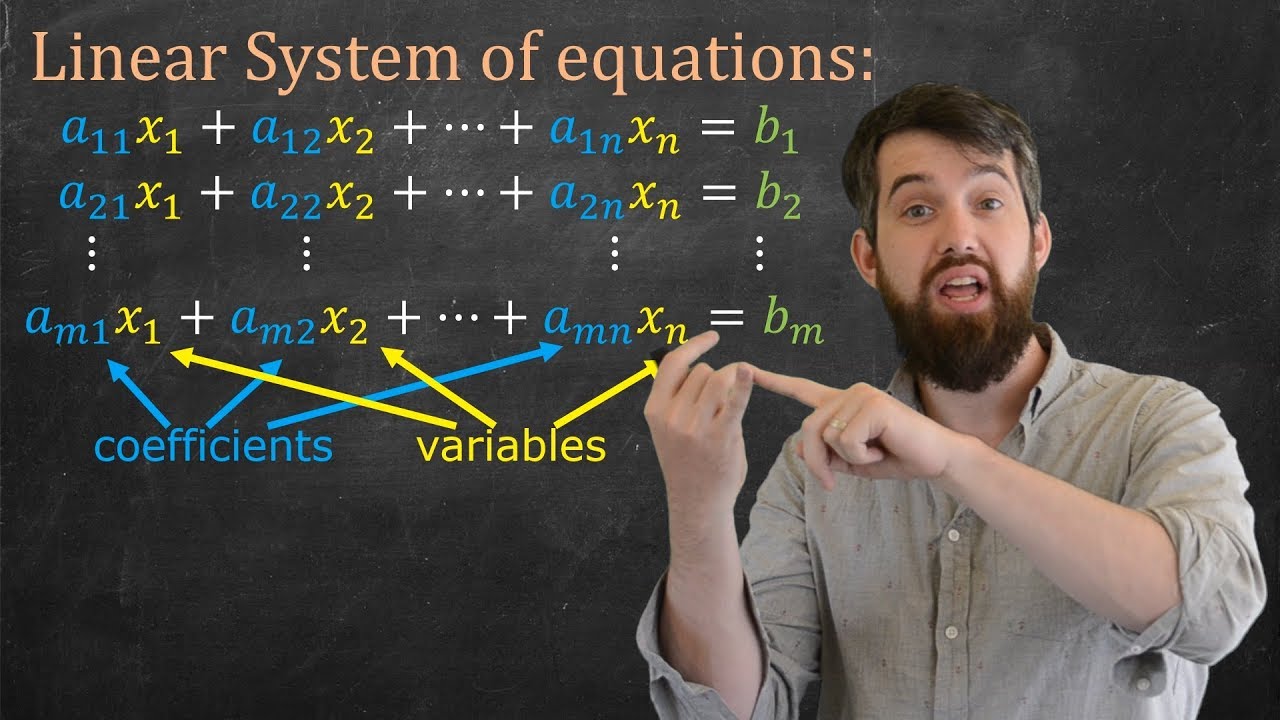
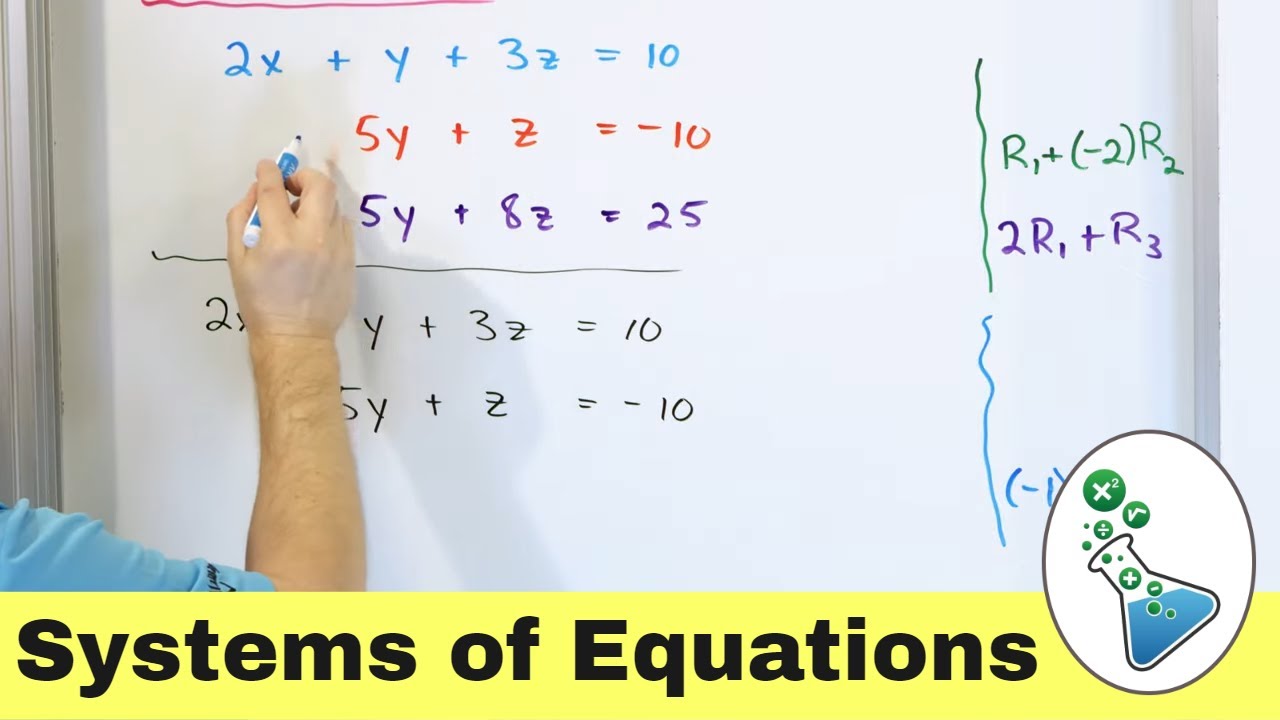
in the last video we saw linear systems of equations algebraically where I just gave you the list of equations and what we saw was that a solution to this algebraic linear system of equations was just some listing of numbers such that if I took those numbers and plug it in all the equations were true but then what we want to do in this video is to try to go in look at what happens geometrically I want to investigate how can I visualize what a linear system of equations really is and I'm going to begin by
focusing on a two dimensional single equation case so I got this one different equation and I say that it's two-dimensional in the sense that there's only two variables x and y by the way when there's only two variables sometimes use x and y if there's more you usually use X 1 X 2 all the way down to xn but for two I'll just write it ax plus B Y is equal to C now generically if I put in some specific values for my ami B here I get an equation of a line indeed if you
wish you could rearrange this and try to write it as a y equals MX plus B form as you might have seen in high school but nonetheless equations of this form are going to represent lies there are a couple of special cases that it's worth paying attention to for example but make the coefficient of the X 0 then what I'm going to get is a horizontal line and indeed the idea here is it does not matter what the x-value is because it's 0 and so all that we're doing is specifying some y values this is
the equation of a line of some particular height Y or alternatively if I go and look at the coefficient of the Y variable well then if I make that 0 doesn't matter what the Y value is this is just specifying what X is and I get a vertical line a really pathological example is the equation 0 x + 0 y is equal to 0 this doesn't matter what I put in here doesn't matter what the x is matter what the Y is everything is a solution so I sort of shaded in yellow to indicate that
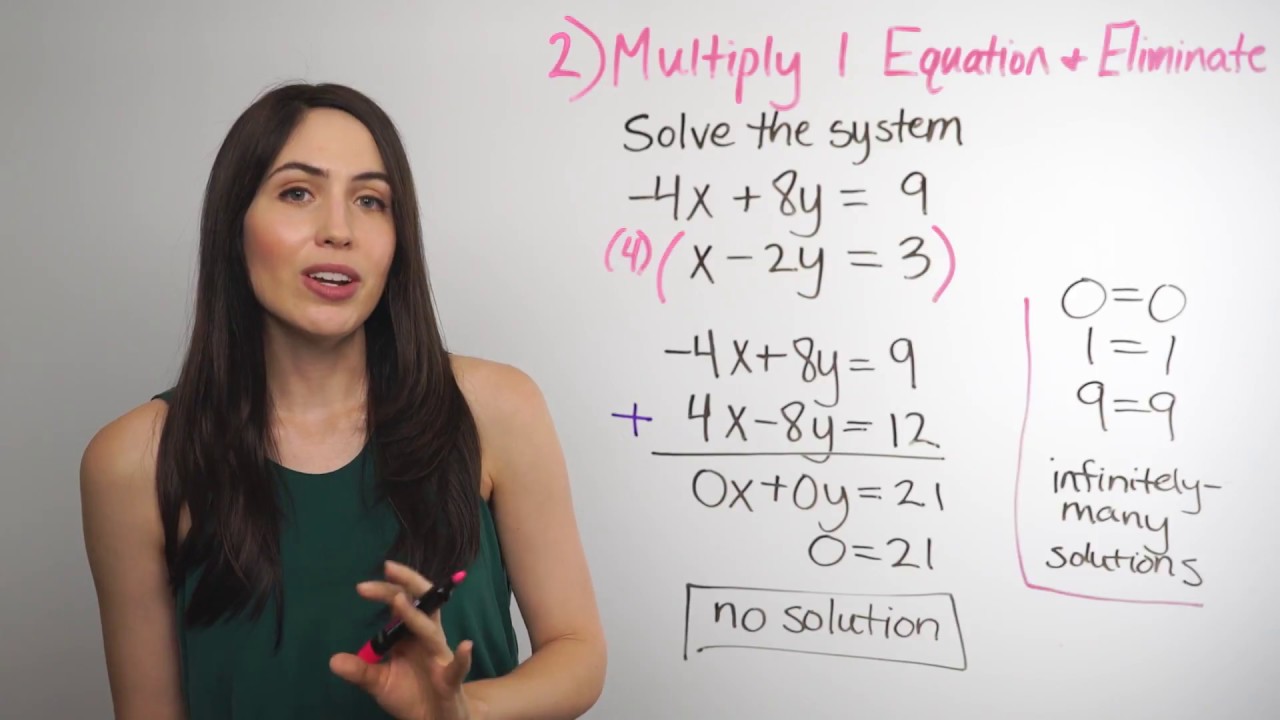
everything is a solution to this I want you to note that and all the examples whether it says love or whether it's all the points but what we've described here is an infinite set of solution there's infinitely many points that will satisfy this equation but that's not always the case so for example look at this funky 1 0 X but 0 Y is equal to 1 but how could that be no matter what x and y I chose that get 0 on the left hand side equal into 1 there's no solutions to this so this
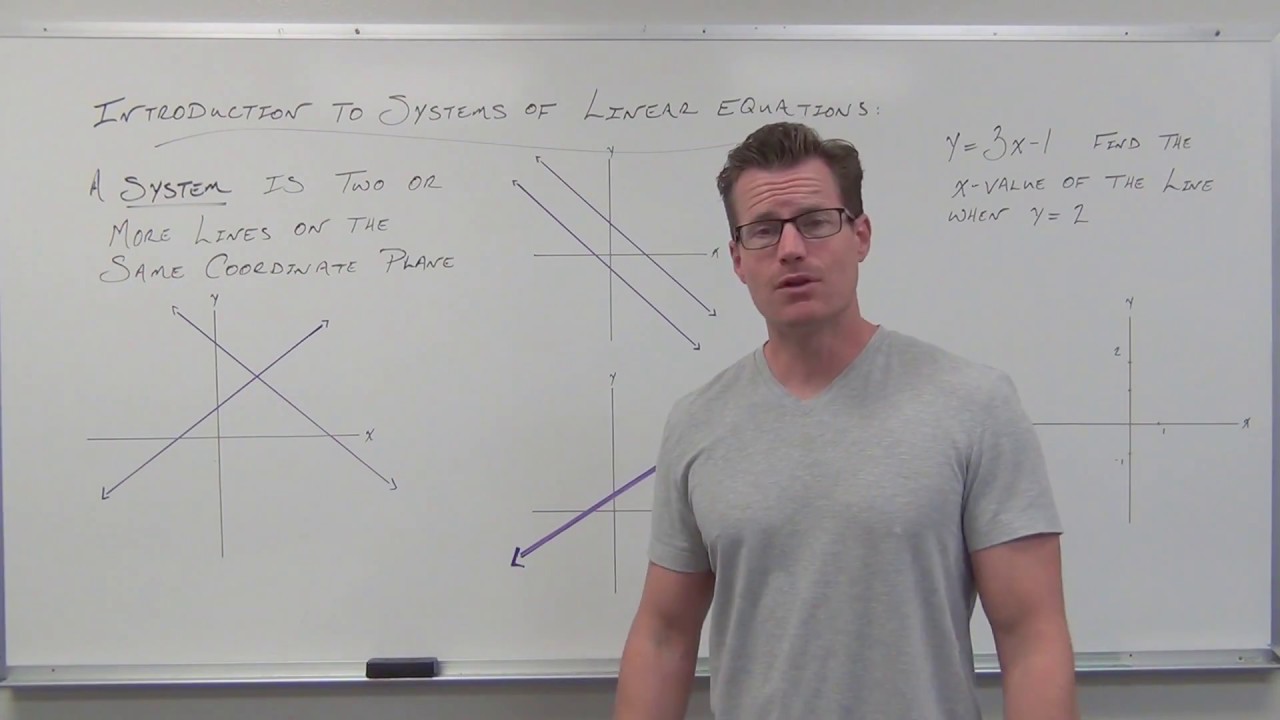
is our first 0 solution example all the previous ones had infinitely many different solutions okay so that was a single two-dimensional equation what about two different two dimensional equations something like this I know the linear system it's two different two dimensional equations I get two different lines and notice what happens notice that there's this little intersection spot now that's kind of interesting what that means is that to be a solution to the linear system well it has to solve both of the equations individually so that to be on both the real line and the yellow
line and the only spots on both the real line and the yellow line is indeed that one little intersection point so this is an example that has one solution so we've seen zero solutions one solution and infinitely many solutions I can play around with these a little bit as well what about this one here I've got these two different parallel lines so there is no solution to this linear system because there's no point that is on both the green line and on the yellow line there's no solution to both equations at the same time infinitely
manager just the reason infinitely many to just the yellow but zero to both at the same time and the third pathological case is okay well whatever got these two parallel lines but what if I go and make them right on top of each other but then I have infinitely many solutions because every point on the Green Line is also on the yellow lines this entire line is a solution to both equations in my linear system now what I want to point out to you is that so far I've had zero one and infinitely many solutions
those were my three different cases could I have two solutions if I had two different lines that's what the in do rows of a linear system mark I had two different lines how could they intersect in some way that there was exactly two solutions it had sort of curved around and hit each other but there's straight lines they can't do that they they either have to intersect in which case there's the one or they're parallel but offset in which case they're zero or they're parallel and on top of each other in which case there's infinitely
many and so I really get these three cases and only these three cases and then it's even better this geometric result which looks pretty intuitive to us but there's zero one or infinitely many solutions I certainly can't think of any other ways that would work with straight lines this is true generally indeed this is a theorem that applies in this general case that if I have a linear system of M different equations and n unknowns there has to be either 0 or 1 or infinitely many solutions but never 7 solutions exactly okay so we visualize
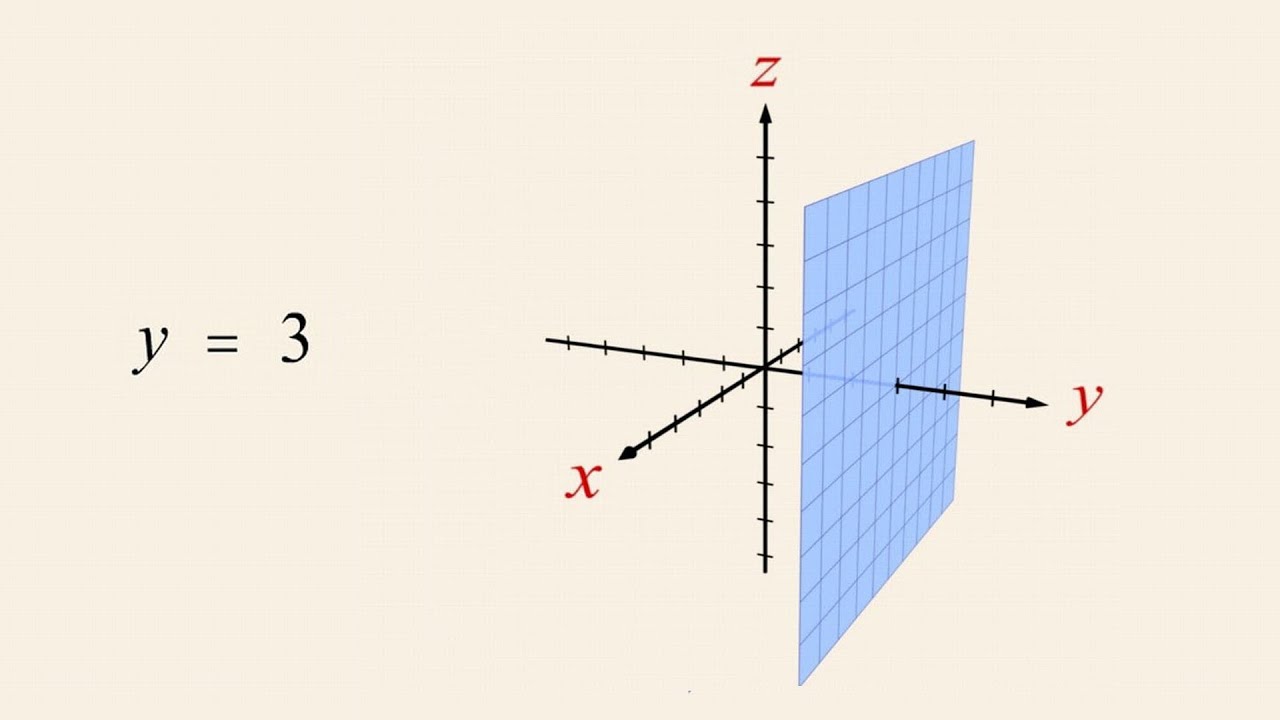
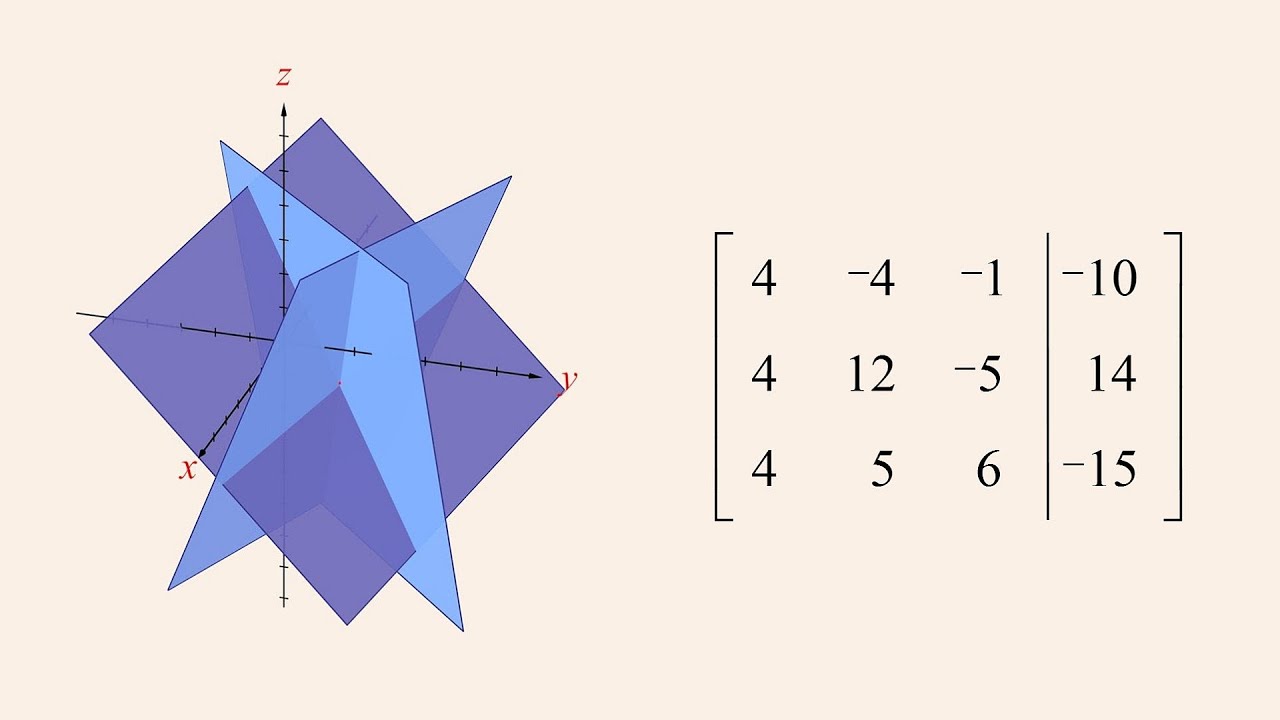
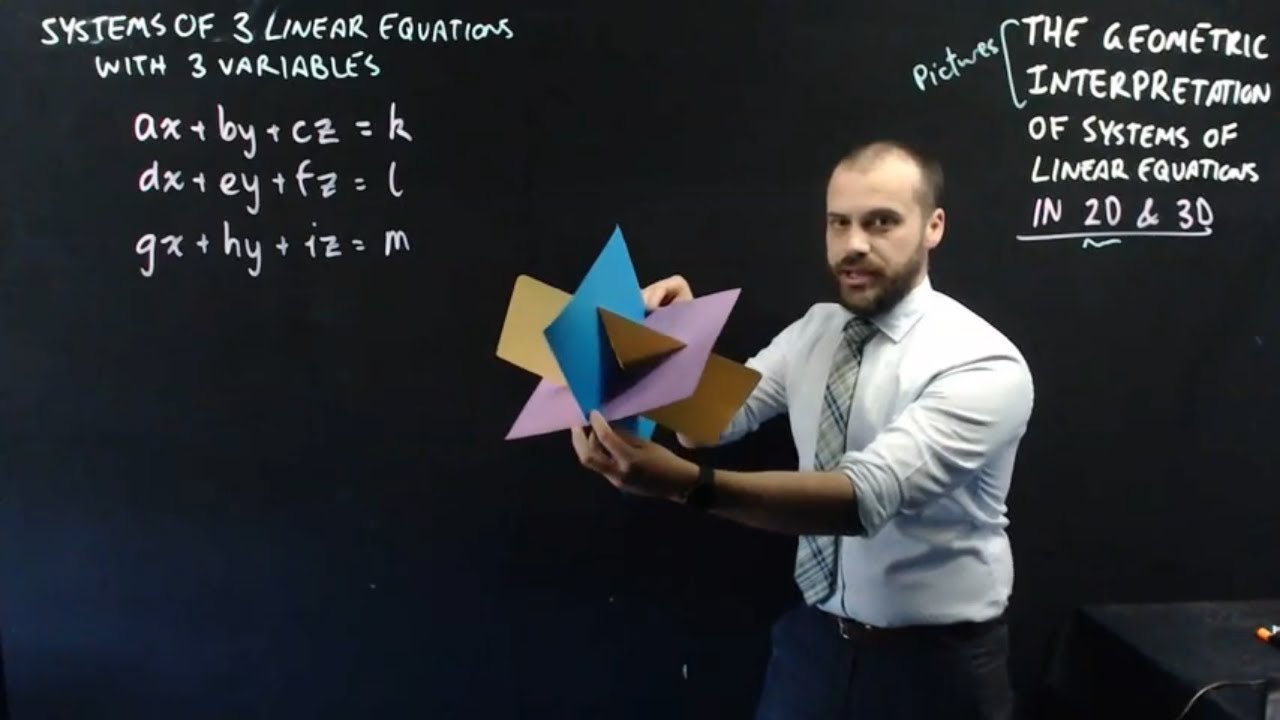
this theorem in the two-dimensional case but let's try to see what's going on three dimensionally so this is an example right now I have one of them only but it's one equation in three different variables x1 x2 and x3 and equations of this form generically make a plane this is an equation of a plane I can take this plane I can rotate my perspective around a little bit if I so wish but this is what an equation in three variables is it's an equation of a plane except for our pathological examples like where all of
my coefficients are 0 or 3 of them are 0 but the constant is one funny cases like that generically plans now we're going to investigate exactly how to figure out these planes quite a bit a little bit further along in the course but for right now just imagine that if I fixed any value for X 3 that would just be a constant for X 3 then you get an equation of a line and then if I vary my X 3 I'm gonna hold 1 2 different lines and whole bunch of different lines all lined up
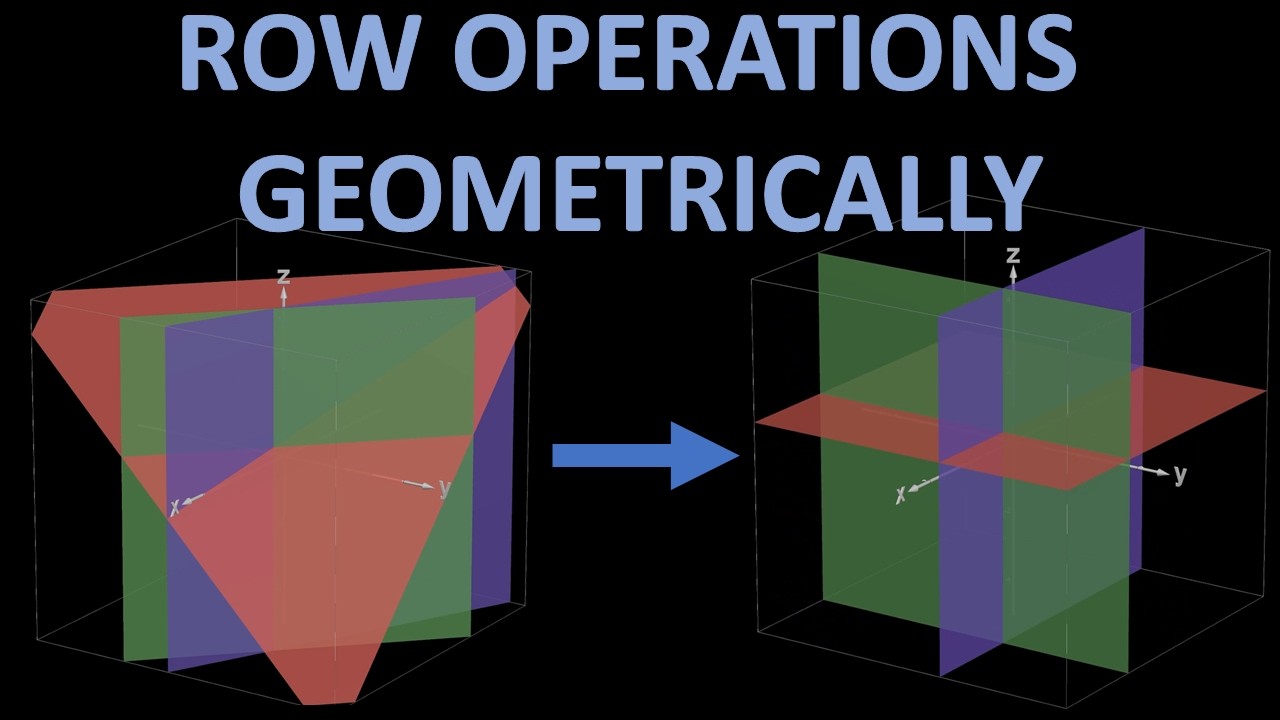
looks like a plane so it seems reasonable this is an equation of a plane but that's only one what about two different planes well two different planes might look a little bit like this and here's the key point I have this line of intersection between these two but if I have one plain slice and have another plain slicing that along the middle where they slice they're going to form a line and that's infinitely many solutions if I rotate my perspective around I can sort of nicely visualize how I have this nice equation of a line
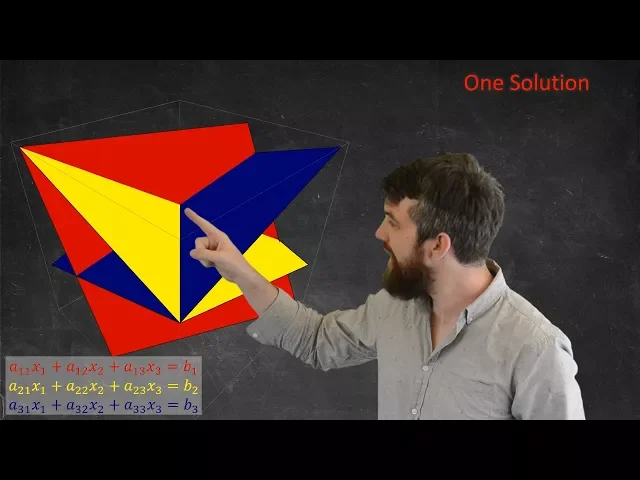
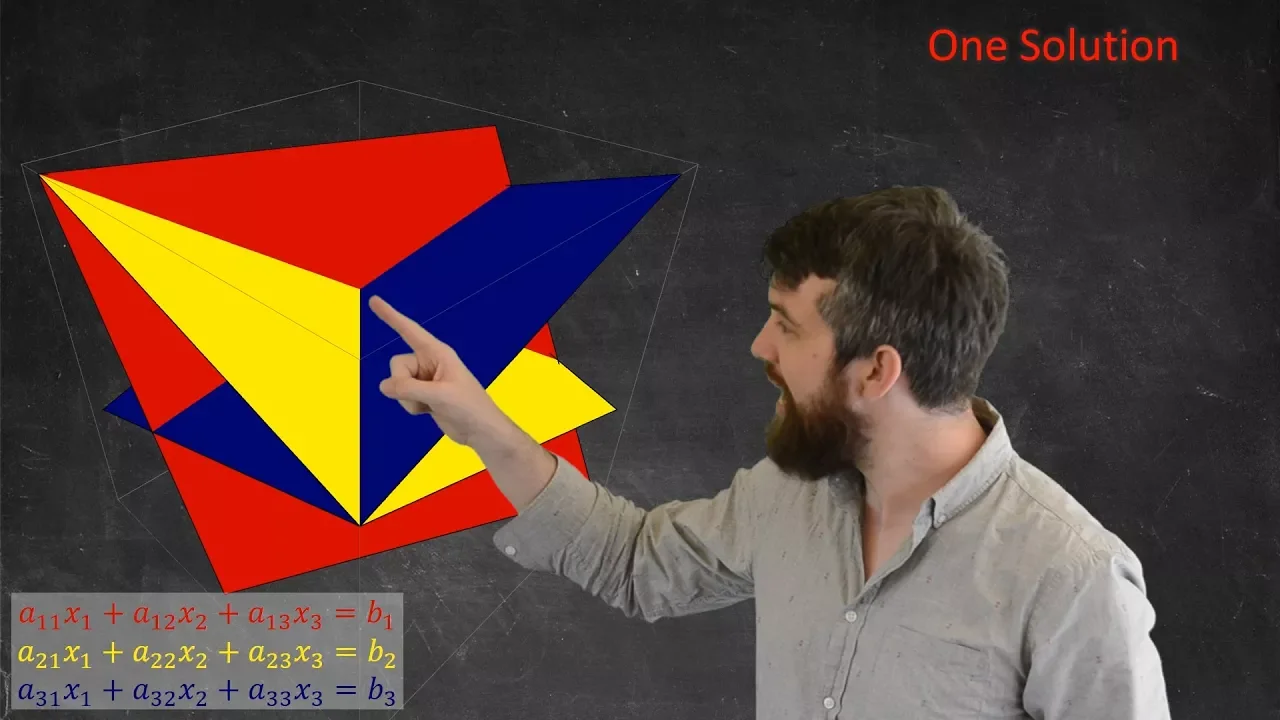
okay so two different equation so two different planes they intersect they form this line an infinite line of solution what about three planes let me come along here and slice another sort of plane in at a weird angle if I just had to read in the yellow they intersect it along a line and the plane comes along and slices that line but what I get is therefore one point there is one point that is on the intersection of all three of these different planes and I can see that point as I transition and zoom my
camera around these three different plans so just as how in the two dimensional place that you had two different linear equations the perhaps most generic answer was that there was the one intersection point in the three-dimensional equation if I have three of these planes they're also going to intersect at this one intersection point of course there's all these other examples ah what about this one where I've got two of the planes so the red and the yellow and I make those parallel they're directly on top of each other now the red may slice through them
but the red and the yellow never touch so this is zero solutions because there is no solution to all three at the same time as the blue and the yellow do not intersect so there we have that we have this nice geometric interpretation of what it is that a linear system represent and what a solution to a linear system can look like