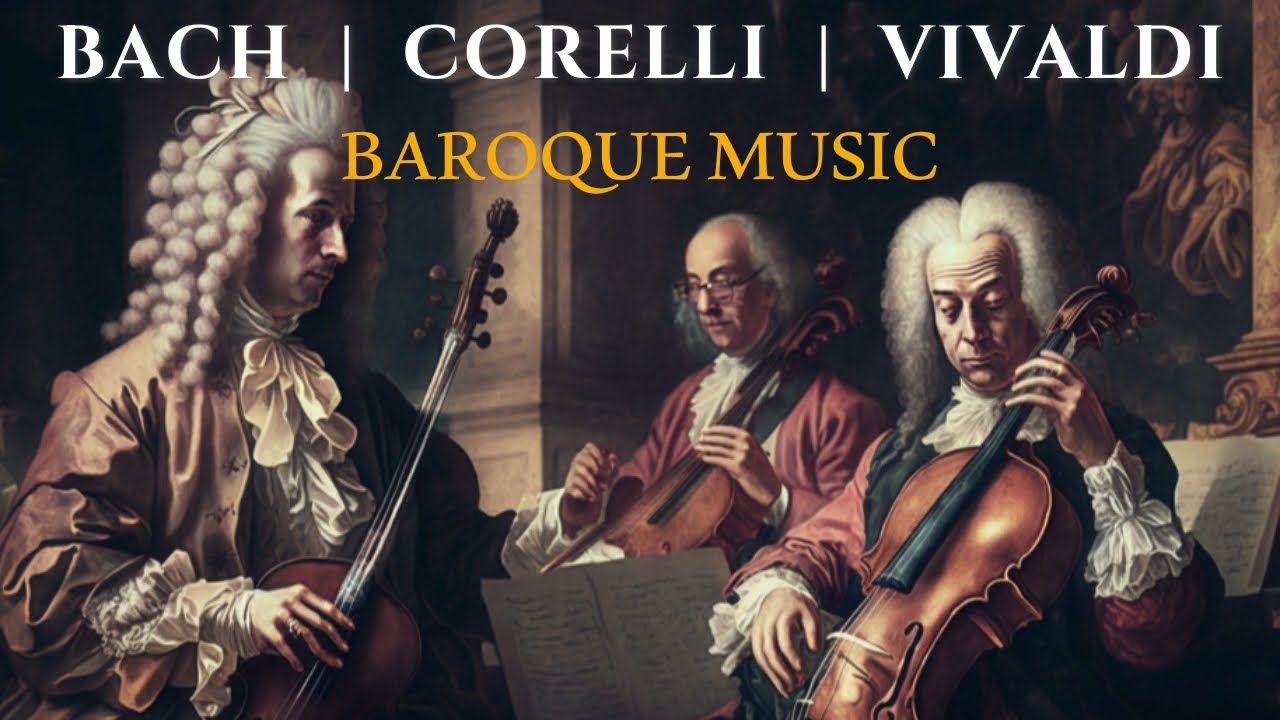
[Music] hi my name is Sarah joy and you are listening to Holiday music's podcast series on the Baroque era today's episode episode 1 is titled courts and churches and before we get into that I want to briefly explain what the Baroque era was today people like to describe any music that they hear being played by an orchestra or perhaps being sung with an operatic vocal style as classical music which I think that's a fine shorthand way of delineating between music that we listen to nowadays on the radio versus you know the rest the orchestral repertoire
that's fine but music historians do divide that big genre of classical music up into specific musical periods so you have Renaissance period and then right after that is the Baroque the Baroque Era which we're going to be talking about after that you had the actual classical music period than you had the Romantic Period and so on the reason why I think it's important that we do divide these um you know music history into these specific periods is that there are very unique stylistic characteristics in each one of them and it's fascinating to trace compositional techniques
ways of approaching and um conceptualizing music just to trace that and see how it grows and changes over time and how it's affected by what was happening in history during that time and to see how composers would build on the people that came before them so that being said the Baroque era uh some of the stylistic characteristics of this time period was greater ornamentation a lot of expressivity rhythmic freedom and you may not know what these terms mean right now but I'm just going to say them and then we'll talk about them in future episodes
but one of the biggest differences that occurred in this period versus in the Renaissance period that came right before it is the use of polyphony and homophony so we're going to talk about that and what that means and the kind of impact that it had on music going forward huge huge deal some influential composers from this time I'm sure you've heard of these people JS Bach Vivaldi monteverdi Purcell Luli great composers and again we're going to be talking more about them in future episodes um so but in today's video we're going to be talking about
the two major institutions that we're able to support musicians and these two institutions are the courts and the churches so we're going to start out by talking about the courts you have to keep in mind that during this time this was the age of absolutism so Europe had come under the control of rulers and monarchs these rulers with King Louis XIV kind of in the lead they kind of competed with each other to see basically how cultured their courts could be and so they wanted the best musicians the best composers they would you know spend
so much money on these lavish sets um Opera in the courts I mean that was a great way to show off your new technology with special effects so they were willing to put a lot of resources and finances behind the Productions that were given in their courts a great example of a court musician was Lily and his name is spelled l-u-l-l-y now Lily he was actually born in Italy but they discovered him on the streets whenever he was I think 14 and they ended up bringing him to King Louie's Court where he developed his musical
talents he gained a lot of popularity and actually became quite Wealthy by the end of his life and he and King Louise stayed quite close I think they had a slight falling out at the end of Lily's life but it was quite rare for a composer to remain with a single Patron for the entirety of their career so if you want a great example of a court musician do some research into him listen to some of his pieces and you'll get a very good idea of the kind of Court music that was popular at the
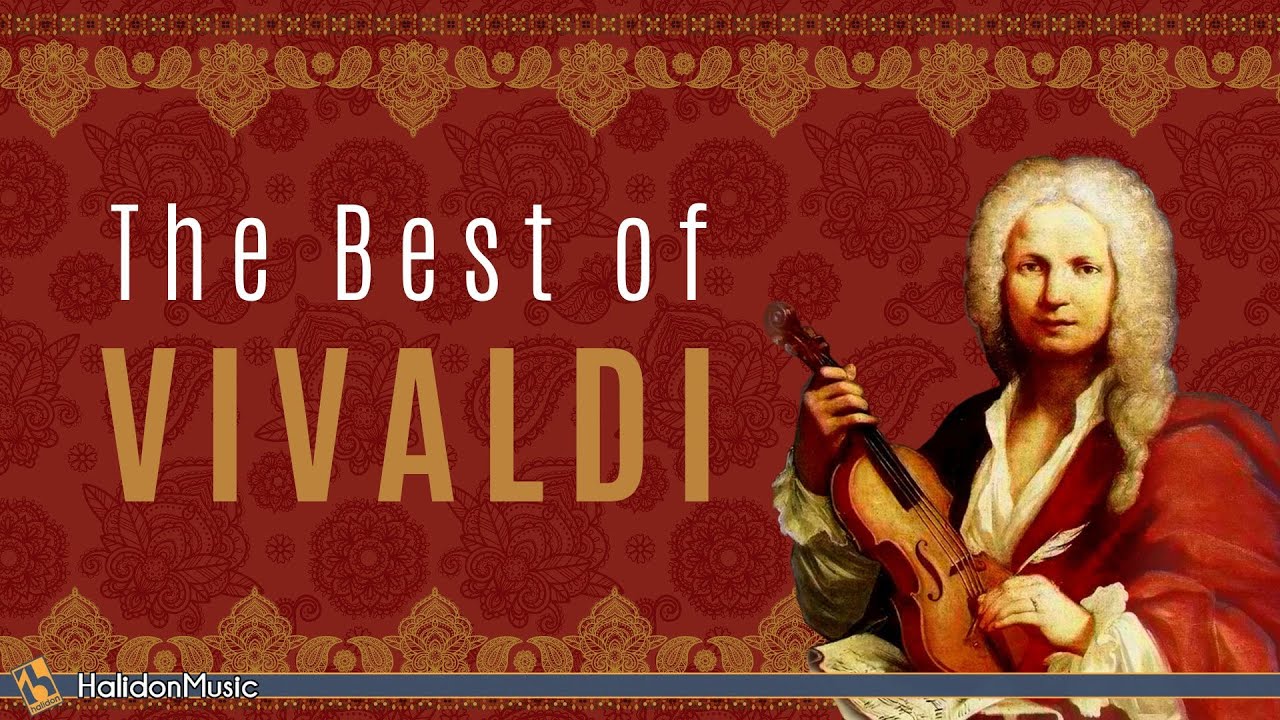
time he died very tragically by the way I don't know if I should put this in this uh podcast but yeah Louie they used to conduct with these big staffs or rods they would function as metronomes he would pound them on the ground and you would keep a steady beat poor Louie he ended up stabbing his foot and it got infected and he refused to let them amputate his leg because he wanted to keep dancing so that's why he died but anyways that was dark moving on another great example of a court musician is Vivaldi
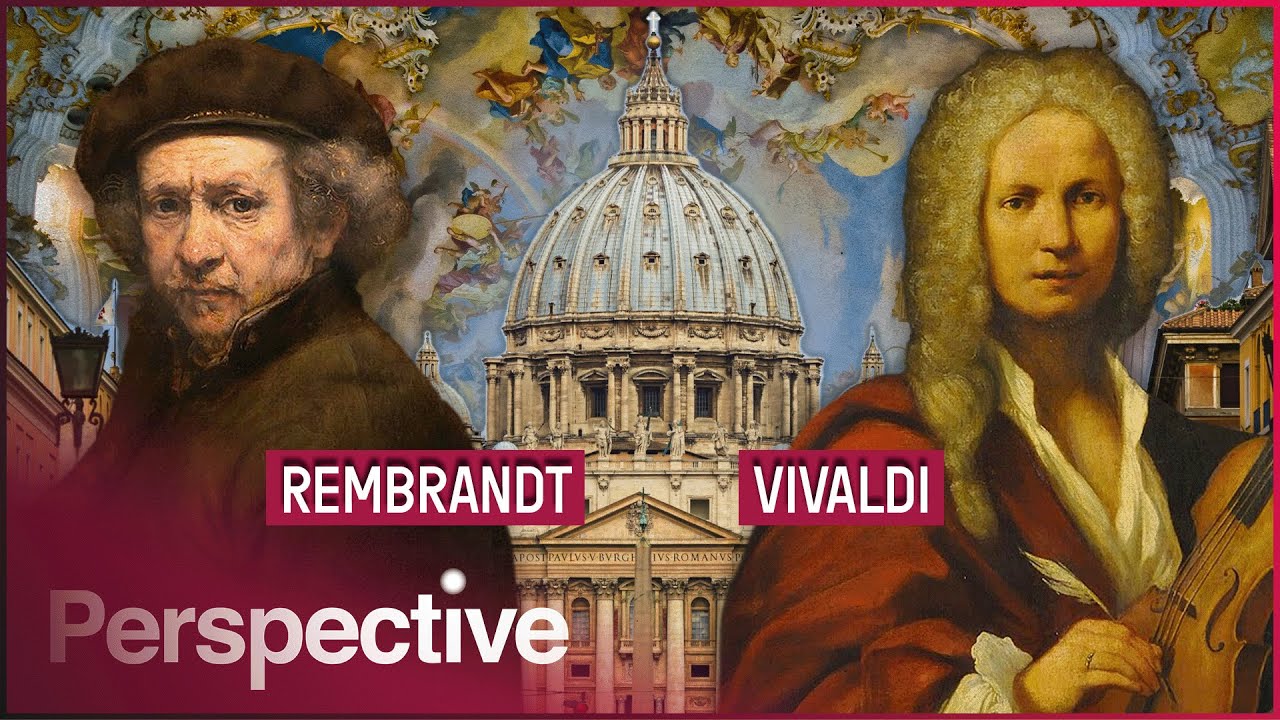
Vivaldi did not start out as a court musician but he was eventually offered and I'm going to look at my notes for this he was appointed at Maestro dicapella of the court of Prince Philip of Hessa darmstadt governor of manchua in the northwest of Italy I don't know how my pronunciations were just then but I gave it my best so during this time Vivaldi composed The Four Seasons which those are very very popular and I'm sure that you've at least heard of them before we're going to take a listen today so this is a small
portion of the Four Seasons Concerto Number One spring in E Major this is movement number one [Music] [Applause] thank you [Music] oh [Music] there are a couple exceptions of what I've been talking about and one of them is the way that the government was set up in England Authority was distributed and not entirely given to a single ruler and that mindset did permeate the culture and so instead of composers writing to make one person look good or to please that one single person they did keep in mind the tastes and the expectations of a broader
public audience exception is Opera opera did begin in the courts but it eventually made its way into Opera houses that were built for the public unfortunately it didn't make it all the way to the lower class but the middle class were able to enjoy it so Bankers Merchants businessmen folks like that now let's talk about music in churches J.S Bach is one of the best examples of a Church musician and one of the things that I love about him is that even though he had a very strange relationship with the authorities they were very demanding
very critical he still did his very best he created with integrity and excellence and you know I think he was able to do that one of the main reasons why he was able to do that is because he knew why he was doing it he had a sense of meaning and purpose and I think that that is summed up in one of my favorite quotes from him this is quote the aim and Final End of all music should be none other than the glory of God and the refreshment of the Soul so I think having
that sense of purpose helped him keep going despite his many frustrations and even in his secular writing he still carried that mindset and he still produced with that sense of giving if that makes sense let's go ahead and listen to box Yazoo Joy of Man's Desiring [Music] foreign [Music] foreign [Music] a couple other famous examples of Sacred Music you have handles Messiah of course and then you have Vivaldi's Gloria in D Major the list is endless I could just tell you piece after piece of Sacred Music but um I think that these can get you
started at least if you go ahead and search those up and you'll find more before this video ends I do want to talk about the popular music of the day so the popular music of that time was honestly it's kind of similar to the popular popular music of today very informal you know people just making up Melodies to entertain friends at the tavern to sing for their family around the fireplace and homes seeing while they work to keep themselves distracted unfortunately those creators didn't really have the education or the means necessarily to transcribe what they
came up with but a few of these Melodies in a few of these rhythms were preserved and we did we do get to kind of have a glimpse into the past and they were preserved by composers who would take certain melodies or certain rhythms and kind of integrate them into larger pieces and they would transcribe them so we do have sheet music that has lasted all of these years so we can kind of get a glimpse of what the popular music was at the time and a great example of this is the composer scarletti who
wrote his keyboard sonatas he would take Spanish folk tunes and Spanish folk rhythms and he would use those as influences on his own compositions so let's go ahead and take a listen to keyboard Sonata in E Major [Music] foreign [Music] foreign as we wrap up today's episode the one thing that was consistent through all of these contacts so courts churches even just popular music people making stuff up in the streets um the consistent thread through all of those was the constant demand for new people were always looking for something fresh and unfortunately what that meant
for some of the greatest composers who we consider great today is that by the end of their lives they had already fallen out of popularity so he lived to see his music fade away and he really had no assurance that it would ever come back in the future it finally had a Revival but I think that that's an important thing that all creatives can keep in mind is that if you truly create with integrity and excellence um you know that kind of art has a way of persevering into the future despite what your current culture
may or may not accept so I don't know I find that to be encouraging perhaps other creatives out there can as well but I think that does it for today so thank you for listening and please stay tuned for episode two