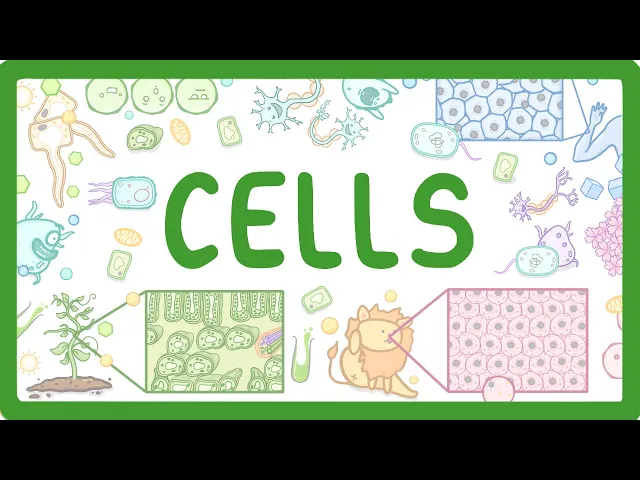
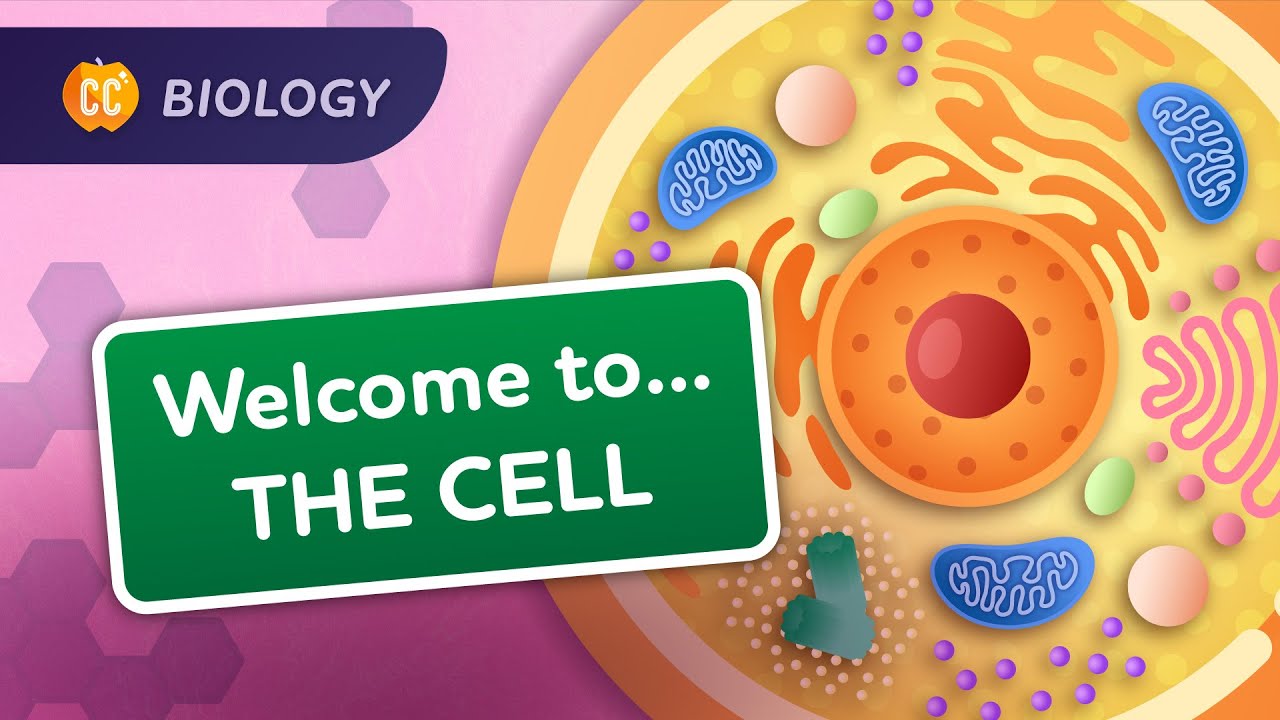
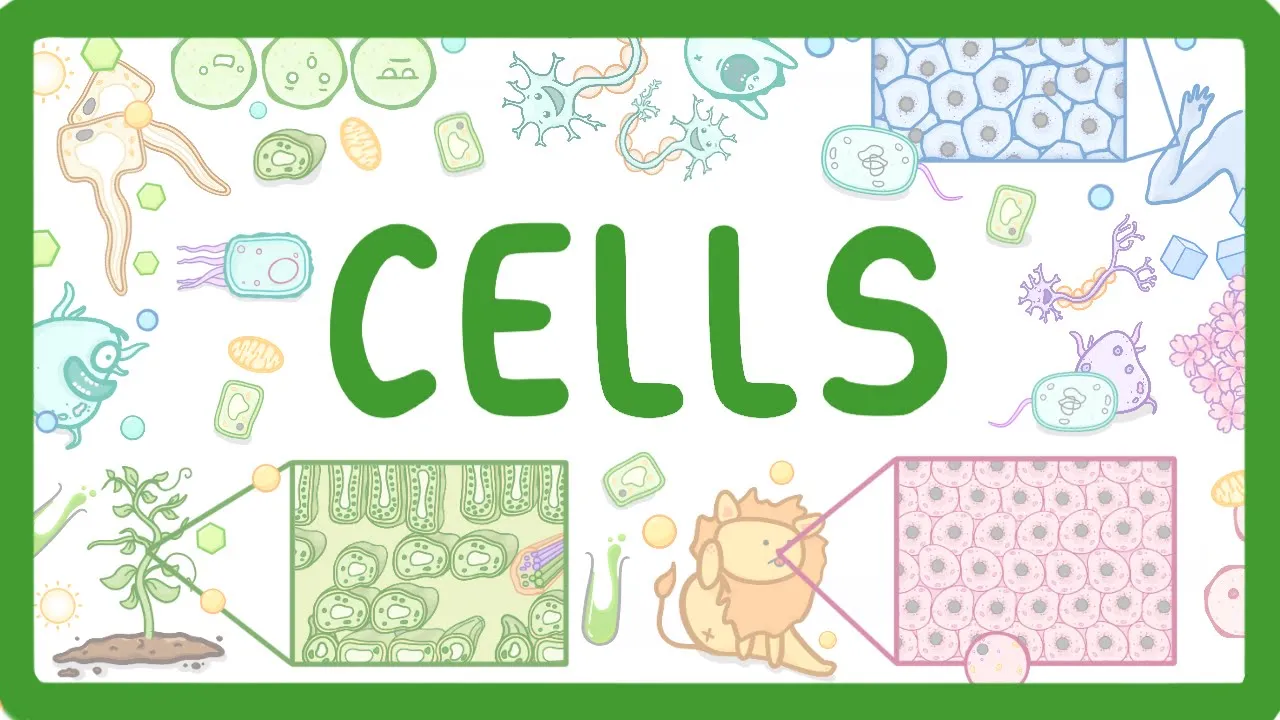
[Music] in today's video we're looking at cells so we're going to cover what cells are and which subcellular structures they contain specifically though we're going to look at the similarities and differences between animal and plant cells first which are both examples of eukaryotic cells and then also our bacterial cells which are prokaryotic cells so hopefully by the end of the video you'll be able to label all the different parts of a cell and describe what each of them do let's start with what cells are you can think of cells as the basic building blocks of
life and what we mean by this is that they're the smallest unit of life that i can replicate independently so if we took an animal or a planter they could divide into two cells then into four cells and so on in some cases though alike for bacteria each individual cell is a whole organism so when they divide like this they're also reproducing because every division produces a whole new organism animals and plants though are multicellular which means that they contain loads of cells and so when their cells divide like this they're normally just growing or
replacing dead cells they're not normally making whole new organisms to see what i mean imagine we took a human and looked at him closely under a microscope we'd see that he's made up of cells so the skin contains skin cells the blood contains blood cells and so on in total we contain hundreds of different types of cells and is thought that an adult contains over 40 trillion cells altogether next we need to look at the actual structure of cells so we'll start by comparing an animal cell and a plant side by side to highlight their
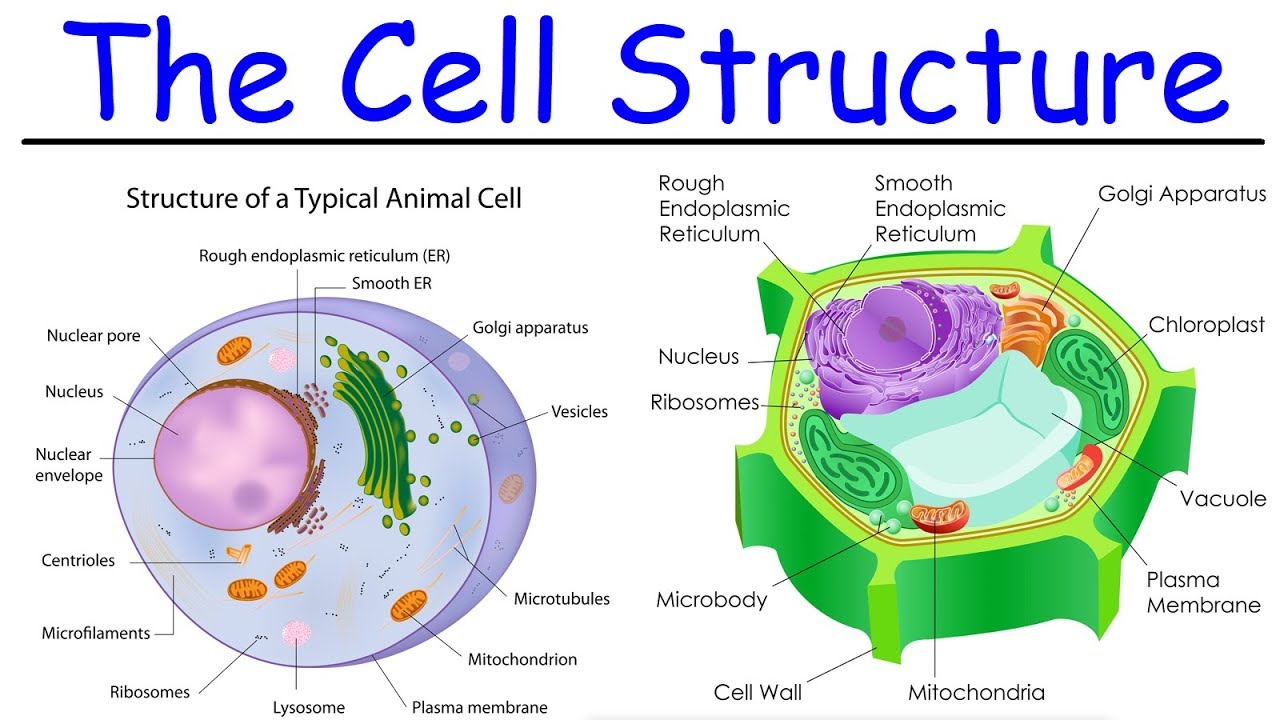
similarities and differences and then we'll look at bacterial cells after now to understand cell structure we need to look at the different parts that make up the cell and these are known as subcellular structures or sometimes organelles firstly both cells are surrounded by these cell membranes that control which substances can pass in and out of the cell for example they'll let some chemicals through the membrane but not others both types also have a nucleus which contains the genetic material or dna of the cell and so it effectively controls the activities of the cell as well
they're also both filled with a gel-like substance called cytoplasm this is what all the other sub-solar structures sit in and it's also where the chemical reactions take place you can basically think of it like water filling a water balloon but the consistency is closer to jelly next they also have lots of mitochondria whose job is to provide the cells with the energy that they need to function we'll cover how this works in another video but basically they break down sugars like glucose in a process called aerobic respiration which releases energy that the cell can use
and finally both cell types also contain loads of ribosomes which are the site of protein synthesis which just means that it's where proteins are made now all of these sub-solar structures that we've just mentioned are common to both animal and plant cells but importantly plant cells also have a few extra structures for one they have a rigid cell wall around the entire cell that's made up of material called cellulose and because cellulose is really strong the cell wallet can provide support and structure to the cell which is really important because if too much water enters
the cell then it would otherwise burst next a lot of the cell is often taken up with this thing called a permanent vacuole you can think of this as a big sac that contains cell sap which is basically a mixture of sugars salts and water that this cell can use when it needs to and finally they also have chloroplasts which is where photosynthesis happens we cover in detail in another video but basically photosynthesis is the process by which plants use energy from the sun to make sugars like glucose and to help with this chloroplasts contain
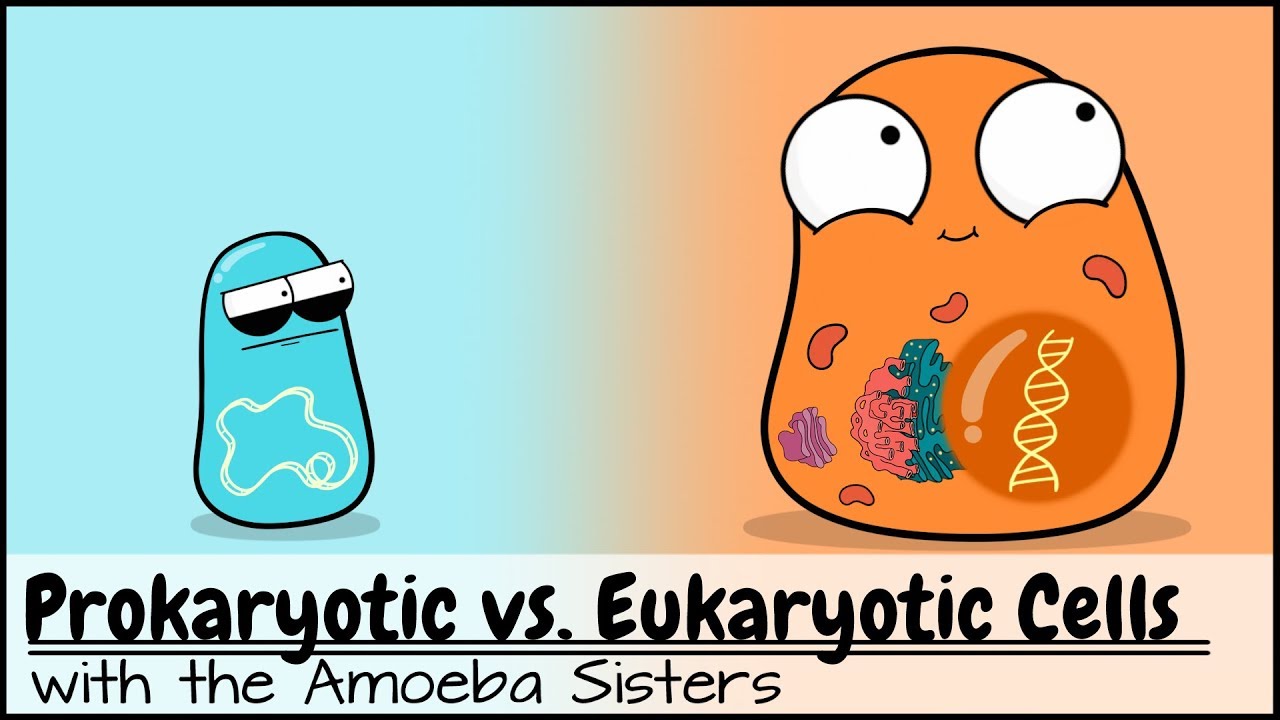
a green substance called chlorophyll which absorbs the light energy that's needed for photosynthesis and it's this chlorophyll substance that makes plants leaves green the last thing we need to look at are bacterial cells as we said earlier bacteria are prokaryotes and consist of a single prokaryotic cell this means we can refer to them as unicellular which just means a one cell organism just like the eukaryotic cells that we've seen so far bacteria also have a cell membrane a cell wall ribosomes and cytoplasm importantly though they don't ever have mitochondria or chloroplasts and they don't keep
their genetic material in a nucleus instead they have a single circular strand of dna that's free to float around the cytoplasm and that contains all the genes that they need to survive and reproduce you might also see this labeled the circular chromosome or nucleoid but they all mean basically the same thing it's just a big loop of dna some bacteria also have additional small rings of dna called plasmids these carry extra genes like antibiotic resistance which the bacteria don't need on a daily basis but may sometimes come in handy some bacteria also have flagella these
are these thread-like structures that have protrude out from the bacteria and are able to rotate to propel the bacteria along so they basically allow the bacteria to move around anyway that's everything for this video so i hope that was helpful for you if you want to practice questions on this or anything else in science or maths then head over to our revision site which you can access by pressing the link in the top right corner of the screen otherwise have a fantastic day