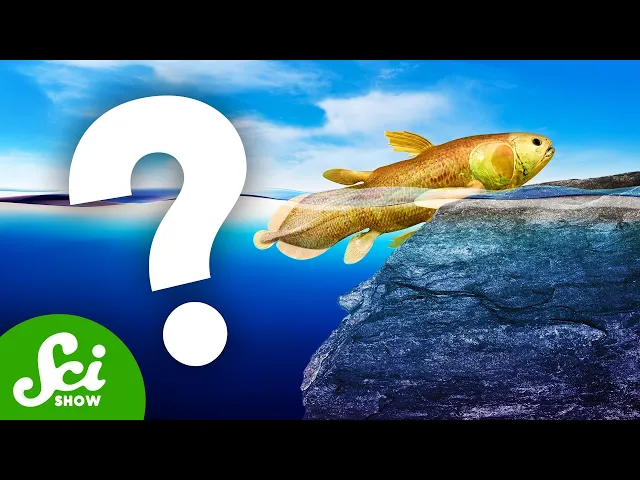
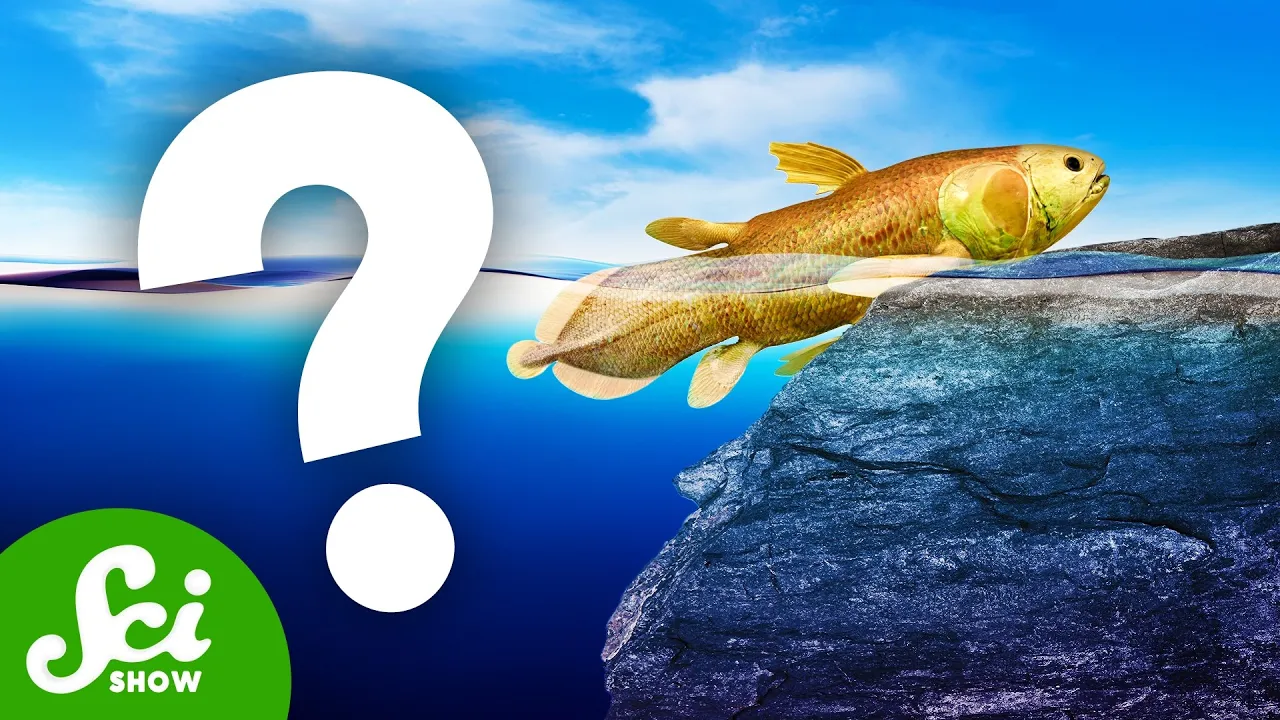
Somewhere in the ballpark of 360 million years ago, a group of fish went and tried living on land instead of in the water, and changed the course of our planet’s history forever. Those fish were the ancestors of all of the vertebrates that live on land, including us. So naturally, scientists are very interested in understanding the details of this evolutionary transition.
But there’s a problem. There’s a period of several million years where the fossil record is pretty sparse, and it happens to coincide with the time our ancestors decided to hop on shore. So at a point in Earth’s history when it would be extra informative to look at the fossil record, the fossils … are missing.
[♪ INTRO] Long before humans or dinosaurs or any land-dwelling vertebrates, there was the Devonian Period, aka the “Age of Fishes. ” And as you may have guessed, there were lots of fish back then. There were placoderms with bony armor, early sharks with their cartilage skeletons, and our closest fishy cousins, the lobe-finned fish, whose fins are supported by sturdy bones.
And among those lobe-finned fish were the ancestors of land-dwelling vertebrates. These included fish like Tiktaalik, which had bony fins capable of supporting its weight, and a mobile neck. That sounds like not that big of a big deal, but like, if you picture a regular fish, there’s no real separation between head and torso.
And it turns out that both these strong fins and the ability to turn your head without moving the rest of your body are useful traits to have if you want your descendants to live on land someday. They’re early steps in the process, so to speak. That said, Tiktaalik was decidedly not a terrestrial animal.
They were land-curious, at best, but probably spent most of their time in shallow water, dragging their bodies along using those big fins. But by the end of the Devonian Period, around 360 million years ago, some later fish species were just about ready to walk along the beach. Like Acanthostega and Ichthyostega, which both looked kinda like big salamanders.
They both had four bony limbs supported by strong shoulders and hips, and had a bunch of fingers at the end of each limb. Kind of like us! But even if they did have feet that could pull them around, these were still primarily aquatic animals.
Their legs were short and paddle-shaped, their heads were large and heavy, and they had gills, all of which is better for swimming than for life on land. And if we fast forward to the middle of the Carboniferous Period, 30 million years later, we find bony animals called tetrapods that are really well adapted to living life on land. Their skeletons have a lot in common with those earlier fish, but they also have four strong legs that could support the bodies, no buoyancy needed.
We know that there must have been a whole lot of evolutionary steps in between those Devonian fishes and the Carboniferous tetrapods. But the fossils that show us the whole process of how it all happened were missing for decades. There was a big empty space in the fossil record, right at a time where we would expect to find some of the most important animals in all of vertebrate history.
Those early tetrapods were the ancestors of all the land vertebrates, so we really want to know more about them! Paleontologists have been complaining about this gap in the fossil record for more than half a century. The first person to notice it was a paleontologist named Alfred Romer, who lamented the lack of fossils way back in 1956.
He noted that between 360 and 330 million years ago, there were almost no known fossils from anything living on land. And since he was the first one to write it down, this gap became known as Romer’s Gap. Of course, gaps in the fossil record are not unusual, since the odds of anything actually becoming a fossil are generally low.
It’s like winning the lottery, but do you have to die first. Plus, not all organisms and ecosystems fossilize equally well. For example, hot and humid places do not preserve fossils nearly as well as cold and dry ones do.
And fossils are also more likely to form in marine ecosystems than on land. So, paleontologists just have to kinda put up with the fact that the fossil record can be extra patchy for certain organisms, certain time periods, or certain parts of the world. But Romer’s Gap is an especially interesting and frustrating example.
It’s a really long gap that seemed to be consistent all over the world, and it’s during a time period where something really, really exciting was happening on land. One of the big questions researchers had was about timing. See, we know which things had to change to take a fish and make it able to walk on land: strong limb bones, a ribcage that could hold its own weight without water, and the ability to breathe air.
That’s a big one. But without fossils of the transition from water to land, we can’t know which of those things came first, or what the intermediate steps looked like. We also would love to know what ecosystems these transitional tetrapods lived in, and just how fast they made it from water to land.
None of which we can figure out without the fossils. And there’s even been a question of whether this gap was really just bad luck or if something else was at play to prevent fossils from forming. See, Romer’s Gap starts right after a mass extinction event.
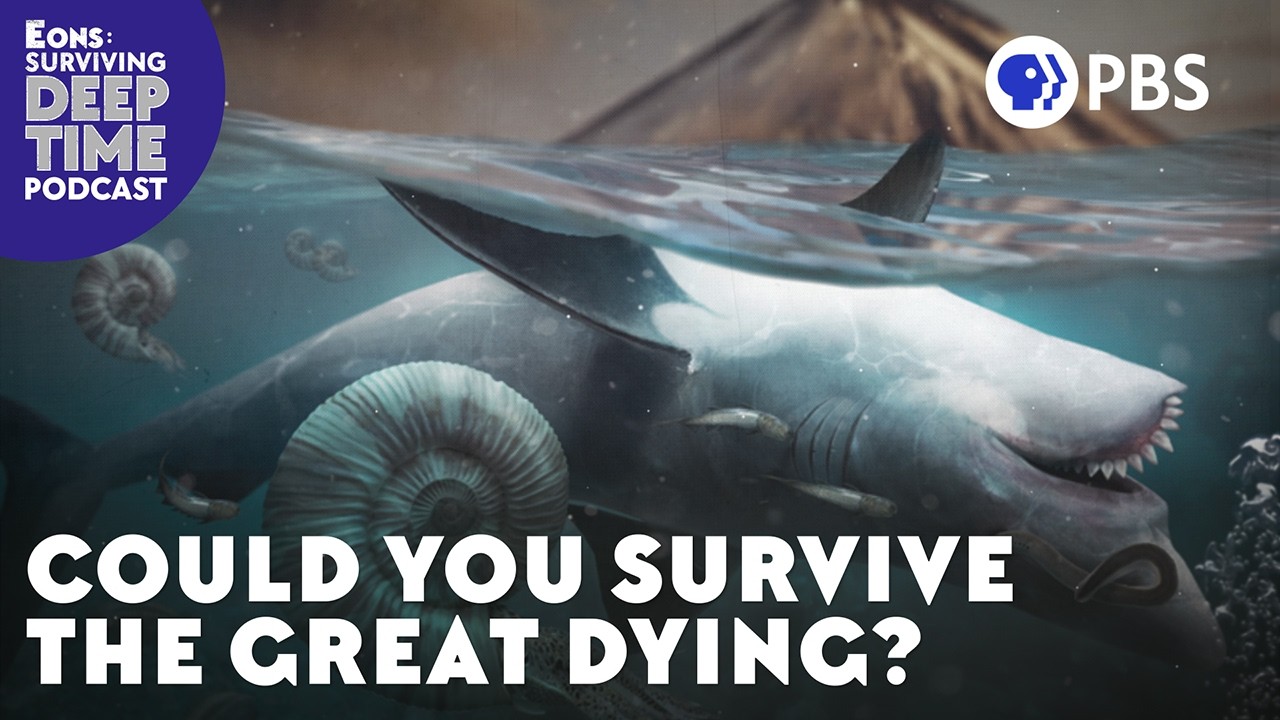
The Devonian Period ended with a mass extinction caused by an ice age, drought, and rapid sea level change that wrecked ecosystems around the world. ~ This event devastated populations of many Devonian fishes, including the armored placoderms as well as lobe-finned fish. And certain research identified potential evidence for low oxygen levels in the wake of these environmental disturbances.
This led to the hypothesis that the world after the Devonian was a harsh place for air-breathing animals, and that early tetrapods might have had to wait until conditions improved before they could finally make the move onto land. If this were true, it could mean that Romer’s Gap wasn’t just a fluke in the fossil record. Paleontologists might not have found fossils of land animals from that time because there just weren’t nearly as many on land as we’d expected.
This is an intriguing hypothesis, but as time has gone on, it hasn’t really held up. Because we’ve started finding the missing fossils. Thanks to Babbel for supporting this SciShow video!
Babbel is one of the top language-learning apps in the world, offering 14 different languages at your fingertips with lessons designed by real language teachers. You can learn through a variety of lessons that prepare you to have practical conversations about travel, business, relationships, and more. Wouldn’t it be cool to say to your waiter in Rome, “Posso avere il conto?
” Well, with lessons that are only 10 minutes a day and easy to access right on your phone or tablet, you’ll be able to ask for the check naturally in no time. And your pronunciation will probably be a lot better than mine. Before you leave for Italy, get cozy with a new language this Fall and start having real conversations in as little as three weeks.
And if you decide Babbel is not the right fit for you, they offer a 20-day money-back guarantee. More importantly, you can get up to 60% off during Babbel’s Black Friday sale by signing up using the link in the description! As it turns out, the solution to Romer’s Gap was that we just weren’t looking in the right places.
But over the past few decades, new fossil discoveries have been slowly filling the gap and completing our picture of the early evolution of tetrapods. It started in the 1990s, about 20 years after Romer’s death. Paleontologists identified tetrapod fossils in Iowa, Scotland, and Nova Scotia, all of which date to within Romer’s Gap.
Then, in 2002, a paleontologist described an exceptional fossil from Scotland named Pederpes. It was originally misidentified as a fish, but further examination revealed that Pederpes is actually one of the earliest known tetrapods. So technically still a fish, but in the same way that like, I’m a fish.
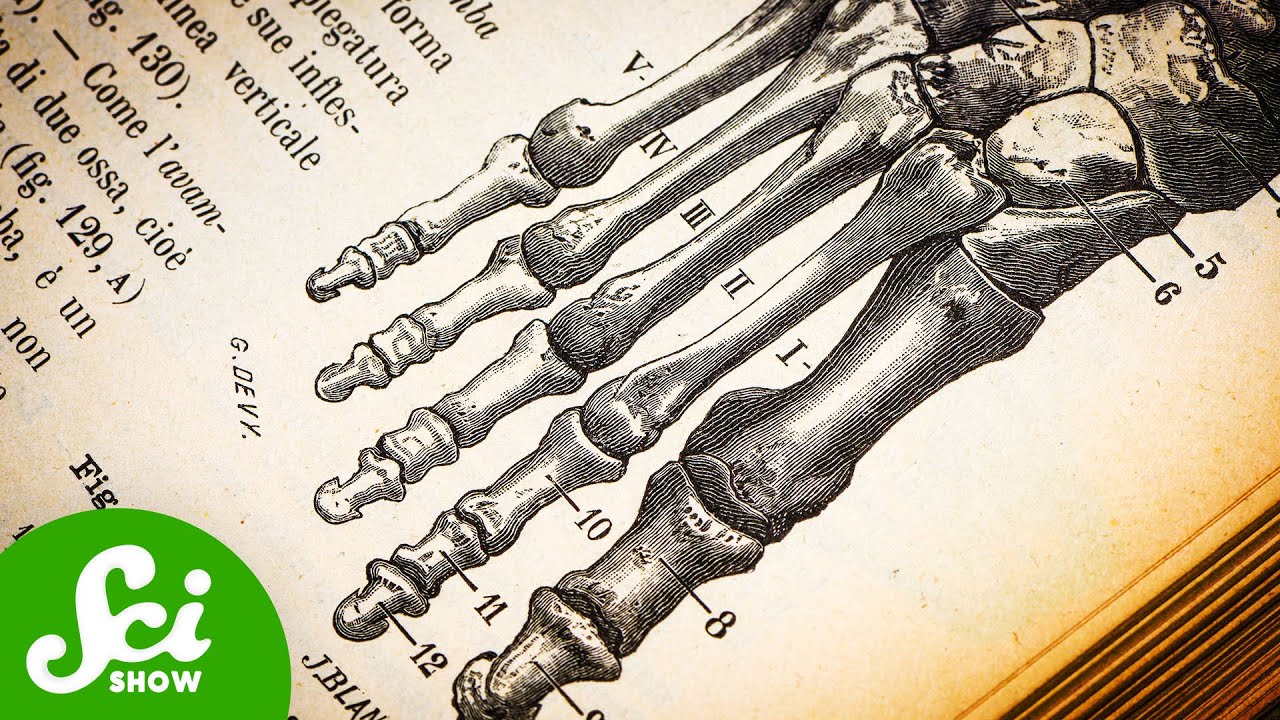
Pederpes was discovered in ancient coastline sediments of the Ballagan Formation, dating to around 350 million years ago, smack in the middle of Romer’s Gap. And it does have some features that make it look like that Devonian fish Ichthyostega, like the skull, hips, and rib cage. But the proportions and arrangement of its foot bones are much more like those land-dwelling species from after Romer’s Gap.
So Pederpes was a monumental find. Not only did it partially fill in the famous gap, it also revealed some of the earliest evidence of tetrapod adaptations for walking on land. And a few years later, in 2004, paleontologists described another Romer’s Gap tetrapod, this one from Queensland, Australia.
It was named Ossinodus, and it was well-designed for both swimming and walking, meaning it represents a nice middle ground in the transition to, well, walking on the ground. By 2012, researchers considered Romer’s Gap to have shrunk, but there were still around 15 million years that were totally unrepresented in the record. And since then, paleontologists have continued to uncover new finds within the remaining gap - not just new species, but entire ecosystems full of early tetrapods.
A site called Blue Beach in Nova Scotia, Canada, preserves a rich ancient ecosystem from the earliest part of the Carboniferous. The fossils there are a mix of more fishy-style animals like Acanthostega as well as walking animals more like the tetrapods of later time periods. There are even fossil footprints, evidence that some of the critters they were finding walked on dry land, at least some of the time.
Blue Beach is a snapshot of an ecosystem in transition, where some of the earliest walking tetrapods lived side-by-side with their still-swimming cousins. This site, with its rich assemblage of tetrapods, also provided a major rebuttal to the old idea that low oxygen levels prevented these animals from becoming diverse and successful at this time. And there’s another site that dates to within the gap called Willie’s Hole, in Scotland.
Excavations at Willie’s Hole have recovered fossils of several new species of early tetrapods, with even more early adaptations for life on land. A 2016 study described a tetrapod from Willie’s Hole called Aytonerpeton. It had slender legs, as well as foot and hip bones that look more like those early tetrapods.
And another one called Mesanerpeton got us yet another step closer to having the full picture. The upper arm bones of Mesanerpeton are slightly twisted, in a way that’s similar to what we see in land-walking tetrapods. That twist helped these animals take longer steps, which makes for more efficient walking.
So the structure of Mesanerpeton’s arm bones are more walking-adapted than their earlier fish cousins, but not quite to the degree of later tetrapods - they’re an intermediate form. These new discoveries aren’t just bridging the gap between terrestrial vertebrates and our fishy ancestors, they’re also revealing the timing of this transition. Which is why it was so awesome to find Willie’s Hole, right in the middle of Romer’s Gap.
Fossils from sites like Willie’s Hole and Blue Beach show that early tetrapods were already diversifying in the early parts of the Carboniferous Period. Which means that the Devonian mass extinction didn’t keep early tetrapods down, and it may have even given them a boost. When the other species all died off, it could have meant there were some open spots for some entrepreneurial fishes to take to the land.
With all these new fossils, it seems that Romer’s Gap might be more like Romer’s itty bitty crevice, even though Romer himself never got to see the gap shrinking. But for modern paleontologists, each new discovery means a clearer look at a formerly mysterious time period, and a more complete picture of how our distant ancestors made the monumental move out of the sea. So future researchers will no longer need to mind the gap.