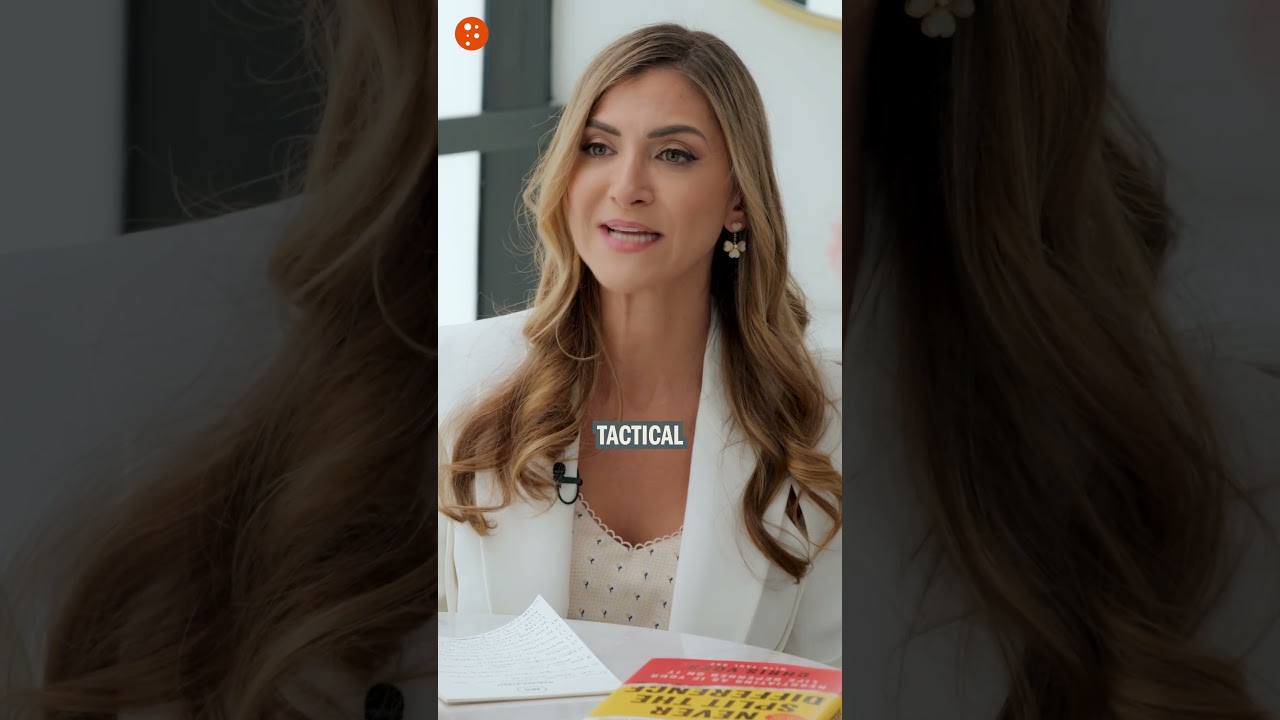
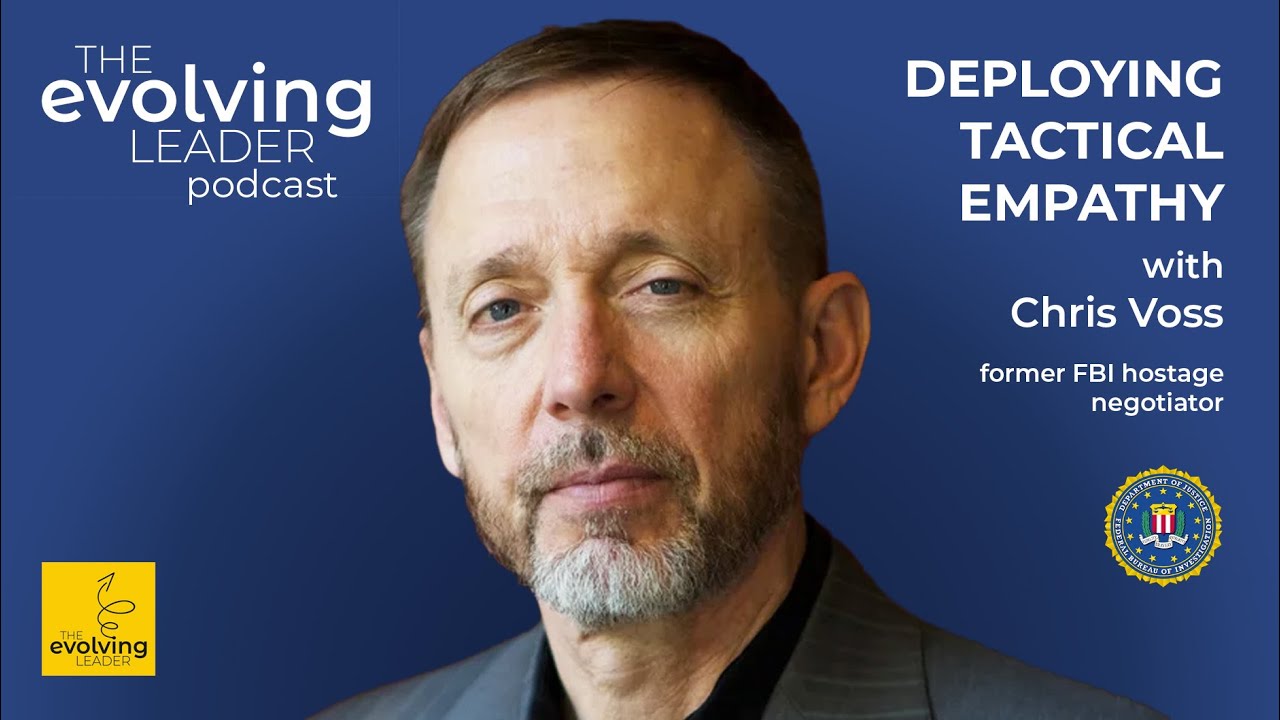
i was going to ask is it tactical empathy that you're employing or is it just because there's a difference right well uh depends upon your point of view i mean just tried we put the word tactical in front of empathy to get people to think about it differently because unfortunately empathy today has become synonymous with sympathy or compassion and it's not now you got to have empathy to get the compassion a friend of mine steve kotler who wrote the book the rise of superman among others says empathy is about the transmission of information compassion is
the reaction to that transmission but unfortunately that's not the way it's looked on uh in today's modern vernacular so put tactical in front of it just to look at it as a skill um like a cell phone or a scalpel either one of those instruments can either do good or evil depend upon whose hands are in right cell phone is not evil by definition somebody orders the murder of another person via cell phone that doesn't make the cell phone evil it's whose hands the tool is in so empathy i've even seen articles that said the
dark side of empathy because of how much influence you can gather with somebody if you really understand how empathy works so tactical empathy is to understand it principally with what we've learned from neuroscience guys like andrew huberman who we were just talking about how does neuroscience tell us a brain probably works more accurately than psychology did because neuroscience can you put a person in an fmri and watch their brain react yeah we know where it's happening in the in the brain yeah much more and then also you can you know one of the experiments that
backs up tactical empathy on a regular basis because if you're in a bad mood or if you're not going to like what i have to say the wrong way to say it would be you're not going to like what i have to say i don't want you to react negatively that would be the wrong way to say it now the two millimeter shift would be for me to say you're going to react negatively to this you're not going to like it this is gonna sound harsh now that keeps those circuits from lighting up in your
brain it's like being warned before the doctor uh gives you a shot if the doctor says it's gonna hurt and he hits you with the needle you appreciate that you were warned and you were braced and prepared for the pain if the doctor all of a sudden just stabbed you you'd be mad also if the doctor said i don't want you to think this is gonna hurt and then he stabbed you you'd be like look dude you were lying to me that hurt like hell yeah the trust is gone the trust is gone so the
warning it's it's how you give the warning yeah now they did this this experiment's been duplicated a number of different times the first time i read about it was in a book called the upward spiral i can't remember the author's name but they put people in fmri uh to watch the electricity in their brain and then they show them a photo that causes them to have some sort of negative emotional reaction i don't know what the pictures were could have been puppies in a rain you know it could have been little old ladies could have
been homeless children i don't know they show the people the picture and they watch the circuits that are associated with negative emotions light up and then they simply say to the people what are you feeling identify self-label you know we would call this a label you sound angry you seem upset i feel angry i feel upset whatever it is every single time the person simply called out the emotion the negative emotion the electrical activity diminished every time now the only change in calling out the negatives is how much does it diminish so tactically if i
know that if i call out a negative versus denying it as a means of my empathy it'll accelerate the effects right and hence the term tactical gotcha i appreciate that distinction can you just define then sympathy for us just we have account you know a counterpart as a layman i would just find sympathy as me feeling what you feel you feel sad i feel sad yeah on the hotline that i crisis hotline i volunteered on a long time ago they drew a real distinction because sympathy is when someone's an emotional quicksand and you try to
get in the quicksand with them now you're both in quicksand nobody gets out empathy on the other hand is identifying that they're in quicksand and then helping them figure a way out yeah the image that came right to my and this is probably just uh a little clue into how my brain works i thought of you know myself eating an ice cream cone and then that scoop just falls right on the ground yeah and you're watching that from a distance and you go oh that's the sympathy part right well that you know uh that could
be either one okay you know that's really close you know if i watch your ice cream scoop down you're like oh i feel so bad yeah your actual reaction is going to be like i don't care how you feel you know that doesn't help me in any way shape or form i appreciate maybe that you want to be there with me but that doesn't get my ice cream back up it doesn't change my sense you sharing the loss with me does not diminish my loss right at all right right right yeah and you know and
unfortunately that's so many people learn it the wrong way because what are our examples the examples that we see are movies and television and it's always wrong you know somebody says yeah you know i lost somebody once too like i don't care who you lost he just made it about you yeah yeah it's it's completely about you but in the movies on the tv when somebody says that the person goes oh thank god or when a person says you know we've all felt that way one one time or another right like you really don't care
it just invalidates the other person's feelings right away right unfortunately it has a tendency to do that but we see these bad models in movies and tv and people say oh well it worked on macgyver or worked in the avengers or worked in justice league yeah i'll try that in real life yeah and you try it in real life and the other person if they if they don't get angry maybe they're in an emotional place enough to at least appreciate that you tried yeah and that that's the best you can well you know you screwed
this up but i thanks for trying right my favorite pseudo uh attempt at feelings is the i'm sorry you feel that way right as if that's an apology yeah oh sorry you feel that way i have no responsibility in this but you're like dodging right i'm sorry you think i lied right no you i you lied and you're sorry that i caught you that's what you're really sorry about right right right or you lost a deal i mean we were just sitting back you know chopping it up reminiscing about the good old days and all
that you know tracking my roots where i came from where i'm going [Music] but like i say [Music] it's all about the journey baby ain't nothing changed but the weather the dangling carry that hang from the rear view your dreams in the past ain't nowhere near you backseat drivers got nothing but two cents shotgun riders two buyers they all liars i should get an a forever i'm too tired but i'm never giving up that's why i'm kinda in mine role model like it or not i gotta play it


![Everything You [PROBABLY] Don't Know About Negotiation | Chris Voss](https://img.youtube.com/vi/B-VKIn_C41I/maxresdefault.jpg)