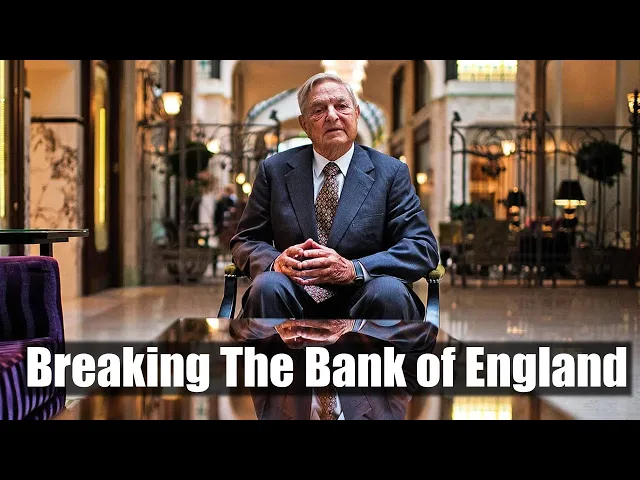
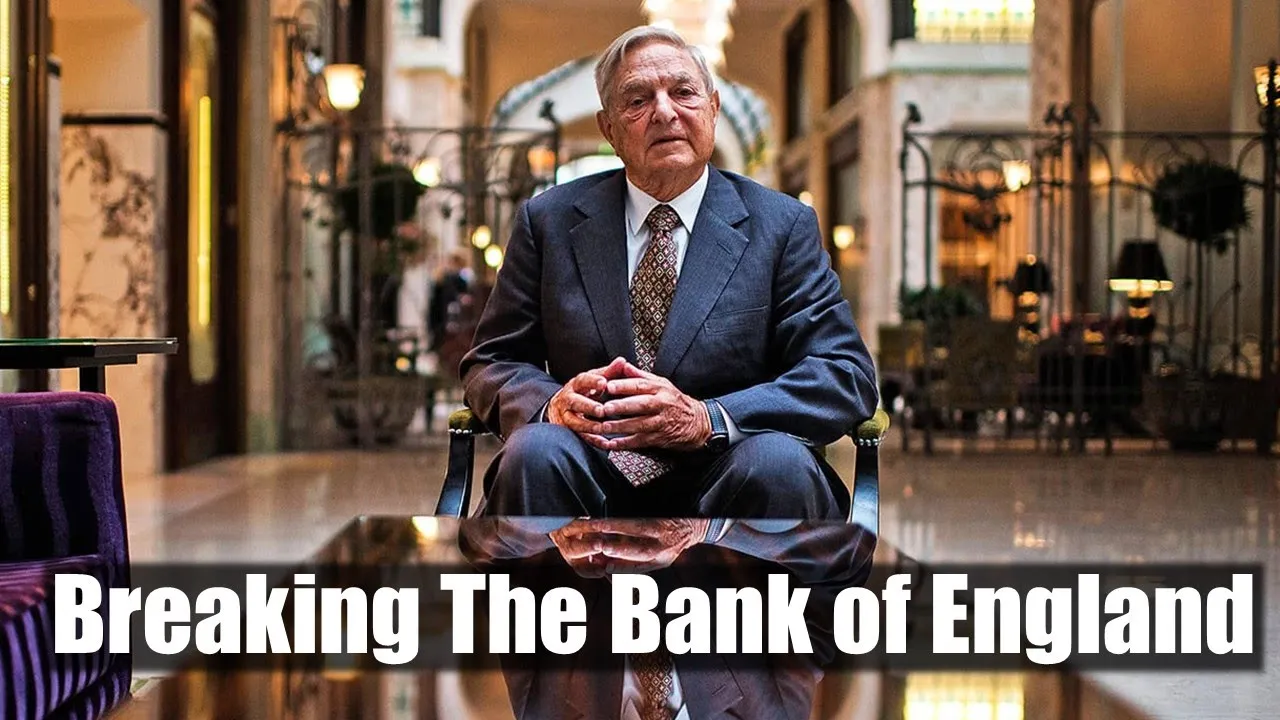
While many today are familiar with his sometimes-controversial political endeavors, George Soros first became known to the public in the early 1990’s as the man who broke the Bank of England. Like much popular lore about Soros, this description is at best a half-truth, as one of his portfolio managers Stanley Drckenmiller did most of the research that led to the one day billion-dollar gain on Black Wednesday 1992. Drckenmiller didn’t fit the mold of a typical investment banker at all.
He had dropped out of graduate school at the University of Michigan without a degree and began his career in finance by first failing the training program for loan officers at Pittsburg National Bank. A senior analyst within the firm took a liking to him anyhow and offered him a role as a stock analyst on his team. Drckenmiller began working for George Soros in 1988 and describes how he was laughed at by Soros’s son the first time they met, as George had introduced him as his future successor.
Soros’s son told Drckenmiller that ten people had already been introduced similarly in the past, and none were still around. To be called the successor was to be marked as a man with no future at the firm. By the time Drckenmiller arrived, Soros had structured his firm with a number of sub managers.
Each manager could run what Soros called a mini account independently, and then Soros would step up the size on any trade he found particularly attractive. The two men didn’t always see eye to eye. In 1989, after a year at the firm, Drckenmiller took a position in bonds and when he arrived in to work the next day he saw that Soros had sold the position without consulting him.
Drckenmiller exploded, and the two men had a heated argument in the office. It wasn’t obvious that they would be able to work together at all. So how did they come up with the trade that made a billion dollars the day the UK dropped out of the ERM?
Well, before I get to that, let me tell you about today’s video sponsor Seeking Alpha Premium. Seeking Alpha premium is a great source of analysis and opinion on any investment. Premium subscribers can set their own price and rating alerts for any stock listed on Seeking Alpha.
They get unlimited access to thousands of investing ideas on thousands of stocks. Seeking Alpha premium gives you access to analyst ratings, transcripts of earnings calls, investor decks, all SEC filings and press releases. There are ten years of downloadable financial statements on stocks available too, to get you started on your analysis.
There are some really useful stock screeners that help you narrow down a list of stocks that you might be interested in and then using the peers tab you can compare up to six stocks to each other pulling all of the different metrics and ratings into one place. Click on the link in the description below to sign up for a free trial. The origins of the ERM can be traced back to 1960 when the heads of the member states of the European Economic Community met in the Hague and agreed to begin moving towards the goal of a single European economy.
In 1969, the European Council decided to create an economic and monetary union to be implemented by 1980. This of course led to the eventual formation of the single European currency (the Euro), but as a step in that direction, the countries of western Europe first agreed to link their currencies together at fixed exchange rates, effectively removing the exchange rate fluctuations you usually have to consider when doing business across borders. This new system, known as the Exchange Rate Mechanism or ERM, made sense on paper and did make commerce between the member nations easier, but it also made the national banks of these countries quite vulnerable – as we will see.
People buy and sell currencies every day in huge volumes to facilitate imports and exports between countries and these transactions when aggregated cause the exchange rate to change. Once a country signed up for the ERM, its central bank had to constantly monitor the markets and intervene if the exchange rate started to deviate too much from the agreed upon rate. With the ERM in force, the nations of Western Europe would be linked together, their currencies pegged not to gold or the dollar – but to one another.
Each currency would trade within a certain range called a band. If any currency hit the top or bottom of that band, the central banks in the individual countries would be obliged to bring it back in line by selling at the top or buying at the bottom. The problem with such a system is that every national economy is unique, the central bankers have to constantly balance interest rates, inflation and economic growth, which becomes really difficult when the national currency is artificially pegged.
Margaret Thatcher, the Prime Minister of the UK at the time, understood this and opposed signing up to ERM, which is why Britain wasn’t a part of the agreement from the start. As the British economy struggled towards the end of the 1980s, Thatcher’s Eurosceptics lost ground to the more pro-European members of the Conservative Party. John Major (Thatcher’s Chancellor of The Exchequer) believed that joining the ERM would be good for both Thatcher and the British economy.
By October 1990 Thatcher’s popularity and her power within the Conservative party had dwindled so much that Britain joined the ERM despite her opposition. The decision was made quickly, three days before the Tory parties conference with the hope that it would boost Thatcher’s popularity. It was decided to sign up at the exchange rate of the time, which was a bit high considering Britain’s slowing economy.
for John Major, Britain's entry was a triumph, this was his policy and he took full credit. Less than a month later, Thatcher had resigned, and Major was selected as prime minister, hailing the ERM as his victory. [Margaret Thatcher] “Now its time for a new chapter to open and I wish John Major all the luck in the world” Who knows, maybe she even meant that.
Joining the ERM didn’t bring the instant prosperity John Major had hoped for. Britain had already been sliding into recession and over the next 18 months things got a lot worse. A million people lost their jobs the high exchange rate meant that businesses struggled to sell their goods abroad, and while the ERM reduced inflation, there was no sign of the German style prosperity that people had been promised.
When a country is in a recession the central bank typically wants to cut interest rates to prop up the economy, but because of the ERM, The Bank of England could no longer do this. The people of Britain were struggling to meet their mortgage payments due to high interest rates and when they failed to meet their mortgage payments they were selling their homes at a loss with negative equity. A year before Britain had signed up for the ERM, the Berlin Wall had fallen, and West and East Germany were going through reunification.
Faced with the prospect of absorbing an impoverished, less efficient workforce with outdated skills, the government in Bonn voted to spend a fortune on social services. If the Bundesbank had created the money necessary to fund this spending, it would have led to high inflation, and German memories of Weimar inflation were still very strong. No where else in Europe was the popular feeling on the subject of inflation so intense.
What’s more, the statutory role of the Bundesbank was to keep the Deutsche Mark sound. Instead of printing money, the Bundesbank had hiked interest rates to attract capital from abroad. The unification of Germany would be, in effect, the biggest leveraged buyout in history.
This was a problem for many European countries. They could keep their currencies in line with the deutsche mark by matching or exceeding Germanys interest rates, but this made little sense for many European countries who weren’t in the process of absorbing a former socialist state. The high interest rates would devastate their economies.
On the other hand, they could devalue their currencies, but doing this would be politically difficult. Most European economies needed lower interest rates to promote economic growth but instead they were sacrificing jobs and prosperity on the altar of ERM. Interest rates were too high for the UK, and if the Bank of England cut rates, it would help the British economy, but it would devalue the pound such that Britain would have to leave the ERM, which of course John Major would never allow.
[John Major] “All my adult life I’ve seen British governments driven off their virtuous pursuit of low inflation by market problems or political problems. I was under no illusions when I took Britain into the Exchange Rate Mechanism. I said at the time that membership was no soft option.
The soft option, the devaluous option, the inflationary option, in my judgement that would be a betrayal of our future at this moment and I tell you categorically: that is not your government’s policy. ” So, between 1990 and 1992 the British economy suffered. Keeping interest rates high wasn’t enough to maintain the pound’s value and so throughout these two years the Bank of England had to frequently intervene in the market and buy pounds, squandering its foreign exchange reserves in the process.
These interventions didn’t really help though and the pound slowly weakened over that period, just barely staying within the limits of the ERM. It wasn't just Britain that was suffering, Germany was also forcing the other European nations to keep their interest rates high and some were finding it hard to bear. Hedge funds had done quite well betting that central bankers would step in whenever their currencies reached the limits of their bands, but they mostly understood that devaluations would eventually have to occur.
The billion-dollar question was, when would it happen and the man who really got the timing right was George Soros. Soros began his career in finance in 1954 as an arbitrage trader and founded his own hedge fund in 1970. His specialty was understanding the catalysts to big global market events.
He knew that the ERM was unstable and that almost every trader would eventually bet on the collapse of certain currencies, but there had to be a trigger event that would cause a stampede big enough to overwhelm the central banks of Europe. In May 1992 a Goldman Sachs economist Gavyn Davies infuriated the Italian Central Bank by suggesting that time was running out for Italy and that the markets would soon force the bank of Italy to devalue the lira. The next month, Danish voters voted in a referendum against the blueprint for European Unification known as the Maastricht treaty.
The next day the French president announced that France would hold a referendum too. If the plan for European Union was rejected by European voters, the whole logic for the convergence trade would disappear and the ERM could just fall apart. Starting in August 1992, Soros and Drckenmiller began building a position against the pound and the Italian lira.
They would borrow these currencies, with the promise of paying them back with interest and then, sell the borrowed currencies to buy German marks. The idea being that when the exchange rate fell they would be able to buy back the currencies they were short cheaper, earning the difference as profit. By the end of August Soros had built up a position equivalent to $1.
5 billion dollars against the pound, but the exchange rate had barely moved. Norman Lamont, the British Chancellor of the exchequer ruled out devaluation entirely in a speech towards the end of August. [Norman Lamont – There will be no devaluation clip] Soros needed a catalyst to really step up the size of his position and luckily for him, on September 16th the President of the Bundesbank held a seemingly innocent interview that provided the catalyst Soros needed.
On the 13th of September the Italian lira had devalued by 7% and Germany had cut interest rates by a mere twenty five basis points. Those who had held on to the lira lost a lot of money and many started to sell British pounds fearing a British devaluation could be next. In Frankfurt the president of the Bundesbank gave an interview to a journalist where he hinted that a more comprehensive realignment of other currencies was needed.
He later claimed that he had thought that his remarks were off the record. The journalist however had a tape recording of the meeting and said it was ready for publication. [Helmut Schlesinger Quote: “I could not say I have not said this, it was not true, I, I have said this, but it was certainly not for the public”] The Bundesbank President had said that he “doesn’t rule out that some currencies might come under pressure,” which in and of itself was a vague and unconvincing statement, but to Stanley Drckenmiller this lack of commitment from Germany made betting against the pound crystal clear.
When Drckenmiller discussed the trade with Soros, Soros seemed unhappy. He didn’t understand why the trade was sized so small. If it worked out, they could make a fortune, and if they were wrong they would lose hardly anything.
Soros told Drckenmiller to go for the Jugular. It was like shooting fish in a barrel according to Soros. As long as the barrel holds up, you keep on shooting the fish.
[Soros Quote: Bundesbank was egging us on to short the weaker currencies] The trade was to short weak European currencies (especially the pound) and buy German and French bonds. At the same time Soros bought half a billion dollars worth of British stocks, working on the assumption that a countries equities are likely to rise following a currency devaluation. For the same reason he sold German and French stocks short.
Soros had a ten billion dollar position and only seven billion dollars in equity. This was a big bet. At the British Treasury, the Chancellor Norman Lamont knew nothing of the bombshell interview which was being widely discussed by traders but had not yet made the news in the UK.
That day had seen some of the heaviest selling yet of the pound and Lamont and his advisers were busy planning their defenses for the next day. Black Wednesday Dawned… The next morning the Bank of England was in chaos. The pound was falling, and after an emergency meeting with John Major, the Chancellor of the Exchequer authorized the purchase of one billion pounds from the market – which had no impact at all.
[Quote from Eddie George] By 9 AM he had purchased another two billion pounds, at which point he called John Major to request permission to increase interest rates, which because Britain was in a recession would be devastating to the economy. The higher interest rate would however squeeze short sellers, who had to pay that interest rate on their borrowed pounds and hopefully attract investors to British bonds. John Major initially refused because he thought it would be political suicide, but as the pound continued to fall, Major conceded.
At 11 AM a surprise announcement was made that the Bank of England was increasing its interest rates by two percent, which is a very large increase. This was intended to show strength, but the markets saw the rate rise as signaling weakness. [Soros quote- a sign of desperation] The Bank of England had around 19 billion pounds in foreign currency reserves but it was now spending 2 billion pounds an hour as to defend the exchange rate.
It is worth noting that currency speculators would only have been a small percentage of the volume being traded. Businesses exposed to the British pound would have wanted out once they understood the risk they were exposed to. No one wanted to take the risk of owning pounds, as it really had become a one-way bet where owning the pound exposed you to risk with no real potential for reward.
[Quote: Trades got a lot bigger] By the end of the day, Britain had bought 27 billion pounds and in a sign of further desperation increased its interest rate a second time to 15%, [Traders announce 15% interest rate] [trader: mortgage rates] [Kenneth Clark Quote – Drver tells him the rate rise didn’t work] At the Bank of England – Robin Leigh-Pemberton – The Governor of the Bank of England and the man in charge of defending the pound believed it was time to throw in the towel and time to stop spending before the bank's reserves were exhausted even though that would mean letting the pound crash out of the ERM. [Eddie George – The scale of the intervention became heavier after the rise in interest rates because I think there were some people in the market who said that makes no sense in the context of the UK economy] It had started to become clear that getting out of the ERM was bound to happen and the sooner it was over the better. [Soros quote: That afternoon it became a veritable avalanche of selling] [Kenneth Clark quote: We had no power.
the markets and events had taken over became increasingly obvious as a day went on that we were merely being flotsam and jetsam being tossed about in what was happening. At 7:30 PM the British government accepted defeat with the following news conference. [Quote Norman Lamont: The government has concluded that Britain’s best interests are served by suspending our membership of the Exchange Rate Mechanism.
] Over the next few days, as the foreign exchange markets were left to their own devices, the British pound fell by 15% against the German mark and by 25% against the US dollar. Soros by no means acted alone in making his bet, and his trades can’t be blamed for what eventually happened. While he had placed a huge multi billion dollar trade, the daily turnover in foreign exchange markets in the early 1990’s was frequently over a trillion dollars per day, making Soros’s ten billion dollars just a drop in the bucket.
Soros didn’t actually break the bank of England, there was a great imbalance which had to sort itself out, and he was the trader who possibly understood the situation best and made the most money from it, but it would have happened one way or another. [trader made ten million pounds clip] Soros and his fund made a billion dollars on black Wednesday, and even more money on the other positions in the coming days. The estimated cost to the British taxpayer for the failed intervention was between 3 and 4 billion pounds.
Once it was all over the next day, Britain’s interest rate went back to 10%. [Journalist quote: “the day had been an utter Fiasco's interest rates of going up and down like a [ __ ] drawers”] Writing in his annual report that year Soros pointed out that the profits on the sterling trade accounted for only 40% of the total profits for the year at quantum fund, and that even without that position the results for the year would have been above his historical average rate of return. Britain leaving the ERM was not the end of the market chaos that year.
The Irish central bank temporarily raised their interest rates to 300% and the Swedish central bank raised their rates to 500% that year to defend their currency pegs. Italy dropped out of the ERM, Sweden, Spain, Ireland and France all eventually capitulated and devalued their currencies against the deutsche mark. In the aftermath of Black Wednesday, the Bank of England was once again free to control the British pound and over the next few years it steadily cut interest rates and restored the British economy to high levels of growth.
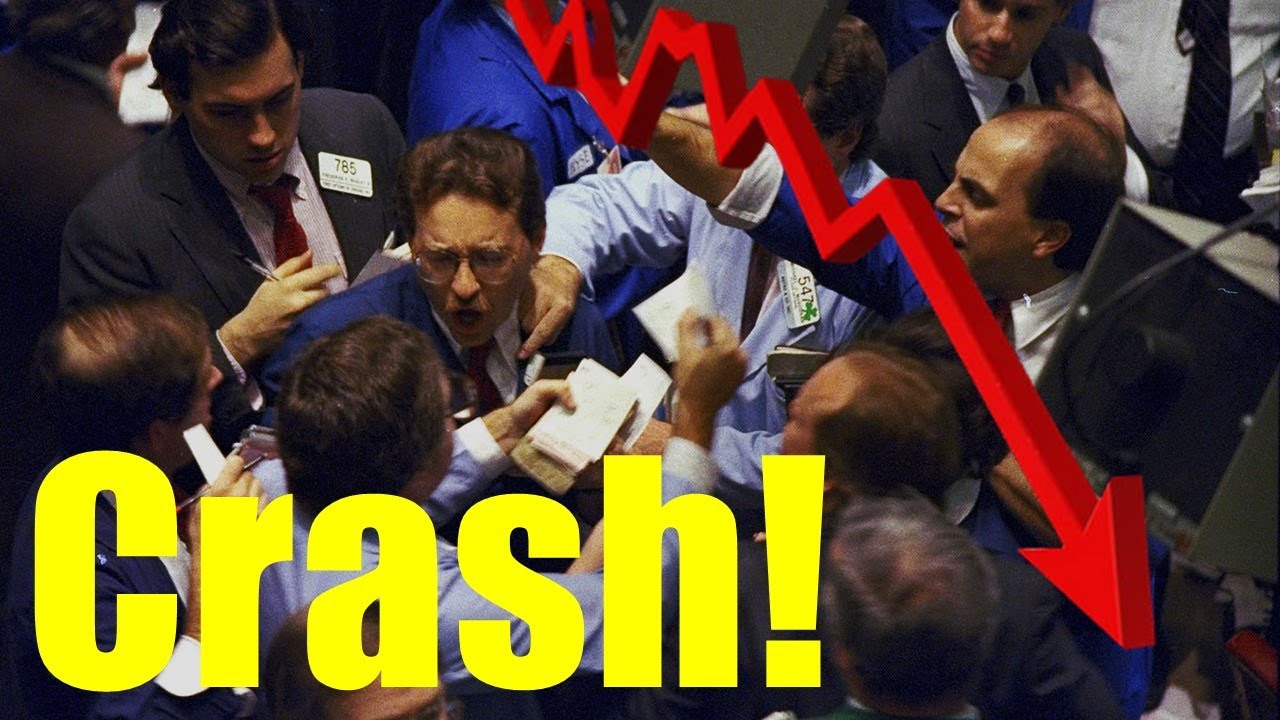
By 1997 the British pound was stronger than it had been when it was added to the ERM and the UK was on its way to 16 consecutive years of economic expansion. In the end Soros and the other foreign exchange speculators might have actually done the British people a favor, despite collecting a significant fee. [Kenneth Clark – Euroskeptics] If you enjoyed today’s video you should watch my video on the 1987 crash next.
Don’t forget to check out our sponsor Seeking Alpha using the link in the description below. See you in the next video, bye.