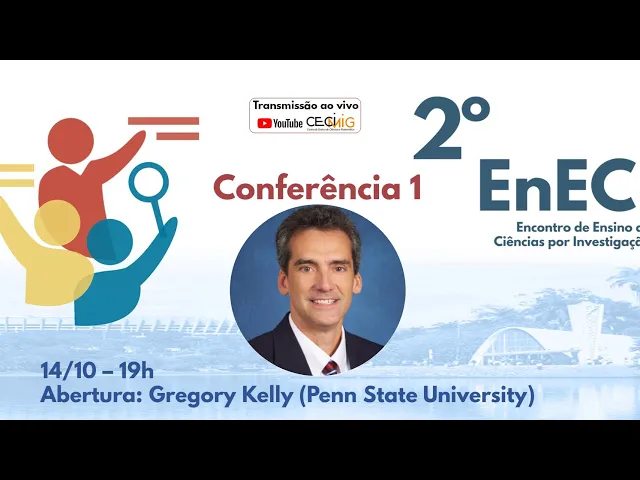
For for [Applause] for for okay speee Lu for for for for spe spe for For for for Mar as marinas gust for for for for [Music] for for p for For for for for fore for for for for for for for l For for for for for Prof okay interpret fore [Applause] okay Professor Kelly Gregory Kelly Professor College of Education penylan State University Science Education science for [Music] good evening everybody thank you so much for I mean trusting me in this task of helping out in this this uh lecture from Dr Kelly uh good evening
Dr Kelly I'm again I would like to thank you for uh taking your time to share your important work in Science Education we hope this is just the beginning of a longl lasting Conversation like nma said we hope that it's in person next time so now we are all looking forward to hear you Dr Kelly so I Turn to You and I mean let's the show begin okay thank you very much I'm gonna share a screen and show some slides as we go through this talk so let me begin there okay so this is um
the slides that you should be seeing now good evening I want to begin by thanking the conference Organizers for the invitation to speak I appreciate the opportunity to share some ideas and learn through the process of this talk and discussion we've all been negatively affected by covid-19 I would very much like to be there with you in Brazil I hope that you were safe and managing well today I'll be talking about epistemic practices in science and engineering Education I will Begin by explaining my motivation I chose to study Science Education because I believe that science
can lead to the betterment of society knowledge of Science and Engineering can create opportunities for students and potentially lead to a more just Society my work examines ways of understanding epistemic cultures what counts as knowledge how is this Determined what are the ways that knowledge is constructed and legitimized how do people learn to participate in the practices that legitimize knowledge much of my research has been dedicated to demystifying science and engineering through close attention to classroom life I examine ways to engage students in epistemic practices that are characteristic of knowledge producing communities I will share
some of this Work with you today in this talk I would draw from a set of recent studies that examine the ways that disciplinary knowledge and practices are framed interactionally accomplished and recognized among participants in elementary classrooms working on engineering design through this presentation I explain my theoretical and methodological orientation to educational Research my talk will be organized as follows I'll begin by reviewing the theoretical orientation informing my research as I will explain much of this work is informed by science and technology studies in particular the empirical study of epistemic practices next I'll explain my
research approach which I call interactional ethnography this approach examines the knowledge that is constructed through Cultural practices and discourse processes much of the Empirical research that I share today examines EP syic practices in Elementary classrooms these practices occur as students engage in engineering design after viewing the video and artifacts I summarized the results and discussed the value of engaging in these practices my work is grounded in an interest to make science and engineering more accessible to students This can be done by helping students understand how science and engineering come to be and how those students
can learn to participate from my theoretical perspective disciplinary knowledge knowledge of physics engineering mathematics for example is the result of people engaging in specific practices these practices are ways of conducting inquiry or creating designs For example scientists collect data which they record analyze and share in peer-reviewed Publications importantly disciplinary knowledge and practices are constructed by communities through concerted Collective actions that is knowledge is constructed by groups with common fosi conceptual tools and values I interested in how we can structure classroom environments that invite students to participate in knowledge generating Practices as people work together into
subjective meaning or understanding shared by a group are negotiated through discourse processes these processes are often specified ways of talking and acting and include verbal exchanges texts signs and symbols for example scientists have a special meaning for the word Force they have ways of representing this idea through diagrams words equations and models that Have standardized features learning to be a member of any scientific Community for example a classroom an events Theory group or research laboratory entails learning ways of speaking doing and being that constitute membership in this way participation in discourse and practice builds identities
and affiliation with science and engineering the theory of Science and education that informs my work I call Social epistemology before I proceed I think it'll be helpful to define a few key terms epistemology is the branch of philosophy dedicated to the study of nature Origins objects and limitations of knowledge epistemology as I use the term does not refer to personal beliefs I'm interested in how knowledge constructed among people in classrooms discourse is the use of Language in context this can be spoken written or symbolic communication discourse includes contextualization such as the sequential order of interactions
gestures proxemic that is the physical orientation of speakers eye gaze and proy the intonation tone stress and rhythm of speech discourses are embedded in sociocultural practices I Define social practice as the pattern set of actions created by members of a group based on common purposes and expectations with shared cultural values tools and meanings I now turn to epistemology as used in science education traditionally there have been two primary stances that researchers have adopted when thinking about how epistemology informs their work the first I call a disciplinary Orientation this is grounded in the history and philosophy
of science it focuses on how theories change uses of models and assessing the empirical adequacy of knowledge claims because it draws from history and philosophy of science this perspective recognizes the social aspects of knowledge construction this view tends to be normative how knowledge should be Constructed a second perspective on the other hand focuses on the individual I refer to this as the learner orientation this perspective is largely grounded in educational psychology thus it focuses on personal views of knowledge and ways of knowing my work has added a third perspective the social practices orientation this perspective
is grounded in sociology anthropology and rhetoric Of science these fields study how science engineering are constructed by people across settings this view tends to be descriptive how the work is actually conducted the social practices orientation recognizes that knowledge is constructed through everyday actions of participants this perspective makes clear that the development of knowledge depends on the context culture and interactions among People their disciplined community and their societies these meetings come together as epistemic practices epistemic practices are the socially organized and interactionally accomplished ways that members of a group propose justifi assess and legitimize knowledge claims
such practices are interactional they are constructed among people through concerted Activity they are contextual they are situated in time and space within communities that adhere to cultural norms they are intertextual they are communicated through a history of coherent discourses and finally they are consequential consequential they produce legitimized knowledge that instantiates power in culture in a few minutes I'm going to Share with you some examples of student discourse and engagement in epistemic practices these videos from elementary school students have students working on engineering design in these examples you'll see students applying science Concepts to solve engineering
problems science and engineering are related but distinct disciplines this table distills some of The differences in the epistemic aims of science engineering the goal of science is to create new knowledge for engineering the primary goal is to create a product or process the primary audience for science is a community of knowers or a disciplinary Community for engineering the audience is often a client for whom the product or process is created the overall orientation for science is one of inquiry and for Engineering one of problem solving I've spoken a bit about epistemology discourse and practices but
what about education and learning and why engineering let me quickly connect these theories the analytic lens I bring to the analysis of classroom life is informed by studies of classroom discourse and sociocultural learning theories from my point of view the analytic lens I bring to Analysis of CLM life a URS through these theories for learning to occur during engineering lessons students need multiple opportunities they need to make sense of concepts by talking science and engineering across contexts they need opportunities to demonstrate knowledge through multiple forms physical representational numerical verbal and to multiple Audiences they need
opportunities to apply apply science Concepts to new contexts such as engineering design they need to situate evidence in purposeful activity and use knowledge to solve problems and propose and evaluate Solutions in the examples I share you'll see these opportunities manifest in students discourse and action so why engineering as I mentioned students in my study are engaged engineering design Challenges engineering has the potential to provide active engagement in learning due to key features such as the material aspects of design devices the need to communicate in different modes across different audiences and the social processes of teamwork
so far in this talk I've presented some theoretical foundations for my research I will now turn to briefly described my Research approach which I call interactional ethnography this approach brings together a focus on cultural practices of ethnography with the emphasis on discourse processes that Define everyday life interactional ethnography entails studying cultures in the making in everyday SE settings such as schools for example I might examine how students take on roles and position each Other in a small laboratory group interactional ethnography examines discourse processes texts signs and symbols as ways that humans make meaning of everyday
life in engineering consideration of discourse processes is particularly important given the need for participants to interact with clients work on teams and use multiple semiotic fields to solve complex problems as groups such as engineering Teams or classroom communities affiliate over time they establish norms and expectations roles and relationships and rights and obligations that comes to constitute being a member through social and discourse processes members of a group create a particular way of talking thinking acting and being over time these concerted activities become patterned they establish cultural Practices of members of the group this is true
for any group for example a football club or in the US a soccer club these clubs have certain discourses such as terminology ology penalty corner kick offside ways of dressing particular uniforms for players referees and even fans ways of participating with explicit and implicit rules and uses of signs and symbols such as hand motions so all cultural groups construct Cultural practices but getting back to engineering in these ways the enacted knowledge of the epistemic practices of engineering include conceptual understanding and discourse features of the discipline my approach to educational ethnography uses a number of different
types of data these include video of classroom interaction photos and artifacts of Student work and interviews with students and teachers these data sets can be quite large so to make sense of them in addition to word forword transcripts I construct invent maps that document the range and type of activities sequence of topics time spent on each as well as the communicative setting associated with each activity once I've created these Maps I can purposefully and Systematically Sample the activity most relevant to the research questions to analyze in depth after these first analyses a more refined level
of analysis occurs through the examination of transcript of talk and action among participants in the presentation today I will focus on epistemic practices of engineering that were occurring as students use the engineering design Process the TR transcripts were coded to note instances of Engagement around practices and during design I needed to identify what epistemic practices of engineering were before I looked for them in classroom interaction so reviewed the literature of empirical studies of engineering and distilled the set of 16 practices of engineering shown here for example Engineers consider problems in contexts make tradeoffs between criteria
And constraints and persist in learn from failure I won't read the entire list as you will observe some of these when we look at the classroom video One engineering practice is the use of a process to solve problems the engineering units in the classroom we studied all use the age appropriate engineering design process to God's student work it has five phases in its iterative Cycle ask imagine plan create and improve let's turn now to see how students engaged in these epistemic practices of engineering while working through the engineering design process in this first classroom fourth
grade students have been challenged to engineer a parachute that Falls slowly and adheres to size Constraints before I play the video let me set the context at this point the students have read a story book with a protagonist involved in a similar aerospace engineering dilemma they have learned about the field of aerospace engineering and they've conducted a set of controlled science experiments to determine how the type of materials of the parachute canopy the size of the Canopy and the length of the suspension lines affect how quickly the parachute Falls in this video the class is
discussing the criteria for the design of the parachute they build a common understanding of what criteria are what their parachute needs to do let's see and here's the criteria I posted some of it right here what does criteria mean what does that mean uh Nathan um it means Like um what you need to do absolutely what your goals are exactly what we need to consider when we're creating something right um so the thing you have to consider is the parachute will need to slow the load to a drop speed of 5 feet per second and
the slower it goes the better the better you must minimize the size of your parachute because you have limited carrying Capacity so it needs to be small enough that it doesn't take up too too too much space okay we can't have a CA a canopy size like this big too much space right it's going to take up too much space okay does that make sense naan can it be slower than 5T per second no does it have to follow that oh it can be slower than that that would be awesome I don't even know if
you can make it slower than that yeah you can yeah you can do you think you Can yeah yeah yeah well we'll know and we test it out right here we see students seeking clarification regarding the epistemic practice of making tradeoffs between criteria and constraints in this back and forth with the students the teacher takes in the student responses and then revoiced the criteria in more standard discourse forms this discussion leads to further work specifying how the constraints need To be considered in the design in the next video students learn to calculate a packing score
to determine whether design meets this constraint notice how the constraints are specified by the curriculum I'll return to this point later please open up your notebook and I want to just look at the criteria sheet with you see it it says a packing score all right so this is how we figure out the score of our parachute your Parachute packing score depends on the size of your canopy and the length of your suspension lines use this page to calculate your packing score okay suspension line length score four times the length of one of your suspension
lines got it four times the length of one suspension line so let's say my suspension line my suspension line let's say it was what did we have here let's say it was 20 okay so from here to the bull clip is 20 from the tape to the bull clip I'm going to measure that that's going to be 20 on this one you might have something different so for my suspension line amount it's going to be 20 * 4 and it equals 80 so on mine I would have 80 as a suspension line length score and
I would have 49 as my canopy area score if line that I just made up there is 129 would it be Mission Ready look at the scale is it Mission ready what does it have to fall between what two numbers in order to be Mission ready DOA 30 it has to be between 30 and 150 does that sound good in this case the students are positioned to engage in three epistemic practices of engineering the class continues to make tradeoffs between criteria constraints they apply math knowledge to solve the problem and consider the problems in Context
these constraints will enter into the students own designs as they make a mission ready parachute the ask phase of the design process is designed to help students understand the challenge the specifications they need to meet and to help them gather background knowledge about the problem having explored these variables students are ready to think about their designs they move into the Imagine phase Of the design in the next video you'll see students individually brainstorming ideas for their parachutes which they sketch turn to your imagine page imagine one and imagine two and you want to think about
what your parachute might look like so your design is your design yours is yours yours is yours you're going to draw draw your design label the materials label the measurements right how many inches for the radius how many inches for my Suspension lines all of that so my friends let's take about five minutes to imagine two imagines remember when you record your information after you draw your diagram and label the parts of it and your measurements this will work because why do you think that will work five minutes to imagine and then you can plan
no one talks at this point the students are each imagining two different designs as To create a diagram model model this supports creativity and Innovation and emphasizes that there is no one way to solve the problem this task is one of many that requires students to use different modes of communication including diagrams and labels as we see in these students work a sketch of the initial design serves as a model or lowcost prototype so in this case the epistemic practice I of engineering is Constructing models and prototypes next to students share their initial ideas with
their group as you will hear the teacher instruct in this video as part of the plan phase they need to develop a group plan notice that to come to agreement they consider their initial designs but also results from scientific studies they completed an earlier lesson the plan is on the next page but you have to agree as a Team my candy size and my suspension lines okay so what might you think about then as a team little smaller what about um Kendra what did you think um what I was thinking was I was thinking I
want in coffee filters this is just way too delicate this would be a good material to have what do you think about that material uh Nathan I don't really know cuz when we checked it add a lot of holes in it go Back to um um let's look at the the information on The Guiding question for lesson three what made it fall more slowly the suspension L okay the length and what else made it fall slowly size of the canopy size of the canopy and what material fell back um do you remember that they tested
that plastic the so I think you're going to have to have a discussion about what material why do you think that's delap Let me ask that question it's very like very F and right did you see them did you see them being tested last week did they fall apart 14 and a half I tried 15 it was way too big usually 20 two more minutes to I vot 15 I vote 15 why cuz it needs to be bigger more the problem they are tackling is non-trivial at this point their previous testing has helped them Reach
three Conclusions first they know the canopy materials work well to create drag and they know which of these materials work better second they know the bigger the canopy the more drag Force they'll have and third they know that the longer the suspension lines the slower the parachute Falls however they're constrained by two factors that limit maximizing both the canopy size and suspension line length first they must meet the packing score To be Mission ready as you saw earlier but second and importantly they must have an operational parachute if the canopy is disproportionately large as compared
to the suspension lines the parachute will not fully open if the suspension lines are longer than need did to open the canopy they are adding materials without performance benefit as they wrestle with these constraints they're engaged in a number Of epistemic practices including envisioning multiple Solutions working effectively in teams investigating properties and uses of materials and making evidence-based decisions once they have a team plan students create the par then comes the fun part testing them each group tests their parachute during a public run where all data are recorded let's watch two three Drop everyone 4.58
so that is what 4.6 good one 2 three Dr my God 6.15 ready one 2 three drop 2.81 Thomas what do you think the problem Is the canop tooo canopy might be too small okay all right let's take all this data back into the classroom I obviously I want to offer a few key observations from an ethnographic point of view during this video students were taking measurements and recording the results you may also have noticed how the teacher handled the failure of the crash landing she immediately asked the group To reflect on what the problem
is and how they can improve their parachute she was scaffolding students through epistemic practice of persisting and learning from failure these types of instructional strategies produce a kind of accountability that is needed to get to the engineering knowledge how do such trials support learning in the next example the groups pull their data and the class analyzes Them to improve the design in the next iteration before you improve let's share our data with one another do did all of the parachute shoes fall the same way no were some slower than others let's think about why let's
try to think about why before you start to improve your parachute design okay so I want you to look at your data and this is the two things I want you to think about number one what is the average drop speed so Let's talk about the average drop speed does everybody understand what that actually means how about this anybody understand what that means Julia I think that's just telling you for how many feet you went per second yes how many feet in every second number two the canopy diameter if my radius was seven what was
my diameter DOA 14 14 and number three what was your team's suspension line length I want to know this the Suspension line length got that three things average drop speed diameter of your canopy and suspension line length I'll give you 10 seconds to talk to your team and pick one person to share out with me uh Team One average drop speed 2.7 2.7 oo is that good look at this I thought that was good that's better than that all right I want to get to look at this can everybody see the Data yeah all right
look at it for one minute and I want you to talk about with your team is there any connection or correlation between these two things and this so look at it for a minute and then have a conversation at your group do you think there's any connection between them so these were the slow would we agree that these two were the slow uh the faster ones that they need the most Improvement okay how can we compare These to the other ones anything you noticed nor I noticed that the people who had shorter suspension lines and
bigger canopies had um lower uh average drops okay to improve the designs the student groups need to learn from their previous efforts and from each other the collective sharing of data allows the class to review key variables influencing the drop speed the canopy diameter and suspension line length in This video clip a number of teacher discourse moves help the teach students engage in epistemic practices that include making evidence-based decisions and applying math knowledge to problem solving the Teacher Calls on students to reflect on why some parachutes perform better than others before they jump to improving
their design she ensures that all students have an understanding of key terms like Average drop speed she specifies key variables she instructs the students to discuss their ideas with their team and finally she focuses student conversation on the relationships among diameter suspens line L and speed let's look closely at their data notice that this is a IL defined problem there is no one solution to it for example look at the best results those of teams 1 five and 7even the drop speeds are similar but the canopy and suspension lines vary having supported students as they
analyze their results the teacher invites them to improve their design notice how she focuses students on their previous results and constraints okay my friends right now you're working on an improve design here's what you need to do turn to your page that says improve you guys have to discuss and Agree on how you will improve your parachute will you change suspense line length will you change diameter what will you do how will you attack this think about the things we just noticed talk to your team um record how you will improve it make sure you
have a drawing with everything labeled before you can rebuild don't forget the data you have you have to find out if you are uh Mission ready do you remember that you can't just change everything and not Know if you've met the criteria go back to your original plan and look at your Mission ready page area of canopy and suspension line length times 4 make sense once you absolutely sure that you're ready to build it you may get materials and start building again that's how big the radius is going to be um the canopy was smaller
and the string was bigger so now we made it the canopy bigger and Smaller here we see the students working across different texts and modes of communication they're involved in envisioning different solutions working effectively in teams and making trade-offs between criteria and constraints now it's time to test and analyze the improved design one two three drop oh nice back up back up back [Applause] up 6.56 rounded to 6.6 6.6 these are awesome all right let's see if we've if we did improve if we did in fact improve all pencils down all calculators down all eyes
up here all right team one what I'm going to ask you is your new data okay everybody look at your data make right now 10 seconds to look at your data I'm going to ask you your new numbers and I'm just going to put them right with them right now 10 Seconds all right team one what is your average drop speed 2.8 2.8 is this better is it still pretty good it is really good this team six okay um for the average drop speed we got um 2.3 wow um we got the diameter was 17
and the suspension lines was 13.5 improved nice job you guys are like professional aerospace engineers should just go get a job do you notice that the Canopy and the suspension lines are a little bit closer little bit closer in range than the original ones which made them I think contributed to um the growth the Improvement yes how does number four and number eight have the same thing but they have different DRS four and eight have the same what oh same this yeah okay in different drops Nathan makes a good point you would think it would
be the same how would we get data to be really really close close To what we think over and over over and over and over and over test and test and test so round of applause for everyone you did a fantastic job aerospace engineer during this improved phase the class needs to decide whether the redesign led to Improvement not all changes in their engineering design necessarily reduce the false speed the teacher decided to place the second trial data at adjacent to those Of the first trial this allowed for easy comparisons and for students to use
evidence to make claims interestingly the student asked about something else he wants to know how two teams with the same inputs got different results this type of differing data is typical when students build their own devices and test them there are Contingencies in the construction and empirical testing throughout these videos we have seen students engaging in epistemic practices of Engineering in this video clip we see the teacher explicitly pointing out to students that they are engaged in the work of engineering on two occasions she calls her students aerospace engineers and Praises their work She helps
to see themselves as Engineers now let's move to a classroom working on a different challenge it also demonstrates how teachers build our students affiliation with Engineering in this class second grade students are designing wall mortar they have tested the mortar to optimize its strength and stability this event that I will show you comes at the end of the unit the teacher situates the students as current And future Engineers notice how the teacher uses metad discourse about the work accomplished by the students in the class and projects into into the future possibilities for them this contributes
to the identity work being done let's watch who can be an engineer anyone anyone okay um and I hope that everybody realized Iz is that all right even children even children so not just adults but even children now of course If you're an engineer as an adult guess what you know more well you will but you also get paid CU you can actually do it a job you can be an engineer as a career you can go to college learn more about the field and then eventually you can spend every single day for example being
a materials engineer working with a bunch of materials figuring out how they go together making new materials from existing materials okay it is a wealth of opportunities for people who are Interested in engineering the students activities and teacher discourse about the students as Engineers work together it's not just naming students as Engineers rather the discourse about engineering supports the genuine engineering work that they had done earlier I presented 16 epistemic practices of Engineering in the video episodes you saw some of these practices highlighted Here carefully designed curricula supported by good teaching can engage students in
sophisticated science engineering projects where students have opportunities to learn disciplinary Concepts and engage in authentic age appropriate practices I now turn to the results and the meaning for Education through an ethnographic lens and with careful discourse analysis I identified how these epistemic practices Of engineering provide opportunities for students to learn students were able to employ discourses of engineering including talk talking about key practices such as understanding criteria constraints problem solving and persisting through failure students use science Concepts such as drag force and speed through application to specific situations and across contexts of USE events diagrams
data tables and Discussions finally the students were engaged in identity work instructions of Notions of themselves they did this through activity and engagement in practices and through meta discourse talk about their activities as members so what does this mean for Education I'll Focus my discussion on four domains discourse features forms of accountability social learning through common tasks and building identity the In affiliation first discourse features in these classrooms learning opportunities were created through constructing meaning across discourse configurations and discourse moves the configurations included drawing and writing individual thinking small group talk and whole class conversations
during their work students Drew from different resources and tools and explain and listen to various audiences the discourse moves included proposing sharing critiquing and assessing ideas through these ideas were interrogated in Social space taken together the science Concepts and engineering design practices were developed through multiple modes of communication giving students substantive reason to talk Science and engineering the second discussion Point concerns accountability learning opportunities were created through holding students accountable first to the results of their experiments data to each other in small groups and to each other and the teacher in the whole class conversations
these levels of accountability were achieved through the The discourse moves of participants but also because of the social configurations set by the tasks which leads to my third implication common basis for decision making and building Knowledge Learning opportunities were created through the social basis of the evidentiary Decisions by using common design challenge with consistent criteria and constraints The students were able to engage in dialogue with a common Focus the common task allowed for data sharing across groups and for students to learn from other groups designs and data to redesign their own device thus the common
task situated the epistemic agent as the social group allowing for learning of the concepts and practices through engagement in discussion of criteria for the knowledge claims the fourth and final discussion Point concerns identity the students and teachers engag in identity work individuals and groups constructed identities as they talked acted and affiliate as a community over time in this case learning opportunities were created at two levels at the epistemological level the development of knowledge of engineering but also at the anthological level the recognition of self as being a member that is self as being something Different
than before these changes occurred through a variety of events and discourses in addition to talking about their classroom events as engineering Notions of students as engineered surface in other ways first the students make reference to fictional characters from stories introducing the engineering challenge and second the teacher made reference to student work in the present and projected roles for the students in The future thus academic identity and affiliation with science and engineering were constructed both through participation and talk about this participation I I've extensively described the research I presented here today in framework supporting This research
in a series of recent studies that are listed here I welcome you to contact me if you're interested In more about this work I thank you for your attention this evening and again I want to thank you and my host for the opportunity to present this work and by inviting me to this conference I'm happy to take questions and engage in discussion at this time thank you so much Dr Kelly are you ready to start our conversation with the audience yes okay yes yes okay great I'm GNA try to translate Here so okay let's see
where we get here uh we we had a few questions during the the presentation so I'm going to start with them and there is one I mean I want to we have in our audience both researchers and teachers so I think we have all kinds of questions here okay so there is I'm I might not be able I I think they are translating I might not be able to say exactly who made the question but Len go she was interested about um the time That the lessons took to be developed how much time the the
teacher uh uh spent with the kids to develop the whole whole uh uh sequence of lessons she was also curious about uh the education that the teacher had like was she a physicist I mean uh about the co you know like was she a science teacher like how was the the path to to develop her education and also someone asked it here the the the grade the teachers the students were In I mean you mentioned it elementary school but I think they want yes something more specific I don't know if I should ask you different
questions would you like to go one by one or can I ask you a couple of three or what would you well I can answer these questions first or if you think other questions are related you can ask the other ones what would you prefer I think there are some similar questions maybe you could start with These questions and then okay we proceed so the the lessons that you saw there are four lessons and most teachers will complete the lessons in between eight and 10 hours so the small video episodes you saw were from lessons
three and four the first lesson is a story book where they read extensively about um a young person who has a uh design challenge a dilemma they're trying to solve in the second lesson they learn about aerospace engineering As a discipline in the third lesson they do scientific tests in this case case different groups worked on variables related to the parachute falling and the fourth lesson is when they do their engineering design testing and redesign so overall it takes about 8 to 10 hours for the complete set of lessons this teacher was very good and
I chose her because you can see examples Of how she positions the students and engages them in important questions but she did not scientific training she was elementary school teacher with a minimal amount of Science and no experience with engineering the advantage we found with engineering is that because the students are building the device the students the teachers often feel comfortable in this setting because there's no one correct solution when teachers teach physical Science Concepts so for example if they were teaching something like terminal velocity they'd feel very constrained by not understanding the equations and
they'd worry about whether they had enough knowledge to explain the concept with engineering we find the teachers are more likely to engage with their students knowing that there'll be multiple Solutions the students you saw here were in in the United States we call fifth Grade that's their sixth year of schooling so most are between 10 and 11 years old uh thank you so much Dr Kelly we have now a few questions about the context I think it would be interesting for us to learn more about the US context School context so uh um Alan Barbosa
asked about uh ask it if it was a public or a private school whether is it a typical School in Massachusetts and maybe you could expand and talking about The diversity of public schools in in the US maybe something like that and there was another question that might be related to that that is about uh the engineering issue because like in Brazil we have science classrooms science lessons and you were talking about engineering so someone in the during your presentation in the on the chat said oh engineering why engineering so maybe it would be interesting
for us also to learn about how engineering came To be part of uh Elementary School and uh what are your thoughts about it how is it contributing sure so I'll begin by talking about the diversity of schools in United States stes and particularly elementary schools so each state in the United States has their own Department of Education which has jurisdiction over Public Schools some states will organize them with more formality and commonality across the schools than other states so for example Where I am in the state of Pennsyvania there are 500 school districts within the
state our neighbor the state of Maryland has 23 school districts it varies widely there's also quite a bit of variation in the quality of the schools and the teaching so because the schools very widely and have different curriculum parents often choose their location their home and where they choose to work Based on the quality of the schools in this particular case this was a public school in a relatively poor area in Massachusetts the students were asked to wear uniforms to school because of the way that it was organized um this was a public school it's
a very typical School in many ways but I think the teacher is not typical the teacher was very engaged and understood fundamentally the sorts of Questions she you need to ask students to have them understand the science and engineering topics so in that respect it's not a typical classroom and I chose it for that reason to show what the potential would be if we do engage students in epistemic practices what they're capable of and what they can do with engineering design a broader question is well why focus on engineering I think that Uh engineering and
science are important topics to teach with students in the United States there's quite a bit of focus on reading and Mathematics particularly as related to testing students knowledge so all of the states of United States have systemwide statewide testing in reading and Mathematics this tends to influence the curriculum so that Elementary School students in particular do very little science or Engineering the advantage of using engineering is that it can situate science in the context of a design so for example in this case the students could be learning about forces about speed measurement variation measurement all
in the context of a project that has them highly engaged they care deeply about the design of their par parachute and making it better so they have reason to pay attention to the data that they collected reason to pay attention to the Concepts and understand what drag Force means not not as a definition from a textbook or equation but in a real life example so I think that while science doesn't have to be taught through engineering engineering provides the opportunity for students to be actively involved in scientific ideas and to build affiliation with their own
projects furthermore as you saw in this Example the students were in small groups but having students talk about the science ideas together through purposeful activity they have opportunities to talk science we know from previous studies that just listening to science and memorizing definitions hardly gets to good conceptual understanding students need to try ideas out they need to draw them talk about them build do experiments and be actively engaged So To that extent engineering works well with the learning theory that I have about student engagement with ideas okay thank you so much uh now we have
two questions more related to research in Science Education H the first one is from Fabo Silva he's asking uh he's saying that in one of your papers uh you addressed the relationship between the study of Epistemic practice and activity Theory and he would like to learn more about um how this dialogue between these two perspectives were Incorporated in your research and uh what I mean relating these two theories these two perspectives uh what was the contribution of establishing this relationship to better understand epistemic practices and Vanessa Capell is asking Is I'm gonna read her question
because you wrote in English Okay so thank you for the brilliant lecture Professor Kelly could you please tell us about how an interactional ethnography logic of inquiry can guide researchers to understand how events are connected over time that is what is proposed at one moment was taken up or not in subsequent events what were the consequence for the group so I think that's a lot of think sure so The first question involves epistemic practices and activity Theory so my original work and um interest in education came from the anthropological and sociological studies of scientific practice
so when I entered the field there was quite a bit of work around um co uh Theory constructivism and neopian theories of um simulation and accommodation while these were valuable most of these studies were done through Clinical interviews with asking students about Concepts and while they they often had devices or um manipulatives for the students they were not set in the context of everyday life in classrooms so was very much interested in understanding the ethnographic point of view so I brought together studies of anthropology of science that ask hard questions about science what is science
what constitutes scientific practice how is it communicated and those studies of Anthropology of science um brought different perspectives perspectives that were not available through theories of cognition or even philosophy of science that focused on Theory change so for example Bruno Lor looked at things that he called inscription devices these were ways that the physicality of scientific experiments are translated into symbolic meaning in the form of graphs and data Representations so that perspective works well with educational ethnography in that we can study the everyday practice of Education from a similar point of view as an anthropologist
in the classroom now the question is what to do about learning theory the neopian points of view tended to be very cognitive and orientation understanding how individual students made sense of Concepts and again while that's valuable it hardly Has us understand the interactional spaces among students the signs and symbols communication and discourse that constitutes those epistemic practices therefore a social cultural theory in particular um dimensions of activity Theory are helpful to inform my perspective and others perspective on what's actually occurring in the classroom in terms of learning so you can see that when you're situate
Epistemic agent as a social group outside the context of individual Minds you need a learning theory that understand understands that social group and activity theory is one that looks at the overall process of people working together through Collective action and that's why epistemic practices and activity Theory work well together the second question concerns interactional ethnography and the logic of inquiry so Importantly events that are constructed by people occur in some context they occur in space and time they Ur with particular discourse histories and through that work and activity they build over time common ways of
being what interactional ethnography will do is tie together those cultural practices and understanding those cultural practices with the ways that they're actually built in momentto moment interaction so unlike other forms of Discourse so might not look at the broader larger perspectives well beyond individual interactions or events interactional ethnography does do that so in this case i' I'd lay out and build out timestamp event maps that show the different social configurations the types of activities that the people were engaged in and how the the participants themselves come to Define their everyday life life in that way
we can see what is Proposed and taken up by the students in this case I mentioned that they read a story book the students speak to and act and reference the fictional characters in their discussion of their own device as if those people exist it becomes something that is um taken up by them similarly the students have um ideas in the classroom you heard the teacher mention aerospace engineers in another event from a video in the Data set the student corrects the teacher the teachers mentioned that the students are are engineers and the student says
no we're aerospace engineers so that's an example of how the student evokes right so they they take up some of that language of aerospace engineering it becomes common to them and then it comes back um in their everyday language I believe this is consequential for the students if we look at the kind Of identity work that's done over time over the course of those 10 hours the students come to see themselves as different kinds of students students who can and are capable of engineering design and successful Solutions so in that way I think it has
direct consequences and what interactional ethnography will do was not just look at the end product of the student claiming to be an aerospace engineer because of the detailed Overtime analysis through the ethnographic point of view International ethnography can identify those instances where identity work has taken place and make comparison across the events across the 10 hours and tie back two specific instances where the interactions occur so in that respect interactional ethnography is able to look at what's being proposed taken up and consequential for the students in the classroom thank you Again Dr Kelly I'm gonna
uh now we have two questions one from claa Vargas she's asking about uh science curric and how could we design a c a curriculum in science that would uh Foster the the development of epistemic practices and if there is any discussion about this in Pennsylvania or in the US and I mean another question here relates to teacher education and how to Vision or what are your views about uh how we could uh design teacher education so PE they use this type of approach and engage in this type of activities okay so the first question is
about science curricula and what you would need to do in my view it's important that the students are engaged in a purposeful activity and I gave examples in this curriculum where the students had a common task because they had a Common task with with common constraints they were able to share and compare data across the groups so that when they did the science experiments and share their information that became valuable for the other students in the class so I would hope to design science curricula that engages students in practices for a purpose that it's not
just observation or interpretation of data it's observation and interion of data because you're part of a collective that's Solving a problem a problem that the um this the students as a collective can work on together so I think that that is one one of the key things to look for in science investigations um for Teacher education um this is a hard this is a hard question and problem Oh I can let me back up so are people in Pennsylvania or United States working on curriculum of this sort there are um quite a variety of uh
Pressures for curriculum in the United States so there are very large Publishers um who interested in capturing market share and like I said earlier this might be done both at the state level or most often by individual school districts thousands of school districts so there's quite a bit of marketing and capitalistic pressure to sell books to districts because of that the curricul tries to do everything for all and in this way it's hard to have Contextualized curriculum that looks carefully at epistemic practices that said there are projects working out um throughout the United States that
are trying to push in this direction so for example we have something called the the Next Generation science standards which do speak directly to discourse processes and practices and engaging students in scientific engineering practices so there's a emphasis in interest throughout the research community and Some interest at the policy level and that's set in the context of um the marketing strategies of companies interested in selling materials to school districts so it's quite a um uh an Ecology of of decisions let's put it that way um in terms of teacher education one of the things some
of my colleagues at Penn State have done that I think is very valuable and um you can look up the work of Carla zimol who um is a professor at Penn State and she and others have worked with colleagues in engineering and science departments to create science courses um that teach science in inventive and interesting ways both science engineering to elementary school teachers I know there's some of that already going on in so the problem we've have in the United States traditionally has been that teachers who work in elementary school don't have much Experience with
college level science and when they do it's often in big lecture halls with um lectures um and PowerPoint presentations of knowledge and that's not really what they need to teach elementary school well so these courses that can State have been designed specifically to be pedagogically inventive and have students engage in a small number of ideas in depth so that they learn the importance of engaging Students there's courses in light and sound waves for example entomology robotics so there a variety of different courses I very much Advocate that if we're going to teach scientific content to
teachers we should do so in a way that models strong pedagogy so I think that's the best answer for Teacher education and again you could look up some of my colleagues work okay thank you very much H we have uh I'm GNA turn again for research here H we have a question from eloisa Joline she's uh talking about the role of uh affective aspects emotional aspects that are involved in the process of uh uh engaging and constructing the method discourse uh she's pointing here that the teacher uh has to to to make the student feel
like he's he he or she is a member of this community so H could you comment on that like this affective aspects and E Prilla Silva is asking uh about what are some issues that emerge now related to research in epistemic practices some Horizons for new researchers or new research if you could find some of them okay so for the affective variables I haven't really studed that well myself so it's hard for me to say directly you can see some of the work that the teachers were doing and I had framed that as identity work
and work With students on affiliation but obviously this teachers effect and how the students feel about themselves in the classroom is crucially important um one of my doctor students name is Beth hufnagel and I can send you some references um after the conference she studied emotional response um quite extensively and through discourse analysis which few people do there are some people who do but very few and it's it's interesting to examine emotional Responses and affect in science settings because science has the ideology of being objective and independent of emotion often science teachers don't um affiliate
with understanding emotional response and maybe you could say the same about me because I haven't studied that but I think it's really important question and I think we'll see that particularly teachers of young children recognize how important that is and that the negative effect could alienate Students from science forever very early in their life indeed many students don't like science very early on so I think it's a great question I haven't researched it extensively myself so I can't answer very well about that in terms of the ISS around epistemic practices that's a great question too
that's a hard one to know about I think that um ways of documenting the student engagement is an important part of this so we have to Both understand how students engage in epistemic practices and what the consequences are for learning so for example one of the things we care a lot about in science is not only producing new scientists who or Engineers who go forth and pursue that but also citizens who understand how to use evidence and um have a a degree of scientific literacy that allows them to be functional if you follow the um
current Situation in United States regarding covid-19 you'll recognize that there are many people in the United States with very poor levels of scientific literacy including people with the most power to do the best for their citizens so there's a lot of work should be done in epistemic practices in terms of understanding both how to engage students in these practices understanding what it means for learning outcomes right so how how Do we recognize what those practices are when students engage how it it's related to learning outcomes and then how those learning outcomes help students apply those
epidemic practice es in other settings and contexts clearly they're unlikely to identify and do analysis of parachutes in most of our future lives however thinking hard about how to use data and why for example similar independent variables got or Different independent variables got similar dependent variable results are things that come up often with data analysis and you can see the students asking insightful questions so that the kind of way I think we need to think about epistemic practices how does this translate to helping someone become a better citizen with the knowledge they're learning from schooling
yes we have similar issues here as you Know perent Dr KY thank you so much for uh your uh this conversation and I'm I'm sorry with but we are getting like the time to leave is arriving here so we need to finish our questions here but we have a few questions and I I mean I was wondering if you would be if it would be okay if we sent them to you so we can uh answer the people and also maybe publish somewhere I don't I'm not in the organization of the event so I'm not
Sure how we could socialize but if okay thank you very much thank you very much and I think I don't know if you w to say some few words before I turn to Lise sure thank you I I just want to thank you again for inviting me to the conference and I very much enjoyed um speaking with you and especially your questions those are excellent questions and very challenging um so I'll be thinking about them for the rest of the evening and you certainly are welcome to Send additional questions that you may have um via
email and I will um very much be interested in engaging with you about them so happy to do so and thank you very much again much appreciated okay so I'll turn to Louise now and byebye back okay bye bye okay [Music] p for [Music] [Music] [Music] Ro [Music] for mared SOS [Music] an kolina par for for okay for Okay for