In 1934, Adolf Hitler declared himself Führer of Germany, consolidating absolute power and elevating himself to a godlike status in the eyes of millions. His portraits hung in every public building, his name became a required greeting, and an entire nation was molded around the grandiose self-image of one man. This extreme case of narcissism changed the course of history, but the psychology behind it runs much deeper than many of us realize.
Well, welcome to today's exploration of the psychology of a deep narcissist. I'm not talking about someone who simply takes too many selfies or speaks highly of their achievements; I'm talking about a profound psychological pattern that Carl Jung, one of history's most influential psychoanalysts, understood as something far more complex and universal than our modern casual use of the term suggests. When we encounter someone we might label a narcissist—the boss who takes credit for everyone's work, the friend who can't stop talking about themselves, the partner who seems incapable of genuine empathy—we're observing just the surface of a much deeper psychological structure.
And no one mapped this territory quite like Carl Jung. Jung's approach to narcissism isn't just clinical; it's mythological, archetypal, and ultimately transformative. Where modern psychology might see a personality disorder to be treated, Jung saw a universal human pattern that exists in each of us to varying degrees—a pattern that, when understood, offers profound insights into our collective psychology.
By the end of this video, you'll understand Jung's unique perspective on narcissism, how he viewed the narcissistic personality through the lens of archetypes, persona development, and the critical concept of the Shadow. You'll learn about the unconscious dynamics that create narcissistic behavior, the developmental wounds that lie beneath the surface, and most importantly, Jung's thoughts on the path towards psychological wholeness that offers an alternative to narcissistic patterns. So, let's dive beneath the surface and explore the true psychology of narcissism through the brilliant insights of Carl Jung.
The term narcissism comes from the ancient Greek myth of Narcissus, a beautiful young man who fell in love with his own reflection in a pool of water. So entranced was he by his own image that he could not leave it and eventually perished there, transformed in death into the narcissus flower. In modern clinical psychology, narcissistic personality disorder is defined by the DSM-5 as a pervasive pattern of grandiosity, need for admiration, and lack of empathy.
It manifests in behaviors like an exaggerated sense of self-importance, preoccupation with fantasies of success and power, belief in one's special status, exploitation of others, sense of entitlement, and absence of empathy. But this clinical definition, while useful for diagnosis, barely scratches the surface of what narcissism truly represents. Psychologically, it's important to understand that narcissism exists on a spectrum.
We all possess some degree of healthy narcissism—the ability to value ourselves, take pride in our accomplishments, and maintain healthy self-esteem. Without this, we couldn't function. The problem arises when these traits become inflexible, maladaptive, and dominate the personality.
Jung's perspective differed significantly from today's clinical approach. Rather than seeing narcissism as simply a personality disorder, Jung viewed it as an archetypal pattern, a universal psychological template that exists within the collective unconscious and manifests in individuals to varying degrees. To understand Jung's view of narcissism, we need to first grasp his concept of the persona.
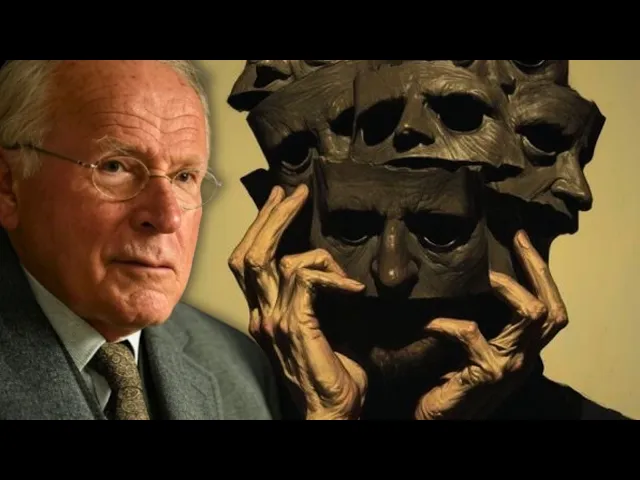
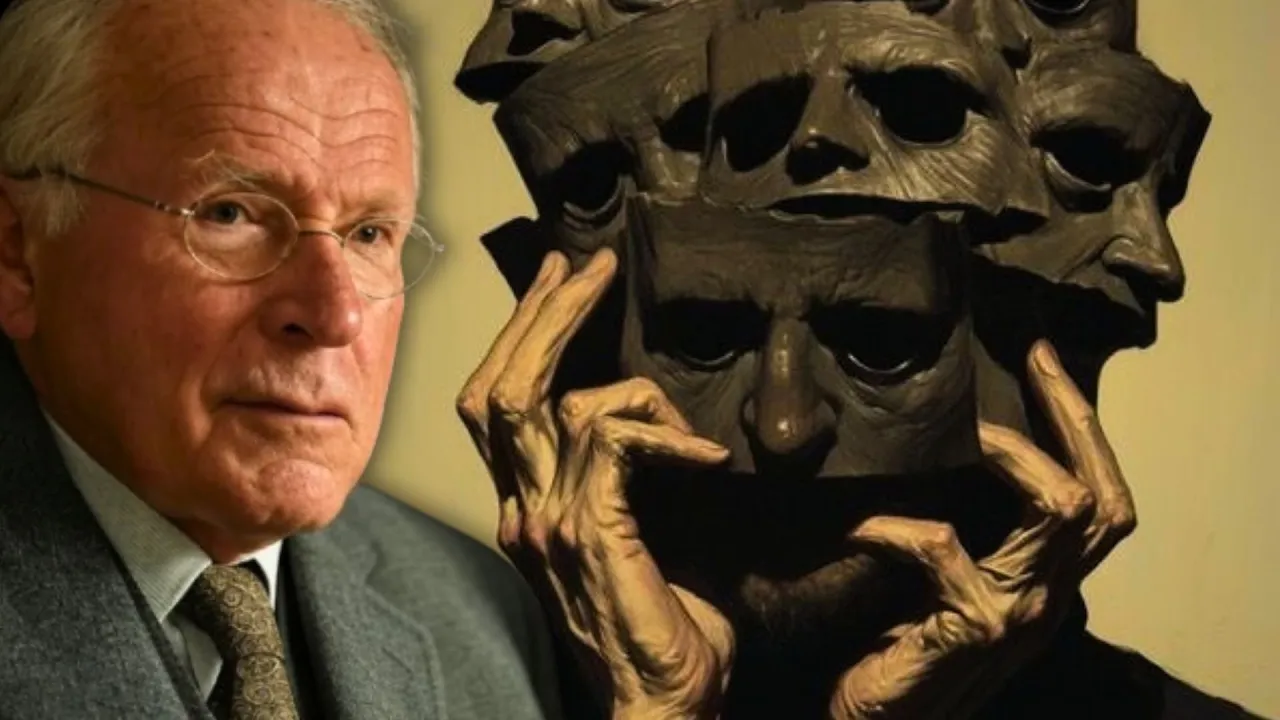
The persona, in Jungian psychology, is the social mask we wear, the face we present to the world. It's derived from the Latin word for the masks worn by actors in ancient theater. Jung believed we all develop a persona as a necessary adaptation to social expectations.
The healthy persona allows us to function in society while maintaining awareness that this is just one aspect of our total self. The narcissist, however, becomes completely identified with their persona. In Jung's words, "The man with the persona is blind to the existence of character far removed from his own because the persona is a point of reference that seems to him absolute.
" For Jung, the narcissist has mistaken the mask for the whole self; they've invested their entire sense of identity in an artificial construct designed only for social navigation. This creates a profound inner emptiness that the narcissist continuously tries to fill through external validation, achievement, and admiration from others. This brings us to a critical insight: what we commonly identify as narcissism—the grandiosity, the need for admiration, the lack of empathy—are actually compensatory behaviors.
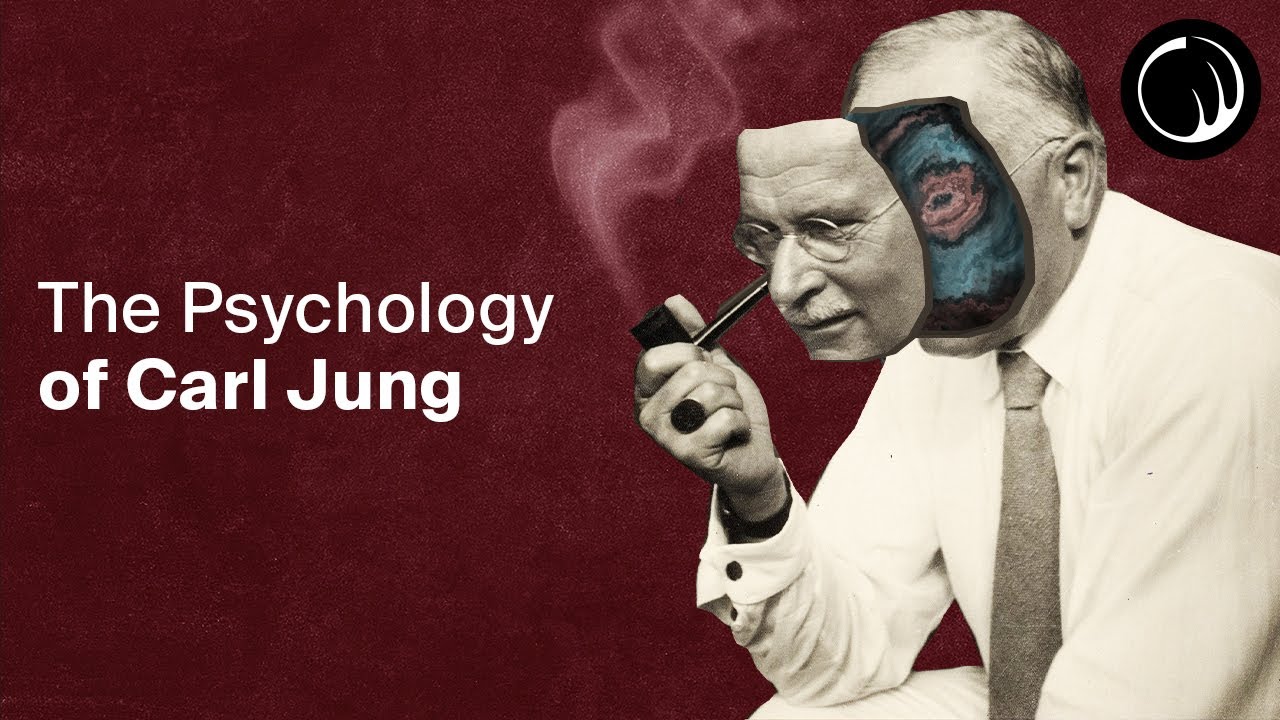
They're not the core of narcissism but its manifestation; symptoms of a much deeper psychological structure that Jung spent his life mapping. To truly understand this deeper structure, we need to explore Jung's framework for understanding the human psyche. Carl Gustav Jung was born in Switzerland in 1875.
After working closely with Sigmund Freud in the early days of psychoanalysis, Jung eventually broke with Freud's theories to develop his own system of analytical psychology. Where Freud focused primarily on repressed sexual drives, Jung developed a much broader view of the unconscious mind and its influence on human behavior. Jung's model of the psyche is like a map of the human mind, with several distinct territories.
At the most conscious level is the ego, our conscious sense of self and identity. The ego is just the tip of the psychological iceberg; however, beneath it lies the personal unconscious, which contains forgotten or repressed experiences specific to the individual. But Jung's truly revolutionary contribution was his concept of the collective unconscious—a deeper layer of the unconscious mind shared by all humans across cultures and throughout history.
Within this collective unconscious reside archetypes, universal patterns or templates that organize human experience and behavior. Jung identified numerous archetypes, including the mother, the father, the hero, the shadow, the anima and animus (our inner feminine and masculine), and the self, the archetype of wholeness and the organizing principle of the entire personality. Another crucial concept in Jung's psychology is.
. . The Persona, which we've already touched on, refers to the social mask we present to others.
It also emphasizes the Shadow—those aspects of our being that we reject, deny, or repress because they don't fit with our conscious self-image. These elements interact differently in healthy versus unhealthy psychological development. In healthy development, the ego maintains a flexible relationship with the Persona, recognizing it as just one aspect of the self.
The individual gradually becomes aware of their Shadow aspects and works to integrate them consciously. There's an ongoing dialogue between the ego and the self, leading toward what Jung called individuation, the process of becoming psychologically whole. In contrast, unhealthy development involves rigid identification with the Persona, projection or denial of Shadow elements, and a disconnection between the ego and the self.
This is precisely what happens in narcissism. The narcissist becomes completely identified with an idealized Persona; all Shadow elements—vulnerability, dependency, imperfection—are vehemently rejected and often projected onto others. The connection to the self is replaced by an inflated ego that's simultaneously grandiose and profoundly fragile.
Jung called this state inflation when the ego identifies with archetypal content, particularly the self, creating an illusory sense of god-like importance. This understanding of the psyche's structure helps us see narcissism not as a simple character flaw but as a complex psychological arrangement with deep roots. To understand how this arrangement forms, we need to look at the developmental origins of narcissism—what Jung and later analysts have called the narcissistic wound.
Jung believed that healthy psychological development involves a natural unfolding of the self, the central organizing archetype of the personality. This process begins in childhood but continues throughout life. In ideal circumstances, a child receives mirroring and validation that's attuned to their true nature, helping the authentic self emerge.
However, when a child's environment fails to provide appropriate mirroring—when parents are absent, abusive, excessively controlling, or use the child to fulfill their own needs—a developmental injury occurs. This is what we now call the narcissistic wound. Jung didn't use this exact terminology, but his understanding of childhood development laid the groundwork for later analysts who expanded on these concepts.
The narcissistic wound occurs when the child learns that their authentic feelings, needs, and expressions are not acceptable or valued. In response to this wound, the child develops what psychologist Donald Winnicott, building on Jung's concepts, called a false self. This false self exists to gain the approval, love, and validation that the true self could not secure.
It's a defensive structure designed to protect the vulnerable, wounded authentic self. In Jungian terms, this false self becomes the rigid Persona with which the narcissist identifies completely. The more severe the original wound, the more elaborate and inflexible this false self becomes.
Jung's concept of inflation is particularly relevant here. When a child's natural development is disrupted, they may compensate through psychological inflation, identifying with archetypal material—particularly the self or God archetype. In effect, the wounded individual unconsciously thinks, "If I cannot be loved for who I am, I will become someone so special, so perfect, so powerful that I must be loved and admired.
" This inflation serves as a defense against the original wound. The grandiosity, perfectionism, and sense of special entitlement characteristic of narcissism all stem from this inflated identification with archetypal content. It's as if the person is unconsciously trying to become their own God to avoid the pain of the original wound.
The tragedy is that this inflation cuts the individual off from authentic connection, both with themselves and with others. Jung wrote, "Inflation magnifies the blind spot in the eye. " The more inflated the narcissistic Persona becomes, the less able the person is to see their own condition or the reality of others.
This developmental perspective helps us understand why narcissists often seem to lack empathy. It's not that they don't have the capacity for empathy; rather, connecting empathically with others would require acknowledging their own vulnerability—precisely what the narcissistic structure was built to avoid. The narcissistic wound creates another critical feature of narcissism that Jung understood deeply: the relationship to the Shadow.
Jung's concept of the Shadow is one of his most profound contributions to psychology. The Shadow contains all that we cannot accept about ourselves—our weaknesses, flaws, dependencies, and darker impulses. As Jung wrote, "Everyone carries a Shadow, and the less it is embodied in the individual's conscious life, the blacker and denser it is.
" For most people, Shadow material is unconscious but occasionally breaks through in moments of stress, emotional reactivity, or through dreams and creative expression. The psychological work of a lifetime involves gradually recognizing, accepting, and integrating these Shadow elements—not acting them out destructively, but acknowledging them as part of our whole self. The narcissist's relationship with the Shadow is particularly problematic.
The entire narcissistic structure exists to protect against feelings of vulnerability, inadequacy, shame, and dependency. These feelings don't disappear; they're banished to the Shadow, where they grow more powerful through denial. This creates what Jung would call a particularly dense and toxic Shadow configuration.
The greater the Persona's grandiosity, the more intense the counterbalance of Shadow material becomes. This is why narcissists are exquisitely sensitive to criticism or perceived slights; these trigger Shadow content that threatens to overwhelm the fragile Persona. One of the primary defense mechanisms against Shadow material is projection.
As Jung explained, "Projections change the world into the replica of one's own unknown face. " Unable to acknowledge their own Shadow qualities, narcissists project them onto others with remarkable intensity. This mechanism explains many narcissistic relationship patterns.
The narcissist may see others as weak, needy, or manipulative—precisely the qualities they cannot acknowledge in themselves. They may accuse others of the very behaviors they engage in, a psychological phenomenon now called narcissistic projection. Perhaps the most visible manifestation of the Shadow in narcissism is narcissistic rage.
When the carefully constructed Persona is threatened by criticism, failure, or perceived abandonment, it becomes a source of intense emotional distress. The shadow erupts in displays of anger that can be shocking in their intensity. This rage represents the breakthrough of shadow material that can no longer be contained.
Unlike those engaged in the process of individuation, narcissists are fundamentally unable to integrate shadow material; to acknowledge their shadow would mean confronting the very vulnerabilities and wounds that their entire psychological structure was designed to avoid. Instead, they maintain rigid psychological defenses that become increasingly brittle over time. As Jung noted, "What we resist persists and grows stronger in the unconscious.
" The more the narcissist denies their shadow, the more power it accumulates, and the more it influences their behavior in unconscious ways. This creates a psychological prison from which escape becomes increasingly difficult. The interplay between the inflated persona and the denied shadow helps explain the paradoxical nature of narcissism: the combination of grandiosity and extreme fragility, of apparent self-love and profound self-alienation.
To understand this dynamic further, we need to examine the archetypal patterns that manifest in narcissism. Jung believed that archetypes express themselves through individual psychology, often in combinations that create recognizable character patterns. Several archetypal configurations are particularly relevant to understanding narcissism.
The first is what Jung called the puer eternus (eternal boy) or, in its feminine form, puella eterna (eternal girl). This archetype represents perpetual youth, possibility, and freedom but also immature purity, entitled feelings, and an avoidance of limitations and commitments. The puer/a eternus is marked by fantasies of specialness and greatness that aren't matched by actual achievement or willingness to engage in disciplined effort.
There's often a quality of magical thinking—the belief that one is destined for greatness without having to submit to the ordinary constraints and developmental challenges that others face. This archetypal pattern is evident in many narcissistic individuals who maintain an entitled attitude and resistance to normal developmental challenges. They may see themselves as exceptions to the rules that govern others and show a characteristic impatience with situations that don't immediately gratify their desires or recognize their special status.
A second critical archetypal pattern in narcissism involves inflation with the self archetype. The self, in Jung's system, is the archetype of wholeness, the organizing center of the entire personality—both conscious and unconscious. It's often symbolized in dreams and mythology as a divine or royal figure.
The healthy relationship between ego and self involves the ego recognizing itself as just one part of a larger psychic system, guided by but not identical to the self. In narcissism, however, the ego becomes inflated through inappropriate identification with the self archetype. The individual unconsciously positions themselves as godlike, special, beyond ordinary human constraints, deserving of special treatment and admiration.
This inflation explains the profound entitlement and grandiosity characteristic of pathological narcissism. It's not simply arrogance; it's an archetypal possession that feels subjectively real and compelling to the narcissist, even as it appears delusional to others. A third archetypal pattern often manifested in narcissism is the trickster.
The trickster archetype represents cunning, boundary-crossing, rule-breaking, and strategic manipulation. In mythology, trickster figures like Loki, Hermes, or Coyote use deception and cleverness to achieve their aims. In narcissistic personalities, the trickster emerges in manipulative behaviors designed to maintain supply—the admiration, attention, and special treatment the narcissist requires.
This can include gaslighting, making others doubt their perceptions, triangulation (playing people against each other), and various forms of emotional manipulation. These archetypal patterns don't operate in isolation but interact to create the complex presentation we recognize as narcissism. The entitled puer/a provides the emotional tone, the inflated identification with the self creates the grandiosity, and the trickster supplies the manipulative strategies to maintain the narcissistic structure.
Understanding these archetypal patterns helps explain why narcissistic behavior appears so consistent across different individuals and cultures. These aren't simply learned behaviors but expressions of universal psychological patterns—patterns that Jung was among the first to map comprehensively. This archetypal understanding also highlights why narcissism creates such profound developmental stagnation.
While healthy psychological development involves a process Jung called individuation, narcissism represents a fundamental blockage to this process. Jung's concept of individuation represents one of his most profound contributions to our understanding of human development. Individuation is the process of psychological differentiation, having for its goal the development of the individual personality.
It's a journey toward wholeness that involves integrating conscious and unconscious elements of the psyche. In Jung's words, "Individuation means becoming an individual; and insofar as individuality embraces our innermost, last, and incomparable uniqueness, it also implies becoming one's own self. " We could therefore translate individuation as coming to selfhood or self-realization.
This process involves several key elements: becoming conscious of previously unconscious material, especially shadow content; developing a more flexible relationship with the persona; integrating aspects of the anima and animus (inner feminine and masculine); and establishing a proper relationship between the ego and the self, where the ego recognizes itself as part of a larger whole rather than identifying with or inflating into the self. Narcissism represents a fundamental obstruction to this individuation process. The narcissistic personality structure is specifically designed to avoid confronting the very elements that individuation requires integrating.
Where individuation demands shadow recognition and integration, narcissism depends on shadow denial and projection. Where individuation involves developing a flexible persona that serves rather than dominates the personality, narcissism requires rigid identification with an idealized persona. Where individuation means establishing a proper relationship between ego and self, narcissism involves an inflation of the ego through inappropriate identification with self energies.
This creates the characteristic developmental stagnation we observe in narcissistic individuals. Despite often appearing successful in external terms, there's a quality of psychological repetition—the same patterns playing out again and again in relationships and life situations without genuine growth or transformation. The fear underlying this stagnation is profound; at some level, the narcissist intuits that behind their carefully constructed false self lies the original wound: the unbearable feelings of shame, inadequacy, and worthlessness that the narcissistic.
The structure was built to avoid authentic selfhood, which would require facing these feelings—something that feels subjectively equivalent to psychological death. As Jung wrote, "the first half of life is devoted to forming a healthy ego; the second half is going inward and letting go of it. " The narcissist cannot take this crucial second step; having constructed an ego identity that is simultaneously inflated and fragile, they cannot risk the journey inward that true individuation demands.
The contrast between individuation and narcissistic development highlights the fundamental tragedy of narcissism: where individuation leads to increasing authenticity, creativity, and capacity for genuine connection, narcissism leads to increasing rigidity, repetition, and isolation. No matter how many people surround the narcissist or how much external success they achieve, this understanding also points toward possible paths of healing—not necessarily the clinical treatment of narcissistic personality disorder, which remains challenging, but the universal human work of moving beyond narcissistic patterns toward greater wholeness and authenticity. Jung's approach to psychological healing differs significantly from many contemporary therapeutic models.
Rather than focusing on symptom reduction or behavioral change, Jung emphasized the importance of meaning-making, symbol engagement, and the gradual integration of unconscious material, particularly shadow content. For individuals with narcissistic patterns, Jungian theory suggests several potential pathways toward healing. The first, and perhaps most crucial, is shadow integration.
As Jung wrote, "One does not become enlightened by imagining figures of light, but by making the darkness conscious. " For the narcissist, this means gradually confronting the disowned aspects of self—vulnerability, dependency, ordinariness, limitations—that have been relegated to the shadow. This integration doesn't happen through intellectual understanding alone, but requires emotional engagement with these rejected aspects of self.
Drams play a particularly important role in this process. Jung saw dreams as the royal road to the unconscious—communications from the unconscious mind that often compensate for conscious attitudes. For narcissistic individuals, dreams frequently present shadow material that contradicts the grandiose persona, offering opportunities for integration if properly attended to.
The role of the analyst or therapist in Jungian work with narcissism is not to confront or challenge the narcissistic structure directly, as this typically generates only defensive reactions, but to create a holding environment where the individual can gradually and safely encounter their shadow material. This involves what Jung called active imagination—a method of engaging with unconscious content through dialogue, artistic expression, or other forms of creative engagement. By giving form to internal figures and energies, the individual can begin relating to, rather than being possessed by, these unconscious forces.
Symbols serve as crucial bridges between conscious and unconscious in this healing work. Jung believed that symbolic engagement allows psychological energy to move from regressive, literalized expressions, like narcissistic behaviors, to more differentiated, conscious forms of expression. For those with narcissistic patterns, engagement with appropriate mythological material can be particularly helpful.
The myth of Narcissus itself offers profound insights when explored deeply; other symbolic narratives involving proud figures who undergo humbling transformations, like the biblical Nebuchadnezzar or the Norse god Odin sacrificing himself to himself, can provide templates for the psychological journey beyond narcissism. The therapeutic relationship itself becomes a vessel for transformation, as the narcissistic individual experiences a relationship where they are neither idealized nor devalued, but consistently seen in their full humanity. New possibilities for authentic connection emerge.
Jung emphasized that it is ultimately relationship—to others, to the unconscious, and to the self—that heals. Perhaps most importantly, Jung's psychology offers hope even for profound narcissistic patterns. While full healing of severe narcissism remains challenging, Jung's vision suggests that these patterns are not immutable destiny but potentially transformable through conscious engagement with the psyche's deeper layers.
As Jung wrote, "There is no coming to consciousness without pain. " The journey beyond narcissism involves confronting painful truths about oneself and relinquishing the inflation that has provided a false sense of security. But on the other side of this painful passage lies the possibility of authentic selfhood—not the grandiose false self of narcissism, but the unique individual self that emerges through the individuation process.
Carl Jung's penetrating insights into the human psyche offer us a uniquely profound understanding of narcissism. Far from seeing it as simply a personality disorder or character flaw, Jung recognized narcissism as involving fundamental psychological dynamics: identification with the persona, inflation with the self archetype, projection of shadow material, and the arrest of the individuation process. This perspective allows us to see beyond the surface behaviors of narcissism to the deeper patterns beneath—patterns that exist to varying degrees in all of us.
As Jung would remind us, we all have narcissistic tendencies; we all struggle at times with shadow projection, with persona identification, with the temptation to inflation. The difference is one of degree, not kind. This universal quality of narcissistic patterns connects to Jung's concept of the collective shadow—those aspects of human nature that our entire culture tends to deny or project.
In many ways, our contemporary society reinforces narcissistic values through its emphasis on image, celebrity, wealth, and external achievement over depth, meaning, and authentic connection. Recognizing these cultural patterns invites us toward greater individual and collective self-awareness; it challenges us to examine our own narcissistic tendencies with compassion rather than judgment, to see how we too might avoid vulnerability, project shadow material, or identify too closely with our personas. Jung's psychology ultimately offers a vision of wholeness as the alternative to narcissism.
This wholeness doesn't mean perfection—quite the opposite. It means embracing our limitations, integrating our shadow aspects, developing a proper relationship between ego and self, and engaging authentically with others and the world. As Jung wrote, "The privilege of a lifetime is to become who you truly are.
" This simple statement encapsulates the antidote to narcissism, where narcissism involves becoming who we think we must be to secure love and admiration; individuation involves becoming who we truly are, with all our strengths and weaknesses, gifts and limitations, light and shadow. In a world that often seems to reward narcissistic behaviors and values, Jung's psychology reminds us of a deeper truth: that authentic selfhood, not grandiose false selfhood, is the path to genuine fulfillment and connection. By understanding the psychology of narcissism more deeply, we gain not only insight into a pervasive human pattern but also clarity about our own journey toward greater wholeness and authenticity.
Thank you for joining me on this exploration of the psychology of a deep narcissist through the brilliant lens of Carl Jung. If you found value in these insights, please consider subscribing for more explorations of depth psychology and its applications to our contemporary challenges.