The Earth formed 4. 5 billion years ago from the collapse of a cloud of gas and dust. A billion years later, it developed a magnetic field that allowed an atmosphere to form.
Life was initially confined to the ocean until algae produced oxygen, which rose into the atmosphere and broke down into ozone. That protective layer allowed plants and animals to emerge and colonize the land. Almost immediately came the first mass extinction.
It wiped out nearly 90 percent of life on Earth. Other extinction events would follow. Everything from acid rain, volcanoes, and massive meteorites shaped the evolution of life on Earth.
Then. . .
humans arrived. And within a tiny fraction of the planet's history, we’ve impacted the land with as much force as any meteorite. Today, fossil fuels, global trade, and industrial agriculture are pushing us to the brink of what could be the next mass extinction.
Our only hope to avoid that fate is to reconnect to the land beneath our feet before time runs out. [PLANET A] [LAND] [RUTGERS UNIVERSITY, NJ] When we talk about land, what we’re really talking about are the living and organic components of our biosphere. Everything from the microorganisms in the soil that we’re standing on to grasses and insects and trees and human beings and all of the species that inhabit all these fabulous places that we have.
Pamela McElwee is an associate professor of human ecology who’s worked in the sustainability field for over 30 years. My dad was a part-time farmer, so being in nature and getting to collect frogs and tadpoles and the ruts of the dirt roads was something I remember very much from my childhood. McElwee researches land management and the way humans modify and adapt to changing landscapes.
Intact and natural ecosystems before large-scale human impacts range from natural forests, natural wetlands, and so forth. We rely on functioning ecosystems for so much: to keep our water that we drink clean, to provide rich, fertile soil that we can use to plant crops in, to provide clean air that we can breathe. But as the population and economy expanded, we began to have planetwide impacts on the Earth.
We altered the natural landscape by chopping down forests and draining wetlands as we bent the land to our will. We’re reshaping the Earth so dramatically that scientists believe we’ve entered an entirely new age. They're calling it the Anthropocene.
Seventy percent of the land surface that isn’t under ice and tundra was directly impacted by humans, so it leaves about 30 percent which is in a mostly intact and fairly minimally disturbed state. And that 30 percent is incredibly important because land provides a lot of benefits to humans that we don’t always understand or recognize. And if we start losing components of ecosystems, we start to lose some of those benefits, and it has a ton of different consequences.
One of the most far-reaching consequences has been the rise in greenhouse gases, resulting from humans burning fossil fuels to power their cities, heat their homes, and fuel their consumption. [NEWTOK, AK] [VANISHING LANDSCAPES] For millennia, the land here in the Alaskan Yupik village of Newtok remained frozen. Every time a piece of land breaks off, I can hear it, and I can feel it.
You can feel it? What do you mean by you can feel it? -The house shakes a little.
-Yeah. At one point, a big chunk of land broke off, and it was felt and heard all across the village. The Arctic has been warming faster than anywhere else on the planet.
Around this time, years ago, there used to be, like, a foot of snow already. Everything would be frozen. My uncle thinks by the time it’s wintertime, he doesn’t have another summer before his house is in the water.
Della Carl and the residents of Newtok are among the first communities in the US being forced to resettle because of climate change. I’m watching my home get smaller every storm, every time it rains, and it’s really heartbreaking. And they risk losing much more than just their homes.
We can do something, but we have to do something now. We’re just asking for the chance. Romy Cadiente is a community leader managing the effort to build a new village before the Bering Sea destroys their old one.
It’s going to take millions of dollars to move Newtok. Why should that money be spent on moving a couple of hundred people? There’s going to be a point in time where the village cannot sustain itself anymore.
And what do you do. . .
with these people? Where do you take them? What happens to their identity?
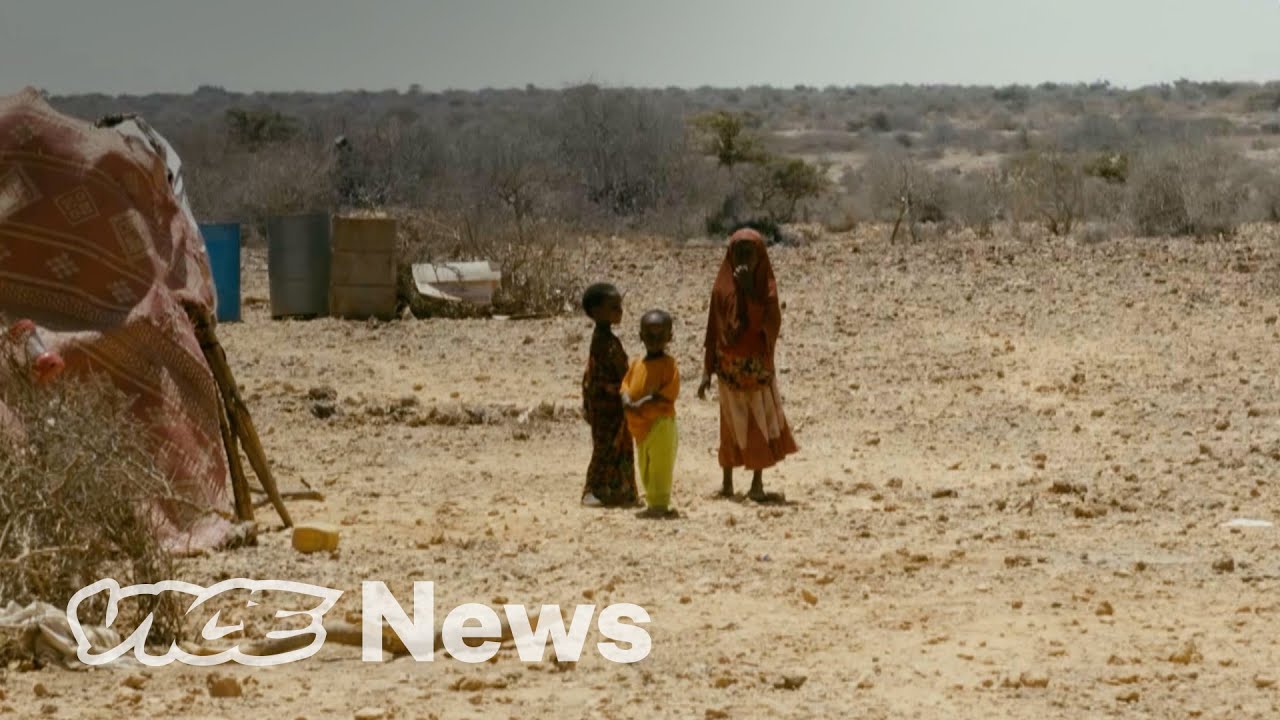
What happens to their culture? If we cannot get this right, what happens to the rest? In 2017 alone, almost two-thirds of global displacements, around 18 million people, were because of natural disasters.
Rising sea levels and extreme weather, like hurricanes and coastal flooding, could create an additional 140 million climate change refugees by 2050. Climate change isn’t the only impact we’re having on the planet. In 2019, there was a major UN report that came out that said there were a million species at risk of extinction.
And what the report pointed out is, we may not even know what a lot of these species are. We haven't discovered them yet. They’re in ecosystems that are threatened.
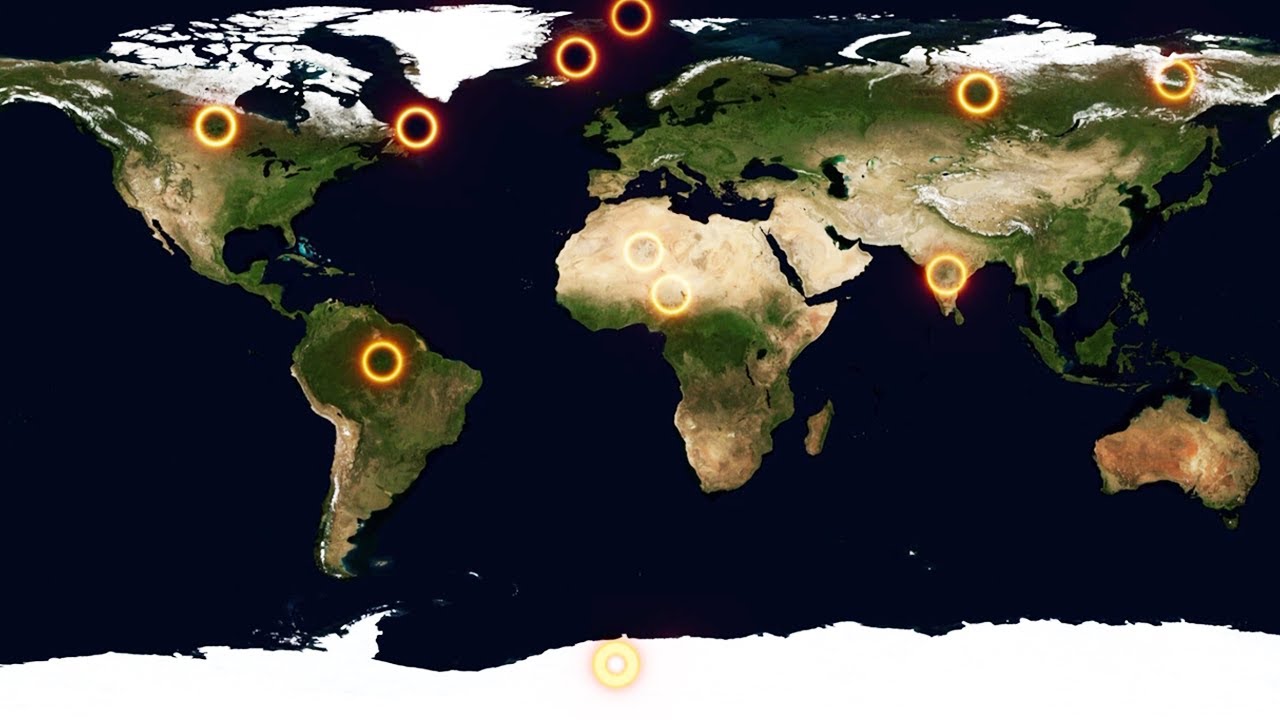
When we lose biodiversity, when we warm our planet, those come back and have impacts on us, as human civilization, and all the other species that inhabit the planet with us as well. Over the last half a billion years, there have been five mass extinctions of life on Earth. Scientists now believe we’re on the verge of a sixth— this one driven by humanity.
Invasive species, habitat loss, climate change, and biodiversity loss are changing our landscapes, sometimes irreversibly. And there’s one culprit that stands out above all else. It is the expansion of agriculture and the unsustainable way that we grow food that contributes to biodiversity loss.
Agriculture is the single largest cause of deforestation and habitat loss worldwide. Fifty percent of all habitable land is used for agriculture. A thousand years ago, that number was just 4 percent.
We’ve expanded our agriculture into native ecosystems to the detriment of biodiversity, to the detriment of loss of forests and their impacts on climate change. While agriculture has expanded across the globe, the diversity of crops has shrunk. We’ve gone from growing thousands of different varieties to only a handful.
And so, the biological diversity that used to be in agricultural systems has essentially been lost. The majority of the world’s food comes from just three crops, and that poses a major risk. That’s a problem because when you have a really narrow range of crops that you’re planting, they could be really susceptible to climate change, to pest outbreaks.
And so when we narrow the range of varieties and species that we’re dependent on, we lose resilience, and we increase the risk. Dr Major Goodman is a traditional corn farmer and scholar. One of my main concerns with transgenics is that the same gene is being used almost worldwide.
Why is that such a big problem? If something should happen, if one of those families should develop susceptibility to a new disease, we’d be in real trouble. He believes that the explosion of transgenics, otherwise known as GMOs, is a disaster waiting to happen.
So one disease could potentially wipe out all the corn? That’s correct. It’s just universal.
You don’t plant the whole world to one thing. Just to give one example, most of the bananas that we buy in our supermarkets are one variety, globally. One variety.
So, if there’s a pest outbreak, bye-bye bananas. [PARAGUAY] In just the past decade, genetic engineering has allowed Paraguay to triple their soy production, making it the fourth-largest exporter in the world. The explosion of large-scale soy production is pushing out the local farmers who previously fed the nation.
Paraguay has had to import 300 percent more food, while the number of people who go hungry has doubled. And the genetically modified soy crops are creating other problems. This lady says a lot of these crops are damaged when they fumigate the fields right next to her, and the corn doesn’t develop as it used to.
It's everywhere, where else can we go from it? And wind or no wind, they still spray every 15, 12 or 10 days, more or less. The soy-producing system invades the community and our seeds don’t germinate anymore.
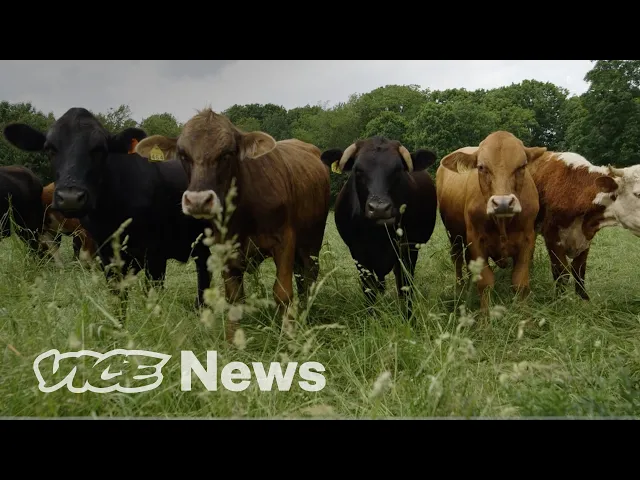
The impact these monocrops are having on the land pales in comparison to the destruction caused by our appetite for just a few species of animals. Three-quarters of all soy production goes to feed cattle, pigs, and chickens in places like the United States, China, and the European Union. If we were to weigh all the mammals on Earth, livestock would account for 60 percent of that weight.
70 percent of the land devoted to agriculture on the planet is devoted to meat production. That’s almost a third of the entire surface area. That many acres producing red meat, pork, chicken, all of that is completely unsustainable.
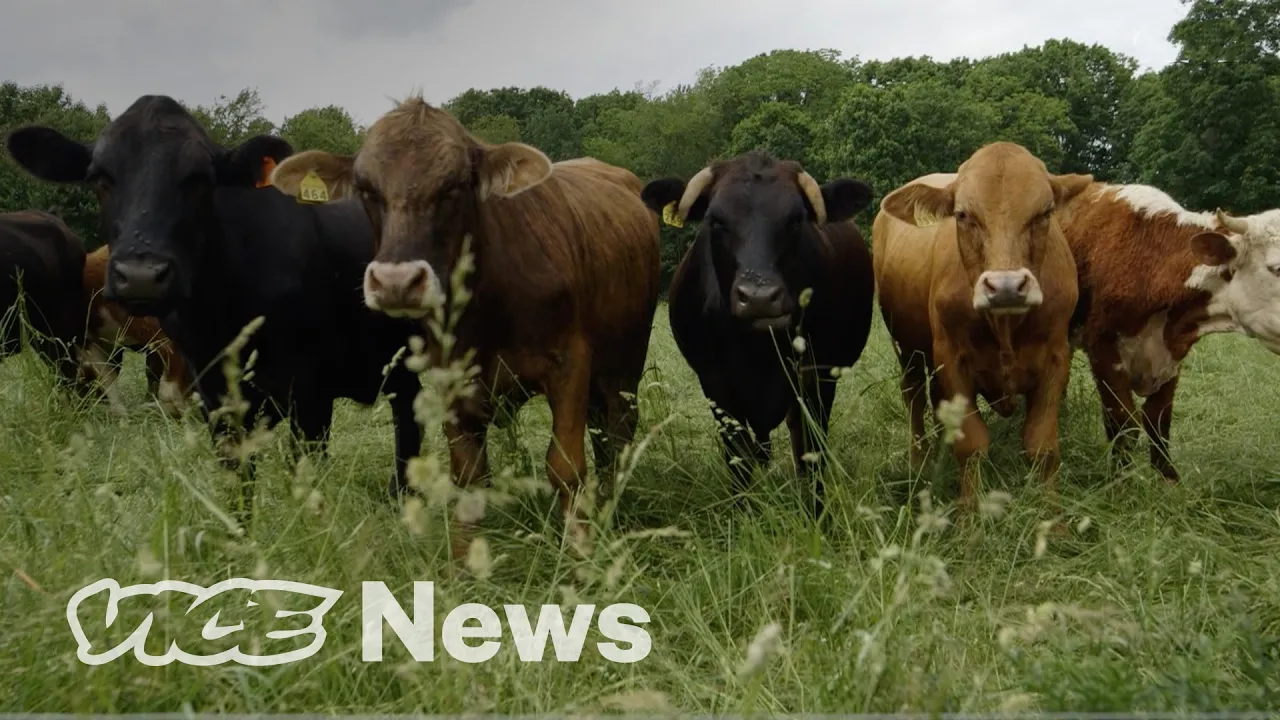
When cows digest their food, they produce methane, a greenhouse gas 20 times more powerful than carbon dioxide. As global consumption of meat, particularly beef and lamb, has risen dramatically over the last few decades, we really see that in our global climate emissions. If we think about the food system and not just agriculture itself, the food system contributes about up to 37 percent of our global greenhouse gas emissions.
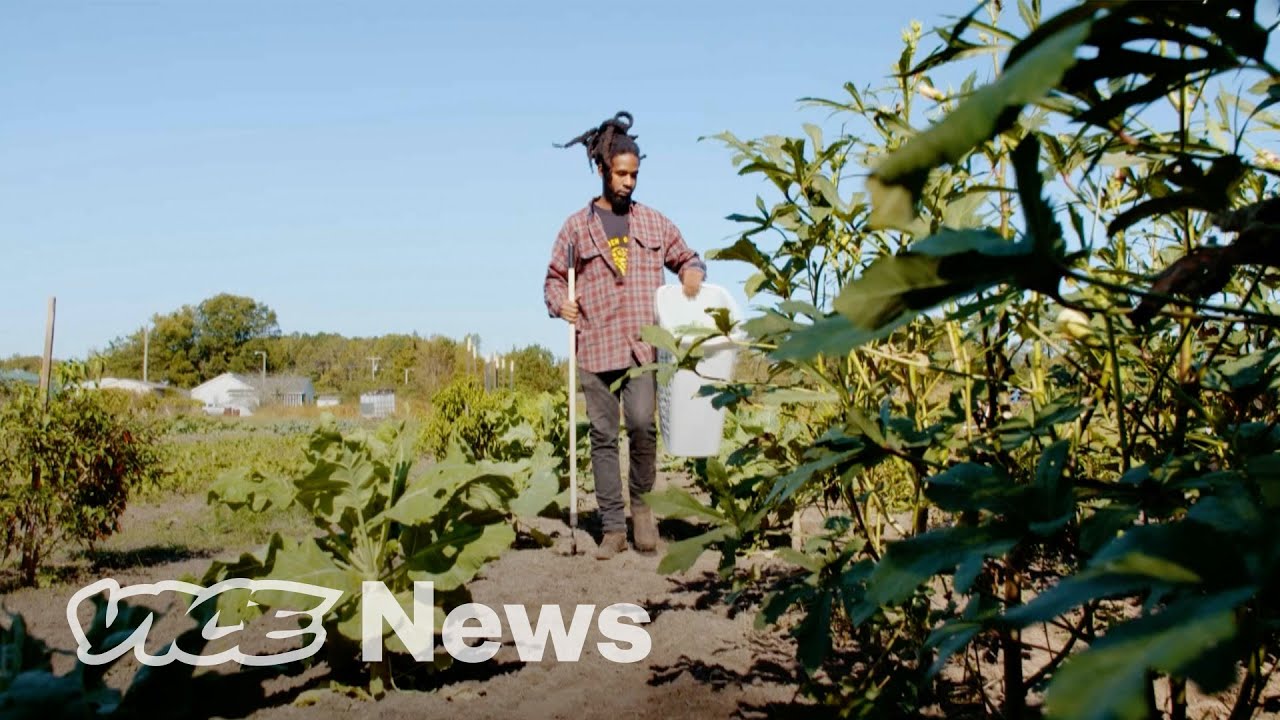
If the way we produce food is what got us into this mess, it can also be the key to getting us out. [SWOOPE, VA] A system that depletes your resource base will eventually crash and burn. Joel Salitan, a farmer who runs Polyface Farms in Virginia, says he has one solution.
So every day, the cows get a brand new salad bar, that was one day’s plateful of food. He rotates the livestock on his farm so he can more efficiently use the land and help enrich the soil. And in 50 days, we follow the cows with the eggmobiles.
The chickens then scratch through these cow patties, incorporate them into the soil, eat out the fly larvae, and actually sanitize the fields before the cows come back through. So it’s a very multi-speciated system. It’s a technique called regenerative agriculture.
Some say that switching to this practice could sequester more than 100 percent of global annual CO2 emissions. Farmers like Salitan are doing what they can to create a more balanced system of agriculture. But their farms have a fairly small impact compared to the heavy footprint of the politically powerful meat, seed, and agricultural industries.
We realize that we have ecosystem loss and species loss, and we have this impact on our human health. We are getting less healthy. People recognize that this food system is broken.
And so, if we want to fix our relationship with land and nature, we have to fix the way the economy works, the way the global economy works. And reducing inequity is a huge part of that. Climate change isn’t about the environment.
It’s about racial injustices as well. It’s about social injustices. It’s about economic injustices.
The system created to support these massive conglomerates is one of the biggest hurdles to achieving a more sustainable food system. Experts on the Anthropocene argue that the exploitation of land and people didn’t happen by chance. Global capitalism has increased the amount of goods that we trade globally tenfold in the last few decades.
So, the system is built on commodities that have been traded globally for hundreds of years. And in order to grow a lot of these commodities, they had to enslave laborers. And to see those connections, it makes it very clear that while the scope and the scale of globalization may be fairly unprecedented, the roots of it are very, very deep.
Racism and colonialism drastically changed the way land was traditionally managed around the world. When colonial powers invaded other societies, they would often destroy the social and cultural ties that people had to the land. [A LEGACY OF COLONIALISM] [FORT YUKON, ALASKA] They said we couldn’t speak our language.
They said don't speak your language. You know, you are forbidden. You know.
We’re going to spank you. We gonna beat you up. These residents of Fort Yukon, Alaska, are doing all they can to save their language, Gwich’in.
[2019 GWICH’IN RAPID WORD COLLECTION WORKSHOP] For generations, they were prohibited from speaking it. The disease came and killed us, killed all the chiefs. That's when they came and took us to school.
We became theirs, you know. They said, "our natives. " I didn't like that word.
It hurt me. Hurt me real bad. [GWICH’IN NATION] Who owns land.
. . is really important in terms of talking about how we manage land.
And it’s especially important when we talk about rights to use land. These are really important globally, particularly for groups of people that are indigenous. [BUEN JARDÍN DE CALLARÚ, PERU] Around 80 percent of the world’s remaining biodiversity is found among forests that are managed by indigenous people.
Scientists are increasingly realizing that ensuring indigenous people keep the rights to that land is one of the most effective ways to keep ecosystems like forests intact. With the help of an American NGO, The Rainforest Foundation, these villagers in the Peruvian Amazon are learning to use drones to monitor and protect their lands. They live in Buen Jardín de Callarú, a tiny village of the indigenous Ticuna people, that sits on the border of 4,000 acres of protected rainforest.
That expanse of land had been impossible to protect from illegal deforestation by loggers and farmers. . .
until now. What you see here on the phone, what the GPS is transmitting via satellite, is here on the map. A system developed at the University of Maryland compares satellite images over time.
If it finds any changes in forest cover, the Ticuna are alerted and use a drone to investigate. Camila, do you want to try? Try to take it up?
If they identify an illegal logging site, the villagers notify local authorities, who investigate. The Rainforest Foundation says that deforestation has dropped to zero in some of the 40 communities they've helped with drones. Experts say collaborations like these are a great example of how the land should be managed.
In these natural systems, everything that we do, from eating to breathing to drinking freshwater comes from how we manage the natural world. And so, if we want to change the pathway we’re on in this Anthropocene era, we need to acknowledge that relationship that we have with our environment. The consequences of habitat destruction are already being felt globally.
[COVID-19 DRIVE-UP TESTING] We don’t know exactly where COVID-19 came from, but it was likely caused by human interaction with wildlife that had long harbored the virus. And it jumped, it spilled over into us. All done.
The more biodiverse an ecosystem is, the more difficult it is for pathogens like the coronavirus to spread. The more we destroy the habitat of animals like rats and bats, the more likely those animals are to infect humans with new and deadly diseases. We need to be really aware of how human impacts on biodiversity comes back to us and impacts us.
We think, “Oh, we need to save biodiversity over here, we need to save species. Oh, I’m worried about climate change over here. " Those are the same problem.
As humans destroy the habitats that absorb greenhouse gases and protect life on Earth, there’s a danger that at some point the planet's life support systems will change irreversibly. At what point is it that we have altered a forest system so dramatically that it cannot recover? At what point do we reach a tipping point where it’s going to flip into a totally different ecosystem that is unrecognizable, that cannot be reversed, and that has impacts that are unforeseen?
The magnitude of the problem we’re facing may seem overwhelming, but McElwee believes there’s a simple place to start. The biggest thing we can do is have a better food system. We can manage our natural ecosystems better, we can produce our food more sustainably, and we can focus on consumers' health as well.
One of the amazing things about ecosystems is that when we leave them alone, they often recover by themselves. We don’t need fancy technologies. We don’t need some sort of new gadget.
We need to stop trampling on everything else. We need to stop this idea of domination that’s reserved for humans. We need to have some sort of recognition of interconnectedness.
That is hugely important in getting us beyond where we are now.